Close
Digital Health & Ai Innovation summit 2026
Medical Taiwan 2026

CVS Health and Uber Health Collaborate to Advance Health Equity in Communities Nationwide

CVS Health teams up with U.S. employers to simplify access to COVID-19 vaccines and help bring people back to work

CVS Health announced a collaboration with Uber Health, Uber’s healthcare arm, to provide critical transportation support at no cost to people who need it most when seeking access to medical care, work or educational programs.

The relationship is part of Health Zones, CVS Health’s new initiative that provides concentrated local investments designed to reduce health disparities and advance health equity in high-risk communities across the country. Health Zones is an integrated approach to addressing six key social determinants of health: housing, education, access to food, labor, transportation, and health care access. The Health Zones initiative is now active in five markets nationwide: Atlanta, GA; Columbus, OH; Fresno, CA; Hartford, CT; and Phoenix, AZ with plans to expand into more cities later this year. Working with trusted national and local partners, CVS Health is addressing community health care needs, ensuring at-risk communities have access to resources and opportunities that can help them thrive.

CVS Health and Uber Health will help eliminate a critical barrier to care and overall well-being โ€“ transportation โ€“ which can limit a person’s ability to receive medical care, to get to work or to job trainings and can ultimately lead to adverse health outcomes. Rides with Uber Health will be available to a target population living in three of the five Health Zones: Atlanta, GA; Columbus, OH; and Hartford, CT with plans to enter additional cities later this year.

“Our Health Zones initiative allows us to make a real impact on the health of communities across the country by working closely with organizations that share our commitment to addressing social determinants of health,” said Eileen Howard Boone, Senior Vice President of Corporate Social Responsibility & Philanthropy and Chief Sustainability Officer, CVS Health. With the Uber Health platform, we’ll provide critical transportation to people within communities who need it most, giving them access to health care services so they can live healthier lives and to jobs and educational programs that can help them reach their full potential.

“We’ve long known that access to reliable transportation can help address critical gaps in care that often disproportionately affect vulnerable communities. With the past two years of the pandemic only further highlighting today’s health inequities, it’s more important than ever for communities to have the tools they need to bridge care gaps and achieve better patient and population health outcomes,” said Caitlin Donovan, Global Head of Uber Health. “Uber Health is proud to be a part of CVS Health’s new Health Zones initiative and encourages community organizations to address transportation as a key social determinant of health, while improving health outcomes in a scalable way.”

For Uber Health, the relationship with CVS Health is a natural extension of its broader commitment to improving population health care management, so more people can achieve and maintain healthy lifestyles. Its HIPAA-supported solution is utilized by more than 2,000 health care organizations across the U.S.

Health Zones is part of CVS Health’s overall commitment to advance health equity in America. In 2021, CVS Health invested $185 million in affordable housing nationwide and $1.3 billion over the past 20 years. Through these investments, CVS Health has been able to provide underserved communities with quality housing, economic support, and educational training opportunities based on the unique needs of the population.

CVS Health continues to help ensure equitable access to COVID-19 testing and vaccinations across the country. Approximately 40 percent of vaccines have been provided to underserved communities and more than 50 percent of CVS Health’s testing sites have also supported these communities.

Quest Diagnostics to Acquire Patient-Engagement Company Pack Health to Improve Value-Based Care

Going Beyond the EHR to Continue the Success of Value-Based Care

Quest Diagnostics, the world’s leading provider of diagnostic information services, announced that it has entered into a definitive agreement to acquire Pack Health in an all-cash equity transaction. Pack Health is a patient-engagement company that helps individuals adopt healthier behaviors to improve outcomes.

Pack Health specializes in comprehensively addressing chronic conditions and comorbidities that are influenced by mental health, lifestyle behaviors, access to care and social determinants of health (SDOH). The company employs certified health coaches trained across 30 chronic conditions who engage, motivate, monitor and support individuals through a virtual engagement platform providing personalized content. With clients that range from health plans to pharmaceutical companies, Pack’s services include medication adherence coaching for pharmaceutical companies’ patient education programs, diet and exercise coaching for health plans focused on improving population health and quality metrics, and community resource outreach to address SDOH, such as food insecurity and transportation access.

“By adding the Pack Health platform to our Extended Care services, Quest will strengthen our ability to connect diagnostic insights to actions that generate greater value, outcomes and quality, empowering affordable care,” said Steve Rusckowski, Chairman, CEO and President, Quest Diagnostics. “This transaction also builds on our growing expertise in addressing social determinants of health, such as through our Quest for Health Equity initiative, and other programs that help organizations deliver value-based care.”

The acquisition builds on Quest’s 2018 acquisition of MedXM, now Quest HealthConnect, a provider of in-person home-based risk assessment and monitoring services that supplement care delivered in clinical settings. Over time, Quest expects to create new services from these diverse capabilities.

Approximately 90% of the nation’s annual healthcare expenditures are for people with chronic and mental health conditions, according to the CDC. Many of these diseases, including diabetes and heart disease, can be delayed or prevented if caught and addressed early. SDOH can influence early disease detection and management. In August 2020, Quest Diagnostics and its Quest Diagnostics Foundation announced Quest for Health Equity, a $100 million initiative to address and reduce health disparities in underserved communities. The company also helps communities access diagnostic services through a national network of relationships with federally qualified healthcare organizations.


Award-Winning DnaNudge RT-PCR Test Integrates With Health Passport Worldwide Digital Health Platform

Award-Winning DnaNudge RT-PCR Test Integrates With Health Passport Worldwide Digital Health Platform

Consumer genetic testing pioneer DnaNudge has completed a systems-integration with digital health platform Health Passport Worldwide making international travel easier for passengers.

DnaNudge provides rapid point-of-care testing that delivers accurate results without the need for a lab or manual sample pre-processing. Through their market-leading app, Health Passport Worldwide enables individuals who have had their test in a DAM Health clinic to receive their results directly to their mobile device.

The app hosts all Covid-19 travel documentation, such as Fit to Fly certificates. It is used by healthcare providers in dozens of countries mainly in Europe, Africa and Mexico so passengers can use the same app to fly outbound and also for their return journey. Unlike other medical records apps, Health Passport Worldwide is accepted for border entry everywhere in the world making travelling internationally easy for its customers.

Health Passport Worldwide is a partner of high-street clinic group DAM Health who have partnered with DnaNudge to deploy CovidNudge across their UK locations.

Sir Richard Sykes, DnaNudge Chairman, said: โ€œWe are really pleased to be able to offer people their test results straight from our platform to their Health Passport Worldwide app. We are committed to providing effective systems for the public and the medical industry throughout the current pandemic and beyond. This digital solution simplifies the testing and reporting process for DAM Health customers, eliminating manual errors and the risk of lost paper certificates.โ€

DnaNudgeโ€™s RT-PCR test – CovidNudge – consists of the DnaCartridge and the NudgeBox. The DnaCartridge is a disposable and sealed lab-on-chip device that enables sample-to-result PCR without the need for any transport medium or pipetting. It can multiplex up to 72 assays and detect every published Covid-19 gene and all known variants including Omicron. The NudgeBox is a standalone instrument that drives the DnaCartridge and runs RT-PCR tests. It is connected to the DnaNudge Cloud for processing the test results that can be made available simultaneously to a Laboratory Information Management System of hospitals, clinics, or the health authorities within 90 minutes of the test being taken.

Liam Spence, DAM Director of Partnerships and Strategy, said: โ€œFast and accurate testing is critical to ensure that travel and other economies continue to thrive. DAM Health offers Health Passport Worldwide for our customers across the UK. Their mobile software means that people receive their test results in the quickest possible way. The new integration with DnaNudge means that people can now use the most efficient and secure PCR test in the UK in our network of DAM Health clinics. The digital health system is also used by many international test centres, meaning it is incredibly easy for passengers and tourists to have a common cross-border solution which can be verified for authenticity.โ€

DnaNudge was recently named the winner of the Royal Academy of Engineeringโ€™s MacRobert Award, the UK’s longest running and most prestigious national prize for engineering innovation, in recognition of DnaNudgeโ€™s testing platform. Following a recent funding round, DnaNudge is accelerating the global distribution of its gold standard RT-PCR system across the public and private healthcare sectors.

COVID Hospitalizations In The US Break Last Winter’s Record

COVID Hospitalizations In The US Break Last Winter's Record

The US has surpassed a milestone that they shall not be proud of. As the Omicron variant spreads its wings across the length and breadth of the country, COVID hospitalizations have climbed up, beating the previous peak which was seen in January 2021. As per the US Health Department, the data from the 2nd week of January 2022 shows that a total of 1,42,388 people were hospitalized because of COVID-19, more than the previous number of 1,42,315 patients that was reported on 14th Jan 2021. Besides, the 10 day average of per day hospitalizations was 1,32,086, which was a whopping 83% climb than two weeks back. It is well to be noted that these numbers include those patients as well who were admitted for other conditions but tested positive for coronavirus upon hospitalization. There is no actual number that suggests patients hospitalized specifically because of catching the virus.

Significantly, the hospitalizations are driven by those who are younger than 60 years of age. A sigh of relief for the older population as their hospitalization figures remain much lower than the previous year same time. There is also worrying data that tells us that the areas where Omicron was reported the first time have suddenly started seeing a spike in death, thankfully not as fast as the rise in cases. But the steep climb itself predicts devastation in store.

Understandably the surge in cases has overwhelmingly affected the medical facilities across the country as almost one-fourth of the establishments are facing severe staffing shortages. There are some states in the country that have already put in place the National Guard for help, while other states are having elective surgeries.

As per a physician in an emergency department, even the most dedicated of the surgeons and physicians are going to be worn out two years into the pandemic and may head towards mental issues and consequences related to it.

With the kind of spread which is being witnessed, no wonder, doctors, nurses, and other medical staff are also getting infected.

That leaves the medical facilities more loaded with coronavirus cases, thereby resulting in the inability to handle emergencies such as cardiac arrests, cancer surgeries, trauma cases, etc. As per a report in a leading newspaper, making a shift from the prior rules, hospital employees who have mild or no symptoms are continuing with their daily work. The physician adds that the demand is going up while the supply is touching lower numbers by the day, and thatโ€™s not only for COVID but other health issues as well.

05 Trends In Healthcare Industry To Watch Out In 2022

05 Trends In Healthcare Industry To Watch Out This 2022

The significance of healthcare in the times we are living in cannot go unnoticed. In fact, healthcare has always been at the top of the agenda for every nation, its government, and the citizens who live there.The transformation that the industry is going through, more so during this modern-era pandemic, is all due to the research, which is an outcome of lots of money being poured in just to understand human health better and also develop ideal methods that could prevent and cure illness of all kinds, and that too, in the nick of time. Keeping the upgrades in mind, here is a list of five healthcare horizons to watch out for this year.

Genetic Mutations: Way To Go

It doesnโ€™t come as a surprise when we say that genetic mutations are on everyoneโ€™s agenda these days. This comes at a time when the Omicron variant has already proven to be a barrier to progress in the world’s battle against the pandemic.The fact is that when the disease spreads, the genetic coding errors in it cause changes in its behaviour, leading to new and prominent variants cropping up. This year will undoubtedly mark the time when we see proper advances made in ascertaining genetic mutations with the hope that we will be able to react swiftly and to the point whenever changes take place in infectious diseases of any kind.

This research will also help with a better understanding of the changes that are taking place at a cellular level within the human body. Our past doesnโ€™t have too much to talk about when it comes to research of this kind, as it has always paved a road that is time-consuming, intensive, and difficult, and expensive too, if not impossible for that matter. The mutations take place within the DNA strands, and with the R & D done in its sequencing, researchers can analyse them, thereby making research more effective.

We are all aware that mutations do take place and are a pretty common occurrence when the body ages. That said, some mutations lead to cancer popping up, and it is still to be ascertained as to why they end up that way. Learning more about genetic mutations will no longer be a distant possibility in 2022, thanks to a precise roadmap of DNA analysis.The genetic editing tool is also one absolute way of looking at things, which allows the researchers to make edits in the DNA. Gene editing might not come to the limelight in 2022, yet big breakthroughs are expected in this regard.

The Robotics & AI Assistance 

The human race sees innumerable surgeries being done every day, right from the heart to the brain and even those minor ones. Eventually, it is the skill of the surgeon that matters the most in determining the success of a surgery. Although the world is packed with qualified and skilled surgeons, there is always a limit to how quick they can be. Besides, factors such as sleep deprivation can lead to errors that can be potentially fatal. It is robotic assisted surgery that is growing in popularity across the surgery segments due to its precision and accuracy that leads to better outcomes in totality.

As of today, da Vinci surgical systems have been of assistance in more than 6 million surgeries. The process doesnโ€™t replace the expertise of a surgeon, but in a way, empowers them to administer delicate surgeries with safety of the highest order.

Although AI-based and robotics-assisted operations are a rarity, the advances that have been made in technology make them more efficient and attractive for the patient as well as the surgeon community.

Last year, the FDA approved certain robotic surgical designs that can adapt to the surgeon’s preferences and make them more intuitive. Surgeries based on this technology can be expected in 2022, paving the way for more players to follow.

Alzheimerโ€™s-Is The Solution Knocking..?

Diseases that attack the mind are the worst. Alzheimerโ€™s is one such occurrence that still doesnโ€™t have a cure. It is a state where people lose memories, with other significant developments on the mind also, making it a worrying subject which lacks clarity.

No wonder researchers and practitioners have been running around trying to get a cure for it since eternity. That said, 2022 will indeed be the time when promising treatments begin, with many drug companies consistently working towards developing new drugs that may provide the much longed for cure. Interestingly, although there has been a significant portion of controversy which has engulfed a drug approved by the FDA last year, that doesnโ€™t bog the researchers down in their commitment to finding an effective medication for Alzheimerโ€™s. There might be, however, a strong chance that the new drug may not yield the wanted results in 2022, but it will indeed be a boon to researchers to step up their research for a quick and likely cure. There is another treatment that is making inroads into finding the root cause of Alzheimerโ€™s where a molecule is used to identify the signs of the disease that are in the brain and also treat it by binding them. It is well to be noted that this treatment has already surpassed phase 1 and, in all likelihood, will finish phase 2 in 2022.

Trap The Opioid Epidemic

Overdose deaths in the US have been on the rise since the time synthetic opioid fentanyl started super spreading. The current levels have already witnessed surge and in 2022 one can see several discussions taking place which could lead to saving lives by reducing illegal usage of drugs. The department of health in the US has already started offering suggestions on how to get rid of this drug abuse as far as communities are concerned, and hence help people get back to what they should be doing, working. The plan laid down by the department is both based on research and practical.

Improving treatment access can lay the foundation to a great extent.

  • Increase knowledge concerning the opioid epidemic by conducting surveillance of public health.
  • Giving more thrust to marketing overdose-reducing drugs.
  • Development of techniques that take into account pain management
  • Adding more research in the existing gamut

2022, in all elements, will see communities, both medical and social work, tackle the problem in an effective and streamlined manner, thereby keeping a check on unacceptable numbers of overdose deaths that are pretty high.

Realistic Customised Sensitive Care

Today, around the globe, there are extremely diverse nations that exist with no or less homogeneity at all times. We all want excellent healthcare and to be treated with dignity, regardless of race, age, or other demographics. Having said that, stereotyping in the gamut of nursing still exists in the age that we are in and can go on to affect a prospective patient’s well-being to no end.

To put it fair and square, trust is what one expects from a healthcare setting. Patients need to have that high level of confidence in the doctors and nurses treating them. It is also highly unlikely for them to follow any advice or guidance from their doctors if that pillar of trust isnโ€™t there in the first place.

This year, expectations are that there will be a rising trend when it comes to elevating cultural competence in the healthcare universe. Cultural competence reflects on taking time to gauge and gather background information about patients while treating them. Nurses and doctors will have to overcome their biases in order to provide quality care to patients, regardless of their cultural backgrounds or sides.

The trend of personalised healthcare due to this practise is bound to bloat the experience of patients to another level. The cultural push for patient care happens to be patient-centric, and tweaks need to be made by professionals to suite patient needs. This step itself will help patients feel respected throughout the process of treatment, thus resulting in appreciable and desired outcomes.


Leaders across healthcare, academia and technology form new coalition to transform healthcare journey through responsible AI adoption

GBT is Developing a Mobile Application for its AI Based Healthcare Advisory System

Leading public, private, educational and research organizations across the U.S. healthcare and life sciences industries announced the formation of the Artificial Intelligence Industry Innovation Coalition (AI3C). The coalition brings together the Brookings Institution, Cleveland Clinic, Duke Health, Intermountain Healthcare, Microsoft, Novant Health, Plug and Play, Providence, UC San Diego, and University of Virginia with the goal of maximizing technology to provide recommendations, tooling and best practices for AI in healthcare.

โ€œThe goal of the newly created AI3C is to establish a pragmatic coalition with public and private organizations to advance health by identifying and addressing significant societal and industry barriers,โ€ said Patty Obermaier, vice president, US Health and Life Sciences, Microsoft. โ€œI am excited about the launch of AI3C and working with its distinguished board as we continue the momentum toward serving the needs of patients and communities through AI innovation.โ€

The AI3C board, composed of volunteer senior executives acting as advisors, will work to co-create AI solutions for positive societal and healthcare outcomes, identify and set the AI strategy and vision for a variety of projects, and track the success of AI adoption in the industry. Each member organization has nominated its own AI ambassadors to serve as regional leads and drive programs. All members have an equal voice in the way the coalition operates and is governed.

The AI3C intends to apply AI to resolve significant challenges in business such as:

  • General economic and industrial challenges โ€“ including research transfer, industry standards and funding instruments
  • Digital skills and employability โ€“ including organizational and cultural challenges, as well as labor policies
  • Data privacy โ€“ including data access and shared innovation

Overall, the AI3C objectives are to accelerate AI innovation and adoption by:

  • Showcasing emerging AI tools
  • Gathering industry-specific AI use cases, best practices and research feedback
  • Transforming the AI workforce
  • Preparing students for careers in AI and data science

To achieve these goals, AI3C members will focus on providing a comprehensive program for responsible AI education and upskilling. Moreover, the AI3C will engage with the healthcare community through white papers, new tools and programs, and social media outreach to make AI more applicable and impactful. The coalition will host quarterly meetings and events to transparently communicate the resolution and progress of solving key challenges through AI adoption.

The AI3C will provide recommendations and advice on a wide array of AI topics including responsible healthcare innovation, health equity and workforce transformation to reduce clinical fatigue. More details about the coalitionโ€™s programs and its impact will be available later this year. The AI3C follows in the footsteps of the National Coalition for Artificial Intelligence in Financial Services, which was launched in December 2020.

โ€œMeeting the urgent need for new health technologies requires diverse partners coming together across sectors. With perspectives from AI practitioners, healthcare professionals and the research community, the AI3C can guide collaborative projects that accelerate the translation of frontier technologies from research to solution development, to implementation,โ€ said Ashley Llorens, vice president and managing director, Microsoft Research and Incubations.

About Microsoft

Microsoft enables digital transformation for the era of an intelligent cloud and an intelligent edge. Its mission is to empower every person and every organization on the planet to achieve more.

Cegedim Healthcare Solutions announces robot integration

Cegedim Healthcare Solutions announces robot integration

Cegedim Healthcare Solutions has revealed a new integration with collection robots as well as partnerships with MedPoint and Pharamself24.

The move will mean pharmacies are able to offer a wider choice and added flexibility to their dispensing workflow, benefitting both pharmacists and their patients. According to the company, the integration means pharmacy teams will spend less time handling administrative tasks, freeing them up to spend more time providing expert advice and care to patients and improving productivity. For patients, the benefits include round-the-clock access to their medications with no more opening hour barriers, and less time spent queueing.

Adam Dennett, managing director, Cegedim Healthcare Solutions, said: โ€œWe are confident that our new integration with collection robots and partnership with MedPoint and Pharmaself24 will allow pharmacists to spend more time delivering care, offering professional advice and improving their business and sales whilst delivering a convenient service for both themselves and their patients. This is an important step towards our vision for fully integrated community-based healthcare.โ€

Cegedimโ€™s long-term strategy is for fully integrated community-based healthcare, with pharmacists playing a key part within multidisciplinary teams. It recognises that pharmacies are an indispensable part of the urgent care pathway, and it hopes collection robots will support this vision.

Consortium in the UK to transform patient diagnostics with Sectra imaging system

Consortium in the UK to transform patient diagnostics with Sectra imaging system

International medical imaging IT and cybersecurity company Sectra has signed a contract for radiology imaging with an NHS consortium in Surrey and Sussex in the UK. Some of the expected benefits following the contract are seamless radiology imaging access across hospitals, improved access to specialists, faster informed decisions and enhanced care for patients.

A consortium of NHS trusts that covers a population of circa 1.2 million will gain immediate access to important patient imaging, and will mobilize a regional workforce for patients, following a decision to procure a medical imaging system from Sectra. The contract, signed during the second quarter of the fiscal year 2021/2022, comprises the Sectra enterprise imaging solution and will be used across the hospitals to review and store imaging acquired throughout the diagnostic process including community diagnostic hubs. The solution will handle approximately 1.7 million examinations per year.

Everything from x-rays to ultrasounds, CT scans, MRIs and more will become instantly available to relevant healthcare professions across five trusts in Surrey and Sussex, regardless of where in the consortium a patient has had their medical imaging captured. This will help radiologists and other busy clinicians to make faster informed judgements for patients on a large range of clinical scenarios from cancer care to trauma cases and much more. The project will support faster turnaround of important diagnostic reports and will help scarce specialists to support hospitals across their region. The initiative will also help to avoid unnecessary duplicate scans and radiation exposure for patients, whilst removing the need for manual, time-consuming processes currently relied on in many parts of the NHS to share images between hospitals.

Dr Benjamin Salt, clinical lead for the consortium, who also works as a consultant interventional radiologist and deputy chief clinical information officer at East Sussex Healthcare NHS Trust, said: โ€œSome of the biggest benefits will be for patients who move around the region as they are referred to specialist centres at different trusts โ€“ whether thatโ€™s for cancer care, trauma, vascular medicine, ophthalmology, head and neck, plastics, liver, pancreatic surgery and more.

The project, initially focused on radiology and mammography imaging, covers large parts of Surrey and Sussex and will see the Sectra system deployed as a cloud-based solution. This will lessen the technology burden on hospitals and create conditions for potential expansion to additional specialties to embrace the benefits of integrated diagnostics.

The trusts involved are: Ashford and St. Peter’s Hospitals NHS Foundation Trust; East Sussex Healthcare NHS Trust; Queen Victoria Hospital NHS Foundation Trust; Royal Surrey NHS Foundation Trust; and University Hospitals Sussex NHS Foundation Trust. The system is also expected to link with two other trusts in the region and with London hospitals as needed, using open standards to make imaging discoverable and retrievable.

Dr Andrew Carne, a consultant radiologist, clinical lead and chief clinical information officer at Royal Surrey NHS Foundation Trust, said: โ€œImproved access to imaging will allow us to support a flexible workforce that can deploy across a regional area โ€“ that has got to be good for staff, patients, and turnaround times of reports at a time when some hospitals lack capacity. A radiographer at one trust might have capacity to help reduce another hospitalโ€™s backlog. With a regionally integrated imaging dataset, that model becomes possible.”

Jane Rendall, managing director at Sectra in the UK and Ireland, said: โ€œDiagnostic imaging often underpins important clinical decisions that make a difference to safe and effective patient care. Having access to that imaging in a seamless way is essential. Whether enabling better access to sub-specialist expertise or changing diagnostic models to improve the speed of decisions, the trusts we are working with in Surrey and Sussex have shown a commitment to ensuring the right image is available to be reported at the right time and by the right person, for the benefit of their patients.โ€

The system is part of Sectraโ€™s enterprise imaging solution, which provides a unified strategy for all imaging needs while lowering operational costs. The scalable and modular solution, with a VNA at its core, allows healthcare providers to grow from ology to ology and from enterprise to enterprise. Visit Sectraโ€™s website to read more about Sectra and why it is top-ranked in ‘Best in KLAS’.

UNC Allied Health Sciences Nationally Recognized for Collaboration, Innovation in Education and Healthcare

UNC Allied Health Sciences Nationally Recognized for Collaboration, Innovation in Education and Healthcare

The UNC Department of Allied Health Sciences in the UNC School of Medicine has received the 2021 Association of Schools Advancing Health Professions (ASAHP) Award for Institutional Excellence and Innovation in Interprofessional Education and Collaborative Health Care.

Interprofessional education involves students from two or more health or social care professions learning together during their professional training. The objective of this collaboration is to cultivate a more unified care delivery system that achieves better outcomes for patients. The UNC Office of Interprofessional Education and Practice (OIPEP) was created in 2018 after years of grassroots efforts to improve communication and collaboration among Carolinaโ€™s health care professions schools โ€” the schools of nursing, medicine, dentistry, public health, social work, pharmacy and the department of allied health.

โ€œMany faculty, staff and students in our department have worked tirelessly to build our interprofessional education (IPE) program and are appreciative of this recognition,โ€ said Judy Schmidt, EdD, director of the Department of Allied Health Sciences Interprofessional Education and Practice. โ€œMoving forward, we will focus on expanding our efforts to train health profession leaders in best practices of interprofessional education and collaborative practice to ensure the highest quality of care in communities across North Carolina.โ€

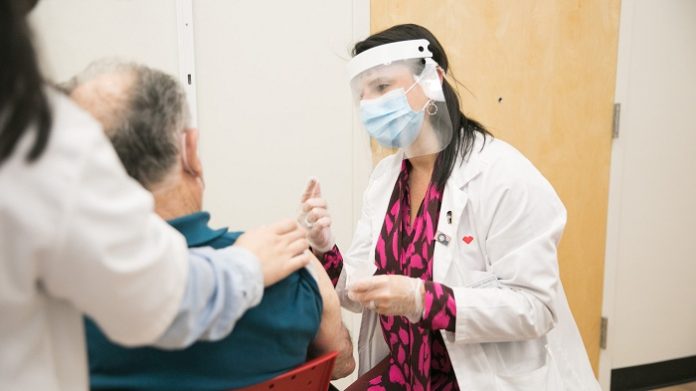
Each of the seven divisions within the UNC Department of Allied Health Sciences (DAHS) engages in a range of interprofessional activities across programs, schools and community settings. DAHS has developed innovative ways to assist during the COVID-19 pandemic, including physical therapy students assisting with mobility during the vaccine effort, physician assistant students helping to provide COVID-19 vaccines at the UNC Friday Center, clinical laboratory science students helping with COVID-19 testing, and a range of students volunteering to be a part of OIPEPโ€™s Carolina Covid Student Services Corps. Here are examples of other recent and ongoing IPEP efforts unrelated to COVID-19:

Heels Prep โ€“ an interdisciplinary collaboration among the DAHS divisions of clinical rehabilitation and mental health counseling and occupational therapy to provide a summer program to support young adults with intellectual disabilities transitioning to adulthood.
The upcoming launch of the inaugural RAM (Remote Area Medical) clinic in the state planned for Wilkesboro, NC. The RAM Clinic, funded by a private donor, will allow students and faculty from multiple schools and programs to offer free screening and medical services to eligible constituents in the rural county.

DAHS has been a founding partner in the Rural Interprofessional Health Initiative, in which over 150 interprofessional students have provided health care and completed quality improvement projects in nine rural counties across North Carolina.

DAHS has seen significant growth in its IPEP efforts. The ASAHP award is a testament to the departmentโ€™s progress in building an innovative and sustainable model to advance IPEP within the department, university and greater community.

Glytec and Roche Announce Strategic Partnership to Bring Digital Health Innovation in Glycemic Decision Support to the Hospital Bedside

Glytec, the only provider of cloud-based insulin management software across the continuum of care, announced a strategic partnership with Roche Diagnostics USA, a division of the worldโ€™s largest biotech company and a global pioneer in pharmaceuticals and diagnostics.

This digital health collaboration combines Rocheโ€™s expertise in medical devices and IT solutions with Glytecโ€™s FDA-cleared insulin dosing decision support software, Glucommanderโ„ข, to address the pervasive challenges with inpatient blood sugar management at the hospital bedside. Glucommander will be the first software application available to run on Rocheโ€™s smart-device next-generation hospital blood glucose system, cobasยฎ pulse, which is designed with the intention of improving patient safety and care by empowering point-of-care clinicians to collect and take immediate action on glycemic management data.

Glucommander has been proven to reduce severe low blood sugar by 99.8%, 30-day readmissions by 36-68% and length of stay by up to 3.2 days. The safety and efficacy of Glucommander have been validated in hundreds of research studies, making it the most studied software solution in the category. One customer calculated that Glucommander led to over $9 million in cost savings in the first year of use.

โ€œOur algorithmic decision support software has been helping hospital clinicians optimize glycemic management for nearly two decades, and weโ€™ve seen the positive impact it can have,โ€ said Ed Furlong, Chief Executive Officer at Glytec. โ€œThe fact that Roche understands the importance of inpatient glycemic management and chose Glytec as the first software partner for the revolutionary device itโ€™s designing speaks volumes about the technology weโ€™ve built and the direction the market is headed.โ€

Roche and Glytec Bring Innovation to the Point of Care

This combination of hardware and software is being designed to help nurses and physicians close the gap between getting data and taking action. Cliniciansโ€™ time is their most limited resource: the objectives of the partnership are to combine the immediacy of a bedside blood glucose test with Glytecโ€™s clinically-proven insulin decision support on a single, handheld device, with the intention of streamlining workflows and saving time. The integrated device and applications are designed to improve patient safety and outcomes by empowering point-of-care clinicians to collect and take immediate action on glycemic management data.

โ€œDiagnostics play a critical role in helping people live longer and healthier lives and we are hopeful that this partnership with Glytec will bring an innovative glucose management tool to the point of care,โ€ said Brad Moore, Senior Vice President, Core Lab and Point of Care at Roche Diagnostics. โ€œOur goal is to drive better care for patients and there is a great need for a diagnostic ecosystem that combines accurate results, robust data, and digital capabilities to improve the standard of care.โ€

CMS Amplifies Focus on Glycemic Management

With an understanding of the positive impact that proper insulin management can have on outcomes and cost of care, Centers for Medicare and Medicaid Services (CMS) published two new eCQMs to measure glycemic management outcomes in August as part of its annual IPPS update. These rules suggest that hospitals should address prolonged, untreated high blood sugar at the bedside and that severe low blood sugar related to insulin management should be a never event.

Translate ยป