Close
Digital Health & Ai Innovation summit 2026
Medical Taiwan 2026

Olympus supports endoscopic AI diagnosis education for doctors in Thailand

Olympus to Support Endoscopic AI Diagnosis Education for Doctors in India and to Launch AI Diagnostic Support Application

Japan-based Olympus Corporation took part in a ground-breaking project as a business promoter, in cooperation with the Ministry of Internal Affairs and Communications (MIC) of Japan, entitled, “Survey Study for International Expansion of Endoscopes Utilizing High-definition Imaging Technology AI Diagnosis Support System in Thailand.” The project aims to develop advanced endoscopy diagnostics in Thailand, where there are relatively few endoscopists.

For the project in Thailand, in collaboration with CYBERNET SYSTEMS CO., LTD., Olympus conduct a demonstration survey on the effectiveness and potential dissemination of the AI diagnostic support system in collaboration with Thai Gastrointestinal Endoscopy Association (TAGE).

With this Thailand will have an opportunity to enhance experiences in AI in endoscopy and assists the next generation of endoscopists to gain new knowledge and skills in the latest AI technology for a diagnostic endoscopy. It also accelerates Thailand and Japan relation further in the field of medical ICT will further develop

Specialist lecturers and physicians from Showa University Northern Yokohama Hospital and TAGE representatives from Siriraj Hospital, Rajavithi Hospital, King Chulalongkorn Memorial Hospital and Ramathibodi Hospital will provide expert guidance to doctors from major medical institutions in Thailand.

In addition to training doctors in techniques for detecting diseases and differential diagnosis by colonoscope, they will also train the doctors on how to instruct the next generation of endoscopists between August 2021 and March 2022.

Smith+Nephew launches Real Intelligence and CORI Surgical System, next generation robotics platform, in India

Smith+Nephew launches Real Intelligence and CORI Surgical System, next generation robotics platform, in India

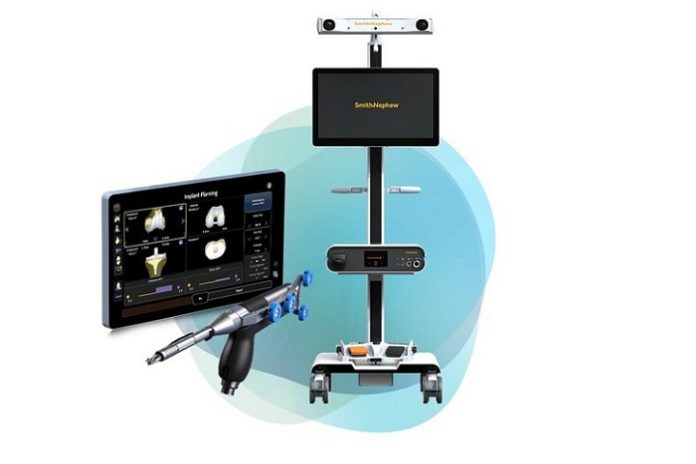
Smith+Nephew, the global medical technology business, announces the launch of its Real Intelligence suite of enabling technology solutions including its next generation robotics platform, the CORI Surgical System, in India.

Robotics-assisted orthopaedic surgery has been gaining momentum in India, which is expected to grow at 20% Compound Annual Growth Rate over the coming years1 as surgeons and patients look to better and more predictable outcomes. With around 200,000 joint replacement procedures annually2, the need exists and the opportunity is well-timed to introduce a ground-breaking new technology.

Smith+Nephew first brought a robotic-assisted solution to India in 2016 with its NAVIOโ—Š Surgical System, recently awarded the โ€˜Best Healthcare Brand in Indiaโ€™ by the Economic Times. Since then, the NAVIO installed base has steadily grown, with multiple installations across the 12 states. The CORI Surgical System was first launched in the US during 2020 and has expanded in other global markets for both total and unicompartmental knee arthroplasty applications.

The CORI Surgical System is small*,4, portable and perfect for todayโ€™s crowded operating rooms4. It includes new camera technology that is over four times faster**,4, offers more efficient cutting with twice the volume**,4, and aims to deliver a faster* robotic-assisted surgical procedure.5 The CORI System uses surgeon-controlled robotics, and its modular design will enable it to be scaled across the orthopaedic service line.

โ€œThe CORI Surgical system is arguably the most sophisticated orthopaedic robotic system available. It’s like taking a large, traditional surgical robot, making it smarter, and shrinking it to fit in your hand. Instead of a bulky appliance moving your hand during surgery, CORI allows you to perform the procedure while it corrects for you. It keeps the surgeon in control and makes everything more elegant,โ€ said Dr. Jimmy Chow, Orthopedic Surgeon for Hip and Knee, Orthopedic Institute of the West. โ€œSmith+Nephew’s Real Intelligence ecosystem puts the surgeon at the center by combining all aspects of patient care, hardware, software and data solutions to enhance decision-making in and out of the OR.โ€

โ€œSmith+Nephew is a global pioneer in robotics-assisted orthopaedic surgery and that is especially true in India with nearly a half decade building the market and creating access through investments in education, awareness and adoption,โ€ said Myra Eskes, President of APAC, Smith+Nephew. โ€œWe are well positioned to meet the growing demand for this exciting technology and look forward to helping our customers and their patients realize its many benefits.โ€

About Smith+Nephew

Smith+Nephew is a portfolio medical technology business that exists to restore peopleโ€™s bodies and their self-belief by using technology to take the limits off living. We call this purpose โ€˜Life Unlimitedโ€™. Our 18,000 employees deliver this mission every day, making a difference to patientsโ€™ lives through the excellence of our product portfolio, and the invention and application of new technologies across our three global franchises of Orthopaedics, Advanced Wound Management and Sports Medicine & ENT.

Founded in Hull, UK, in 1856, we now operate in more than 100 countries, and generated annual sales of $4.6 billion in 2020. Smith+Nephew is a constituent of the FTSE100 (LSE:SN, NYSE:SNN). The terms โ€˜Groupโ€™ and โ€˜Smith+Nephewโ€™ are used to refer to Smith & Nephew plc and its consolidated subsidiaries, unless the context requires otherwise.

NuVasive Launches Modulus ALIF 3D-Printed Porous Titanium Implant for Anterior Spine Surgery

NuVasive Launches Modulus ALIF 3D-Printed Porous Titanium Implant for Anterior Spine Surgery

NuVasive, Inc., the leader in spine technology innovation, focused on transforming spine surgery with minimally disruptive, procedurally integrated solutions, announced the commercial launch of Modulusยฎ ALIF, a 3D-printed porous titanium implant for anterior lumbar interbody fusion (ALIF), in targeted global regions.

“Modulus ALIF has been one of NuVasive’s most successful clinical evaluations to date with continued surgeon adoption and overwhelmingly positive feedback. This differentiated technology furthers our position to become the market leader in ALIF and extends our Modulus portfolio across all procedural segments,” said Massimo Calafiore, executive vice president, Global Business Units at NuVasive. “We are leveraging our experience as the leader in lateral surgery to deliver outcome-driven innovation to fuel continued growth and differentiation in the anterior spine segment.”

Modulus ALIF is the latest addition to the NuVasive Advanced Materials Scienceยฎ (AMS) portfolio and provides implants and instrumentation designed for both supine ALIF and XALIFโ„ข procedures. In addition, Modulus ALIF comes in a variety of sizes and lordotic options to accommodate varying patient anatomy. Highlights of the Modulus ALIF technology include:

Proprietary Modulus titanium design: Modulus is designed for enhanced osseointegration,1 biomechanical,1 and imaging properties. The porous surface architecture is engineered to participate in fusion and promote new bone on-growth and in-growth.2 The proprietary design also allows for enhanced visualization compared to solid titanium implants.

Zero-step locking mechanism: This feature provides definitive tactile and visual confirmation, enabling confidence in a surgeon’s screw placement in the implant.

Low-profile, versatile instrumentation: The device’s instrumentation can be utilized in both supine ALIF and XALIF, supporting a surgeon’s preferred surgical approach. The instrumentation’s low-profile and versatile features are designed to increase operating room workflow efficiencies.

“Modulus ALIF has been a long awaited implant in my practice. The design is best-in-class and the differentiated surface structure will help improve fusion and clinical outcomes,” said Gregory M. Mundis Jr., M.D., orthopedic spine surgeon and co-director of the San Diego Spine Fellowship at Scripps Health in San Diego. “The device’s instrumentation is designed to work with various patient anatomies. This versatility makes me more confident that I am choosing the best solution for my patients.”

NuVasive is committed to furthering innovation and clinical validation of X360ยฎ, a comprehensive lateral approach to single-position surgery that includes XLIFยฎ, XALIF, and XFixationโ„ข. Recently, a new journal article was published in World Neurosurgery that further validates the improved benefits possible with single-position surgery compared to dual-position lumbar fusion. The findings concluded that shorter operating time and hospital stays were more prevalent in single-position surgery while maintaining similar clinical outcomes.

NuVasive will feature Modulus ALIF at these upcoming events:

NuVasive Innovation Event: A surgeon-focused event today, July 22, where NuVasive leadership and surgeon partners will discuss NuVasive’s outcome-driven innovation including Modulus ALIF, the Pulseยฎ platform, C360ยฎ, and more. Visit nuvasive.com/innovationevent for more information.

37th Annual Meeting of the Section on Disorders of the Spine and Peripheral Nerves: On Thursday, July 29, NuVasive will host a lunch workshop discussing patient-specific care with NuVasive’s ALIF, XALIF, and AMS portfolio of implants. Visit NuVasive at booth #301 where it will also feature the Pulse platform, X360, and the Simplifyยฎ Cervical Disc.

About NuVasive
NuVasive, Inc. is the leader in spine technology innovation, with a mission to transform surgery, advance care, and change lives. The Company’s less-invasive, procedurally integrated surgical solutions are designed to deliver reproducible and clinically proven outcomes. The Company’s comprehensive procedural portfolio includes surgical access instruments, spinal implants, fixation systems, biologics, software for surgical planning, navigation and imaging solutions, magnetically adjustable implant systems for spine and orthopedics, and intraoperative neuromonitoring technology and service offerings. With more than $1 billion in net sales, NuVasive has approximately 2,700 employees and operates in more than 50 countries serving surgeons, hospitals, and patients.

Signify Healths Transition to Home care coordination solution launches in 50+ hospitals nationwide

Signify Healths Transition to Home care coordination solution launches in 50+ hospitals nationwide

Signify Health, Inc. a leading value-based care platform that leverages advanced analytics, technology and nationwide healthcare provider networks, has activated its Transition to Home solution in 50+ hospitals to provide Medicare patients with the clinical and social care support they need as they make the transition from the hospital to the home. The solution, designed to reduce the clinical and financial impacts of avoidable inpatient readmissions and unnecessary emergency department visits, is being used by some of the industryโ€™s most visionary health systems and healthcare providers, including Ardent Health Services, Beaumont Health, Cape Fear Valley Health, and Premier Health.

Signify Healthโ€™s Transition to Home solution is designed to complement existing post-discharge care coordination strategies at hospitals, health systems, clinically-integrated networks (CINs), and accountable care organizations (ACOs). Through virtual and telephonic clinical and social care coordination, Signify Health employs an evidence-based, holistic clinical model that supports Medicare patients for 90 days following discharge from an acute care facility. Through this customizable and scalable model, Signify Health collaborates with patients and their care teams to improve quality of care and outcomes, and to ensure a high-touch patient experience that extends beyond the four walls of the facility.

โ€œAs large health systems and physician groups assume more risk, they are looking to better address those clinical and social gaps that exist outside the acute care setting, but that can have a significant impact on the health outcomes of their patients,โ€ said Kyle Armbrester, Signify Health CEO. โ€œWe are delighted to activate our extensive capabilities of engaging patients in and around the home for our provider partners participating in episodes and other value-based programs. Facilitating a timely transition to the home and extending our partnersโ€™ reach beyond the hospital setting will enhance patient care experience, achieve better outcomes and improve financial performance.”

Potentially avoidable hospital readmissions cost Medicare approximately $17 billion per year with hundreds of thousands of patients affected. Post-discharge barriers to recovery are responsible for many of these readmissions and encompass a broad range of issues such as social determinant of health gaps, multiple comorbidities, medication mismanagement, and poor care plan adherence.

An analysis of readmission results for 800,000 episodes of care managed by Signify Health under Medicareโ€™s value-based bundled payment program (BPCI-A) shows that nearly 44% of all readmissions occur more than 30 days following discharge from the hospital. To address the risk of readmission during this critical phase, Signify Health’s Transition to Home solution provides evidence-based clinical and social care coordination services to patients during the 90 days following discharge. The services offered include risk stratification, patient education, a social needs and behavioral health assessment, medication review, care plan reminders, PCP and specialist follow-up facilitation, coordination with acute care clinicians, and escalation and triage care pathways.

These services are performed by Signify Healthโ€™s interdisciplinary care team of clinical and social care coordinators, pharmacists, nurses and physicians, who maintain a regular cadence of contact with patients and providers to identify and address individual needs and act as an extension of the patientโ€™s care team. Signify Healthโ€™s care team leverages proprietary technology and tools to coordinate care with the patientโ€™s PCP, apply evidence-based care coordination interventions, and facilitate in-network utilization.

By applying motivational interviewing techniques that enable deeper conversations, Signify Health care coordinators typically identify between two and four social needs (such as food insecurity and lack of access to transportation) per patient and are able to address more than 50% of those needs.

โ€œSignify Healthโ€™s evidence-based approach for our Transition to Home solution focuses on key drivers of unnecessary rehospitalizations,โ€ said Marc Rothman, M.D., Chief Medical Officer, Signify Health. โ€œOur clinical and social care professionals are trained to address patientsโ€™ needs regardless of their risk level, ensuring that provider care teams can focus on the highest-need cases. Ultimately, this offering was built to deliver on the most important metric of success: healthier, happier patients and empowered clinicians.โ€

Since launching the program on a pilot basis in 2021, Signify Healthโ€™s Transition to Home solution has grown rapidly and is now supporting patients in 10 states. Early results indicate strong consumer interest in telephonic post-discharge care coordination support, with upwards of 60% of patients reached engaging with the Signify Health care team and early analyses showing this engagement has a statistically significant effect on reducing rehospitalization rates.

To learn more about Signify Healthโ€™s Transition to Home solution, please visit our website at https://www.signifyhealth.com/solutions-episodes-of-care-transition-to-home or contact us at info@signifyhealth.com.

About Signify Health
Signify Health is a leading healthcare platform that leverages advanced analytics, technology, and nationwide healthcare provider networks to create and power value-based payment programs. Our mission is to transform how care is paid for and delivered so that people can enjoy more healthy, happy days at home. Our solutions support value-based payment programs by aligning financial incentives around outcomes, providing tools to health plans and healthcare organizations designed to assess and manage risk and identify actionable opportunities for improved patient outcomes, coordination and cost-savings. Through our platform, we coordinate what we believe is a holistic suite of clinical, social, and behavioral services to address an individualโ€™s healthcare needs and prevent adverse events that drive excess cost, all while shifting services towards the home.

South West Alliance of Rural Health and Barwon Health Embrace Digital Innovation with InterSystems IRIS for Health

South West Alliance of Rural Health and Barwon Health Embrace Digital Innovation with InterSystems IRIS for Health

InterSystems, a creative data technology provider dedicated to helping customers solve the most critical scalability, interoperability and speed problems, announced that South West Alliance of Rural Health (SWARH) and Barwon Health in South West Victoria in Australia will realise their digital innovation strategy with InterSystems IRIS for Healthโ„ข, the premier data platform specifically engineered to extract value from healthcare data.

SWARH provides information technology services supporting public hospitals and associated health services in a region extending from west of Melbourne to the South Australian border. Barwon Healthโ€™s facilities include University Hospital Geelong and community health centres in and around Geelong and the south coast.

Currently, SWARH and Barwon Health support different IT environments. These include a range of clinical and patient administration systems, specialist healthcare applications, and data analytics solutions. While these systems are connected โ€“ primarily via Health Level Seven (HL7ยฎ) messaging standards โ€“ there is no single data repository supporting real-time data analysis.

With IRIS for Health, all healthcare data within SWARH and Barwon Health will be available for artificial intelligence & machine learning (AI/ML), business intelligence (BI) and clinical intelligence in real time. By embracing digital innovation, the organisations plan to improve clinical outcomes and patient experience, and optimise the use of resources.

IRIS for Health will also future proof the organisationsโ€™ interoperability and healthcare device integration capabilities. This includes API Management capabilities and deep support for emerging healthcare data standards like HL7 Fast Healthcare Interoperability Resources (FHIR).

A single-stack solution for AI/ML, BI and clinical intelligence is expected to simplify and accelerate the process of extracting value from or โ€˜operationalisingโ€™ healthcare data. It is also expected to improve the consistency and reliability of healthcare information โ€“ something InterSystems calls โ€˜healthy dataโ€™ โ€“ and pave the way for machine learning.

Machine learning is revolutionising the extraction of value from data and, as the custodian of valuable healthcare data, SWARH recognises that it can use it to improve patient outcomes and experience. One example being explored is to identify, in real time, which facility is likely to provide the best outcome for a particular patient. A machine learning algorithm could then inform decisions about where to send a patient being transported by air ambulance, for example.

โ€œIRIS for Health will enable us to consolidate all our healthcare data into a single repository for analysis and operationalisation. It enables, for example, machine learning models to be trained on historical data capture across the whole region,โ€ said Andrew MacFarlane, CIO at SWARH. โ€œThat underpins our innovation strategy to extract value from healthcare data to provide the best possible care and ensure the long-term sustainability of our operations.โ€

IRIS for Health enables the organisations to capture and persist the data from HL7 and other messages to create a real-time health data lake or repository. It will also integrate with Barwon Healthโ€™s existing data warehouse to migrate previously captured information to the new environment. Both SWARH and Barwon Health use the Microsoft Power BI data analysis tool and will take advantage of the InterSystems IRIS Connector for Power BI. IRIS for Health already provides the database and interoperability technology underlying SWARHโ€™s InterSystems TrakCareยฎ healthcare information system and its data will also be available for analysis.

IRIS for Health will enable other strategic goals for SWARH and Barwon Health, including the use of AI for better population health, and the โ€˜Hospital of Thingsโ€™ which will see the integration and analysis of data from healthcare and medical devices both inside and outside hospitals, combined with external population data, to improve the quality of care.

โ€œOrganisations need clean, accurate data available anytime, anywhere. It needs to be able to flow seamlessly across all sources, be ready for action, and enable better decisions. That is what we call healthy data,โ€ said Darren Jones, Country Manager โ€“ Australia and New Zealand at InterSystems. โ€œWe congratulate SWARH and Barwon Health on becoming the first healthcare providers to deploy a healthy data strategy in Australia.โ€

About InterSystems

Established in 1978, InterSystems provides innovative data solutions for organisations with critical information needs in the healthcare, finance and logistics sectors, and beyond. Our cloud-first data platforms solve interoperability, speed and scalability problems for organisations around the globe. InterSystems also develops and supports data management in hospitals through the worldโ€™s most proven electronic medical record, as well as unified care records for health systems and governments through a powerful suite of healthcare data integration solutions. The company is committed to excellence through its award-winning, 24ร—7 support for customers and partners in more than 80 countries. Privately held and headquartered in Cambridge, Massachusetts, InterSystems has 25 offices worldwide. For more information, please visit https://www.intersystems.com/au/

Why Is Flexibility Important In Healthcare?

American Hospital Dubai selects Oracle and Cerner to deliver healthcare

It is generally assumed that American healthcare is held together by series of stringent rules. To break them is to court chaos, inviting anarchy into the system.

However, the sector has become more flexible in recent times. Multiple innovations are changing the industry, and the mentality of workers has slowly started to adapt as well. The rulebook has not been thrown out of the window. Instead, it has had a few necessary chapters added to it for the benefit of all.

Some changes to healthcare can even better accommodate the needs of more patients, so professionals should take potential adjustments seriously and adhere to each of them where better results can be found. Otherwise, there is a genuine possibility that those in their care will be denied access to the crucial support and treatment they require.

So, where is there room for some creativity? Just how important is flexibility when it comes to the provision of healthcare? What should the workers themselves keep in mind here? Read on for more details.

Accommodating Telemedicine Options

An unprecedented worldwide catastrophe, the coronavirus changed how people seek treatment for illness and injury. The healthcare industry has needed to adapt accordingly.

Predictably, the pandemic has accelerated the use of telemedicine technologies, enabling patients to seek health guidance remotely. Americans were slow to pick up on the trend pre-coronavirus, but social distancing measures meant that telehealth interactions were projected to reach 1 billion by the end of last year.

These changes may be permanent too. After all, as more people report feelings of unease and anxiety, it may be many Americanโ€™s favored method of receiving healthcare advice. They can do so from the comfort of their home rather than in the office of a stranger. Additionally, those who are busy may seek guidance via these telemedicine channels also.

Flexibility could save lives here. If people do not feel brave enough to visit their doctors in person, telemedicine may be a suitable alternative to prevent any number of serious illnesses. Ultimately, it is undoubtedly better than not receiving medical guidance at all.

Innovative Remote Surgeries

It is not only medical consultations that the coronavirus has changed. Important procedures have also been influenced, with new technologies immerging to compensate for any workplace restrictions in healthcare.

For instance, robot assisted surgeries were a blessing to healthcare professionals, ensuring minimum contact between the patient and the professional during the pandemic. As these operations commenced, surgeons sat at a computer-operated console. In many instances, it gave them greater control over the procedure, enabling them to command the precise hand movements of the robotic arms. Ultimately, these technologies have undoubtedly been life-saving in many instances.

Once again, it is worth speculating whether these innovations are a temporary measure only. If the robotic hand movements are so precise, could they supersede the jitters of a nervous surgeon? Of course, it would be preferable if medical professionals could perform their roles to a fault, but even the ablest professionals can be prone to human error. Perhaps unfortunate incidents could be mitigated via these technologies?

Streamlined Payment Processes

Unfortunately, healthcare in the US is frequently plagued by overly complicated payment procedures. In some instances, the issue of compensation can raise barriers and interrupt the healing process.

However, NadaPaymentsโ€™ healthcare payment system offers complete flexibility and transparency for both patients and healthcare professionals. There are various payment options available that accommodate any financial situation, with in-person, online, over the phone, or mobile payments all being readily available. They also answer any questions and disclose their data security methods so that patients always know where they stand.

Additionally, this healthcare payment system ensures that the professionals get paid sooner. Less manual effort is required on the admin side of things as well, which means they do not need to issue bills, orchestrate deposit checks, or chase down late payers. These situations almost resolve themselves through the ease of the systemโ€™s use and free up time to attend to more pressing matters.

The last thing patients need in their healthcare experience is their finances taking a substantial hit. Not only this but patient care can be disrupted when busy work with payments becomes overwhelming. Ultimately, flexible payment systems ensure that everyoneโ€™s best interests are protected on both sides of the healthcare line.

Improved Data Management Solutions

Both patients and healthcare professionals have sensitive personal data to share with their practice. When that happens, their information needs to be safeguarded thereafter.

File cabinets and folders were once popular, but they have been rendered obsolete by the range of IT technologies that are now available. Many healthcare businesses should now be using cloud storage solutions to store sensitive information for the following reasons:

  • Remote access โ€“ So long as healthcare employees have suitable smartphone apps, they can access their essential data anywhere and everywhere.
  • Faster communication โ€“ Data can be shared between colleagues instantly, reducing the need for in-person meetings or frantic folder searching.
  • Compartmentalizing data โ€“ Certain files can be stored in password-encrypted areas of the cloud, meaning that users will be unable to access data that does not pertain to them.
  • Scalable technology โ€“ Healthcare businesses do not need to be wholly reliant on these systems immediately but can progressively utilize them over time to ease the transition.
  • Backup Options โ€“ Replicated data can be stored on the cloud and accessed in the event of a data breach, minimizing crippling setbacks.

Cloud storage is highly dynamic and a great asset to the healthcare professional. Productivity can be improved here, which may also influence the quality of care patients receive. For instance, a doctor may spend more time comforting and getting to know their patients instead of fixing relentless admin logistics.

Heightened Employee Awareness

Healthcare professionals are intelligent individuals, and they must never lose their aptitude for further learning. By keeping their minds open, they may be able to identify multiple ways to improve their practice and thus patient care.

After all, implementing cloud storage may be a fruitless endeavor if workers are not well-versed in its use. If they do not take these matters seriously, improper use may occur or even a lack of use altogether. Therefore, worker attitudes must change alongside the integration of new technologies and processes, minimizing growing pains in the evolution of their workplace. Even one neglectful healthcare professional can leave a practice vulnerable here.

Unfortunately, digital attacks on the healthcare sector are also on the rise, with data breaches in Michigan revealing names, insurance details, and contact information of 3.3 million patients. Healthcare professionals may assume they have limited options in resolving these problems and leave the responsibility for IT technicians. However, even simply avoiding phishing scams in their emails can potentially better this situation. They could also implement a backup data strategy to minimize any possible downtimes. Often, many of the solutions are simple.

Conclusion

The healthcare industry has rightly been strict with many of its measures in the past. Today it continues to uphold high standards. However, there is room for flexibility in the industry, especially as new technologies and work trends begin to immerge. So long as healthcare workers are willing to be creative and adaptable in their processes, significant strides can be made throughout the sector. Ultimately, the patient must always come first, and healthcare professionals should do everything in their power to meet that unwavering goal.


COVID-19 lockdowns: The cure is not worse than the disease

Mondi adapts production line in Germany to make much-needed face mask components

Although lockdowns are associated with harms to health, their impact on health is unlikely to be worse than the impact of the COVID-19 itself, an international review led by University of Wollongong (UOW) researcher Gideon Meyerowitz-Katz has concluded.

The international team examined the impacts of lockdowns on mortality, routine health services, global health programs, and suicide and mental health to try to determine whether government interventions or the lethality and infectiousness of SARS-CoV-2 are to blame for negative health consequences.

โ€œThere has been an ongoing debate around whether the benefits of government lockdowns are outweighed by the negative impacts on the economy, social structure, education, and mental and physical health. In a nutshell, whether the cure is worse than the disease,โ€ Mr Meyerowitz-Katz said.

โ€œWhile it was challenging to determine the causes of harm, we concluded that it was unlikely that government interventions had been worse than the pandemic itself in most situations.โ€

Mr Meyerowitz-Katz, an epidemiologist and UOW PhD candidate, said excess mortality statistics suggest that lockdowns are not associated with large numbers of deaths in countries, such as Australia and New Zealand, that avoided large COVID-19 epidemics.

โ€œThere are no locations anywhere in the world where a lockdown without large numbers of COVID-19 cases was associated with large numbers of excess deaths. This shows quite convincingly that the interventions themselves cannot be worse than large COVID-19 outbreaks, at least in the short term,โ€ he said.

Conversely, places with few COVID-19 restrictions, such as Brazil, Sweden, Russia, and at times certain parts of the United States, have had large numbers of excess deaths throughout the pandemic.

A common claim is that government interventions are responsible for reduced access to and use of healthcare services, which causes harms to health in the long term. While there has clearly been a reduction in attendance for vital non-COVID health services during lockdowns, it is difficult to disentangle whether the association relates to restrictions intended to prevent COVID-19 cases or to the epidemic itself.

The association may be related to lack of capacity of healthcare services during the pandemic, redeployment of healthcare staff and facilities to managing COVID-19 patients, or the public staying away from hospitals because they fear becoming infected by the virus. For example, data from England, and Australia, show emergency department activity was suppressed weeks before stay-at-home orders were implemented and remained suppressed well after they were lifted.

There is robust evidence that government interventions to control COVID-19 have not been associated with increased deaths from suicide, but there is abundant evidence that mental health has declined in the population since the onset of the pandemic.

โ€œThe question is whether these declines in mental health were caused by government interventions or driven by the pandemic itself,โ€ Mr Meyerowitz-Katz said. โ€œThe relationship between mental health and lockdowns is commonly discussed, but the equally important link between large-scale COVID-19 outbreaks and depression and anxiety is often overlooked.โ€

Missing school clearly affects childrenโ€™s mental health, but so does losing a loved one to COVID-19; it is estimated that 43,000 children have lost a parent to COVID-19 in the United States, and 2 million have lost at least one grandparent.

Stringent control measures aimed at reducing disease mortality and morbidity will be accompanied by negative consequences in many sectors of the economy. These harms are real, multifaceted and potentially long term, and are therefore an important factor for policy makers to consider when choosing which intervention packages to implement. But again, it is extremely difficult to separate the potential impacts of lockdowns from those of the pandemic itself.

The review does not conclude that lockdowns cannot cause any harm; there are harms associated with both large COVID-19 outbreaks and government interventions to prevent the disease.

โ€œGovernments are not faced with the choice between the harms of lockdown and the harms of COVID-19, but rather how best to minimise the impact of both,โ€ Mr Meyerowitz-Katz said.

Integration and Interoperability: The Future of Healthcare Data

Max Healthcare will become the second-largest healthcare chain by revenue in India

The healthcare technology revolution is coming, but itโ€™s also long overdue. For decades, the technological ecosystems in place to support patient data capture and transfer have been plagued by a lack of interoperability and innovation. Healthcare providers worldwide continue to share patient electronic health records (EHRs) using disparate systems, leading to a common crux detailed frequently by patients and providers in their criticisms of current healthcare resources: information silos and information blocking across healthcare organizations, clinical systems, and payer organizations. Our industry thrives on innovation and technological advancement, frequently pushing the boundaries of what is possible โ€“ and yet, patient data so often remains locked behind unnecessary barriers. The road ahead demands a patient-centric approach that requires coordinated care that cannot be achieved without seamless patient data exchange.

To this effect, the call for the healthcare industry to leverage technology for better patient care outcomes has long been heard and led to the development of Fast Healthcare Interoperability Resources (FHIR) in 2014. FHIR, an HL7 standard that leverages an application programming interface (API), promises the seamless input and transfer of patient data across disparate systems. SMART on FHIR, on the other hand, works to formalize the process for interacting with FHIR interfaces, outlines how the apps will be launched from the EHR and standardizes the security protocols used by third-parties to exchange data with healthcare organizationโ€™s EHR systems.  Patient portals were only the beginning โ€“ FHIR is the future.

The Evolution of the FHIR API and Open-Access Patient Information

With the creation and continued evolution of FHIR protocols well underway, the government has now established a timeline for industry-wide compliance. In March of 2020, the CMS Interoperability and Patient Access Final Rule promised to liberate patient data using CMS authority to regulate Medicare Advantage (MA), Medicaid, CHIP, and Qualified Health Plan (QHP) issuers on the Federally-facilitated Exchanges (FFEs). In May of 2020, the Office of the National Coordinator for Health Information Technology (ONC) ruled that all electronic health companies should implement this protocol by the summer of 2021, under the Century Cures Act Final Rule.

In many ways, the FHIR framework is hardly a novel concept. When we look to the financial applications popularized across generations for personal financial wellness and wealth management, itโ€™s easy to draw parallels. Within those applications, users can display their entire financial life in one place, everything from savings to investments and more, with credit to the secure exchange of user data across various platforms. Now, FHIR advocates for that same streamlined accessibility within the world of healthcare. The use of this technology doesnโ€™t simply increase EHR visibility; it also helps to empower a future in which patients become more educated and informed. This shift will eliminate traditional barriers and enhance patient engagement while reducing costs and eliminating errors that frequently occur in the manual exchange of patient information.

With pressure from the ONC, this long-awaited industry transformation is finally within reach, but it will not be fully realized until we overcome the associated adoption challenges.

Exploring Barriers to Adoption

Across industries, technological innovation is often met with some degree of resistance during the initial adoption period. The revolution of healthcare technology, in this case, is no exception. As the deadline established by the ONC approaches, healthcare organizations must adopt FHIR-based APIs that meet the necessary interoperability standards.

The exchange of information to and from electronic health record systems requires creating specific APIs that can handle this import and export. In this particular case, EHRs must adopt a technical framework that provides the other third-party applicationsโ€™ ability to connect with the interface. Through this connection, patient data can be downloaded or uploaded and shared securely across multiple systems. For this to happen effectively, however, the FHIR API must account for all necessary data points, such as patient information, scheduling, etc. If the EHR is lacking some of it, it may fail to support all necessary use cases. Accounting for these data points is a critical step in the widespread adoption of FHIR.

Healthcare organizations must also account for pre-existing infrastructure and clinical data models. Currently, any EHR relies on an established internal data model, which allows for patient data exchange between different components of the system. In some cases, this data model is built according to industry standards, such as USCDI. However, some models are โ€˜homegrown.โ€™ With this in mind, engineers and EHR vendors must determine a way to map an existing data model to FHIR and, in the case of incompatible models, develop workarounds that allow for changes to pre-existing components. Speaking of these irregularities, we must also consider the potential for varying medical terminology. For example, if SNOMED CT is currently employed on the EHR side, then there is a strong likelihood that some sort of mapping into ICD-10 would be required to support various FHIR API use cases.

Lastly, the digital exchange of patient data, while an important step to enhanced patient care, presents some security concerns. The goal is, after all, to build a network that empowers seamless communication between healthcare providers, payers, and patients. When facilitating data exchange with third-party vendors, patient consent and network security must remain top of mind. Presently, FHIR does not define any security-related functionality. With this in mind, all the security-related measures (including access permissions, authentication, authorization, and data encryption) will need to be addressed separately, depending on the existing infrastructure and the overarching technology roadmap.

The Future of Value-Based Care

Letโ€™s imagine a world in which a patient can simply download an app to their phone and automatically connect to their healthcare information, with all their personal data and medical information stored in one, easy-to-navigate place. This is precisely the world which FHIR envisions. If information is power, well, FHIR is positioned to become an incredibly powerful tool. More than that, it sets the stage for the future of a more empowered and streamlined healthcare system.

Finally, our industry finds itself on the brink of historical transformation, a time when patient data will be liberated and, more importantly, truly actionable.

Alcohol Use Disorder Treatments That Have Been Proven Effective

Alcohol Use Disorder Treatments That Have Been Proven Effective

Unfortunately, alcohol abuse is not so uncommon, a lot of people struggle with it all around the world. But nowadays itโ€™s easier to seek help and get the right treatment! The only important thing is to reach out and find the most suitable option for the patient. Here are some alcohol use disorder treatments that have been proven effective!

Establishing a routine

It all starts with the first step of seeking help, itโ€™s not easy but itโ€™s necessary in order to get better. People who struggle with alcohol abuse need to get a treatment plan – something that they can follow until they become fully sober. Being goal-oriented in this phase is a must in order to get used to the sudden change – these changes are both on a physical and mental level, so it will involve going to the care center and establishing a cycle that works for the specific person!

Depending on the care center

Not all hospitals and rehabs are the same, and the same goes for patients – it all depends on the case and the level of severity. The only important thing is that the person who is in need seeks help from a professional for alcohol treatment if they want to get the best results. If you want to get the most effective results and get better, your first step is to find quality help, someone who will take care of you and guide you through this tough process.

Detoxing

In almost all alcohol abuse cases, patients need to go through a detox phase – getting rid of all the alcohol from their system, which will involve a withdrawal phase as well, as those two go hand in hand. In order for a person to get clean – depending on the level of addiction and how long itโ€™s been going on, the body of the patient needs to slowly become less and less dependent on the alcohol. Thankfully, rehabs and care centers offer medication that helps in those times of crisis so the patient can move on to the next level of help.

Different kinds of medication

Nowadays there are many different kinds of medications that help with addiction, both for physical and mental well-being. Obviously, there is no such thing as a miracle drug that can instantly cure this kind of disorder, but it definitely helps in the process. Medications such as Disulfiram (Antabuse) helps with keeping you away from drinking, as it makes you sick from alcohol, whilst on the other hand Naltrexone will help with reducing cravings and lessen the chances of you getting back to old drinking habits.

Injections

Depending on the facility, a lot of the same medication used to help with alcohol abuse can be found in a form of injections. Itโ€™s not that uncommon for professionals to take this route and give their patients a shot of Vivitrol or in other words Naltrexone, but it all depends on the patient and the facility they are in.

Counseling

Medications are only a fragment of the process, there is so much more that goes into sobriety, itโ€™s not that black and white! Counseling is necessary, alcohol abuse affects your body and your mental state so youโ€™ll need to work on both. Focusing on building a life during and after rehab is extremely important and through counseling and therapy, it can be easier to see the light at the end of the tunnel. In order to get better, a person needs to be both mentally and physically over the alcohol abuse, and the only way to properly do so is to talk to people, go to therapy and focus on setting goals for yourself.

Support groups

The most important thing to remember is that you are not alone! Going through something like alcohol addiction can make you feel isolated and alone, but in reality, a lot of people carry the same struggles and itโ€™s completely normal to share. One of the vital parts of any kind of addiction treatment is to have a solid support system – regardless if itโ€™s family, friends, or support groups you started attending along the way. This can help in so many ways, maintain your social life, meet people who relate to your struggles, who understand you – you are in this together!

At the end of the day, getting better from alcohol abuse is a whole process, it takes time and itโ€™s extremely intricate. Every case and every person is different, a professional will decide what suits their needs the most in order to reach success faster.ย  The road is long and hard, but if you are in the right hands, you have nothing to worry about!

Four million NHS patients ‘left in limbo’ waiting for diagnosis, warns Policy Exchange

Woman patient waiting at hospital Doctors Waiting Room.

More than four million NHS patients are waiting to have a condition or complaint diagnosed, according to a new report from Policy Exchange. The report calls for the Government to invest ยฃ1.3bn in new capital funding for diagnostics to achieve a much faster, 8-week diagnosis.

New analysis undertaken by the think tank of the Referral to Treatment (RTT) Statistics from NHS England has found that 80% of the current NHS waiting list (more than 4.2 million people) are still without a decision to admit, effectively the earliest point of diagnosis, with average wait times across specialisms approaching ten months (37 weeks). This represents an enormous unknown clinical risk to the individual and the NHS โ€“ one in five cancers are picked up following a non-cancer referral.*

The paper warns that 90,000 cases of cancer are usually detected in patients on non-cancer pathways, meaning that there are likely to be hundreds of undiagnosed cancer patients sitting on a routine referral within each NHS hospital in England.

The report also calls for the NHS to urgently improve communication with the 5.3 million people in England โ€“ 1 in 10 of the population โ€“ who are currently waiting to be seen by clinicians in the wake of the Covid-19 pandemic.

The report, A Wait on Your Mind?, by Policy Exchangeโ€™s Head of Health Robert Ede and Sean Phillips, warns that millions are being โ€œleft in limboโ€, with no idea how long it will be until they are treated.

Former NHS England National Medical Director Sir Bruce Keogh, and Former Health Secretary Rt Hon Stephen Dorrell, back the report, alongside Professor Neil Mortenson, President of the Royal College of Surgeons.

In a Preface to the report, Sir Bruce Keogh says:

โ€œWhilst a tolerant British public played their part in reducing demand for non-COVID services, that tolerance must be repaid or it will wane with the pandemic, as families pay a very personal price for delays in diagnosis and treatment. 

Intolerable waiting lists are back. This is our next big test โ€ฆboth the public and NHS staff have now seen better and expect better.โ€

In a Foreword to the report, Rt Hon Stephen Dorrell, former Health Secretary, writes:

โ€œIn an age when Amazon can send a message which predicts to within two hours the time of delivery of a parcel sent from the Far East to your home, it is humiliating that the NHS is unable to offer any meaningful guidance on when it will be able to treat your painful or life limiting condition. Millions of patients are being kept in the dark about when they will be treated and how long they must wait โ€“ we cannot let this continue. After Covid, as waiting lists grow, the NHS needs a transparency revolution.โ€

Focus groups with patients in England waiting longer than six months have highlighted how many feel โ€œleft in the darkโ€.

On communication with patients over waiting lists, the report argues that:

1. The NHS must urgently enhance patient communication, with NHS Trusts rapidly investing in developing patient-centred information and communication materials.

2. The Government must invest in a priority NHS-led digital offer to support patients on the waiting list. These services could include appointment scheduling, list status, signposting to wider services, and made available through the NHS App.

Policy Exchange also calls for a new ยฃ1.3bn package for the diagnostics sector over this Parliament, which combined with existing funding would bring NHS capacity in line with the OECD average. This would be delivered in tranches over the next three years, commencing with ยฃ500m at the upcoming Comprehensive Spending Review. This must be accompanied by a new target to achieve a diagnosis within eight weeks of initial referral โ€“ currently patients wait on average 37 weeks.

Robert Ede, Head of Health and Social Care Policy at Policy Exchange and the lead author of the report, said:

โ€œOperational transparency must improve. Current clinical prioritisation and waiting times are hidden from patients. Few are informed about their likely wait time, how this compares to their rights as set out in the NHS constitution, or how new prioritisation methodologies is being applied to their case. The โ€˜consumerโ€™ of the service is being left in limbo, with limited support whilst they wait. There is evidence that the existing approach is also cementing health inequalities.โ€ 

โ€œThere has been a lot of focus on those waiting a long time for treatment. But the figure that should be keeping the new NHS Chief Executive up at night is 4.2 million โ€“ the number of people with a routine referral still awaiting a decision from a specialist. This is an enormous clinical risk. A proportion of these patients will have a cancer and other urgent hidden condition. As we look to the spending review, Policy Exchange is calling for reform to the system, putting the funding and incentives in place to prioritise an NHS diagnostics revolution, whilst supporting patients as they wait for treatment.โ€

Professor Neil Mortensen, President of the Royal College of Surgeons of England said:

โ€œWe agree that the current state of the waiting list in England is politically unacceptable.  With more than 5.3 million on the waiting list, innovative solutions and investment are sorely needed. Policy Exchange are right to highlight that surgical hubs are one part of the answer.  73% of people say that if they needed an operation, they would be willing to travel to a surgical hub, if it was not their nearest local hospital. The recommendation that hubs should facilitate three session days and seven-day working is ambitious, but increasing activity is essential to bringing down the long backlog of operations.  We urge every Integrated Care System (ICS) in England to identify at least one ‘surgical hub’ where planned surgery can continue, with COVID cases now rising again.โ€

*The 4.2 million figure awaiting diagnosis was calculated by removing 1,020,705 patients which have a decision to admit from the current waiting list of 5,304,849. The figure is the most reasonable proxy for undiagnosed patients on a routine referral. This uses the most recent statistical release up to May 2021.

Translate ยป