






Close
Digital Health & Ai Innovation summit 2026
Medical Taiwan 2026

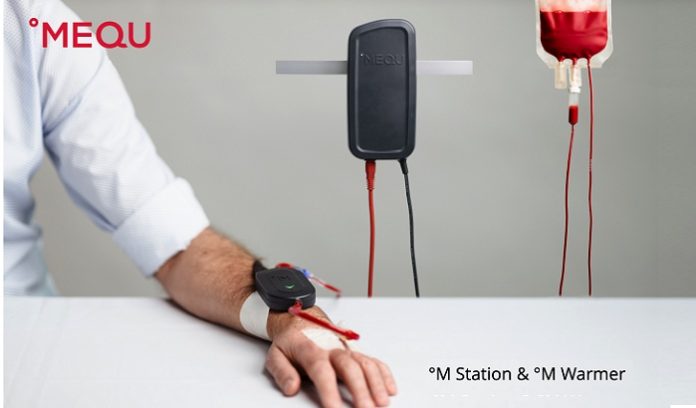
MEQU Launches – M Station – an In-hospital Power Solution for its Blood and IV Fluid Warming Device, M Warmer System

MEQU Launches - M Station - an In-hospital Power Solution for its Blood and IV Fluid Warming Device, M Warmer System

The innovative Danish MedTech company, °MEQU, announced the launch of an in-hospital solution, °M Station, for its blood and IV fluid warming device, °M Warmer System.

°M Warmer System is a portable blood and IV fluid warming device that is globally adopted in the pre-hospital and military sectors. Using a patented warming technology, the °M Warmer is able to warm infusion fluids from cold to body temperature in less than 10 seconds. The AC powered °M Station is an in-hospital power solution for °M Warmer System, which is ideal for use inside the hospital, such as emergency rooms, operating theatres, intensive care units, X-Ray/CT scan, etc.

Related to the launch, CEO & Founder, Ulrik Krogh Andersen said, “our R&D department has done an outstanding job developing a revolutionary new solution for in-hospital transfusions. Similar to our portable solution it is small in size and weight and setting up the system takes less than 30 seconds. Nothing can be assembled in the wrong way, which prevents any connection errors in a stressful situation. This will enable healthcare providers to quickly and safely administer warm fluids to the patient whenever needed – in a hectic trauma situation or as part of routine surgery…

Seamless Transfusions from the Point-of-injury to Inside the Hospital

°M Station allows for continuous infusion of warm blood or fluids. If the patient arrives at a hospital with an °M Warmer attached, it is now possible to seamlessly continue the transfusion inside the hospital. With the addition of the °M Station, the M Warmer solution offers maximum flexibility as transfusions can continue uninterrupted – either as a stationary solution or as a portable solution when moved around inside the hospital.

This ensures seamless transfusions of warm fluids to severely injured patients throughout the entire patient journey from point of injury until the patients no longer need any fluid infusion, which helps reduce the negative effects of severe hemorrhage and hypothermia.

Global Sales Director, Peter Skade adds– “we are happy to finally introduce °M Station to the market as there has already been a great deal of interest from several countries in recent months. We believe that °M Station will show its benefits soon enough as healthcare providers come to experience how easy and flexible the °M Warmer System is to use. Compared to the standard stationary systems, which are known to be somewhat cumbersome and time-consuming to set up and use, the °M Warmer system is so much easier and faster to use – especially in stressful situations. Furthermore, the M Warmer system requires minimal priming volume and is 100% maintenance-free…”

°M Station will be available globally through its established distributorships in the coming week.

Patients, doctors and the pharma industry all win with new digital services

Patients, doctors and the pharma industry all win with new digital services

We’re often told that the healthcare sector lags behind other industries in its uptake of information technology and modern digital services. And nowhere is this more obvious than in the trillion-dollar pharmaceutical industry, despite its well-earned reputation for innovation.

While accelerating the development of new vaccine technologies, COVID-19 has only accentuated the impact of information not freely flowing in healthcare ecosystems. We saw this issue in many countries including the U.S. with COVID-19 test results. As demand for COVID-19 tests soared, wait times to get test results back were hampered by a lack of technology and outdated processes. One bottleneck in the process to get back test results? An over-reliance on fax machines.

Even in countries like Australia, where test results are delivered electronically, acting on those results is usually a manual process. With regular testing critical to the safety of some medications,that can be problematic.

While other industries have moved into the age of technology, big data and real-time information, in many ways the life sciences and healthcare industry have not modernised. This is where our technology comes into the picture.

Built on InterSystems IRIS for Health™, our highly-configurable apps and portals support specialty medicines for patients, caregivers, health care providers (HCPs), nurse support teams, field teams and pharmaceutical companies. We’re proud of our ability to integrate with labs and receive real-time information about patient test results in our solutions.

This critical, real-time access to data can substantially benefit the pharmaceutical industry. For some patients on experimental new medicines, the careful monitoring of test results can mean the difference between detecting an adverse event and treatment success. Real-time information is of vital importance to patients and care teams alike.

Our Chameleon platform provides automated risk management to keep patients safe throughout complex specialty treatments while integrating with labs and other vendors in real time. Plus, it adapts to the unique look of brands, which results in technology that matches pharmaceutical companies’ products.

Key to the platform’s effectiveness is the ability to adapt to the unique workflows and journeys of patients and doctors. By focusing on getting the right information to the right person at the right time, doctors and patients can focus on the most important matters at hand.

In one of our Australian-based programs, we’re working with a pharmaceutical partner to help coordinate thousands of patients for scheduled infusions on specific dates using our technology, a task that normally would be performed by the healthcare team. This function allows the healthcare team to manage many more patients when simple administrative tasks are automated and, instead, they are able to spend time with patients who need their care.

Patients receive reminders about the upcoming infusion appointments and use our patient app to review product information, access educational materials, schedule their next infusion and report any adverse events. All of this patient app data – such as infusion dates and any adverse events that the patient logs – is automatically updated in the HCP portal to keep the care team in sync with the patients and know when a patient receives (or misses) a scheduled infusion.

The result has been a highly successful program that manages thousands of patients who are engaged in their treatment and highly compliant with making their scheduled infusions.

Patients receive care on the timeline needed for the best possible medical outcomes, doctors are kept well-informed of their patients’ progress and pharmaceutical companies see patients adhering to high-need, specialty treatments. It’s the type of solution that wouldn’t be possible without technology and real-time data exchanges.

We think the future of all specialty medicines will include digital companion apps to support patients and help them adhere to complex treatments. These apps will allow more data to be shared in real time and greater communication with the healthcare team to ensure patient safety.

That’s a situation where everyone wins – patients, doctors and the pharma industry.

Author George Hunnewell

George Hunnewell is CEO of RxMx. Over his 30-year career, he has worked at pre-revenue start-ups, high-growth companies and held leadership positions at public companies. He was previously the Chief Operating Officer at Cogstate, a publicly traded specialty contract research organisation, and spent 15 years at Parexel International rising to the level of corporate vice president and executive committee member. At RxMx, Hunnewell is focused on expanding the commercial success of the company in markets around the world.


What to Do Next If Nursing Home Abuse Is Reported

What to Do Next If Nursing Home Abuse Is Reported

When you place an elderly loved one in a nursing home, you reasonably expect them to receive the best possible care. You may hope that not only will their health needs be met, but their safety and psychological needs will be met as well.

However, nursing home abuse is far too common, and there are steps that you can take if you believe that your loved one is in danger.

Recognizing the Signs of Abuse

Some of the most common signs of nursing home abuse are easy to spot. Bedsores, unexplained injuries, matted hair, visible bruises, and drastic weight loss are common signs of abuse.

But other signs are not so easy to pick up on. Your loved one may act fearful when the nursing home staff is in the room. They may be listless, unresponsive, or may look depressed for no apparent reason. They may start to display abnormal behaviors like an objection to being examined (either by you or a staff member). If you recognize these signs, it is time to take action.

My Loved One Was Likely Abused: What’s Next?

By law, the management of the nursing home must investigate any claims of abuse. Inform the management in writing and ask for updates about the progress of the investigation. Talk to your loved one about what may have been happening. This can be challenging because some elderly patients are not able to verbalize the abuse. Others may be afraid that if they talk to you, the staff will retaliate against them.

The first thing you should do if you suspect abuse is to ensure their safety. In some extreme cases, this may mean calling in the authorities, emergency medical care, or removing them from the facility altogether.

Document the abuse. Take photos of injuries, the condition of the patient’s room, and the facility. Communicate only in writing with the management. Know the patient’s rights and the facility’s responsibilities.

Nursing home patients have the right to:

  • Dignity and respect
  • The ability to manage their own money if able
  • The right to be informed of their medical issues or have a designated person informed
  • A home-like environment
  • A reasonable expectation of privacy
  • Freedom from violence and fear
  • A safe and comfortable environment.

How to Spot & Handle Abuse?

Be an active part of the patient’s day-to-day life. Make surprise, unannounced visits and ask to see the facility’s care log. Ask when the person had their last meal or was last administered medication. Send new friends or family members to drop in periodically. This way, the staff won’t know to spruce things up when they see you arrive quickly.

If you don’t get a resolution from management, call the state authority on nursing homes and elder abuse. There are adult protective services agencies tasked with investigating these types of cases and will work quickly to get to the bottom of abuse claims.

Conclusion

Overworked, underpaid and inexperienced staff sometimes take out their frustrations on their patients and cause long-lasting harm or even death. Don’t wait if you suspect abuse. Hire an attorney who is knowledgeable about nursing home abuse.

If your loved one has suffered at the hands of their caregivers, they may be entitled to compensation. An experienced nursing home abuse lawyer will fight to get you money to cover medical bills, the cost of getting into a new facility, or the cost of acquiring alternative care. There is no need for your loved one to suffer in silence.

6 Insanely Common Medical Errors

Hospitals Pursue a New Way Forward in 2021: Top 10 Trends to Watch

When you need medical attention, you reasonably expect doctors and nurses to know what they are doing. Unfortunately, medical errors may occur at any given time since medical mistakes are now the third leading cause of death in the USA, a developed nation.

The following are only some of the most common mistakes medical professionals at a doctor’s office, hospital, or other health care facility can easily make.

1. Prescription Errors

Sometimes, you might need a prescription to make you feel better or to fight off an illness. However, prescription errors are among the most common errors in the world of medical mistakes and can usually be easily prevented with a little attention to detail.

Some of the ways that prescription errors occur include:

  • Writing the wrong prescription
  • Giving the wrong dose
  • Not writing legibly
  • Not paying attention to possible adverse reactions to medications.

There could be issues with mislabeled drug packages, which wouldn’t be the doctor’s fault but could still result in an adverse reaction to the medication given.

When you talk to a doctor or medical professional, you should offer details about any allergies that you may have. If the provider doesn’t pay attention to the details and prescribes a medication that could cause a reaction, this would be an error.

And if the health care professional broke the standard duty of care through his or her negligence or incompetence, they can be slapped with a medical malpractice lawsuit by the injured party.

However, to protect doctors, most states have set in place damages caps for such cases, which is why it is best to talk to an experienced lawyer first, like this Minnesota personal injury attorney, to see if your case is worth pursuing.

2. Preventable Infections

There are many ways that you can get an infection from a medical procedure or while staying in a hospital. If you have open wounds or the doctors or nurses don’t use the proper safety equipment, then it could result in an infection.

Also, hospital-acquired infections are a growing problem as more and more germs have gained antibiotic resistance. Two common examples are methicillin-resistant Staphylococcus aureus and Clostridium difficile. Unfortunately, many patients’ health deteriorates rapidly when contracting a hospital-acquired infection, with some of them ending up being diagnosed with conditions much worse than their initial diagnosis.

3. Botched Surgeries

When you have surgery, the doctor usually marks the correct area on your body so that there are no mistakes. If your doctor fails to do this and operates on the wrong side, limb, or body area in general, then it would be a medical error.

Another common error associated with surgery is removing the wrong organ. Using equipment that isn’t clean is also a common medical mistake, which may result in an infection or serious complication if not corrected.

4. Misdiagnosis, Delayed Diagnosis

After providing all the information about your symptoms, your doctor should be able to put everything together to give you a correct diagnosis or order more tests.

Sometimes, symptoms might overlap and be associated with a few different conditions. However, if your doctor pushes your symptoms aside and gives a wrong diagnosis or doesn’t pay attention to test results, then you are the victim of medical error.

5. Equipment Malfunction

Medical equipment that is used during procedures or during treatments can sometimes malfunction. Not all instances of medical malfunction are caused by the product manufacturer’s negligence.

Medical facilities are required to routinely perform maintenance checks of all of the equipment that is used, and if the facility hasn’t checked the equipment, then they could be held at least partially liable for resulting patients’ injuries.

6. Lax Supervision

When you are in a hospital or medical facility, you need to be supervised. If you are not the patient, then you may expect that your sick family member is supervised in the proper way. Medical errors may also occur if the patient is left alone and he or she gets hurt, or their condition worsens.

A seriously ill patient shouldn’t be left in a hospital bed for long periods of time without someone checking on them as bedsores, and other conditions could develop. When patients are left alone, it’s usually considered neglect and can lead to serious charges if something bad happens to the patient.

Lax supervision and neglect are rampant in nursing homes and assisted living facilities, which can have horrible consequences when paired with other medical mistakes like prescription errors or abuse.

Getinge receives US FDA 510(k) clearance for three products, expanding the Servo ventilator platform

Getinge receives US FDA 510(k) clearance for three products, expanding the Servo ventilator platform

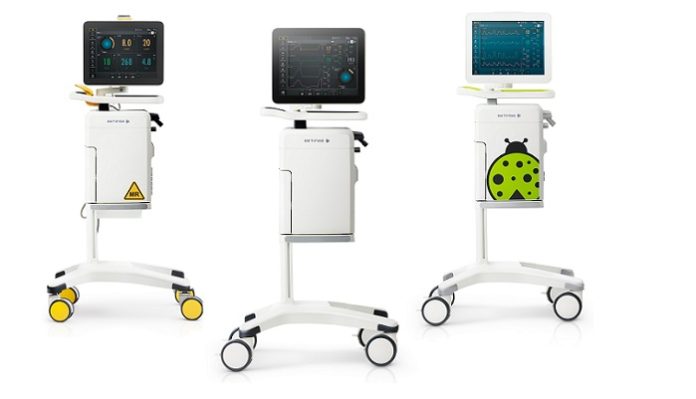
Getinge announces clearance from the US FDA of several new software options for the Servo-u and Servo-n ventilators. In addition to the latest software upgrades, Getinge also received clearance for the new Servo-u MR ventilator for the MRI room.

“The COVID-19 pandemic and the heightened awareness of respiratory health has driven the need for personalized ventilation solutions for critically ill patients. Now more than ever, options for personalized lung protection and personalized weaning solutions are at the forefront of respiratory patient health. Getinge strives to support clinicians and patients by optimizing lung protection and delivering solutions for personalized ventilation,” said Eric Honroth, President, Getinge North America.

With this software upgrade for the Servo-u and Servo-n combined, Getinge adds several new functionalities and options across all patient categories – adult, pediatric and neonatal. Getinge broadens its portfolio of lung-protective tools, including Automatic Stepwise Recruitment maneuver (Auto SRM), a standardized and automated workflow that guides lung recruitment and helps clinicians identify a personalized PEEP that provides the lowest driving pressure, which is a variable strongly associated with patient survival in ARDS1 . Stress index and Transpulmonary pressure monitoring, including key parameters for assessment of lung stress during controlled and spontaneous ventilation, complements the lung protective toolkit, which was designed to optimally divide the cognitive workload between the clinician and the ventilator.

Additionally, the clearance includes Heliox therapy. Heliox is a mixture of helium and oxygen that facilitates laminar flow and minimizes airway pressure due to its low density. This helps reduce the work of breathing (WoB) of patients suffering from obstructive lung diseases.

Getinge also received clearance to introduce the Servo-u MR to the US market, a complement to the Servo Family, expanding Getinge’s platform of ventilators into the MRI room. Designed to guide the ventilator into a safe position, the Servo-u MR includes a magnetic field indicator with visual and audible alerts and an auto-lock handle that locks all four wheels as soon as the clinician releases the ventilator.

“We are seeing a transformation in the way healthcare providers view respiratory health,” said Eric Honroth. “With this clearance, we are excited to be part of driving this transformation, working hand in hand with experts and clinicians.”

Getinge remains committed to innovation in ventilation platforms. With its rich legacy of firsts, Getinge is proud to bring innovative products and solutions to clinicians through this most recent 510k clearance.

The new options and the Servo-u MR ventilator are expected to be available in the U.S. in July 2021.

Avance Clinical Invited to Present “Decentralized Trials – No Going Back” for Oracle Health Sciences Connect

Avance Clinical Invited to Present "Decentralized Trials - No Going Back" for Oracle Health Sciences Connect

The leading Australian CRO for biotechs and Frost & Sullivan Asia-Pacific CRO Market Leadership Award winner Avance Clinical has been invited to present on the future of decentralized clinical trials at the Oracle Health Sciences Connect conference.

Title: Decentralized Trials – No Going Back
Time: 23 April, 2021 – 3.05 pm (Australia/Adelaide ACST).

Avance Clinical CEO Yvonne Lungershausen, shared the company’s insights on the future of Decentralized Clinical Trials (DCTs) and the technology and patient factors that will determine success. Avance Clinical uses the full range of eClincial technologies to support clients wanting DCTs or a site-based approach while still leveraging advance technology including ePro, eSource and eConsent.

“DCTs are fast becoming the new norm and this is an incredible opportunity for the drug development sector as well as the diverse and remote patient populations that will now have access to clinical trials,” said Lungershausen.

“The pandemic has been the catalyst in speeding up the adoption of decentralised clinical trial methods, as people stopped participating in trials and visiting clinics. Trials have stalled putting lives and significant investments at risk.”

Yvonne Lungershausen said there are considerable benefits to DCT’s including:

– Reduce the scheduling and travel burden on patients – providing care from the comfort of the patient’s home.
– Connecting patients to trials on a global scale – patients that were otherwise inaccessible under more traditional trial protocols are now available.

And she said challenges include:

– Missed human-to-human contact and continuity of patient care
– Investigational product distribution to more remote destinations
– Oversight of compliance and study procedures in the patient’s home

The presentation also covers advances in artificial intelligence (AI), machine learning, cloud computing and blood self-collection devices which are all revolutionising the decentralized clinical trial process.

– Wearable devices are demonstrating enormous potential whether worn as a wrist strap or an adhesive patch on the body. AI-embedded capabilities allow these devices to measure a patient’s heart rate or metabolism remotely. Linked to the cloud through secure networks, clinicians can receive and analyse the data real-time.
– Video calling and electronic reminders, can improve patient compliance in trials – prompting participants to take their medication at the right time or to record in their electronic diary development.
– Technologies are developing to allow patient-centric sampling (self-collection of specimens) with devices that require the use of a lancet and finger prick whereas others do not, making clinical trials even more convenient.

Syneos Health Partners with Medable, Expanding Decentralized Solutions to Bring Clinical Trials Closer to the Patient

Syneos Health Partners with Medable, Expanding Decentralized Solutions to Bring Clinical Trials Closer to the Patient

Syneos Health, the only fully integrated biopharmaceutical solutions organization, and Medable, the leading cloud platform for patient-centered drug development, announced a strategic partnership to bring clinical trials closer to the patient. The partnership will deliver new decentralized capabilities to Syneos Health with the aim of increasing clinical trial diversity, while improving patient access and experiences to transform biopharmaceutical product development.

Syneos Health will gain access to Medable’s digital platform that reduces physician burden, simplifies the patient journey, and collects previously difficult to obtain data to speed therapies to patients across the clinical development lifecycle. The collaboration will also deliver a fit-for-purpose decentralized digital solution to Syneos Health customers tailored to the specific attributes and requirements for conducting non-interventional research.

“The demand for decentralized clinical trials has steadily increased as sponsors search for innovative and meaningful ways to drive efficiency, reduce cost and alleviate patient burden,” said Maria Fotiu, Executive Vice President for Decentralized Solutions, Syneos Health. “Our collaboration with Medable will identify opportunities to capture data – real time – to better deliver customized, decentralized solutions. When combined with our Illingworth Research Group mobile research nursing capabilities, we believe we’ll be able to engage more diverse populations and increase access for patients who previously couldn’t participate in clinical trials.”

Decentralized Solutions from Syneos Health combine deep insights, agile technologies and operational excellence to transform clinical trials. Medable’s patient-centered cloud platform is a flexible and modular decentralized clinical trial solution that scales to meet the unique needs of specific therapy areas, indications and protocols. It delivers on-site and at-home access on any web-enabled device utilizing Medable’s foundational TeleVisit, TeleConsent, TeleCOA and remote patient monitoring tools.

“We’re excited to work with Syneos Health to accelerate the shift to patient-centric research,” said Alison Holland, Executive General Manager of Digital and Decentralized Solutions for Medable. “The decentralized model requires industry leaders working closely together across an ecosystem to adopt new tools for decentralized and hybrid studies. Combining Syneos Health’s deep experience with our leading digital platform is a win-win-win for patients, sites and sponsors.”

Medable will also now be part of the Syneos Health Dynamic Assembly® network, an open ecosystem of preferred best-of-breed data and technology collaborators committed to delivering fit-for-purpose solutions designed to strategically address the nuances of each customer engagement.

About Syneos Health

Syneos Health is the only fully integrated biopharmaceutical solutions organization. The Company, including a Contract Research Organization (CRO) and Contract Commercial Organization (CCO), is purpose-built to accelerate customer performance to address modern market realities. We bring together approximately 25,000 clinical and commercial minds with the ability to support customers in more than 110 countries. Together we share insights, use the latest technologies and apply advanced business practices to speed our customers’ delivery of important therapies to patients.

About Medable

Medable is on a mission to get effective therapies to patients faster by transforming clinical drug development with disruptive technologies. The company’s digital platform streamlines design, recruitment, retention and data quality for decentralized trials, replacing siloed systems with integrated digital tools, data and interfaces to accelerate trial execution. Medable connects patients, sites and clinical trial teams to improve patient access, experience, and outcomes. Medable is a privately held, venture-backed company headquartered in Palo Alto, California.

The VA, Samsung and LIVMOR team up on initiative to streamline cardiology care

The VA, Samsung and LIVMOR team up on initiative to streamline cardiology care

The VA tapped tech giant Samsung and health tech company LIVMOR for a remote patient monitoring initiative focused on the cardiology space.

The program, which began in April 2020, was designed to help gather patient data via digital tools, including smartwatches, tablets and phones, as well as help clinicians coordinate and plan care.

“For me, this program has revolutionized the way that we deliver cardiology care, not only in North Texas but nationally from the national VA cardiology office. Prior to this our care was incongruous. Amongst cardiologists there are subspecialties … general cardiology and electrophysiology—all of those providers are cardiologists but we weren’t able to streamline the patient’s care,” Dr. Lori Ellis, Head of Telecardiology and Digital Program Director for the Department of Veterans Affairs, North Texas, told MobiHealthNews. “What this program has allowed us to do in that field is to actually streamline a patient’s care in that field so that all the treating providers are aware of the important physiological parameters this patient is transmitting to us.”

The program was built on Samsung products and used Samsung’s data security tool, Knox, which provides HIPAA-compliant security on the device. From there, LIVMOR was able to imbed its remote monitoring tools and work with the VA and build on specific customizations.

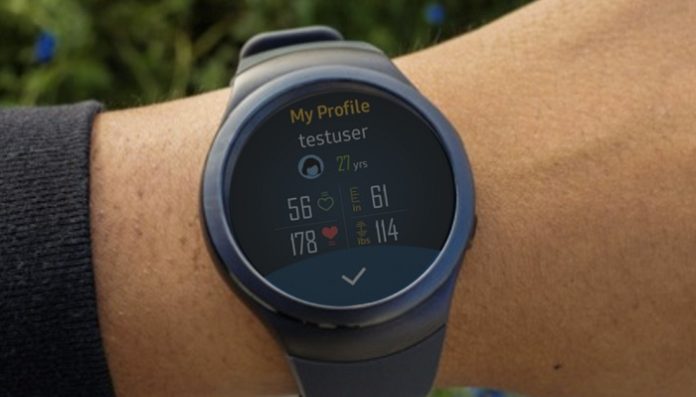
“It’s a comprehensive remote-monitoring system that includes a Samsung wearable and a Samsung tablet—a cellular-enabled tablet that is in [specific] mode and leverages the Knox platform. It also includes other diagnostic peripherals that can be customized depending on the patient’s chronic condition—anything from a blood pressure cuff and weight scale to a glucometer, spirometer or digital stethoscope,” Ken Persen, CEO of LIVMOR, told MobiHealthNews. “Very specifically, we are leveraging the sensors on the Gear S2 device to extract pulse rhythm data and activity, and it’s through that pulse rhythm data that we transmit wirelessly through the tablet and send through the cloud for review by Dr. Ellis and her team and the patients.”

Ellis said the new technology helps make care easier for the patient. For example, if a patient saw a general cardiologist and an arrhythmia was detected, instead of referring them to an electrophysiologist and leaving the onus of seeking care up to the patient, the clinician can help set up that connection. Ellis also said she saw more patient engagement since the program kicked off.

“We’ve seen something happen that I’ve never seen in 25 years of practice, and that is patients that want to participate in their own health and they want to comply with the treatment plan that they helped develop. As a provider we struggle just to get a patient to take medications you’d like them to,” Ellis said. “So, you can imagine the last year of this. Program 600 plus patients have transmitted over a million pieces of data and not at the behest of anyone. I think that speaks to the fact the patients believe in this program and the patients see the value in this program and it’s what matters to them. So, to me, that is what sets this device apart from all others that we have had access to before in the VA.”

As remote patient monitoring becomes more commonplace, the Samsung team is looking to further its foothold in the space.

“As we look at these different capabilities, [what] we are particularly excited about is we are leveraging a platform that is readily available and accessible to these patients,” Reg Jones, Senior Director, Head of Public Sector for Samsung Electronics America, told MobiHealthNews. “Our smartwatches, they are smartwatches. They look and feel like a smartwatch, which means they are alleviated from otherwise bulky or inconvenient medical devices. So really packing capability into something that is a bit more consumer-friendly, but at the end of the day backed by a security platform is really quite a powerful combination.”

The VA has been an early adopter of digital tools. In fact, the VA has been offering patient and caregiver-facing apps since 2013. It has a history of working with big tech. For example, in 2019 the VA teamed up with Apple to roll out Apple Health Records to more than 9 million veterans in the US and surrounding territories. The health system has also worked with Microsoft in an effort to use the former’s adaptive video game tools to support rehabilitation therapies.

Samsung has also been in the digital health space for some time. In January the company announced that its smartwatch ECG blood pressure measurement will expand to 31 countries. The company landed FDA clearance for its ECG back in August of 2020.


Kaiku Health to develop digital patient monitoring for melanoma with leading global medicines company

Kaiku Health to develop digital patient monitoring for melanoma with leading global medicines company

Kaiku Health, the developer of digital health intervention platform in oncology, announced it will develop digital patient monitoring and management for melanoma patients in collaboration with Novartis, a leading global medicines company.

Melanoma is less common than other types of skin cancer, but it can more easily spread to other parts of the body. Approximately half of the patients have BRAF V600-positive melanoma and may be eligible for BRAF and MEK inhibitor combination therapy for their cancer. The combination treatment is an oral targeted therapy that patients typically take outside the cancer centers. A research published at ESMO Virtual Congress in 2020 [1] indicated that over 90% of centers that have utilized telemedicine with patients receiving oral targeted therapies during the COVID-19 pandemic are also intending to do so in the future.

Kaiku Health and Novartis are now aiming to further improve the remote monitoring and support of these patients with the joint development of a therapy-specific module for patients receiving BRAF/MEK combination therapies for melanoma. The developed module is designed to track symptoms and to provide personalized symptom self-management guidance and patient education. Kaiku Health platform will also automatically notify the care team, if patients’ symptoms get worse during the treatment course. Patients can use Kaiku Health either as the mobile application, designed for their smartphones and tablets, or the web browser-based application on their computers.

The intent of the collaboration is also to generate novel insights on patient outcomes in a real-world setting and the goal is to develop more advanced Machine Learning based algorithms for personalizing the symptom management of patients receiving BRAF and MEK combination therapies.

“We are excited to collaborate with Novartis to develop together more personalized symptom management and patient support for melanoma patients. The introduction of several oral targeted therapies has resulted in growing need for improved ways for monitoring patients remotely during their treatments, and we are excited to work closely with Novartis and several leading cancer centers in further improving the digital patient monitoring and management of melanoma patients”, says Lauri Sippola, the CEO of Kaiku Health.

In the initial phase of the collaboration, the goal is to pilot the co-created module in cancer centers located in Germany, Netherlands, Switzerland and Italy starting in May 2021.


Highmark, ChristianaCare launch value-based care, digital health joint venture

India takes first step towards universal health coverage with Digital Health Mission launch

The joint company, which has yet to be named, will take advantage of the strengths of both companies to drive toward more accessible and affordable care. Karen Hanlon, chief operating officer at Highmark Health, said on a call with reporters Wednesday that the venture aims to disrupt the traditional dynamic between payers and providers for greater collaboration.

“For decades, healthcare in the United States has been a tug of war between payers and providers,” Hanlon said. They’re starting the work off in Delaware, where both partners have a strong base, but are intending to scale up the solutions they develop.

Two key “engines” power the venture’s effort to launch new care models, according to the announcement. The partners will create a Solution Design Center that will build solutions that are data- and technology-driven to address outcomes, efficiency and patient experience.

The second component is ChristianaCare’s Center for Virtual Health, which builds, tests and deploys virtual care solutions to primary and specialty care providers.

RELATED: Highmark Health inks 6-year strategic partnership with Google Cloud to tap AI, analytics technologies

Janice Nevin, M.D., CEO of ChristianaCare, said on the call that an example of the venture at work would be in the care of a patient with hypertension, a disease that requires long-term management. With the data and technology tools the joint venture is aiming to make available, the care team can have round-the-clock access to data that can help improve that patient’s health.

With those data, they can then intervene sooner when risks crop up, and the tech platforms enable multiple methods of communication with the patient, including text message or video visits, to triage concerns, Nevin said.

Executives from both organizations said the joint venture is built on the existing, long-term relationship between the two partners in Delaware. It will be governed by a board with representatives from both organizations, and the two partners have entered a 10-year joint venture arrangement.

And while both organizations say they are in this partnership for the long haul, they stressed that the venture does not represent a merger or exclusivity agreement between Highmark and ChristianaCare.

“For decades, we’ve worked within the confines of a healthcare system that simply isn’t working,” Nevin told reporters. “What we’re announcing today represents a seismic shift.”


Translate »