










Close
Digital Health & Ai Innovation summit 2026
Medical Taiwan 2026

Philips partners with Orbita to develop conversational voice and chatbot applications to complement its telehealth solutions

Philips partners with Orbita to develop conversational voice and chatbot applications to complement its telehealth solutions

Royal Philips, a global leader in health technology, and Orbita Inc., an innovative provider of conversational artificial intelligence (AI) solutions for healthcare, announced a partnership agreement to co-create next-generation conversational virtual assistants for Philips’ consumer health and patient support applications. The joint development agreement will see Orbita’s technology rolled out to digital health applications that enhance the patient experience and increase efficiency throughout the health continuum.

Orbita, a U.S.-based company, provides healthcare, life-science, and medical technology organizations with HIPAA-compliant chatbots and voice assistants for ‘digital front door’ applications, remote and in-facility patient support, pre- and post-visit outreach, and other healthcare applications. Its conversational platform allows developers and non-technical staff to quickly build and easily manage cloud-based virtual assistants that are seamlessly deployable to smart speakers, web and mobile chat apps, short message service (SMS) and interactive voice response (IVR) services, as well as custom devices.

“With the acceleration in the adoption of telehealth during the COVID-19 pandemic, AI-enabled voice services, virtual assistants and chatbots are already playing an enabling role in driving 24/7 access to healthcare, enhancing patient engagement, and improving clinical efficiency,” said Henk van Houten, Chief Technology Officer and Head of Philips Research. “Orbita is a not only a leader and innovator in voice and chat-powered virtual assistants that deliver the human touch needed in healthcare, but also a company that can keep up with the rapid pace of telehealth innovation that Philips is determined to pursue.”

“We are extremely excited to be expanding our partnership with Philips, one of the largest and most innovative digital health technology companies in the world,” said Nathan Treloar, President and Chief Operating Officer at Orbita. “Philips’ presence in the industry means they are at the forefront of healthcare’s most demanding challenges, where the greatest opportunities exist to apply the unique capabilities of Orbita’s products and solutions.”

Philips believes that AI has the potential to improve people’s lives across the health continuum – from healthy living and prevention to diagnosis, treatment, and home care – provided it is applied with a deep understanding of people’s lives, and the clinical and operational context in which healthcare providers operate. Its partnership with Orbita, a company that has a proven track record of successfully applying AI-enabled conversational virtual assistants in healthcare applications, is part of Philips’ overall strategy to leverage cutting-edge AI wherever it can help deliver on the Quadruple Aim of healthcare. Examples where Philips is already using AI can be found in its personal health, diagnosis and treatment, and connected care offerings. Examples of Orbita’s solutions include patient acquisition and engagement portals, virtual bedside assistants, and virtual care continuity assistants.

Philips owns a minority interest in Orbita through its Health Technology Venture Fund since May of 2020. Philips Ventures manages a business-agnostic digital health fund that invests in, and partners with, promising healthcare informatics and health technology start-up companies to accelerate their growth and extend their reach. Active partnerships, such as the one announced today with Orbita, are an essential part of Philips’ goal to develop integrated solutions that enable healthcare providers to deliver on the Quadruple Aim – better health outcomes, better patient and staff experiences, and lower cost of care.

About Royal Philips

Royal Philips is a leading health technology company focused on improving people’s health and well-being, and enabling better outcomes across the health continuum – from healthy living and prevention, to diagnosis, treatment and home care. Philips leverages advanced technology and deep clinical and consumer insights to deliver integrated solutions. Headquartered in the Netherlands, the company is a leader in diagnostic imaging, image-guided therapy, patient monitoring and health informatics, as well as in consumer health and home care. Philips generated 2020 sales of EUR 19.5 billion and employs approximately 82,000 employees with sales and services in more than 100 countries.

About Orbita Inc.

Orbita’s award-winning, HIPAA-compliant conversational AI platform powers voice and chat solutions for healthcare and life sciences organizations that improve patient engagement, increase clinical efficiency, and improve outcomes. Customers include innovative organizations like Mass General Brigham, Mayo Clinic, Amwell, Yale New Haven Hospital, Cancer Treatment Centers of America, University of Chicago Medicine, and a portfolio of pharmaceutical clients. Partners include Cognizant, Deloitte, Pariveda, and ServiceNow.

 

ADT Security Australia Launches Essence SmartCare Solution for Senior Care

Five Tips for Seniors Returning Home After a Hospital Stay

Essence SmartCare, part of global IoT solutions provider Essence Group, announced that ADT Security Australia, a leading provider of security monitoring services, has selected its Care@Home™ Enhanced Telecare Services Platform to expand ADT’s Health and Wellness services offering in Australia. ADT Security Australia is part of Johnson Controls, the global leader in smart, healthy and sustainable buildings.

This partnership was facilitated in conjunction with HSC Technology Group. It will enable ADT to enhance its senior care offerings in Australia by providing a new range of assistive services through Essence’s Care@Home solution, under the banner of ADT Home Assure. The rollout of Essence’s technologies will allow ADT Security Australia to offer breakthrough telecare services to seniors using state of the art technology and utilizing the LTE network.

This announcement comes as the senior population is set to grow rapidly in Australia with the proportion of seniors who are over the age of 75 to grow from 33% to 55% in the next 30 years, and an annual revenue for home-based care and services of around $4.5 billion AUD (source).

“We are honored to be joining forces with ADT Security Australia, one of the largest security and safety solutions providers, to enable them to provide the best care and protection to Australian seniors,” said Barak Katz, General Manager for Essence SmartCare. “Our unified telehealth and care platform enables monitoring at any level and through any type of caring device for a wide range of health conditions, both at home or on-the-go – all through one connected Care@Home smart platform.”

Essence SmartCare’s award-winning Care@Home platform is an aging-in-place product suite, providing seamless health monitoring solutions that enable seniors to live independent lives while providing their families with peace of mind. Leveraging a variety of advanced technologies, including deep AI capabilities, to ensure the safety of seniors, the platform comprises an integrated suite of services, including continuous monitoring of daily activities, advanced fall detection, and voice-activated alerts to facilitate real-time communication with caregivers and emergency services providers.

“At ADT Asia Pacific, our mission is to protect the lives of our customers and their assets across the region by providing the highest quality solutions and services leveraging best in class partners,” said David Kirubi, Vice President, ADT Asia Pacific. “Essence’s Care@Home solution presents a substantive and unique industry value proposition in enabling this mission, for the benefit of our customers while ensuring peace of mind for their loved ones and carers.”

About Essence SmartCare

Essence SmartCare, part of the Essence Group, develops pioneering Health & Care platforms for market-leading healthcare and senior care providers, enabling smart preventive care and emergency response so seniors can live life to the fullest – with total peace of mind. Partnering with Essence SmartCare helps position companies as progressive, forward-thinking and in touch with the need to enable elderly and vulnerable people to lead more independent and safer lives.

About Johnson Controls:

At Johnson Controls we transform the environments where people live, work, learn and play. As the global leader in smart, healthy and sustainable buildings, our mission is to reimagine the performance of buildings to serve people, places and the planet.

With a history of more than 135 years of innovation, Johnson Controls delivers the blueprint of the future for industries such as healthcare, schools, data centers, airports, stadiums, manufacturing and beyond through its comprehensive digital offering OpenBlue. With a global team of 100,000 experts in more than 150 countries, Johnson Controls offers the world’s largest portfolio of building technology, software as well as service solutions with some of the most trusted names in the industry.

Aurora Spine Receives FDA Clearance for Its Proprietary APOLLO Anterior Cervical Plate

Aurora Spine Receives FDA Clearance for Its Proprietary APOLLO Anterior Cervical Plate

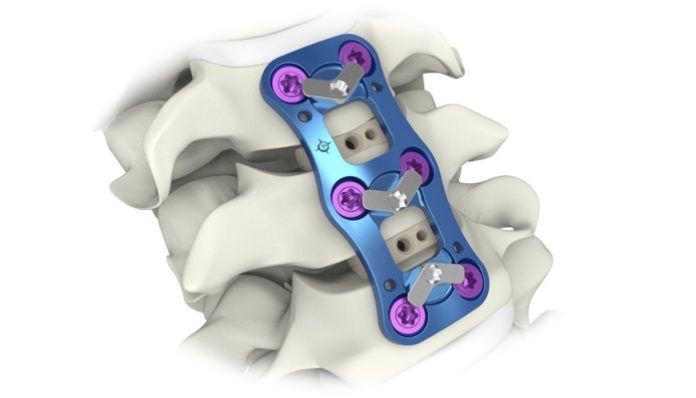
Aurora Spine Corporation , a designer and manufacturer of innovative medical devices that improve spinal surgery outcomes, announced today that it has received U.S. FDA 510(k) clearance for its proprietary APOLLO Anterior Cervical Plate (ACP) system, featuring a sleek 1.9mm design, with Hyper-Angulation™ variability in the Cephalad-Caudal screw angulation of 32° – Freedom to Angulate™.

The new ACP system challenges the status quo of cervical spine technology. It is designed to help reduce common postoperative complications, such as dysphagia, malalignment, and adjacent level ossification, by enabling surgeons to customize treatment to patient needs versus a traditional one-size-fits-all approach, and consists of:

  • Freedom to Angulate, including Hyper-Angulation™ screw variability, to optimized performance for each surgical level to support construct stability.
  • A wide array of implant length options to match a variety of patient anatomies and to facilitate maximizing the distance from the adjacent levels; and
  • A range of advanced screw offerings with fixed and variable angles to enable better screw placement and locking accuracy.
  • APOLLO™ is part the DEXA™ family of products: positioned to reshape the market through patent focused innovation and address the next advancement in spine surgery – DEXA Interbody Technology.

“There are an estimated 180,000 cervical fusion procedures performed in the United States each year to relieve compression on the spinal cord or nerve roots. Receiving FDA 510(k) clearance for the APOLLO™ (ACP) system reflects Aurora Spine’s commitment to deliver innovative, modern technology for the anterior cervical spine and to support positive clinical outcomes,” said Trent Northcutt, President and CEO, at Aurora Spine. “The launch of APOLLO™ (ACP) is key to our long-term cervical implant strategy and represents a significant opportunity for growth, as cervical spine procedures comprise an approximately $2.6 billion segment of the global spine market.”

Mr. Northcutt added, “This approval is an important piece to the puzzle for advancing Aurora Spine’s key initiative of bringing more proprietary-based products to the marketplace and decreasing our reliance on third-party products. Sales of cervical plates in fiscal 2019 represented approximately 10% of revenues for Aurora and the APOLLO plate will enable Aurora to convert another portion of the company’s revenue base into a proprietary product and allow us to capture higher margins. This new product will also support sales of our TiNANO™ cervical cages and enable us to develop additional products around our DEXA™ patent, which matches implants to a patient’s bone density. This approval is a great step for Aurora in fiscal 2021 and we are hopeful to deliver several new key products throughout the year.”

About Aurora Spine

Aurora Spine is focused on bringing new solutions to the spinal implant and pain management markets through a series of innovative, minimally invasive, regenerative spinal implant technologies.

Neither TSX Venture Exchange nor its Regulation Services Provider (as that term is defined in the policies of the TSX Venture Exchange) accepts responsibility for the adequacy or accuracy of this release.

Numares announces FDA Submission of AXINON System, a NMR platform for metabolomics-based, AI-driven Diagnostics

Numares announces FDA Submission of AXINON System, a NMR platform for metabolomics-based, AI-driven Diagnostics

Leading NMR diagnostics company numares AG announced that the company made a 510(k) submission to the U.S. FDA for its AXINON® IVD System, a NMR-platform for AI-driven, metabolomics-based diagnostics. If cleared, AXINON® would become the first NMR-based clinical laboratory system using AI-evaluated metabolic data. Several multi-marker assays for AXINON® will cover numerous unmet medical needs, in order to prevent, diagnose and treat disease.

The clearance of AXINON® would bring a novel diagnostic approach to clinical laboratories, the combination of several metabolic biomarkers, so-called metabolite constellations, analyzed by advanced nuclear magnetic resonance (NMR) technology and evaluated by numares’ proprietary, AI-driven AXINON® diagnostic software.

“This U.S. regulatory filing for its diagnostics platform is an important milestone for numares,” said Winton Gibbons, President – US and co-Chief Executive Officer of numares. “After entering into collaborations on joint diagnostics development with analytical instrumentation and solution provider Bruker Corporation in January 2021, and with Mayo Clinic Laboratories in 2019, this FDA submission is the first step in our common endeavor to bring NMR diagnostics into routine clinical use, and make metabolomics-based diagnostics accessible to the patients.”

numares is currently developing multi-marker algorithms for several diagnostic tests on the AXINON® IVD System. These include AXINON® GFRNMR to reliably assess kidney function by improved determination of glomerular filtration rate (GFR). numares expects to submit this test to the FDA also in the first half 2021. The third assay AXINON® renalTX-SCORE® is intended to reliably identify early kidney rejection in post-transplant surveillance, and be submitted to the FDA in 2022. Further multi-marker tests are in development, e.g., for liver disease, cancer detection, and multiple sclerosis.

Dr. Maulik Shah, numares’ Medical Director comments: “AXINON® provides clinical laboratories with a powerful technology that leverages the information-rich metabolome with artificial intelligence to give healthcare professionals new insights into disease diagnosis and management for improved patient outcomes. At the same time, automation capabilities, excellent precision, easy operability will allow easy adaption of the FDA-cleared system by clinical laboratories and will make AXINON® an indispensable routine diagnostic tool in precision medicine.”

“The 510(k) submission of our AXINON® System is an important step and prerequisite to further strengthen commercialization of numares’ products in the United States”, concludes Dr. Volker Pfahlert, co-CEO of numares and chairman of the executive board. “Metabolic disorders are a rapidly increasing problem and major challenge to today’s healthcare systems. Patients will benefit from our approach to consider the patient’s metabolome with sophisticated algorithms. Once cleared by the FDA, we believe AXINON® has the potential to meaningfully improve health outcomes and quality of life for millions of patients.”

The AXINON® System consists of AI-based AXINON® Software, ready-to-use AXINON® kits, and an advanced NMR technology, refined by numares’ proprietary Magnetic Group SignalingTM to ensure highly standardized and automated processing of serum or urine samples in high-throughput.

Rapid Medical Receives FDA Clearance for the First Adjustable Stent Retriever for Use in Ischemic Stroke Treatment

Rapid Medical Receives FDA Clearance for the First Adjustable Stent Retriever for Use in Ischemic Stroke Treatment

Rapid Medical, developer of responsive, adjustable neurovascular devices, announces the FDA clearance of its TIGERTRIEVER™ revascularization device for use in the treatment of ischemic stroke. TIGERTRIEVER is the first stent retriever to offer intelligent control, enabling neuro interventionalists to better remove blood clots and restore blood flow the brain following an ischemic event—a condition that devastates 800,000 Americans annually. Already approved in Europe, over 5,000 patients have been treated with TIGERTRIEVER.

Ronen Eckhouse, Rapid Medical Co-founder and CEO states, “The FDA clearance of TIGERTRIEVER is a significant milestone in the development and growth of Rapid’s global business. It is a great testament to the advantages of our proprietary 3D braiding technology–the platform for our portfolio of remotely adjustable neurovascular devices, including the Comaneci and Columbus products.”

Existing stent retrievers are non-adjustable, passive devices, delivered to the occlusion minimally invasively through the vasculature. When unconfined, they slowly expand into the blood clot. The blockage is hopefully captured and removed as the device is retrieved. Though currently recognized as the gold standard in treating large vessel ischemic stroke, traditional stent retrievers have significant limitations. They cannot be adjusted for patient variability and fail in about 30% of revascularization procedures.

TIGERTRIEVER provides physicians with intelligent control during thrombectomy procedures. With full device visibility and adjustability, physicians adapt their approach to visual and tactile feedback as needed. The benefit of this tailored approach to ischemic stroke patients was proven in the recently published TIGER Trial.

The TIGER Trial is a 160-patient pivotal trial to support FDA clearance, performed at 16 US Stroke Centers and 1 Israeli hospital. The study documents TIGERTRIEVER’s superiority over conventional stent retrievers, achieving a statistically significant improvement in the ability to restore blood flow to the brain and excellent comparable safety metrics. The trial also reveals the lowest-ever rate of clot fragmentation, suggesting that TIGERTREIVER’s control may provide better retention of the entire clot and minimize the potential for additional strokes caused by embolic particles.

“In the TIGER Trial, we saw an 11-point improvement in revascularization with TIGERTRIEVER over the data from recent stent retriever trials. This may improve outcomes for 1 in 10 stroke patients, a major leap from previous devices,” stated Dr. Rishi Gupta, national co-principal investigator of the TIGER Trial, vascular neurologist and Director of Neurocritical Care at WellStar Health System in Marietta, GA. “I have more control over the clot when I need it,” added Dr. Gupta.

TIGERTRIEVER is available in the USA in 21 mm and 17 mm sizes, applicable for a wide range large vessel occlusions.

About Rapid Medical

Rapid Medical develops the premier responsive interventional devices for neurovascular diseases such as ischemic and hemorrhagic stroke. Utilizing novel manufacturing techniques, Rapid Medical’s products are remotely adjustable and fully visible. This enables physicians to respond in real-time to the intravascular environment and have greater control over procedural outcomes. TIGERTRIEVER™, COMANECI™ and COLUMBUS™/DRIVEWIRE are CE marked. COMANECI™ and DRIVEWIRE are also FDA approved.

Azalea Health Expands COVID-19 Essentials Pack to Support Vaccination for Community Healthcare Providers

Azalea Health Expands COVID-19 Essentials Pack to Support Vaccination for Community Healthcare Providers

Azalea Health Innovations, Inc. (Azalea), a leading provider of cloud-based patient management and health IT solutions, announced an expansion to their COVID-19 Essentials Pack that includes new features to track vaccinations and seamlessly report them to state agencies. The interoperable platform can also be easily integrated with patient engagement solutions to support vaccination outreach. As new variants raise the stakes for vaccination, the EHR update enables real-time immunization reporting and more efficient vaccine distribution, while relieving the administrative burden on overwhelmed clinicians.

The new features in the COVID-19 Essentials Pack make it easy for community health providers to track their vaccine inventory and add patients’ vaccination status to their medical history. Azalea’s interoperable solution means vaccination reports can automatically be sent to state registries if providers choose to, enabling public health officials to allocate vaccines more effectively. The Essentials Pack previously updated the EHR with COVID-19 diagnosis codes to add to patients’ medical history, COVID-19 lab codes for billing, and a COVID-19 assessment questionnaire module for syndromic surveillance that can be plugged into Azalea’s customizable EHR workflows.

“Like many of us, healthcare providers have endured great hardship in the last year, and we’re proud to help them vaccinate their patients quickly and bring this pandemic to an end,” said Baha Zeidan, CEO and co-founder of Azalea. “The human and financial toll of the pandemic has been dire for many hospitals, particularly smaller hospitals in underserved communities. We cannot allow administrative hurdles to slow down the vaccination process and delay healthcare’s recovery from the pandemic.

With the update to the COVID-19 Essentials Pack, providers can filter their patient population for vulnerable groups, such as the elderly and those with chronic conditions, and automate vaccination outreach to these patients through the patient portal broadcast messaging feature. Providers can also send paperwork through the patient portal to minimize in-person contact and administrative work. Azalea’s EHR is fully interoperable with the SMART on FHIR API standard, so it’s easy to integrate third-party patient engagement apps to support outreach efforts as well.

Azalea has been committed to helping community healthcare providers weather the pandemic since the beginning. Within hours of the National Emergency Declaration, Azalea announced that it would provide a year of free telehealth services for EHR customers. Azalea’s platform has also helped hospitals like DeWitt Hospital connect to health information exchanges, track COVID-19 testing, recover lost revenue, and maintain continuity of care through the ongoing crisis.

About Azalea Health Innovations, Inc.:

Azalea is changing the way health IT platforms connect community-based healthcare providers and patients across the care continuum. Offering a 100% cloud-based, interoperable solution, Azalea delivers electronic health records, revenue cycle management, and a fully integrated telehealth solution designed for rural, community and urban practices and hospitals, especially those focused on underserved populations. Quick to deploy and intuitive to use, Azalea solutions ensure better care coordination and communication, and the “one patient, one record” approach provides care teams the agility to achieve better outcomes. The Azalea platform also delivers tools and resources to help providers meet their Meaningful Use requirements, and informs their strategies to navigate accountable care and alternative payment models.

Creative Medical Technology to Launch Virtual Physician Focused on Telehealth Solutions for Regenerative Medicine

Creative Medical Technology Holdings, Inc., a leading commercial stage biotechnology company focused on a regenerative approach to Immunotherapy, Urology, Neurology and Orthopedics, today announced its intent to launch Virtual Physician™ focused on telehealth solutions for regenerative medicine this summer.

The company will initially utilize the platform to educate, recruit and retain patients for their already commercialized proprietary procedures in partnership with their national network of providers:

As additional products are commercialized, (i.e. StemSpine® – Regenerative Stem Cell Procedure for Treatment of Degenerative Disc Disease), the platform will expand to include these products.

Furthermore, the company plans to build out Virtual Physician™ to include additional products outside of their proprietary procedures focused on regenerative medicine. “While our primary interest is in supporting our providers and to educate, recruit and retain patients for our proprietary procedures through this innovative platform, we are also aware of the power of telehealth to accelerate acceptance for regenerative medicine more broadly”, said Timothy Warbington, President and CEO of Creative Medical Technology Holdings Inc. “While several telehealth companies have emerged (i.e. Teladoc with market cap of $29B; HIMS & HERS Health with market cap of $2.5B), none address this area of breakthrough medicine. As a company at the forefront of this cutting-edge industry, we see it as our responsibility to drive broad adoption.

Virtual Physician creates three unique opportunities to drive shareholder value:

  • Management Service Organization : Charging a fee per qualified patient to providers – conversations with existing providers validates this as highly valuable
  • Royalty for promotion of products from external partners: As the platform grows in popularity, company can charge a fee from other manufacturers for featuring their products
  • Direct sales of ancillary products to consumers on platform: Become a one-stop shop for our patients by curating and consolidating additional products to improve underlying medical conditions

About Creative Medical Technology Holdings

Creative Medical Technology Holdings, Inc. is a commercial stage biotechnology company specializing in regenerative medicine-stem cell technology in the fields of immunotherapy, urology, neurology and orthopedics and is listed on the OTC under the ticker symbol CELZ.

Omnicell set to showcase latest solutions at DUPHAT 2021

Omnicell Inc, a leading provider of medication and supply management solutions and adherence tools for healthcare systems and pharmacies, will unveil its latest robotic dispensing system – Medimat – to the Middle East pharmaceutical industry at this year’s DUPHAT Conference and Exhibition (5-7 April 2021), DWTC, Dubai.

The next generation Medimat is the latest enhancement to Omnicell’s portfolio of technologies for central pharmacy workflows, helping to dramatically improve all aspects of the dispensing process. By simplifying the dispensing process and minimising the number of human interactions in the pharmacy workflow, Medimat will further reduce the potential for errors.

For pharmacists in particular, a lack of inventory precision and control can result in large quantities of expired stock and significant monetary losses for hospitals. Smarter and safer medication management technology is key to reducing the burden on healthcare teams, ensuring they can provide the right medication, at the right dose, at the right time.

“Automation has become an integral part of any healthcare setting and we are committed to the continual development of our technologies in order to support the vital process of medication and supply management,” said Sara Dalmasso, International Vice President and General Manager for Omnicell International. “We are thrilled to be a part of such a well-respected and dedicated platform as DUPHAT. The event will provide an outstanding opportunity to introduce Medimat to healthcare professionals in the region, as well as showcase Omnicell’s other industry-leading solutions.

Medimat will support the healthcare industry by improving efficiency, driving savings and freeing up staff from administrative and logistical tasks, such as unpacking medication, stock management and searching for medication. Crucially, it will enable pharmacists to spend more time on clinical work and building patient relationships.”

Additional benefits of Medimat include:

  • Pharmacists will know where the drug is within the robot and what quantities are available.
  • Ability to track slow-moving items and eliminate wasted or out-of-date stock.
  • Ability to generate a real time report on stock usage, so manual stock counts are no longer needed, saving valuable time.
  • Highly effective scan station means inputting of medication supports safety.
  • Direct mode option enables users to have medication available for immediate dispensing.
  • Speed of the robot will allow for more prescriptions to be processed with a higher level of accuracy – input speed of up to 750 packs per hour. *

Omnicell will also be showcasing its range of point of care solutions at this year’s event including Omnicell XT Automated Dispensing Cabinets for medication management, RFID Cabinet for hospital inventory as well as our new software solutions SupplyX which tracks all inventory moving through healthcare settings while providing real time data insights.

Omnicell technology has been supporting healthcare providers in the Middle East for 17 years, including King Faisal Specialist Hospital (KSA), National Guard Health Affairs (KSA) and Dubai Health Authority (UAE). The Company’s proven and streamlined range of solutions and services are designed to reduce medication dispensing errors, improve patient safety, drive efficiency and allow healthcare professionals to spend more time on face-to-face patient care.

About Omnicell
Since 1992, Omnicell has been committed to transforming the pharmacy care delivery model to dramatically improve outcomes and lower costs. Through the vision of the autonomous pharmacy, a combination of automation, intelligence, and technology-enabled services, powered by a cloud data platform, Omnicell supports more efficient ways to manage medications across all care settings. Over 7,000 facilities worldwide use Omnicell automation and analytics solutions to help increase operational efficiency, reduce medication errors, deliver actionable intelligence, and improve patient safety. More than 50,000 institutional and retail pharmacies across North America and the United Kingdom leverage Omnicell's innovative medication adherence and population health solutions to improve patient engagement and adherence to prescriptions, helping to reduce costly hospital readmissions.

About DUPHAT

Dubai International Pharmaceuticals & Technologies Conference and Exhibition (DUPHAT) takes place from 5-7 April 2021 at the DWTC, Dubai. Established in 1995, DUPHAT has quickly established itself as the unique pharma event for the Middle East and North Africa markets with some of the top 100 global pharma companies branding it as the ‘must-attend’ event for the pharmaceutical industry in the region. It endeavours to provide a complete solution to the pharma industry, from manufacture to supply to the end consumer.

Useful Tips for Hiring a Caregiver

Hiring a Caregiver

A caregiver is needed for a variety of purposes – not only in families but also elsewhere such as at the scene of natural calamities. This is the reason we have different categories of caregivers who are well-versed in giving care under specific situations. For the purpose of assistance of people with health conditions, there are health caregivers who take care of the entire routine of the concerned person related to health such as eating, exercising, and much more.

Here’s What You Should Do To Find The Ideal Caregiver

Since a lot depends on the caregivers in such cases, you must know how to choose the right one for you. For an elderly person with a chronic disease, it is important to go with a medical caregiver who has experience because at every point you want to be sure that you are doing the right thing, taking the right medications, and following the correct routine. The professionals behind Freedomcare point out that a relative, or a friend can serve as a caregiver. So, how do you find a caregiver that is best for you? Well, let us figure it out with some useful tips:

Access Your Needs

The first thing that you need to do is to evaluate the help that you require. Is it health care, personal care, or household care? You need will define what kind of caregiver will be right for you. Make a list and put down everything you need assistance with. At the end of it, you will have a clear idea of all that you need.

Draft A Job Description

Well, you can go the traditional method too in which you would ask your family members and friends to find a caregiver. Not to mention, it is going to take a lot of time. However, if you want to get the ideal caregiver as soon as possible, you must ideally roll out a job description. Once you make a job description, you can expect to get applications immediately. What is implied, you will have many options to choose from.

Interview The Applicants

If you want you can do it yourself, or you can get somebody you trust to interview the applicants. Interviewing is the most important step that allows you to know the applicants in person. You can see who fits you and who does not. With a set of specific questions, you can figure if the applicant is capable of handling areas of your life that you need help with.

Check References

You know that a lot is going to depend on your caregiver, hence you want somebody who can be trusted and is dependable. Speaking with people who have given references will be very helpful in getting a better idea about your potential caregiver. You should not miss this step out.

Finding a caregiver is certainly not very difficult. But getting the high one may be a struggle for many. But there are ways you can make sure the one who is going to be with you is dependable, trustworthy, and hard-working. Follow the above-mentioned methods and you can expect to get a good caregiver.

Should COVID-19 Be Covered by Workers’ Comp?

Should COVID-19 Be Covered by Workers' Comp

The response for the COVID-19 pandemic has been far from a unitary one. States took very different approaches to deal with the ongoing state of emergency. Policymakers, in particular, are faced with the challenge of integrating relief packages in the existing legislative landscape.

Including COVID-19 in the workers’ comp coverage is a complex issue for two main reasons: 1) it is an infectious disease, and 2) it is not categorized as an occupational disease. The discussion about whether or not it should become part of the compensation package is hindered by the (still) little available data on the matter and the ongoing strain on governments and officials, not to mention the healthcare system.

The main possible benefits include financial support for workers with a modest income, while the biggest concerns revolve around the cost of such a legislative shift. The cost to society is also considered.

A Few Words About Workers’ Compensation

Workers’ compensation was designed to offer a set of benefits to both employer and employee. These benefits come into play when an employee suffers a work-related injury or illness. The victim is reimbursed for medical bills that relate to the injury or illness in question. Furthermore, lost wages are also covered. These payments offer a financial security blanket that can significantly ease the impact of a potentially traumatic event.

Workers’ compensation is meant to cover work-related disease or injury but does not generally include “ordinary diseases of life”, because it can be very hard – sometimes impossible – to prove that it’s job-related. Therefore the common flu, for example, does not qualify as an occupational disease.

Of course, these labor laws differ between states. Some types of chronic illness have been included in workers’ comp. For example, in some states employees who develop cancer after long-term exposure to dangerous materials are now protected by workers’ comp. Also, several states include lung and respiratory disease developed by first responders in the compensation package.

Possible Benefits

In the following, we will consider some of the main benefits that are brought up in the discussion around including COVID-19 in workers’ compensation.

Help High-Risk Essential Workers

Remote work has been implemented by many companies as a solution to decrease employees’ risk of exposure. However, this is not always an option. Those who are unable to perform their work-related tasks remotely expose themselves to possible contagion while commuting to the office and back but also during office hours.

If COVID-19 was included on workers’ comp, this could help many employees who are exposed. What is more, workers with lower salary packages would also clearly benefit since workers’ compensation would cover medical bills and lost wages. The reality is that for many families with more modest incomes, going beyond the strict implication on health, it would be a struggle to recover financially following contagion.

Bureaucratic Efficiency?

This may seem like a contradictory junction of terms but let us consider it for a minute. Given the ongoing strain on government institutions, it is worth directing thought and energy into alternative means to ease the burden on sectors that are currently over solicited. You might wonder how workers’ compensation can figure into the equation. Well, these are usually covered by decentralized private entities, like insurance companies.

Possible Drawbacks

As expected, the main concerns about having workers’ compensation cover COVID-19 is cost related. Also, not having enough scientific data about the illness and its implications figures into the equation.

High Cost

One of the biggest concerns of employers regarding expanding workers’ comp to include COVID-19 is that it would be too costly. It is still early to have an exact figure, but preliminary research has shown some rather high figures. For example, in California, the total system cost would be $33,6 billion.

What Would be the Total Cost for Society?

This question is yet to be answered. Many argue that costs will still be there if they are not included in workers’ comp. An expanded coverage could also provide social benefits that might help slow down or impede the spread of contagion.

For example, workers could be encouraged not to work while contagious, knowing that they are financially covered. This of course should be considered as a great advantage to society. Answering this question is essential, if policymakers are seriously debating the inclusion of COVID-19 in the workers’ comp.

Is COVID-19 Already Covered by Workers’ Comp?

There is no simple “yes” or “no” answer. The COVID-19 pandemic has exposed many fields to new dangers. Some jobs, particularly in healthcare, are more at risk of becoming infected at the workplace.

The problem is that even in the case of medical workers, some argue that it cannot be proven beyond a reasonable doubt that the infectious event took place within working hours. Therefore, workers’ compensation benefits for COVID-19 are not guaranteed in the majority of states, not even for employees who are at a high risk of infection.

Since the situation is currently highly volatile across states, the best option for those who suspect to have been infected by COVID-19 during work is to contact a qualified workers compensation attorney. They will be able to offer guidance about what actions can and should be pursued.

The Debate Continues

As of yet, there is no clear answer or solution to COVID-19 being covered by workers’ compensation. However, as the situation drags on, hopefully, experts can collect enough data to make an informed decision about integrating the virus into workers’ comp.

Translate »