Close
Digital Health & Ai Innovation summit 2026
Medical Taiwan 2026

Karnataka Govt. Launches AI-Driven Hospital Pods To Treat COVID-19 Patients

 Karnataka Govt. Launches AI-Driven Hospital Pods To Treat COVID-19 Patients

Karnataka Government recently announced the launch of AI-driven movable hospital to treat COVID-19 patients. It has been done in an effort to contain the spread of the virus in the state.

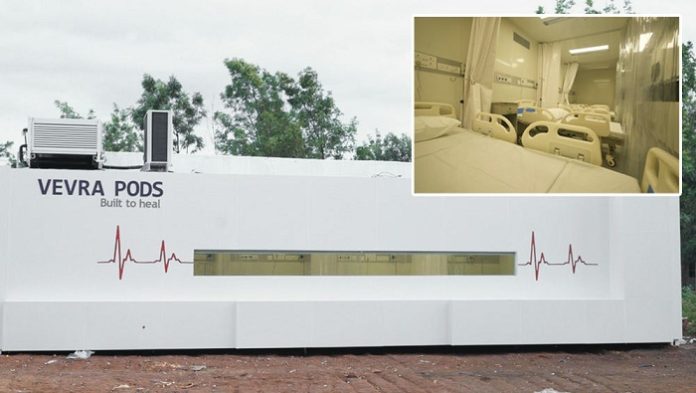
Called the Vevra Pods, these are movable capsules that are infused with artificial intelligence to prevent the spread of contagious diseases such as COVID-19, flu, TB and more. Dr Sudhakar K, the education minister tweeted that AI has the potential to transform healthcare and urged tech startups to focus on low-cost solutions.

It has been developed by Bengaluru-based design-and-build firm Vevra in association with Portugal-based healthcare IoT InnoWave Group. With an accommodation capacity of up to nine beds, it will have an antechamber airlock room to provide a safe area for healthcare professionals.

The Pods will have stringent control over the quality of air being circulated in and out of the room with installations such as HEPA filters, UVC lights and high-end exhaust system. It will also have PLC-integrated air conditioning system to maintain temperature and humidity.

It will also have other features such as fire-resistant structure, anti-bacterial wall, attached toilet, devices to measure oxygen level, RO water purifier, geyser, shower area, fire extinguisher, CCTV surveillance and more. The pods are reusable with 15 to 20 yearsโ€™ structural warranty.

โ€œI am delighted to be a part of such an innovative development in our hospital and medicine industry. Artificial Intelligence has the potential to transform public healthcare,โ€ Dr K Sudhakar said.

Connected health firm expands availability of respiratory monitoring solution

15418 - digital_healthcare.jpg

Currently deployed in Asia, Eastern Europe and the Middle East, it is now available in the Americas and Western Europe. The technology which leverages medical wearable sensors to decrease contact between the patient and caregiver, allows for proactive remote patient monitoring (RPM).

Ms Zhang, deputy director of the nursing department of the Shanghai Public Health Clinical Centre, said: โ€œVivaLnkโ€™s continuous temperature monitor wearable, which was used for the first time in the fight against COVID-19 in our hospital, really reduced cross infection risks for our doctors and nurses due to its capabilities to provide data and vitals remotely. We used more than 200 temperature monitors throughout our hospital, and it made a huge impact in the care we were able to provide.โ€

Built upon VivaLnkโ€™s ambulatory medical wearable sensor platform, the solution can be set up and scaled in hospitals, nursing homes and remote environments, including pop-up hospitals. Once deployed, nurses and caregivers can effectively manage the vitals of all patients from a centralised console to easily identify changes, and view trends and history.

The multi vital monitoring solution includes:

  • Vitals: temperature, heart rate, respiratory rate, Sp02 Oxygen Saturation, and ECG
  • Reusable sensors with continuous monitoring and live streaming
  • Centralised patient monitoring application console
  • On-premise data server software
  • RPM option with patient companion app and cloud hosting
  • Up to 21 days of continuous monitoring on a single charge

Jiang Li, founder and CEO of VivaLnk, said: โ€œContinuous monitoring of patientsโ€™ vitals is essential for early detection of symptoms of infectious diseases, especially as we navigate the changing landscape of COVID-19. With temperature, heart rate and Sp02, it rounds out the key vitals for infectious respiratory diseases monitoring.โ€

The VivaLink solution works by automatically and continuously collecting patient vitals, and wirelessly sending it to a secure on-premise server via a Bluetooth Low Energy (BLE) WiFi router. The data is then consolidated and presented to a centralised console for caregivers. In RPM or remote field hospital deployments, an optional patient app and mobile device, and a cloud hosted application are available.

Adventist Health partners with Synchronous to provide AI-driven behavioral telehealth

Adventist Health partners with Synchronous to provide AI-driven behavioral telehealth

Adventist Health, a Sacramento area faith-based health system, announced this week that it was partnering with the artificial intelligence-driven behavioral telehealth company Synchronous Health.

Through the partnership, said Adventist, the organizations will codevelop behavioral health solutions to address community needs.

According to the companies, Adventist is already using the Synchronous Health platform to address trauma and burnout among its caregivers and to address depression and isolation among older adults, all of which has been exacerbated by the COVID-19 pandemic.

“This partnership directly reflects the marketโ€™s need for our vision and solution of an entirely new model for delivering behavioral health and well-being services,โ€ said Synchronous Health CEO Guy Barnard in a statement.

WHY IT MATTERS

The coronavirus crisis has triggered an uptick in concerns around mental health, particularly where healthcare workers are concerned.

In April, Adventist said, the health system started working with Synchronous to provide services targeting burnout for its 37,000 associates.

“Because our cliniciansโ€™ well-being is central to our mission, we needed an innovative solution, and we needed it fast. In Synchronous, we found a unique approach that allows us to quickly expand the care and support needed for our front-line workers,” said Bill Wing, Adventist Health president.

According to its website, Synchronous matches individuals with a provider, and provides customized frequency and intensity of support for virtual visits. It also uses its bot, “Karla,” to push strategies and innovations developed with a behavioral health specialist, and then measures the effectiveness of each interaction.

By combining the benefits of human connection and technology, Synchronous can scale to serve more populations with broader reach, greater impact, and sustained improvements,” said Barnard.

Adventist and Synchronous also codeveloped and launched a program last month aimed at improving the well-being of older adults. The program, says the health system, includes physical and mental health assessments, along with telehealth services and facilitated access to community resources.

THE LARGER TREND

Behavioral telehealth use was on the rise even before the COVID-19 pandemic, with providers pointing to the accessibility of virtual care as a draw for patients.

The coronavirus crisis pushed the need even higher, with social distancing measures making patients increasingly reluctant to pursue in-person care. With depression and anxiety rates high among adults, many providers turned to telehealth as a viable option.

In May, psychiatrists reported being “pleasantly surprised” with the shift. Although some cited issues with diagnosis and connectivity, many said the rapid transition to relying on virtual care went smoothly.

ON THE RECORD

“Adventist Health shares our passion for creating better ways to care for the whole person. With our platform and Adventist Healthโ€™s expert clinical assets and deep-rooted community presence, we are delivering individualized, precision care to millions of people,” said Lisa Henderson, chief operating officer of Synchronous Health, in a statement.

>>

Moscow DOH uses AI platform to detect lung cancer symptoms

Moscow DOH uses AI platform to detect lung cancer symptoms

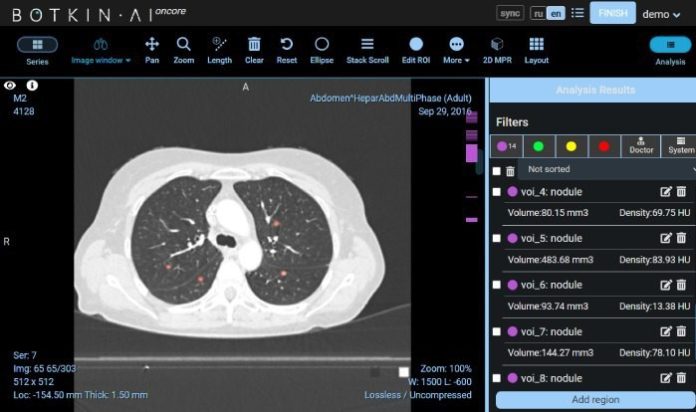
Botkin.AI, a Russian software platform has been integrated with the Unified Radiological Information System of Moscow, allowing CT studies from 46 medical organisations connected to the service to be automatically downloaded for analysis.

Further it is planned that a large number of scans, implemented during the COVID-19 pandemic will be retrospectively reviewed with the help of Botkin.AI platform, using a new algorithm created to detect malignant tumours in the studies with the damaged lung tissues because of COVID-19.

The new functionality of the platform was funded by a grant from Skolkovo Foundation, a non-profit government organisation which supports technological entrepreneurship in Russia.
HIMSS20 Digital
Learn on-demand, earn credit, find products and solutions. Get Started >>

The Botkin.AI platform will eventually be expanded to also analyse digital X-rays and mammography studies to aid breast cancer diagnosis.

WHY IT MATTERS

This project will contribute to a national government healthcare project to increase early stage lung cancer detection.

To date, the AI has analysed more than 7,000 studies and it is planned to process around 20,000 studies per month, making it the largest project in the world to use AI for radiology.

THE LARGER CONTEXT

Meanwhile in the UK, AI-powered cancer diagnostics, Ibex Medical Analytics and provider of digital pathology services in the NHS, LDPath, recently announced the rollout of clinical grade AI application for cancer detection in pathology.

In a US study published in the journal Nature Medicine, researchers from Mount Sinai Health System used AI algorithms in conjunction with chest CT scans and patient history to quickly diagnose patients who were positive for COVID-19 and improve the detection of patients who presented with normal CT scans.

ON THE RECORD

Sergey Voinov, head of digital medicine at Skolkovo Foundation, said: ” I am confident that it will be possible to scale up AI technology in medicine even more in the near future, as we are now seeing positive effects on the healthcare system and patients.

โ€œThe particular relevance of AI technologies can be noted in terms of the. epidemiological situation that we are all experiencing now, and healthcare system performance as well as the welfare of patients in the future will depend on the integration speed of such technologies.โ€

Sergey Morozov, director of the Diagnostic and Telemedicine Centre of the Moscow City Health Department, said: โ€œA radiologist will see the CT scans in which a tumour process is most likely detected. Itโ€™s no exaggeration to say that such an intelligent triage can save patientsโ€™ lives.โ€

Sergey Sorokin, CEO of Botkin.AI, said: “The project implemented by the Diagnostic and Telemedicine Centre of the Moscow City Health Department is not only the world’s largest project in the use of artificial intelligence technologies in healthcare for the whole region today, but also the most qualitatively elaborated one from both technological standpoint and from the AI use in practical healthcare methodology point of view. We are grateful to the whole project team from the Center for the constructive work and the opportunity to implement our products in this crucial project for the whole industry”.

Learn more at the Skolkovo paviliion during the HIMSS & Health 2.0 European Digital Event taking place on 7-11 September 2020.

Healthcare Industry Veteran to Lead Strategy, Innovation for the Healthcare Business of LexisNexis Risk Solutions

Healthcare Industry Veteran to Lead Strategy, Innovation for the Healthcare Business of LexisNexis Risk Solutions

The Healthcare business of LexisNexis Risk Solutions announced that Jay Sultan has joined the organization as vice president of strategy. Reporting directly to the Healthcare business’s CEO, Josh Schoeller, Sultan will lead strategy development, innovation, market planning and strategic partnership initiatives to help scale the business for growth.

Sultan brings to the organization an impressive depth of expertise in healthcare and data analytics. He is a healthcare IT expert on new interoperability regulations and their immediate impact on payers, providers, PBMs, and other healthcare entities. During his career, he has advised more than 180 health plans and 50 delivery systems on value-based care, provider data management, healthcare analytics, clinical data use and interoperability. Prior to joining LexisNexis Risk Solutions Sultan was vice president of healthcare innovation and strategy at Cognizant.

“Jay is a national thought leader respected for his business acumen and intimate understanding of the data interdependencies across all healthcare stakeholders,” said Schoeller. “He is the perfect fit to lead our strategic growth and industry partnership initiatives that will help our customers truly transform how our healthcare system operates today.”

Sultan is a healthcare industry veteran with more than 20 years of experience. His previous experience also includes leadership positions at Edifecs, where he served as principal strategic advisor on healthcare payment reform and payer/provider partnerships, at TriZetto Corporation as chief product portfolio architect, and at MedAlign as chief informatics officer.

“LexisNexis Risk Solutions has vast data resources and the strategic opportunity to win in this newly created healthcare data landscape,” said Sultan. “Their expertise will give payers, providers, pharmacies and life science organizations the tools they will need to thrive in today’s environment. I am excited get started and build on their long track record of success in delivering analytics and insights that improve care.”

About LexisNexis Risk Solutions
LexisNexisยฎ Risk Solutions harnesses the power of data and advanced analytics to provide insights that help businesses and governmental entities reduce risk and improve decisions to benefit people around the globe. We provide data and technology solutions for a wide range of industries including insurance, financial services, health care and government. Headquartered in metro Atlanta, Georgia, we have offices throughout the world and are part of RELX, a global provider of information-based and analytics and decision tools for professional and business customers across industries.

Livongo and Teladoc merger: a catalyst for accelerating healthcare’s digital transformation

IMU Collaborates with Fusionex to Integrate Digital Technologies to Enhance Medical Education and Research

When digital health companies Livongo and Teladoc announced their $38 billion merger earlier this month, there was a predictable gushing of praise for the deal and a sense of coming-of-age for digital health startups in general. “Perfect merger,” “huge leap forward for digital health,” were some of the phrases used to describe the merger. Both companies had reached a certain scale, had had successful IPOs, and were positioned very well in the aftermath of the pandemic to take advantage of the shift to virtual care.

In my recently published book Healthcare Digital Transformation (co-authored with Ed Marx), we discuss the fundamental drivers of digital transformation today in healthcare, namely:

Digital transformation time horizons have shrunk from years to months for health systems in the wake of the pandemic. In an article I published in this column just before the announcement of what is now commonly referred to as the โ€œTeladongoโ€ deal (that awful portmanteau), I point out that several structural issues must be overcome before telehealth adoption can be more widespread. The initial scramble to activate and operate a predominantly virtual care model in the immediate wake of the pandemic must give way to an assessment of the transformation efforts required to shift towards virtual care, the technology choices needed to sustain them, and the organization models necessary to execute them effectively. The merger of the two leading digital health companies creates a viable, at-scale entity that can provide an alternate platform for healthcare providers beyond core electronic health record (EHR) systems that offer superior functionalities and improved user experience for patients and providers alike.
The consolidation of the digital health technology landscape

Today, the digital health landscape is replete with point solutions that lack scale, need integration with core EHR systems, and require significant investments by client organizations to implement and run. In one health system that my firm recently worked with, we identified no less than 35 different digital engagement solutions, all focused on providing improved access to care for patients. The solutions required configuration and set-up for the client’s specific environment, integration with core EHR systems, and a significant effort for maintaining the interfaces. The costs of acquiring the licenses for the tools are often dwarfed by the costs of integrating the solutions, implementing process changes, and training large numbers of staff members.

Digital health startups, known for their innovation, struggle for the most part to achieve scale for their solutions due to the relatively low maturity of healthcareโ€™s digital transformation and a large number of independently run hospitals and health systems that need to adopt their solution for a startup to reach critical mass. Livongo and Teladoc have achieved that rare distinction โ€“ they were already at-scale technology platforms looking to gain even more scale economies through aggregation. Both companies started with commercial payers and employer groups for early validity and are now positioned to expand deeper into the healthcare provider space.

Teladoc already has a significant presence in hospitals, many of whom are white-labeling the Teladoc platform for providing telehealth services, often using the Teladoc physician network to complement their network of doctors within the system.

Livongoโ€™s proven success in remote management of chronic care, especially diabetes, now could be offered to health systems looking to manage their own populations remotely in a post-COVID-19 era. Given the long sales cycles in healthcare technology, an existing footprint of customers offers opportunities for cross-selling and accelerating growth.

If anything, the Livongo-Teladoc merger points to further aggregation in the digital health space as other digital health companies with competing and/or complementary solutions look increasingly likely to be acquired by the new entity, or become part of additional consolidation plays in the markets.
The fragmentation of digital transformation efforts in healthcare

The slow pace of digital transformation in healthcare is often due to organizational models and constraints within health systems. Ownership for digital transformation programs and digital health solutions is usually spread across multiple stakeholder groups. Telehealth may belong to a different group than one that is responsible for digital front doors or remote monitoring programs. In the absence of a common governance layer, multiple transformation roadmaps across IT and functional groups run in parallel, and programs and are often implemented without a rigorous evaluation of possible synergies. The result is fragmented user experience, higher costs, and process inefficiencies.

Many leading health systems are seeing virtual care as the future. They realize that they can achieve increased patient flow through higher utilization of specialties and sub-specialties from telehealth consults. They can also achieve improved efficiencies in population health management through remote monitoring programs that can deliver longer-term ROI for organizations through convenience, cost savings, and better healthcare outcomes. Companies like Teladoc and Livongo sit at the confluence of several forces that are collectively pushing the industry forward in adopting virtual care models, and doing it efficiently and with speed.

As digital transformation accelerates, the leading health systems will look for scalable, proven solutions that can perform a broad range of functions under a single umbrella. After decades of technology sprawl, healthcare IT environments are consolidating their platforms for scale, standardization and cost savings.

Mid-tier systems that are constrained by management resources, budgets, technical debt and other factors, have a unique opportunity to consolidate all efforts under a single leadership structure. One health system we worked with has set up a committee of three senior executives, including the CIO, who makes decisions for

the organization’s digital roadmap. Regardless of the organizational structure, healthcare organizations must get out of their own way to allow digital transformation to succeed.

With non-traditional competitors such as Walgreens, Walmart, and CVS-Aetna steadily moving into the primary space, health systems must unite internally (and possibly among each other) to address the competitive challenges head on and prepare for a digital future. The consolidation in the digital health solution provider landscape may well be the catalyst for a broad-based restructuring of the healthcare sector and the acceleration of digital transformation.


MTBC’s PrecisionBI Releases Next-Generation Healthcare Analytics and Business Intelligence Platform

MTBC, Inc., a leading provider of cloud-based healthcare IT solutions and services, announced the launch of its next-generation PrecisionBI healthcare analytics and business intelligence platform. This highly anticipated release delivers an all-new platform experience to help large medical groups, health systems, and academic institutions easily monitor business metrics, build customized dashboards to visually track Key Performance Indicators, and gain a 360ยฐ view of performance across their organizations.

โ€œThis PrecisionBI update is a significant technology and user experience upgrade that our clients and partners have been looking forward to,โ€ said A. Hadi Chaudhry, President of MTBC. โ€œNot only does this new release feature a new, modern interface but it provides a more unified, completely web-based experience. We believe our existing and new clients will love the new PrecisionBI.โ€

PrecisionBI is a turnkey healthcare analytics solution that consolidates financial, clinical, and business data for better insights and data-driven decisions. Key enhancements now available to PrecisionBI clients include:

โ€œBy helping healthcare leaders better understand and leverage their data, PrecisionBI is helping thousands of providers optimize revenue and improve patient care,โ€ said Wes Stolp, Executive Vice President of Sales at MTBC. โ€œWe are proud to officially release the next-generation of our business intelligence solution and eager to help even more enterprise groups overcome inefficiencies with data-powered decision making.โ€

MTBC acquired PrecisionBI, the trusted analytics and business intelligence partner to healthcare enterprises and vendors, through its recent acquisition of Meridian Medical Management. As a result of this acquisition, MTBC plans to introduce the next-generation of PrecisionBI not only to existing PrecisionBI clients, but also to MTBCโ€™s larger cohort of enterprise medical groups, partners, and physicians.

About MTBC

MTBC is a healthcare information technology company that provides a full suite of proprietary cloud-based solutions, together with related business services, to healthcare providers and hospitals throughout the United States. Our Software-as-a-Service (or SaaS) platform includes revenue cycle management (RCM), practice management (PM), electronic health record (EHR), business intelligence, telehealth and patient experience management (PXM) solutions for high-performance medical groups. MTBC helps clients increase financial and operational performance, streamline clinical workflows and make better business and clinical decisions, allowing them to improve patient care while reducing administrative burdens and operating costs. MTBCโ€™s common stock trades on the Nasdaq Global Market under the ticker symbol โ€œMTBC,โ€ and its Series A Preferred Stock trades on the Nasdaq Global Market under the ticker symbol โ€œMTBCP.โ€

Western Australian government commits AU$8m to build an electronic medical record system

Western Australian government commits AU$8m to build an electronic medical record system

The government of Western Australian has said it will commit AU$8 million to begin planning for a state-wide electronic medical record (EMR) system.

Once developed, the system will enable clinicians to view information such as patient notes, assessments, medical histories, and diagnostic test results in one place. It will also mean that patients no longer need to wait for medical records to be transferred between clinicians.

“The development of an electronic medical record system will enable information to be available across the full continuum of care — not only promoting safety and quality but also saving lives,” Western Australia Minister for Health Roger Cook said.

“It is wonderful to see the advancements being made in health as we progress on our digital journey, and planning for an electronic medical record system is a key component of this.”

The system was one of the key recommendations of the Sustainable Health Review. Initially launched in June 2017, the review panel was tasked with delivering “a patient first, innovative and sustainable health system” for Western Australians. It delivered its final report [PDF] in April 2019.

The development of the WA state-based system would come despite the existence of My Health Record (MHR), the country’s national e-health system, since 2012.

WA Health has told ZDNet that the two systems will be quite different from one another.

“The national MHR is a patient-controlled summary of an individual’s health information that can be viewed securely online,” the agency said.

“An EMR is an information and communication technology solution that captures data from various clinical systems and applications. It provides benefit to both clinicians and consumers by bringing together a single, integrated view of a patient’s record that is available to treating health professionals.

Noting these are two different types of solution that serve different purposes, WA Health will continue to work in partnership with Australian Digital Health Agency to continue to upgrade applications to view, upload and promote the use of the MHR in routine clinical care.

Bettina McMahon, CEO of the Australian Digital Health Agency (ADHA), the system administrator for My Health Record, recently told the Joint Committee on Public Accounts and Audit how there has been an increase in the use of My Health Record in the past few months.

“We’ve seen a significant increase in the use of My Health Record by both consumers and healthcare providers, particularly over the last three months,” she said.

“In relation to general practitioners, the month of March has seen the highest amount of viewing of documents yet, as well as uploads to track use.”

According to McMahon, 95% of the public pathology labs in the country are uploading into the My Health Record, which she said was another threefold increase over the last year for tests being uploaded.

As of May 25, there were 22.74 million My Health Records and 13.97 million records with information in them.

Similar works are underway in New South Wales after eHealth NSW announced last August that all of the state’s public hospitals would have access to electronic medical records by the second half of 2020 as part of eHealth NSW’s wider efforts to make the state’s health system more citizen-centric.

At the time, eHealth NSW CIO and CEO Zoran Bolevich outlined the EMR system would be used to support the eHealth’s strategy to develop a Single Digital Patient Record (SDPR) that will be designed to give a holistic, state-wide view of a patient’s healthcare information.

“It is important for us to start looking at how we can link disparate electronic medical records databases so we can have a more continuous flow of patient information, and that’s what we’re trying to do with this piece of work,” he said.

“We’re trying to create a more consistent patient and clinician experience, especially for junior doctors and nurses who travel around the state and work in different types of hospitals โ€ฆ so there is a consistent look and feel everywhere.”

NimbleRx and Uber Health Partner to Expand Accessibility to Prescription Delivery

NimbleRx and Uber Health Partner to Expand Accessibility to Prescription Delivery

NimbleRx, a platform providing independent pharmacies the ability to offer convenient, online delivery, announced a partnership with Uber Health to offer safe, contactless prescription delivery from pharmacies in Seattle, WA and Dallas, TX, and soon, other parts of the country. The service, which is fully integrated with Uberโ€™s platform, is currently live throughout the Seattle and Dallas metro areas.

Consumer habits have changed rapidly in response to the COVID-19 pandemic. With the current health crisis and ongoing social-distancing guidelines in place, it is more critical than ever for people to receive their prescriptions directly and efficiently. NimbleRx is a two-sided marketplace that works directly with independent and regional pharmacies to utilize its delivery platform, and offers consumers a simplified pharmacy experience through multiple online delivery options. Uber Healthโ€™s direct integration with the Nimble platform is providing consumers with an additional option to quickly receive their prescription deliveries without needing to leave their homes.

Currently, Nimble offers next-day delivery to 70% of the population of the United States, and same-day delivery to 30%. As delivery demand has increased in hotspots around the country, Nimble has seen demand increase from retail pharmacies nationwide, partly due to increased requests from the senior population.

โ€œAround 70% of doctor visits end with a prescription, and with an increase in telemedicine over the last several months as well as a fundamentally larger acceptance of online healthcare, weโ€™ve seen this number increase further,โ€ said Talha Sattar, Founder and CEO of Nimble. โ€œNow more than ever, it is critical that patients have easy and swift access to their medications. Our partnership with Uber Health will allow Nimble to increase our capacity to serve our customers, and more efficiently deliver the prescriptions people need to address their health conditions.โ€

Built on Uberโ€™s platform and part of Uber for Businessโ€™s suite of enterprise solutions, Uber Health is a HIPAA-secure solution that enables its various partners within the healthcare industry to request non-emergency medical transportation for patients and improve access to care for some of our most vulnerable populations including those on Medicaid and Medicare. Part of a larger initiative by Uber to provide access to on-demand and scheduled last-mile delivery solutions to consumers and businesses, prescription delivery provides a ripe opportunity to address the current and critical needs of Nimble customers.

“Given the current crisis, having to pick up prescriptions from your local pharmacy can be an unnecessary and sometimes risky barrier to care,” said Dan Trigub, Head of Uber Health. “Our partnership with Nimble marks Uber Health’s expansion into pharmaceutical delivery, and allows us to support the effective and timely delivery of medications to those who need it most.”

In response to the growing demand, Nimble implemented several changes to its technology including the enablement of delivery for those without a mobile phone, who make up approximately 11% of customers, as well as adding additional and faster delivery windows.

Following the initial launches in Seattle and Dallas, Nimble and Uber Health are already working to expand the partnership in additional regions across the United States. To date, Nimble has completed over 15,000 deliveries via the partnership with Uber Health.

About NimbleRx
Nimble is the nationโ€™s leading prescription delivery service. Nimble makes delivery simpler, faster and more affordable for patients and pharmacies. Pharmacy customers can schedule their prescription deliveries through a convenient, easy-to-use mobile application or website. Nimble has raised $60M in financing from Sequoia Capital, Y Combinator, First Round Capital, DAG Ventures and Khosla Ventures and is based in Redwood City, CA.

Experity Announces Acquisition of Calibrater Health

Experity Announces Acquisition of Calibrater Health

Experity, the leading provider of clinical and practice management software to the urgent care space, announced that it has acquired Calibrater Health, a leader in feedback management solutions. The acquisition enables Experity to strategically expand its industry-leading patient engagement offering with reputation management capabilities tailor-made to meet the needs and demands of the rapidly growing urgent care industry.

The patient experience is top priority for providers in the urgent care space. While a positive experience largely depends on efficient and seamless care delivery, equally important are clinicsโ€™ patient engagement and reputation management capabilities designed specifically for the urgent care industry. Calibrater Healthโ€™s feedback management technology contributes to a seamless patient experience through:

In combination with Experityโ€™s intuitively designed workflows and critical load-balance and reporting capabilities, the new features will deliver a more robust patient engagement platform. As a result, clinics can provide a smoother patient experience from the patientโ€™s initial online search, to post-visit follow-up, to their future urgent care visits.

โ€œDelivering a positive patient experience is the lifeblood of the urgent care market, so joining forces with a leader in feedback management like Calibrater Health is the right step in Experityโ€™s continued growth,โ€ said David Stern, CEO of Experity. โ€œThe urgent care industry continues to redefine what the patient experience can look like. We are committed to evolving alongside our providers to ensure that we will always meet their needs.โ€

A seamless patient experience requires connected, integrated technology. However, urgent care clinics have traditionally had to rely on multiple, disparate platforms to get all the functionalities needed to manage the various elements of the business. This acquisition fully integrates crucial technological functionalities and data collected across all workflows within an urgent care business, including patient feedback and clinical data.

โ€œJoining two leaders with different areas of expertise in urgent care technology brings immense value to urgent care providers who are tired of having to work across disconnected technology platforms and vendors to get what they need,โ€ said Tim Dybvig, CEO of Calibrater Health. โ€œWith this integration, clinics using Experity or Calibrater solutions now have all the capabilities and insights they need in one interface to provide a truly seamless patient experience.โ€

About Experity

Experity is a dynamic HIT company that provides integrated technology solutions to more than 4,000 on-demand healthcare practices, primary care clinics, diagnostic testing centers, and health systems nationwide. With a mission to power patient-centered care, the companyโ€™s complete suite of software and services includes EMR and PM, patient engagement, teleradiology, business intelligence, consulting, and billing solutions. The company was formed through the merger of the leaders in urgent care technology, DocuTAP and Practice Velocity. A Warburg Pincus portfolio company, Experity is a fast-paced, high-growth company committed to improving on-demand healthcare for everyone.

Translate ยป