













Close
Digital Health & Ai Innovation summit 2026
Medical Taiwan 2026

Innovaccer Launches Unified Patient Record to Deliver Complete View of the Patient

Innovaccer Launches Unified Patient Record to Deliver Complete View of the Patient

Innovaccer Inc., a Silicon Valley-based healthcare data platform company, announced the launch of its โ€œunified patient recordโ€ as its proprietary model that allows the collection of data from the full range of a patientโ€™s healthcare experiences and provides a complete view of that patient for the healthcare team.

Data Is Key Element in the Unification of Patient Data

โ€œWhile working and interacting with different stakeholders (providers, payers, employers, patients, technology companies etc.) across the industry, I have seen how healthcare today is largely fragmented. Adding to that are problems like consumer demand, aging population, increase in the prevalence of chronic diseases and excessive cost of care. I have realized that until we take the unification of patient data as a priority in healthcare, we are not going to move the needle sufficiently,โ€ said Abhinav Shashank, Innovaccerโ€™s co-founder and CEO.

Drive Care Team Collaboration in the Service of the Patient โ€” for Better Outcomes.

In order to eliminate the challenge of seamless data access, the unified patient record serves as the backbone of Innovaccerโ€™s Data Activation Platform that uses APIs and an analytical framework to manage complexity across all patient care settings. Innovaccerโ€™s opportunity to connect patient-level data from a range of sources makes individual data truly interoperable for providers, payers and large employers who need it across the healthcare continuum.

With the power of a connected care framework, Innovaccer will be using its Data Activation Platform to unify patient records, automate routine workflows and apply analytic insights so providers, payers, employers, can deliver better outcomes for individuals and care as one.

โ€œOur vision is to help healthcare care as one, and the unified patient record is critical to realizing this vision. One unified patient record, one platform, everyone on one page in service of the patient for better outcomes.โ€ added Shashank.

Leveraging โ€œValue-Engineeringโ€ to Activate Patient Data

Innovaccer also leverages artificial intelligence to automate workflows and create point-of-care alerts. The platform uses โ€œvalue-engineeringโ€ to generate custom actionable intelligence to โ€œactivateโ€ patient data. It also integrates applications on the platform using tools for collaboration, greater efficiency and the ability to address social determinants that factor into a patientโ€™s health. So far, Innovaccerโ€™s Data Activation Platform has unified over 3.8 million patient records, enabling more than 25,000 providers to transform care delivery and care as one.


Ibex Obtains CE-IVD Mark for AI-Powered Cancer Detection

Ibex Obtains CE-IVD Mark for AI-Powered Cancer Detection

Ibex Medical Analytics, the pioneer in artificial intelligence (AI)-powered cancer diagnostics, announced CE-IVD Mark for the Galenโ„ข Prostate solution for use in supporting pathologists in identification of suspected cancer on prostate core needle biopsies. Galen Prostate – the first-ever AI-based solution for cancer detection used in routine clinical practice – is already deployed in pathology labs with demonstrated success in alerting on missed cancer cases. With this CE-IVD Mark of Galen Prostate Ibex is now partnering with leading institutes across Europe to implement AI and support pathologists in their diagnostic workflow.

Pathology is the medical specialty of diagnosing disease in patients and plays a pivotal role in cancer diagnosis and treatment decisions. To this day, cancer diagnosis is performed by pathologists looking at biopsies through a microscope. In recent years, a global increase in cancer incidence and in the number of screening tests has coincided with a decline in the number of pathologists, causing a crisis that affects labs worldwide and results in longer turnaround times and rising concerns about diagnostic accuracy.

Ibex uses AI to develop clinical-grade solutions that help pathologists detect and grade cancer in biopsies, helping them ensure diagnostic accuracy, integrate comprehensive quality control and enable a more efficient workflow. Galen Prostate is a vendor-neutral AI solution, evaluated across multiple scanning systems, staining platforms and pathology labs. The solution uses an algorithm that was trained on slides from a dataset of over 60,000 prostate slides from multiple institutions and representing a variety of diagnoses and clinical findings.

The CE-IVD Mark follows the outstanding results from a blinded multi-site prospective clinical study measuring, for the first time, performance against consensus diagnosis between multiple pathologists. The study included digitized slides from prostate core-needle biopsies analyzed by Galen Prostate. Performance was evaluated against the consensus diagnosis of multiple pathologists. Ibexโ€™s AI-powered algorithm demonstrated the highest AUC (area under the ROC curve) reported in the field, 0.997, as well as very high sensitivity and specificity (98.6% and 95.6%, respectively). These results validate the robustness of Galen Prostate and support its adoption by pathology institutes aiming to improve their diagnostic accuracy by enhancing quality control with AI.

โ€œWe are impressed with the results of the study, particularly with the performance of Galen Prostate, which was in near perfect concordance with the consensus diagnosis between multiple pathologists. This solution can become an important tool for pathologists that look for ways to improve diagnostic quality and workflow efficiencyโ€ said Delphine Raoux, MD, Head of Innovation Technologies at Medipath – the largest network of private pathology labs in France, who participated in the study; โ€œMedipath believes that AI-powered solutions are the future of pathology and we are happy to participate in trials that demonstrate their accuracy and utility, and to collaborate with Ibex to help the evolution of their AI solutionsโ€.

โ€œWe hit an important milestone with the CE-IVD Mark, facilitating a wider adoption of Galen Prostate in the market. These clinical-grade results confirm our robust and meticulous approach to AI, that corresponds to the pathologistโ€™s own workflowโ€, said Joseph Mossel, Ibex Medical Analytics CEO; โ€œCancer incidence and testing for cancer keep growing, with an impact on pathologistsโ€™ turnaround times and misdiagnosed cases. Ibex is committed to providing practical solutions that help pathologists meet these challengesโ€.

CryoLife Receives CE Mark for On-X Ascending Aortic Prosthesis

CryoLife Receives CE Mark for On-X Ascending Aortic Prosthesis

CryoLife Inc , a leading cardiac and vascular surgery company focused on aortic disease, announced it has received CE Mark for the On-X Ascending Aortic Prosthesis (AAP), allowing resumed distribution in the European Union. The On-X AAP is indicated for the treatment of diseased, damaged or malfunctioning native or prosthetic heart valves in the aortic position involving an ascending aortic aneurysm. These associated aortic root diseases coexist in as many as 10 percent of all aortic valve replacements.

“The absence of the On-X AAP from the market since late 2016 has hindered our ability to compete for certain mechanical valve tenders in the EU. With the receipt of the CE Mark on the AAP, we once again have a complete portfolio of On-X products available in Europe, allowing us to be more competitive and potentially drive market share gains in the mechanical valve market. The On-X AAP offers the best hemodynamics of any commercially available valved conduit device, and we will resume selling the On-X AAP in the EU immediately,” said Pat Mackin, Chairman, President, and Chief Executive Officer of CryoLife.

The On-X AAP is part of the On-X Heart Valve portfolio, which also includes the On-Xยฎ Aortic Valve and ON-Xยฎ Mitral Valve. The On-X Aortic Valve was the first mechanical aortic heart valve to receive both FDA and CE Mark approval for labeling to permit use with a reduced warfarin dosage, based on results of the original PROACT trial that demonstrated a greater than 60% reduction in bleeding events without increased risk of stroke. The On-X Mitral Valve is currently completing enrollment in its own PROACT (Lowered INR Mitral Arm) Prospective Randomized Clinical Trial, seeking a reduced warfarin indication similar to that of the On-X Aortic Valve.

About CryoLife, Inc.
Headquartered in suburban Atlanta, Georgia, CryoLife is a leader in the manufacturing, processing, and distribution of medical devices and implantable tissues used in cardiac and vascular surgical procedures focused on aortic repair. CryoLife markets and sells products in more than 100 countries worldwide.

LucidHealth Partners With Aidoc to Bring Advanced Radiology AI to Care Sites in the Midwest

LucidHealth Partners With Aidoc to Bring Advanced Radiology AI to Care Sites in the Midwest

LucidHealth, a physician-owned and led radiology company, announced that it is using an AI-powered diagnostic aid from leading AI vendor Aidoc to help prioritize and expedite treatment to patients with critical, life-threatening conditions. LucidHealth is one of the first radiology companies in the Midwest to incorporate artificial intelligence into their radiology practice, further cementing their commitment to continuously improving patient outcomes.

“LucidHealth is committed to bringing the most advanced, highest quality technological solutions to assist our patients,” said Mark Alfonso, Chief Medical Officer, LucidHealth. “Aidoc’s AI-powered alerting system combined with our own proprietary workflow software, RadAssist, enables us to prioritize the patients with the most urgent, time-critical, life-threatening conditions. For example, proactive examination for intracranial hemorrhages via AI automatically and immediately flags those cases to the radiologists, allowing them to prioritize and assist in addressing those patients sooner. This reduction in wait time could be life-altering; providing the ability to ensure rapid radiologist inspection and triage for expedited treatment.”

Aidoc’s FDA cleared solutions detect time-sensitive pathologies and flag them in the radiology worklist including Intracranial hemorrhage, Pulmonary Embolism (awarded Minnie’s Best Software), and C-spine fractures just to name a few. The addition of Aidoc’s deep learning solutions into LucidHealth’s platform will enhance patient care for the most critical cases across the Midwest.

“I’m delighted that LucidHealth will integrate Aidoc’s solutions into its clinical workflow,” said Tom Shearer, Regional VP Sales at Aidoc. “LucidHealth’s broad partnership base with radiology groups means hundreds of thousands of patients will benefit from the power of AI, saving lives in the most critical cases.”

About LucidHealth:

LucidHealth is a physician-owned and -led radiology management company. We partner with radiology groups to provide the technology and resources to increase the strategic value of their practices nationwide. Our belief is that all patients should have access to the highest quality of subspecialized imaging care, regardless of facility size or location. Our mission is to empower independent radiology groups to deliver world-class, subspecialized care to all patients within the communities we serve.

About Aidoc:

A leader in AI healthcare, Aidoc is one of Time Magazine’s 50 Genius Companies and its founders were recognized in Forbes’ “30 under 30” list. The company’s solutions analyze medical imaging to provide the most comprehensive AI offering in the field. Aidoc is used by radiologists worldwide, aiding them in maximizing their clinical performance and expediting patient care. In 2019, Aidoc’s pulmonary embolism solution won the “Best New Radiology Software” Minnie award. Aidoc is currently deployed at over 300 medical facilities in the US and around the world.

GlobalMed to Unveil Enhanced Virtual Health Platform and New Delivery Systems at HIMSS20

GlobalMed to Unveil Enhanced Virtual Health Platform and New Delivery Systems at HIMSS20

GlobalMed, a leading provider of virtual health solutions, announced that it will showcase integration enhancements to its virtual health platform eNcounterยฎ, introduce a backpack telehealth exam station, and offer a lighter, more affordable exam camera at HIMSS20, March 9-13 in Orlando, FL.

Enhancements to GlobalMedโ€™s eNcounter platform include:

  • FHIR-enabled, clinical data integration that facilitates the flow of portable virtual health data between health information systems. This allows important evidence to be queried from and stored in any FHIR-compatible system (i.e. EHR, practice management solutions, etc.).
  • Dynamic Integration Management Service (DIMS) — Facilitates automated sync with FHIR endpoints so that over time, eNcounter is always configured and compatible with an integrated platform. In doing so, DIMS minimizes the cost of ongoing maintenance, support, and development between integrated health information systems.

โ€œOur customers expect to collect actionable virtual care data directly in their EHR,โ€ said Joel E. Barthelemy, founder and CEO of GlobalMed. โ€œWeโ€™ve augmented our existing virtual health platform not only to solve the problem of access to quality, useable data but to also dramatically reduce the cost and inefficiency of healthcare integration that is time consuming, expensive and difficult.โ€

As data interoperability and usability drive changes in the quality of care delivery, so do smaller and lighter delivery systems. To this end, GlobalMed will also showcase new products that integrate with their eNcounter platform:

  • A backpack-sized exam station โ€“ a lightweight and more space-efficient version of the widely adopted, briefcase-sized, TES (Transportable Exam Station).
  • The TotalExamยฎ Lite โ€“ a feature-rich, lightweight, affordable camera kit with an autofocus unit and otoscope for high definition images and video.

โ€œThe market is moving to smaller, lighter devices that offer the same high quality as previous generations but with more features and at a lower price point. The backpack offers an easier way to deliver remote care in the most austere environments without compromising quality or capabilities,โ€ said Michael Harris, GlobalMedโ€™s chief innovation officer. โ€œOur new camera and otoscope were designed with the same idea in mind โ€“ to keep the same high definition images and video our customers know while meeting their demand for a more affordable and lighter weight option.โ€

All products will be exhibited at HIMSS20 booth 6089 in the Orange County Convention Center.

Media event to be livestreamed

Answers Media will livestream a โ€œpop-upโ€ media event in the GlobalMed booth on Wednesday, March 11 at 3:30 pm eastern time. Dr. Nick van Terheyden, host of The Incrementalist show on HealthcareNOW Radio, will interview several global virtual care experts including Yaya Mbaoua, CEO of The Mbaoua Group. Mbaoua will also present on Thursday, March 12, in a lecture hall session titled, โ€œTransforming Africaโ€™s Health Crisis with Telemedicine.โ€

About GlobalMedยฎ

GlobalMed powers the worldโ€™s largest, most advanced virtual health platform that supports a patient at any point in the continuum of care. Providers are enabled with integrative software and data-capturing tools to deliver a complete and accurate patient encounter for evidence-based treatment and improved patient outcomes. Providers looking to manage capacity, reduce costs, and deliver responsible medicine, will get all they need from one platform.

With over 25 million consults delivered in 60 countries and specializing in both federal and commercial spaces, GlobalMedโ€™s virtual health platform deploys in its highly secure Azure environment and is used worldwide from the VA, DoD, and White House Medical Unit to rural hospitals and villages in Africa. Founded in 2002 by a Marine Corps Reserve Veteran still serving as CEO, GlobalMed is proud to be a Veteran-Owned Small Business (VOSB).

St. Francis Hospital’s New Robotic Platform Transforms Spine Surgery

St. Francis Hospitals New Robotic Platform Transforms Spine Surgery

CHI Franciscanโ€™s St. Francis Hospital in Federal Way, Washington is expanding high quality, innovative surgical care with a spinal robotic surgery platform that combines robotics and navigation software โ€” the first of its kind in King County. The technology allows surgeons to perform minimally invasive spinal fusion surgeries at a rate of 98 percent implant placement accuracy. The minimally invasive nature of this technology ultimately helps to reduce tissue damage and shortens the patientโ€™s length of stay.

โ€œOur new robotic surgery arm enables us to deliver the highest-quality spinal care available to our patients,โ€ said Dino Johnson, St. Francis Hospital chief operating officer. โ€œWe look forward to using this cutting-edge technology to help patients heal and return to their everyday life as soon as possible.โ€

The robotic surgery system utilizes photos of the patientโ€™s spine to develop a patient plan, including implant size and placement. With a patient plan in place, the robotic surgery system allows a surgeon to plan a pathway to the specific region of the patientโ€™s spine in need of surgical intervention โ€” similarly to a GPS. The surgeon then follows the path laid out to accurately place stabilizing screws with a minimally invasive approach. This technique enables surgeons to perform faster implant placement than traditional spinal fusion procedures and with less impact to the patientโ€™s surrounding tissue.

โ€œThe spine is one of the most important parts of the body that requires the utmost precision and care during surgery,โ€ said Kenneth Nwosu, MD, St. Francis Hospital spine surgeon, who completed the first surgery with the robotic system. โ€œWe are excited the surgical robotic system enables us to consistently enhance our surgical accuracy.โ€

In addition to patient benefits, the robotic surgery system also improves health care provider safety. Studies have shown that image intensifiers typically used during traditional spine surgery can increase provider exposure to radiation, which the robotic technology reduces.

The spinal robotic surgery platform at St. Francis Hospital is part of CHI Franciscanโ€™s continued efforts to offer state-of-the-art tools to deliver the highest quality of care to its patients. It joins CHI Franciscanโ€™s long list of robotically-assisted surgical tools across the system including bariatric, urologic, thoracic, orthopedic, and gynecologic robotic surgery tools.

About CHI Franciscan

CHI Franciscan is a Catholic nonprofit health system based in Tacoma, Washington, with $2.45 billion in total revenue and a team of more than 12,000 physicians, providers, nurses, and staff that provide expert, compassionate medical care at 11 acute care hospitals and over 200 primary and specialty care clinics throughout the greater Puget Sound. This includes St. Anthony Hospital, Gig Harbor; St. Clare Hospital, Lakewood; St. Elizabeth Hospital, Enumclaw; St. Francis Hospital, Federal Way; St. Joseph Medical Center, Tacoma; Harrison Medical Center, Bremerton and Silverdale; Highline Medical Center, Burien; CHI Franciscan Rehabilitation Hospital, Tacoma, and Wellfound Behavioral Health Hospital, Tacoma. Started in 1891 by the Sisters of St. Francis of Philadelphia, today CHI Franciscan is one of the largest health systems in Washington state. The system is comprised of more than 1,200 hospital beds and over 4,000 credentialed providers offering cardiovascular care, cancer care, orthopedics and sports medicine, neurosciences, womenโ€™s care and other health care services. CHI Franciscanโ€™s mission is to create healthier communities, including caring for the poor and underserved. In fiscal year 2018, the organization provided $190 million in community benefit โ€” free, subsidized, and reduced cost health care and programs.

Baxter Launches Peri-Strips Dry with Secure Grip for Reliable Staple Line Reinforcement in Surgical Procedures

Baxter Launches Peri-Strips Dry with Secure Grip for Reliable Staple Line Reinforcement in Surgical Procedures

Baxter International Inc , a global leader in advancing surgical innovation, announced 510(k) clearance from the U.S. FDA for a new generation of its Peri-Strips Dry with Veritas Collagen Matrix (PSDV) product, known as PSDV with Secure Grip. Now available with โ€œpeel and secureโ€ technology, PSDV is a staple line reinforcement material that bariatric surgeons have used to mitigate staple line complications for more than 15 years. This new generation of PSDV is two times faster to prepare compared to the previous version and another staple line reinforcement product.

โ€œWe continue to advance innovation by providing surgeons tools that are faster and easier to use in the operating room,โ€ said Wil Boren, president of Baxterโ€™s Advanced Surgery business. โ€œAs surgical procedures are becoming more complex, it is important that surgeons have the tools they need to optimize patient care.โ€

Despite the sophistication of modern stapling technology used in bariatric procedures, staple line complications that result in high morbidity and mortality persist. The most prevalent complications are staple line bleeding and leaks. While the incidence of these complications is low, the impact can be clinically debilitating for the patient and costly to address.

PSDV is proven to effectively reduce intraoperative and postoperative staple line bleeds and leaks in routine bariatric procedures such as a sleeve gastrectomy or gastric bypass. A 2015 meta-analysis extracted data from 295 studies predominantly comprised of morbidly obese patients undergoing laparoscopic gastric bypass and laparoscopic sleeve gastrectomy to include nearly 42,000 patients concerning bleeds and over 56,000 patients concerning leaks. PSDV showed statistically significant greater relative efficacy in reducing bleeding and leaks when compared to no staple line reinforcement, oversewing, and another staple line reinforcement product.2

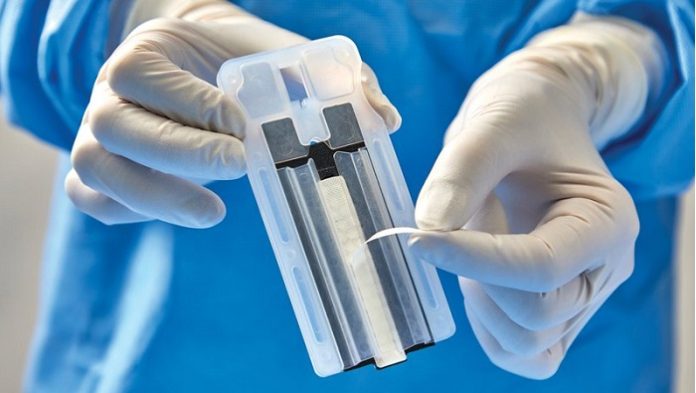
PSDV with Secure Grip is applied to the surgical stapler via a pressure-sensitive adhesive strip. The new generation of PSDV provides strong adherence to the stapler, allowing surgeons to easily manipulate tissue. In a recent Staple Line Reinforcement Comparison study,1 30 bariatric nurses and surgical technicians evaluated stapler preparation time, ease of use and learnability of the PSDV with Secure Grip versus other options. Participants unanimously chose PSDV with Secure Grip as the most preferred staple line reinforcement material in the operating room.

PSDV with Secure Grip is available now to Baxter customers.

About Baxter

Every day, millions of patients and caregivers rely on Baxterโ€™s leading portfolio of critical care, nutrition, renal, hospital and surgical products. For more than 85 years, weโ€™ve been operating at the critical intersection where innovations that save and sustain lives meet the healthcare providers that make it happen. With products, technologies and therapies available in more than 100 countries, Baxterโ€™s employees worldwide are now building upon the companyโ€™s rich heritage of medical breakthroughs to advance the next generation of transformative healthcare innovations.

Arcomed and IQ Messenger: A New Era in the Monitoring of Alarms in Infusion Pumps

Arcomed and IQ Messenger: A New Era in the Monitoring of Alarms in Infusion Pumps

The arcomed Chroma infusion pumps take it a step further in the incorporation of the latest medical technology, by incorporating connectivity with the IQ Messenger system, one of the most frequently-used medical alarm management software. The alarms in infusion pumps can be of many types and may or may not require immediate attention, however the patient and their family members are unaware of this and usually turn to the nurses whenever a pump emits any type of alarm.

From now on, any arcomed Chroma pump (connected to a UniQueConcept module) that generates an alarm can replicate this alarm on a mobile device (smartphone or tablet) connected to IQ Messenger. This allows the nursing staff to have greater freedom of movement, while knowing what type of alarm the pump is generating at any given time and deciding whether or not attending to it is a priority, which results in time savings, avoids unnecessary trips and simplifies workflows, while further improving patient safety.

Types of alarms in infusion pumps

Although there are many different causes of alarms and the Chroma infusion pumps report specifically on the type of alarm emitted, there are generally two main types of alarms in arcomed infusion pumps:

  • Pre-alarm: Acoustic and visual signal that warns us of a relevant event, but that does not stop the infusion (for example, the โ€œnear-end infusionโ€ alarm).
  • Alarm: The same, but this time it stops the infusion, possibly activating the KVO (Keep Vein Open).

What can the arcomed Chroma infusion pumps alert us of? The pumps self-check constantly while they are in operation, so that any failure leads to the infusion being stopped and the emission of an alarm tone along with the appearance of an icon on the screen.

The alarms in the arcomed Chroma infusion pumps can detect problems that prevent the infusion from starting (such as a badly placed line or failure to have configured the infusion volume, for example). They can activate the KVO both at the beginning and at the end of the infusion (when the Start/Stop key is pressed or when the drug to be infused has run out) and can stop it completely without activating the KVO for different reasons, either related to patient safety (air in the lines, occlusion, any type of problems with the infusion flow, etc.) or to the operation of the pump (internal error, dead battery, open door, etc.).

The collaboration between arcomed and IQ Messenger is a reflection of our desire to continue offering hospitals and healthcare professionals the best technology that is available at any given time.

Wellpepper acquired by Caravan Health in sign of growing market for digital patient treatment plans

Wellpepper acquired by Caravan Health in sign of growing market for digital patient treatment plans

Seattle-based health technology startup Wellpepper has been sold to Caravan Health in a deal that promises to expand the reach of Wellpepperโ€™s technology for digital patient treatment plans.

Founded more than seven years ago by two Microsoft veterans, Anne Weiler and Mike Van Snellenberg, the startupโ€™s platform is used by health care providers to create apps and other interactive technologies to help patients understand and follow treatment plans in a variety of situations.

Wellpepperโ€™s approach, which replaces verbal instructions and stacks of paper, was proven effective in clinical research studies and adopted by a variety of providers.

Caravan, based in Kansas City, Mo., specializes in accountable care, working with community health systems to improve patient care, reduce errors and avoid duplication of services. As part of Caravan Health, Wellpepper will continue to work with its existing customers, while also integrating with Caravanโ€™s offerings.

โ€œWeโ€™re super excited about the new home that we have here at Caravan, and the platform that it gives us,โ€ Van Snellenberg said.

Financial terms werenโ€™t disclosed, but the founders described the deal as a successful exit for Wellpepper, which raised $1.5 million in funding over its lifetime.

Wellpepper had a six-person team prior to the acquisition. Van Snellenberg and most of the companyโ€™s employees are now working for Caravan from an office in Seattle, and they plan to make additional hires to further build out the team. Weiler left the company with the acquisition to explore other opportunities.

Wellpepper was born out of the personal experiences of the founders and their frustrations with the general lack of continuity of care in healthcare. Weilerโ€™s eyes were opened to the challenges as a new mom who was discharged without instructions after a lengthy stay in the hospital.

โ€œWe started talking about how we were so connected everywhere else in our lives, and in this crucial moment, we werenโ€™t,โ€ said Weiler, explaining that they leaned on their roots in software for a solution: โ€œWe started prototyping, as one does.โ€

Weiler said they had the good fortune to connect early on with Dr. Terry Ellis, a Parkinsonโ€™s researcher and professor at Boston University, testing their concepts with her patients in what ultimately led to a randomized control trial that gave initial validation to their results. Another trial was conducted with Harvard University.

As a startup, Wellpepper partnered and worked with organizations such as Mayo Clinic, and customers including EvergreenHealth in Kirkland, Wash., helping to develop treatment plans for patients to follow before and after surgery. Over its lifespan as an independent startup, Wellpepper saw the concept of digital treatment plans go from a subject of skepticism in healthcare to one of acceptance and ultimately competition, as others developed rival technologies.

Then came consolidation, including the acquisition of Healthloop by GetWellNetworks, and Medumo by Philips.

Along the way, Wellpepper ran into an existential question, Weiler said: โ€œShould we also be doing care delivery? If youโ€™re monitoring people outside the clinic, whoโ€™s actually doing the followup?โ€

As software specialists, they opted not to go that route, which is one reason the acquisition by Caravan made sense.

โ€œThe fit there was pretty interesting because we knew that engaging patients in their health through technology solutions improves their outcomes,โ€ Weiler said. โ€œBut the other side of value-based care is getting some of the costs under control. And thatโ€™s a lot of what Caravan does.โ€

Piedmont Rockdale Cardiology Department Earns Echocardiography Reaccreditation

Piedmont Athens Breaks Ground on New Patient Tower

Piedmont Rockdale Hospitalโ€™s cardiology department has earned an additional three-year term of accreditation by the Intersocietal Accreditation Commission (IAC) in Echocardiography in the area of Adult Transthoracic. The department, which has been continuously accredited by the IAC since 1988, completed an extensive application and review process that assesses metrics and validates demonstration of consistent quality care and dedication to improvement.

Echocardiography, also called Echo, is a painless test that uses ultrasound to create a moving picture of the heart. This allows a cardiologist to see how well the heartโ€™s chambers and valves are working.

Piedmont Rockdale echocardiography technicians undergo extensive training to gain skills in the most effective echocardiography studies in order to examine heart muscle contractions, blood flow within the heart, to assess injury from a previous heart attack, to identify blood clots in the heart, or identify fluid buildup in the pericardium, or the sac around the heart.

According to the Centers for Disease Control and Prevention (CDC), nearly half (47%) of Americans have at least one risk factor that contributes to heart disease: high blood pressure, high cholesterol, and smoking. Heart disease is the leading cause of death in men and women in the United States, with one death every 37 seconds.

The use of echocardiography to diagnose heart problems and/or monitor changes of the heart helps cardiologists determine if there is a need for additional testing, as well as the next steps in treatment.

Piedmont Rockdale has a variety of cardiac and preventative health services available to patients in order to help them lower their risk of heart disease and to continue to lead healthy and active lives after a diagnosis of heart disease. These include general cardiology, interventional cardiology, heart failure clinic, advanced cardiovascular imaging services, electrophysiology, and cardiac rehabilitation.

Translate ยป