









Close
Digital Health & Ai Innovation summit 2026
Medical Taiwan 2026

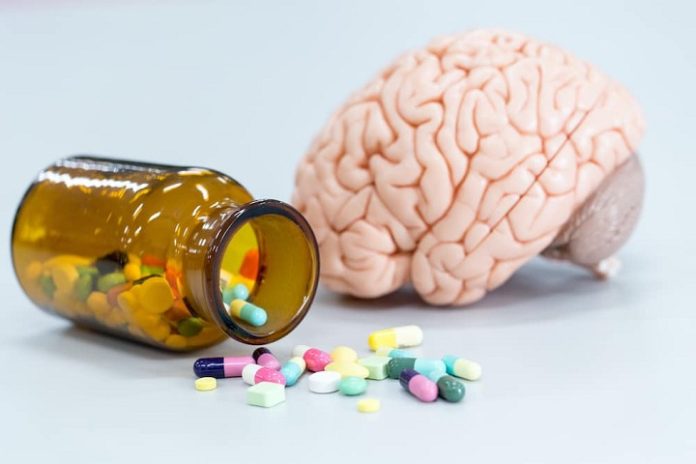
What Drugs Do with a Brain?

What Drugs Do with a Brain?

The brain is a complex body organ. It comprises a three-pound white and gray matter mass that is at the center of human activity. Essentially, a person needs the brain to do everything. For instance, a person needs the brain when driving a car, enjoying a meal, creating an artistic masterpiece, breathing, and enjoying daily activities. All basic functions of the body are regulated by the brain. For instance, the brain enables a person to interpret and react or respond to what they experience. Itโ€™s also the brain that shapes a personโ€™s behavior. In simpler terms, the brain is the person. Itโ€™s everything they feel and think. It is what a person is.

How it Works

Most people have likened the human brain to an intricate and incredibly complex computer. But, rather than have electrical circuits and silicon chips controlling the electronic devices, the human brain has billions of neurons. These are organized into networks and circuits. Each neuron works like the switch that controls information flow. Once a neuron receives a signal from another neuron that it is connected to, it sends a signal to the other neurons within the circuit.

When a person abuses drugs, this network is interrupted. Thatโ€™s because drugs affect the chemical composition of the brain. Consequently, some cases of drug abuse and overdose may necessitate calling the Addiction Resource drug helpline for emergency assistance. This is a phone number that is manned by addiction experts that are ready to provide the help that individuals need to overcome drug abuse problems. Once a person calls this phone number, they are given all the information they need to get the most appropriate help.

One of the goals of addiction treatment is to restore the normal functioning of the brain by removing the intoxicating substance from the brain and body. Different circuits in the brain coordinate and perform specific functions. Neuronsโ€™ networks send signals to different brain parts, nerves, and the spinal cord.

To do this, they release a neurotransmitter into the synapse or gap between one neuron to the next. This neurotransmitter crosses this gap and attaches to a receptor on a receiving cell or neuron. This alters the receiving cell. Unfortunately, this coordination and functioning are interrupted when a person uses drugs. To restore normalcy, a person may have to call rehab and undergo extensive treatment for addiction.

Effects of Drugs on the Brain

Research has shown that how different drugs affect the brain varies. For instance, opiates can activate opioid receptors in the brain. Cocaine can inhibit proteins reuptake for monoamine transmitters.

But generally, drugs affect how neurons receive, send, and process signals through neurotransmitters. Drugs like heroin and cannabis activate neurons since they mimic the structure of neurotransmitters.

As such, these drugs attach to the neurons and activate them. But, how they activate neurons vary from the way natural neurotransmitters do. Additionally, they can alter the message that is sent via the brainโ€™s network.

Cocaine and amphetamine prompt the body to release natural transmitters in abnormally large quantities. They can also prevent the normal recycling of brain chemicals. Thatโ€™s because they interfere with the work of transporters. This disrupts or amplifies neurons communications.

These effects can be serious to an extent where brain coordination and communication is inhibited significantly, especially in overdose cases. Consequently, a person or their loved ones may have to call an addiction hotline number for emergency assistance.

The Brain Parts that Drug Use Affects the Most

Using some drugs can alter important areas of the brain that are critical for life-sustaining functions. It can also lead to compulsive use of drugs leading to an addiction. Thatโ€™s why people should call rehab numbers to seek assistance when a loved one starts abusing drugs extensively.

Some of the brain parts that are affected the most by drug use include:

  • The basal ganglia- This brain part plays a crucial role when it comes to positive motivation.
  • The extended amygdala- This is a crucial part when it comes to dealing with stressful feelings like irritability, uneasiness, and anxiety.
  • The prefrontal cortex- This powers a personโ€™s thinking, planning, decision making, problem-solving, and self-control abilities.

Research has shown that drugs like stimulants work on the brain reward system by stimulating an increase in dopamine production. This system is responsible for the regulation of pleasurable feelings. This explains why a person may want to take a stimulant more often to enjoy a pleasurable feeling.

The Bottom Line

Most drugs affect the brain negatively when misused. Thatโ€™s why people should call the drug helpline when a loved one starts to abuse addictive substances. In most cases, early intervention helps by preventing extensive damage to the brain by drugs.

What High-Speed 3D Printing Could Mean for Medicine

What High-Speed 3D Printing Could Mean for Medicine

While 3D-printed objects have been around for decades, recent developments show that they are set to become even more advanced. Additive manufacturing is the traditional 3D printing process by which layers are stacked upon one another to create the object, but the EPFL Laboratory of Applied Photonics Devices (LAPD) in Switzerland has shown that this tedious method may actually become obsolete. Researchers at the LAPD experimented with vats of clear liquid that are inserted into the 3D printer in which the desired object starts to emerge after spinning for roughly thirty seconds. While it almost seems impossible โ€“ even magical โ€“ this development can be understood by the principles of tomography.

Innovating what exists

Tomography is the same technology used by doctors in CT and CAT scans through x-rays and computers that generate sectional images of organs, tissues, and bones. The result of using tomography in 3D printing is more high-resolution objects which cannot be achieved through the traditional additive manufacturing means. A laser hardens the liquid through polymerisation, and additional algorithms are able to calculate the projection of light at certain angles and doses for the desired product. While this currently results in objects of 2 centimetres or 0.79 inches, this figure is expected to grow significantly in the coming years. This is great news for the fields of science and medicine, where AI and analytics are already growing in prominence among healthcare leaders globally.

Functional design

Head of the LAPD Christophe Moser says that this method is set to become scalable for mass fabrication. Moreover, they will be able to produce cellular tissue models, medical devices, and even personalised implants. Bioprinting has already been introduced to medical facilities, with the printing of less-complex parts like the ears or tracheas.

However, simply having the technology doesnโ€™t mean everything will come easy โ€“ and it certainly doesnโ€™t mean that healthcare professionals will be replaced, as they will still be needed for the design process. For example, most professionals assume that 3D printing will lead to the creation of printed human organs. And the technology is not far off as it can already design intricate projects like making a PCB with a 3D printer. In fact, 3D printing company Nano Dimension CEO Amit Dror compared the similarities between the two design processes, as both are made through combining different components. To design any such intricate project still requires design expertise, and despite 3D printing reducing costs, turnaround times, and helping to create standardised designs, it requires the same human knowledge of whatever youโ€™re trying to print. Physicians, doctors, and surgeons will still be required to design the custom organs and tools that 3D printing could be used to make.

Overcoming barriers

Regulations still complicate the matter, with governing bodies unsure of how to approach the field. Human heart valves, for instance, are frequently printed but have not been transplanted successfully. Bournemouth University and Saint Louis University have collaborated on work with 3D printing in healthcare, with the ultimate goal being the replication of functional tissue and material to actually be translated successfully into patients. They are also still working on how to connect the printed structures to vascular systems which will be responsible for carrying blood throughout the body. However, animal studies on blood vessels, skin, and cardiac tissue show signs of promise โ€“ which is a monumental step towards creating transplantable organs for humans. Tel Aviv University has likewise already created the first 3D printed heart containing cells, blood vessels, chambers, and ventricles from human matter.

Long-term plans

Because of the shortage of donors for organ transplants, patients are left to take suppressants and drugs which could work against them in the long run. These compromise their immune systems and prevent them from successfully accepting transplanted organs, should these become available. Professor David Hay, who is heading a team of researchers at the Centre for Regenerative Medicine at the University of Edinburgh foresees that 3D printing an actual organ with tissue function that can be transplanted into a human body may take another 15 to 20 years. In the meantime, doctors and health professionals can continue to use the technology in the ways that they have already done so successfully. Dealing with something as delicate as the human body will take time, but with the steady developments weโ€™ve already seen, itโ€™s well worth waiting for.


How AI Is Impacting Hospital Operations in 2020

How AI Is Impacting Hospital Operations in 2020

After a slow start, it seems like AI is beginning to disrupt healthcare in earnest. Major players from healthcare and the tech industry are arranging deals, ramping up the data collection needed for AI algorithms to work and finding new ways to apply the technology to healthcare.

Companies use the technology in a variety of ways โ€” providing significant benefits for hospital operations, but also raising concerns about the increasing collection and use of patient data that these AI algorithms depend on.

AI is making a significant impact on hospital operations. Here are four ways that experts expect it to change how hospitals run in 2020.

1. Advanced Medical Diagnostics

Medical organizations are using AI to improve the accuracy of diagnoses of diseases like lung and breast cancer, as gold-standard diagnostic methods continue to suffer from high rates of both false positives and negatives.

In one study from earlier this year, an AI algorithm developed by a team of Google researchers was more effective than radiologists at detecting cancer in mammograms. Another study โ€” in which researchers used AI to look for evidence of lung cancer in CT scans โ€” provided similar results, with the AI performing even better than radiologists.

In practice, these algorithms could enable quicker diagnoses, enabling earlier and more aggressive treatment of diseases like breast and lung cancer.

2. Pulling Better Data From Records

Providers often lack access to the comprehensive data they need to treat a patient adequately. It’s normal for the entirety of a patient’s medical record to be scattered across multiple documents โ€” or for data to be stored, unstructured, in one report โ€” making it difficult for providers to find the most relevant information.

Some healthcare experts hoped that Electronic Health Records (EHRs) would help combat this problem โ€” so far, however, the new systems haven’t been quite successful, with most physicians finding them to be time-consuming and inefficient. Data can remain hard to find because it’s often entered in the form of lengthy clinician notes โ€” a problem that’s made worse by content importation systems that can duplicate existing information.

Because information is in everyday language, standard computer algorithms can’t pull out and organize relevant data in a way that providers can refer to quickly.

Natural language processing (NLP) may change this. NLP algorithms can effectively read written language. Under ideal conditions, these codes can sort through natural language as quickly as a typical computer algorithm works through a spreadsheet to extract information.

An NLP algorithm working on an EHR can isolate relevant details, keywords and context โ€” effectively summarizing a patient’s medical history without the need for a human reader to scan through the document and note the highlights.

A few different tech companies are already offering experimental versions of NLP for EHR โ€” like Amazon, whose Amazon Comprehend Medical can quickly sort through unstructured medical text and offer providers the most relevant information.

3. AI in Medical Devices

AI hospital improvements will also enhance the effectiveness of medical devices.

For example, AI is used in surgical robots to stabilize the recorded hand movements of surgeons, removing hand tremors or jitters that could make incisions and robot movements less precise. New CT scanners are using AI to automatically reduce noise and stitch together scans, making them easier for radiologists to read and interpret.

While these devices have been slowed down by the lengthy FDA approval process in the past, a new set of FDA rules may make it easier for manufacturers to get their AI-powered medical devices approved, speeding up their development and adoption

4. Increased Security Concerns

AI’s adoption isn’t likely to be a universal positive. The increased use of the technology has raised concerns around both security and the ethical use of data.

In at least one of the major projects involving hospitals and big tech that is happening right now, Google’s Project Nightingale, neither patients nor doctors knew that their data was collected and used. While the project seems to be compliant with HIPAA, security experts expressed concerns that the tech giant didn’t gather the information ethically โ€” and that nothing was stopping Google from using patient data in unrelated projects down the line.

As hospitals collect and store more health data, security vulnerabilities will also become a serious issue. Information is valuable โ€” and whenever companies store data in significant amounts, hackers will try to gain access. The healthcare field has already seen a few major security breaches in the past few years, and experts believe that these breaches will grow more common in the near future.

Medical organizations that want to incorporate AI into hospital operations will need to understand the importance of good data stewardship, as well as the potential risks that come with holding on to vast stores of patient information.

AI Is Changing How Hospitals Are Run

New applications of AI and increased tech sector interest in healthcare is driving hospital adoption of the technology. Already, companies use it to improve diagnostic accuracy, make EHRs easier to use and build better medical devices.

However, AI may create new problems for hospitals, as well. Data security is likely to become a significant, and hospitals that adopt AI will need to understand the dangers that can come with handling large amounts of sensitive patient information.

Integra LifeSciences Launches AmnioExcel Plus Placental Allograft Membrane

Integra LifeSciences Launches AmnioExcel Plus Placental Allograft Membrane

Integra LifeSciences Holding Corporation, a leading global medical technology company, announced the launch of AmnioExcelยฎ Plus Placental Allograft Membrane, its latest wound care offering to support soft tissue repair. AmnioExcel Plus is a next generation, thicker, tri-layer, non-side specific allograft consisting of amnion-chorion-amnion layers that aids in creating an environment to help close complex wounds. The proprietary DryFlexยฎ processing technology preserves the inherent growth factors, cytokines and extracellular matrix (ECM) found in native placental tissue.

โ€œIntegra LifeSciences is dedicated to the development of innovative regenerative technologies to treat soft tissue wounds and help heal patients. We are excited to now offer clinicians an amniotic product with a thicker allograft which is easy to handle, conforms to the wound surface and aids in wound closure,โ€ said Robert T. Davis, Jr., corporate vice president and president, Orthopedics and Tissue Technologies. โ€œAmnioExcel Plus is a great addition to our comprehensive and clinically differentiated portfolio of high-quality brands to treat virtually every unique wound type at any stage and help improve patient outcomes.โ€

AmnioExcel Plus is a novel technology for use by clinicians in both the operating room and outpatient wound care setting to help address the epidemic of approximately 8.2 million wounds with an estimated cost to Medicare of up to $98.6 billion annually.1

โ€œAmnioExcel Plus has excellent handling properties. Iโ€™ve found it easier to handle than other allograft products Iโ€™ve used,โ€ said Dr. Lawrence Lavery, D.P.M, professor of plastic surgery at UT Southwestern Medical Center and medical director of the amputation prevention program at Parkland Memorial Hospital. โ€œIt is robust, flexible, and non-side specific, which allows me to employ it in many different clinical settings. The room temperature storage and the 5-year shelf-life make it desirable logistically. Iโ€™m excited to treat even more patients with this product in the clinic.โ€

โ€œI have the good fortune of being able to use AmnioExcel Plus on my patients and have seen great clinical results,โ€ said Pradeep S. Mohan, M.D., plastic and reconstructive surgeon, hand and microsurgeon at Veda Medical and Veda Wound Care of Texas in San Antonio. โ€œAmnioExcel Plus is easy to handle and place within, and on, tissue. It does not stick to my hands or instruments compared to other products on the market and it adheres to the wound bed nicely.โ€

About Integra
Integra LifeSciences is a global leader in regenerative technologies, neurosurgical and extremity orthopedic solutions dedicated to limiting uncertainty for clinicians, so they can focus on providing the best patient care. Integra offers a comprehensive portfolio of high quality, leadership brands that include AmnioExcelยฎ, Bactisealยฎ, Cadenceยฎ, Certasโ„ข, Codmanยฎ, CUSAยฎ, DuraGenยฎ, DuraSealยฎ, ICP Expressยฎ, Integraยฎ, MediHoneyยฎ, MicroFranceยฎ, PriMatrixยฎ, Salto Talarisยฎ, SurgiMendยฎ, TCC-EZยฎ, Titanโ„ข and VersaTruโ„ข.

Integer Acquires Israel’s Medical Devices Maker Inomec

Integer Acquires Israel's Medical Devices Maker Inomec

Medical device outsource (MDO) manufacturer Integer Holdings has acquired medical devices maker Inomec to expand its operations in Israel. Established in 2008, Inomec has expertise in the research, development and manufacturing of medical devices.

The company manufactures minimally invasive tools, delivery systems, metal implants and drug-device combination devices, as well as offers laser processing services.

Inomec founder and CEO Sefi Shachrur said: โ€œIntegerโ€™s leadership as a medical device outsource manufacturer is unmatched and we look forward to providing our customers increased opportunities with our combined capabilities.โ€

The acquisition of Inomec will allow Integer to establish research and development and sales centre in Israel

The acquisition of Inomec will allow Integer to establish research and development and sales centre in Israel, in addition to optimising its catheter design, clinical, and pilot manufacturing capabilities.

The new centre will enable Integer to work with early and late-stage startups, as well as multinational medtech companies in the region. Inomec offers clinical and pilot manufacturing, clean room assembly and packaging services, as well as polymer and metallic laser welding, and bio-compatible 3D printing services to its customers.

Integer also operates facilities in Plymouth and Chaska of Minnesota, Clarence of New York, Beaverton of Beaverton, Raynham of Massachusetts, Montevideo of Uruguay and Galway of Ireland.

Integer president and CEO Joe Dziedzic said: โ€œAcquiring Inomec strengthens our research and development pipeline by adding differentiated capabilities and expanding our global footprint in a key market with an extensive innovation ecosystem that is widely recognized as a leader in MedTech innovation.โ€

In May 2018, MedPlast agreed to acquire advanced surgical and orthopedics (AS&O) product lines from Integer Holdings for $600m in cash. The acquired business strengthened MedPlastโ€™s front-end design, development and prototyping services, in addition to expanding its metals manufacturing capabilities such as machining, stamping, coating and metal forming.

Sharecare acquires Visualize Health to drive better patient outcomes

Sharecare acquires Visualize Health to drive better patient outcomes

Sharecare, the digital health company that helps people manage all their health in one place, announced its acquisition of Visualize Health, a company that supports value-based healthcare and enables payers and providers to close gaps in patient care. By integrating streamlined, insights-based actions into the clinician’s workflow to eliminate care gaps in individual patient journeys, Visualize Health’s cloud-based technology complements Sharecare’s comprehensive health and well-being platform, and ideally positions the digital health company to help payer and provider partners succeed in value-based environments.

“As reimbursement models shift to value-based care, provider groups are facing new and growing pressures to deliver the best possible quality while also adapting to various performance measures, and reporting and documentation standards โ€“ all of which greatly increase provider workload, particularly when they lack the technology to gain visibility into each patient’s full care plan,” said Jeff Arnold, founder, chairman and CEO of Sharecare. “By acquiring Visualize Health, we are poised to help our partners effect meaningful change across their populations by improving care coordination, quality measurement, and the relationship between clinicians and their patients.”

Visualize Health integrates with all major electronic medical records and practice management systems to quickly identify incomplete quality measures, gaps in care and deficiencies in documentation. With that, Visualize Health also serves providers recommended actions for each patient, including prescribed care measures across a broad array of conditions such as asthma/COPD, depression, diabetes and general preventative care and screening.

“We are driven by our commitment to the quadruple aim and thus have spent the last five years at Visualize Health focused on not only improving the health of populations, reducing unsustainable healthcare spending and enhancing each individual’s healthcare experience, but also empowering providers with the tools they need to provide quality care,” said Dr. Kenneth Persaud, CEO of Visualize Health. By joining Sharecare โ€“ from its scale to the breadth and depth of its end-to-end platform โ€“ we are poised to provide even more value to providers across the country, while exponentially expanding our reach and ability to innovate.

Through previous acquisitions, Sharecare has integrated a range of capabilities and introduced new services to support providers’ workflows โ€“ including medical record management; quality, performance and risk-adjustment tools; and billing contract compliance โ€“ and demonstrated its ability to grow those revenue streams organically. With Visualize Health, Sharecare is focused on bringing new products to its growing customer base and innovation to its medical records management business.

As an established leader in consumer and patient engagement, Sharecare also will partner with physician practices using Visualize Health to offer the Sharecare app to patients so they can be empowered to better manage their own health day-to-day between office visits, in particular for those who may benefit from treatment plans or disease management programs. In parallel, Sharecare will use insights from Visualize Health to foster richer patient communication and deeper engagement within the Sharecare app.

Arnold added, “Just as the market is looking for innovative and nimble patient-centric care models that match resources to individual needs, being physician-accepted is a key factor in Sharecare’s continued growth and success. By combining forces with Visualize Health, our vision of health systems becoming Sharecare-enabled โ€“ and, ultimately, physicians ‘prescribing’ Sharecare to their patients โ€“ is within closer reach than ever before.”

Visualize Health will operate out of the Sharecare campus in Franklin, Tenn., which the company acquired with its purchase of Healthways in 2016. In addition to the Visualize Health business, Sharecare’s Franklin office also serves as a regional hub for its Health Data Services and Population Health divisions. Financial terms of the deal were not disclosed.

About Sharecare
Sharecare is the digital health company that helps people manage all their health in one place. The Sharecare platform provides each person โ€“ no matter where they are in their health journey โ€“ with a comprehensive and personalized health profile where they can dynamically and easily connect to the information, evidence-based programs and health professionals they need to live their healthiest, happiest and most productive lives. In addition to providing individual consumers with direct access to award-winning and innovative frictionless technologies, scientifically validated clinical protocols and best-in-class coaching tools, Sharecare also helps providers, employers and health plans effectively scale outcomes-based health and wellness solutions across their entire populations.

Primary Care Group Uses Population Health IT to Help Prevent Colon Cancer

Primary Care Group Uses Population Health IT to Help Prevent Colon Cancer

Georgia’s Albany Area Primary Health Care is working on population health, focusing on what the provider organization believes to be high priority conditions that will add value to the practice, to patients and to payers.

The healthcare organization has a major effort underway in colorectal cancer screening, trying to significantly increase its screening rates. It is doing a breast and cervical program at the CDC, applying it to uninsured women, many of whom would never have a mammogram. And it’s doing another program to try to increase its pneumococcal vaccination rates, doing this in affiliation with the American College of Physicians and the CDC. Those organizations have a program that Albany Area Primary Health Care is sustaining for hypertension control.

The colorectal program is a major focus, and technology has played a big part in its success, said James Hotz, MD, clinical service director at AAPHC. He said its technology allows a user to analyze what the electronic health record shows is done and what’s not done: The user can easily click by site or by a clinician, and the system presents a green bar (meaning done) or a red bar (meaning not done).

“So we would click on the red bar for people coming in that week, and our population managers would post it as ordering FIT (fecal immunochemical test) or colon cancer screening as something to be done,” Hotz explained. “They would then do a focused outreach to people who may not be coming in anytime soon. What we found is 20 percent of the people that needed to be screened didn’t even have a return appointment.”

So the population managers did a mail campaign including a FIT test to all those who were at average risk. They call them at day two and day seven to encourage people to return the FIT test. The clinics that employed population managers each achieved above 75 percent screening rate, with one hitting above 80 percent.

“In the clinics where we did not do this focus application of population managers, numbers were running down into 40 percent to 50 percent,” Hotz said. “But globally, by doing this focused outreach using this analytics technology, we’ve been able to increase our screening rate significantly. When we started the project, and this was January of 2016, we had a 34 percent colorectal cancer screening rate. Today our rate is 60 percent.”

Some basic math at the clinics: One in 20 people unscreened over 50 will develop colon cancer and that means that, with their numbers, there were 125 people who would have developed colon cancer.

“By screening, we reduced that risk of colon cancer by 70 percent, so that’s 87 people who we can prevent getting colon cancer by increasing these rates,” Hotz said. “So it translates into good quality metrics but it translates into lives saved.”

Albany Area Primary Health Care uses population health technology from Forward Health Group. Many vendors provide population health systems, including The Advisory Board, Caradigm, Enli Health Intelligence, Evolent Valence, IBM Watson Health, Optum and Wellcentive, as well as EHR vendors Allscripts, Cerner and Epic.

Hotz added that the organization also uses the population health technology to generate various payer-oriented reports.

“A lot of times we find out there’s some errors in reports, like we are not capturing hysterectomies that have been done and there all those denominators and they are falsely lowering our cervical cancer screening rates,” Hotz explained. “But the real bottom line to administrators is, on all UDS measures that are part of this portfolio or population management, we are significantly above national average. And what that meant to us from just HRSA alone was like $287,000 of quality bonus for us last year.”

Measuring quality, Albany Area Primary Health Care comes out quite high, which helps with value-based care, and Hotz credits the population health program and technology for this high quality.

“Look at the numbers,” Hotz said. “All clinics nationally for tobacco screening are at 85 percent versus our 90 percent, colorectal 39 versus 60, for coronary disease and limpid management 79 versus 90, ischemic vascular 78 versus 90, controlling high blood pressure 62 versus 73. So when you compare us to all the federal qualified health centers, our performance is above national average on all of them and that’s where, depending on the quartile you’ll fit in, that helps determine part of your bonus.”

Hotz added that this not only helps with quality patient care and payment bonuses, it helps with employee recruiting and other matters.

“It’s easier to recruit a five-star college football player to Alabama than it is to Vanderbilt because, you know, people want to be on the winning team,” Hotz concluded.

Verizon and Emory Healthcare light up in the US first 5G healthcare lab

Verizon and Emory Healthcare light up nations first 5G healthcare lab

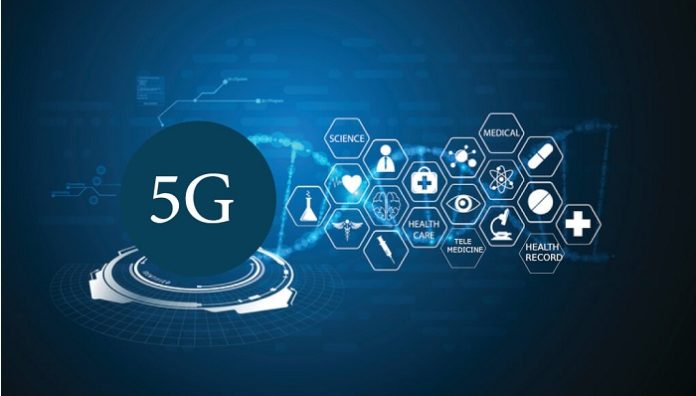
Verizon and Emory Healthcare have entered into a strategic partnership to develop and test 5G Ultra Wideband-enabled use cases that could transform the healthcare industry. As part of the partnership, Verizon lit up the Emory Healthcare Innovation Hub (EHIH) with 5G Ultra Wideband service, making it the nationโ€™s first 5G healthcare innovation lab.

EHIH is a healthcare advancement and commercialization program committed to improving the patient care and provider experience. EHIH does this by leveraging the 11TEN Innovation Partnersโ€™ โ€œdemand driven innovationโ€ approach to solving the most pressing problems facing health care. Verizon will collaborate with Emory Healthcare and its nine Innovation Hub partners, including founding partner Sharecare, to help spur the development of healthcare solutions powered by 5G.

The massive bandwidth, super-fast speeds and ultra-low latency of Verizonโ€™s 5G Ultra Wideband network have the potential to help redefine patient care with real-time data analytics, giving researchers the ability to explore solutions such as connected ambulances, remote physical therapy and next-generation medical imaging. EHIH will be able to test how 5G could enhance augmented and virtual reality (AR/VR) applications for medical training, enable telemedicine and remote patient monitoring, and provide point of care diagnostic and imaging systems from the ambulance to the ER.

โ€œThe potential of Verizon 5G Ultra Wideband combined with mobile edge computing to transform healthcare is limitless,โ€ said Tami Erwin, CEO of Verizon Business Group. โ€œWhich is why Verizon is partnering with Emory to explore the 5G future of patient care. With 5G, doctors should be able to do things like create holographic 3D anatomical renderings that can be studied from every angle and even projected onto the body in the OR to help guide surgery.โ€

“The healthcare industry, driven by value-based care and increased consumerization, is set for a paradigm shift that will put a much greater focus on connectivity and access to data,โ€ said Scott D. Boden, MD, Vice President for Business Innovation for Emory Healthcare. โ€œAcross every facet of healthcare, from care innovation to reimbursement model transformation to decentralization of care, speed to data is critical to the digital evolution of health,”

This engagement is part of Verizonโ€™s broader strategy to partner with customers, startups, universities and large enterprises to explore how 5G can disrupt and transform nearly every industry. Verizon operates five 5G Labs in the U.S. and one 5G Lab in London that specialize in developing 5G uses cases in industries ranging from health care to public safety to entertainment. While this is the first 5G lab Verizon has set up on-premises for a customer, it will be part of an ongoing initiative to co-develop 5G-related use cases to help customers transform their industries.

In addition to providing EHIH with 5G, Verizon will offer network and security services, project management, professional consulting services and managed infrastructure and sit on the Emory Hub Executive Advisory Board.

The ribbon cutting for the new 5G healthcare innovation lab takes place Friday February 28th from 10a-12p ET at One Glenlake Parkway, NE, Atlanta, GA.

Philips and Intercept TeleMed spur new breed of tele-ICU for small Hospitals

Philips and Intercept TeleMed spur new breed of tele-ICU for small Hospitals

As hospitals seek to manage the challenge of critical care provider shortages (critical care nurses and physicians, known as intensivists), and rising patient acuity in the intensive care unit (ICU), a new breed of independent tele-ICU providers is emerging to offer the support needed for bedside care teams.

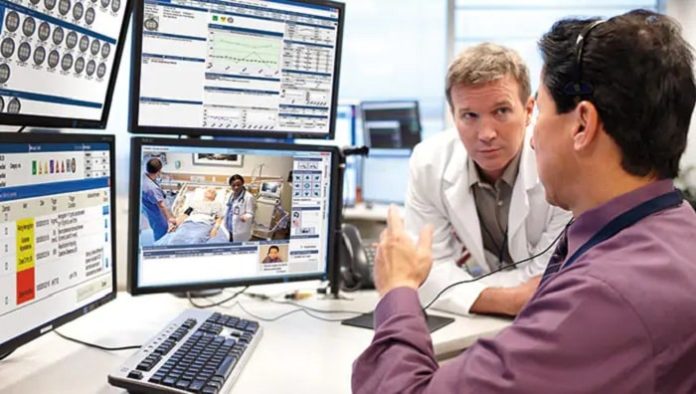
Intercept TeleMed, leveraging Philipsโ€™ eCareManager Acute Telehealth Suite, has launched tele-ICU services for hospitals that want the benefits of intensivist-led care, 24/7 staffing, and advanced analytics. Organizations seeking to implement a centralized delivery model without the upfront investment in resources and infrastructure can achieve this through a trusted tele-ICU services provider like Intercept. Particularly geared toward hospitals with fewer ICU beds than the threshold needed to build an independent remote clinical command center, Intercept can also provide hospitals with consultative services such as tele-stroke, tele-psychiatry, or staff augmentation.

Intercept was founded by Dr. Diego C. Reino, a surgeon specializing in abdominal organ transplants for the highest risk patients. Having personally experienced the value of tele-ICU, Dr. Reino gathered a support staff of critical care physicians and nurses who could remotely deliver the data-driven critical care expertise that bedside teams need. Intercept offers customized solutions that address each organizationโ€™s individual needs, whether that be staff augmentation, a โ€œround and respondโ€ or specialist physician on demand service, or a full 24/7 tele-ICU. These solutions are made possible through Philips eCareManager, delivered as a turnkey solution for a hospitalโ€™s operational needs and attuned to their outcome goals.

Philips eCareManager synthesizes patient data and uses predictive analytics and data visualization to deliver need-to-know information to caregivers for increased clinical decision support. This insight helps empower the remote care team at Intercept to detect patient trends and deterioration early so they can intervene in a timely manner. eCareManager also allows Intercept to effectively manage various patient populations and the coordination of care with confidence. The system keeps patient information in a centralized database to provide care teams โ€“ bedside and telehealth โ€“ with access to the same, up-to-date information to ensure efficient and effective collaboration.

In previous studies, patients who received their ICU care from a hospital that utilized Philipsโ€™ eCareManager:

โ€ข Saw a significant reduction in mortality;

โ€ข Were discharged from the ICU 20% faster;

โ€ข 15% were discharged to home faster.

โ€œOur solutions help the underserved population of small hospitals with the critical services they need,โ€ said Christine Storm, General Manager of Patient Care Analytics at Philips. โ€œHelping to drive proactive care for the sickest patients at organizations of all sizes is a key part of meeting Philipsโ€™ goal of improving 3 billion lives annually by 2030.โ€

โ€œAt Intercept, we designed a tele-ICU services company that is founded by critical care physicians, funded by critical care physicians and is led by critical care physicians, all of whom have an in-depth understanding of the problems and opportunities for improved outcomes within any ICU,โ€ said Diego Reino, MD, CEO, Intercept TeleMed. โ€œBy leveraging Philipsโ€™ advanced telehealth solution, Intercept has been able to build real partnerships with our hospitals and bedside staff to deliver proactive care to patients.โ€

Intercept works directly with Philips to implement the solution across client sites, incorporating the technology within the hospitalโ€™s algorithms for care. The tele-ICU helps these hospitals meet Leapfrog IPS standards as well as minimize transfers and patient leakage across their organizations.

As part of its commitment to continuously evolve to meet the needs of a changing healthcare marketplace, Philips recently announced an eCareManager platform extension with the launch of Sentry Score, a predictive algorithm for the adult intensive care unit (ICU) that shows a patientโ€™s probability of requiring an intervention within 60 minutes.

Serinus Health Will Unveil Unique Suite of Patient Centric Services at HIMSS 2020

Serinus Health Will Unveil Unique Suite of Patient Centric Services at HIMSS 2020

Serinus Health is a leading provider of patient centric services for effective reduction of ER/Hospitalizations. Serinus provides Remote Patient Monitoring at home for early detection of health risk changes. Risk changes trigger automated alerts to the care team. Upon receiving a health alert, Serinus conducts real time patient health assessment to complement the patientโ€™s condition evidence, for prompt and precise Interventions of Care Coordination. Furthermore, Serinus’ platform enables physicians to provide “Care When and Where is Needed’ using evidence based Tele-Medicine to patients at home.

Timely and evidence-based Telemedicine care at home, or in the clinic, is THE effective way to prevent ER/Hospital Admissions.

Serinus has the most flexible array of health monitoring tools, for total patient flexibility, including automated APPs; smart Artificial Intelligence Virtual Assistants via Voice or Texting; and data concentrators requiring no patient intervention for vital automated transmissions via cell networks. Serinus smart cloud applications detect and send automated Alerts upon detection of vital abnormalities, while physicians and care teams have access real time patient vital data fusion dashboards.

Serinus Health will demonstrate all these Patient Centric Solutions at HIMSS 2020 Intelligent Health Pavilion, IHP, (Booth 7273-29) and during the IHPโ€™s Leadership Theater presentation.

The Intelligent Health Association (IHA), creator of The Intelligent Health Pavilionโ„ข (IHP), the one-stop, healthcare-technology, destination pavilion, will be celebrating its 10th anniversary at HIMSS20. The IHA focuses on the following technologies: Auto-ID, biometrics, UV technologies, smart lighting, RFID/RTLS, 3-D printing, lasers, robotics, RF technologies, voice technology, wearables, sensors, hearables, mobile devices, and all wireless technologies

Translate ยป