












Close
Digital Health & Ai Innovation summit 2026
Medical Taiwan 2026

GE Healthcare Selected as Vendor of Choice for NYC Health + Hospitals $224 Million Investment to Upgrade Medical Imaging Technology System-Wide

GE Healthcare Selected as Vendor of Choice for NYC Health + Hospitals $224 Million Investment to Upgrade Medical Imaging Technology System-Wide

NYC Health + Hospitals hasย announced that it is investing $224 million over ten-years to upgrade medical imaging technology system-wide. Across the NYC Health + Hospitals system there are 470 of these machines, and they are used to screen, diagnose, and treat numerous disease states. Within the first four years, 230 medical imaging machines will be updated, including MRI, CAT, nuclear cameras, X-ray machines, catheterization labs, PET/PETCT machines, and fluoroscopy units.

The new equipment, supplied under contract with GE Healthcare, will support the public health systemโ€™s goal of standardizing care and providing patients modernized, state-of-the-art technology that will produce faster and better image quality, and lead to quicker diagnoses and treatment for patients.

โ€œAt NYC Health + Hospitals, we are making investments that will improve patient experience and provide the highest quality of care, diagnosis and treatment for all New Yorkers,โ€ said Mitchell Katz, MD, President and CEO of NYC Health + Hospitals. โ€œWeโ€™re standardizing our technology to offer patients the same quality of care regardless of what facility they visit.โ€

โ€œGE Healthcare is honored to work alongside NYC Health + Hospitals in its mission to improve patient care and clinical outcomes for the people of New York,โ€ said Everett Cunningham, President and CEO of GE Healthcare, U.S. and Canada. โ€œProviding premium care to a growing patient population continues to be challenging in todayโ€™s healthcare environment. This relationship demonstrates the importance of equipment utilization and strategic planning to solve for these challenges, assisting large healthcare systems in meeting their goals related to reducing costs, increasing hospital efficiency, enhancing clinical quality, and most importantly, improving the patient experience.โ€

The investment and relationship with GE Healthcare will standardize and modernize the imaging equipment for the Cityโ€™s public health system. This partnership will also modernize and streamline the imaging capital equipment planning and replacement process.

Of the total investment, $20 million has already been allocated for NYC Health + Hospitals/Coney Island, which is undergoing renovations as part of its Hurricane Sandy recovery project. The hospital will receive 47 new imaging machines, including 12 new ultrasounds, an MRI machine, and a variety of X-ray machines totaling 19 units.

NYC Health + Hospitals has 89,000 pieces of medical equipment, ranging from low-complexity equipment to sophisticated imaging and operating room equipment. NYC Health + Hospitals performs1.5 million imaging procedures each year.

About GE Healthcare

GE Healthcare is the $19.8 billion healthcare business of GE.ย  As a leading provider of medical imaging, monitoring, biomanufacturing, and cell and gene therapy technologies, GE Healthcare enables precision health in diagnostics, therapeutics and monitoring through intelligent devices, data analytics, applications and services. ย With over 100 years of experience in the healthcare industry and more than 50,000 employees globally, the company helps improve outcomes more efficiently for patients, healthcare providers, researchers and life sciences companies around the world.ย  Follow us onย Facebook,ย LinkedIn,ย Twitterย andย The Pulseย for latest news, or visit our websiteย https://corporate.gehealthcare.com/ for more information.


About NYC Health + Hospitals

NYC Health + Hospitals is the largest public health care system in the nation serving more than a million New Yorkers annually in more than 70 patient care locations across the cityโ€™s five boroughs. A robust network of outpatient, neighborhood-based primary and specialty care centers anchors care coordination with the systemโ€™s trauma centers, nursing homes, post-acute care centers, home care agency, and MetroPlus health planโ€”all supported by 11 essential hospitals. Its diverse workforce of more than 42,000 employees is uniquely focused on empowering New Yorkers, without exception, to live the healthiest life possible. For more information, visitย www.nychealthandhospitals.org

Siemens Healthineers Launches ACUSON Redwood to Meet Growing Demand for Cost-Effective Premium Medical Imaging Services

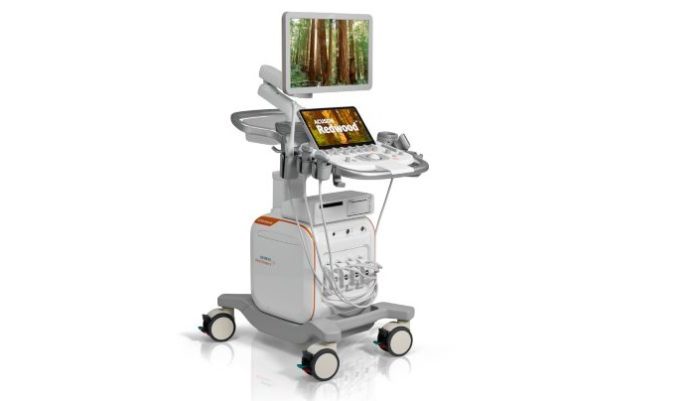
 ACUSON Redwood

Siemens Healthineers has launched the ACUSON Redwood, a new ultrasound system built on the companyโ€™s new platform architecture and features advanced applications for greater clinical confidence, AI-powered tools for smart workflows and has shared services cardiology features used by different hospital departments. These features, along with a portable and lightweight design, offer clinicians an affordable and efficient high-performing imaging solution.

โ€œGlobally, we are seeing an increased demand for cost-effective medical imaging services being driven by the growing healthcare needs of an aging population, particularly in regard to chronic diseases,โ€ says Robert Thompson, Head of Ultrasound at Siemens Healthineers. โ€œChronic diseases often require more imaging and additional follow up which drives costs. To meet this challenge, we worked together with input from users to transform care delivery with the ACUSON Redwood. This system is designed to deliver premium image quality, exceptional performance, and greater workflow efficiency within the constraints of limited resources and tightening budgets.โ€

The ACUSON Redwoodโ€™s advanced applications, including Contrast Enhanced Ultrasound (CEUS) and Shear wave Elastography, are available for the first time from the company in this segment and support precise lesion detection and characterization as well as potentially reduces the need for invasive procedures.

A full portfolio of high-performance transducers including compact micro-pinless technology and single crystal transducers support superb image quality. With our coherent image formation (CIF) technology, the ACUSON Redwood maintains B-mode image quality performance even in complex modes and the systemโ€™s UltraArt Universal Image Processing provides several image choices right on the touch screen avoiding manual adjustment of multiple image parameters.

With a suite of AI-powered tools, the ACUSON Redwood delivers smart workflows for greater efficiency. Designed to go beyond the radiology department and bring precision imaging to more patients, lightweight and portable with 13 transducers, the ACUSON Redwood is easy to move and delivers premium imaging capabilities to the various clinical departments within an organization, such as radiology, cardiology and OB/Gyn.

Shared Services Cardiology Capabilities
The ACUSON Redwood is a comprehensive shared services cardiac solution. In this environment it is crucial to address the needs of a broad range of cardiac assessments which is why the system includes applications such as syngo Velocity Vector Imaging (VVI) technology, an advanced 2D quantitative tool for assessment of global and regional myocardial motion and mechanics, stress echo with a complete wall motion scoring analysis package and Left Ventricular Opacification (LVO) mode to enable cardiac contrast agent imaging.

With the ACUSON Redwood, Siemens Healthineers enhances its portfolio of systems built on the new architecture platform, joining the flagship ACUSON Sequoia, and the high-performance ACUSON Juniper. The ACUSON Redwood has 510K clearance from the U.S. Food and Drug Administration (FDA) and European CE

mark.

ABB demonstrates concept of mobile laboratory robot for Hospital of the Future

ABB demonstrates concept of mobile laboratory robot for Hospital of the Future

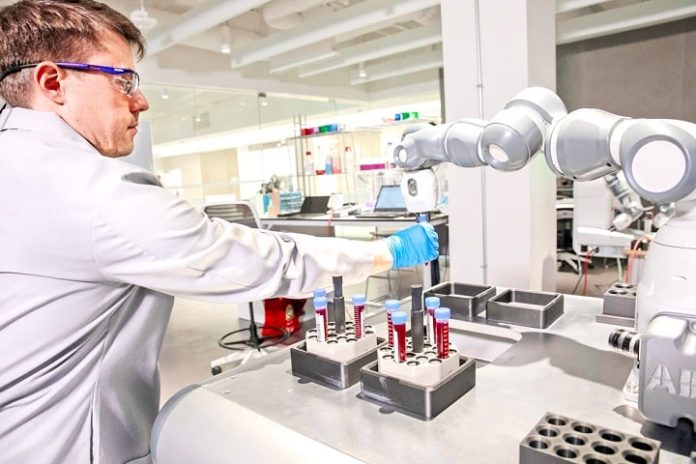
ABB opened its first global healthcare research hub on the Texas Medical Center (TMC) campus, in Houston, Texas โ€“ showcasing a number of concept technologies, including a mobile YuMiยฎ robot, which will be designed to assist medical and laboratory staff with laboratory and logistics tasks in hospitals.

The dual-arm mobile YuMiยฎ will be able to sense and navigate its way around its human co-workers autonomously, while learning to find different routes from one location to another. It has the potential to undertake a wide range of repetitive and time-consuming activities, including preparation of medicines, loading and unloading centrifuges, pipetting and handling liquids and picking up and sorting test tubes.

The mobile YuMiยฎcould also be used in hospitals for a wide variety of logistics roles. YuMiยฎ may be able to dispense medicines, transport them to where they are needed in hospitals, bring medical supplies to hospital staff and bed linen direct to patientsโ€™ bedrooms.

At TMC Innovation Institute, ABB will develop robots that are able to carry out repetitive, delicate and mundane processes, leaving highly skilled medical and laboratory staff free to undertake more valuable roles and ultimately treat more patients. ABB analysis shows that repetitive tasks could be completed up to 50 per cent faster with automation, compared to current manual processes, with the added benefit that robots can work 24 hours a day.

โ€œThe healthcare sector is undergoing significant transformation as the diagnosis and treatment of disease advances, while coping with an aging population, increasing costs and a growing worldwide shortage of medical staff. With our new healthcare research and development hub at TMC we are aiming to develop answers to these challenges โ€“ together with the best minds in academia, science and medicine,โ€ said Sami Atiya, President of ABBโ€™s Robotics and Discrete Automation business. โ€œOur experience in industrial and collaborative robotics will give us a strong basis to be able to adapt flexible automation to the healthcare sector. Together with our partners at TMC, we will develop cutting-edge robotics solutions. We are working to reduce the number of manual procedures performed by medical staff, improve the accuracy of laboratory work and enhance patient satisfaction and ultimately patient safety.โ€

Other technologies showcased by ABB at the Healthcare Research Hub include YuMiยฎ robots that could aid in centrifuge tending and test tube handling systems, and an IRB 1200 robot that could execute liquid transfers in a pipetting application. All are common medical laboratory tasks that robotic automation may be able to support by combining consistent performance with a level of flexibility and continuous operation that could increase throughput and quality while minimizing costs.

TMC is the largest medical city in the world with world-class collaborative research resources, including some of the worldโ€™s leading companies and hospitals. ABBโ€™s new 5,300 sq ft (500m2) Healthcare Hub will be housed at the TMC Innovation Institute, a state-of-the-art hub that fosters collaboration of medicine and cutting-edge technology, connecting start-ups with pioneers in academia and leading technology companies in order to accelerate the development and prototyping of breakthrough medical technology.

โ€œTexas Medical Center, TMC Innovation, and the entire TMC network of member institutions are pleased to welcome ABB on the occasion of its first foray into the healthcare space with this incredible and unprecedented new robotics facility,โ€ emphasized Bill McKeon, President & CEO of Texas Medical Center. He added, โ€œA primary goal across TMC โ€“ the largest medical city in the world โ€“ is to make research happen faster while simultaneously cutting costs in order to create more rapid and cost-effective solutions for patients who are in desperate need of treatment. ABBโ€™s move into the heart of the Texas Medical Center campus with this first-of-its-kind R&D facility for creating robotics solutions in healthcare will set a new course for advancements in medicine and establish TMC as the nexus for a new kind of synergistic partnership that will shape the future of healthcare for clinicians, researchers, and patients alike.โ€

Robotic automation in the healthcare sector offers significant opportunity for future growth. According to internal ABB research, the global market is estimated to reach nearly 60,000 non-surgical medical robots by 2025, a fourfold increase from 2018.

ABB is a technology leader that is driving the digital transformation of industries. With a history of innovation spanning more than 130 years, ABB has four customer-focused, globally leading businesses: Electrification, Industrial Automation, Motion, and Robotics & Discrete Automation, supported by the ABB Abilityโ„ข digital platform. ABBโ€™s Power Grids business will be divested to Hitachi in 2020. ABB operates in more than 100 countries with about 147,000 employees. www.abb.com

ABB Robotics is a pioneer in industrial and collaborative robots and advanced digital services. As one of the worldโ€™s leading robotics suppliers, we are active in 53 countries and over 100 locations and have shipped over 400,000 robot solutions for a diverse range of industries and applications. We help our customers to improve flexibility, efficiency, safety and reliability, while moving towards the connected and collaborative factory of the future. www.abb.com/robotics

TMC INNOVATION
Texas Medical Center (TMC)โ€”the largest medical city in the worldโ€”is at the forefront of advancing life sciences. Home to the brightest minds in medicine, TMC nurtures cross-institutional collaboration, creativity, and innovation among its 106,000-plus employees. With a campus of more than 50 million square feet, TMC annually hosts 10 million patients, performs over 180,000 surgeries, conducts over 750,000 ER visits, performs close to 14,000 heart surgeries, and delivers over 25,000 babies. Beyond patient care, TMC is pushing the boundaries of clinical research across its extensive network of partner institutions on a daily basis, pioneering effective health policy solutions to address the complex health care issues of today, and cultivating cutting-edge digital health applications and medical devices.

Perspectum announces partnership with Precious Medical Centre

Perspectum announces partnership with Precious Medical Centre

Perspectum, the leading provider of diagnostic solutions for metabolic disease and cancer, is partnering Precious Medical, a premier imaging centre in Singapore, following a successful launch event this week.

Chronic liver disease is a โ€˜silentโ€™ and growing epidemic. Increasing levels of obesity and diabetes have driven a rise in non-alcoholic fatty liver disease (NAFLD), estimated to affect 40% of Singaporeans. NAFLD also appears to affect Asians at a lower BMI compared to Westerners. Most patients may not experience symptoms until the advanced, irreversible stages. If liver disease is diagnosed early, progression can be limited, reducing the need for expensive interventions.

Dr William Chong, director of Precious Medical Centre says, โ€œThe development of accurate methods to quantify chronic liver disease will help improve the quality of care for our patients. We are proud to be the first to offer LiverMultiScan clinically in Asia. We hope that this partnership will also create more awareness and people will consider liver checks as an integral part of their health screening โ€” the earlier the diagnosis, the greater the probability of recovery.โ€

โ€œWe are excited to bring our innovations to the clinics in Asia โ€” providing scalable, patient-centric solutions to cater to the growing epidemic.โ€ shared Sir Michael Brady, Chairman of Perspectum.

GE Healthcare and Theragnostics announce global commercial partnership for late stage PSMA diagnostic for prostate cancer

GE Healthcare and Theragnostics announce global commercial partnership for late stage PSMA diagnostic for prostate cancer

GE Healthcare and Theragnostics have entered into a global commercial partnership for a new Prostate-Specific Membrane Antigen (PSMA) PET/CT imaging agent. Theragnostics will lead the development of the tracer, GalliProst, while GE Healthcare will lead all pre-approval commercial preparations and as and when approval is received, all subsequent commercial and distribution activities.

Today, prostate cancer is the fourth largest cancer type accounting for just over 1.2 million new cases and over 350,000 fatalities around the globe in 2018. The diagnostic workflow for detecting prostate cancer starts through a blood test or biopsy, after which patients are typically referred for PET/CT imaging so that radiologists can see their tumour, lymph nodes and any metastasis in order to decide the appropriate course of treatment. The โ€˜heatmapโ€™ style image enabled by the new tracer shows the precise location and intensity of PSMA, which is expressed on the surface of prostate cancer cells.

Theragnostics has reported data from a phase two clinical study which met its primary and secondary endpoints, demonstrating that one third of newly diagnosed prostate cancer patients – and over 50% of patients with biochemically recurrent disease – had their treatment plans modified as a result of a GalliProst scan. The change in patient management increased to 75% in a post-radical radiotherapy setting.

โ€œWe are excited to partner with Theragnostics on GalliProst to give vital insights into prostate cancer,โ€ said Sanka Thiru, Global Product Leader, Molecular Imaging Oncology in GE Healthcareโ€™s Pharmaceutical Diagnostics business. โ€œWe believe that this partnership enables both parties to leverage each otherโ€™s key areas of expertise in order to accelerate the development of GalliProst and ultimately improve patient care.โ€

Greg Mullen, CEO of Theragnostics added: โ€œThis agreement is validation of the potential for our novel prostate cancer Gallium-68 (68Ga) diagnostic tracer, GalliProst which can benefit the treatment of prostate cancer patients around the globe. We are very pleased to sign our second agreement with GE Healthcare following our agreement last year for a diagnostic tracer for imaging kidney function and scarring.โ€

Both GE Healthcare and Theragnostics will be attending the upcoming European Association of Nuclear Medicine 2019 Congress (EANM) in Barcelona on October 12-16.

About GE Healthcare:
GE Healthcare is the $19.8 billion healthcare business of GE. As a leading provider of medical imaging, monitoring, biomanufacturing, and cell and gene therapy technologies, GE Healthcare enables precision health in diagnostics, therapeutics and monitoring through intelligent devices, data analytics, applications and services. With over 100 years of experience in the healthcare industry and more than 50,000 employees globally, the company helps improve outcomes more efficiently for patients, healthcare providers, researchers and life sciences companies around the world. Follow us on Facebook, LinkedIn, Twitter and The Pulse for latest news, or visit our website https://corporate.gehealthcare.com/ for more information.

About Theragnostics:
Theragnostics, a private biotech company based in UK and US, is developing innovative radiopharmaceuticals to improve cancer diagnosis and treatment. It has developed a radiopharmaceutical technology platform that allows for diagnostic tools as well as therapeutic solutions to inform clinical management, guide care and treat cancer patients in areas of unmet medical need. Three diagnostic imaging agents have been successfully developed. The first radiopharmaceutical therapy, rPARP inhibitor THG-009 (I-123 labelled PARPi) is expected to enter clinical development in 2020. Theragnostics is led by recognized experts in the clinical development and commercialization of innovative diagnostic and therapeutic nuclear medicine products. For more information, visit www.theragnostics.com

Sectra wins radiology PACS contract at Marshfield Clinic Health System in the U.S

Sectra wins radiology PACS contract at Marshfield Clinic Health System in the U.S

International medical imaging IT and cybersecurity company Sectra will install its award-winning PACS at the 7 hospitals and 50 plus outpatient clinics that comprise Marshfield Clinic Health System in Wisconsin. The Sectra solution will provide consolidation of all radiology images on a single platform and allow for efficient remote reading by radiologists.

Marshfield Clinic Health System is the largest private group medical practice in Wisconsin with more than 1,200 providers operating out of 50 locations.

โ€œI am very pleased to welcome Marshfield Clinic as a customer. Sectraโ€™s solution is designed for health systems with geographically dispersed locations like Marshfield. The images will follow the patients and the physicians will have easy access to them, regardless of their physical location,โ€ says Mikael Anden, President of Sectra in the U.S.

In addition to Sectra PACS for diagnostic radiology, the multi-year contract signed in September will include Sectra Breast Imaging PACS for mammography workflow, advanced visualization tools and business analytics.

Sectra PACS is optimized for high production environments and supports the goal of shortened report turnaround times, enhanced result distribution workflows, and improved communication between departments. It is a part of Sectraโ€™s enterprise imaging offering, which provides a unified strategy for all imaging needs.

Experience Sectraโ€™s solution at RSNA
Visit Sectra in booth #6113 at RSNA 2019 to learn more about the complete enterprise imaging offering, with Sectra VNA and our Best-in-KLAS PACS for radiology, pathology and cardiology at its core. Explore how the solutions and latest innovations support radiologists in becoming more efficient and accomplishing more. For RSNA highlights and to book a demo, please visit medical.sectra.com/rsna.

About Sectra
Sectra assists hospitals throughout the world to enhance the efficiency of care, and authorities and defense forces in Europe to protect societyโ€™s most sensitive information. Thereby, Sectra contributes to a healthier and safer society. The company was founded in 1978, has its head office in Linkรถping, Sweden, with direct sales in 19 countries, and operates through partners worldwide. Sales in the 2018/2019 fiscal year totaled SEK 1,413 million. The Sectra share is quoted on the Nasdaq Stockholm exchange. For more information, visit sectra.com/.

International innovation award for infection control technology

International innovation award for infection control technology

Developed by the Nonwovens Innovation and Research Institute (NIRI) and engineered to help prevent the spread of healthcare associated infections, Surfaceskinsantibacterial door push pad and pull handle technology received the Innovation Award at this yearโ€™s Research, Innovation & Science for Engineered Fabrics (RISEยฎ) Conference, adding to a raft of awards already won for the globally-patented healthcare technology.

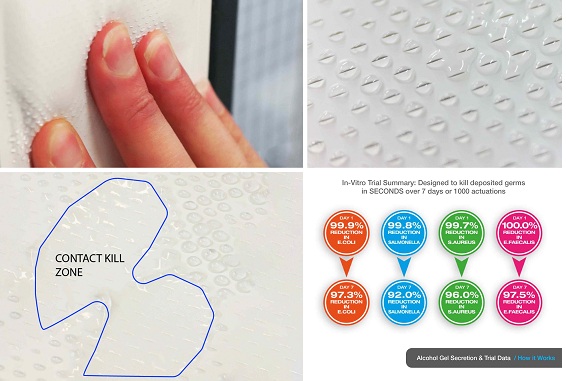
Surfaceskins came about through the observation that, while gel dispensers in hospitals and medical waiting areas make hands clean, as soon as your hands touch a dirty door handle or push plate you can become contaminated with germs left by previous users. An estimated 80% of all infections are known to be transmitted by hand contact and compliance with the use of gel dispensers by healthcare workers can be lower than 30%. Surfaceskins work in conjunction with gel dispensers and hand washing, as a vital infection control measure designed to complement existing hand hygiene practices and protocols, breaking the transmission chain that contributes โ€“ within the USA alone – to 1.8 million Healthcare Associated Infections (HCAIs) per annum, at an estimated cost of US$28 โ€“ 45 billion, and 99,000 deaths each year.

Surfaceskins employs a uniquely designed nonwoven-film system design to store, distribute and dispense standard alcohol gels to ensure all the product surface is active. The product comprises both vertically-lapped (v-lap) and spunbond nonwovens; the v-lap material acts as a reservoir for the gel, whilst the spunbond performs an ADL (acquisition distribution layer) function, meaning the liquid gel is still available at the top of the pushpad by the end of the product lifespan. The perforated film top sheet and micro-valves in the top sheet open and close with pressure, ensuring the gel doesnโ€™t evaporate.The combination of technical performance and the relatively low cost of nonwovens makes Surfaceskins an inexpensive, commercially-viable consumable product ideal for hospitals, SCBUโ€™s, HDUโ€™s, ICUโ€™s, elderly wards, food preparation, washroom, toilet, offices and other high risk traffic areas.

Seven years in development, the final Surfaceskins product won over ยฃ3 million in pre-orders, before launching last year. Prior to winning the RISE Innovation Award, Surfaceskins infection control technology won numerous innovation awards including Medilink Innovation in Healthcare Award; Shell LiveWIRE Grand Ideas Award, and Venturefest Innovation Showcase Award as well as being nominated for IDEA19 Achievement Award and shortlisted for The Spectator Disruptor of the Year Awards.

About NIRI:
Spun out of University of Leeds in 2005 to focus on applied research, industrial innovation and project development in nonwovens, NIRI employs more than 20 multidisciplinary personnel and has recently invested significantly in new facilities including: a textile and fibre engineering laboratory; industrial specification nonwoven plant, and comprehensive testing and analysis facilities. NIRI has successfully delivered over 450 projects for more than 200 clients, worldwide.

About Surfaceskins Limited:
The company was born form a collaboration between the textile and product and process development specialists at NIRI and a team of industrial design consultants, Simon Scott-Harden (ZELOcreative)ย and Adam Walkerย (Lensnectar).ย  The Surfaceskins range of products has been developed by a team combining experienced business acumen, technical expertise and healthcare sector knowledge.

The UK announces funding projects to achieve global universal health coverage

The UK announces funding projects to achieve global universal health coverage

Professor Dame Sally Davies, UKโ€™s chief medical officer has announced funding for projects to help fight antimicrobial resistance (AMR) and hence achieve global universal health coverage. The funding is a mix of ยฃ6.2 million that will strengthen existing surveillance systems that track AMR trends in Asia and Africa and ยฃ12 million to enhance collaborations on health systems research between low- and middle-income countries and the UK. The former fund is expected to come from the Fleming Fund while the latter will be made available through the National Institute of Health Research (NIHR) Global Health Research program.

The funds for the project were announced at the UN General Assembly where Professor Davies warned that the world cannot accomplish universal health coverage- a UN ambition, without looking into the threat of AMR which causes 700,000 deaths every year. She also stressed on the fact that if AMR continues to follow the current trends, common infections will become more complex and expensive to treat, hence affecting millions. Infection prevention and control measures like immunization, good hygiene and measured antibiotic usage are crucial to achieving universal health coverage through eliminating the threat of AMR.

Deerfield Management to invest $635m to build state-of-the-art healthcare campus in New York

Deerfield Management to invest $635m to build state-of-the-art healthcare campus in New York

A new healthcare campus is in the offing at New York City. US-based healthcare investment firm Deerfield Management has rolled-out plans to invest $635m (ยฃ514.3m) in it.

NYCLifeSci, as it will be called shall integrate capabilities of inventors and innovators from academician, government, industry as well as the non-profit sectors to help address the needs in the healthcare sector. The facility will be developed in partnership with New York City Economic Development Corporation (NYCEDC) and will involve the redevelopment of a 12-storey building located at 345 Park Avenue South into a life sciences campus.

It is well to be noted that the project will generate around 1,400 jobs and is expected to get finished in early 202. Once completed, the project will be operated by Deerfield in partnership with MATTER, a Chicago-based non-profit healthcare incubator.

The facility will include turnkey labs, engineering, and computing space and also other amenities as well as support services. It will be host to scientists, entrepreneurs, and even organizations that work together to develop high-grade new treatments and better ways to eradicate diseases. Understandably around 300,000ftยฒ of space will be dedicated for life sciences out of which 200,000ftยฒ will be wet lab capable.

MATTER will be the one providing solutions as far as resource and programming to accelerate startup development and boost collaborations and networking between entrepreneurs and organizations is concerned.ย James Patchett, NYCEDC President and CEO confirmed that there has been a shortage of commercial laboratories, engineering and computing space for developing cures, but with a facility like LifeSci NYC, all such worries can be kept at bay. He further added that their partnership with Deerfield and MATTER will prove to be a standout for New Yorkers and especially the patients here and across the country by providing breakthrough scientific discoveries.

Moreover, Deerfield is planning to invest more than $2bn (ยฃ1.6bn) in research and seed development by 2030 in order to develop new and innovative medicines and treatments that contribute to the prevention and cure of complex diseases.

RSPH calls for quick measures to keep child vaccine decline in check

RSPH calls for quick measures to keep child vaccine decline in check

The National Health Service has disclosed there is a drop in coverage across 13 routine childhood vaccinations in England. The decrease is in the bracket of 0.2%-1.0% compared to the previous year. The major point of concern for the health officials is the fact that the six-year continuous decline coverage of five in one vaccine (diptheria, tetanus, pertussis, polio, and haeomphilus influenza type B) currently stands at 94.2%, which is falling short of the 95% target that is set by the World Health Organization. This is the first time since 2008 that the coverage has dipped below 95%. Besides, coverage for both doses of measles, mumps and rubella vaccines have also slipped again this year. The statistics are a bit alarming as the first dose at 24 months is down to 90.3% from 91.2% while the second dose at five years is down to 86.4% from 87.2%.

Mary Ramsay, PHEโ€™s Head of Immunization says that the changes though are of a small proportion yet they are big drops in terms of public health. The trend for the last 5 years according to her is concerning. The government has been urged by the Royal Society for Public Health (RSPH) to deliver a comprehensive strategy this autumn to address the widening gap in the vaccination uptake. This may involve the much-required catch-up programs for people who might have missed out on periodic jabs, intervention by local groups to under-vaccinated communities and thoughtful investment in media campaigns that would help drive the importance of these vaccines.

The society also stresses on improving the existing strategies for better uptake by increasing the availability of appointment times or even sending reminders to parents. Adequate funding needs to be looked into by the Government for such steps. Matt Hancock, Health Secretary is of an opinion that everyone has a role to play when it comes to halting the vaccination decline. These falling rates according to him are unacceptable. The loss of measles-free status of the country is a stark reminder to all that these devastating diseases can resurface. ย Shirley Cramer CBE, Chief Executive, RSPH says that the loss of measles-free status early this year is alarming and the latest figures on childhood vaccination coverage go on to show that the world-leading child vaccination program is under threat. She further adds that one must be wary of the growth of misinformation which is spread through the online platforms. This can greatly damage the trust in vaccines. According to her, their research found out that negative messaging around vaccinations was high on social media with 2 in 5 parents succumbing to it. Shirley further adds that the parents must make full use of the free PHS vaccines as they are safe and effective.

Translate ยป