









Close
Digital Health & Ai Innovation summit 2026
Medical Taiwan 2026

5 Technologies That Help Hospitals Respond to Emergencies

5 Technologies That Help Hospitals Respond to Emergencies

Emergencies are common occurrences in hospitals. Nevertheless, health facilities must determine the best ways to deal with possible crises.

Often, technology can help. Read the five examples below to learn more.

1.Predictive Analytics to Minimize Outbreaks

Hospital staff gear up for flu season each year with practiced efficiency. They gather data about regional and national trends and determine the possibility of a flu epidemic. However, some facilities take prevention a step further with predictive analytics.

At Detroit Medical Center, predictive analytics software examines medical records to find instances of patients with flu-like symptoms. It also evaluates the likelihood of a person receiving a flu vaccination.

The system aids users in finding patients who are at leastย 75% likely to develop the fluย within the next two to three months. After, hospital representatives start outreach campaigns to connect with vulnerable individuals.

Some organize free flu shot clinics in areas with an above-average rate of unvaccinated people. Alternatively, they might send texts or visit homes of unvaccinated individuals to encourage them to vaccinate.

These measures do not mean a flu outbreak won’t happen. Instead, they inform hospitals about when one may occur and which facilities may get hit hardest.

2. Telehealth to Streamline Care Coordination

Telehealth advancements enable people to get medical help without leaving their homes. Furthermore, some hospitals are assessing ways toย use technology to help remote partiesย assist after disasters. A distributed communications platform would allow health care professionals to support emergency services in any given area.

Telephone or video conversations can help specialists deliver care fast. When a natural disaster causes immense damage to a hospital’s facilities, mobile telehealth units could improve patient care without major hiccups.

If the line of communication is open during challenging circumstances, teams on the ground can discuss specifics when it comes to injury and illness. Remote professionals can guide rescue workers on how to treat and aid those affected.

3.Satellite Mapping to Determine Disaster Areas

Floods can also put strains on hospitals and their employees. It often takes days for floodwaters to recede, meaning a prolonged period of increased demand at local health care facilities. Plus, it’s often impossible to assess flood damage until water levels go down.

Researchers at the University of Connecticut recentlyย developed a satellite mapping technologyย to tackle these challenges. They claim it’s an efficient method for evaluating damage soon after a flood hits. The team thinks their achievement could lead to better flood forecasts.

Local authorities can skillfully address mass casualty incidents (MCIs) when they have information about potential and actual damage. An MCI โ€” anyย emergency with multiple deathsย โ€” can fall into several categories, such as active shooter situations, terrorist acts and natural disasters.

An MCI often requires numerous emergency responders and reliable communications between various groups on the scene. When satellite maps confirm flood damage, it’s easier for emergency responders and hospital employees to understand what to anticipate.

Members of the University of Connecticut group who built this technology say it’s completely automated. There’s no need for humans to interpret the results to get the most meaning from them.

4. Chatbots to Help Treat Symptoms at Home

When some feel sick, they make a beeline for the emergency room, especially those without a primary care physician. Health organizations believe chatbots could cut down on emergency room visits for non-life-threatening sickness.

A hospital chain in Northern California called Sutter Health launched a chatbot in 2019 that helps users learn whether their symptoms warrant urgent treatment. After one tester used itย during suspected food poisoning, the verdict came out โ€” chatbots won’t replace doctors, but they could help them.

For example, a physician might refer to the chatbot transcript to save time when asking about symptoms. One chatbot, known as Ada Health, gives users a range of options for treatment based on their responses. The influx of information has a calming effect on anxious people, helping them realize they don’t need to dash to the emergency room.

Hospital staff could also use chatbot interactions to prepare for potential influxes. For example, if an above-average number of users confess severe food poisoning, hospital workers might call in additional staff or communicate with the health department.

5. E-Triage Systems for Better Resource Allocation

The triage process determines which patients need prioritized care. High-tech systems could help employees make decisions faster.

One so-called e-triage tool uses machine learning to compare an incoming patient’s information with data from similar patients. The systemย identified 10% more peopleย likely to experience critical outcomes. Selected patients could benefit from faster treatment. With these resources, hospitals can prioritize patients with genuine emergencies.

Hospital workers are accustomed to dealing with urgent situations, but they wouldn’t mind extra support. The five examples above, like predictive analysis and smart chatbots, prove technology could be the solution.

DePuy Synthes Expands ATTUNE Knee Platform with Cementless Option

DePuy Synthes Expands ATTUNE Knee Platform with Cementless Option

Cementless technology supports growing trend of younger, more active patients undergoing knee replacement

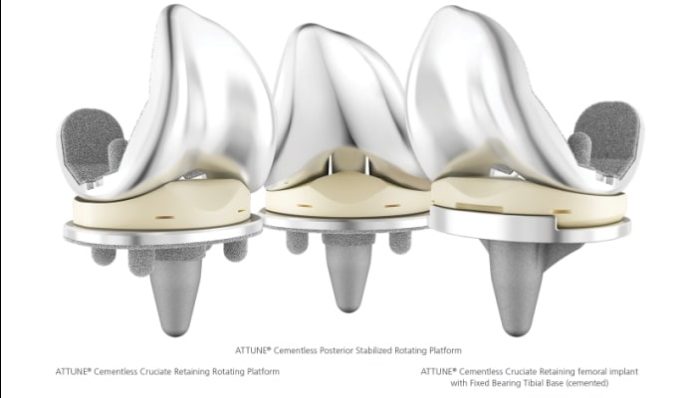
Johnson & Johnson Medical Devices Companies announced that DePuy Synthes** is launching the ATTUNE Cementless Knee in a rotating platform option in select markets around the world. This launch combines the proprietary technologies of the ATTUNE Knee designed to provide stability while the knee is in motion with DePuy Synthesโ€™ extensive heritage in rotating platform knees and cementless technology.

The demand for cementless knee replacement is increasing1, specifically for younger, more active patients for whom biological fixation and in-growth of the implant to bone may help meet the demands of their active lifestyle today and into the future. In the U.S., cementless total knee replacement procedures increased more than 25 percent from 2017 to 2018.2

โ€œThe ATTUNE Cementless Knee has the same great kinematic features of the cemented ATTUNE Knee, but I feel the cementless technology is a better alternative for my younger and more active patients who have healthy, strong bone,โ€ said Ryan M. Nunley, MD, Associate Professor and Fellowship Director at Washington University Orthopedics, Barnes Jewish Hospital. โ€œThese patients have the potential to remain active for many decades, and I think the evidence3 is growing that cementless knees have good long-term durability. Iโ€™ve implanted more than 400 ATTUNE Cementless Knees in my practice with excellent early results.โ€

The ATTUNE Cementless Knee is the latest addition to the comprehensive ATTUNE Knee platform, which also includes a cemented primary knee system, a revision knee system and a tibial base with ATTUNE S+ Technology designed to enhance intraoperative tibial fixation.

As with the cemented primary and revision systems, the ATTUNE Cementless Knee features several patented technologies designed to improve knee function. These include the ATTUNE GRADIUS Curve to provide stability through the range of motion and GLIDERIGHT Articulation to more accurately replicate the normal relationship between the patella (knee cap) and femur.

In developing the ATTUNE Cementless Knee, DePuy Synthes drew on the successful clinical history and legacy of its cementless and rotating platform technologies, including the LCS Cementless Knee which features POROCOAT Porous Coating which allows for biologic fixation. The LCS Cementless Knee with POROCOAT Porous Coating has demonstrated an implant survivorship of 97.4% at a minimum 17-year follow-up.4 In addition, all of the bone interfacing surfaces of the ATTUNE Cementless Femoral Component are coated with POROCOAT Porous Coating and the ATTUNE Cementless Rotating Platform Tibial Base features four porous-coated pegs and central cone designed to enhance fixation of the implant to the bone.

โ€œWith the ATTUNE Cementless Knee, we have carried forward technologies and learnings from clinically proven devices like the LCS Knee and combined that with ATTUNE Knee patented technologies to provide our customers a compelling solution to meeting emerging patient needs,โ€ said Torbjorn Skรถld, Vice President, DePuy Synthes EMEA Joint Reconstruction. โ€œOur strong hope and belief is that this implant system will help younger, more active patients get back to doing what they love if their surgeon feels they are the right candidate.โ€

The ATTUNE Cementless Knee is initially being launched in the United States, select countries in Europe, Japan, Australia and New Zealand, with additional launches to follow. It is available in a cruciate retaining and posterior stabilized rotating platform construct as well as a hybrid construct (cementless femoral component with a cemented fixed bearing or rotating platform tibial base)

For more information please visit the ATTUNE Cementless website.

About Johnson & Johnson Medical Devices Companies

At Johnson & Johnson Medical Devices Companies, we are helping people live their best lives.?Building on more than a century of expertise, we tackle pressing healthcare challenges, and take bold stepsย that lead toย new standards of care while improving peopleโ€™s healthcare experiences.?In surgery,ย orthopaedics, vision and interventional solutions, we are helping to save lives and paving the way to a healthier future for everyone, everywhere.

About DePuy Synthes

DePuy Synthes, part of the Johnson & Johnson Medical Devices Companies, provides one of the most comprehensive orthopaedics portfolios in the world. DePuy Synthes solutions, in specialties including joint reconstruction, trauma, craniomaxillofacial, spinal surgery and sports medicine, are designed to advance patient care while delivering clinical and economic value to health care systems worldwide. For more information, visit www.depuysynthes.com.

*The Johnson & Johnson Medical Devices Companies comprise the surgery, orthopaedics, vision and interventional solutions businesses within the Johnson & Johnson’s Medical Devices segment.
**DePuy Synthes represents the products and services of DePuy Synthes, Inc. and its affiliates.
***Dr. Ryan Nunley is a consultant to DePuy Synthes Joint Reconstruction.


1,2DRG Q3 2018 Construct Report .
3National Joint Registry for England, Wales, Northern Ireland and the Isle of Man, 15th Annual Report. (2018). Table 3.25.ย  Available from: njrreports.org.uk
4McMahon SE, Doran E, Oโ€™Brien S, Cassidy RS, Boldt JG, Beverland DE. Seventeen to Twenty Years of Follow-Up of the Low Contact Stress Rotating-Platform Total Knee Arthroplasty With a Cementless Tibia in All Cases. J Arthroplasty 34(3): 508, 2019. 10.10.1016/j.arth.2018.11.024.

File a Car Insurance Claim the Right Way With These Tips

File a Car Insurance Claim the Right Way With These Tips

Car insurance claims are something that everyone would like to avoid. From the time you start driving until your last day behind the wheel, you do whatever it takes to be safe on the road. Unfortunately, no matter how careful you are, accidents happen. When they do, however, you need to act quickly and file a car insurance claim immediately. This ensures you receive the compensation that you need and deserve. If you don’t file a car insurance claim, then you won’t get the money that covers repairs or replacements for your vehicle and any medical expenses resulting from injuries suffered in the accident. Here are some tips on how to file a car insurance claim and what you can expect.

Do not leave the scene of the accident

When an accident happens, it is your responsibility to get your vehicle and yourself off the road and safe. You need to make sure that there are no other victims or potential hazards in the area before you attempt to move your vehicle from the middle of the road. If another driver approaches you after the accident, then you need to tell them that you are going to call for help and ask him or her not to leave. If they ignore you, then you should note their license plate number and inform a police officer of this later.

Call For Help

If no one is hurt in the accident, then it is important to call the police and file a car insurance claim. If another car is hurt in the accident, you need to call emergency responders, so they can transport anyone suffering from injuries to the hospital safely. Not only does calling for help ensure that people receive medical care when they need it most, but it also protects you in case someone tries to accuse you of wrongdoing. If you are the one who was hurt in the car accident, then it is important to call 911 or ask someone else to do so.

Contact your Attorney

After you have spoken to emergency responders and filled out an incident report, you need to speak to an attorney. If the car accident was not your fault and someone is trying to blame you for it then an experienced car accident attorney can help ensure that you receive the money that you deserve. A car insurance claims adjuster may offer you an amount of money that seems right, but the car accident lawyer will be able to tell you if that offer is right or not. This ensures that you don’t leave money on the table and that you receive the compensation that covers your medical expenses, lost wages, and pain and suffering.

Do not sign anything

After receiving a settlement offer from a car insurance claims adjuster, you may be tempted to sign the documents so that you can receive your money as quickly as possible. However, before you do this, it is important to have an attorney review the agreement first because there could be something in it that takes away your rights. An attorney can go over the settlement with you and ensure that it is in your best interests before you sign anything.

Do not accept fault

No matter what, do not accept any responsibility for the car accident until your car insurance claim has been resolved. If it is possible, then any evidence of fault should be documented so you can go back and show it to the car insurance claims adjuster. This evidence includes photos of where the accident took place, as well as any witnesses who claim that you were not at fault. This is the only way that you can protect yourself at this point and ensure that your car insurance claim is filed properly.

Understand what happens next

After speaking with a car accident lawyer, he or she will explain what happens next in the car insurance claim process. Since everyone’s case is different, each car accident victim will have to go through a different process to receive compensation for their injuries and vehicle damage. Sometimes an insurance company will offer a settlement, but other times they may have to take the case to court. No matter what happens next, having an attorney by your side will ensure that you receive everything you are entitled to.

File your car insurance claim

Whatever the outcome of your car accident is, you must file a car insurance claim. If the other driver’s insurance company tries to say that you were not at fault and that their client is not responsible for paying damages, then having your car insurance claim will prove them wrong. Even if the other person was entirely at fault, it is important to have a record of your financial losses. This will help you get the money that you deserve faster than if you were to try and take care of everything yourself.

Even if you are sure that the car accident was not your fault, it is important to be prepared for all possible outcomes. By following these steps and calling a car accident lawyer as soon as possible after an auto accident occurs and by being familiar with the process, you can ensure that you will receive anything you deserve from a car insurance claim.

Whittington Health NHS Trust unveils ยฃ4m state-of-the-art Radiology department

Whittington Health NHS Trust

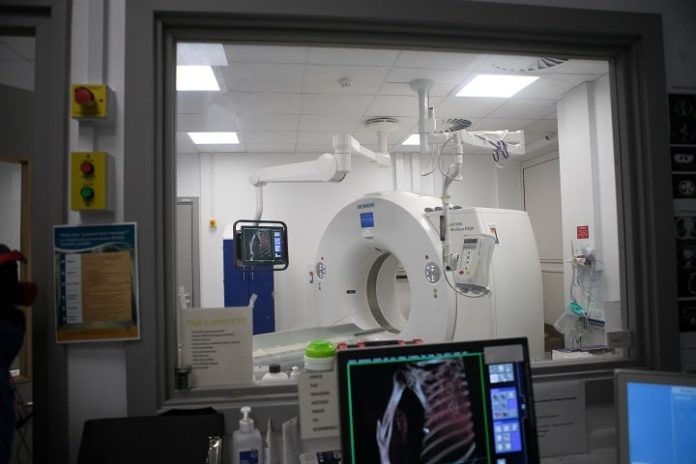
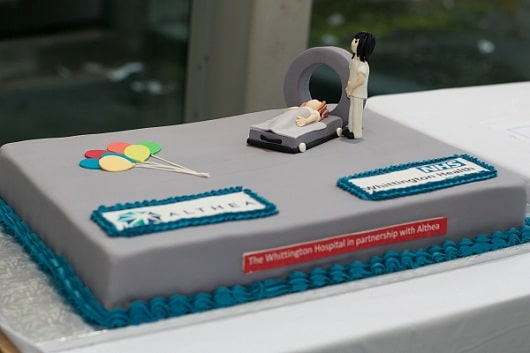
Managed service and maintenance provider Althea are delighted to have completed a ยฃ4m refurbishment and replacement project at Whittington Health NHS Trustโ€™s (WH) Imaging Department.

The new diagnostic imaging equipment, which was updated and installed over a two-year period, includes 14 ultrasounds, a CT scanner, a fluoroscopy system, 5 digital x-ray rooms 2 mobile x-ray machines, 1 digital dental x-ray and a mammography unit.

Being vendor independent, Althea was able to source the equipment from a variety of different manufacturers including GE, Canon, Samsung, Siemens, Hologic and Planmeca; choosing each item specifically based on cliniciansโ€™ and patientsโ€™ needs.

Included within the new equipment is the Nuclear Medicine Department equipped with a state-of-the-art SPECT-CT scanner. This hybrid scanner allows detection of the organโ€™s functional information using the SPECT camera and precise localisation of relevant areas using the CT scanner. The amalgamation of these two diagnostic tools provide massive improvements in the quality of nuclear medicine images resulting to higher confidence in detecting, localising and in certain examinations, quantifying the degree of pathologic findings.

Also included are 5 new Samsung digital x-ray rooms and 2 mobile systems – all with wireless imaging detectors. They are designed to raise efficiency to a whole new level due to its streamlined operation. The new machines come equipped with state-of-the-art technologies such as S-Detector, S-Vue & S-Align, which provides outstanding image quality to enhance patient diagnosis.

The departmentโ€™s new stitching package has also enhanced the diagnostic process for spinal patients and has provided an added dimension to improve patient management. Through ease of use and automated positioning, patient imaging examination times are reduced allowing a greater volume of patients to be seen in the same time frame.

Also newly installed is a Hologic 3Dimensions mammography unit which provides superior resolution diagnostic breast imaging and High Definition Tomosynthesis, facilitating more accurate diagnosis of smaller breast lesions particularly in dense breast tissue. The Affirm Biopsy package allows biopsies to be performed under tomography guidance, enabling faster and more accurate sampling of micro-calcifications and wire localisation placement.

With all equipment now operational and providing patients with the quality of services they deserve; Althea has shifted its focus to providing service excellence. On the ground, its specialist team ensure ongoing maintenance and training programmes are closely managed, minimising equipment downtime and promoting the use of these new digital technologies to maximum effect.

Helen Taylor, Clinical Director for Acute Patient Access, Clinical Support Services and Womenโ€™s Health at Whittington Health NHS Trust said โ€œEverything we do here at Whittington Health is driven by our ambition to provide our patients with outstanding safe, compassionate and innovative care. The refurbishment of our Imaging Department together with all of the new and more advanced technology which Althea has installed is a key example of how we are delivering this vision.โ€

David Rolfe, UK&I Chief Executive Officer at Althea, said โ€œWe have been working with the Trust since 2005 and this is the second time we have completed a refurbishment and replacement project within the Imaging Department.โ€

โ€œFrom day one we have worked closely to evaluate the Radiography needs of the Trust and develop a sustainable long-term equipment replacement programme. The partnership guarantees that the Trustโ€™s state-of-the-art equipment will be maintained throughout the lifetime of the contract enabling them to focus solely on patient care.โ€

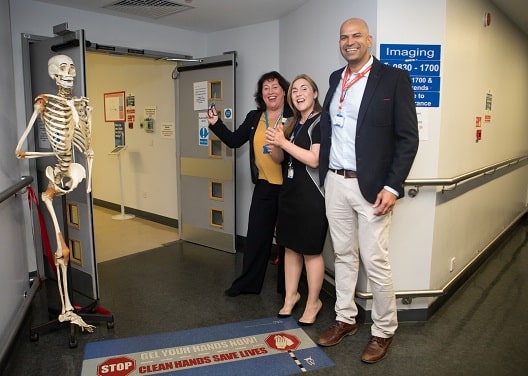
The new Radiology Department was formally unveiled at a special open evening on Friday 6th September. Invited guests included local GPs from Haringey and Islington boroughs, Radiology undergraduates, as well as WHโ€™s executive team, staff and Imaging suppliers. Professor Mary Lovegrove OBE, Emeritus Professor of Education and Development for Allied Health Professions was the keynote speaker.

Whittington Health
Whittington Health aims to help local people live longer and healthier lives by providing safe, personal, coordinated care for the community we serve. The provide hospital and community care services to 500,000 people living in Islington and Haringey as well as other London boroughs including Barnet, Enfield, Camden and Hackney. As one organisation providing both hospital and community services, Whittington Health is known as an โ€˜integrated care organisationโ€™. It has an income of ยฃ295 million and over 4,000 staff delivering care across north London.

SCORR Marketing and the Conference Forum to Collaborate on CRAACO Conference

SCORR Marketing, the leading full-service marketing and communications firm in the health science industry, and the Conference Forum, the leading presenter of strategic-level life science conferences, will collaborate on the 2020 Clinical Research as a Care Option (CRAACO) conference. The Conference Forum will include key initiatives and thought leaders from the Bridging Clinical Research & Clinical Health Care Collaborative at its CRAACO conference.

โ€œWe started the Bridging Collaborative in 2018 to bring all stakeholders together to address the gap between clinical research and health care,โ€ said Cinda Orr, CEO at SCORR. โ€œMoving these discussions to CRAACO means the momentum of the Bridging Collaborative will continue as we persist in exploring ways to put patients at the center of research and care.โ€

Although the Bridging Collaborative is changing, its key areas of focus will continue to be discussed through the CRAACO conference.

โ€œWhile CRAACO approaches clinical research as a care option from a different viewpoint, we expect this collaboration will make our event stronger by bringing more voices to the conversation,โ€ said Valerie Bowling, executive director of the Conference Forum. โ€œThis enhances our ability to facilitate meaningful discussions that ultimately benefit patients.โ€

CRAACO will be April 27โ€“28, 2020, in Raleigh-Durham, N.C. SCORR will be the eventโ€™s lead media sponsor, and SCORR Vice President of Communications Roger Boutin will serve on CRAACOโ€™s advisory board.ย 

About SCORR Marketing
SCORR Marketing is the leading full-service marketing agency for the health science industry. With global capabilities, SCORR partners with companies involved in the research, development, and commercialization of biopharmaceutical and device products, as well as those delivering health care products and services. SCORR provides integrated programs to help clients achieve their goals and improve health and well-being worldwide. Learn more at scorrmarketing.com

About the Conference Forum
The Conference Forum is a life science industry research firm that develops conferences primarily around how to get therapeutics to patients faster. The Conference Forum examines and challenges the complex ecosystem of drug development and delivery, bringing ideas together from a variety of sources to help advance clinical research with common goals that are patient-focused.

Expert on ultra-high field magnetic resonance imaging from Siemens Healthineers nominated for the German Future Prize

 Siemens Healthineers nominated for the German Future Prize

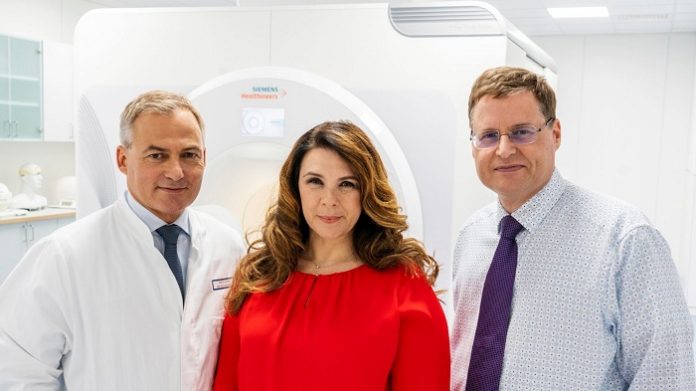
Christina Triantafyllou, Ph.D., an employee at Siemens Healthineers, has been nominated for the German Future Prize for her work on Magnetom Terra, the first ultra-high field magnetic resonance scanner approved for clinical use. Nominated with her are Professor Arnd Dรถrfler, MD, Head of University Hospital Erlangenโ€™s Department of Neuroradiology, and Professor Mark E. Ladd, Ph.D., Head of the Division of Medical Physics in Radiology at the German Cancer Research Center in Heidelberg. They are one of three research teams in contention for the award. The prize, awarded by the President of Germany, is one of the countryโ€™s highest distinctions for technology and innovation.

Thanks to the efforts of the team led by Christina Triantafyllou โ€“ who is responsible for ultra-high field MRI solutions at Siemens Healthineers โ€“ and together with MRI experts at the company as well as other collaboration partners, imaging at a magnetic field strength of 7 Tesla โ€“ previously used only in basic research โ€“ has been available as a novel and effective diagnostic tool for clinical use since 2017. This development is a breakthrough for precision

medicine and brings immediate benefits for patients. Because with its ability to accurately image even tiny structures measuring down to 0.2 mm, Magnetom Terra opens up new opportunities for early diagnosis and personalized treatment of neurological diseases such as multiple sclerosis (MS), epilepsy, and Parkinsonโ€™s disease in particular. The German Future Prize will be awarded by Germanyโ€™s federal president, Dr. Frank-Walter Steinmeier, on November 27, 2019, in Berlin.

โ€œAlong with the entire team at Siemens Healthineers, I am delighted by this nomination for the German Future Prize. The choice underlines our successful cooperation with research partners around the globe,โ€ said Dr. Bernd Montag, CEO of Siemens Healthineers. Siemens Healthineers draws on a collaborative network of over 4,400 research partners all over the world. In fiscal 2018, the company invested around โ‚ฌ1.3 billion in research and development, an area in which it employs some 8,800 people. Siemens Healthineers boasts a portfolio of over 18,500 patents, patent applications, and utility models.

โ€œThe development and clinical approval of Magnetom Terra are illustrative of the strengths of Siemens Healthineers: The close ties between our own research and development team and the expertise of leading institutions in the fields of medicine and research enable us to swiftly bring innovations to market, providing value to users, and enhancing patient well-being. Clinical use of 7 Tesla imaging helps neuroradiological experts detect pathological changes such as MS or Parkinsonโ€™s disease at an early stage and offer targeted treatment. This is an outstanding example of the benefits that can be achieved by expanding precision medicine,โ€ said Montag.

Early diagnosis for effective treatment
In the early stages of MS and neurodegenerative diseases such as dementia and Parkinsonโ€™s disease, it is often the case that pathological changes are often not sufficiently pronounced to allow diagnosis using clinically established MRI systems with lower field strengths. Consequently, valuable time is often lost before diagnosis and the start of treatment. By contrast, the ultra-high field scanner Magnetom Terra from Siemens Healthineers offers imaging with an extremely high level of detail that can reveal such minute changes in anatomy and even organ function. In addition, the systemโ€™s innovative imaging technology can identify pathological changes at the metabolic level that may be invisible with anatomical imaging.

The field strength of 7 Tesla โ€“ which is around 140,000 times stronger than the Earthโ€™s magnetic field โ€“ yields remarkable results: While in the past clinical imaging could only detect pathological changes in the advanced stages of MS, at 7 Tesla these changes have been observed early on. Particularly for younger people, who make up the majority of MS patients, early diagnosis and swift treatment are key to delaying a subsequent disability or preventing it altogether. For epilepsy โ€“ one of the most common neurological diseases, with around half a million patients in Germany alone โ€“ Magnetom Terraโ€™s superior anatomical resolution helps locate and diagnose seizure foci more accurately. This enables more precise planning for surgical interventions, often allowing the quality of life of those affected to be restored to pre-seizure levels. In addition to providing important benefits in neurological issues, the Magnetom Terra is also suited to clinical assessment of musculoskeletal disorders. Tests are currently underway for using Magnetom Terra in other areas of clinical application, such as prostate imaging.

In terms of key achievements in hardware technology, Magnetom Terra uses a specially developed, innovative actively shielded magnet. Despite its higher performance, it weighs only half as much as the magnets used in previous generation of 7 Tesla systems. This makes Magnetom Terra vastly easier to transport and facilitates a smoother simpler integration with existing hospital infrastructure. Another innovation is its dual mode functionality, that allows users to seamlessly switch between clinical use and research applications. The system is therefore an ideal platform for translational research: Patients can benefit from the latest research findings without delay. Numerous installations in leading hospitals around the world suggest that 7 Tesla imaging will become an integral part of many large teaching and research hospitals in the medium term.

Successful collaboration between industry and research, and physics and medicine
The work of physicist Christina Triantafyllou, Ph.D., at Siemens Healthineers was a driving force behind the development of Magnetom Terra, which laid the technical foundations for the clinical application of 7 Tesla imaging. Univ.-Prof. Dr. sc. techn. Mark E. Ladd, head physicist at the German Cancer Research Center in Heidelberg, provided key input when the first 7 Tesla MRI systems for research purposes were installed at University Hospital Essen and in Heidelberg in the 2000s. Since then, he has played a major role in further developing 7 Tesla imaging. Radiologist and neuroradiologist Univ.-Prof. Dr. med. Arnd Dรถrfler has also been involved with the new system since the development stages. He played a key role in the clinical implementation and validation of the worldโ€™s first 7 Tesla MRI scanner for clinical use at University Hospital Erlangen, and in the clinical approval process for the Magnetom Terra.

The German Future Prize was founded in 1997 by the then German president, Dr. Roman Herzog, and has since come to symbolize the country’s scientific potential and innovative spirit. Besides excellence in research, the main selection criteria considered by the jury include the patentability and market viability of the technology. The prize, which is endowed with โ‚ฌ250,000, was also awarded to Siemens employees in 2004, 2005, 2007, and 2012.

ABHI Host UK Pavilion at MEDICAL FAIR THAILAND

ABHI Host UK Pavilion at MEDICAL FAIR THAILAND

This week (11-13th September 2019) the Association of British HealthTech Industries (ABHI) is delighted to be hosting the UK Pavilion at MEDICAL FAIR THAILAND; Southeast Asiaโ€™s biggest exhibition for the medical and healthcare industry.

The international exhibition has moved to a larger venue in Bangkok and six UK companies will be exhibiting alongside the UKโ€™s leading HealthTech trade body to wave the British flag for innovation. These include: Advanced Medical Solutions, De Soutter Medical Ltd, Lawton Tubes, OES Medical Ltd, Surtex Instruments Ltd and TensCare Ltd.

Focused on equipment and supplies for the hospital, diagnostic, pharmaceutical, medical and rehabilitation sectors, MEDICAL FAIR THAILAND provides UK companies business opportunities to navigate the dynamic marketplace of Thailand and Southeast Asia.

It is supported by some of Thailand and the regionโ€™s most prominent government and industry trade associations, including Thailandโ€™s Ministry of Public Health, MEDICAL FAIR THAILAND and is the ideal platform for business to enter the market.

Hosted by Messe Dรผsseldorf Asia, MEDICAL FAIR THAILAND has been running since 2003 and continues to go from strength-to-strength. Organisers estimate that this yearโ€™s conference will be the largest to date, with 1,000 exhibitors from 60 countries coming together to do business. More than 10,000 medical and healthcare innovations will be on display.

Paul Benton, Managing Director, International, ABHI added: โ€œWe are delighted to be hosting the UK Pavilion at MEDICAL FAIR THAILAND. Over the years the exhibition has seen considerable growth, reaffirming its position as the must-attend event for UK companies wanting to do business in Thailand and the region. We are delighted to be able to support companies in this burgeoning market.”

Thailand has a dynamic marketplace. As the second largest healthcare market in Southeast Asia, it is set to be valued at US$28.5 billion by 2021. In addition, Southeast Asiaโ€™s expected healthcare spending could accelerate to US$740 billion by 2025, creating further business opportunities for companies in the HealthTech space.

About ABHI
ABHI is the UKโ€™s leading industry association for health technology (HealthTech).

ABHI supports the HealthTech community to save and enhance lives. Members, including both multinationals and small and medium enterprises (SMEs), supply products from syringes and wound dressings to surgical robots and digitally enhanced technologies. We represent the industry to stakeholders, such as the government, NHS and regulators. HealthTech plays a key role in supporting delivery of healthcare and is a significant contributor to the UKโ€™s economic growth. HealthTech is now the largest employer in the broader Life Sciences sector, employing 121,000 people in 3,500 companies, with a combined turnover of ยฃ22.2bn. The industry has enjoyed growth of around 5% in recent years. ABHIโ€™s 300 members account for approximately 80% of the sector by value.

Cybersecurity for Healthcare

Layered defense is key to a successful Cybersecurity Strategy in Healthcare which starts with endpoint management. The number of internet connected (IoT) devices is exploding. In a healthcare setting, these โ€œendpointโ€ devices not only provide significant new opportunities for improving patient care, but also present serious risks for increased attack surfaces for hackers. In the same way that a patientโ€™s injured skin surface can be a pathway into the body for a serious infection, an unprotected endpoint device presents a highly potential point of entry for a cyberattack.

In the same way that a patient might be protected by multiple layers of preventive care (good hygiene, antiseptics, sterile bandages, and immune system support), any device connected to a healthcare network should be protected by multiple layers of IT security (good process design, access control/logging, antivirus, application whitelisting, version control, and intelligent threat analysis).

Endpoint Management is therefore a key component of a successful cybersecurity strategy in healthcare. The same practices and technologies that apply to the health care systemโ€™s core networks must also be applied to endpoints. These include application whitelisting, user access control, patch management, virus protection, encryption, digital signatures, firewalling, etc. All are critical in protecting your networks from being compromised by attackers.

The challenge with so many endpoints and countless types of devices is keeping track of everything going on in your network. The human layer also adds complexity. Users may require different access data controls to do their job. If the security systems prevent efficient working, users may be tempted to disengage security systems to get the job done. Intelligent security system design allows for efficient working without compromising security at any layer. Endpoint devices can include medical devices, multiple types of operating systems, mobile devices, and devices that can be off-network. An endpoint security suite must be able to protect all device types, operating systems and applications.

Failures in patch management and version control can be the Achillesโ€™ heel of any IT system. This is particularly important in healthcare systems that are mission critical and require 24/365 high availability. Most vulnerabilities out there today that cause ransomware attacks are directly related to a system not being up to date on patches, and hackers are looking for those visible vulnerabilities to strike and penetrate the entire network. Patch management is a key component of a solid cybersecurity strategy.

Another area of concern for endpoint management is keeping a good inventory of devices on your network and understanding each deviceโ€™s access controls and life cycle. You cannot protect what you donโ€™t know, this includes hardware and software. Endpoints are proliferating in healthcare, with many employees having many different types of devices. In security, we must ensure that all these endpoints follow the rules and policies that the Information Security Department has designed. If your network has unprotected endpoints, your network is already at risk โ€“ It only takes one compromised endpoint to ruin your defenses.

So, after you protect your endpoints, patch them, and understand the life cycle of each device, the question becomes how to manage all these components of your cyber defenses with limited resources. This is where a strategic and trusted partner is critical in providing all the above techniques with an easy to use technology and management interface. If your current endpoint management system requires many security engineers to manage computing resources, how much effort and financial impact will that have to the bottom line. Most healthcare systems have limited resources of cybersecurity skills, and the endpoint management system must help in relieving security experts to allow them to become more proactive and less reactive to new threats.

How AI and self care can make up for practitioner scarcity

AI and self care can make up for practitioner scarcity

Demand for healthcare services continues to skyrocket. Is limited growth in clinician ranks triggering a talent gap? Raw numbers suggest such a gap already exists; deeper analysis tells another story.

Letโ€™s start by taking stock of the actual discrepancy between existing service needs and the number of available providers. A study by the Association of American Medical Colleges reveals a stark gap between healthcare service demand and the number of full-time equivalent (FTE) clinicians.

As the population both grows and ages, this disparity only gets wider by 2030. So why doesnโ€™t this portend a major crisis?

Accenture research has quantified 17 distinct variables impacting the practitioner-patient issue. Together with data from a broad range of sources, such as Accentureโ€™s Workforce Automation Predictor, they reveal not a shortage but talent equilibrium in healthcareโ€™s future.

How will this come about? It will require working differently than we do today. We see it happening in two ways:

Patients embracing self-care: By 2030, our research shows up to 10 percent of existing patient-service demand being met via self-care.

Tech-enabled tools like biometric devices and wearables have already reached widespread adoption; nearly two-thirds of physicians now say they would prescribe an app to help patients manage chronic diseases.

Our analysis reveals that a care model comprising an annual physician exam and technology-enabled self-management the rest of the year can save time equivalent to 24,000 primary care physicians (PCPs). As self-care becomes more widespread, and more advanced in reach and scope, providers will enjoy a greater ability to institute highly personalized treatment plans to their patients, further bridging staffing shortfalls.



Automation taking charge: While it ties into technology advancing the cause of patient self-care, automation is also its own trend worth highlighting. In brief, Accenture predicts that by 2030, 25 percent of current healthcare tasks will be automated.

Artificial intelligence (AI) is already a major driver of the automation revolution in healthcare, a surging trend that will continue as both technology and uptake advance. As AI-powered automation merges into the mainstream, it will eliminate much of the talent gap we see growing between healthcare demand and clinician supply.
At present, 17 percent of physician activity is filled up by administrative activities alone. Todayโ€™s digital advances will free up tomorrowโ€™s healthcare professionals to concentrate their energies more exclusively on patient engagement and personalized care.

AI will simultaneously enhance practitioner decision-making via greater use of cognitive computing. This will allow clinicians to spend more time treating patients, combining data with clinical judgment to enhance outcomes, and engaging more closely with extended care teams.

How should healthcare organizations focus on the changing nature of practitioner/patient demographics? Accenture recommends they begin by undertaking a three-step plan to nurture and retain an adaptive, agile workforce:

  1. Redesign talent strategies. Begin to plan around which workforce capabilities best address patient needs as digital tools and self-care become more central to the care model.
  2. Build digital muscle. Incrementally embed a stronger organization-wide focus on data and digital that improves efficiency and enhances outcomes via better, faster decision-making.
  3. Shape a winning culture. Foster a culture of innovation, hospitality and agility central to the successful healthcare organization of tomorrow.Shoring up tomorrowโ€™s talent gap requires working differently than we do now. Such new work models are already taking distinct form. The healthcare organizations that embrace them first will be best positioned for future success.


Extinguishing Burnout, a Continuing Challenge in Healthcare

Extensive research has identified the causes and consequences of burnout; now itโ€™s time for solutions.

More than
half of doctors, and almost as many nurses, have reported high degrees of burnout stemming from longer hours and increased workloads. Burnout, characterized by emotional exhaustion, cynicism, job dissatisfaction and sometimes depression, can negatively impact not only the health of the individuals involved, but also patient safety and satisfaction, turnover and healthcare costs. And yet pressures to cost-effectively care for a growing population of elderly patients with high rates of chronic disease and comorbidities, make it a difficult problem to address.ย 


Burnout is nearly
twice as prevalent among physicians as US workers in other fields, and those working at the front lines of care (emergency medicine, family medicine, general internal medicine and neurology) are at the greatest risk. In a recent Harvard Business Review study, doctors, nurses, and other medical personnel all had similar levels of emotional exhaustion and cynicism, but doctors were the group least able to withdraw from work, rest and recharge.ย 


The implications of this are staggering:ย 


Quality of Patient Care

According to a recent Stanford study, physician burnout might be a greater source of medical errors than unsafe workplace conditions. Medical errors are common in the US and responsible for between 100,000 to 200,000 patient deaths annually. Burned-out physicians have more than twice the odds of self-reported medical error, and 10 percent of physicians reported to have made at least one major medical error in the past three months alone. The same study also found that the rates of medical errors tripled in medical work units, even those ranked as the safest, if physicians reported high levels of burnout. Among nurses, higher levels of burnout are associated with patient mortality as well as dissemination of hospital-transmitted infections. Burnout also increases the likelihood of care deficiencies, lack of professionalism and lower patient satisfaction.ย 


Turnover and Productivity

Burnout leads to job dissatisfaction and more than 200 percent increases the odds that the physician develops the intent to leave their job. Turnover substantially increases healthcare costs. The cost of turnover of RNs is estimated at 1.2 to 1.3 times their salary, whereas it can cost anywhere from hundreds of thousands of dollars to over $1 million to replace a physician. Additionally, burned-out physicians tend to make more referrals and order more tests, another costly byproduct of the epidemic — not to mention errors, malpractice claims, and absenteeism. Furthermore, a Mayo Clinic study found that every 1-point increase in exhaustion or 1-point decrease in job satisfaction was associated with a 28 percent and 67 percent greater likelihood, respectively, of reduction in professional effort, a national problem thatโ€™s exacerbating our struggle to meet the needs of an aging population.ย 


Personal Consequences

Burnout leads to a 25 percent increase in alcohol use/dependence and 200 percent increased odds of suicidal thoughts among physicians. The suicide rate among male physicians is currently 40 percent higher than other males in the population, and the rate among female physicians is 130 percent higher than other females. Itโ€™s also been linked to other health risks, such as heart disease, high blood pressure, Type-2 diabetes and vulnerability to other illnesses.ย 


Burnout has been associated with a number of factors: stress, process inefficiencies, excessive workloads, home and work-life balance issues, management dysfunction, increased administrative work due to Electronic Health Records initiatives and toxic organizational cultures.
The Mayo Clinic defines causes of job burnout as comprising the following: a lack of control (over schedule, assignments, workload and other decisions affecting oneโ€™s job); unclear job expectations; toxic workplace dynamics (bullies, micromanagers, lack of teamwork); activity extremes such as the constant chaos of many hospitals; work-life imbalance; and a lack of support at work, at home, or both.ย 

We already know that physicians and nurses are seeing too many patients, working too many hours, and receiving too little support from other medical staff. But with burnout negatively impacting productivity and turnover, what can be done? It is, no doubt, a complex and intimidating problem to address, but leadership can begin by soliciting honest feedback from staff on what workplace issues contribute to burnout and seek to create a holistic and systems-based approach to addressing those issues, as well as regional or practice-level initiatives. The drivers of burnout have been defined, and thereโ€™s a wealth of research indicating what they are, their consequences and what approaches can be taken to combat them. Each workplace is individual, with unique stressors, and how they manifest will vary, but there are still several universally beneficial places to begin the process:


Measure the Problem

Score physician depersonalization with other quality measures to help devise a comprehensive program to address patient safety and outcomes. Reporting and measurement should be standardized across the organization and all locations to develop the best understanding of the issues at hand. Programs should be aimed at identifying the root causes of burnout in your facilities, developing a full understanding of the issues and targeting prevention.


Prioritize

In instances where burnout triggers vary across a health system, prioritization can be a great starting point. You can do so by identifying the locations/divisions/departments with the highest burnout rates and the lowest satisfaction rates and start there. This will allow you to focus on specific issues within a local work unit and implement targeted intervention strategies.ย 

ย 

Assist With Decompression

Get to the bottom of why physicians and nursing staff are unable to decompress and recharge. How is the inability manifesting itself? Is it in a decreased ability to sleep at night? Is it because theyโ€™re always on call or receiving work communications during free time? Find out what environmental stresses are prohibiting decompression and create programs to address them.

Increase Engagement

Seek to design initiatives that reconnect staff with the meaning inherent in their roles. Staff should be regularly shown and reminded how their efforts have saved and enhanced patient lives. Such initiatives would also contribute toward improving workplace culture, shifting the organizational tone to one thatโ€™s more positive and appreciative.


Promote Stress Reduction

This could take many forms, from providing stress reduction programs/activities such as yoga, meditation or tai chi, to employing massage therapists to provide short stress reduction massages to nurses and physicians throughout the workday. Also ensure that nurses and physicians are able to work reasonable schedules and take time off at regular intervals.


Better Support Residents and New Physicians

Investment in the wellness, values and healthy habits of residents will pay off in the decades ahead. Physician behavior, routines and customs are largely set during early career years and good practices early on can help stave off problems down the line.


Redesign Cumbersome Work Processesย 

Design work processes with an eye toward stress reduction. Find ways to relieve the administrative burdens of physicians and nursing staff. Process improvements need to work for the organization as a whole as well as its key players. Any developments that add to existing workloads should be avoided and, wherever possible, administrative strain should be trimmed.


Reassess Leadership

Preventing burnout may also be a matter of ensuring you have the right leadership in place. Senior management has a direct effect on physician satisfaction. Great leadership listens, helps physicians and staff understand their job expectations, assists with career development, makes staff feel more appreciated and advocates for meaningful change.


Burnout is a national epidemic that needs to be addressed. Thankfully, it can be. By methodically eradicating its drivers across our organizations, weโ€™ll improve the lives of countless healthcare workers, lower costs, save lives and assuage the impending physician shortage.ย 

Translate ยป