Close
Digital Health & Ai Innovation summit 2026
Medical Taiwan 2026

Philips unveils HeartStart Intrepid with IntelliSpace Connect across Europe and select markets worldwide

Philips unveils HeartStart Intrepid with IntelliSpace Connect

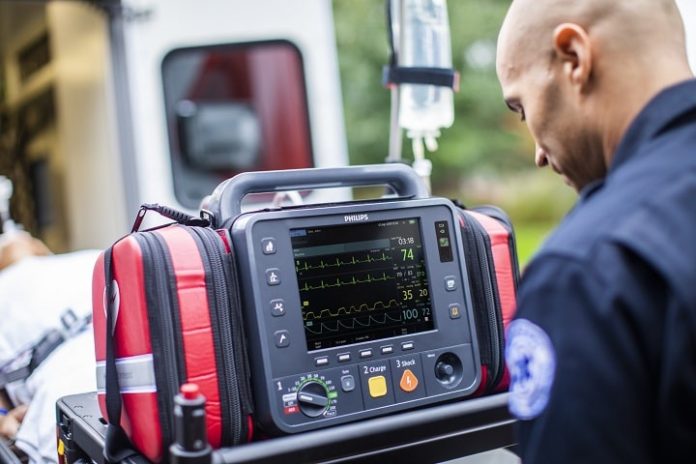
Royal Philips, a global leader in health technology, announced the launch of the HeartStart Intrepid monitor/defibrillator with IntelliSpace Connect. Created to provide clinical and operational efficiencies at every stage of the emergency care continuum, the solution lets caregivers evaluate and treat patients during the most demanding medical emergencies in both pre-hospital and hospital settings. The Philips HeartStart Intrepid monitor/defibrillator has received CE Mark approval and is available for sale in Europe and other select markets in Asia and Africa.

โ€œFirst responders donโ€™t often know what to expect when they arrive at the scene of an emergency, so they have to be equipped and ready to handle anything that may come up in the field,โ€ said Arman Voskerchyan, Business Leader, Therapeutic Care at Philips. โ€œA full range of monitoring capabilities and decision support tools let emergency staff quickly evaluate and treat patients in life-threatening situations. Enhanced connectivity between care settings helps to streamline communication and improve clinical workflow for caregivers, ultimately allowing them to provide patients with better care.โ€

A full range of monitoring capabilities and decision support tools let emergency staff quickly evaluate and treat patients in life-threatening situations. Enhanced connectivity between care settings helps to streamline communication and improve clinical workflow for caregivers, ultimately allowing them to provide patients with better care.

The HeartStart Intrepid monitor/defibrillator can also be used across various emergency settings in the hospital, allowing clinicians to assess the patient and deliver the appropriate treatment, including defibrillation if a patient is suffering a sudden cardiac arrest. The cloud-based IntelliSpace Connect data management solution helps set the stage for coordinated care across the patientโ€™s clinical care journey. IntelliSpace Connect supports the integration of emergency event data into electronic patient care reporting (ePCR) and electronic medical records (EMR/EHR) for accurate event documentation to facilitate billing, while secure data storage enables post-event review to drive quality improvement initiatives.

Designed to be lightweight, portable and rugged, the Philips HeartStart Intrepid can endure both the rigors of emergency medical service (EMS) use and the physical demands of the Emergency Department, as well intra-hospital transport. It offers comprehensive vital patient monitoring parameters and diagnostic measurements to speed triage and help clinicians determine the best course of care. To assist in the delivery of quality CPR, the Intrepid also offers the QCPR solution which provides integrated CPR feedback and guidance for both compressions and ventilations. In addition, with the HeartStart Intrepid, Philips introduces the Traumatic Brain Injury (TBI) Advisory, a unique feature based on key patient vital sign assessment to provide visual guidance to help prevent serious complications in patients with suspected TBI.

IntelliSpace Connect can be accessed through a browser eliminating the need for specialized hardware and software upgrades. Powered by Philips HealthSuite, a secure and reliable cloud platform, IntelliSpace Connect provides a simple, cost-effective option for hospitals through a Software-as-a-Service model.

For information on how the solution can improve clinical workflow, simplify record keeping and enhance patient care, while also streamlining communication and collaboration, visit www.philips.com/intrepid.

About Royal Philips
Royal Philips is a leading health technology company focused on improving people’s health and enabling better outcomes across the health continuum from healthy living and prevention, to diagnosis, treatment and home care. Philips leverages advanced technology and deep clinical and consumer insights to deliver integrated solutions. Headquartered in the Netherlands, the company is a leader in diagnostic imaging, image-guided therapy, patient monitoring and health informatics, as well as in consumer health and home care. Philips generated 2018 sales of EUR 18.1 billion and employs approximately 78,000 employees with sales and services in more than 100 countries. News about Philips can be found at www.philips.com/newscenter.

Digital Health – from Hope, Hype, and Halt to Hope, Heal and Health

Digital Health

Abstract

Over the past 40 years, the healthcare community has been repeatedly excited by the hope of providing better care through the effective adoption of the technology. In the hope that digital health is going to be the game changer, an aura of hype has been created amongst the stakeholders of healthcare industry. However, digital health is yet to witness a large-scale adoption that could match the hope created about its utility. There does not exist an example where digital health has successfully transformed the health system of a geography and has demonstrated a net positive return on the initial investment. Owing to the lack of a positive business case, the initiatives pertaining to digital health are losing steam.

Corporates are shutting down digital health labs, staunching investments in digital health, digital health conferences are consolidating, and governments are re-evaluating the funding regimes for such initiatives. For the technology to be able to create desired impact in this sector, the principle stakeholders namely governments, hospitals, insurers, tech developers, medical professionals, and patients need to participate equitably. The resources need to be focused on high impact areas like epidemiology surveys, legal and regulatory frameworks, geriatric care, and human resources training. For a new technology to thrive, the industry competitors and governments must work in unison to develop solutions that are pragmatic, solves the problems, reduce the cost of care delivery, and are sustainable in the long-term. Digital Health Champions also need to answer the key question; Who pays?What would the Digital Health financing model be? Digital health is not dead, but it is in a stage where its revival is an up-hill yet doable task, and above all is necessary.

Full Article

Tech revolution: First, the world was changed by the invention of wheel. The second invention that matched the magnitude of impact of wheel is the electricity. The concept of electricity has existed for over 2,000 years, but its commercial supply for civilian use began in late nineteenth century. The adoption of electricity has been very steady since then and before the World War II, whole North America and Europe had access to electricity. The third invention in the league of wheel is the internet connectivity. Post World-War II, the world realized the need of effective flow of information.

Internet has revolutionised the human civilization beyond the expectations of subject matter experts. The most significant contribution of internet is making the world flat. Internet has uncovered the change that is possible through the power of human interaction. Many industries have reaped the benefits of connected global markets through blockbuster products and borderless territories. The wheel, electricity, and internet form the backbone of the present-day infrastructure. The technology means productive man-hours, higher revenues, and targeted customer acquisition and convergence across sectors.

Henry Ford used a combination of wheels and electricity to develop the assembly line concept. These assembly lines made cars so affordable, that it changed the way we commute today. Banks use cash counting machines, which are again a precise combination of wheels and electricity. These machines have saved millions of hours of human effort by making our cashiers more productive. Interestingly, internet and global market places are making cash redundant, another seismic shift. Cellular phones have made inter-human connectivity a fundamental service. Human behaviour has evolved significantly by the fact that we are connected to everyone, every time, everywhere. The role of technology is so ingrained in our lives, that any deviation from it is unimaginable. Every industry and sector has been revolutionized by the technology. The dependency of organizations on technology has reached to a point where the survival and competitive advantage of organizations depends upon technology.

In 1950s, when the world was recovering from world wars, the digital technology was endeavouring to jump out of innovation labs into the real business world. Automation of simple and repetitive human jobs was the lowest hanging fruit plucked by digital technologies in 1950s and 60s. The governments, financial institutions, corporate organizations, and manufacturing industry were tempting to experiment with the idea that data generated can be used to break down the problems and substitute human efforts with mechanical or electronic interventions. As we see the history, military and financial institutions took a lead to transform the lab experiments into opportunities. NASA, for example, leveraged an IBM computer to put a man on moon1. Banking industry created a business case for automated teller machines to reduce the dependency on human cashiers. This introduction marked the dawn of digital era in commercial world.

The examples of uptake of digital technologies include self-service gas stations, supermarket billings, online shopping, real-time email communications, automated ticket dispensers, candy machines, traffic signals, and cyber warfare. All these examples were advanced features of their time, as well as, saved a lot of money for the public. The proliferation of these innovations was organic in nature. Healthcare, however, has always been a shy cousin of these industries and fails to provide some strong examples of digitalization in that era. Healthcare has spent billions of dollars on committees and conferences to market the idea of digital health yet failing to find any mass adopters. For the purposes of this paper, digital health is defined as electronically connecting up the points of care so that health information can be shared securely2.

There is no denying in the fact that digital health has failed to deliver3. Digital health is struggling to survive, and signs have begun to emerge that the era of legacy technologies will soon be gone. In 2012, the moratorium on all E-health and mobile health initiatives in Uganda was the signal that all is not well with digital health adoption and scaling up4. Since then, the number of healthcare conferences on digital health have drastically reduced. More healthcare IT companies have gone bankrupt in past five years, than in two decades before that5.

The National Health Services (NHS) in England and, to some extent, Kaiser Permanent are trying to implement digital health on mass scale through the effective telemedicine and digital health records projects.For the rest of the world, there is no example of digital health being implemented at national level6,7. The industry is still struggling with rudimentary issues of interoperability, data privacy, legal frameworks, systemic acceptability, and project financing. On top of that, the changing the goal posts and direction towards robotics have created opaque lens to look through the past and future of digital health.


Hope: Health Digitization is a Magic Wand

Back in 1950s, there existed one example of digital health in the form of telemedicine. The wealthy folks of that time could use their landline telephones to speak to a physician, describe their condition, book an appointment, or even request a home visit. In fact, in 1959, Mudaliar Committee referred to the use of police wireless communication for primary health centre staff8. Disappointing it is, that by 1980s, it became almost impossible to get a physician on the phone and ridiculously expensive to request a physician home visit.

However, technologies like internet and sensors provided a hope that healthcare would be accessible anywhere and anytime. There was a hope that some digital solution would move the epicenter of healthcare from hospital to patient. Medical staff hoped that they would have patientsโ€™ data available on fingertips. Hospitals hoped for an instant payment from the insurance companies using secure technology. Insurance providers hoped to use data and analytics in reducing frauds and save operational costs. Above all, patients hoped to get a better care they deserve.

Everyone expected that digital technology was the missing link between โ€œhealth-careโ€ and โ€œhealth-cureโ€. What came out was an entire conference industry built on digital health in hype of mass adoption of digital health.

The IT infrastructure in the hospitals did not move beyond billing and administration!!! And the companies that still hold on to the digital health portfolio are cross-subsidizing the losses with their income from BFSI (Banking, Financial Services and Insurance) verticals.

Electronic Medical Records (EMRs) were looked upon as the holy grail of digital health. Once all the patient data gets digitalized, infinite possibilities would open. Overtime, EMRs found it difficult to break into a physicianโ€™s office. For a considerable time, the myth prevailed that physicians are afraid of technology or physicians see technological advancements as their enemy. This myth loses its rationale when a physicianโ€™s office is loaded with technologies like digital stethoscopes, portable glucometers, latest Computed Tomography (CT) scan machines, Magnetic Resonance Imaging (MRI) machines etc. Medical devices industry has exploded in past three decades.CT and MRI machines were made commercially available in 1970s. Within 20 years, there were at least 1 MRI and 2 CT machines per million population in the developed world. At present, there are more than 10 MRIs and 20 CT machines per million population9,10. These statistics are a proxy for physicianโ€™s acceptance to the new clinically proven technologies if they add to his knowledge of diagnosis/treatment, add to his income, and saves time for โ€˜doing moreโ€™ in his practice. Knowledge, money, and time are the underlying benefits when it comes to DoI (Decision on investment) for digital health.

Money chasing digital health:USA is paying around $50,000 to each physician for adopting EHRs. In 2009, the US Federal Government set aside $27 billion of the American tax payersโ€™ funds to boost the adoption of EHR.Billions of dollars were budgeted for training health information technology workers under the Health Information Technology for Economic and Clinical Health (HITECH) Act.

โ€œFor physicians willing to adopt EHRs, the financial incentives offered by the federal government were substantial. The average physician with at least 30 percent of his or her patients covered by Medicare is eligible for up to $44,000 in total incentives. A physician with at least 30 percent of his or her patients covered by Medicaid is eligible for even more, up to $63,750. As of May 19th,2011 320 health care providers (including 283 physicians and 37 hospitals) had received a total of $75 million in Medicare incentive payments for demonstrating meaningful use of electronic health records. The relatively slow start was perhaps to be expectedโ€ as quoted in an article from the Commonwealth Fund11.

Despite this huge budgetary allocation, the digital adoption in American clinics and hospitals is far from ideal. Less surprisingly, fax machines have taken a refuge in American health system12,13. We need a deeper study as to how and why 95% of physician practices and hospitals in South Korea have transitioned to a fully digital state using EHRs without monetary support from the government. Almost all these EHRs provide some smart functionality like identifying drug interactions and patient communications, in addition to medical data storage14.

The USA policy is a classic case of dollars chasing EHRs, and not EHRs chasing dollars. If EHRs are beneficial in principle, the physician practices should be adopting it for their own profit. But the true value of EHRs has not been captured as of today. Additionally, this example sums up the success day of lobbyists in the Capitol Hill. The bottom line is, digital health, when looked holistically in terms of deployment and use, hasnot been resounding success.

The positive side is, hope never dies. The narrative has shifted from e-health/telemedicine to fitness devices, machine learning, artificial intelligence, block-chain,and automation. The hope is that these technologies would bridge the gap in access to right care. Google, Apple, and Amazon are driving their success in healthcare through patient centered approach. The hope remains that automation would reduce errors in healthcare, as it did in manufacturing industry. The hope is patient data could travel instantly like money travels in financial sector. The hope is that every patient and disease condition is accounted for like items are tracked in Walmart. Patients have expressed consent to share their health data, if their hopes are rightfully met.


Hype: Digital Revolution is Knocking the Doors

Back in 1970s, when automation, mechanization, and digitalization were sprouting up, another paradigm shift was being orchestrated by Walmart. Being a retailer, Walmart was very close to consumers. It understood their needs, communicated these needs to manufacturers, and delivered products which were consumer centric. Walmart made consumer the king.

โ€œPatient Centric Approachโ€ became a hype phrase in healthcare conferences in no time. Ten years ago, the digital platforms created a hype that healthcare will undergo an overhaul in ten years. Ironically, nothing changed in those ten years.

Healthcare conferences are a major source of useful information and unnecessary hype in this sector. In the digital health conferences, experts would talk about patient data privacy, data analysis, data portability, etc. Not many digital health providers discussed about patient itself. Top-down approach adopted by digital initiatives has landed on its face. Healthcare needs a bottom-up approach, where patients dictate their needs and providers improvise themselves to cater to these needs. Companies like Apple, Google, Facebook, and Amazon, who have deep access to consumers and their data, are positioned very well to make digital health a success. What happened to Nokia and Blackberry in the cellular industry, might happen to most of the digital health providers in near future.

Dotcom moment: During the hype phase of digital health, every corporation invested in building a healthcare division. Software veterans like Microsoft, Qualcomm, Siemens,Intel,Oracle, Cisco,BlackBerry,Nokia etc. invested billions of dollars in developing healthcare solutions. Manufacturing conglomerates invested in health tech to hedge their risks. Venture capitalist funding flow in healthcare increased exponentially. Healthcare organizations like Mayo Clinic and MD Anderson invested a significantly in digital health offerings. IT companies spent millions of dollars on healthcare conferences to get a tap on hype or build their client pipeline by getting leads. How long did this hype survive? Microsoft dropped down its HealthVault app15. Google declared that โ€œGoogle Healthโ€ has failed(16). Mayo clinic & Noaber Foundations Joint venture spins out their digital arm Vital Health and then sold it to Philips(17). MD Anderson ended contract with IBM Watson health, after losing over $62 million in digital health experiments(18).

Even the โ€˜Digital Health conferenceโ€™ industry is shrinking, losing momentum, and consolidating. mHealth summit was acquired by HIMSS. It is important to note that mHealth summit a leading conference on health and mobile based technologies was backed by National Institute of Health (NIH) and Fogarty International Center19.The Connected Health Symposium organized by Partners HealthCare, merged with the Personal Connected Health Allianceโ€™s (PCHA) โ€˜Connected Health Conferenceโ€™ to stage a single conference since 201720. Health 2.0 got acquired by HIMSS21.The consolidation in the event organization space is an indicator to dwindling confidence in digital health events. The WHO trimmed their team in eHealth department drastically. In 2004, there were 22+ support staff at the WHOโ€™s eHealth health unit. By 2008, it was reduced to about 14 and in Jan 2017, 3 people with no dedicated support staff, and in Dec 2017, the eHealth unit was left with just one staff.

98% of the digital health start-ups have failed to survive22. No single healthcare start-up attains unicorn status (more than $1 billion valuation). There is not a single example, except National Health Services (NHS) and to some extent, Kaiser Permanente of a large-scale implementation of digital health solution. Smaller countries like South Korea and Estonia have made remarkable implementation of digital health solutions but the percentage of global population impacted by them is akin to a rounding error of numbers. These examples point in a direction that all the hype about digital health was based on speculation instead of facts. The result is, people lost time, corporations lost money, and health system have sustained inertia.Someone, somewhere has got something wrong in digitizing healthcare.

Halt: The Non-starter
In 1990s, when digital technologies and platforms were going viral with software and websites, the protectors of healthcare invested their energies in building a strong wall to keep status quo intact. In a time when people could do banking from home, book tickets from anywhere, and get groceries delivered at home, hospitals are enjoying a romantic relationship with paper and fax. Less surprisingly, healthcare industry missed the digital wave. What is the reason behind digital phobia of healthcare industry? Despite all the hype created around digital health, there is a reason why the experts failed to declare digital health dead? Despite examples and comparisons with other industries, healthcare has not adopted technology to the level it should have.

The need for Digital Health is far more than ever before; holding back the ubiquitous implementation of digital health is estimated to cost over a trillion dollars annually to the global population.

A technology like digital health records would help physicians to better manage their operations, increase health access to the patients, and lower the long-term healthcare cost for the payer. Yet, EMRs failed to establish a rapport with physicians because the physicians cannot find the value-add worth their time and money investment23. The biggest reason for the failure of digital health is that more energies have been spent in developing policy manuals and organizing conferences, than developing a product, financial models and solve the interoperability issues that can demonstrate value to the user and demonstrate clinical evidence for better healthcare delivery.The hope that patients will get better healthcare with the help of technology is fading away. EMRs solved the issue of billing and data storage, not access and care. The EMRs failed because they were designed around hospitals and not for patients24. The need is to design patient centered solutions.

The digital health has not paid off to the investors, users, and the patients. This technology has not earned the value it promised for the governments,healthcare providers and the patient communities. A bigger focus was laid on the development of the business case. Digital health industry should have shifted focus from tuning business model towards fixing the service model. With most of the software being sold as a service, digital health should be viewed as a service to the key stakeholders of the healthcare industry. Going forward, the hype and promises should be driven by the magnitude of impact created, and not by the speculation of company valuations. It must be a game of โ€˜clinical value creationโ€™ and not just โ€˜financial valuations for investorsโ€™.

Moment of Truth: A Call to Action
The industry and the governments have begun to get the sense of the failing digital health initiatives. We can either declare the digital health as dead or initiate are suscitation phase. Another truth is, the rules of the game have changed. Doctor is no longer the king of healthcare, patient is. Digital health is transforming from a standalone product to becoming a service to support clinical outcomes. As the businesses are driven by the profit motives, follow the money. Money in healthcare can be backtracked to insurance companies (payers) and patients. Health insurance providers would have larger role to play in digitizing health sector to save costs and gain competitive edge.

The digital health is in a state of atrophy as suggested by the history its evolution.The nomenclature and the goal posts have kept changing over the past two decades, helping to rebrand the idea of IT in healthcare.

We are back from โ€œHope, Hype to Haltโ€to hope again and it looks tough to take off. We need to galvanize the global efforts for deciding a roadmap as to what are the building blocks. We must take start at hurdle race once again, but the path and goals must be clearly articulated with evidence of impact documented as we go along.

The role of the Government must evolve. Governments need to go beyond its current role of acting as a catalyst to derive consensus amongst stakeholders.Providing funding and operational support at national or global level is the need. For example, the Government of India is funding telemedicine as an integral service at Health & Wellness Centers and collaborating with private players to operate these centers25. Three major developments in 2018-2019 could well give the much-needed boost as one last chance to lift the adoption of Digital Health.

First major development is the mHealth resolution at the World Health Assembly proposed by the Indian Government and this resolution received global support 26. This resolution signals an increased focus on mHealth, but the rest is a grounds-up movement.The second major development was the launch of the Global Digital Health Index, which may play a role of a barometer for adoption and maturity of digital health27.

The index was launched alongside the World Health Assembly in May, 201828. Third major development is the guidelines on digital interventions for health system strengthening launched on 17th April, 201929. These guidelines would help the governments of the WHO member states to take decisions on deploying digital health solutions across the continuum of care. Governments must not miss this opportunity to take a stewardship role for digital health and all stakeholders must get together to ensure that it happens.

The healthcare systems across the world are becoming unsustainable. Technology can help the health systems, but we must start with human interoperability before technical interoperability, human-ware before software or hardware. Challenges in healthcare are opportunities for digital health. Digital initiatives in other industries have worked the best when the implementation was orchestrated by the whole industry as a uniform effort.

Aftermath 9/11, the initiative of developing a process to deposit cheques electronically was develop by big banks in a unison. Perhaps, this offers a cue to what is needed.

Itโ€™s time that the industry takes the lead on patient centric and clinical outcome driven solutions.In this hurdle race between technology and medicine, the patient is the goal post, and healthcare will win by adoption of technology across the continuum of care.

The government(s) takes the lead in catalysing integration of digital tools in delivery of care and the UN, WHO & ITU work in unison to provide an umbrella cover for guidelines, standards and legal frame-works, best practises and shared common goal to ensure success leveraging the latest developments.

Time to re-start is now and convert Digital Healthโ€™s Hope, Hype and Halt to Hope , Heal and Health !


References

  1. IBM. The Apollo Missions. IBM 100 Icons of Progress. [Online] IBM, 2018. [Cited: 04 30, 2018.] http://www-03.ibm.com/ibm/history/ibm100/us/en/icons/apollo/.
  2. Australian Digital Health Agency. What is digital health? https://www.digitalhealth.gov.au/. [Online] 2015-19. https://www.digitalhealth.gov.au/get-started-with-digital-health/what-is-digital-health.
  3. Joseph C. Kvedar, Alexander L. Fogel. Why Real-World Results Are So Challenging for Digital Health. NEJM Catalyst. July 10, 2017.
  4. GSMA. mHealth Country Feasibility Report: Uganda. [Online] 2015. https://www.gsma.com/mobilefordevelopment/wp-content/uploads/2017/05/mHealth_Uganda_R.pdf.
  5. Becker’s Hospital Review. 98% of digital health startups fail โ€” here’s why. Becker’s Hospital Review E-weekly. May 18, 2016.
  6. Cruickshank, John.Healthcare without walls: A framework for delivering. s.l.ย : 2020health.org, 2010.
  7. Galewitz, Phil. Kaiser: Your doctor will see you now โ€“ in this telemedicine kiosk. [Online] June 20, 2016. [Cited: April 30, 2018.] https://www.usatoday.com/story/news/2016/06/18/kaiser-how-far-telemedicine-has-come/86084092/.
  8. Gupta, Rajendra P. Healthcare reforms in India: Making up for the Lost Decades. Healthcare reforms in India: Making up for the Lost Decades. New Delhiย : Elsevier India, 2016, p. 190.
  9. OECD Data. Computed tomography (CT) scanners. [Online] Organisation for Economic Co-operation and Development, 2017. [Cited: April 30, 2018.] https://data.oecd.org/healtheqt/computed-tomography-ct-scanners.htm#indicator-chart.
  10. Data, OECD. Magnetic resonance imaging (MRI) units. [Online] Organisation for Economic Co-operation and Development, 2017. [Cited: April 30, 2018.] https://data.oecd.org/healtheqt/magnetic-resonance-imaging-mri-units.htm#indicator-chart.
  11. Schilling, Brian. The Federal Government Has Put Billions into Promoting Electronic Health Record Use: How Is It Going? The Commonwealth Fund Newsletter. [Online] https://www.commonwealthfund.org/publications/newsletter-article/federal-government-has-put-billions-promoting-electronic-health.
  12. Reece, Richard. Why Doctors Don’t Like Electronic Health Records. MIT Technology Review. September 27, 2011.
  13. Yaraghi, Niam. Going Digital: Here’s why more physicians are going to be adopting electronic health records. US News and World Report. September 24, 2015.
  14. Current Status of Electronic Medical Record Systems in Hospitals and Clinics in Korea. Young-Taek Park, Dongwoon Han. 3, 2017, Healthc Informatics Research, Vol. 23, pp. 189โ€“198.
  15. Foley, Mary Jo. Microsoft to drop its HealthVault Insights apps. ZDNet. January 2018.
  16. Rao, Leena. Google Shuts Down Medical Records ad Health Data Platform. TechCrunch. June 24, 2011.
  17. Cohen, Jessica Kim. Philips acquires Mayo Clinic spinout VitalHealth. Becker’s Hospital Review E-weekly. December 8, 2017.
  18. Herper, Matthew. MD Anderson Benches IBM Watson In Setback For Artificial Intelligence In Medicine. Forbes. February 19, 2017.
  19. Barr, Paul. HIMSS buys mHealth Summit. Modern Healthcare. Februry 17, 2012.
  20. Cusano, Donna. Connected Health Symposium to merge with PCHAlliance conference. [Online] Telehealth and Telecare Aware, October 21, 2016. [Cited: April 30, 2018.] http://telecareaware.com/connected-health-symposium-to-merge-with-pchalliance-conference/.
  21. Sullivan, Tom. HIMSS acquires Health 2.0 conferences. Health IT News. April 19, 2017.
  22. Chase, Dave. Why 98% of Digital Health Startups Are Zombies And What They Can Do About It. Forbes. May 18, 2016.
  23. Minor, Lloyd. Doctors are burning out because electronic medical records are broken. QUARTZ. Auguat 25, 2017.
  24. Gur-Arie, Margalit. EMRs Were Designed for Billing and Not Optimized for Patient Care. [Online] HIT Consultant Media, March 6, 2013. [Cited: April 30, 2018.] https://hitconsultant.net/2013/06/03/emrs-were-designed-for-billing-and-not-optimized-for-patient-care/.
  25. Press Trust of India. Government launches telemedicine initiative ‘Sehat’ . The Economic Times. August 25, 2015.
  26. Digital Health. Organization, World Health. Genevaย : s.n., 2018. SEVENTY-FIRST WORLD HEALTH ASSEMBLY. A71/A/CONF./1.
  27. Cella, Gina. Health Leaders Announce Global Digital Health Index to Track and Improve How Countries Around the World Use Digital Technology for Health. [Online] Personal Connected Health Alliance , September 21, 2017. [Cited: May 8, 2018.] http://www.pchalliance.org/news/health-leaders-announce-global-digital-health-index-track-and-improve-how-countries-around.
  28. GDHI. GLOBAL DIGITAL HEALTH INDEX. [Online] 2018. https://www.digitalhealthindex.org.
  29. World Health Organization. WHO releases first guideline on digital health interventions. WHO Newsletter. [Online] World Health Organization, April 17, 2019. [Cited: April 21, 2019.] https://www.who.int/news-room/detail/17-04-2019-who-releases-first-guideline-on-digital-health-interventions.
  30. Health Survey & Planning Committee – Mudaliar Committee .Health Survey & Planning Committee. Ministry of Health , Government of India. Delhi : Govt. of India, 1959.


 

Philips response to updated FDA letter to healthcare providers on paclitaxel devices to treat peripheral artery disease

Philips response to updated FDA on paclitaxel devices to treat peripheral artery disease

Royal Philips (NYSE: PHG, AEX: PHIA), a global leader in health technology, today announced its response to the U.S. Food and Drug Administrationโ€™s (FDA) Letter to Health Care Providers regarding treatment of peripheral artery disease (PAD) in the superficial femoropopliteal artery (SFA) with paclitaxel-coated devices.ย ย 

Importantly, the FDA recommendation continues to provide access to paclitaxel-coated therapies for patients suffering from PAD, while emphasizing the need for physicians to discuss the benefits and risks of therapy and diligently monitor their patients. For patients at high risk of restenosis, the letter outlines that physicians may determine that the benefits of treatment with paclitaxel-coated devices outweigh the risks.ย 

Philips remains very confident in the safety and performance of its unique Stellarex low-dose drug-coated balloon (DCB) [1] as a treatment option for patients with PAD, including the durable primary patency (maintained blood flow) demonstrated in complex patients studied in randomized controlled trials at three years. In addition, an analysis [2] of two randomized controlled trials has shown no difference in mortality between patients treated with Stellarex DCB versus those treated with percutaneous transluminal angioplasty (PTA) through three years, with no device-related deaths.

Stellarex is unlike any other DCB in the industry for the treatment of PAD as it features the EnduraCoat Technology, a unique coating consisting of polyethylene glycol as the base material, the so-called โ€˜excipientโ€™, and a combination of amorphous and crystalline paclitaxel particles dispersed in it. EnduraCoat provides efficient drug transfer, effective drug residency with high coating durability and minimal particulate loss, and therefore enables a low therapeutic drug dose.ย ย 

โ€œPhilips appreciates the thoughtful discussions we have had with the FDA, our industry partners, and physician leaders to help clarify the benefits and possible risks of paclitaxel-coated therapies,โ€ said Chris Landon, Business Leader, Image Guided Therapy Devices at Philips. โ€œThe safety of patients is our highest priority and we will continue to work with the FDA and our industry partners on further actions to assess the long-term safety and appropriately inform patients of the potential risk.โ€ย 

Philips will continue to follow up on all its clinical trials including the ILLUMENATE Pivotal trial, the ILLUMENATE European Randomized Controlled Trial (EU RCT), and the ILLUMENATE SAVER registry. The company is also focused on continued enrollment in its ILLUMENATE Below the Knee (BTK) clinical trial.ย 

About Royal Philips

Royal Philips is a leading health technology company focused on improving people’s health and enabling better outcomes across the health continuum from healthy living and prevention, to diagnosis, treatment and home care. Philips leverages advanced technology and deep clinical and consumer insights to deliver integrated solutions. Headquartered in the Netherlands, the company is a leader in diagnostic imaging, image-guided therapy, patient monitoring and health informatics, as well as in consumer health and home care. Philips generated 2018 sales of EUR 18.1 billion and employs approximately 78,000 employees with sales and services in more than 100 countries. News about Philips can be found at www.philips.com/newscenter.

The Importance of Equipment Calibration in Hospitals

Importance of Equipment Calibration in Hospitals

There are hundreds of different types of equipment in any given hospital, anywhere in the world. Each specialty has its own specific kind of machinery, but they all have one thing in common: Each piece is only as good as its calibration. Why is this so important, and how can staff and management ensure each piece is correctly calibrated?

The Importance of Calibration
Each item and device in a hospital is perfectly calibrated when it is delivered, but as it is used, it becomes susceptible to wear and tear. Each time it’s used, moved or bumped, the calibration gets knocked out of alignment a little bit.

If a sensitive piece of equipment is out of alignment, it could provide inaccurate readings. In some situations, this could mean the difference between a correct diagnosis and a missed opportunity. In other cases, as with robot-assisted surgery, minor calibration errors can cause physical harm or even death.

How can management and hospital staff keep everything calibrated, allowing them to provide the best patient care and the most accurate results possible?

Keeping Everything Calibrated
Keeping everything calibrated doesn’t have to take a ton of time or money. Consistency is the biggest key. First, when should sensitive equipment be checked for calibration accuracy?

  • When recommended by the manufacturer.
  • Before or after critical measuring projects. This primarily applies to laboratory equipment, but could still be used with hospital tools.
  • At your pre-decided calibration intervals. You may recalibrate your equipment once a month, every half year or annually.
  • After an accident. If your equipment is jostled, damaged or dropped, it should be recalibrated. Any damage can negatively affect the accuracy of the machinery.

Start by setting up a calibration schedule for your equipment. This could be based on your own needs, the manufacturer’s recommendations or some combination of the two. Be prepared to carry out emergency calibration if there is an accident that affects one or more of the devices.

Getting shaken, jostled or bumped hard can cause problems and trigger a need for recalibration. If your facility is located in an area that’s prone to earthquakes, have an emergency response plan in place for necessary recalibration after these geological events.

In House vs. Third-Party Calibration
When choosing to recalibrate your hospital equipment, you’ve got two options: in-house or third-party calibration. What are the pros and cons of each?

In-house calibration means you always have someone on hand to recalibrate your equipment, without having to schedule an appointment or wait for a repair person to show up. The problem with in-house calibration is that you either have someone specializing in this skill on call, or someone who knows how to handle it but might not do it exclusively.

Opting for third-party calibration can save your facility money, provide unbiased data and keep your employees focused on what they do best โ€” caring for patients. You may face a longer turnaround, especially if the third-party company has a busy schedule. However, it will end up being more efficient and will likely provide you with a better overall experience.

Adhering to FDA Regulations
Hospital equipment calibration isn’t just important to ensure you’re providing the best patient care possible. It can also help your facility adhere to FDA regulations. According to Title 21 of the FDA’s Code of Federal Regulations, manufacturers must test all equipment to ensure it’s suitable for its intended use. They must also provide the tools and provisions necessary to maintain the machinery once it’s reached its final destination.

The FDA also requires that teams carry out calibration regularly, either according to the company’s directions or the manufacturer’s recommendation. Anyone doing this calibration needs to be trained, and each calibration needs to be documented to ensure any mistakes can be traced back to their source. Don’t forget to write down when the equipment will be due for its next calibration as well.

Noncompliance with FDA regulations regarding equipment calibration can result in substantial monetary penalties. This could range from $100,000 for individual errors that don’t result in a patient’s death to $500,000 for a noncompliance issue by a corporation that ends a patient’s life.

Moving Forward
Calibrating hospital equipment has a variety of uses, from ensuring you can provide the best patient care to making sure each piece of machinery offers safe and accurate data. This isn’t something that you can overlook or postpone. Without regular calibration, sensitive equipment won’t function properly. It could provide inaccurate information and, in some cases, may even cause harm.

Staying on top of equipment calibration schedules will ensure you’re not falling behind and risking FDA noncompliance and the monetary penalties that come with it. If you haven’t already set up a calibration schedule, consider doing so or sticking to the manufacturer’s recommendations to keep all your sensitive equipment running smoothly.

Elsevier and LogicStream Health to deliver nurse documentation optimization solutions

nursing practice and documentation.

Elsevier, a global information analytics business specializing in science and health, and LogicStream Health, a leading provider of clinical process improvement and control software, will collaborate to meet health systemsโ€™ needs for optimizing their nursing practice and documentation.

Nurses are burdened with heavy documentation responsibilities, particularly electronic health records (EHRs). A recent study[1] found that nurses on average document one data point every minute and spend 19 to 35 percent of practice time documenting care. Capturing and making sense of that content, and alleviating some of that burden through smarter documentation, will save time and effort for nurses and improve patient care.

Elsevier and LogicStream Health are tackling the problem of nurse documentation burden together by closely aligning their products: LogicStream Healthโ€™s Clinical Process Improvement and Control Software Solutions and Elsevierโ€™s Care Planning.

LogicStream Healthโ€™s Clinical Process Improvement and Control Software Solutions offers hospital and clinic staff an efficient and effective way to manage their nursing flowsheets and measure their effectiveness for the clinical care being delivered.

โ€œElsevier and LogicStream Health have a shared vision about the need to fix big, costly problems in healthcare associated with clinical variation,โ€ said Patrick Yoder, PharmD, Chief Executive Officer, LogicStream Health. โ€œLack of standardization in nursing flowsheets causes an enormous burden in terms of cost and time that nurses spend on documentation and can be an impediment to delivering effective patient care.

โ€œCustomers using our platform and nursing documentation optimization solutions have saved millions of dollars in nursing overtime expense and related labor efficiencies in their clinical process improvement efforts. One large health system in the Midwest was able to eliminate more than six minutes of flowsheet documentation time per nurse per shift. For a health system with 1,000 nurses that translates to 120,000 hours of nursing time per year and could save more than $8M in overtime. We are very excited about bringing this solution to market with Elsevier, the worldโ€™s leader in healthcare analytics solutions.โ€

Elsevierโ€™s Care Planning, the Category Leader for Clinical Decision Support: Care Plans and Order Sets in the Best in KLASยฎ: Software & Services Report* for three straight years, is the industryโ€™s only EHR-based care planning solution that combines the patient story, more than 600 evidence-based clinical practice guidelines and standardized assessments into one patient-centered plan of care across all care settings and disciplines.

โ€œEffective longitudinal care coordination combined with practice transformation and optimized documentation workflows can help healthcare organizations improve care delivery,โ€ said Hajo Oltmanns, Senior Vice President and Chief Commercial Officer, Clinical Solutions, Elsevier. โ€œElsevier is pleased to add LogicStream Healthโ€™s nurse documentation solution into our Care Planning suite. Together, we will help health systems reduce care variability and improve outcomes.โ€

About LogicStream Health
LogicStream Health is trusted by a community of high-performing healthcare providers across the United States. The companyโ€™s software-as-a-service (SaaS) platform stands alone in its ability to help customers gain instant insights to improve vital clinical processes and better control patient care. As a result, customers reduce cost and improve outcomes. Healthcare customers are generating millions of dollars in ROI from the LogicStream Health platform, for example, by reducing high-cost medications; achieving significant reductions in CAUTI; and, reaching nearly 100% compliance with VTE protocols. The LogicStream Health SaaS platform complements modern EHR systems and is designed for rapid implementation and easy adoption by end-user clinicians, informaticists, data analysts, and executive teams striving to better control and manage clinical processes in near-real-time. LogicStream Health, developed by clinicians for clinicians, today is supporting hundreds of hospitals on a scalable and sustainable technology platform to standardize process and deliver highly reliable healthcare. For more information, visit our home page. Our mission is clear โ€“ Helping clinicians improve and better control the care they deliver to every patient, every day.

About Elsevier
Elsevier is a global information analytics business that helps scientists and clinicians to find new answers, reshape human knowledge, and tackle the most urgent human crises. For 140 years, we have partnered with the research world to curate and verify scientific knowledge. Today, weโ€™re committed to bringing that rigor to a new generation of platforms. Elsevier provides digital solutions and tools in the areas of strategic research management, R&D performance, clinical decision support, and professional education; including ScienceDirect, Scopus, SciVal, ClinicalKey and Sherpath. Elsevier publishes over 2,500 digitized journals, including The Lancet and Cell, 39,000 e-book titles and many iconic reference works, including Gray’s Anatomy. Elsevier is par of RELX, a global provider of information-based analytics and decision tools for professional and business customers. www.elsevier.com


Synaptive Medical Launches Surgical Planning Tool Modus Plan with Added Automated Tractography Segmentation Capability

Synaptive Medical Modus PlanTM

Synaptive Medical, a leader in transforming how surgeons access and use enriched patient data, announced the U.S. launch and availability of Modus PlanTM featuring BrightMatter AutoSeg. This release provides the additional capability of automated tractography segmentation into patient-specific bundles of interest. Modus PlanTM, previously referred to as BrightMatterTM Plan, will supplement Synaptiveโ€™s fully integrated suite of surgical technologies, including its robotically controlled microscope, Modus VTM.

Historically, it has taken significant time for surgeons to manually generate tractography, which has been one of the limitations to widespread adoption of this useful patient-specific information. Each patientโ€™s neuroanatomy consists of unique patterns of white matter that indicate key areas of the brain that control function. Synaptiveโ€™s Modus Plan software automatically generates dynamic whole-brain tractography. This new capability takes it one step further by visually segmenting these tracts into patient-specific bundles, thereby providing surgeons valuable information about areas of the brain during surgical procedures.

Synaptive developed Modus Plan and its BrightMatter AutoSeg feature with neurosurgeons in mind. Image-guided technology is a critical component of modern neurosurgical practice, especially when dealing with deep-seated lesions, as standard anatomical approaches may not take into account critical white matter tracts. Automatically segmented tractography can be imported into image-guided systems, including both Synaptiveโ€™s BrightMatter Guide and third-party systems. With this preoperative and intraoperative use, automated segmentation is foundational to surgical planning, decision-making during surgery and ultimately improving patient outcomes.

โ€œTo help surgeons provide safer care for their patients, it is critical that we streamline these procedures to save time. The potential clinical application of adding BrightMatter AutoSeg to our offering is substantial,โ€ said Cameron Piron, President of Synaptive Medical. โ€œIn instances of brain cancer, tumor growth may distort patientsโ€™ white matter tracts, which may complicate planning a safe route of entry to the brain. Having easy access to quickly generated tractography before tumor resection procedures may be life-saving for patients. The latest enhancements to Modus Plan further demonstrates our dedication to delivering tools that assist neurosurgeons in providing optimal care for patients undergoing surgical procedures.โ€

The tractography segmentation feature is intended to be incorporated into hospital systemsโ€“subject to regulatory clearancesโ€” across multiple markets already using Synaptiveโ€™s fully integrated suite of neurological solutions delivering automation and product integration to deliver better patient outcomes.

About Synaptive Medical

Synaptive Medical Inc., a Toronto-based medical device and technology company, designs hardware and software technologies that cross traditional barriers in hospitals and improve patient care in and beyond the operating room. Synaptiveโ€™s Modus VM and integrated BrightMatterโ„ข solutionsโ€”including surgical planning, navigation and visualization, and an informatics platformโ€”give leading clinicians and healthcare systems the information they need to ensure the best possible outcomes for patients.

ExThera Medical Receives CE Mark Approval for the Seraph 100 Blood FilterA Promising Treatment for Drug resistant Bloodstream Infections and Sepsis

ExThera Medical Receives CE Mark Approval for the Seraph 100 Blood FilterA

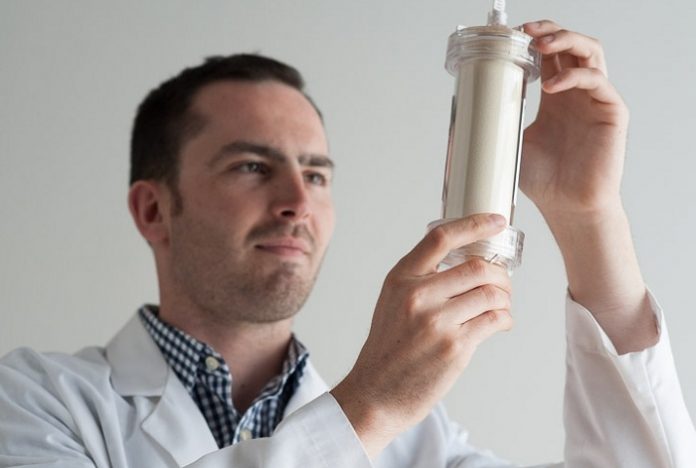
ExThera Medical Corporation announced that it has received CE Mark approval for its Seraph100 Microbind Affinity Blood Filter(Seraph 100) for the reduction of pathogens during bloodstream infections (BSI). This CE Mark signifies that Seraph 100 meets the safety and performance requirements for medical devices in the European Economic Area (EEA) as an adjunct to anti-infective therapy, and it gives ExThera access to a market of 500 million people. In October 2019 ExThera plans to begin shipping Seraph 100 for clinical use in selected member states of the European Union, providing a completely new treatment option for a large, at-risk patient population. Distributors for Italy, Germany and other EU countries will be announced early in September.

Bloodstream infections are a leading cause of death around the world, with mortality as high as 50%.[i] In Europe, the annual incidence rate is estimated at 1.2 million.[ii] In addition to rapid diagnostic tests, quick and effective therapeutic products are needed to successfully treat these infections for which every hour of delay in effective treatment can increase mortality by up to 7%.[iii] The challenge of quickly reducing pathogens is severely complicated during increasingly common drug-resistant infections, which are estimated to kill 10 million people annually by 2050.[iv]

As a broad-spectrum โ€˜sorbent-type blood filterโ€™ Seraph 100 provides a new option for treating bloodstream infections. Whereas existing devices remove only molecules, e.g. cytokines and/or endotoxin, Seraph 100 can also quickly lower the concentration of bacteria, viruses and fungi in whole blood. In pre-clinical and clinical testing, Seraph 100 was able to significantly reduce the concentration of both drug-susceptible anddrug-resistant pathogens, providing a long-awaited adjunctive therapy for bloodstream infections.

In March, 2019, Dr. med. Stefan Bรผttner of the Department of Nephrology, Dialysis and Kidney Transplantation at University Hospital Frankfurt, presented research findings at the International Symposium on Intensive Care and Emergency Medicine (ISICEM), highlighting Seraph 100 excellent clinical results, including the safe treatment of bacteremia during dialysis.

โ€œToday marks a definitive turning point in advancing the care of bloodstream infections, the result of years of dedicated research, development and investment,โ€ according to Bob Ward, NAE, President / CEO of ExThera. โ€œSeraph 100 provides an innovative therapy for rapid and effective treatment of infections that might otherwise pose a devastating risk to patients. We look forward to Seraph 100โ€™s continuedsuccess in Europe, while demonstrating its potential to help healthcare providers and their patients around the world.โ€

โ€œBloodstream infections pose a continuing challenge for healthcare providers worldwide, with the threat of catastrophic consequences for the patient, often leading to sepsis and even death if not treated effectively,โ€ said Prof. Dr. med Jan T. Kielstein, FASN, FERA, Director, Medical Clinic V: Nephrology, Rheumatology and Blood Puri?cation, Academic Teaching Hospital Braunschweig, Germany. โ€œSeraph 100 adds a critical tool to our clinical arsenal that can be used to treat a wide range of infections, including those that are proven to be drug-resistant. Itโ€™s an option we were not previously able to employ, and we are excited to have it available.โ€

According to consultant Kathleen White, ExTheraโ€™s former V.P. and Chief Operating Officer, โ€œThe ExThera team did an extraordinary job designing, testing and obtaining regulatory approval for Seraph 100, while also gaining certification of its Quality Management System. I thank them, our consultants and our clinical collaborators for their hard work and dedication to this revolutionary product.โ€

About Seraph and ExThera Medical

Based in the San Francisco Bay Area, and in Vaals, The Netherlands, ExThera is a privately held medical device company developing innovative, single-use blood filters capable of capturing a broad range of pathogens from whole blood. Seraphโ€™s unique design, and its highly blood-compatible surface, first developed at Stockholmโ€˜s Karolinska Institute [v], quickly reduce the concentration of drug-resistant anddrug-susceptible bacteria, viruses, fungi and sepsis mediators in blood continuously drawn from, and returned to the patient. ExThera develops therapeutic products to treat patients in the hospital, on the battlefield and during epidemics. Led by an accomplished management team with extensive experience in blood-contacting devices and biomaterials, the company has worldwide patent protection and a growing body of data from independent laboratory studies, including as best performer in DARPAโ€™s Dialysis-Like Therapeutics program, and from its successful EU clinical trial. For more information, please visit www.extheramedical.com.

NinePoint Medical Announces FDA Clearance for Pancreatic and Biliary Applications of the NvisionVLE Imaging System

 NvisionVLE Imaging System

NinePoint Medical, Inc., a transformative medical device company pioneering the use of a real-time optical imaging platform for gastrointestinal applications, announced that it has received U.S. FDA clearance to market the NvisionVLE Imaging System for use in the pancreas and bile duct. These anatomical indications add to the previously existing esophageal applications for NinePointโ€™s state-of-the-art Optical Coherence Tomography (OCT) imaging platform.

The NvisionVLE Imaging System provides physicians real-time, high-resolution volumetric images of the tissue surface and subsurface. This allows gastroenterologists to thoroughly evaluate tissue for regions of interest that may not be visible with other medical imaging technologies. The newly cleared application is associated with NinePointโ€™s Low-Profile Optical Probe, a 7 French diameter imaging probe designed to handle small and tortuous anatomies, such as those found in the pancreatico-biliary system. In the pancreas and bile duct, the ability to see beneath the tissue surface could help physicians answer a number of important clinical questions.

โ€œWhen a patient enters our care with an undiagnosed condition in the pancreatico-biliary system, the stakes can be very high,โ€ said Isaac Raijman, MD, previously the Chief of Gastroenterology at Baylor St. Lukeโ€™s Medical Center. โ€œWe have a number of tools today to help evaluate a patientโ€™s condition within this anatomy. Unfortunately in many cases, our current toolset is unable to provide enough information to determine the best course of action. This is especially concerning for strictures or blockages of unknown origin. We are hopeful and excited that imaging beneath the surface with the NinePoint technology will supply the missing link and will enhance our clinical decision-making for these critically ill patients.

This clearance marks another significant step for the strategic collaboration between NinePoint Medical and their exclusive worldwide distributor, Merit Medical Systems, Inc.โ€œNinePoint continues to produce innovative and high quality products that our team has been very impressed with,โ€ said Fred P. Lampropoulos, Chairman and CEO of Merit Medical. โ€œThe addition of new applications for the NvisionVLE Imaging System is important to demonstrate not just the quality but breadth of value the technology brings to hospitals and patients. Weโ€™re thrilled to add this to our suite of Merit Medical endoscopy products, and look forward to more great things from our collaboration with NinePoint.โ€

The pancreatico-biliary clearance marks a very productive 12 months of product development activity for NinePoint Medical. In November of 2018, NinePoint announced the first FDA-cleared artificial intelligence imaging technology for gastroenterology applications, the Intelligent Real-time Image SegmentationTM (IRIS) product. โ€œIโ€™m so proud of the team here at NinePoint,โ€ commented Eman Namati, Ph.D., President and CEO of NinePoint Medical. โ€œOur group over the years has really pushed the limits of engineering innovation to help patients. This past year has been especially fruitful, with the clearance and market launch of a first-of-its-kind artificial intelligence technology, and now with the clearance of a pancreatico-biliary application for the Low-Profile Optical Probe. The ability to promote to this new anatomical space really strengthens the platform of the NvisionVLE Imaging System, and continues to build the opportunity for this technology to help patients.โ€

About the NvisionVLE Imaging System

The NvisionVLE Imaging System is designed to help gastroenterologists care for their patients. Current methods to identify abnormalities in the esophagus and bile duct can leave disease undetected. The NvisionVLE Imaging System, which leverages state-of-the-art Optical Coherence Tomography (OCT) imaging hardware, provides physicians with a high-resolution volumetric view of both the tissue surface and subsurface to guide tissue acquisition and decision making using more complete information. With the first FDA-cleared artificial intelligence imaging product in gastroenterology to aid image review, and the ability to create real-time superficial laser marks to guide tissue acquisition, there is no technology on the market like it.

The NvisionVLE Imaging System has been cleared by the FDA and is commercially available in the U.S. It is indicated for use as an imaging tool in the evaluation of human tissue microstructure, including esophageal tissue microstructure, by providing two-dimensional, cross-sectional, real-time depth visualization and may be used to mark areas of tissue. The software provides segmentation and display of common imaging features, including hyper-reflective surface, layering, and hypo-reflective structures. The Low-Profile Optical Probe, as part of the NvisionVLE Imaging System, is indicated for use as an imaging tool in the evaluation of human tissue microstructure, including esophageal and pancreatico-biliary system tissue microstructures, by providing two-dimensional, cross-sectional, real-time depth visualization. The NvisionVLE Imaging System is intended to provide an image of tissue microstructure. The safety and effectiveness of this device for diagnostic analysis (i.e. differentiating normal versus specific abnormalities) in any tissue microstructure or specific disease has not been evaluated.

About NinePoint Medical, Inc.

NinePoint Medical is a privately-held medical device company that designs, manufactures, and sells an Optical Coherence Tomography (OCT) imaging platform for clinical use in gastroenterology, pulmonology, urology, gynecology, and ENT. Using proprietary imaging and software technology while pushing the limits of engineering innovation, NinePoint Medical is committed to enabling earlier diagnosis of disease and therefore more effective treatments for patients. NinePoint Medical is located in suburban Boston, Massachusetts. For more information, please visit www.ninepointmedical.com.

About Merit

Founded in 1987, Merit Medical Systems, Inc. is engaged in the development, manufacture and distribution of proprietary disposable medical devices used in interventional, diagnostic and therapeutic procedures, particularly in cardiology, radiology, oncology, critical care and endoscopy. Merit serves client hospitals worldwide with a domestic and international sales force and clinical support team totaling in excess of 300 individuals. Merit employs approximately 5,600 people worldwide with facilities in South Jordan, Utah; Pearland, Texas; Richmond, Virginia; Malvern, Pennsylvania; Rockland, Massachusetts; San Jose, California; Maastricht and Venlo, The Netherlands; Paris, France; Galway, Ireland; Beijing, China; Tijuana, Mexico; Joinville, Brazil; Markham, Ontario, Canada; Melbourne, Australia; Tokyo, Japan; and Singapore.

Magellan Health Announces DecisionPoint in Collaboration with Premier Inc

 Magellan Health Announces DecisionPoint in Collaboration with Premier Inc

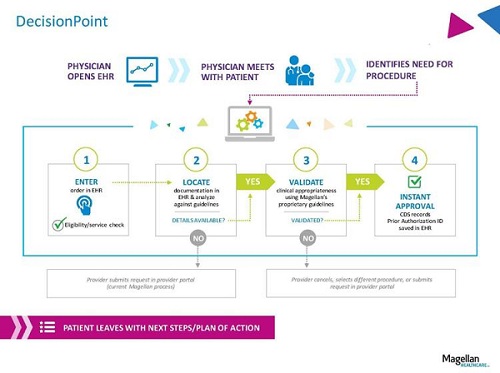
Magellan Health, Inc. announced a collaboration with Stanson Health, Premier, Inc.โ€™s clinical decision support (CDS) technology division, to deploy an industry-leading automated prior authorization (PA) solution at the point of care. Magellanโ€™s enhanced CDS Tool, DecisionPoint, which will be powered by Premierโ€™s CDS technology, supports true automation of the prior authorization process within the electronic health record (EHR) and physician workflow.

DecisionPoint is built with Magellan Healthcareโ€™s Advanced Imaging Management program clinical guidelines and Premierโ€™s award-winning technology platform. The tool will provide clinical guidelines for determining the medical necessity of certain imaging procedures to inform providers and enable authorization determinations in real time, improving efficiency of the overall PA process for providers and health plans, while also enhancing the member experience and maintaining clinical integrity.

โ€œAs a national leader in digital and clinical innovation, we continuously focus on building more provider-friendly approaches that reduce inefficiencies throughout the healthcare delivery system,โ€ said Gus Giraldo, Magellan Healthcareโ€™s president of behavioral and specialty health. โ€œOur collaboration with Premier is an example of our ongoing efforts to advance the industry commitment to automate prior authorization for better care delivery. With DecisionPoint, providers and payers can experience greater value through more effective processes combined with Magellanโ€™s high level of clinical intensity.โ€

"As part of the collaborative initiative, Hawaiโ€˜i Pacific Health (HPH) and other provider groups will participate in a pilot of Magellanโ€™s guidelines embedded in the system. HPH is one of the largest healthcare providers in Hawaiโ€˜i, with four major medical centers and more than 70 locations statewide. The pilot will be administered though Hawaiโ€˜i Health Partners, HPHโ€™s Accountable Care Organization (ACO). The pilot will leverage Magellanโ€™s clinical guidelines for the top-utilized advanced imaging studies, as well as Magellanโ€™s full panel of clinical experts.

โ€œBeing one of the first to implement an enhanced CDS system is part of our goal to be the leader in healthcare transformation in Hawaiโ€˜i. It is our hope that this system will assist providers in delivering the most appropriate care, help streamline care delivery and ease provider workflow,โ€ said Gerard Livaudais, M.D., vice president of Hawaiโ€˜i Health Partners. โ€œThis will ultimately enhance the patient experience, as well as the quality of care that our patients receive.โ€

The healthcare industry is in the midst of a significant paradigm shift as it transitions from fee-for service models to value-based care. As a technology-augmented service backed by the support of providers, DecisionPoint is designed to minimize the industryโ€™s challenges by fully integrating with EHRs at the point of care to enable more timely, automated PAs.

โ€œWe look forward to working with Magellan and Hawaiโ€˜i Pacific Health to pilot this initiative,โ€ said Scott Weingarten, M.D., chief executive officer of Stanson Health, a Premier Company. โ€œOur approach to prior authorization will help ensure that patients receive real-time authorization decisions and evidence-based care whenever possible. We believe that this approach, using machine learning and AI algorithms, should improve patient experience, provider satisfaction, and the affordability of care.โ€

DecisionPoint, initially focused on Magellanโ€™s advanced imaging studies, is expected to be available to additional providers in the fourth quarter of 2019 and will expand to additional product lines in the future. This will include further clinical decision-making capabilities to assist physicians and patients in optimizing the care plan. For more information, please visit MagellanHealthcare.com or email ProviderSolutions@MagellanHealth.com.

About Premier, Inc.

Premier, Inc.ย  is a leading healthcare improvement company, uniting an alliance of more than 4,000 U.S. hospitals and health systems and approximately 165,000 other providers and organizations to transform healthcare. With integrated data and analytics, collaboratives, supply chain solutions, and consulting and other services, Premier enables better care and outcomes at a lower cost. Premier plays a critical role in the rapidly evolving healthcare industry, collaborating with members to co-develop long-term innovations that reinvent and improve the way care is delivered to patients nationwide. Headquartered in Charlotte, N.C., Premier is passionate about transforming American healthcare. Please visit Premierโ€™s news and investor sites on www.premierinc.com

About Magellan Health: Magellan Health, Inc., a Fortune 500 company, is a leader in managing the fastest growing, most complex areas of health, including special populations, complete pharmacy benefits and other specialty areas of healthcare. Magellan supports innovative ways of accessing better health through technology, while remaining focused on the critical personal relationships that are necessary to achieve a healthy, vibrant life. Magellan’s customers include health plans and other managed care organizations, employers, labor unions, various military and governmental agencies and third-party administrators. For more information, visit MagellanHealth.com.

About Hawaiโ€˜i Pacific Health: Hawaiโ€˜i Pacific Health is a not-for-profit health care system with over 70 locations statewide including medical centers, clinics, physicians and other caregivers serving Hawaiโ€˜i and the Pacific Region with high quality, compassionate care. Itโ€™s four medical centersโ€”Kapiโ€˜olani Pali Momi, Straub and Wilcoxโ€”specialize in innovative programs in womenโ€™s health, pediatric care, cardiovascular services, cancer care, bone and joint services and more. Hawaiโ€™i Pacific Health is recognized nationally for its excellence in patient care and the use of electronic medical records to improve quality and patient safety.

About Hawaiโ€˜i Health Partners: Hawaiโ€˜i Health Partners, an affiliate of Hawaiโ€˜i Pacific Health, is a physician-led Accountable Care Organization (ACO) with the goal of providing high quality care, increased efficiency and optimal patient health. It is Hawaiโ€˜i’s first and only ACO with over 800 physician members.

Translate ยป