Close
Digital Health & Ai Innovation summit 2026
Medical Taiwan 2026

GSK completes transaction with Pfizer to form new world leading Consumer Healthcare Joint Venture

GSK completes transaction with Pfizer to form new world leading Consumer Healthcare

The Joint Venture brings together two highly complementary portfolios of trusted consumer health brands, including GSK’s Sensodyne, Voltaren and Panadol and Pfizer’s Advil, Centrum and Caltrate. Underpinned by science-based innovation, it is the global leader in OTC products and has number 1 or 2 market share positions in all key geographies, including the US and China.

Following announcement, the Joint Venture will focus on completing the integration of the two businesses, which is expected to realise annual cost savings of £0.5bn by 2022 for expected total cash costs of £0.9 billion and non-cash charges of £0.3 billion. Up to 25% of the cost savings are intended to be reinvested in the business to support innovation and other growth opportunities.

Brian McNamara, Chief Executive Officer, GSK Consumer Healthcare, said:

“Now the deal has closed, our focus will be on completing the integration of these two businesses and leveraging their combined strength. With our portfolio of brilliant, science-based brands and strong talent and capabilities, we are well-positioned to create a world-leading consumer healthcare business with stronger sales, cash flow and contribution to earnings.”

As previously announced, GSK intends to demerge the Joint Venture from the company within three years and to list the GSK Consumer Healthcare business on the UK equity market.

Emma Walmsley, Chief Executive Officer, GSK and Chair of the Joint Venture, said:

“The completion of the joint venture with Pfizer marks the beginning of the next phase of our transformation of GSK. This is an important moment for the Group, laying the foundation for two great companies, one in Pharmaceuticals and Vaccines and one in Consumer Health.”

Additional information

While completion of the transaction with Pfizer has taken place today, there are certain jurisdictions in which the transfer of relevant assets to or by GSK will only take place following receipt of additional market-specific approvals or other matters relevant to those jurisdictions. The arrangements in relation to these jurisdictions are considered immaterial in the context of the transaction.

5 Proven Strategies Hospitals Can Use to Boost Efficiency

Better efficiency is one of the ongoing goals at most workplaces, but it’s arguably imperative at hospitals. In those settings, processes that waste time could have life-or-death consequences.

Here are five proven ways hospitals can boost the efficiency of their workforces.

1. Attach RFID Tags to Equipment
If hospital workers don’t know the location of equipment they need to use, patient care can be compromised. The facilities may also need to compensate for the lost equipment with costly rentals or replacement purchases.

However, radio frequency identification (RFID) tags can eliminate the common problem of misplaced equipment. Michigan Medicine is a 1,000-bed facility with five buildings on its campus. The hospital also handles 12,000 pieces of equipment and decided to improve the tracking of those items with RFID tags. Hospital administrators made that decision after the patient equipment manager received 200,000 item requests in one year.

RFID systems let people use dedicated interfaces to see the precise, real-time location of the things they need. Then, they spend less time searching for the items and can devote more minutes to patient care.

2. Deploy Continuous Electronic Monitoring Equipment
Hospital employees know that patient monitoring is one of the essential components of high-quality treatment. Keeping tabs on a patient’s vital signs and other characteristics informs medical staff if medications or other interventions have the intended effects. However, checking on all the patients in an area of a hospital is time-consuming. That’s why there’s a growing interest in hospitals using continuous electronic monitoring (CEM) technology for 24/7 checks.

It’s now easier to do that than before since many patient wearables can track changes. In the past, CEM technology was mostly in critical-care units or places with specialized beds and associated equipment.

There are also alarm and notification (A&N) platforms that sync with CEM tools and immediately let medical workers know about shifts in a patient’s condition that require urgent action. In one example of what’s possible, an algorithm takes data from CEM platforms and electronic health records and uses it to determine a patient’s risk of sepsis. It reduces sepsis fatalities by nearly 23% and detects it 18 hours sooner than clinicians can.

CEM technology allows hospital employees to make the most of their work hours by getting real-time data they can use to support care decisions. It also reduces the time spent performing manual vital sign assessments.

3. Rely on Health Care Answering Services
Many hospitals have outpatient facilities where people go for everything ranging from chronic illness management to minor surgeries. In small or understaffed units of a hospital, people who primarily deal with patient care may also need to multitask by answering incoming calls or scheduling appointments. When that happens, overall productivity levels often go down.

Fortunately, medical answering services can provide call overflow assistance. They enable patients to reach human operators instead of voicemail messages when they need to get in touch during business hours. Then, outside of that timeframe, answering service companies engage with patients through after-hours help.

If patients experience complications after procedures or other potentially urgent situations, an answering service can either dial the appropriate provider on a patient’s behalf or let the caller know how to connect with them. Answering services allow providers to focus more on patient care instead of administrative tasks that could get them sidetracked.

4. Install Wayfinding Equipment
Statistics say no-shows cost health care facilities $150 billion annually. When people don’t appear for their appointments, the associated staff members have to juggle their responsibilities and look for productive ways to fill empty time slots. Many things can cause people to miss their appointments, including getting lost and not finding their way fast enough to be there on time.

An unspecified cancer research center in the U.S recently invested in wayfinding equipment from Phunware that gives patients and visitors navigational information through an app. Additionally, hospital staff members can push updates to the app, such as to tell people about a section of the hospital that’s closed for renovations.

Then, the customer service experience should improve, and workers should find it easier to concentrate on their duties instead of being interrupted by people who need directions.

5. Create and Launch Chatbots
E-commerce companies commonly use chatbots, mainly to provide quick answers to frequent customer questions. Useful applications exist in the health care sector, too. In the United Kingdom, Moorfields Eye Hospital built a chatbot that lets patients ask about their conditions. It also has accessibility features for visually impaired users.

Triage chatbots also exist that encourage people to describe their symptoms and get trustworthy advice about the kind of care they need. Some people criticize this technology, but it could allow individuals to get personalized information that may be life-saving. Some triage chatbots make assessments in a couple of minutes or less.

When people use them, they could get help in making decisions about promptly attending local health facilities for further assistance or taking part in home-care measures until they can visit their primary care doctors.

Additionally, chatbots could give people answers about the recommended ways to take prescribed medications, the locations of the pharmacies closest to them or the process to go through when making an appointment. Then, the health care workers who would ordinarily answer those calls have reduced burdens and can spend more time doing other tasks.

Worthwhile Technologies Can Make Hospitals More Efficient
This list gives a sampling of the broad range of technologies available to hospital administrators that want to help workforces cut down on inefficient processes and get more done. Before a facility invests in one or more of them, it’s ideal for representatives to take the time required to research the pros and cons linked to each solution.

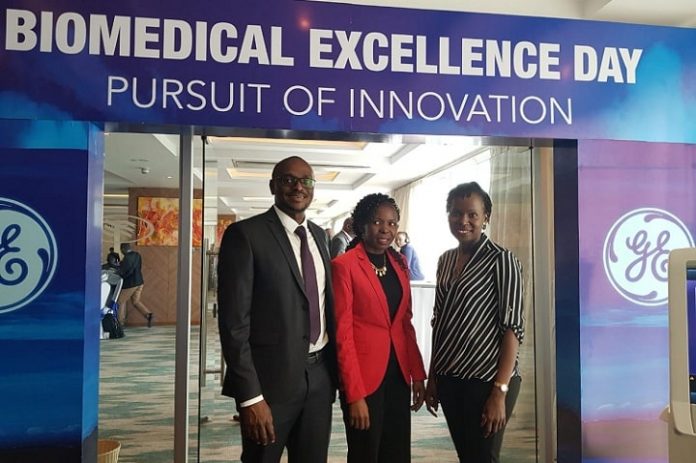
GE Healthcare and the Association of Medical Engineering of Kenya host more than 100 biomedical engineers for Biomedical Excellence Day

GE Healthcare host Biomedical Excellence Day

More than 100 biomedical engineers from the public and private sectors across the country participated with best practices on maintenance emphasized during the training; the training aligns with Kenya’s Vision 2030 and the Big Four agenda pillar on capacity building for Universal Health Coverage

GE Healthcare (www.GEHealthcare.com)  hosted the first “Biomedical Excellence Day” in Kenya during which more than 100 biomedical engineers were trained by local and international experts. The engineers were drawn from both government and private health centers from across Kenya’s 47 counties. The training was organized in partnership with the Association of Medical Engineering of Kenya (AMEK) and held in Nairobi.

AMEK is a professional Association registered under CAP 108 of the laws of Kenya and boasts of approximately 2000 members currently.

The objective of the Biomedical Excellence Day was to provide biomedical engineers with the latest information and knowledge on the use of advanced medical equipment. The full day event also provided a platform for knowledge sharing to foster best practices in maintenance of healthcare systems. Topics covered included Medical Equipment Lifecycle management and upgrades, Navigation through CT Technology, Code of Conduct for Medical Engineers, among other topics.

As a leader in healthcare sector, we believe that in-order to provide sustainability of healthcare solutions, training programs for healthcare professionals need up-dating to remain relevant to their practice and to reflect advances in healthcare innovations.” said Andrew Waititu, Managing Director of GE Healthcare East Africa. “The Biomedical Excellence Day reinforces our commitment to support continuous training for healthcare professionals and support the Universal Health Coverage agenda.”

In June 2016, GE Healthcare launched a US $13 million Healthcare Skills and Training Institute in Kenya in collaboration with the government to promote training of biomedical engineers and other healthcare workers as part of the Managed Equipment Services (MES) project. This is driving capacity and capability building as a priority for sustainable development of the healthcare sector in Kenya. To date, over 1600 professionals have been trained.

“Training in the latest medical technologies is critical for Biomedical Engineering professionals to efficiently provide quality Healthcare technology management to Kenyans through treatment, consultation, diagnosis, monitoring, administration, equipment preventive maintenance, surgery among other services. We appreciate GE Healthcare for organizing the Biomedical Excellence Day which aligns with our motto of “Strengthening healthcare technology through appropriate technology” as it bridges the skills gaps within our fraternity.” Eng. Millicent Alooh, Secretary General, AMEK.

About GE Healthcare:
GE Healthcare (www.GEHealthcare.com) is the $19,8 billion healthcare business of GE. As a leading provider of medical imaging, monitoring, biomanufacturing, and cell and gene therapy technologies, GE Healthcare enables precision health in diagnostics, therapeutics and monitoring through intelligent devices, data analytics, applications and services. With over 100 years of experience in the healthcare industry and more than 50,000 employees globally, the company helps improve outcomes more efficiently for patients, healthcare providers, researchers and life sciences companies around the world.

Siemens Healthineers to acquire forerunner in robotic-assisted vascular interventions

“Together with Corindus, Siemens Healthineers is well-positioned to be one of the leading players in the field of robotic vascular interventions and to perform minimally invasive procedures more accurately, more quickly and more effectively. With this acquisition, we are opening up a new field for our image-guided therapies business. Together with our strong portfolio in imaging, digitalization and artificial intelligence, we are creating significant synergies to advance therapy outcomes”, said Bernd Montag, CEO of Siemens Healthineers AG.

The collaboration with Siemens Healthineers is a unique opportunity to take our business to the next level and continue our success story. Together we plan to develop next generation solutions that further improve patient care“, said Mark Toland, President and
CEO at Corindus.

Siemens Healthineers AG has entered into a merger agreement with U.S.-based Corindus Vascular Robotics, Inc. (NYSE American: CVRS), a global technology leader for robotic assisted vascular interventions. Under the terms of the agreement, Siemens Healthineers will acquire all fully diluted shares of Corindus for $4.28 per share in cash or $1.1 billion in total. The transaction is expected to be closed by end of calendar year 2019, subject to Corindus shareholder approval, receipt of regulatory approvals and other customary closing conditions. The Corindus board fully supports the acquisition proposal. Corindus is headquartered in Waltham, Boston, Massachusetts, and currently has approximately 100 employees.

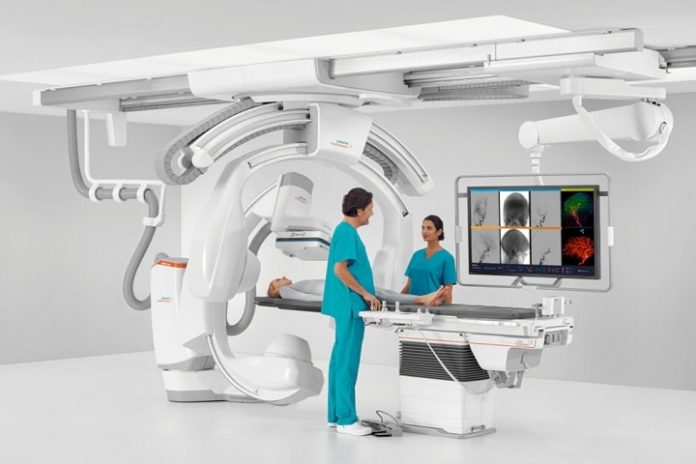
Corindus develops, produces and sells robotic systems for minimally invasive procedures. These systems help doctors to precisely control guide catheters, guide wires, balloon or stent implants via integrated imaging. The physician does not have to stand at the angiography table as usual but can control the procedure with a separate controlling module and is therefore less exposed to radiation. Corindus is currently one of the leading companies offering a robotic treatment platform for major vascular therapeutic markets, meaning coronary, peripheral vascular and neurovascular1 interventions. For example, heart disease is the most common cause of death in the U.S. Every year, more than four million percutaneous coronary interventions are carried out worldwide.

The acquisition of Corindus meets the objective of simplifying today’s challenges in everyday hospital life. Robotic assisted minimally invasive procedures have the potential to reduce treatment times, increase precision during treatment, raise standardization levels in
clinical procedures and ultimately improve clinical outcomes, which is the strategic focus of the Advanced Therapies business segment.

“The interplay of exact imaging and robotic-assisted interventions will enhance both the eyes and hands of the physician, metaphorically speaking. With the addition of Corindus to our strong therapies portfolio we sharpen our procedural focus and will grow by expanding precision medicine and improving clinical outcomes. In the future, our digital and artificial intelligence-based tools will help to integrate the aspects of image-guidance and therapy even further”, said Michel Therin, President Advanced Therapies at Siemens Healthineers.

The CorPath systems developed by Corindus will be used together with angiography systems that Siemens Healthineers sells as one of the leading suppliers. The Siemens Healthineers products make minimally invasive treatment possible by using high-quality imaging before and during medical interventions. The company’s leading role in image based minimally invasive procedures is now complemented by robotic-assisted precision medicine. This expansion strengthens the therapy position of Siemens Healthineers and underlines its role as one of the leading providers of solutions along the entire treatment path. This makes the acquisition of Corindus a strategically significant extension of Siemens Healthineers’ therapy business.

The future integration of Siemens Healthineers digitization and artificial intelligence solutions with Corindus’ robotic systems offers further promising possibilities. The aim is to further increase procedure optimization in order to enable the greatest possible degree of efficiency and clinical reproducibility. In addition, Corindus is driving forward the approval procedure for remote robotic treatment in vascular interventions. Due to the limited availability of specialists for minimally invasive procedures in many regions and the limited number of corresponding clinical facilities, remote treatment could significantly improve patients’ access to treatment in the future.

Siemens Healthineers enables healthcare providers worldwide to increase value by empowering them on their journey towards expanding precision medicine, transforming care delivery, improving patient experience and digitalizing healthcare. A leader in medical technology, Siemens Healthineers is constantly innovating its portfolio of products and services in its core areas of diagnostic and therapeutic imaging and in laboratory diagnostics and molecular medicine. Siemens Healthineers is also actively developing its digital health services and enterprise services. In fiscal 2018, which ended on September 30, 2018, Siemens Healthineers generated revenue of €13.4 billion and adjusted profit of €2.3 billion and has about 50,000 employees worldwide. Further information is available at www.siemens-healthineers.com.

Siemens Healthineers to Showcase the Power of Data in the Lab with its Atellica Diagnostics IT Solutions at AACC 2019

 Siemens Showcase the Power of Data in the Lab

At the 71st AACC Annual Scientific Meeting & Clinical Lab Expo, Siemens Healthineers will feature in Booth #1039 its innovative IT solutions to combat the laboratory’s staffing challenges, limited budgets, and the increasing complexity in sample management and testing.

“We will be demonstrating the power of our broad IT offerings and how the data they deliver, and artificial intelligence, can drive fewer errors and help create more efficient workflows in the laboratory for better outcomes,” said Deepak Nath, PhD, President, Laboratory Diagnostics, Siemens Healthineers.

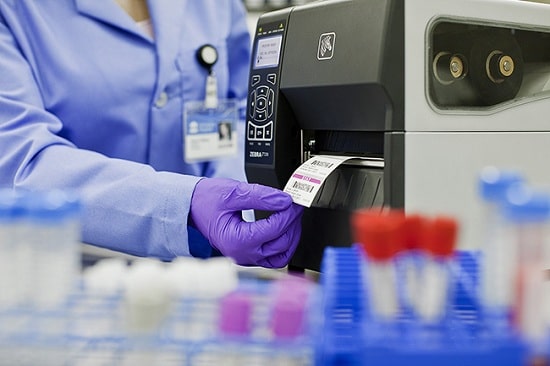
The Siemens Healthineers Atellica® Diagnostics IT portfolio enables laboratories to unlock their full potential by leveraging data to optimize workflows. With easy-to-navigate user interfaces and centralized management of operations, the robust software solution enhances visibility into valuable business analytics that unify sample, process, result, and inventory data. These important features have enabled laboratories to achieve outcomes that matter, such as a 93 percent reduction in testing errors,1 an 85 percent increase in patient and staff satisfaction,1 and an 88 percent achievement rate for 30-minute STAT turnaround.

The Atellica portfolio pipeline includes the Atellica Asa™ Application,3 a tablet-based virtual assistant designed to simplify and organize operator interactions with the instruments. The goal of the Atellica Asa Application is to draw staff attention to a single interface with only the most common, yet critical, procedures needed to complete daily system operations. The tile-based software is designed to organize operator tasks by workflow and to reduce the number of screens used to complete a single task.

In addition to demonstrations of the Atellica Asa virtual assistant, attendees can learn more about LifeNet, an innovative online program that helps labs increase system utilization by providing a centralized platform to schedule system maintenance and view service history of connected Siemens Healthineers systems. Attendees also can explore the artificial intelligence-driven Guardian Program, which can help to predict certain system failures up to 21 days before they happen. By monitoring more than 80 critical components in real time, the Guardian Program can continuously detect potential issues and schedule repairs at a time that will not affect turnaround time, maintaining workflow during peak hours. Visitors to the Siemens Healthineers booth also can experience their own virtual reality journey through a simulated hospital environment to visualize in vitro testing and workflow possibilities based upon tailored needs.

Other Products to Explore
Just out of the assay pipeline, Siemens Healthineers has achieved 510(k) clearance from the FDA for its N Latex FLC kappa and N Latex FLC lambda assays for monitoring multiple myeloma. The assays are confirmed to be highly precise and sensitive for free light chain quantification compared to the immunofixation method currently regarded as the reference method for detection of monoclonal immunoglobulins and its components.

Siemens Healthineers will also unveil a new product for point-of-care testing. “Point-of-care testing enables clinicians to deliver the right test in the right setting for their patients at the right time,” said Christoph Pedain, PhD, Head of Point of Care Diagnostics, Siemens Healthineers. “Siemens Healthineers will be unveiling its newest technology for point-of-care testing—the RAPIDPoint 500e Blood Gas System.” The RAPIDPoint® 500e Blood Gas System,3 will be revealed on Tuesday, August 6 for product demonstrations.

Clinicians who use Siemens Healthineers products will speak about industry hot topics such as high-sensitivity cardiac troponin I, free light chain testing in the diagnosis and monitoring of multiple myeloma, and effective chronic disease management utilizing point-of-care testing. To learn more about these presentations, please visit https://www.siemens-healthineers.com/

Siemens Healthineers enables healthcare providers worldwide to increase value by empowering them on their journey towards expanding precision medicine, transforming care delivery, improving patient experience and digitalizing healthcare. A leader in medical technology, Siemens Healthineers is constantly innovating its portfolio of products and services in its core areas of diagnostic and therapeutic imaging and in laboratory diagnostics and molecular medicine. Siemens Healthineers is also actively developing its digital health services and enterprise services. In fiscal 2018, which ended on September 30, 2018, Siemens Healthineers generated revenue of €13.4 billion and adjusted profit of €2.3 billion and has about 50,000 employees worldwide. Further information is available at www.siemens-healthineers.com

Optimum Healthcare IT Announces Expansion of Staffing Business with OptimumTech

Optimum Healthcare IT

Optimum Healthcare IT, a Best in KLAS healthcare staffing and consulting services firm, announced that the company has expanded its staffing business with OptimumTech, a dedicated IT staffing division headquartered in Nashville, TN.

As the market for skilled and experienced IT workers continues to grow and become more competitive, successful companies need to attract and retain the most talented IT resources. To begin, OptimumTech will provide IT staffing services in the Nashville, TN, area.

OptimumTech is lead by Optimum Healthcare IT CEO Jason Jarrett, a 12-year veteran in IT Staffing as well as Ken Large, Vice President of Recruiting and Steven Whalen, Vice President of Sales. Before joining Optimum Healthcare IT, all three leaders began their careers in IT staffing within the Nashville market.

Backed by an established team of experienced recruiters, OptimumTech provides high-quality employment solutions by matching employers with the finest job candidates. With an understanding of the importance of having the right person for the right job, whether it is for a permanent position or a short-term project, OptimumTech has the knowledge that comes from years of hard work and dedication in the healthcare solutions and staffing industry and an extensive network of professionals.

About OptimumTech

OptimumTech is part of Optimum Healthcare IT, Best in KLAS healthcare IT staffing and consulting services firm based in Jacksonville Beach, Florida. The recruiters at OptimumTech are an established team of specialists who bring years of experience to every search and understand that for a company to be successful; they need to have quality employees. OptimumTech is committed to providing our clients with the highest quality candidates available and understands the importance of having the right person for the job, whether it is for a permanent position or a short-term project. We bring the knowledge that comes from years of hard work and dedication in the healthcare solutions and staffing industry and an extensive network of professionals. Visit www.optimumtech.com

About Optimum Healthcare IT
Optimum Healthcare IT is a Best in KLAS healthcare IT staffing and consulting services firm based in Jacksonville Beach, Florida. Optimum provides world-class professional staffing services to fill any need as well as consulting services that encompass advisory,  EHR implementation, training and activation, EHR optimization, community connect, managed services, enterprise resource planning, security, and ancillary services – supporting our client’s needs through the continuum of care. Our organization is led by a leadership team with more than 100 years of experience in providing expert healthcare staffing and consulting solutions to all types of organizations. Visit www.optimumhit.com

Lahey Hospital & Medical Center Unveils New Endoscopy Center

Lahey Hospital  Unveils New Endoscopy Center

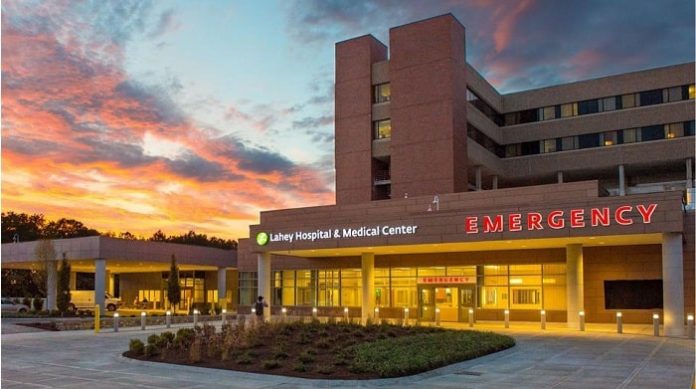
Lahey Hospital & Medical Center is proud to offer area residents a state-of-the-art Endoscopy Center.

The new space, which will grow the endoscopy suite from 4,500 to more than 13,000 square feet, will allow the new Endoscopy Center to meet increasing demand while enhancing patient experience.

The new center will include nine procedure rooms, including two advanced procedure rooms, 23 pre-procedure and post-procedure bays for outpatients and and inpatients, light-filled waiting rooms, and its own entrance and parking lot. The space will also include updated imaging equipment, advanced reprocessing technology and separate workflows for outpatients and inpatients.

Members of the planning team, including Andrew Warner, MD, Chair of Gastroenterology, used a virtual reality program to envision the procedure rooms and work spaces.

“The virtual reality technology helped us design the safest and most efficient procedure rooms possible,” said Dr. Warner. “The new space will allow us to meet the high demand and continue to grow while significantly improving the experience for patients.”

Additionally, this new unit has the largest automated cleaning system in the region, which reduces the risk of human error and cross-contamination, ensuring safe, patient-ready endoscopes for every procedure.

The endoscopy unit has seen more patients this year than ever before and continues to bring on new providers. In addition to an aging population needing screenings and an increase in referrals, the department is seeing more patients seeking treatment for chronic GI disorders and advanced endoscopic procedures.

Lahey Hospital & Medical Center
Lahey Hospital & Medical Center, a part of Beth Israel-Lahey Health, is a world-renowned tertiary medical center known for its innovative technology, pioneering medical treatment, and leading-edge research. A teaching hospital of Tufts University School of Medicine, the hospital provides quality health care in virtually every specialty and subspecialty, from primary care to cancer diagnosis and treatment to kidney and liver transplantation. It is a national leader in a number of health care areas, including stroke, weight management and lung screenings, among many others. For more information on Lahey Hospital & Medical Center, please visit www.lahey.org.

Nexus Primary Health Migrates TrakCare Healthcare Information System to InterSystems Cloud-Based Managed Service

InterSystems IRIS Data Platform

InterSystems, a global leader in information technology platforms for health, business and government applications, announced that community healthcare provider Nexus Primary Health has migrated its InterSystems TrakCare® healthcare information system to an InterSystems cloud-based managed service.

Nexus delivers allied health, medical and nursing, mental health and wellbeing, disability, community support and health promotion services to the communities around Mitchell, Murrindindi and Strathbogie Shires in Victoria, Australia. It has four facilities in the region and over 250 staff, some working remotely.

The migration follows a review by Nexus of its information systems and the adoption of a cloud-first systems strategy. The availability of the InterSystems managed service allowed TrakCare to become one of the first of the agency’s systems to be migrated.

InterSystems met all of Nexus’s requirements, including the legal requirement that data be hosted in Australia. Compared with the previous remotely hosted implementation of TrakCare that serviced Nexus, InterSystems provides higher levels of systems management and monitoring, support, availability and redundancy.

“The cloud hosting by InterSystems has had a huge business benefit,” said Barbara Moss, Nexus Primary Health’s Data & Systems Manager. “We now have service level agreements that ensure high levels of management and monitoring. If there is a problem, I am quickly notified with a clear explanation of the incident, which means it gets fixed far more rapidly.”

The increased service levels have improved systems availability. Prior to the migration, staff had been impacted by a difficult to diagnose issue that made it difficult to log into the system. Immediately upon moving to the cloud-based managed service, detailed reports from InterSystems made it apparent that a third party application was consuming any available TrakCare licenses.

With twin data centres in Melbourne and Sydney, InterSystems provides full disaster recovery, as well as increased flexibility and capacity to support Nexus’s expansion. It also simplifies support for remote workers. “It gives me great peace of mind and comfort to know that we can access TrakCare whenever we need it and there is room to move for the future,” said Moss.

Nexus has a number of initiatives underway to help its staff work more efficiently. One of these is to give remote staff such as home carers access to TrakCare to coordinate activities and collaborate with each other – lifting the system’s footprint from around 50% to close to 100% of staff. “We would like to have all staff utilise TrakCare, including carers who are out on the road,” said Moss.

Nexus also wants to engage members of the community in the management of their own care. This may include future access to relevant documentation through a patient portal or the ability for clients to book appointments online.

Community engagement and other new initiatives would be facilitated by the solution, said Moss. “Healthcare provision is changing rapidly and we need to manage those changes efficiently. The cloud facilitates that through support for different devices, for example, or the ability to provide extra capacity on demand.”

Nexus also has increased financial certainty with known systems support costs. “In the past we had to pay for additional management capabilities,” said Moss. “That has now been incorporated into the contract so, for example, we don’t have to get separate quotes for patching.”

“InterSystems is proud to support Nexus Primary Health in implementing its cloud-first strategy,” said Luciano Brustia, Regional Managing Director, Asia Pacific for InterSystems. “As Nexus has demonstrated, healthcare organisations can derive a number of benefits from InterSystems infrastructure and the expertise of our support staff.”

About InterSystems

InterSystems is the information engine that powers some of the world’s most important applications. In healthcare, finance, government, and other sectors where lives and livelihoods are at stake, InterSystems has been a strategic technology provider since 1978. InterSystems is a privately held company headquartered in Cambridge, Massachusetts (USA), with offices worldwide, and its software products are used daily by millions of people in more than 80 countries. For more information, please visit http://www.intersystems.com/.

Cleveland Clinic to Build New Neurological Institute Building Expand Cole Eye

Cleveland Clinic build a Neurological Institute building

Cleveland Clinic announced plans to build a Neurological Institute building and expand the Cole Eye Institute. The two new buildings, to be located on Cleveland Clinic’s main campus, will accommodate expansion of patient care, research and education needs.

The new facility for the Neurological Institute will centralize all outpatient neurological care on Cleveland Clinic’s main campus. The proposed 400,000-square-foot building, to be located on Euclid Avenue just east of East 96th Street, will bring together services currently delivered in eight locations to provide integrated sub-specialty care for patients with neurological conditions.

The building will feature the most advanced technology and will house care teams in various neuroscience subspecialties to enable a new level of clinical collaboration and individualized treatment planning. A comprehensive array of services will include digitized patient evaluations, imaging, neuro simulation training, infusion therapy, neurodiagnostics, and brain mapping suites as well as research space dedicated to investigating new therapies. It will serve as the nucleus for neurology-related distance health care and digitized data processing and management, offering access to Cleveland Clinic care to patients who live far away.

Currently over 1,700 Neurological Institute caregivers provide care to 225,000 patients annually through clinical visits, surgeries and in-patient stays. Patient volumes are projected to increase significantly by 2025, needing to serve more than 300,000 patients annually.

“The new Cleveland Clinic neurological building will enable us to centralize and advance the care we provide in an environment specifically designed around the unique needs of people with neurological conditions,” said Andre Machado, M.D., Ph.D., chair of the Neurological Institute and the Charles and Christine Carroll Family Endowed Chair in Functional Neurosurgery. “It will become the hub for patient-centered care, distance health, digitization, discovery and innovation. A building fully dedicated to neurological care will enable us to provide leading-edge treatment options to restore neurological function and improve quality of life while making progress toward developing the care of tomorrow.”

The Cole Eye Institute has grown dramatically over the last 10 years and has one of the highest patient volumes in the United States. Patient visits have increased from 130,000 annual visits in 2008 to more than 310,000 in 2018. Over the same time period, surgical procedures have grown from 5,000 to more than 16,000 each year.

The Cole Eye Institute expansion involves adding more than 100,000-square-feet to the existing building to accommodate its rapidly growing patient eye care and research needs. The new addition will feature an ophthalmic surgical center that will increase the number of operating rooms from five to 12 and the addition of 60 new exam rooms. It will also house a new Center of Excellence in Ophthalmic Imaging, an expanded simulation center for resident and fellow education and training, and a larger ophthalmic research center to facilitate growth of eye research as well as consolidate multiple ophthalmology research labs currently housed at different locations. The new construction will be complemented by renovation of the existing 130,000-square-foot Cole Eye Institute. The two buildings will be connected to create an integrated eye center designed to deliver an outstanding patient experience, as well as state-of-the art eye care, research and education.

“The current Cole Eye Institute building has served us well but we have surpassed its clinical, surgical, research and educational capacity,” said Daniel F. Martin, M.D., chair of the Cole Eye Institute and the Barbara and A. Malachi Mixon III Institute Chair of Ophthalmology. “The new state-of-the-art facility is designed to provide exceptional clinical, diagnostic and surgical services for the entire range of eye diseases, as well as to facilitate research and discovery of the next generation of new therapies.”

Both the expansion of the Cole Eye Institute and the building of the new Neurological Institute will be supported in large part by philanthropy and the power of giving.

Groundbreaking for the Cole Eye Institute is slated for next year and within the next two years for the Neurological Institute.

Reference: https://my.clevelandclinic.org/departments/neurological

Canopy Health San Francisco Health Network Announce Collaboration that will Expand Hospital-Based Midwifery Access in San Francisco

Canopy Health

Canopy Health and San Francisco Health Network (SFHN) announced they have signed a contract, effective July 1, 2019, to expand hospital-based midwifery access at Zuckerberg San Francisco General (ZSFG). This is the first time SFHN, which includes ZSFG, has signed a contract to provide services to enrollees with commercial health plan coverage.

“Through strategic expansion and partnerships, Canopy Health can give commercial HMO members increased access to care and more choice when they have a baby,” said Jeff Burnich, M.D., Chief Physician Enterprise Executive at Canopy Health.

ZSFG’s Family Birth Center is home to the longest-standing hospital-based nurse midwifery practice in San Francisco. The midwifery program was established in 1975 by a team of obstetricians and nurse-midwife community leaders to provide more choices for childbearing women.

“The ZSFG midwifery program is a great option for healthy women who want limited interventions and continuous support during labor and delivery, but still want to be in the vicinity of a medical physician in case of an emergency,” said Rebecca Jackson, M.D., Division Chief of Obstetrics, Gynecology & Reproduction at ZSFG.

The contract allows UCSF patients through Hill Physicians Medical Group, one of the five physician groups that comprise the Canopy Health alliance, to access ZSFG’s midwifery program and other obstetric services.

“We are pleased to see our partnership with Canopy Health extend to ZSFG. Every time Canopy Health expands its network of facilities and medical groups, our patients benefit from having more choice and access to high-quality care,” added David Joyner, CEO of Hill Physicians Medical Group.

The Family Birth Center leads the state in multiple perinatal indicators, and the strong partnership between midwives and doctors has been integral to its success. Currently, one-third of the babies born at ZSFG are assisted by midwives at no additional charge.

“We see birth through a different lens,” added Laurie Jurkiewicz, CNM, midwife at ZSFG. “We see pregnancy and birth as normal processes and important life transitions and believe it is essential to support those processes, engage patients fully in the care experience, and use medical interventions only when necessary.”

ZSFG is the only medical facility in San Francisco to have a 24/7 midwifery service and hold a “Baby-Friendly Hospital” designation, an award from the World Health Organization (WHO) and UNICEF for the hospital’s high level of support for successful breastfeeding.

“As a practicing family doctor at both UCSF Health and ZSFG, I know firsthand how the family centered care model at ZSFG results in the Family Birth Center having one of the lowest Cesarean section rates of any hospital in California,” said Kevin Grumbach, M.D., Chair of the UCSF Department of Family and Community Medicine and Canopy Health board member. “For the first time, women with private insurance will now have the option of delivering their babies at this wonderful high-touch, high-tech birthing center.”

Canopy Health’s mission is to reinvent healthcare in the Bay Area through improving health outcomes, coordinating care, and increasing access and choice for members no matter where they live, work, or play. By welcoming ZSFG into the Canopy Health network, members who have access to Canopy Health through their health plan will have greater access to diverse and comprehensive support throughout pregnancy, labor, and delivery.

“Studies show that access to comprehensive and holistic maternity care can help improve patient health outcomes for both mom and baby,” added Burnich. “Canopy Health is excited to see how this collaboration benefits our members and supports growing families.

  • SF Health Network members who get their care at one of the SF Health Network health centers, including the Women’s Health Center at ZSFG, Chinatown Public Health Center, Maxine Hall, Potrero Hill, Silver Avenue, Southeast, Tom Waddell, Castro Mission,
  • Ocean Park, or ZSFG Family Health Centers.
  • San Francisco Health Plan members who have chosen SF Health Network’s ZSFG for hospital services regardless of which program they are enrolled—Medi-Cal, Healthy San Francisco, or Healthy Workers.
  • Canopy Health members who are privately insured through Health Net, UnitedHealthcare, or Western Health Advantage.
    Anthem Blue Cross and Partnership Health Plan members who are enrolled in Medi-Cal and come to ZSFG for hospital services.

For more information about this announcement, please contact Denise Vance-Rodrigues, Vice President of Business Development at Canopy Health, at denise.vance-rodrigues@canopyhealth.com.

For more information about ZSFG or midwifery services, please contact Cristina Padilla, Public Relations Officer, at cristina.padilla@sfdph.org.

Women who are interested in having a midwife-assisted delivery should talk to their healthcare providers first. ZSFG Family Birth Center services are available to women who are:

About Canopy Health
Canopy Health is a physician- and hospital-owned medical alliance that focuses on delivering a refreshing approach to healthcare and providing transparent, affordable care from a network of exceptional providers.

Incorporated in March 2015 as an affiliation between UCSF Health and John Muir Health, Canopy Health aims to provide a top-quality continuum of care across the Bay Area through its premier network of primary care providers, top-tier academic medical facilities, community hospitals, and medical groups.

In addition to its founding members, Canopy Health currently includes five physician groups — John Muir Health Physician Network, Meritage Medical Network, Hill Physicians Medical Group, and Santa Clara County IPA (SCCIPA), and Dignity Health Medical Network – Santa Cruz (DHMN-SC).

Canopy Health also includes 19 participating medical centers across nine Bay Area counties — including Alameda, Contra Costa, Marin, San Francisco, San Mateo, Santa Clara, Santa Cruz, Solano, and Sonoma.

About Zuckerberg San Francisco General Hospital
Learn more about the ZSFG Family Birth Center and midwifery programs at www.zsfgfamilybirthcenter.org or www.obgyn.ucsf.edu/san-francisco-general-Zuckerberg San Francisco Hospital and Trauma Center (ZSFG) is the only Level 1 trauma center in San Francisco and is a part of the San Francisco Health Network (SFHN). The San Francisco Health Network is a community of top-rated clinics, hospitals, and programs within the Department of Public Health that connect San Franciscans to quality health care, regardless of immigration status or lack of health insurance.hospital/midwifery-zsfg. Find a SF Health Network health center at www.sfhealthnetwork.org.




Translate »