Close
Digital Health & Ai Innovation summit 2026
Medical Taiwan 2026

Living with Social Anxiety Disorder: Uncovering Next – Generation Treatments for a Common and Debilitating Mental Illness

Living with Social Anxiety Disorder

Interviewing for a job, going on a date, speaking in front of a crowd – everyone, in all kinds of circumstances, has anxiety, even if for only short, fleeting moments. And with our 24/7 news cycle, fast-paced lives and hyperactive use of social media, there’s certainly a lot to be anxious about in this frenetic 21st century America.

However, there is a more acute and debilitating form of anxiety, known as social anxiety disorder, or “S-A-D,” that millions of people suffer from, many experiencing it every day and without even realizing that they have it. In fact, they might even think that the feelings associated with SAD are normal, just caused by introversion or shyness. But SAD is not just shyness – it is entirely different.

SAD is a common mental health disorder, affecting over 15 million Americans, according to the Anxiety and Depression Association of America and U.S. National Institute of Mental Health.

It is a chronic disorder marked by intense fear of being evaluated, judged and humiliated in certain challenging social or professional situations. The fear and anxiety that individuals with SAD experience when they have to interact in these challenging social and work situations may cause them to sweat, have an increased heart rate, stumble over words or even trigger a full-blown panic attack.

While we all get nervous about important social engagements, individuals with SAD experience excessive fear and anxiety that cause them to avoid situations altogether and miss out on important social and professional opportunities. This ultimately affects their quality of life, constantly fearing scrutiny, embarrassment, humiliation and rejection.

This sort of crippling and debilitating fear can ruin relationships, sideline careers and even lead to heavy drinking, substance abuse and suicide in the misguided attempt to control it. Only three medications, all antidepressants with limited efficacy and numerous side effects, are approved by the U.S. FDA to treat SAD. While potentially addictive anti-anxiety medications known as benzodiazepines (the misuse of which has reached epidemic levels in the U.S.) and beta-blockers are not approved for treatment of SAD, they are often prescribed “off-label” for SAD.

It is especially important to note that, up to this point, the FDA has not approved a safe and fast-acting treatment for SAD, one that patients can conveniently and privately self-administer as-needed, for on-demand relief, before they experience symptoms of SAD. But all of that may be about to change.

The three antidepressants approved by the FDA for SAD can take many weeks, or even months, to take effect – or they might not work at all. They also lack the important convenience of being taken on-demand, at the moment that the individual with SAD knows he or she is about to be hit with the lightning bolt of fear and anxiety. SAD sufferers don’t just need an antidepressant; they need a fast-acting, neural lightning bolt to the parts of the brain that control “flight or fight” impulses and fear and anxiety, but only when they need it.

One of VistaGen Therapeutics’ late-stage product candidates, PH94B, is a novel neuroactive nasal spray for SAD. Based on successful Phase 2 clinical studies in which efficacy was observed within 15 minutes of nasal spray administration at microgram doses and without any detectable systemic exposure, VistaGen is preparing to enter pivotal Phase 3 clinical development of PH94B and is targeting PH94B to be the first FDA-approved on-demand treatment for SAD. If Phase 3 development is successful, PH94B could bring hope to the millions of people across the world who battle the debilitating impact that SAD has on their daily lives.

Among other potential future therapeutic applications of PH94B, such as PTSD and generalized anxiety disorder, or GAD, VistaGen’s most advanced development of PH94B is to enable individuals with SAD to self-administer PH94B as-needed, on-demand – often right before their anticipated fear or anxiety-inducing situation, like going on a date or giving an important presentation at the office or school. This will offset the expected onrush of fear and anxiety that precedes the event or situation.

PH94B is a novel, odorless, synthetic investigational neurosteroid that activates and stimulates the main fear and anxiety center in the brain, the limbic amygdala, which then broadcasts calming, inhibitory signals to parts of the brain that are involved in controlling fear and anxiety, including the hypothalamus, prefrontal cortex and hippocampus.

VistaGen recently completed a pilot Phase 3 study for PH94B, which is like a test run for the actual Phase 3 trial, and the results among the participants were encouraging. Anxiety levels dropped significantly, as measured by the Subjective Units of Distress Scale (SUDS) and Liebowitz Social Anxiety Scale, developed by principal investigator Dr. Michael Liebowitz, a psychiatrist formerly at Columbia University and founder of Anxiety Disorders Clinic at the New York State Psychiatric Institute.

Anxiety, like depression, is among the greatest calamities to affect the human spirit, and it affects some people worse than others. We agree with the National Institute of Mental Health: SAD is “more than just shyness.” When it comes to SAD, we need to bring serious pharmaceutical innovation to address this high unmet medical need that hasn’t seen a change in decades. At VistaGen, we are committed to this effort, driven by tenacious and visionary efforts to achieve the goal of making a difference for the millions of people whose lives we hope to meaningfully impact with the medicine we are developing.

Shawn Singh is CEO of VistaGen Therapeutics , a clinical-stage biopharmaceutical company developing new-generation medicines for CNS diseases and disorders for which current treatments fall short of patient needs, including depression and social anxiety disorder. Mr. Singh has over 25 years of experience working with private and public biotechnology, medical device and pharmaceutical companies; a venture capital firm; and contract research and development organization (CRO), serving in numerous senior management roles.

Hard Science, Not Hype, Will Drive Medical Cannabis in the 21st Century

Drive Medical Cannabis in the 21st Century

Medical cannabis is a hot-button issue, and for good reason. A growing body of research suggests that it has real medical benefits, from pain relief to seizure reduction. But there’s a lot of misinformation out there, too. Some people think that medical cannabis is just a way to get high legally. Others believe that it’s a miracle drug that can cure anything.

The truth is that medical cannabis is neither one of those things. It’s not some miracle cure-all, and it can’t be used to treat every ailment under the sun. But it does have real medical benefits, and scientists are only starting to unlock its potential. In this blog post, we’ll take a look at some of the latest scientific findings on medical cannabis and dispel some of the myths about it. We’ll also explore how hard science will drive medical cannabis in the 21st century. So, if you’re interested in learning more about medical cannabis, read on!

The increasing legalization of cannabis for both recreational and medical use

The legalization of cannabis is becoming an increasingly important issue in modern society. On the one hand, many individuals are using cannabis for medical purposes, given its proven therapeutic benefits for conditions such as chronic pain and anxiety. On the other hand, there is also a growing trend toward the legalization of cannabis for recreational use, and brands like DankStop work tirelessly to make high-quality cannabis products available to everyone, driven in part by a desire to end the stigma surrounding marijuana use and misconceptions about its risks and dangers.

Regardless of whether it is being used for medical or recreational purposes, the increasing legalization of cannabis represents an important step forward for society. For one thing, it brings us one step closer to removing stigmas around marijuana use and recognizing its benefits. Furthermore, medical studies have shown that cannabis can be incredibly useful as a tool for managing various medical conditions. Thus, by making this widely-used drug more accessible, we can empower both patients and medical professionals alike to address vital issues such as chronic pain and anxiety more effectively. Ultimately, therefore, legalizing cannabis is essential for helping to improve our society overall.

Unlocking the therapeutic benefits

It is well-known that medical cannabis has a number of beneficial therapeutic effects, ranging from pain relief to improved mood and sleep quality. Yet despite these potential benefits, medical cannabis has long been shrouded in controversy, with many people voicing concerns about the safety and efficacy of this plant-based treatment. In order to fully reap the therapeutic benefits of medical cannabis, then, it is essential that we first unblock the barriers to its widespread use.

One key step towards unlocking medical cannabis’ therapeutic potential is educating the public about its properties and impacts. By raising awareness about the medical benefits of this plant-based treatment and debunking commonly held misconceptions about its risks and side effects, we can help destigmatize medical cannabis and facilitate its wider acceptance in society. Additionally, more research is needed into medical cannabis in order to better understand how it works and to determine which populations would most benefit from its use. Furthermore, policies must be implemented that make medical cannabis accessible to all who need it, including those who may have difficulty obtaining prescription drugs due to cost or lack of insurance coverage.

The future of medical cannabis lies in hard science, not hype or guesswork

Historically, medical cannabis has been shrouded in controversy and hype. Numerous claims about its purported benefits have circulated for decades, but much of the research supporting these claims has been lacking in scientific rigor. However, in recent years, there has been a shift towards more hard-core medical research into medical cannabis. With thousands of scientific studies demonstrating its therapeutic potential, medical cannabis is becoming an increasingly important medical tool. This renewed focus on rigorous scientific studies means that the future of medical cannabis lies in evidence-based solutions, not speculation or unproven claims. Whether used to treat chronic pain, mood disorders, or neurological conditions like epilepsy, medical cannabis is poised to become an indispensable part of modern medicine as scientists uncover its full range of effects and benefits. Ultimately, with more investment in medical research and better tracking of patient outcomes, we can ensure that this powerful remedy is delivered effectively and safely to those who need it most.

ABB Robotics to develop solutions for the Hospital of the Future

ABB Hospital of the Future

ABB announced that it will introduce collaborative robots to medical laboratories as it opens a new healthcare hub at the Texas Medical Center (TMC) innovation campus in Houston, Texas.

The facility will be ABB’s first dedicated healthcare research center when it opens in October 2019. ABB’s research team will work on the TMC campus with medical staff, scientists and engineers to develop non-surgical medical robotics systems, including logistics and next-generation automated laboratory technologies.

Sami Atiya, President of ABB’s Robotics and Discrete Automation business said, “The next-generation laboratory processes developed in Houston will speed manual medical laboratory processes, reducing and eliminating bottlenecks in laboratory work and enhancing safety and consistency. This is especially applicable for new high-tech treatments, such as the cancer therapies pioneered at the Texas Medical Center, which today require manual and time-consuming test processes.”

a limiting factor to the number of patients who can be treated is the need for highly skilled medical experts who spend a large part of their day doing repetitive and low value tasks, such as preparing slides and loading centrifuges. Using robots to automate these tasks will enable medical professionals to focus on more highly skilled and productive work, while ultimately helping more people to receive treatment through dramatically speeding the testing process.

ABB has analyzed a wide range of current manual medical laboratory processes and estimates that 50% more tests could be carried out every year using automation, while training robots to undertake repetitive processes will reduce the need for people to do tasks which cause repetitive strain injury (RSI).

As the world population ages, countries are spending an increasingly larger proportion of their GDP on healthcare. In addition to improving the quality of patient care, increasing healthcare efficiency through automation can ease some of the societal, political and financial challenges that this will cause. The market for non-surgical medical robots is estimated to reach nearly 60,000 by 2025 with the market almost quadrupling vs. 2018, according to an internal ABB research.

ABB’s collaborative robots, which already operate in food and beverage laboratories worldwide, are well suited to medical facilities as they don’t require safety fences to operate safely and efficiently alongside people. The robots will undertake a range of repetitive, delicate and time-consuming activities including dosing, mixing and pipetting tasks as well as sterile instrument kitting and centrifuge loading and unloading.

Houston is a focal point for medical technology research globally and the TMC innovation ecosystem is the ideal location for ABB’s new healthcare hub. A 20-strong team from ABB Robotics will work in the new 5,300 sq ft (500m2) research facility, which includes an automation laboratory and robot training facilities, as well as meeting spaces for co-developing solutions with innovation partners.

“With this exciting partnership, Texas Medical Center continues to push the boundaries of innovative collaboration with cutting-edge industry partners by establishing TMC as the epicenter for ABB Robotics’ entry into the healthcare space,” said Bill McKeon, President & CEO of Texas Medical Center. “Operating a city within a city that sees 10 million patients on an annual basis, it is essential to prioritize efficiency, and precision and to develop processes that are easily repeatable in nature. By bringing ABB into the fold at TMC Innovation with this first-of-its-kind R&D facility for creating robotics solutions in healthcare, TMC is emphasizing its commitment to doing just that.”

“We are proud to co-develop collaborative robotics systems for the Hospital of the Future with one of the world’s most advanced partners and to test them in real-world laboratories to ensure they add value to healthcare professionals, driving innovation and transforming how medical laboratories operate worldwide,” added Atiya. “A key element of ABB’s long-term growth strategy is to continue to invest and innovate in service robotics, bringing our automation expertise to new areas such as healthcare and building on our automotive and electronics sectors business.”

About ABB
ABB is a pioneering technology leader with a comprehensive offering for
digital industries. With a history of innovation spanning more than 130 years, ABB is today a leader in digital industries with four customer-focused, globally leading businesses: Electrification, Industrial Automation, Motion, and Robotics & Discrete Automation, supported by its common ABB Ability™ digital platform. ABB’s market leading Power Grids business will be divested to Hitachi in 2020. ABB operates in more than 100 countries with about 147,000 employees.

ABB Robotics is a pioneer in industrial and collaborative robots and advanced digital services. As one of the world’s leading robotics suppliers, we are active in 53 countries and over 100 locations and have shipped over 400,000 robot solutions for a diverse range of industries and applications. We help our customers to improve flexibility, efficiency, safety and reliability, while moving towards the connected and collaborative factory of the future. www.abb.com/robotics

About TMC INNOVATION
Texas Medical Center the largest medical city in the world—is at the forefront of advancing life sciences. Home to the brightest minds in medicine, TMC nurtures cross-institutional collaboration, creativity, and innovation among its 106,000-plus employees. With a campus of more than 50 million square feet, TMC annually hosts 10 million patients, performs over 180,000 surgeries, conducts over 750,000 ER visits, performs close to 14,000 heart surgeries, and delivers over 25,000 babies. Beyond patient care, TMC is pushing the boundaries of clinical research across its extensive network of partner institutions on a daily basis, pioneering effective health policy solutions to address the complex health care issues of today, and cultivating cutting-edge digital health applications and medical devices. For more information, please visit www.tmc.edu.

Siemens Healthineers, the University of Missouri and its hospital system announce formation of new strategic alliance

Siemens Healthineers

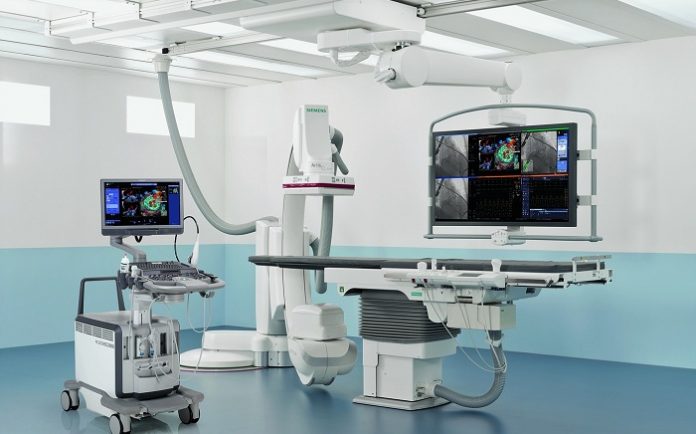
Siemens Healthineers, University of Missouri System (UM System) and University of Missouri Health Care (MU Health Care) launch “Alliance for Precision Health.” The ten-year collaboration will bring the partners’ expertise together to improve health care in Missouri State, promote education and launch research initiatives. Among other things, the clinic receives the only 7 Tesla MRI Scanner that is commercially available for clinical use – the Magnetom Terra.

With its high magnetic field strength, finest structures in the body can be visualized. This is particularly useful for brain examinations and researching complex neurological diseases such as Alzheimer’s disease. In this installation, it and other scanners offer remote assistance via the Siemens Healthineers software, syngo Virtual Cockpit.

Experienced personnel can then support complex examinations from anywhere and compensate staff bottlenecks. The 10-year Value Partnerships agreement is valued at $133 million, which includes Siemens Healthineers delivery of advanced medical imaging equipment and supporting infrastructure in the NextGen Precision Health Institute located at the University of Missouri-Columbia. Separately, as part of the established research relationship, the parties will jointly contribute to the establishment of the Alliance for Precision Health in amounts that could reach $40 million. This makes it one of the largest such partnerships Siemens Healthineers has ever entered in the USA.

The Best Way to Improve Healthcare in the United States

Introduction

Americans spend about $3 trillion per year on healthcare, or about $10,000 per person per year. Despite these expenditures, Americans are worse off than their international counterparts with respect to infant mortality, life expectancy and the prevalence of chronic conditions.

Most public policy debates and legislation focus on how to recover these costs, which invariably ends in a null set.

This paper proposes a new standards-based approach for fixing the inefficiencies plaguing the healthcare industry in the United States. As described herein, a non-profit standards body would be established by Congress to bring a coordinated approach to healthcare for each of the top ten chronic diseases.

Such an approach would establish consistent priorities and practices across all of the components of the healthcare industry affecting these chronic diseases, including standards of care, areas of research emphasis and insurance guidelines.

Under such an industry structure, patient care would improve and the overall costs for the provision of healthcare would drop precipitously.

The U.S. Healthcare Market Doesn’t Function Effectively or Efficiently

Looking at the components of the healthcare industry from standards of care to prices to insurance coverage to potential new treatments, virtually none of the relevant choices are understood by the consumer. What this means from an economic point of view is that there is no “invisible hand” of the marketplace driving an effective and efficient outcome from the interplay of supply and demand.

Equally troubling, none of components of the overall industry work in lock-step. For example, the FDA could have indirectly required billions of dollars of research to be spent on a drug before it gives its approval, only to find that the organizations that provide guidelines for care don’t promote its use and the insurance carriers don’t contribute towards its charges.

One way to think about the current system is depicted in the following chart:
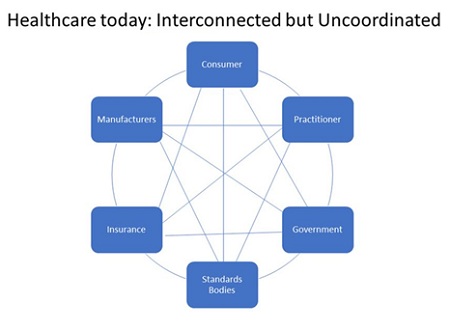
As the chart implies, all of the components of the healthcare industry impact each other. However, they don’t work in lock-step to achieve a certain outcome. Moreover, the consumer is hard-pressed to make heads or tails of the best approach for his or her condition given that the relevant information for each component is hard to get. This is particularly true for chronic illnesses. Hence, the current system almost guarantees a misallocation of resources

In broad terms, the cost of healthcare in the United States is approximately $3.0 trillion per year (or $10,000/person), including:
• 32% for hospital care
• 20% for physician and clinical services
• 10% for prescription drugs
• 5% for nursing care facilities and continuing care retirement communities

When looking for causation for these healthcare expenditures, there are many large targets including heart disease, diabetes, asthma, cancer, Alzheimer’s, Parkinson’s and Epilepsy.

Taken together, chronic diseases cause 7 of every 10 deaths in America. Moreover, about 25% of people with chronic diseases have some type of activity limitation such as needing help with dressing or bathing or being restricted from work or attending school.

By any measure, chronic diseases take a heavy toll on the nation’s health and wealth. For example, heart disease and stroke are estimated to cost over $430 billion per year. Diabetes costs are estimated to be about $175 billion per year. Alzheimer’s is estimated to add about $150 billion per year. And cancer adds over $200 billion per year. In total, over 50% of the $3 trillion spent on health care each year is attributable to chronic diseases.

The logical question to ask is: “what is being done about it?” The answer is a quite a lot, but not very effectively or efficiently.

The FDA has been at the center of the process of new healthcare solutions for over a century.

The FDA has done a good job in achieving its legislative charter of ensuring that drugs and devices are safe and effective. For example, over the last 50 years, only 2% of all FDA-approved drugs have been taken off the market to due to safety concerns.

In looking at the government website for clinical trials, it lists over 270,000 research studies. However, no one prioritizes this research for any particular objective. Moreover, there is no coordination on which promising research should be pursued for which illnesses. The sad reality is that most of these studies don’t produce meaningful benefits for people.

One important reason for the lack of progress is that the FDA has defined a process where a drug takes 12 years on average to be approved at an average cost of over $1 billion. These estimates do not include the FDA’s impact on preclinical research, which can add more than a decade to the process and additional costs.

The impact and cost of delay from the FDA approval process is large, not only from the enormous costs of treatment but from premature death of those losing out on new treatments. For example, in 2012, I filed a Citizen’s Petition with the FDA for it to withdraw support of ACT chemotherapy for BRCA1-related breast cancer and enable women to be treated with a PARP inhibitor and a platinum-based drug. The Petition was denied. However, this past year, the FDA approved such an approach. In the interim period, thousands of women died prematurely from the inferior treatment afforded by an antiquated standard of care.

Announcing a desire for cures is not enough. For example, it has been more than 50 years since President Nixon declared a “War on Cancer”. More recently, President Obama announced a major initiative to seek cures through precision medicine. However, when I subsequently petitioned the FDA to issue a Notice of Proposed Rulemaking seeking input on how best to analyze and approve, as appropriate, new Precision Medicine Initiatives, the FDA responded by saying it “has been unable to reach a decision on your petition due to the need to address other Agency Priorities”.

It is a lack of action on important matters such as this that led the former Director of the National Cancer Institute, Vincent T. DeVita, Jr. M.D., in The Death of Cancer (2015) to recommend that the FDA should not have approval authority over Phase 1 and Phase 2 clinical trials for cancer (and, by inference, should not participate in regulating preclinical cancer research).

After all of its internal efforts to improve its procedures, the FDA’s current processes still leads to only 20 or 30 drug approvals per year, and much fewer blockbuster remedies.

The FDA effectively acts as a barrier to competitive entry, thereby ensuring excessive profits for the pharmaceutical companies.

Beacons of Hope

Michael J. Fox was diagnosed with Parkinson’s disease in 1991 at the age of 29. After observing the progress, or lack thereof, on Parkinson’s disease, he established the Michael J. Fox Foundation for Parkinson’s disease (MJFF) to develop a comprehensive approach to the disease and to find a cure.

Since 2000, MJFF has funded more than $750 million to pursue a cure for Parkinson’s disease. It is collaborating with literally scores of organizations with respect to funding, in-kind contributions, strategic input and research initiatives. It also provides extensive information to the public at no cost, including weekly video briefings, covering issues such as diagnosis and symptoms, living with Parkinson’s disease, treatment options and promising new research.

Another example of an organization trying to coordinate an approach to a disease is the National Comprehensive Cancer Network® (NCCN®), which is a not-for-profit alliance of twenty-eight leading cancer centers devoted to patient care, research, and education. The NCCN® is dedicated to improving and facilitating quality, effective, efficient, and accessible cancer care so patients can live better lives. NCCN® programs offer access to expert physicians, superior treatment, and quality and safety initiatives that continuously improve the effectiveness and efficiency of cancer care globally.

Despite these bright spots, the current healthcare system doesn’t work efficiently because the components generally are not connected or coordinated by the “invisible hand” of the marketplace. This market failure must be addressed to improve healthcare in the United States

An Integrated Approach for the Healthcare of Chronic Illnesses

Just as the private market has failed, it is not reasonable to assume that the federal government can somehow orchestrate an efficient and effective outcome, as Hillary Clinton once tried to pursue during her husband’s presidency. At a minimum, such an approach would be subject to political instability, as witnessed with the Affordable Care Act.

Rather, the best approach would be to build on successful models in practice today and establish an industry-wide organization with standards-setting responsibilities. That is, Congress would set up a non-profit quasi-governmental standards body to establish the scope and direction of care for chronic diseases.

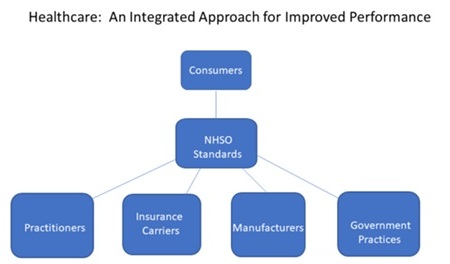
The following chart shows how the healthcare industry should be organized to improve care and lower costs for chronic illnesses.
"/

The first steps for the newly-established NHSO would be to establish standards of care for each of the Top 10 illnesses and to develop short-term and long-term objectives based upon the industry resources dedicated to these illnesses. These objectives could include the avoidance of the illness in the first place from vaccines or other measures.

Secondly, the chapters would define the interfaces and best practices for the various components of the industry affecting their relevant patient populations.

For example, each chapter would establish the benchmark for the basic level of insurance coverage for various procedures and treatments based on the approved standard of care. They would also prioritize the efforts for specific research initiatives. Equally important, they would establish the informational, pre-clinical and clinical requirements most appropriate for each chronic illness.

The ultimate value of the NHSO and its chapters would be to create a better functioning private market for each of the Top 10 chronic illness markets in the United States.

Setting Standards

Governments worldwide have recognized the importance and impact of standards on their economies. Standards have significant procompetitive effects such as increasing price competition as standard products are more readily compared and solving issues such as product compatibility and consumer safety.

Standards bodies can be governmental, quasi-governmental or non-governmental. Quasi-governmental and non-government standards bodies are often non-profit. Quasi-governmental organizations are supported by the government but managed privately.

In the healthcare industry, we know that there is a need for:
• the consumer’s voice to be heard and a set of objectives to be set to address those voices;
• a standard of care to be developed and communicated for the target populations; and
• for all of the components in the industry to address the consumers’ requirements on a coordinated and efficient basis.
To help achieve these objectives, a non-profit, quasi-government standards organization called the National Healthcare Standards Organization (NHSO) should be established to publish guidelines and coordinate the practices of the industry as follows:
1. The NSHO would be created by Congress with separate chapters for each of the Top 10 chronic diseases.
2. Each chapter would have the same charter: namely: 1) to represent the patients afflicted with a specific chronic illness and 2) determine the preferred standard of care in detail for its particular illness. This would include standards for the prevention, diagnosis and management across the continuum of care.
3. The practices and prescribed treatments of the preferred standard of care would, in turn, be codified as qualifying for mandatory payments to be made by insurance companies.
4. Each chapter would establish short-term and long-term objectives for their patient population based on available industry resources.
5. Each chapter would set the priorities for existing Research and Development projects and identify promising areas for additional funding.
6. Each chapter would determine the appropriate FDA approval process for the informational, device and drug applications in its field. That is, the FDA review process could be streamlined for a particular application without the need for legislation. Final approval authority for commercial release would rest with the FDA.
The NHSO and each chapter would have five representatives including medical experts in the relevant field and a member of the public. The composition of the Chapter Members should represent the core medical specialties and clinical expertise involved in the specific standard of care (with exclusions for any conflicts of interests).

The NHSO and its chapters would have full-time paid staff providing logistical and content development for all matters before the NHSO. The budget of NHSO would be covered by user fees paid for by industry participants based upon company size.

Summary

The healthcare system in the United States is grossly inefficient. As long as consumers, practitioners, manufacturers, standards and guidance bodies, insurance carriers and government practices and policies are not coordinated, healthcare services will have excessive costs and will remain overpriced and the well-being of the overall public will remain inadequate.

The inefficiencies are largest in the area of chronic illnesses. Additionally, chronic illnesses represent the least likely areas for achieving an efficient outcome in a free marketplace given the complexity and the lack of readily-available information.

This paper shows why the public and its representatives in Congress should endorse a National Healthcare Standards Organization that builds on the seeds that are already blossoming in the fields of Parkinson’s disease and cancer. The National Health Standards Organization should focus on the Top 10 chronic illnesses to ensure all of the components of the healthcare industry are working in lock step and reflect the best interests of the public regarding these illnesses.


 

Siemens Healthineers and Braunschweig Municipal Hospital enter into ultrasound technology partnership

Siemens Healthineers ultrasound technology

Siemens Healthineers and Braunschweig Municipal Hospital have agreed to enter into a technology partnership in the field of ultrasound, under which Siemens Healthineers will administer and manage all ultrasound devices for the next ten years, with an option for 15 years.

The partnership will provide a very high level of standardization, high-level capacity monitoring, and the integration of management software in the existing system, in addition to improvements in availability and patient care. As part of this technology partnership, Siemens Healthineers will ensure the fleet of devices continues to reflect the state of the art, and supply around 140 new devices. A financing plan will allow the hospital to plan its costs with confidence.

“We already have a successful technology partnership in place with Siemens Healthineers in the area of radiology,” says hospital CEO Dr. Andreas Goepfert. “We are expecting this new partnership in the field of ultrasound to improve the availability of all our devices, which will help us increase our patient throughput, as well as improving patient satisfaction.”

“The question of device availability is critically important for our operational purposes and also the performance of all our clinical services at Braunschweig Municipal Hospital,” adds Dr. Stefan Schaller, head of sales, Siemens Healthineers in Germany. “That’s why our plan focuses on availability, reliability and service quality, the customer’s needs, and
sustainability.”

Integrated Operating Rooms to Grow Exponentially with Virtual Reality and Artificial Intelligence

Virtual Reality and Artificial Intelligence

The operating room (OR) is transforming from a seemingly simple box into a technology-powered, infection-free, and sleek surgical environment. The new-age OR will be able to utilize intelligent and efficient delivery options to improve the precision and predictability of the services offered. This can be made possible through robotic-assisted surgery devices (RASDs), which will greatly help drive the $4.50 billion US and EU5 hospital OR products and solutions market toward $7.04 billion by 2022.

“By 2022, 35% to 45% of ORs across the world will become integrated ORs. After 2030, with the availability of multiple home care devices, ORs will shift toward a hub-and-spoke model, with the OR being the hub,” said Bejoy Daniel, Senior Industry Analyst, Transformational Health. “Approximately $30 billion worth of integration opportunities are likely to become available to healthcare and non-healthcare companies by this period when ORs make the transition from regular rooms to an integrated environment.”

Frost & Sullivan’s recent analysis, Analysis of the US and EU5 Hospital Operating Room (OR) Products and Solutions Market, Forecast to 2022, analyzes the impact of robotics and workflow solutions on the quality and quantitative measures in the ORs. The study covers workflow solutions, surgical components in the workplace, and OR room services.

“Currently, the priority for vendors is to analyze the available data and facilitate connectivity for device integration. The aim is to interpret, synchronize, and coordinate data to achieve optimal OR results,” noted Daniel. “Data interoperability will help analyze past and present data to predict future health outcomes and patient wellness index for optimum use of resources. The shift in favor of data and algorithms will fuel the algorithmic business and endow businesses with a competitive edge.”

The OR services segment is highly fragmented and has more potential in Europe than the United States; however, approximately 70% to 75% of the major hospitals have adopted OR management solutions across both countries. For more growth opportunities, market participants could:

  • Foster partnerships with medical device and technology companies to deliver products and services across a larger customer base.
  • Adopt virtual reality (VR) in medicine to increase volumes of well-planned and cost-effective precision surgeries.
  • Employ Artificial Intelligence (AI) algorithms. For instance, Google is investigating predictive analytics to reduce readmission and identify potential patient risks.
  • Provide patient-centric services that are not necessarily aligned to clinical outcomes.

Analysis of the US and EU5 Hospital Operating Room (OR) Products and Solutions Market, Forecast to 2022 is part of Frost & Sullivan’s global Advanced Medical Technologies Growth Partnership Service program.

About Frost & Sullivan
For over five decades, Frost & Sullivan has become world-renowned for its role in helping investors, corporate leaders and governments navigate economic changes and identify disruptive technologies, Mega Trends, new business models and companies to action, resulting in a continuous flow of growth opportunities to drive future success. Contact us: Start the discussion.

Microsoft and Providence St. Joseph Health announce strategic alliance to accelerate the future of care delivery

Microsoft  future of care delivery

Microsoft Corp. and Providence St. Joseph Health announced a multi-year strategic alliance to accelerate the digital transformation of health care. The alliance will combine the power of Microsoft’s cloud, artificial intelligence (AI), research capabilities, and collaboration tools with the clinical expertise and care environments of Providence St. Joseph Health, one of the largest health systems in the country.

The two organizations will develop a portfolio of integrated solutions designed to improve health outcomes and reduce the total cost of care by combining technologies from Microsoft with Providence St. Joseph Health’s data and clinical expertise. The alliance will accelerate the health care industry’s adoption of the cloud and enable data-driven clinical and operational decision-making by leveraging Microsoft Azure, and industry interoperability standards like FHIR, to integrate siloed data sources in a cloud environment that enables security and compliance.

Providence St. Joseph Health will deploy next-generation solutions and emerging technologies from Microsoft and its partners at a Providence St. Joseph Health-affiliated hospital facility in Seattle, Wash., near Microsoft’s Redmond headquarters. This site will enable modern clinical and operational experiences for both patients and providers. The goal will be to scale these innovations across the entire Providence St. Joseph Health system, in a transformation that will bring innovative and necessary solutions to more communities.

“Providence St. Joseph Health has been on a journey to transform health care and achieve a vision of health for a better world. We’re excited to accelerate that journey by collaborating with Microsoft. Together, we’ll support doctors, nurses and all caregivers by equipping them with innovative tools and technology that make it easier to do the vitally important work of improving lives,” said Rod Hochman, M.D., president and CEO of Providence St. Joseph Health.
Microsoft logo

“Our alliance with Providence St. Joseph Health brings together the expertise of one of the largest and most comprehensive health systems in the country with the power of Azure, Microsoft 365 and Dynamics 365,” said Satya Nadella, CEO of Microsoft. “Our ambition is to accelerate Providence St. Joseph Health’s digital transformation and to build new innovations together that are designed to improve health care delivery and outcomes.”

As part of the strategic alliance, Providence St. Joseph Health will use Microsoft Azure as its preferred cloud platform and standardize productivity and collaboration tools for its 119,000 caregivers on Microsoft 365, and will continue to improve and support patient engagement using technologies including Dynamics 365. Providence St. Joseph Health doctors and nurses will use Microsoft Teams, which is part of the Microsoft 365 platform, for more secure communication and collaboration, enabling them to bring together chat, video meetings and conferencing, and line-of-business applications into a single hub.

About Providence St. Joseph Health
Providence St. Joseph Health is a national, not-for-profit Catholic health system comprising a diverse family of organizations and driven by a belief that health is a human right. With 51 hospitals, 829 physician clinics, senior services, supportive housing and many other health and educational services, the health system and its partners employ more than 119,000 caregivers serving communities across seven states – Alaska, California, Montana, New Mexico, Oregon, Texas and Washington with system offices based in Renton, Wash., and Irvine, Calif.

About Microsoft
Microsoft  enables digital transformation for the era of an intelligent cloud and an intelligent edge. Its mission is to empower every person and every organization on the planet to achieve more.

Philips and TeleTracking join together as founding sponsors of Command Center Summit Connected Care Delivery

Royal Philips Royal Philips

Royal Philips , a global leader in health technology announced its founding sponsorship of BRI Network’s inaugural Command Center Summit: Connected Care Delivery , alongside the summit’s other founding sponsor TeleTracking Technologies, Inc.

As care delivery becomes more complex, finding ways to coordinate patient care across the health continuum, from healthy living and prevention, to diagnosis, treatment and home care, is one of the most important challenges facing hospitals and health systems. They therefore need to look at new, more efficient ways to increase access to care and improve care collaboration. Centralized care is emerging as an innovative way of transforming healthcare operations by generating real-time, actionable analytics and pro-active recommendations to guide each patient’s progression based on their clinical condition. By doing so, it helps to ensure that patients are always transitioned to the most appropriate care setting.

During the upcoming ‘Command Center Summit: Connected Care Delivery’, Philips and TeleTracking will show how the command center or clinical operations center approach to centralized care helps to provide the real-time clinical and operational insights needed to predict and manage demand and proactively assign resources, thereby enabling the seamless delivery of care and enhancing the patient and care provider experience.

Philips is uniquely positioned to integrate and analyze clinical data across our own solutions and those from third parties, both inside and outside the hospital, to generate real-time actionable analytics, and proactive recommendations to help that patients are monitored 24/7 and timely transitioned to the most appropriate care setting,” said Jeroen Tas, Chief Innovation and Strategy Officer at Philips. “Connected care is positively impacting patient care operations, and we look forward to teaming up with TeleTracking in this unique Command Center Summit to provide health systems with the insights and tools they need to impact the Quadruple Aim of improving patient outcomes, enhancing patient and staff experiences, and lowering the cost of care.”

“TeleTracking has spent nearly three decades studying and addressing the issues of inefficiency in healthcare, and we are very pleased to co-sponsor this event with Philips, an important collaborator in our efforts,” said Christopher Johnson, President of TeleTracking. “We have developed a state-of-the-art operating platform with a focus on providing the best possible experience for patients and caregivers, bringing visibility to underlying data that provides important hindsight into what has happened, so we can learn from it; insight into what is happening, so we can respond to it; and foresight into what will happen, so we can prepare for it.”

Philips has a leading position in patient monitoring (e.g. central patient monitoring), enterprise telehealth (e.g. the centralized tele-ICU), predictive analytics (e.g. for monitoring at-risk patients in their homes), and population health management (e.g. patient stratification and identification of at-risk patient groups).

This expertise enables Philips to provide hospitals and health systems with Clinical Operations Center solutions for effectively managing patients across the health continuum. By helping to optimize admissions, in-hospital transfers, and back-to-home transfers based on each individual patient’s clinical needs, they enable hospitals and healthcare systems to better predict demand and match capacity. At the heart of Philips’ Clinical Operations Center approach are advanced data management and adaptive intelligence technologies that support efficient evidence-based decision making.
Command Center Summit 2019

Over the course of two days, attendees will hear from hospitals with direct experience of establishing command centers in their organizations. Discussion threads will include how to make the business case for a command center; leveraging data to improve clinical outcomes; and designing a command center to optimize patient flow across the health continuum.

The presenters include hospital leaders from across the US. The summit also features a joint keynote address from Philips Chief Innovation and Strategy Officer Jeroen Tas, and Christopher Johnson, President of TeleTracking, who will share their thoughts on the significant benefits of a centralized approach to care and how the two companies are helping health systems to transform their operations both strategically and culturally.

Vocera Announces New Platform Enhancements to Improve Patient Staff Experience

Vocera implemented AI

Vocera Communications, Inc, a recognized leader in clinical communication and workflow solutions, announced that its next generation rounding solution now uses artificial intelligence (AI) and machine learning to track satisfaction trends faster and provide sentiment analysis to enable healthcare leaders to quickly understand patient perceptions. Vocera Rounds integrates with a natural language processing service that uses machine learning to identify and analyze key words and phrases.

Real-time situational awareness about patient satisfaction is presented in a new user interface that features an intuitive dashboard with customized smart filters, diagnosis information, and sentiment emojis. It makes all types of rounding easier and more meaningful with tools to prioritize patient populations.

“I’m impressed by the time-saving navigation, unique experience management tools, and new design of Vocera Rounds. We will be able to identify potential issues and trends more quickly,” said Sue Murphy, Chief Experience Officer at UChicago Medicine. “The sentiment analysis with both high-level views and drill-down reports will also be valuable for nurse leaders who need a quick look at how things are going so they can address service issues proactively, and those who need a more detailed view to initiate long-term improvement strategies.”

The customizable user experience of Rounds enables nurse leaders to prioritize rounding based on information about patients’ past experiences, feedback and risk factors. Care teams can customize questions within the rounding tool to gather data about patients’ risk of falling or infection, mental status, skin integrity, and other clinical indicators. Rounds is an award-winning mobile solution used to standardize rounding processes and improve patient, family and staff engagement and experience. More than three million rounds have been conducted across the country in hospitals using the Rounds solution. It is one of four upgraded solutions within Vocera Care Experience, a set of applications designed to engage and educate patients and families from pre-arrival communication to post-discharge follow-up calls.

Part of the Vocera Platform, the newly designed patient and family communication solution, Care Inform, is now accessible from the Vocera smartphone app. Clinicians using the collaboration app to communicate with care teams can also engage with patients and families by launching Care Inform from the mobile app to record personalized discharge instructions. They can also share a range of educational materials in the form of text messages, videos, and support documents.

The Vocera Platform unifies different types of communication at critical touch points in a patient’s journey. Clinicians who engage with patients during rounds, hospital discharge or follow-up care calls can easily send patient requests or service recovery notifications to team members using a hands-free Vocera Badge, Smartbadge, or a Vocera app on their smartphones or web console. Care Experience business intelligence, which now includes sentiment analysis, provides multi-dimensional analysis of patient experience across units and different facilities within a health system to identify gaps and improve processes throughout the care continuum.

“Our Care Experience suite of solutions is integral to the Vocera Platform, helping improve patient communication and education, and ensuring the healthcare experience is as frictionless as possible for patients, families and care teams,” said Brent Lang, president and CEO of Vocera.

About Vocera
The mission of Vocera Communications, Inc. is to simplify and improve the lives of healthcare professionals and patients, while enabling hospitals to enhance quality of care and operational efficiency. In 2000, when the company was founded, we began to forever change the way care teams communicate. Vocera offers the leading platform for improving clinical communication and workflow. More than 1,850 facilities worldwide, including nearly 1,600 hospitals and healthcare facilities, have selected our clinical communication and workflow solutions. Care team members use our solutions to communicate and collaborate with co-workers by securely texting or calling, and to be notified of important alerts and alarms.

They can choose the right device for their role or task, including smartphones or our hands-free, wearable Vocera Smartbadge and Vocera Badge. Interoperability between the Vocera Platform and more than 140 clinical and operational systems helps reduce alarm fatigue; speed up staff response times; and improve patient care, safety, and experience. In addition to healthcare, Vocera is at home in luxury hotels, aged care facilities, nuclear power facilities, schools, libraries, retail stores, and more. Vocera solutions make a difference in any industry where workers are on the move and need to connect instantly with team members and access resources or information quickly. In 2017, Vocera made the list of Forbes 100 Most Trustworthy Companies in America. Learn more at http://www.vocera.com and follow @VoceraComm on Twitter.

Translate »