













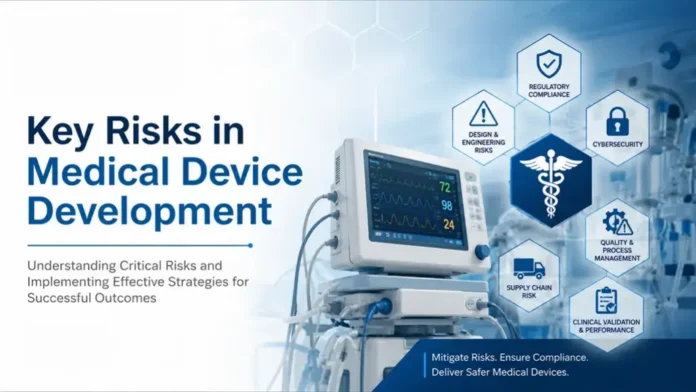
The Key Risks in Medical Device Development whitepaper examines the major challenges that can impact the successful development and commercialization of medical devices. It highlights critical risk areas such as design flaws, regulatory compliance issues, software reliability, cybersecurity threats, and supply chain disruptions. The paper explains how these risks can lead to project delays, increased costs, and potential patient safety concerns. It emphasizes the importance of implementing robust risk management practices throughout the product lifecycle. The whitepaper also discusses the role of quality management systems, validation processes, and regulatory planning in minimizing development hurdles. Additionally, it explores the growing need for cybersecurity measures as connected and digital medical devices become more common. Practical strategies for identifying, assessing, and mitigating risks are outlined to help manufacturers improve product quality and compliance. Overall, the paper provides valuable insights for organizations seeking to accelerate development while ensuring safety, reliability, and regulatory readiness.
Egypt and Mauritania Strengthen Healthcare Partnership

Egypt and Mauritania have taken concrete steps to deepen bilateral healthcare cooperation, with senior officials from both nations meeting to discuss a broad agenda covering medical training, pharmaceutical collaboration, preventive healthcare, and medical tourism. The talks were held between Egypt’s Minister of Health and Population, Khaled Abdel Ghaffar, and Mauritania’s Ambassador to Egypt, El Houssein Ould Sidi Abdallah.
According to an official statement released by Egypt’s Ministry of Health and Population, Minister Abdel Ghaffar reaffirmed Egypt’s commitment to strengthening its healthcare partnership with Mauritania through the exchange of expertise, capacity-building initiatives, and technical support spanning a wide range of medical fields. Ministry spokesperson Hossam Abdel Ghaffar confirmed that the discussions reviewed progress on existing cooperation programmes and assessed opportunities for expanding collaboration in professional training, skills development, and specialised consultancy services.
A notable outcome of the meeting was the focus on pharmaceutical collaboration between the two countries. Abdel Ghaffar directed ministry officials to organise a dedicated visit for the Mauritanian delegation to the Arab Company for Drug Industries and Medical Appliances (ACDIMA), providing them first-hand exposure to Egypt’s pharmaceutical manufacturing capabilities and regulatory framework. This move is seen as a direct step toward enabling Mauritania to benefit from Egypt’s established pharmaceutical infrastructure.
The meeting also covered preventive healthcare, with both sides examining how Mauritania could draw on Egypt’s experience in disease prevention, public health management, and healthcare system governance.
Medical tourism featured prominently as another area of focus in the Egypt-Mauritania healthcare discussions. Both delegations reviewed practical mechanisms to facilitate the treatment of Mauritanian patients in Egyptian hospitals and specialised medical centres. Beyond patient referrals, the two sides explored the possibility of deploying Egyptian cardiologists to hospitals in Mauritania, a step aimed at building local medical capacity and enabling the transfer of specialised expertise directly to Mauritanian healthcare facilities.
Ambassador Ould Sidi Abdallah expressed appreciation for Egypt’s continued support to Mauritania, commending the progress achieved by Egypt’s healthcare sector and acknowledging its role in supporting Arab and African nations through medical cooperation and expertise-sharing initiatives.
The meeting brought together a senior cross-ministerial delegation on the Egyptian side, including Deputy Minister of Health Amr Kandil, Adviser to the Minister for International Health Relations Mohamed Gad, Director-General of International Health Relations Susan Zanaty, and officials from the Mauritanian Embassy in Cairo. The breadth of representation underscored the significance both governments place on advancing this healthcare partnership.
The Egypt-Mauritania healthcare discussions align with Egypt’s wider strategy of expanding healthcare partnerships across Africa and the Arab world, with particular emphasis on medical training, pharmaceutical production, healthcare services delivery, and technical cooperation with partner nations.
Microsoft and Mayo Clinic Develop AI Model for Healthcare Diagnosis and Treatment

Microsoft and the nonprofit academic medical centre Mayo Clinic have announced a joint effort to develop a new artificial intelligence model built exclusively for the healthcare sector. The initiative is aimed at supporting patients, clinicians and healthcare consumers by drawing on Mayo Clinic’s deep medical expertise and Microsoft’s AI and cloud engineering capabilities.
According to the two organisations, the healthcare AI model will integrate Mayo Clinic’s anonymised health data, medical knowledge base and patient care experience with Microsoft’s technology infrastructure. Once operational at scale, the model is expected to analyse diverse types of clinical information to support tasks such as earlier diagnosis and more personalised treatment planning.
The model is currently being deployed within Mayo Clinic’s own clinical environment, where it will be tested and refined through real-world application. The organisations have not disclosed how widely the model is being used at this stage, which specific clinical areas are involved, or when it might be made available to other healthcare providers beyond Mayo Clinic.
Ownership of the model will rest with Mayo Clinic, while Microsoft intends to make it accessible to developers and healthcare companies through Azure Foundry APIs software tools that allow external parties to connect the model directly into their own applications and services.
Gianrico Farrugia, M.D., president and CEO of Mayo Clinic, commented on the development: “We have long believed AI can help transform healthcare. Seven years ago, we launched Mayo Clinic Platform to move healthcare from a pipeline to a platform model through a safe, trusted, patient-centric de-identified data foundation designed to accelerate innovation, breakthroughs, and cures. Now, by combining our clinical expertise and data foundation with Microsoft’s engineering and AI capabilities, we are once again building something new in healthcare and bringing more of Mayo Clinic to more patients.”
Mustafa Suleyman, CEO of Microsoft AI, also spoke on the collaboration: “This is the best collaboration imaginable to help us accelerate towards that future. Mayo has unparalleled clinical expertise, de-identified clinical health data and longitudinal medical insights, and we’re thrilled to partner with their world-class physicians to build a state-of-the-art foundation model for healthcare.”
Healthcare has emerged as one of the most active frontiers for advanced artificial intelligence development, though it also presents considerable challenges. Medical AI systems must be capable of handling complex clinical data, accommodating individual patient health histories, and satisfying the most rigorous standards for safety, privacy and validation.
Under the European Union’s AI Act, AI-based software developed for medical purposes is classified as high-risk. This classification requires that such systems meet a defined set of safeguards, including risk-mitigation mechanisms, high-quality training datasets, clear communication to users, and ongoing human oversight, as outlined by the European Commission.
The growing use of AI in healthcare is reflected in broader public behaviour as well. A 2025 survey of 2,000 patients in the United Kingdom, conducted by healthcare startup Semble, found that one in four representing 24% of respondents were turning to AI tools and social media platforms such as ChatGPT and Instagram for health-related guidance. Separately, in Denmark, visits to the public health information website Patienthåndbogen dropped by 31% between January and November 2025 following the launch of Google’s AI Overview, according to the country’s national news agency Ritzau.
Healthcare AI model development is gaining momentum because the technology holds the potential to process large volumes of medical information rapidly, assist clinicians in diagnostics and complex clinical decisions, and significantly reduce the administrative burden on healthcare staff. Microsoft has described “frontier medical intelligence” as being close to realisation, positioning this partnership as a step in that direction.
Nevertheless, the application of artificial intelligence in medicine continues to raise legitimate concerns around accuracy, potential bias, data privacy and accountability. These concerns are particularly prominent given the sensitive nature of health data and the direct impact that clinical decisions can have on patient outcomes. The two organisations have not provided a detailed timeline for when the healthcare AI model will be made available to healthcare providers outside of Mayo Clinic’s own clinical setting.
How Ergonomic Classroom Furniture Supports Paediatric Musculoskeletal Health

Want to know one of the most overlooked factors in a child’s long-term health?
The furniture they sit on at school.
OK, it sounds cheesy, but it’s true. Kids sit in chairs for the majority of their waking hours. The chair (and accompanying desk) that they sit in has a huge impact on how their developing bodies grow. Choose poorly and you’re setting children up for a lifetime of neck and back pain, and poor posture.
Get it right, and you support healthy spines, better focus, and happier students.
Here’s exactly how proper ergonomic furniture pulls that off…
Inside this guide:
- Why Children’s Posture Matters More Than You Think
- The Real Cost Of Bad Classroom Furniture
- How Ergonomic Design Protects Growing Bodies
- The Role Of Circular School Tables In The Classroom
- Picking The Right Furniture For Your School
Why Children’s Posture Matters More Than You Think
Children’s bodies are still developing.
Sit-ups during the day literally mold children’s bones, joints and muscles. A tiny ergonomic error between your child and the furniture they interact with daily can lead to major issues later on.
And here’s the worrying part…
Studies indicate that the average child will spend approximately 15,000 hours sitting down at school. Imagine how long 15,000 hours is – that’s a lot of time for a developing spine to be stuck uncomfortably still – especially if placed incorrectly.
Statistics regarding back pain aren’t encouraging either. Upwards of 13% of kids between 10-16 experience recurring back pain and poor posture is one of the leading contributors.
Now think about the long-term impact:
- Slouched shoulders that carry into adulthood
- Neck strain from looking down at low desks
- Lower back pain that starts in primary school
- Hip and knee issues from chairs that don’t fit
This is why properly designed school desks & tables matter so much. Even good-quality circular school tables. They provide children with proper support at the time when their bodies need it the most. Remove that support and schools are straight up sculpting bad posture into a child’s backbone.
The Real Cost Of Bad Classroom Furniture
Most schools don’t think twice about their furniture.
They purchase what they can afford, set it up and forget about it. However inexpensive, improperly sized furniture can affect young students more than most teachers and parents understand.
Here’s what happens when classroom furniture doesn’t fit:
- Children slouch to reach their work
- Feet dangle off chairs and put pressure on the back of the legs
- Necks crane forward just to see the desk surface
- Shoulders hunch up and stay that way for hours
Research published in PLOS One showed that poor student/furniture fit correlated with neck, shoulder, and lower back pain. Furniture torture, classroom style.
And here’s the kicker…
Children have no idea they are hurting because they have never sat any differently. Damage accumulates silently and then manifests itself later as an adult chronic condition.
How Ergonomic Design Protects Growing Bodies
This is where ergonomic classroom furniture really changes the game.
Ergonomic furniture takes into account the way children’s bodies function – not just how they look on paper. Measurements, angles, and materials were all carefully considered to create furniture that allows for proper posture.
Key features worth looking for include:
- Adjustable seat heights to suit different age groups
- Chairs with proper lumbar support for growing spines
- Desk surfaces angled for a natural writing posture
- Rounded edges to avoid pressure points and injury
- Stable bases that don’t wobble, tip, or slide
Children who sit at furniture designed for their size will naturally adopt proper posture. Without realizing it, children will slouch less. Their muscles will loosen. Their spines will straighten. Even their focus will increase.
That’s a win-win for both teachers and students.
The Role Of Circular School Tables
Circular school tables are one of the smartest investments any school can make.
Here’s why…
Rectangular desks require students to sit in one place. They stretch across the desk, twist their torso to look at the teacher, or slump down to pass something to someone next to them. That’s not healthy for your spine.
Circular school tables solve all of that.
Round tables allow each student to sit with equal access to the centre of the table. Students won’t need to twist around or reach over other people. All children will be sitting ergonomically balanced because:
- Less spinal twisting during group work
- Even weight distribution across both hips
- Easier eye contact and communication with peers
- More natural arm positions when writing or drawing
Circular school tables promote healthy collaboration too. Kids aren’t forced into strange positions while working together. Group work is easily one of the most common times children experience bad posture. Circular tables designed that problem away.
Round tables in classrooms with correctly proportioned chairs are optimal for ergonomic development in children, particularly at a young age.
Picking The Right Furniture For Your School
Choosing the right classroom furniture isn’t complicated.
However you do need to pay attention to the important things. Don’t get distracted by flashy colours or stylish patterns – does the furniture function for the child who will be sitting in it everyday?
Use this quick checklist before buying:
- Does the chair height match the age group it’s meant for?
- Can the child’s feet rest flat on the floor?
- Is the desk surface at elbow height when seated?
- Is there room to shift positions comfortably?
- Are circular school tables included for group work areas?
Adjustable furniture is ideal when furniture scalability is most important. Large classrooms with multiple ages or rapidly expanding schools will find adjustable furniture allows the most flexibility. Invest once, and grow with the students.
Quality is important, too. While inexpensive furniture may save you money now, they’ll cost you far more in replacements (and irritated students) down the road. Be sure to look for furniture with strong frames, surfaces that resist scratches, and finishes that can stand up to the daily wear and tear of classroom use.
The Bottom Line
Ergonomic classroom furniture isn’t a luxury – it’s a basic requirement for healthy kids.
Schools investing in appropriately-sized furniture for kids including ergonomically designed round school tables care for young bodies at their crucial developing stages. Outcomes are reflected in posture, concentration, behaviour and overall long-term physical health.
To quickly recap:
- Children spend thousands of hours seated at school
- Poorly designed furniture causes real musculoskeletal problems
- Ergonomic chairs and desks support growing spines properly
- Circular school tables encourage healthy group postures
- Quality classroom furniture is an investment, not an expense
Schools that care about this will provide their children with a lifelong head start – on education and health.
Philips Elevate Plus Gains FDA Clearance for AI Ultrasound

Philips announced that it has obtained FDA clearance for Elevate Plus, an expanded suite of advanced imaging, artificial intelligence and automation capabilities designed for its flagship EPIQ Elite and Affiniti ultrasound platforms. The company said the technology, which already holds CE mark certification and 510(k) clearance, is intended to help standardize routine examinations, reduce the need for repeat scans and support the delivery of consistent, high-quality imaging across different users. Originally introduced in February 2025, the platform extends Philips’ efforts to advance AI Ultrasound applications in clinical settings by combining imaging enhancements with workflow automation tools.
Among the newly cleared capabilities is Auto Measure Abdomen, an AI-enabled feature developed to automate routine measurement tasks during examinations. Philips said the technology can help reduce variability in measurements while saving time for clinicians. The company also expanded access to Koios AI decision-support tools, which were previously available off-cart. The functionality is now integrated directly into EPIQ Elite and Affiniti systems, allowing clinicians to classify breast lesions and thyroid nodules within the ultrasound workflow. According to Philips, integration with Koios Bi-RADS enables interpretation and malignancy risk assessment in less than two seconds.
The Elevate Plus package also introduces imaging upgrades aimed at improving visualization of anatomy and blood flow. Philips said XRes Pro+ provides cleaner tissue detail and sharper anatomical boundaries, helping create more consistent images across different body types. In addition, Super Res MVI Pro enhances visualization of microvascular flow, giving clinicians greater clarity when assessing blood circulation and vascular structures. These enhancements are designed to improve image quality while supporting more efficient diagnostic workflows.
Commenting on the clearance, Jie Xue, chief business leader, Precision Diagnosis, Philips, said: “Elevate Plus underscores our commitment to advancing AI-powered ultrasound to help clinicians deliver more consistent, efficient, and confident ultrasound care to patients. By combining intelligent imaging with AI-powered workflow automation across our ultrasound platform, Elevate Plus is designed to reduce variability, streamline routine exams, and support faster, more informed clinical decisions as care teams face growing demand.”
Gretchen Sammy, ultrasound manager at Boston Medical Center, stated: “Elevate Plus is a game-changer for our ultrasound workflow. Automating key measurement tasks allows our sonographers to reduce scanning time by up to 30% without sacrificing clinical precision. During our evaluation, measurements were consistently placed exactly where we would expect them saving time while maintaining the accuracy we rely on.”
Maria Cristina Chammas, director of ultrasound at Hospital das Clínicas, School of Medicine, University of São Paulo, added that AI Ultrasound automation could help shorten scanning times, improve workflow efficiency and reduce repetitive manual tasks that contribute to sonographer fatigue while supporting more consistent clinical results.
Smith+Nephew Launches Next-Generation LEAF Platform for Remote Patient Monitoring

Smith+Nephew has announced the launch of its next-generation LEAF Platform, a wearable sensor-based remote patient monitoring system designed to support postoperative recovery and improve care delivery outside the hospital setting. The LEAF Platform launch represents the company’s continued focus on expanding its digital health portfolio with technology aimed at tracking patient recovery following orthopaedic surgery.
The updated LEAF Platform features a redesigned wearable sensor that is smaller, more comfortable, and easier for patients to use at home. The system enables care teams to remotely monitor patient progress by collecting data on physical activity and rehabilitation adherence during the recovery period. The platform is intended to give clinicians meaningful, real-time visibility into how patients are recovering after procedures such as total knee and total hip replacements.
According to Smith+Nephew, the next-generation system includes improvements in sensor design and connectivity, making it more practical for widespread clinical use. The company indicated that the LEAF Platform is part of its broader digital and robotics strategy, which is focused on delivering connected care solutions that bridge the gap between surgical procedures and long-term patient outcomes. Remote patient monitoring through wearable sensor technology has increasingly become a priority for healthcare providers seeking to manage patient recovery more efficiently while reducing unnecessary clinical visits.
Smith+Nephew stated that the LEAF Platform launch aligns with growing demand among healthcare systems for scalable digital tools that extend the reach of clinical care teams. The platform is designed to integrate into existing care workflows, allowing providers to act on recovery data without disrupting established protocols. With the next-generation LEAF Platform now available, Smith+Nephew reinforces its position in the expanding remote patient monitoring market, where wearable sensor adoption continues to gain traction across orthopaedic and rehabilitation settings.
ResMed Completes $340 Million Acquisition of Noctrix Health
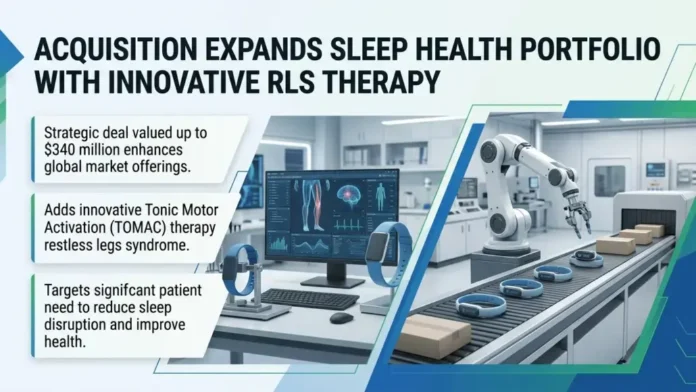
Global sleep and breathing health company ResMed has finalized its acquisition of Noctrix Health in a deal valued at up to $340 million, marking a notable expansion of its product and therapy offerings in the sleep health space. The transaction, which closed recently, brings Noctrix Health’s tonic motor activation (TOMAC) therapy platform under the ResMed umbrella, targeting patients who suffer from restless legs syndrome (RLS) a condition that significantly disrupts sleep quality for millions of people worldwide.
Noctrix Health had developed a wearable neurostimulation device designed to treat moderate-to-severe restless legs syndrome through its proprietary TOMAC therapy, which works by delivering targeted electrical stimulation to the legs. The therapy represents a non-pharmacological treatment pathway for RLS, an area where treatment options have historically been limited and where patients often face challenges with long-term medication adherence or side effects. The acquisition of Noctrix Health is structured as an upfront payment combined with additional milestone-based consideration, with the total deal reaching up to $340 million depending on the achievement of certain commercial and regulatory milestones.
ResMed’s Chief Executive Officer Mick Farrell highlighted the strategic importance of the transaction, describing Noctrix Health’s TOMAC therapy as a meaningful addition to the company’s growing portfolio of sleep health solutions. ResMed, which is widely known for its continuous positive airway pressure (CPAP) devices and software solutions for sleep apnea management, has been actively broadening its reach across various sleep-related conditions. The inclusion of an RLS-focused therapy aligns directly with that broader strategic direction, allowing the company to address a wider spectrum of sleep disorders beyond its core sleep apnea business.
Restless legs syndrome affects a significant portion of the global population and is frequently underdiagnosed and undertreated. The condition causes uncomfortable sensations in the legs, typically worsening at night, and leads to severe disruptions in sleep. By integrating Noctrix Health’s technology and clinical expertise through the acquisition of Noctrix Health, ResMed positions itself to serve patients who have not yet found effective relief through existing treatment options. The combined organization is expected to continue development efforts and pursue broader commercialization of the TOMAC platform as part of ResMed’s long-term growth strategy in sleep health.
Protecting Our Nurses: Smart room technology can improve nurse safety, mental health and job satisfaction

Hospitals cannot solve the nursing crisis through staffing strategies alone. The inpatient environment itself must evolve to better protect, support, and sustain caregivers. In a recent survey, nurse job satisfaction had declined to 47%; and 23% said they were likely to leave the profession. Their concerns were many, including cognitive burden, high-stress environments and their own personal safety.
Workplace violence has become an accepted risk of bedside care — and that normalization is dangerous. Around 25% of bedside nurses have been assaulted. Hospitals are responding with increased investment in workforce protection, including the adoption of formal workplace violence prevention programs and significant spending on security staffing, training, and infrastructure upgrades. In 2022, The Joint Commission implemented new standards requiring accredited hospitals to maintain workplace violence prevention programs, while the American Hospital Association estimated hospitals spend billions annually on violence prevention efforts, including security personnel, training, and facility security investments.
At the same time, hospitals are undergoing a digital transformation that is reshaping inpatient care. This shift is enabling smart hospital rooms powered by ambient listening, computer vision, and integrated monitoring platforms that enhance safety while helping protect clinicians.
Traditional approaches alone are not enough to address the scale of the problem. Technology is beginning to change the equation.
The Safety Dividend
While video monitoring gets a lot of attention, the true value of virtual care platforms comes from combining visual monitoring, ambient listening, and AI-driven insights into a unified safety system. Advances in ambient intelligence and computer vision are enabling hospitals to move from reactive response models to proactive situational awareness. These technologies can help identify behavioral escalation earlier, improve coordination during high-risk situations, and support faster intervention workflows.
Together, these capabilities provide continuous situational awareness – helping care teams detect early warning signs and intervene before situations escalate. When risk is identified, the system can trigger rapid escalation workflows, alerting behavioral response teams, security, or nearby staff in real time, including through duress or STAT alarm pathways.
This proactive, human-in-the-loop approach is especially critical in behavioral health and high-acuity environments, where patient behavior can change quickly and unpredictably. By integrating into existing clinical and security workflows, these systems help protect staff while enabling faster, more coordinated responses to potential workplace violence.
Violence is Only One Potential Risk
Nurses join the profession because they want to help people. Unfortunately, they are often pulled in so many directions, they may not have the opportunity to expeditiously complete many tasks. This overwhelming environment can reduce job satisfaction and increase mental health risks.
One time and motion study really highlights this reality. While giving patients discharge instructions, bedside nurses were interrupted multiple times to put out fires. In addition to providing haphazard patient education, this proved stressful for the providers – a process that should have taken 15 or 20 minutes sometimes took hours.
By contrast, a virtual nurse can focus on both the patient and the task at hand. Virtual care models can also help restore protected clinical time. Tasks such as discharge education, admission intake, and routine patient communication can be conducted without repeated interruptions, improving both patient comprehension and caregiver focus. These are also great opportunities for experienced nurses, who may be interested in transitioning away from the bedside but not away from nursing. They can remain in the workforce and continue to use their knowledge and wisdom to help patients and mentor early career bedside nurses. We also have significant evidence that these virtual tools reduce turnover. That’s a positive for patients, nurses and hospitals as a whole.
As a third-generation nurse, I often think about how we can get back to the legacy nursing that my mother and grandmother practiced. Smart, integrated patient rooms are clearly part of that solution. Without concerns about safety, chronic labor shortages and being pulled in multiple directions at once, nurses and other caregivers can focus on building therapeutic relationships with patients. If someone does become aggressive, healthcare workers can feel secure that a robust monitoring system will help protect them.
The future of nursing will not be determined solely by workforce pipelines or staffing ratios. It will also be shaped by whether hospitals are willing to redesign care environments around the wellbeing of the people delivering care. Smart, integrated patient rooms are not simply a technology investment — they are increasingly becoming a workforce strategy.
Multimodal AI Advancing Next Generation Clinical Workflows
The Synthesis of Sight and Reason in Clinical AI
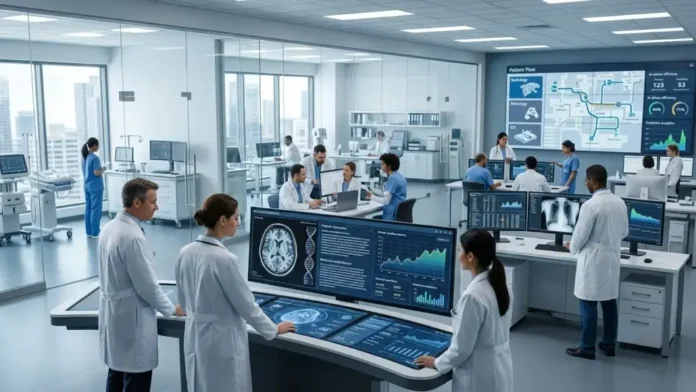
In the contemporary medical landscape, the primary challenge is no longer a lack of data, but the difficulty of integrating the massive volume of information generated by different clinical disciplines. Historically, a radiologist would look at a scan, a pathologist would review a slide, and a primary care doctor would read the EHR, often with very little shared context. The introduction of multimodal AI advancing next generation clinical workflows addresses this fragmentation by providing a single, unified “intelligence layer” that can process all of these inputs simultaneously. A multimodal AI model can analyze a chest X-ray while simultaneously considering the patient’s smoking history, current symptoms, and genetic predisposition to lung cancer. This holistic analysis provides a level of diagnostic certainty that is far greater than any single-modality approach, effectively mirroring the “complete picture” that the best human clinicians strive to build.
This synthesis is particularly transformative in the realm of clinical workflow automation. By automating the integration and summary of diverse data points, multimodal systems can provide clinicians with a pre-populated, high-fidelity view of the patient’s clinical status as soon as they open the chart. This reduces the time spent “searching for clues” across different systems and allows the provider to focus their energy on the complex interpretive and empathetic work that requires a human touch. This transition is not about replacing the clinician but about providing them with a more powerful and intuitive “digital partner” that can handle the heavy lifting of data integration. The result is a more fluid and efficient diagnostic process where the most critical insights are brought to the surface instantly. This level of operational excellence is a vital requirement for the modern hospital, ensuring that every minute of clinical time is used to its maximum potential.
Language Processing and Image Analysis in Harmony
The true power of multimodal AI lies in the synergy between computer vision and natural language processing (NLP). Modern multimodal systems can “read” a clinical note and “understand” the visual features of an MRI scan in the same way a human expert does. For example, in the management of stroke patients, the AI can analyze the imaging data to identify a blockage while simultaneously reviewing the patient’s medication history for contraindications to clot-busting drugs. This real-time, cross-modal reasoning is a cornerstone of multimodal AI advancing next generation clinical workflows, as it provides the “just-in-time” insights needed for high-stakes decision-making. By breaking down the barriers between “visual” and “textual” data, we are creating a more intelligent and responsive healthcare system that is better equipped to manage the complexity of modern medicine.
Furthermore, this synergy is driving medical AI innovation in the field of clinical documentation. Multimodal agents can now “listen” to a patient-doctor interaction and “view” the physical examination to autonomously draft a comprehensive and accurate clinical note. This reduces the administrative burden on clinicians, which is a leading cause of burnout and professional dissatisfaction. More importantly, these automated notes are often more detailed and accurate than those drafted manually, as they can pull in relevant data from imaging and lab results automatically. This ensures that the medical record is a high-quality, comprehensive document that supports better care coordination and research. By making the documentation process a byproduct of the clinical encounter, rather than a separate chore, we are returning the clinician’s focus to where it matters most: the person in front of them. The technology serves as a silent and efficient scribe, capturing the essence of the healing interaction.
Integrating Genomics and Molecular Insights
Beyond text and images, the next generation of multimodal AI is increasingly incorporating genomic and proteomic data into the clinical workflow. This move toward “pan-omics” integration is the ultimate goal of healthcare artificial intelligence, providing a truly holistic view of the individual’s biological and clinical state. For example, in precision oncology, a multimodal AI can analyze the tumor’s visual characteristics on a pathology slide, its molecular signature on a genomic sequence, and the patient’s clinical response to previous therapies. This allows for the identification of highly personalized treatment plans that are tailored to the specific drivers of the individual’s cancer. Multimodal AI advancing next generation clinical workflows is therefore a vital engine for the move toward “molecularly-guided” medicine, where every therapeutic decision is backed by a deep, multi-dimensional understanding of the disease.
This level of integration also has profound implications for clinical research and drug discovery. By analyzing the complex relationship between visual, clinical, and molecular data across millions of patients, multimodal systems can identify new “signatures” of health and disease that were previously invisible. This collective intelligence is accelerating the pace of medical progress, leading to the discovery of new therapeutic targets and the development of more effective diagnostic criteria. Multimodal AI is thus not just a tool for care delivery; it is a powerful platform for scientific discovery, ensuring that the healthcare system is constantly learning and evolving. As these systems become more integrated with the global research infrastructure, the “lessons learned” in one clinic can benefit patients everywhere. We are building a “global clinical brain” that is more powerful than the sum of its parts, powered by the best that science and technology have to offer.
Operational Insights and Hospital Management
The impact of multimodal AI extends beyond the clinic into the realm of hospital operations and management. By analyzing the multimodal flow of patients, supplies, and information, these platforms can provide a high-level view of the institution’s performance and identify opportunities for optimization. For example, a multimodal system could analyze surgical scheduling data, equipment sterilization cycles, and current staffing levels to suggest the most efficient use of the operating rooms for the coming day. This “intelligent orchestration” is a key driver of clinical workflow automation, ensuring that the logistical backend of the hospital is as sophisticated as the clinical frontline. By eliminating the “hidden” friction of hospital life, these systems allow for a more calm and focused environment for both staff and patients.
Furthermore, these platforms can be used to manage the safety and quality of the entire institution. By monitoring multimodal data from across the hospital including clinical outcomes, patient feedback, and operational metrics AI can identify the early warning signals of a systemic issue, such as a rise in hospital-acquired infections or a bottleneck in the emergency department. This proactive oversight allows for rapid intervention and continuous quality improvement, which is a hallmark of the modern healthcare IT trends. Multimodal AI advancing next generation clinical workflows is thus a vital tool for organizational resilience, ensuring that the hospital remains a safe and reliable sanctuary of healing in a complex world. The goal is to create a “transparent hospital,” where every data point is used to improve the care of the next patient. The technology provides the visibility and the intelligence needed to make this vision a reality.
Future Horizons: The Generative and Multimodal Era
Looking toward the future, the integration of generative AI with multimodal frameworks will lead to the rise of “clinical foundation models” intelligent systems that have been trained on almost all of medical knowledge and data. These models will be able to perform a wide range of tasks, from generating synthetic medical images for research to providing empathetic, multi-modal support for patients in their own homes. This level of hyper-intelligence is the ultimate expression of multimodal AI advancing next generation clinical workflows, moving the healthcare system from a collection of specialized tools toward a unified, sentient ecosystem. The future of medicine will be one where the AI “understands” the patient as a whole person, accounting for their biology, their story, and their personal goals. This is the ultimate promise of the digital age, ensuring that the best that science has to offer is delivered with a high level of humanity and care.
Furthermore, the rise of “explainable multimodal AI” will ensure that these systems are transparent and trustworthy. Future platforms will not only provide a diagnosis or a suggestion but will also be able to explain their reasoning by pointing to the specific features in the image, the clinical note, or the genomic sequence that led to that conclusion. This “collaborative reasoning” is essential for the successful integration of AI into the clinical environment, ensuring that the clinician remains the final arbiter of care. By prioritizing transparency and professional standards, we are building a healthcare system that is as ethical as it is intelligent. The future of clinical workflows is one of partnership, where the technology and the healer work in perfect harmony to achieve the best possible outcomes. This is the future of medicine, and it is a future we are building one multimodal insight at a time.
Conclusion: The Symphony of Data and Healing
The ongoing journey of multimodal AI advancing next generation clinical workflows is a testament to the power of integration and the pursuit of clinical excellence. We have moved from a time of fragmented, single-modality care to an era of high-tech digital synthesis. By prioritizing image analysis, language processing, and molecular insights into a unified framework, healthcare organizations are ensuring that their diagnostic and therapeutic processes are as sophisticated as the people they support. Multimodal AI is not just a technological trend; it is a fundamental redefinition of the clinical architecture, ensuring that the healing process is supported by a system that is as intuitive and responsive as the modern world.
Ultimately, the success of multimodal AI will be measured by its ability to improve the health of the population through better accuracy and more personalized care. When the system works perfectly, it provides a seamless and supportive environment where every piece of data is used to its maximum potential. This is the ultimate goal of all our technical and administrative efforts. By investing in the highest levels of integration and professional standards, we are safeguarding the future of healthcare, ensuring that the healing process is supported by the best that modern science and technology have to offer. This is the promise of multimodal AI, and it is a promise we are fulfilling every day, for every person. The next generation of workflows is here, and it is a future we are building together, one unified data point at a time.
Digital Biomarkers Enhancing Continuous Health Assessment

The Biological Signal in the Digital Stream
In the traditional medical model, clinical decisions were often based on “snapshots” a single blood pressure reading, a one-time blood draw, or a static imaging scan. While these snapshots are valuable, they often fail to capture the dynamic and fluctuating nature of human biology. The introduction of digital biomarkers enhancing continuous health assessment addresses this limitation by providing a constant stream of data that reflects the patient’s status in real-time. Digital biomarkers include everything from heart rate variability and gait patterns to sleep quality and even the subtle changes in voice or typing speed that can indicate neurological deterioration. By using advanced algorithms to filter the “noise” of daily life, healthcare sensors can extract the meaningful “signals” of health, providing a more comprehensive and accurate picture of the patient’s true physiological state.
This level of insight is particularly transformative for the management of chronic conditions, where subtle changes can indicate the early stages of an acute episode. For a patient with heart failure, a slight decrease in their daily activity level or a change in their respiratory rate during sleep captured by a digital biomarker can alert the clinical team days before the patient becomes symptomatic. This allows for an early intervention, such as a medication adjustment, that can prevent a costly and stressful hospital admission. This proactive monitoring is the hallmark of remote patient monitoring, where the goal is to keep the patient healthy and out of the hospital. By moving the “diagnostic eye” from the clinic into the home, digital biomarkers are fostering a more responsive and effective healthcare system that is built on the reality of the patient’s daily life.
Validation and the Science of Continuous Monitoring
While the potential of digital biomarkers is immense, their utility depends on their scientific validation and clinical relevance. Unlike traditional biomarkers, which have been studied for decades, digital biomarkers require a new framework for validation that accounts for the variability of the sensor technology and the environmental context of the data collection. This involves the use of high-fidelity clinical trials to prove that a specific digital signal such as a change in gait captured by a smartphone accelerometer directly correlates with a meaningful clinical outcome, such as the progression of Parkinson’s disease. This scientific rigor is a cornerstone of digital biomarkers enhancing continuous health assessment, ensuring that the technology provides genuine value to both the patient and the clinician. When a digital biomarker is validated, it becomes a powerful tool for precision medicine, providing a reliable and objective metric for tracking health.
Furthermore, the integration of these biomarkers into the clinical workflow requires a sophisticated digital infrastructure that can process and present the data in an actionable format. Clinicians do not have the time to sift through thousands of data points; instead, they need intelligent dashboards that highlight the most significant trends and provide clear clinical insights. This is where digital health technology and AI become essential, using sophisticated machine learning to identify the “red flags” and to suggest potential interventions based on the data. This level of decision support ensures that the constant stream of data leads to better care rather than just more administrative burden. By building the science and the technology around the needs of the provider, we are ensuring that digital biomarkers are a practical and powerful addition to the modern diagnostic toolkit. The goal is to turn “data” into “knowledge” and “knowledge” into “healing.”
The Role of Sensors in Behavioral and Mental Health
Digital biomarkers are also opening up new frontiers in the assessment and treatment of mental and behavioral health conditions. For decades, the diagnosis of these conditions has relied heavily on subjective self-reporting and clinical observation, which can be prone to bias and recall error. Today, “digital phenotyping” the use of passive data from smartphones and wearables is providing a more objective view of a patient’s mental state. For example, changes in sleep patterns, social interaction frequency, and even the speed and rhythm of typing can be digital biomarkers for depression, anxiety, or bipolar disorder. This level of continuous health monitoring allows for the early detection of a relapse and for the delivery of “just-in-time” support, such as a virtual therapy session or a mindfulness prompt. This proactive approach is particularly important in mental health, where early intervention can significantly improve the long-term outcome.
Moreover, these digital tools are helping to reduce the stigma associated with mental health by framing it as a biological and data-driven discipline. When a patient can see the objective signals of their mental state on a digital dashboard, it can provide a deeper sense of understanding and agency over their own recovery. It also allows for a more personalized approach to treatment, where the therapy is tailored to the specific patterns of the individual’s daily life. Digital biomarkers enhancing continuous health assessment are thus a vital tool for the integration of physical and mental health, ensuring that every aspect of the person’s well-being is monitored and supported with the same level of precision and care. By breaking down the silos between different clinical disciplines, we are building a more holistic and human-centered healthcare system for all.
Remote Patient Monitoring and the Future of Care Delivery
The impact of digital biomarkers extends to the very structure of care delivery, moving the focus away from the traditional clinic toward a decentralized, home-based model. Remote patient monitoring (RPM) platforms are now being used to manage everything from postoperative recovery to high-risk pregnancies, providing a level of safety and convenience that was previously impossible. By utilizing digital biomarkers to monitor a patient’s vitals and activity levels in real-time, healthcare organizations can identify and address potential issues before they escalate, reducing the need for emergency visits and hospital stays. This shift is a key component of the broader healthcare transformation, ensuring that the system is as efficient and sustainable as it is effective. The digital biomarker is the “connective tissue” that makes this decentralized care model a reality, ensuring that the patient is never truly alone in their journey.
Furthermore, RPM platforms allow for a more collaborative relationship between the patient and their care team. By sharing the data from their digital biomarkers, patients can have a more informed and active conversation with their doctor about their health goals and progress. This level of engagement is a powerful driver of health outcomes, as it encourages the behaviors and choices that lead to long-term wellness. In this context, the technology is not just a monitoring tool; it is a catalyst for partnership and self-efficacy. By empowering the individual with the data they need to understand their own biology, we are building a healthcare system that is more resilient and more profoundly human. The future of care delivery is one of omnipresent support, where every digital signal is a step toward a healthier life.
Future Horizons: The Predictive and Preemptive Era
Looking toward the future, the next generation of digital biomarkers will move beyond monitoring toward a more predictive and preemptive model of health. Advanced AI algorithms will be able to analyze the interaction between different biomarkers such as heart rate, sleep, and environmental factors to predict a health event weeks or even months before it occurs. This “precision prevention” is the ultimate goal of the digital health movement, ensuring that we can intervene at the earliest possible stage to prevent the onset of disease altogether. For example, a digital biomarker for cognitive decline could allow for lifestyle interventions that delay the onset of Alzheimer’s by decades. This level of foresight is the primary promise of digital biomarkers enhancing continuous health assessment, moving medicine from a reactive “cure-based” discipline toward a proactive “prevention-based” science.
Moreover, the integration of digital biomarkers with genomic and proteomic data will lead to the rise of “personalized digital twins” virtual models of the individual that can simulate their response to different lifestyle choices and treatments in real-time. This would allow for a level of hyper-personalized care that is currently unimaginable, where every person has a custom roadmap for their lifelong health journey. As the technology continues to evolve, the distinction between “patient” and “healthy individual” will continue to blur, as we all use digital tools to manage our health in a continuous and proactive way. The legacy of this transformation will be a society that is not only healthier but also more deeply connected to the intricate and beautiful signals of our own biology. This is the promise of digital biomarkers, and it is a promise we are fulfilling one data point and one continuous assessment at a time.
Conclusion: Listening to the Digital Voice of the Body
The ongoing journey of digital biomarkers enhancing continuous health assessment is a testament to the power of human curiosity and the pursuit of clinical excellence. We have moved from a time of static, episodic care to an era of fluid and continuous diagnostics. By prioritizing sensor-generated data, scientific validation, and clinical integration, healthcare organizations are ensuring that their diagnostic processes are as sophisticated as the people they support. Digital biomarkers are not just a technological trend; they are a fundamental redefinition of how we listen to the body, ensuring that the healing process is supported by a system that is as intuitive and responsive as the modern world.
Ultimately, the success of digital biomarkers will be measured by their ability to improve the health of the population through early intervention and more personalized care. When the system works perfectly, it provides a seamless and supportive environment where every person feels empowered by their own health data. This is the ultimate goal of all our technical and administrative efforts. By investing in the highest levels of validation and professional standards, we are safeguarding the future of healthcare, ensuring that the healing process is supported by the best that modern science and technology have to offer. This is the promise of digital biomarkers, and it is a promise we are fulfilling every day, for every person. The predictive future is here, and it is a future we are building together, one digital signal and one healthier life at a time.