

















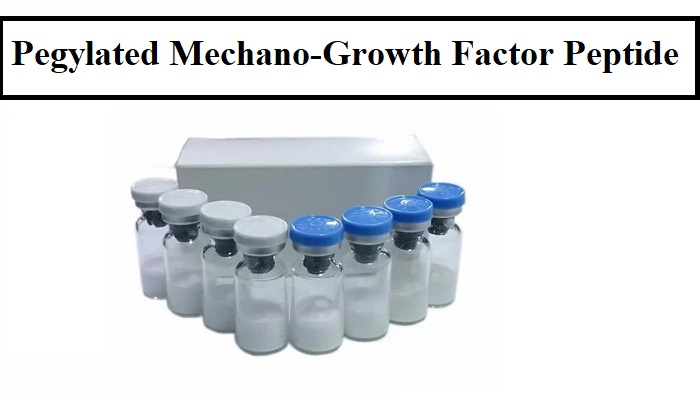

An anabolic peptide known as PEG-MGF, an abbreviation for “Pegylated Mechano-growth factor,” has been found in the muscle, bone, neural, tendon, and cardiac tissue of animal models under duress. It is a version of insulin growth factor 1 that has been investigated for its potential to amplify the organism’s physical endurance, support the immune system, improve lipolysis functions, and lower cholesterol levels, as theorized by experiments conducted on animal models.
In addition, research has indicated that PEG-MGF peptide may potentially improve immune activity during active tissue healing, which indicates that it may have the potential to hasten wound repair, as suggested by studies conducted on animal models.
Researchers are currently interested in gaining a deeper understanding of PEG-MGF and its possible impact on animal organisms. As a licensed researcher, you can buy peptides online.
PEG MGF Peptide: What is it?
The PEG-MGF sequence is as follows: PEG-Suc-Tyr-Gln-Pro-Pro-Ser-Thr-Asn-Lys-Asn-Thr-Lys-Ser-Gln-Arg-Arg-Lys-Gly-Ser-Thr-Phe-Glu-Glu-Arg-Lys-Cys.
The pegylation process is deemed responsible for forming the peptide known as the mechano-growth factor that has been pegylated. When polyethylene glycol is attached to another chemical substance, a process known as pegylation takes place; this process serves to lessen the organism’s natural immunological response to certain chemicals or compounds.
The possible impacts of PEG-MGF are believed to be longer-lasting than those of MGF since it has a longer half-life in blood than MGF. The study’s findings make it much more intriguing to researchers since they suggest that the consequences of PEG-MGF may be more impactful and long-lasting.
Research has indicated that PEG-MGFs’ fundamental role may facilitate muscle healing and growth. Investigations purport the peptide’s potential to connect to receptors and mend injured muscle tissue may potentially accelerate recovery. Research on animals has postulated that it may also send a signal to satellite cells, causing them to expand.
According to research conducted on animals, this peptide seems to have the potential for evaluation in other fields of research, including weight regualtion, immune system action, and in cognitive functioning.
PEG-MGF Peptide and Muscle Cells
Studies conducted on mouse models of muscle damage have suggested that exposure to PEG MGF in muscle cells may protect the cells by decreasing oxidative stress and suppressing the release of inflammatory hormones.
According to further studies, the peptide PEG-MGF seems to reduce muscle inflammation and speed up the healing process in cases of physical stress-induced muscle injury.
Several studies have implied that pegylated MGF might activate insulin-like growth factor 1, which may ultimately result in increased lean mass, higher energy levels, and a reduction in biomarkers of cell aging. In addition, studies conducted on animals have indicated that it may promote muscle cell regeneration and accelerate the metabolism of fat cells within the organism.
According to research on mouse models, the presentation of PEG-MGF to mice appeared to have resulted in a 25% increase in the size of muscle fibres.
PEG MGF Peptide and the Brain
High levels of PEG-MGF in the brain were suggested to minimize the effects of age-associated neural degeneration, as indicated by studies conducted in the scientific community. When mice were exposed to the peptide, they were hypothesized to exhibit improved cognitive function.
According to the findings of further research, exposure in murine models to PEG-MGF seems to have the potential to alleviate muscular weakness and reduce the death of motor neurons in the brains of the organisms. Because this peptide is naturally produced in the brain due to overexpression, it has been speculated that the presentation of this peptide may potentially lessen the effect of various neurological illnesses and support general cognitive functions.
PEG-MGF Peptide and Bone
According to scientific research on rabbits, the PEG-MGF peptide appears to potentially speed up bone healing. Studies conducted on animals have suggested that it may promote the proliferation of osteoblasts, the cells responsible for forming new bone.
Over only four weeks, rabbits given a high concentration of PEG-MGF suggested the same amount of healing as speculated in the control group after six weeks. Therefore, researchers have high hopes that they may better understand the mechanisms of bone healing.
PEG-MGF Peptide and the Heart
Research indicates that pegylated mechano-growth factor peptide may prevent programmed cell death in cardiac muscle cells due to hypoxia, which occurs in oxygen-deprived environments. Additionally, the peptide is believed to be responsible for delivering cardiac stem cells to the site of damage, which may assist in regenerating and healing tissues and muscles inside the heart after a cardiac wound.
Compared to the rats given a control compound, the rats given PEG-MGF within eight hours after hypoxia were theorized to have a larger migration of stem cells and a lower reduction in cell death.
Further study has ascertained that the targeted presentation of PEG-MGF might help enhance cardiac function following a heart attack. During the research, the rats given the peptide, compared to the control group, which was not given the compound, appeared to have exhibited significantly less cardiac remodeling and improved hemodynamics.