















In the discourse surrounding medical innovation, much of the focus is directed toward drugs and devices. However, the foundational element of care delivery the physical building is undergoing a revolution of its own. Hospital infrastructure modernization strategies are proving that a well-designed facility is a clinical tool in its own right, capable of reducing infection rates, improving patient throughput, and enhancing the well-being of the staff. The transition from legacy buildings to smart hospital infrastructure is not merely a matter of aesthetics; it is a strategic necessity for institutions facing rising costs, aging facilities, and the constant threat of public health crises.
Modernization in the healthcare context involves a deep integration of engineering, digital technology, and evidence-based design. We are moving toward a model where the hospital is a “living building” a system that can sense its own environment, optimize its energy usage, and respond dynamically to the needs of its occupants. This structural evolution is the bedrock upon which all other medical advancements are built, providing the stable and efficient environment necessary for high-tech clinical practice.
Smart Facility Management and Operational Intelligence
The first pillar of hospital infrastructure modernization strategies is the implementation of smart facility management systems. Traditionally, hospital maintenance was reactive fixing things when they broke. Today, integrated Building Management Systems (BMS) utilize thousands of sensors to monitor everything from air pressure in operating rooms to the vibration of HVAC fans. This real-time data allows for predictive maintenance, ensuring that critical infrastructure never fails during a life-saving procedure.
By centralizing these functions, hospital administrators gain a level of operational intelligence that was previously impossible. They can track the movement of people and equipment throughout the facility, identifying bottlenecks and optimizing the use of space. For example, motion sensors can identify underutilized areas of the hospital that can be repurposed for clinical use, or they can trigger automated cleaning protocols for high-traffic zones. This level of efficiency reduces overhead and allows more of the hospital’s budget to be directed toward direct patient care.
Healthcare Energy Efficiency and Environmental Stewardship
Hospitals are notoriously energy-intensive environments, operating 24/7 and requiring massive amounts of power for lighting, climate control, and medical equipment. Consequently, healthcare energy efficiency has become a primary focus of hospital infrastructure modernization strategies. Modern facilities are incorporating renewable energy sources, such as solar arrays and geothermal systems, alongside high-efficiency LED lighting and smart thermostats.
The benefits of these green initiatives are two-fold. Financially, the reduction in utility costs can save a large hospital millions of dollars annually. Environmentally, reducing the carbon footprint of healthcare is an ethical imperative. There is a growing recognition of the link between environmental health and human health; therefore, a hospital that minimizes its impact on the planet is directly contributing to its mission of promoting wellness. Modernization efforts now include the use of sustainable building materials and advanced waste management systems, turning the hospital into a model of environmental stewardship within the community.
Infection Control Systems and the Safety of the Environment
Patient safety is the ultimate goal of any clinical institution, and the physical building plays a critical role in preventing hospital-acquired infections (HAIs). Hospital infrastructure modernization strategies are prioritizing the integration of advanced infection control systems. This includes the use of antimicrobial surfaces, such as copper-alloy touchpoints, and the implementation of sophisticated air filtration systems like HEPA and UV-C disinfection units.
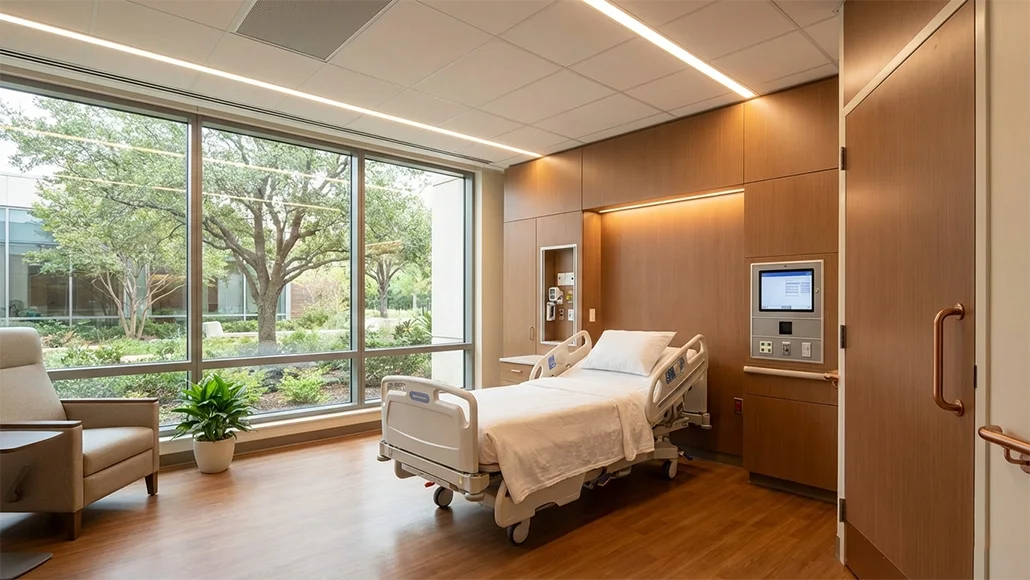
The design of the modern ward is also changing to enhance safety. We are seeing a move toward 100% private patient rooms, which significantly reduces the risk of cross-contamination. Furthermore, smart infrastructure can now monitor hand-hygiene compliance, using sensors to track whether staff are utilizing sanitization stations upon entering and leaving a room. These environmental safeguards work in tandem with clinical protocols to create a “zero-harm” environment. By building safety into the very fabric of the building, hospitals can protect their most vulnerable patients from the invisible threats of the clinical environment.
Resilient Healthcare Operations and Disaster Preparedness
The true test of a hospital’s infrastructure often comes during a crisis. Whether it is a natural disaster, a power outage, or a pandemic, a modernized facility must be capable of maintaining resilient healthcare operations under extreme stress. Modernization strategies include the development of “flexible” clinical spaces that can be rapidly converted to intensive care units or isolation wards. This modularity was proven essential during the COVID-19 pandemic and is now a standard feature of new hospital designs.
Resilience also extends to data and power. Smart hospital infrastructure includes redundant power supplies and decentralized data centers to ensure that electronic health records and life-support systems remain functional during a local utility failure. This “always-on” capability is non-negotiable in an era where healthcare is increasingly digital. By investing in these resilient systems today, hospitals are ensuring they can serve as a sanctuary for their communities during their darkest hours.
Human-Centric Design and the Healing Environment
Modernization is not just about machines and materials; it is about people. Hospital infrastructure modernization strategies are increasingly incorporating human-centric design principles to improve the experience of both patients and staff. This includes the use of natural light, views of nature, and noise-reduction materials, all of which have been clinically proven to reduce patient stress and accelerate recovery.
For the staff, a well-designed facility reduces the physical and mental toll of the clinical workday. Ergonomic workstations, dedicated “respite rooms” for nurses, and optimized layouts that reduce the distance staff must walk each shift all contribute to a more sustainable work environment. When the staff are well-supported by their physical surroundings, they can provide a higher level of compassionate care. This holistic approach to infrastructure ensures that the hospital remains a place of healing in every sense of the word.
The Future of Facility Modernization
As we look toward the future, the pace of facility modernization will only accelerate. We will see the rise of “digital twins” virtual models of the physical hospital that allow administrators to test various scenarios and optimize operations in a risk-free digital environment. We will also see the deeper integration of robotics into the building itself, from automated pharmacy delivery systems to robotic floor cleaners.
The modernization of hospital infrastructure is an ongoing commitment to excellence. It is a recognition that the quality of care is inseparable from the quality of the environment in which it is delivered. By prioritizing intelligence, sustainability, and safety, we are building a healthcare infrastructure that is prepared for the challenges of the 21st century. The smart hospital of tomorrow is being built today, providing a foundation of resilience and care that will serve generations to come.