













The silent heartbeat of every modern hospital is its clinical laboratory. While clinicians and surgeons interact directly with patients, the laboratory provides the critical data that informs nearly 70% of all medical decisions. For decades, the labor-intensive nature of diagnostic testing meant that clinicians often had to wait hours, or even days, for the results that would guide a life-saving intervention. However, the paradigm is shifting. The introduction of clinical laboratory automation improving testing efficiency has revolutionized the diagnostic landscape, moving away from manual pipetting and toward a high-throughput, robotic environment. This evolution is driven by a convergence of rising testing volumes, a global shortage of skilled laboratory personnel, and an urgent need for greater accuracy and speed in patient care. By integrating advanced robotic systems and digital management platforms, laboratories can now process thousands of samples with a level of precision and consistency that was previously unimaginable.
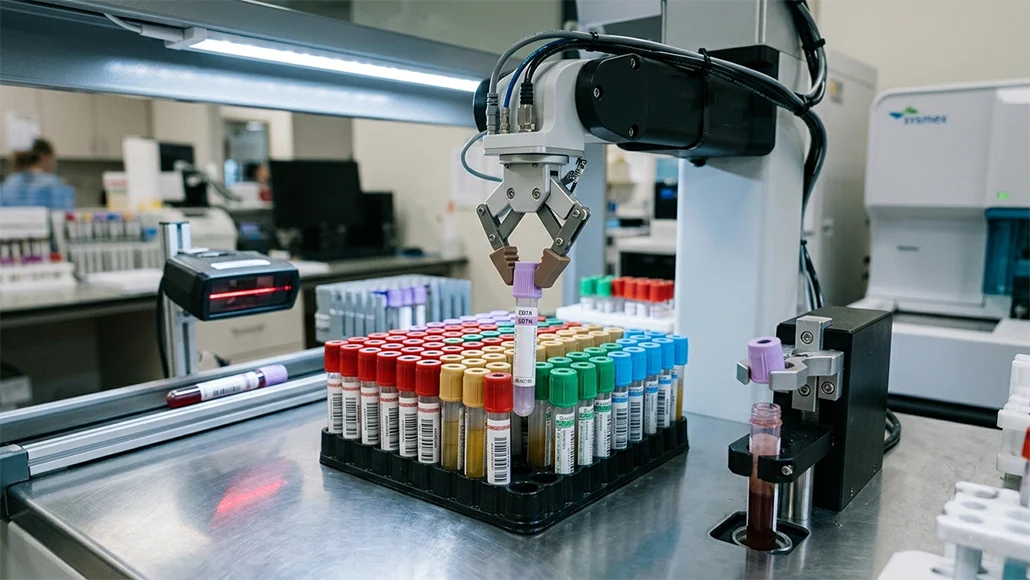
The core of clinical laboratory automation improving testing efficiency is found in the total laboratory automation (TLA) models. In these systems, a sample is placed on a track and navigated through the entire analytical process from sorting and centrifugation to analysis and storage without any human intervention. This hands-off approach is the hallmark of modern clinical lab systems, as it drastically reduces the potential for human error. In a manual lab, the risk of mislabeling a tube or incorrectly pipetting a reagent is a constant concern. However, in an automated environment, every sample is tracked by a barcode and handled by robotic arms that operate with sub-millimeter precision. This not only ensures the integrity of the test but also significantly reduces the turnaround time (TAT), allowing physicians to receive critical results while a patient is still in the emergency room or the operating suite.
The Impact of Robotic Sample Processing on Workflow
One of the most significant bottlenecks in traditional diagnostics is the pre-analytical phase. This stage includes the sorting, uncapping, and preparation of various biological samples, such as blood, urine, and tissue. Historically, this work was performed by laboratory technicians, who spent hours on repetitive tasks that were both time-consuming and prone to causing repetitive strain injuries. The emergence of robotic sample processing as part of clinical laboratory automation improving testing efficiency has fundamentally changed this dynamic. Modern pre-analytical workstations can sort and prepare hundreds of tubes per hour, ensuring that they are ready for the analyzer the moment they arrive in the lab. This initial speed is crucial, especially for time-sensitive tests like cardiac troponin or blood glucose levels, where every minute counts for the patient’s outcome.
Beyond the immediate speed of processing, these robotic systems contribute to a much safer work environment. Laboratory personnel are frequently exposed to biohazardous materials, and manual handling of open tubes increases the risk of aerosolization and accidental needle sticks. By utilizing clinical laboratory automation improving testing efficiency, the lab can keep samples closed and contained for as much of the process as possible. The robots handle the dirty work, allowing the highly trained human staff to focus on the thinking work interpreting complex results, maintaining the equipment, and troubleshooting rare diagnostic anomalies. This shift in roles is a key benefit of diagnostic laboratory technology, as it elevates the profession of laboratory medicine from manual labor to data-driven clinical consultation.
Digital Lab Management and Real-time Data Integration
While the hardware of clinical laboratory automation improving testing efficiency is impressive, the brain of the modern lab is the Laboratory Information Management System (LIMS). These digital platforms are the connective tissue that links every piece of robotic hardware to the hospital’s electronic health records. When a sample is scanned at the point of collection, the LIMS immediately knows which tests are required and directs the automated track to send the sample to the appropriate analyzer. This seamless integration is essential for lab efficiency solutions, as it eliminates the need for manual data entry and reduces the risk of clerical errors. Furthermore, these systems provide laboratory managers with real-time data on the status of every sample, allowing them to identify and resolve bottlenecks before they impact patient care.
The use of clinical laboratory automation improving testing efficiency also allows for autoverification of results. This process uses complex algorithms to review test results against a patient’s historical data and known physiological ranges. If a result is within normal parameters and consistent with previous tests, the LIMS can automatically release the result to the clinician without a manual review. This drastically speeds up the reporting process for the vast majority of normal tests, leaving the laboratory specialists with more time to focus on the critical or abnormal results that require expert clinical judgment. This blend of robotic efficiency and human expertise is the ultimate goal of clinical laboratory automation improving testing efficiency, creating a system that is both faster and more reliable than either could achieve alone.
Scalability and the Global Demand for Diagnostics
The global demand for diagnostic testing is increasing at an exponential rate. Factors such as an aging population, the rise of chronic diseases like diabetes and cardiovascular disorders, and the increasing use of personalized medicine are putting unprecedented pressure on laboratory resources. In this context, clinical laboratory automation improving testing efficiency is not just a convenience it is a necessity for the sustainability of the healthcare system. Automated labs are inherently scalable, meaning they can handle a significant increase in testing volume without a proportional increase in staff or physical space. This efficiency is particularly vital during public health crises, such as the COVID-19 pandemic, where the ability to rapidly scale up PCR testing was a critical component of the global response.
Furthermore, these lab efficiency solutions are becoming more accessible to smaller community hospitals and diagnostic centers. While the initial investment in a TLA system can be significant, the long-term cost savings in terms of reduced labor, decreased reagent waste, and fewer errors make it a compelling financial decision. As the technology matures, we are seeing the emergence of modular clinical laboratory automation improving testing efficiency, where a lab can start with a single robotic module and add more as their needs grow. This democratization of diagnostic laboratory technology ensures that patients in rural or underserved areas can receive the same high-quality, rapid diagnostics as those in major metropolitan medical centers.
The Future of Automated Laboratory Medicine
As we look to the future, the next frontier for clinical laboratory automation improving testing efficiency is the integration of artificial intelligence and advanced molecular diagnostics. We are moving toward a world of smart labs that can not only process samples but also predict when a piece of equipment is about to fail or when a specific reagent is running low. AI will play a greater role in the analytical phase, helping to interpret complex genomic sequences or identify rare cellular abnormalities in blood smears with a level of accuracy that exceeds human capability. This evolution will further solidify the role of clinical laboratory automation improving testing efficiency as the backbone of precision medicine.
The ultimate vision is a fully integrated diagnostic ecosystem where the lab is not a separate department but a seamless part of the patient’s clinical journey. From the moment a sample is drawn, it is part of a high-speed, data-driven process that delivers actionable insights directly to the physician’s fingertips. By continuing to innovate in the field of clinical laboratory automation improving testing efficiency, we are not just making labs faster we are making healthcare more responsive, more accurate, and more human. The robots may be doing the work, but the benefit is felt by every patient who receives a timely diagnosis and a personalized path toward healing.