













The field of medical diagnostics has been revolutionized by the rapid advancement of visualization technologies that allow physicians to see deep within the human body without an incision. In the current era of healthcare, the focus has shifted from merely capturing images to extracting deep, actionable data from every scan. This transition is characterized by medical imaging innovations enhancing diagnostic precision, a movement that combines physics, engineering, and digital intelligence to redefine how we identify and treat disease. From the early days of blurry X-rays to today’s high-fidelity 3D reconstructions, the journey of imaging has always been about reducing uncertainty and improving the resolution of human health.
AI Integration in Radiology Workflows
At the heart of this transformation is the integration of artificial intelligence into the radiological workflow. For many years, the primary challenge in imaging was not just capturing the data, but interpreting it. A single CT or MRI scan can produce thousands of individual images, creating a massive cognitive load for radiologists. Today, AI algorithms are acting as a second pair of eyes, flagging subtle abnormalities that might be missed by the human eye, such as early-stage lung nodules or minor intracranial hemorrhages. This synergy between human expertise and algorithmic speed is a prime example of medical imaging innovations enhancing diagnostic precision, ensuring that a diagnosis is not just fast, but incredibly accurate.
Advancements in MRI Technology
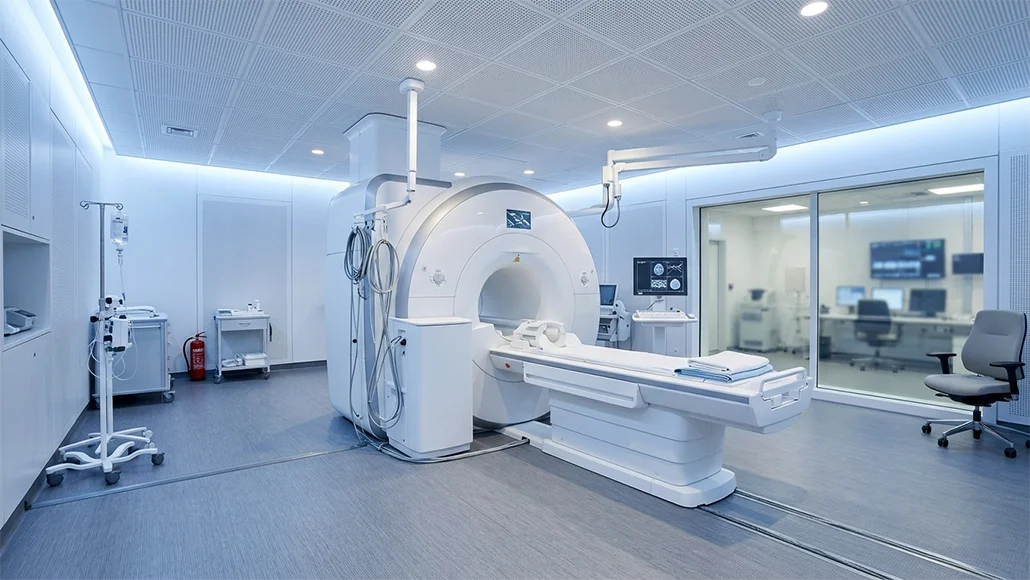
Magnetic Resonance Imaging (MRI) has seen some of the most impressive hardware upgrades in recent years. The move toward higher field strengths, such as 7-Tesla magnets, has unlocked levels of anatomical detail previously thought impossible. These high-field systems allow researchers and clinicians to see the microscopic structures of the brain, aiding in the early diagnosis of neurological disorders like Alzheimer’s and multiple sclerosis. Furthermore, the development of silent MRI and faster scanning protocols has improved the patient experience, making it easier for children or claustrophobic patients to undergo necessary diagnostics. These improvements in hardware are essential components of medical imaging innovations enhancing diagnostic precision, as they provide the raw data quality necessary for complex clinical analysis.
Next-Generation CT Imaging with Photon Counting
Computed Tomography (CT) technology has also made significant strides, particularly with the advent of photon-counting detectors. Traditional CT scanners convert X-rays into light before turning them into electrical signals, a process that can lose detail and increase noise. Photon-counting CT, however, measures each individual X-ray photon, providing much higher spatial resolution and the ability to differentiate between different types of tissues and materials with greater clarity. This advancement is particularly beneficial in cardiovascular imaging, where it allows for better visualization of coronary arteries and the detection of plaque that might otherwise be obscured. By improving the fundamental way X-rays are detected, medical imaging innovations enhancing diagnostic precision are providing a clearer map of the patient’s internal anatomy.
Molecular Imaging and Nuclear Medicine
Another critical area of development is molecular imaging and Nuclear Medicine. The combination of Positron Emission Tomography (PET) and CT or MRI (PET/CT and PET/MRI) has allowed doctors to see both the structure and the function of organs simultaneously. Using specialized radiotracers, clinicians can observe the metabolic activity of tumors, which often changes long before structural changes are visible on a standard scan. This functional insight is crucial in oncology, as it allows for the precise staging of cancer and the monitoring of a patient’s response to therapy. The ability to visualize disease at a cellular level is perhaps the ultimate expression of medical imaging innovations enhancing diagnostic precision, moving us closer to the goal of truly personalized medicine.
3D and 4D Visualization in Surgical Planning
The rise of 3D and 4D visualization techniques has also changed the surgical landscape. Surgeons can now use patient-specific 3D models, generated from high-resolution scans, to plan complex procedures before entering the operating room. In some cases, augmented reality (AR) is being used to overlay these imaging data directly onto the patient during surgery, providing a GPS for the surgeon’s instruments. This real-time guidance reduces the risk of complications and ensures that interventions are as targeted as possible. This integration of pre-operative data into intra-operative reality is a direct result of medical imaging innovations enhancing diagnostic precision, showing that the value of an image extends far beyond the diagnostic phase.
Data management and interoperability are also playing a vital role in the effectiveness of these innovations. In a modern hospital, imaging data must be accessible to specialists across different departments and even different locations. Cloud-based Picture Archiving and Communication Systems (PACS) have made it possible for a specialist in one city to review a scan taken in another in real-time. This connectivity ensures that the expertise of a sub-specialist radiologist is available to any patient, regardless of where they are located. When the best minds are combined with the best technology, the result is a significant boost in medical imaging innovations enhancing diagnostic precision.
Patient safety is another pillar of the innovation process. Historically, the radiation dose associated with CT scans was a concern for many. Modern reconstruction algorithms, however, can now produce high-quality images from much lower doses of radiation. These low-dose protocols are particularly important for patients who require frequent monitoring, such as those with chronic lung conditions or pediatric patients. By balancing the need for clarity with the need for safety, medical imaging innovations enhancing diagnostic precision are ensuring that the benefits of imaging always outweigh the risks.
The field of ultrasound is also experiencing a renaissance, driven by portability and miniaturization. Hand-held ultrasound devices that connect to a smartphone or tablet have become a reality, allowing for point of care imaging in environments ranging from sports medicine clinics to emergency helicopters. While these devices may not yet match the resolution of high-end console systems, their ability to provide immediate diagnostic information is invaluable. This democratization of imaging technology is a key trend, reflecting how medical imaging innovations enhancing diagnostic precision are becoming more accessible to a wider range of clinicians.
Looking ahead, the next frontier in imaging lies in radiomics the extraction of large amounts of quantitative data from medical images that are not visible to the naked eye. By analyzing the texture, shape, and intensity patterns within an image, researchers are finding signatures that can predict how a tumor might behave or whether a patient is likely to respond to a specific drug. This move toward quantitative imaging transforms the radiologist’s report from a descriptive narrative into a data-driven prediction tool. It represents the pinnacle of how medical imaging innovations enhancing diagnostic precision can contribute to the broader ecosystem of precision health.
Advancing Diagnostic Precision Through Innovation
In conclusion, the evolution of medical imaging is a testament to the power of human ingenuity and its application to the most complex machine of all the human body. Through the integration of AI, the refinement of hardware, and the emergence of molecular techniques, we are entering a new age of diagnostic clarity. These medical imaging innovations enhancing diagnostic precision are not just making images clearer; they are making the path to recovery more certain. As we continue to push the boundaries of what is visible, we provide clinicians with the tools they need to diagnose earlier, treat more effectively, and ultimately improve the quality of life for patients around the world.