






Healthcare systems across the globe are under mounting pressure to improve patient outcomes while reducing administrative burden. One of the most promising solutions emerging in recent years is automated clinical documentation. By leveraging artificial intelligence and natural language processing, automated clinical notes are transforming how healthcare providers capture, manage, and utilize patient information.
This shift is not just about efficiency it plays a critical role in improving accuracy and reducing clinical and legal risks.
The Challenge of Manual Clinical Documentation
Traditional clinical note-taking is time-consuming and prone to human error. Physicians often juggle multiple responsibilities, from patient care to administrative reporting, which increases the likelihood of incomplete or inconsistent documentation.
Common challenges include:
- Missed details during patient interactions
- Delayed note entry leading to memory gaps
- Variability in documentation styles
- Increased cognitive load and burnout
These issues can compromise patient safety, disrupt care continuity, and expose healthcare providers to compliance risks.
How Automated Clinical Notes Enhance Accuracy
Automated clinical documentation systems use advanced AI models to capture and structure patient information in real time. By doing so, they significantly improve the accuracy and completeness of medical records.
Real-Time Data Capture
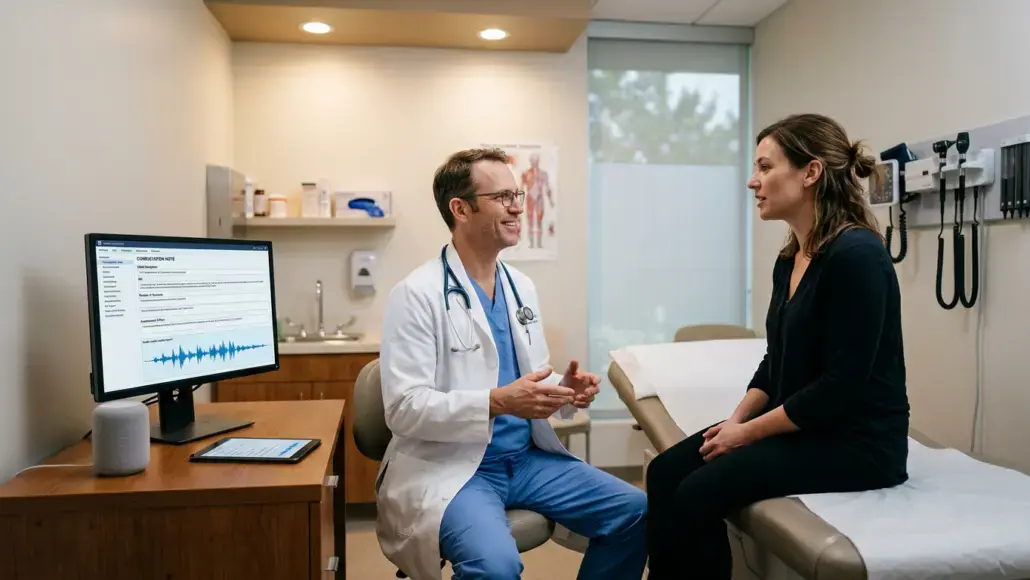
Automated systems can transcribe and organize conversations during patient visits, ensuring that no critical detail is overlooked. This real-time capture reduces reliance on memory and minimizes omissions.
Standardized Documentation
AI-driven tools follow structured templates and clinical guidelines, ensuring consistency across all patient records. Standardization helps reduce ambiguity and improves communication among care teams.
Reduction of Human Error
Manual data entry often leads to typographical errors, incorrect coding, or missing fields. Automation minimizes these risks by validating inputs and prompting clinicians for missing information.
Improved Clinical Decision Support
Accurate and structured data feeds into clinical decision support systems, enabling better diagnosis and treatment planning. This ultimately enhances patient outcomes.
Reducing Risk in Healthcare Settings
Beyond accuracy, automated clinical notes play a crucial role in mitigating various risks associated with healthcare delivery.
Enhanced Compliance and Audit Readiness
Healthcare providers must adhere to strict regulatory requirements. Automated documentation ensures that records are complete, time-stamped, and compliant with industry standards, reducing the risk of penalties during audits.
Better Legal Protection
Incomplete or inconsistent documentation is a common factor in medical malpractice cases. Automated systems create detailed and reliable records, providing stronger legal protection for healthcare professionals.
Data Security and Integrity
Modern automated solutions incorporate robust security measures, including encryption and access controls. This safeguards sensitive patient information and ensures data integrity.
Reduced Burnout and Cognitive Load
By handling repetitive documentation tasks, automation allows clinicians to focus more on patient care. Reduced burnout leads to better attention to detail and fewer errors, indirectly lowering clinical risk.
Applications Across Specialties
Automated clinical notes are not limited to general practice they are increasingly being adopted across various specialties, each benefiting in unique ways.
In mental health, for example, an ai scribe for psychiatrists can capture nuanced patient conversations, preserving critical context that might otherwise be missed. This improves diagnostic accuracy and continuity of care.
Similarly, in fast-paced environments such as emergency departments, automated documentation ensures that critical information is recorded promptly and accurately.
Integration with Healthcare Ecosystems
Modern automated documentation tools are designed to integrate seamlessly with electronic health record (EHR) systems. This interoperability ensures that data flows smoothly across departments, enhancing collaboration and care coordination.
Healthcare organizations that adopt these systems often report:
- Faster documentation turnaround times
- Improved billing accuracy
- Enhanced patient satisfaction
- Better operational efficiency
The Role of Intelligent Medical Writing Solutions
Advanced platforms like Medwriter are helping bridge the gap between clinical expertise and efficient documentation. By combining AI capabilities with domain-specific knowledge, such tools support healthcare professionals in generating precise and compliant clinical notes.
These solutions are particularly valuable in high-volume settings, where accuracy and speed are equally critical.
Challenges and Considerations
While the benefits are substantial, implementing automated clinical documentation requires careful planning.
Key considerations include:
- Ensuring data privacy and regulatory compliance
- Training staff to use new systems effectively
- Maintaining human oversight to validate AI-generated content
Healthcare providers must strike a balance between automation and clinical judgment to achieve optimal outcomes.
The Future of Clinical Documentation
As AI technology continues to evolve, automated clinical notes will become even more sophisticated. Future advancements may include predictive analytics, personalized documentation workflows, and deeper integration with diagnostic tools.
Ultimately, the goal is to create a healthcare environment where accurate, real-time documentation supports better decision-making and safer patient care.
Conclusion
Automated clinical notes represent a significant advancement in healthcare documentation. By improving accuracy, standardizing records, and reducing human error, these systems play a vital role in minimizing risk and enhancing patient safety.
As healthcare organizations continue to adopt AI-driven solutions, the focus will increasingly shift from administrative burden to delivering high-quality, patient-centered care.