








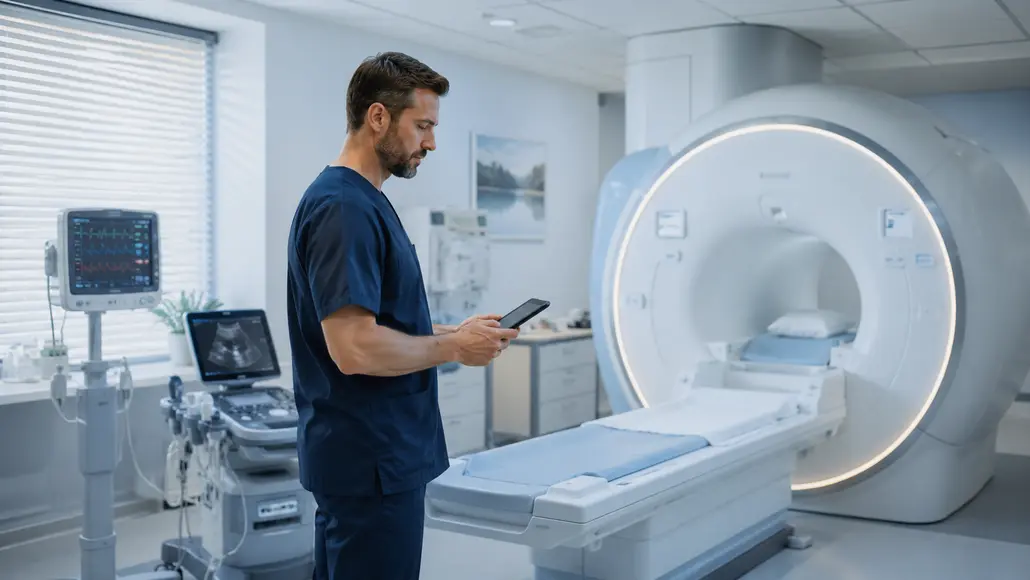
The financial landscape of modern healthcare is increasingly defined by a complex dual challenge: the rapid, relentless pace of technological obsolescence and the tightening of capital budgets across public and private sectors. Hospitals, diagnostic centers, and specialized clinical practices must continually invest in the latest medical tools to maintain high standards of patient care, improve clinical outcomes, and secure their competitive positioning in a crowded market. However, the sheer cost of acquiring advanced machinery such as 3-Tesla MRI scanners, robotic-assisted surgical systems, and high-throughput genomic sequencers can strain even the most robust balance sheets. In this high-pressure environment, clinical equipment leasing improving capital efficiency has become a cornerstone of strategic financial management for healthcare providers worldwide. By shifting from a traditional ownership-based model to a flexible, access-based model, organizations can preserve vital liquidity while ensuring their clinicians always have the most advanced tools at their disposal.
The primary and most immediate advantage of leasing is the preservation of working capital. Traditional outright purchasing requires a massive upfront investment, often drawing from precious cash reserves that could be better utilized for other critical areas such as facility expansions, the recruitment of specialized staff, or the development of community outreach programs. Leasing allows these significant costs to be spread over the useful clinical life of the equipment, effectively aligning the organization’s expenses with the revenue generated by the asset’s use. This transformation of a large, lumpy capital expenditure (CAPEX) into a predictable and manageable operating expense (OPEX) provides greater financial stability and improves the organization’s debt-to-equity ratio. Furthermore, clinical equipment leasing improving capital efficiency offers a level of scalability that traditional bank financing often cannot match, allowing providers to expand their technological footprint rapidly in response to changing patient volumes or new clinical needs.
Strategic Asset Optimization and Financial Flexibility
Managing a modern hospital’s massive asset portfolio requires a delicate and ongoing balance between clinical necessity and financial prudence. Clinical equipment leasing improving capital efficiency facilitates a far more dynamic and responsive approach to asset management. Instead of being locked into a piece of equipment for its entire physical lifespan—which may far exceed its clinical or technological relevance—leasing allows providers to structure agreements that coincide with known technology refresh cycles. This ensures that the facility is never burdened with outdated, inefficient machinery that is costly to maintain and increasingly less effective for precise patient diagnosis or treatment. When a lease term ends, the organization has the flexibility to simply return the old equipment and upgrade to the latest, most efficient model, ensuring a continuous state of technological readiness and clinical excellence.
From a sophisticated tax and accounting perspective, leasing offers several distinct advantages that can significantly impact an organization’s bottom line. Depending on the specific structure of the lease whether it is an operating lease or a capital lease organizations may benefit from accelerated depreciation schedules or the ability to deduct full lease payments as legitimate business expenses. These financial nuances are critical for maintaining healthy cash flow and maximizing the return on investment (ROI) for expensive clinical technology. By working closely with specialized healthcare financing firms that understand the unique lifecycle of medical equipment, providers can tailor lease structures to match their specific budgetary constraints, including seasonal payment variations, “step-up” payments that align with clinical ramp-up, or deferred start options that allow the equipment to begin generating revenue before the full payment schedule commences.
Mitigation of Technological Obsolescence and Innovation Risk
The healthcare technology sector is characterized by a cycle of innovation that is among the fastest in any industry. A state-of-the-art imaging system or laboratory analyzer today may be surpassed by a more precise, faster, and more automated model in just a few short years. For organizations that purchase equipment outright, this “innovation risk” is a significant and growing concern. They may find themselves stuck with a depreciating asset that has lost its market value and its competitive clinical edge, but still has years of remaining book value. Clinical equipment leasing improving capital efficiency effectively transfers this risk from the healthcare provider to the lessor. The hospital is paying for the utility and the clinical outcomes provided by the machine rather than the machine itself, providing a built-in financial hedge against the rapid march of scientific progress. This is particularly vital in high-innovation fields like oncology, cardiology, and neurology, where new diagnostic capabilities can directly and profoundly influence patient survival rates and quality of life.
Beyond the mitigation of technological risk, leasing also addresses the significant and often unpredictable burden of ongoing maintenance, calibration, and repair. Many comprehensive clinical equipment leasing agreements include full-service contracts as part of the monthly payment, ensuring that the equipment is maintained to the highest manufacturer standards throughout the entire lease term. This reduces the administrative and technical burden on the hospital’s internal biomedical engineering department and provides a totally predictable cost structure for maintenance. In the event of a catastrophic equipment failure, the lease agreement often provides for rapid replacement or prioritized repair, minimizing clinical downtime and ensuring that patient treatment schedules are not disrupted. This holistic, “hassle-free” approach to asset management is a key driver in the widespread adoption of leasing models across the global healthcare sector.
Enhancing Operational Agility and Competitive Differentiation
The ability to move quickly and decisively is a major competitive differentiator in today’s healthcare market. Whether it is opening a new specialized outpatient center, adding a new service line like cardiovascular surgery, or upgrading a satellite clinic, speed to market is essential for capturing patient share and building community trust. Clinical equipment leasing improving capital efficiency provides the operational agility needed to launch these initiatives without the long delays often associated with traditional capital approval cycles and budget negotiations. Procurement through leasing is often faster and requires less internal bureaucratic oversight than a major capital purchase, allowing clinical directors and administrators to respond to community needs and competitive threats in real-time.
Furthermore, leasing enables smaller independent practices and community hospitals to compete effectively with much larger, better-funded academic medical centers. High-end technology that would be financially out of reach for a small regional clinic can be acquired through manageable, revenue-aligned monthly payments. This democratizes access to advanced medical care, ensuring that patients in rural or underserved areas can benefit from the same level of diagnostic precision and treatment efficacy as those in major metropolitan hubs. When clinical equipment leasing is used as a strategic tool, it levels the playing field, allowing clinical excellence and patient outcomes to be the primary drivers of patient choice rather than sheer financial muscle or institutional size.
Lifecycle Management and the Principles of the Circular Economy
The end of a piece of medical equipment’s useful life is just as important as its beginning, especially in an era of increasing environmental awareness and regulatory scrutiny. Disposing of complex medical machinery requires strict adherence to environmental regulations regarding electronic waste and hazardous materials, as well as rigorous data security protocols to ensure that any stored patient information is permanently and securely erased. Clinical equipment leasing improving capital efficiency simplifies this entire process for the healthcare provider. At the end of the lease, the lessor typically takes full responsibility for the removal, transportation, and ethical disposal or refurbishment of the equipment. This supports a circular economy model where medical assets are repurposed, refurbished for secondary markets, or recycled, significantly reducing the overall environmental footprint of the healthcare industry.
Many lessors have developed sophisticated secondary markets where refurbished, high-quality equipment can be sold to facilities with different clinical needs, lower volume requirements, or more constrained budgets, such as those in developing nations. This lifecycle management ensures that the maximum value of the asset is realized even after it leaves its primary high-volume environment. For the lessee, this means they can exit an asset cleanly and move on to the next generation of technology without the headache of managing a secondary sale, negotiating trade-ins, or ensuring compliant disposal. This streamlined and professional exit strategy is a final, critical component of the overall capital efficiency provided by the modern leasing model.
The Future of Healthcare Access and “As-a-Service” Financing
As the healthcare industry continues to move toward a value-based care model, the methods for financing its essential infrastructure must continue to evolve. We are already seeing a move toward more sophisticated “subscription-based” or “as-a-service” models, which take the core principles of leasing to the next logical level. In these arrangements, healthcare providers may pay based on the actual number of scans performed, the number of tests run, or even the clinical outcomes achieved, rather than a fixed monthly fee. This further aligns costs with actual revenue and places the onus of equipment uptime and performance entirely on the vendor or the financing partner. Clinical equipment leasing improving capital efficiency is the foundational framework upon which these new, even more flexible models are being built.
The ongoing integration of artificial intelligence (AI) and advanced digital health tools will also profoundly influence how medical equipment is financed and managed. Software-heavy systems require a different approach to lifecycle management than traditional purely mechanical hardware. Modern leasing agreements are already adapting to include regular, automated software updates, cybersecurity patches, and remote performance monitoring as part of the core service offering. In the long run, the ultimate goal is to create a seamless, integrated environment where the financial burden of technology never stands in the way of clinical excellence. By embracing clinical equipment leasing as a primary strategy for capital management, healthcare leaders are ensuring that their organizations remain financially healthy, operationally agile, and, most importantly, fully capable of delivering the highest possible quality of care to the patients they serve.