













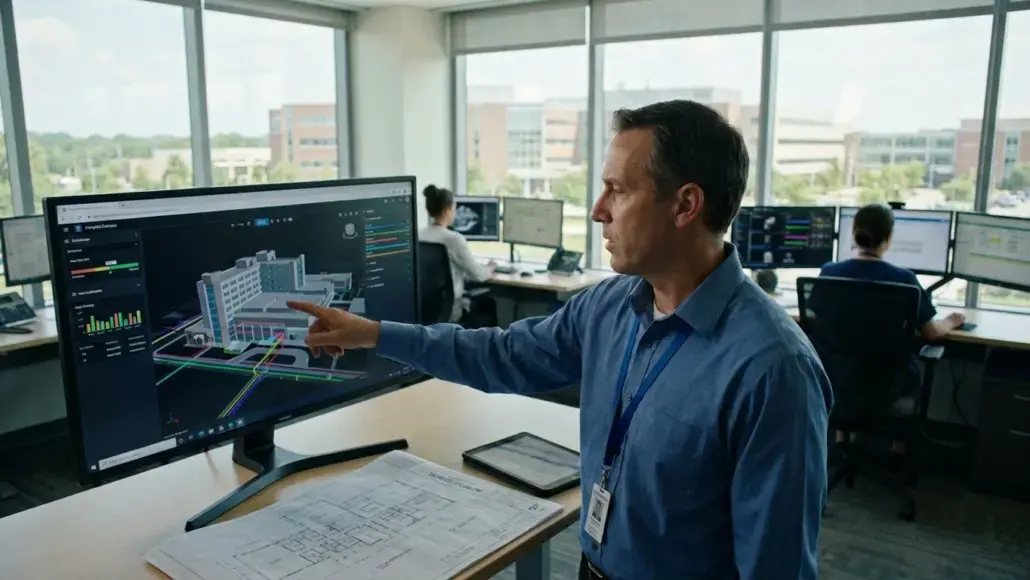

The complexity of modern hospital environments is staggering, often likened to the operational intricacy of a mid-sized airport but with the added life-and-death stakes of clinical care. Managing these facilities requires a delicate balance between patient flow, resource allocation, and mechanical maintenance. Traditionally, these elements have been managed in silos, with facilities teams, clinical staff, and administrators working from different datasets. However, the introduction of digital twins optimizing healthcare infrastructure is bridging these gaps by creating dynamic, virtual replicas of physical healthcare environments. These digital twins are not static blueprints; they are living models that integrate real-time data from IoT sensors, electronic health records, and building management systems to provide a holistic view of the hospital’s operational pulse.
By utilizing digital twins optimizing healthcare infrastructure, health systems can simulate “what-if” scenarios that were previously too risky or expensive to test in the real world. For instance, if a hospital expects a massive influx of patients due to a seasonal flu outbreak or a natural disaster, administrators can use the digital twin to model how the sudden surge will impact bed capacity, staffing levels, and even the movement of supplies through the hallways. This predictive capability allows for the development of robust contingency plans, ensuring that the physical infrastructure can withstand extreme stress without compromising patient care. This shift toward simulation-based management marks a new era for smart hospitals, where data-driven insights replace intuition in facility management.
Transforming Facility Management and Asset Utilization
The management of a healthcare facility extends far beyond the clinical rooms; it encompasses the HVAC systems, the power grid, the medical gas supply, and the fleet of mobile medical assets. Digital twins optimizing healthcare infrastructure provide a centralized platform for managing these diverse components. By mapping every piece of equipment from an MRI machine to a portable infusion pump into a digital model, facilities teams can track asset utilization in real-time. This visibility prevents the common problem of “lost” equipment, where expensive devices sit idle in closets while other departments face shortages. With a digital twin, the location and status of every asset are always known, optimizing the return on investment for medical technology.
Furthermore, digital twins optimizing healthcare infrastructure are revolutionizing the maintenance of critical systems. Instead of following a rigid calendar-based maintenance schedule, which can lead to unnecessary downtime or unexpected failures, hospitals can adopt a condition-based approach. The digital twin monitors the performance data of a system such as the vibration patterns of a backup generator and uses machine learning to predict when a component is likely to fail. This allows the maintenance team to intervene during off-peak hours, ensuring that essential services are never interrupted during high-stakes clinical procedures. This level of operational resilience is essential for maintaining the safety and comfort of both patients and staff.
Enhancing Patient Flow and Clinical Coordination
One of the most immediate benefits of digital twins optimizing healthcare infrastructure is the optimization of patient flow. A hospital is a constant stream of movement: patients being admitted, moved to imaging, taken to surgery, and eventually discharged. Any bottleneck in this process can lead to overcrowded emergency departments and delayed treatments. Digital twins allow clinical coordinators to visualize this flow in real-time, identifying the root causes of congestion. For example, the model might reveal that a delay in pharmacy processing is the primary reason why patients are not being discharged on time, which in turn prevents new admissions from moving out of the ER.
By addressing these systemic bottlenecks, digital twins optimizing healthcare infrastructure improve the overall efficiency of the care delivery process. Clinicians can receive real-time updates on bed availability and the status of diagnostic results, allowing for faster decision-making. In more advanced implementations, the digital twin can even assist in the design of new hospital wings. Before a single brick is laid, architects can run simulations to determine how the layout of a new department will impact walking distances for nurses and response times for emergency teams. This ensures that the physical space is optimized for the human experience, reducing fatigue and improving the quality of care.
The Role of Digital Healthcare Facilities in Sustainability
Sustainability is becoming a core priority for global healthcare systems, which are among the largest consumers of energy and producers of waste. Digital twins optimizing healthcare infrastructure are powerful tools for achieving “green hospital” goals. By monitoring energy consumption patterns across the entire facility, the digital twin can identify areas of waste, such as empty rooms that are being fully heated and lit. Smart building systems, integrated with the digital twin, can automatically adjust lighting and HVAC settings based on occupancy data, significantly reducing the hospital’s carbon footprint and operational costs.
In addition to energy management, digital healthcare facilities can use digital twins to optimize the lifecycle of materials and waste. By tracking the consumption of medical supplies and the generation of different types of waste, hospitals can identify opportunities for reduction and recycling. This data-driven approach to sustainability not only helps the environment but also aligns with the growing regulatory pressure on the healthcare sector to report on its environmental impact. Digital twins provide the data transparency needed to meet these requirements, positioning the hospital as a leader in socially responsible care delivery.
Scaling Digital Twins Across Healthcare Systems
While the concept of a digital twin is highly sophisticated, the technology is becoming increasingly accessible to healthcare systems of all sizes. The initial step usually involves the creation of a 3D model of the facility, which is then layered with data from existing systems. As more sensors are added and more data sources are integrated, the twin becomes more accurate and more useful. The key to success lies in the interoperability of data. For digital twins optimizing healthcare infrastructure to be effective, they must be able to communicate with the wide variety of proprietary systems found in a hospital environment. This is where the move toward open data standards and cloud-based platforms is playing a critical role.
Moreover, the impact of digital twins extends beyond the walls of a single hospital. On a regional or national level, digital twins can be used to model entire healthcare systems. This allows health authorities to understand how changes in one facility will impact others in the network. For instance, if a specialized trauma center is temporarily closed for renovation, the digital twin can predict how the surrounding hospitals will be affected by the diverted patient volume. This high-level coordination is essential for maintaining the stability of the healthcare infrastructure during times of crisis and for planning the long-term growth of the medical system.
Conclusion: A Resilient Future for Healthcare Infrastructure
The integration of digital twins optimizing healthcare infrastructure represents one of the most significant advancements in hospital management in the 21st century. By providing a virtual laboratory for testing and optimization, these models are allowing healthcare leaders to build more efficient, resilient, and sustainable environments. They are the foundation of the “smart hospital,” where the physical and digital worlds are in constant communication to ensure the best possible outcomes for patients and the most effective working conditions for staff.
As we continue to navigate the challenges of modern healthcare from aging populations to global pandemics the need for agile and data-driven infrastructure has never been greater. Digital twins provide the clarity needed to make complex decisions with confidence. They turn the “hidden” operations of a hospital into a transparent and manageable system, ensuring that every square foot of the facility is working toward the ultimate goal: the health and well-being of the community. In the years to come, digital twins optimizing healthcare infrastructure will become as essential to the operation of a hospital as the medical equipment itself, marking the final transition from traditional facility management to the era of the intelligent healthcare ecosystem.