








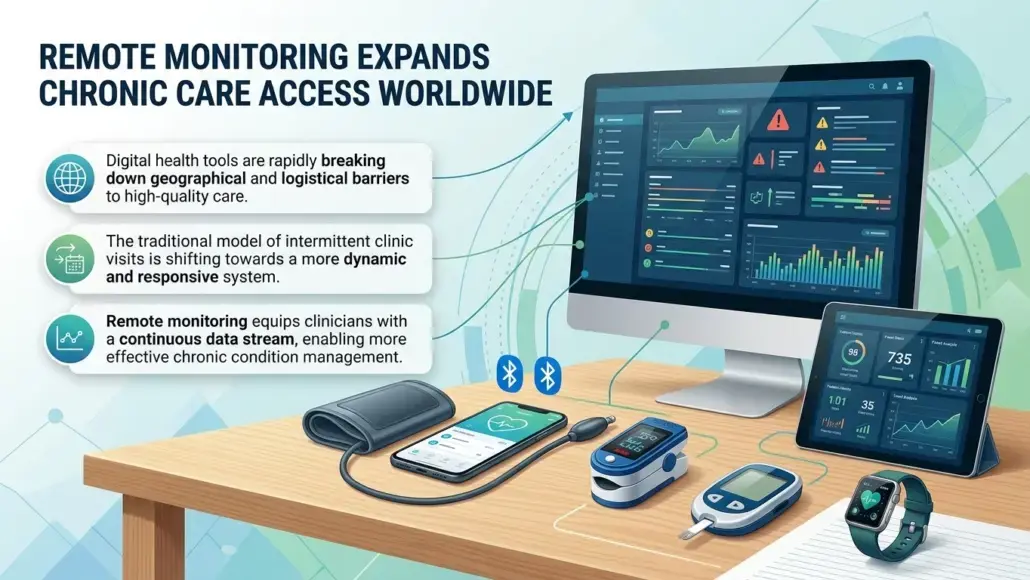

The geographical and logistical barriers that have historically limited access to high quality medical supervision are being dismantled by the rapid proliferation of digital health tools. For millions of individuals living with persistent conditions, the traditional model of intermittent clinical visits is being replaced by a more dynamic and responsive system of care. This evolution is driven by the fact that remote monitoring expands chronic care by providing clinicians with a continuous stream of physiological data from the patient’s home environment. This shift from reactive to proactive management is a fundamental requirement for addressing the growing global burden of non-communicable diseases.
Remote patient monitoring involves the use of sensors and connected devices to track vital signs such as blood pressure, glucose levels, and heart rate. This data is transmitted securely to healthcare providers, who can then use it to adjust treatment plans in real-time. This capability is particularly important for patients living in rural or underserved areas, where the nearest specialist may be far away. By bringing the expertise of the clinic into the home, remote monitoring expands chronic care for populations that have traditionally faced significant disparities in health access and outcomes.
Integration of Virtual Care and Digital Health
The integration of virtual care into the broader healthcare technology ecosystem allows for a more seamless coordination of services. Telehealth consultations can be scheduled based on the data received from monitoring devices, ensuring that clinical interventions are both timely and necessary. This targeted approach to patient management reduces the strain on physical clinics and emergency departments, allowing resources to be focused on the patients who need them most. The synergy between virtual care and patient monitoring is a cornerstone of the modern effort to create a more efficient and equitable health system.
Digital health platforms are also empowering patients to take a more active role in their own health management. When patients can see their own data and understand how their lifestyle choices affect their physiological markers, they are more likely to adhere to their treatment plans. This increased engagement is a critical factor in the long term success of chronic care programs. The evidence suggests that remote monitoring expands chronic care not only by providing data to clinicians but also by fostering a sense of agency and responsibility among patients.
Early Intervention and Economic Efficiency
For healthcare providers, the primary benefit of these systems is the ability to identify potential complications before they escalate into acute crises. Analytical software can scan incoming data for anomalies, alerting clinicians to changes that may require immediate attention. This early warning system allows for interventions that can prevent hospitalizations and improve the overall quality of life for the patient. In this way, remote monitoring expands chronic care by creating a safety net that protects patients around the clock, regardless of their physical proximity to a medical facility.
The financial case for connected healthcare is becoming increasingly clear. By reducing the frequency of hospital admissions and shortening the length of stay when admission is necessary, remote monitoring can lead to significant cost savings for both payors and providers. Additionally, the ability to manage a larger number of patients with the same clinical staff increases the operational efficiency of the health system. As reimbursement models move toward value-based care, the role of digital health in driving better outcomes at a lower cost will continue to grow in importance.
Technological Innovation and Wearable Design
Medtech innovation is focusing on making monitoring devices more user-friendly and less intrusive. Wearable sensors that are integrated into clothing or worn as subtle patches are replacing the bulky equipment of the past. These advancements make it easier for patients to comply with monitoring protocols over long periods. As the technology becomes more discreet, the barrier to adoption for patients of all ages is reduced, further supporting the reach of chronic care programs. The focus is on creating a healthcare technology environment that fits into the patient’s life.
The security of patient data is a top priority for any organization implementing remote monitoring solutions. Robust encryption and secure data storage are essential for maintaining patient trust and complying with regulatory requirements. As the volume of data generated by connected devices increases, the industry must invest in the infrastructure necessary to handle this information safely and efficiently. Cybersecurity is a fundamental component of patient safety in the digital age.
Global Equity and Workforce Evolution
The role of artificial intelligence in analyzing the vast amounts of data generated by remote patient monitoring cannot be overstated. AI algorithms can identify subtle trends and correlations that may be missed by human observers, providing deeper insights into the patient’s condition. These insights can be used to personalize treatment plans and predict future health events with increasing accuracy. The combination of human clinical expertise and machine intelligence is a powerful tool for improving the management of chronic conditions.
Global health organizations are recognizing the potential of these technologies to address health inequities on a massive scale. regions where the shortage of healthcare professionals is most acute, remote monitoring can provide a vital link to specialized care. By utilizing the existing mobile phone infrastructure, digital health programs can reach millions of people who have never had access to regular medical supervision. This global perspective is essential for understanding the full impact of how remote monitoring expands chronic care.
In conclusion, the transition toward a more connected and data-driven approach to health management is a defining feature of the 21st century. By breaking down the barriers of time and distance, remote monitoring is creating a more responsive and patient-centered health system. It is clear that remote monitoring expands chronic care by providing the continuous oversight and timely intervention that are necessary for long term health and well-being.