












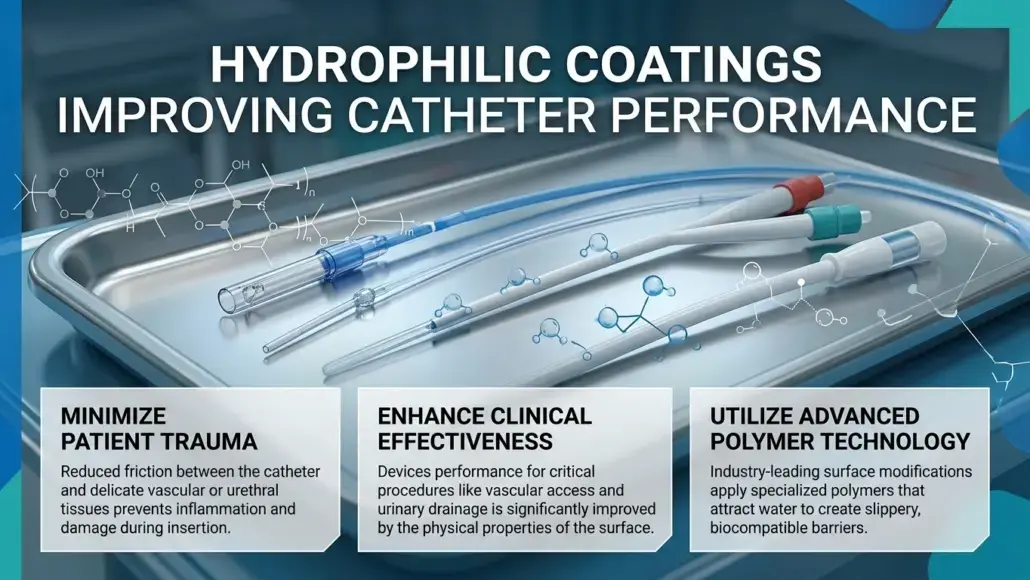
The clinical effectiveness of vascular access and urinary drainage depends significantly on the physical properties of the device surface. When a catheter is inserted into the body, the friction between the device and the delicate tissues of the vessel or the urethra can lead to trauma, inflammation, and discomfort. To mitigate these risks, the medical device industry has developed a variety of surface modification techniques, with a particular focus on the use of advanced polymers that attract water. The introduction of hydrophilic coatings is a key factor in improving catheter performance, providing a lubricious surface that reduces tissue damage and enhances patient comfort during both short-term and long-term medical procedures.
Surface modification is a critical aspect of modern medical device engineering, as it allows for the optimization of the device’s interaction with the biological environment without changing its structural properties. When hydrophilic coatings are applied to a catheter, they form a thin, water-saturated layer that mimics the natural environment of the body. This layer provides an exceptionally low coefficient of friction, allowing the device to glide smoothly through the anatomy with minimal resistance. This move toward a more biological and gentle approach to device design is a hallmark of the modern healthcare sector, where the focus is on achieving the best possible clinical outcomes with the least amount of patient distress.
Friction Reduction and Patient Comfort Standards
The primary benefit of utilizing lubricious coatings is the significant reduction in the mechanical stress placed on the patient’s tissues during insertion and withdrawal. In vascular access, a low-friction surface reduces the risk of vessel spasm and thrombosis, which are major complications that can lead to device failure and additional surgical interventions. For the patient, this means a more comfortable experience and a faster recovery. Hydrophilic coatings allow for a more precise and controlled placement of the device, which is essential for successful outcomes in complex interventional procedures. The focus remains on improving the overall quality of care and for reducing the burden on the patient.
Furthermore, the use of these coatings is essential for the long-term management of patients who require indwelling catheters. Traditional uncoated devices can become stuck to the surrounding tissue, causing significant pain and trauma when they are removed. The presence of a stable and lubricous layer ensures that the device remains mobile and easy to handle throughout its useful life. The move toward a more patient-centered and comfortable approach to chronic care is a defining characteristic of the modern healthcare industry, and the role of hydrophilic coatings in supporting this transition is indisputable. The focus remains on achieving the best possible balance between functional performance and patient well-being.
Infection Control and Surface Modification Innovation
The surface of a medical device is a common site for the colonization of bacteria and the formation of biofilms, which are the primary causes of healthcare-associated infections. Hydrophilic coatings can be engineered to incorporate antimicrobial agents or to possess specific chemical properties that discourage bacterial attachment. By creating a surface that is both lubricious and hostile to pathogens, manufacturers can significantly reduce the risk of infection for the patient. This integration of protective features directly into the device surface is a significant technical achievement that enhances the safety profile of the catheter.
Furthermore, the high water content of the coating helps to prevent the buildup of proteins and other biological materials that can lead to clogging and device failure. This is particularly important for urinary catheters, where encrustation is a major problem that requires frequent and often painful replacements. The move toward a more resilient and long-lasting approach to device design is a defining characteristic of the modern healthcare sector, and the role of hydrophilic coatings in supporting this transition is essential. The focus remains on creating a robust and dependable medical device that can be used with confidence in every clinical setting.
Regulatory Compliance and Quality Assurance in Coating Technology
The transition toward a more advanced approach to surface modification requires a rigorous adherence to international standards for safety and performance. Regulatory compliance is a fundamental requirement for both manufacturers and healthcare providers, as the integrity of the coating depends on the consistency of the application process. Manufacturers must provide extensive data to demonstrate that their Hydrophilic Coatings are stable, non-toxic, and that they do not shed particles into the patient’s bloodstream. This involves a comprehensive program of quality control, including the verification of the raw materials and the final inspection of every coated device.
Furthermore, the durability of the coating is a critical factor in its success. The lubricous layer must remain intact throughout the entire procedure and for the duration of the device’s use. Manufacturers utilize advanced bonding techniques, such as UV curing or chemical cross-linking, to ensure that the coating is permanently attached to the catheter substrate. The move toward a more integrated and professionalized manufacturing environment is a defining characteristic of the modern healthcare industry, and the role of high-quality surface modification in supporting this transition is essential. The focus remains on creating a reliable and effective medical device that can meet the most demanding clinical requirements.
Future Horizons in Medical Coating Innovation
The continued evolution of the medical device market will likely lead to an even greater emphasis on the use of active and responsive coatings. We are seeing the development of surfaces that can release medications, such as analgesics or anticoagulants, directly to the site of treatment. The role of hydrophilic coatings in supporting this evolution is essential, as they provide the platform for these sophisticated and functional designs. This move toward more therapeutic and integrated devices represents the next frontier in vascular and urological health.
In the coming years, the integration of sensing technology into the device surface will allow for the real-time monitoring of the local environment. A catheter could be equipped with sensors that detect signs of infection or changes in physiological parameters, providing an early warning to the healthcare team. The ability to manage complex medical cases with the same speed and precision as a simple diagnostic test is a major goal for both researchers and healthcare providers. The ongoing commitment to technical innovation and patient-centered care is what will define the leaders of the industry in the decades to come.
The transition toward a more connected and data-driven approach to medical device design is a defining characteristic of the modern healthcare industry. By prioritizing the use of hydrophilic coatings, healthcare providers can achieve levels of safety and patient comfort that were once considered unattainable. The benefits of this approach extend beyond the clinic, contributing to a more effective and sustainable health system that is better equipped to handle the challenges of a global population. The commitment to technical excellence and patient-centered care is what will define the success of these programs in the decades to come.
As the industry moves forward, the focus will remain on the refinement of coating properties and the continued improvement of clinical outcomes. The ability to handle the increasing complexity of new device designs and surface modifications will remain a key challenge for engineers and clinicians alike. The ongoing evolution of Hydrophilic coatings is a testament to the power of technical innovation in the service of human health, ensuring that the next generation of medical devices is both safe and comfortable for every patient who needs them.