













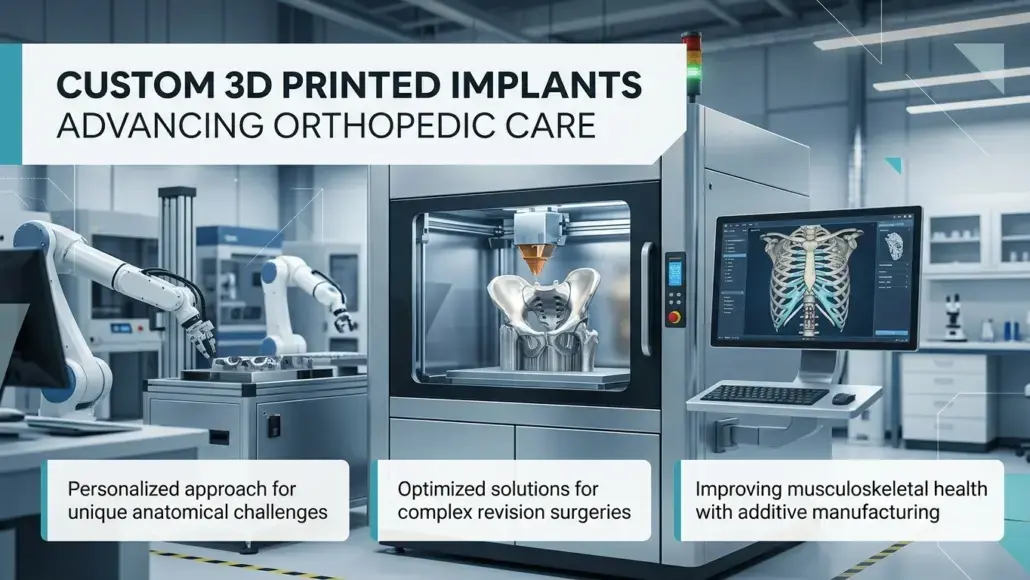
The structural complexity of the human skeleton means that a standard, “off-the-shelf” implant is not always the optimal solution for every patient. For individuals with unique anatomical challenges or those undergoing complex revision surgeries, the need for a more personalized approach is paramount. The emergence of medical additive manufacturing is fundamentally changing the field of musculoskeletal health, and it is becoming clear that custom 3D printed implants are a key factor in improving orthopedic care. By allowing for the creation of devices that are perfectly matched to the patient’s specific anatomy, this technology enhances surgical precision and improves the long-term success rates of even the most difficult procedures.
Personalized medicine is no longer a theoretical concept but a practical reality in the modern operating room. The transition from mass-produced implants toward tailored solutions is driven by the integration of advanced imaging and digital design tools. When custom 3D printed implants are utilized, the surgeon can work with a device that reflects the exact geometry of the patient’s bone, providing a superior fit and a more stable fixation. This move toward a more individual and data-driven approach to surgery is a hallmark of the modern healthcare sector, where the focus is on achieving the best possible functional outcomes for the patient.
Anatomical Models and Surgical Precision Standards
The primary benefit of utilizing additive manufacturing in orthopedics is the significant improvement in the planning and the execution of the surgery. By creating high-fidelity anatomical models from the patient’s CT or MRI data, surgeons can visualize the specific challenges of the case before they enter the operating room. These models serve as a vital tool for pre-operative planning, allowing for the rehearsal of the procedure and the selection of the optimal surgical approach. When custom 3D printed implants are used in conjunction with these models, the degree of surgical precision is significantly enhanced, leading to shorter operative times and reduced blood loss.
Furthermore, the use of patient-specific instrumentation, such as 3D-printed cutting guides, ensures that the implant is positioned with extreme accuracy. This reduces the risk of malalignment, which is a primary cause of post-operative pain and premature implant failure. The move toward a more precise and standardized approach to surgery is a defining characteristic of the modern healthcare industry, and the role of custom 3D printed implants in supporting this transition is indisputable. The focus remains on achieving the best possible alignment and for restoring the patient’s natural joint function.
Implant Design and Tissue Integration Innovation
The flexibility of additive manufacturing allows for the creation of implant designs that were previously impossible to produce using traditional methods. Custom 3D printed implants can feature complex internal lattice structures that mimic the porous nature of human bone. These “trabecular” surfaces encourage the growth of living bone into the implant, providing a more biological and durable fixation. This integration of the device with the host tissue is essential for the long-term stability of the implant, particularly in younger or more active patients who place greater demands on their joint replacements.
Furthermore, the ability to vary the density and the stiffness of the material across the implant allows for a more natural load distribution. This reduces the risk of “stress shielding,” a phenomenon where the bone around an implant becomes weaker because the device is too stiff and takes on all the load. By creating custom 3D printed implants that behave more like natural bone, manufacturers can improve the long-term health of the surrounding tissue and reduce the likelihood of complications. The move toward a more biological and mechanical harmony is a hallmark of the modern approach to implant engineering.
Regulatory Compliance and Quality Assurance in Additive Manufacturing
The transition toward a more personalized approach to implant manufacturing requires a rigorous adherence to international standards for safety and performance. Regulatory compliance is a fundamental requirement for both manufacturers and surgeons, as the integrity of the custom device depends on the consistency of the digital and physical processes. Manufacturers must provide extensive data to demonstrate that their 3D-printing processes are validated and that the final products meet the required specifications for strength and biocompatibility. This involves a comprehensive program of quality control, including the verification of the raw materials and the final inspection of every custom part.
Furthermore, the handling of patient data is a critical factor in the success of any custom implant program. Hospitals and manufacturers must ensure that the digital workflow—from the initial scan to the final design—is secure and that the patient’s privacy is protected at every stage. The move toward a more integrated and digitalized manufacturing environment is a defining characteristic of the modern healthcare industry, and the role of secure data management in supporting this transition is essential. The focus remains on creating a robust and dependable system that can be used with confidence in every surgical setting.
Future Horizons in Orthopedic Innovation
The continued evolution of the additive manufacturing market will likely lead to an even greater emphasis on the use of advanced materials, such as bio-absorbable polymers and metal-ceramic composites. We are seeing the development of implants that can deliver medications or growth factors directly to the surgical site, further enhancing the healing process. The role of custom 3D printed implants in supporting this evolution is essential, as they provide the platform for these sophisticated and functional designs. This move toward more active and responsive implants represents the next frontier in musculoskeletal health.
In the coming years, the integration of artificial intelligence into the design process will further enhance the speed and the accuracy of the custom workflow. AI algorithms can analyze the patient’s anatomical data and suggest the optimal implant design and surgical plan, reducing the time required for manual design. This would provide a more efficient and scalable solution for personalized orthopedic care, making custom implants available to a larger number of patients. The ability to manage complex surgical cases with the same speed and precision as a standard procedure is a major goal for both researchers and healthcare providers. The ongoing commitment to technical innovation and patient-centered care is what will define the leaders of the industry in the decades to come.
The transition toward a more personalized and data-driven approach to orthopedic care is a defining characteristic of the modern healthcare industry. By prioritizing the use of custom 3D printed implants, healthcare providers can achieve levels of precision and functional recovery that were once considered unattainable. The benefits of this approach extend beyond the operating room, contributing to a more effective and sustainable health system that is better equipped to handle the challenges of an aging population. The commitment to technical excellence and personalized medicine is what will define the success of these programs in the decades to come.
As the industry moves forward, the focus will remain on the refinement of manufacturing properties and the continued improvement of surgical outcomes. The ability to handle the increasing complexity of new implant designs and digital workflows will remain a key challenge for engineers and clinicians alike. The ongoing evolution of custom 3D printed implants is a testament to the power of technical innovation in the service of human health, ensuring that the next generation of orthopedic care is both precise and accessible to every patient who needs it.