















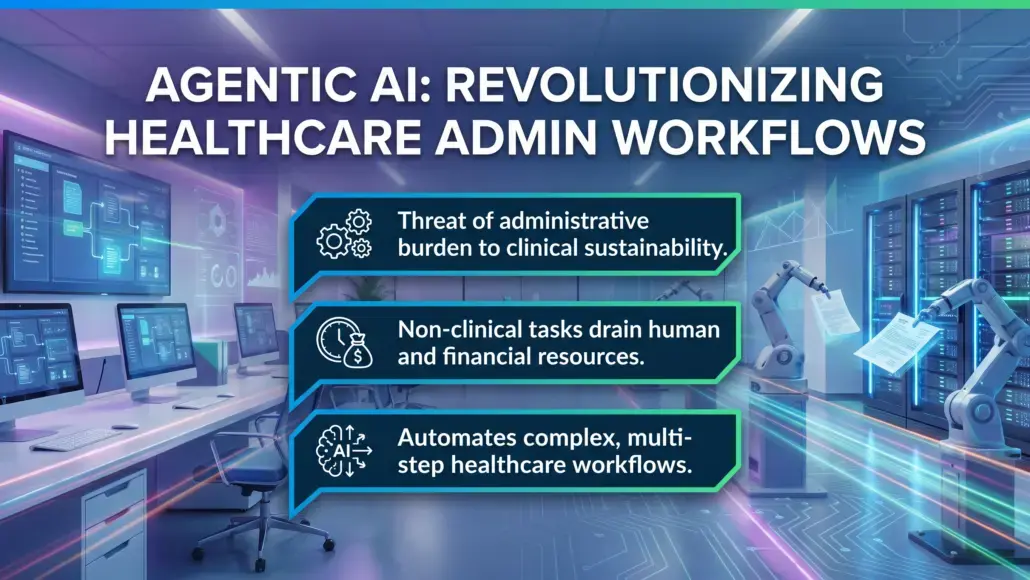

The administrative burden in modern healthcare has reached a level that threatens the sustainability of clinical operations. From complex scheduling and insurance verification to the intricate requirements of regulatory reporting, the sheer volume of non clinical tasks consumes a disproportionate amount of human and financial resources. The introduction of agentic ai automating multi-step healthcare administrative workflows provides a sophisticated solution to these challenges by moving beyond simple, rule based automation. Unlike traditional bots that require manual intervention at every decision point, autonomous agents can perceive their environment, reason through complex scenarios, and take independent actions to achieve specific operational goals. This capability allows for the orchestration of entire processes without the need for constant human oversight, freeing administrative staff to focus on higher value tasks that require human empathy and judgment.
The power of these agents lies in their ability to interact with multiple software systems simultaneously, acting as a digital glue that binds disparate platforms together. In a typical hospital environment, data is often trapped in legacy systems that do not communicate effectively. Autonomous agents can bridge these gaps by extracting information from one system, verifying it against another, and then updating a third, all while adhering to strict compliance and security protocols. This level of integration is essential for creating a cohesive administrative environment where information flows freely and accurately. By automating these repetitive and error prone tasks, healthcare organizations can significantly reduce operational costs and improve the overall speed of service delivery, which ultimately leads to a better experience for both patients and providers.
In addition, the deployment of agentic ai automating multi-step healthcare administrative workflows enables a more proactive approach to organizational management. These systems can monitor administrative data in real time, identifying potential bottlenecks or inefficiencies before they become major problems. For example, an agent could analyze patterns in patient no shows and automatically initiate a series of actions to fill the open slots, such as contacting waitlisted patients or adjusting staff schedules. This ability to anticipate and respond to changing conditions is a fundamental characteristic of agentic intelligence, distinguishing it from the reactive nature of traditional automation. As these systems continue to evolve, they will play an increasingly central role in the strategic planning and execution of healthcare operations, driving continuous improvement across the entire organization.
Streamlining Revenue Cycle Management and Prior Authorizations
Revenue cycle management remains one of the most complex and contentious areas of healthcare administration, characterized by long delays, frequent errors, and high levels of friction between providers and payers. The manual process of verifying insurance coverage, submitting claims, and managing denials is incredibly time consuming and costly. The application of agentic ai automating multi-step healthcare administrative workflows in this area offers the potential to dramatically simplify these processes. Autonomous agents can be trained to handle the entire lifecycle of a claim, from the initial encounter to the final payment. They can automatically gather the necessary clinical documentation, verify that it meets the specific requirements of each payer, and submit the claim through the appropriate channels.
Prior authorization is another area where agentic AI can have a profound impact. This process, which requires providers to obtain approval from insurers before performing certain procedures or prescribing specific medications, is a major source of clinician burnout and patient frustration. Autonomous agents can streamline this workflow by automatically identifying which services require authorization and then pulling the relevant clinical data from the electronic health record. The agent can then submit the request and monitor its status, automatically responding to requests for additional information or initiating an appeal if a request is denied. This reduces the time to treatment for patients and alleviates a significant administrative burden for clinical teams, allowing them to focus more on patient care and less on paperwork.
Beyond individual claims, these agents can provide high level insights into the health of the revenue cycle. They can identify trends in denials, pinpointing specific codes or payers that are causing problems. This allows organizations to take corrective action, such as providing additional training to coding staff or renegotiating contracts with payers. The transparency and accuracy provided by autonomous agents are essential for maintaining a healthy bottom line in an increasingly competitive and cost conscious industry. By reducing the number of rejected claims and accelerating the payment cycle, healthcare providers can ensure they have the financial resources necessary to invest in new technologies and improve patient care.
Coordinating Complex Patient Transitions and Discharge Planning
The transition of a patient from the hospital to their home or a post acute care facility is a critical moment that requires careful coordination between multiple teams. Ineffective discharge planning can lead to medication errors, missed follow up appointments, and high rates of readmission, all of which are costly and detrimental to patient health. The use of agentic ai automating multi-step healthcare administrative workflows can greatly improve the coordination of these transitions. Autonomous agents can monitor a patient’s clinical status in real time, automatically identifying when they are ready for discharge and then initiating the necessary administrative tasks. This includes scheduling follow up appointments, arranging for home health services, and ensuring that all necessary medical equipment is delivered to the patient’s home.
These agents can also facilitate communication between the hospital and the patient’s primary care physician, ensuring that everyone involved in the patient’s care has access to the same information. By automatically generating and sending discharge summaries, the agent ensures that the transition of care is smooth and that there are no gaps in the patient’s treatment plan. Additionally, agents can be used to follow up with patients after they leave the hospital, checking on their progress and identifying any potential issues before they require a return visit. This proactive monitoring is essential for reducing readmission rates and improving long term patient outcomes, which is a key goal of value based care models.
The ability to manage complex logistics is another strength of agentic AI in the context of patient transitions. Coordinating transportation, verifying insurance coverage for post acute care, and managing the delivery of prescriptions require a high degree of organization and attention to detail. Autonomous agents can handle these tasks with a level of precision and speed that is difficult for human staff to match. By automating the logistical aspects of discharge planning, healthcare organizations can ensure that patients move through the system efficiently, freeing up hospital beds for those who need them most. This optimization of patient flow is critical for maintaining the operational efficiency of the entire healthcare system.
Enhancing Supply Chain Resilience through Predictive Procurement
The healthcare supply chain is a complex and often fragile network that is essential for the delivery of high quality care. Shortages of critical supplies, from personal protective equipment to essential medications, can have devastating consequences for patient safety and clinical operations. The deployment of agentic ai automating multi-step healthcare administrative workflows provides a way to build more resilient and responsive supply chains. Autonomous agents can monitor inventory levels in real time across multiple locations, automatically placing orders when supplies fall below a certain threshold. They can also analyze external data sources, such as news reports and market trends, to identify potential disruptions and take preemptive action to secure necessary supplies.
Predictive procurement is a key capability of these agents, allowing organizations to move away from reactive purchasing to a more strategic approach. By analyzing historical usage patterns and predicting future demand, agents can optimize inventory levels, reducing the costs associated with overstocking while ensuring that critical items are always available. This is particularly important for high value items, such as surgical implants and specialized pharmaceuticals, where carrying costs are significant. The agent can also evaluate the performance of different suppliers, identifying those that are most reliable and cost effective. This data driven approach to supplier management is essential for building a more stable and efficient supply chain.
Additionally, autonomous agents can streamline the entire procurement process, from requisition to payment. They can automatically verify invoices against purchase orders and clinical documentation, reducing the risk of errors and fraud. This level of automation not only saves time and money but also provides a clear audit trail that is essential for regulatory compliance. By integrating the supply chain with other administrative and clinical workflows, healthcare organizations can achieve a level of visibility and control that was previously impossible. This integrated approach is the key to creating a truly resilient healthcare system that can withstand the challenges of the future.
Evaluating the Long Term Impact on Healthcare Staffing Models
The widespread adoption of autonomous agents will inevitably lead to significant changes in the healthcare workforce. As agentic ai automating multi-step healthcare administrative workflows becomes more common, many of the traditional roles in healthcare administration will be transformed or even replaced. However, this shift should not be seen as a threat to human workers but as an opportunity to elevate their roles. By automating the most repetitive and mundane tasks, agents allow human staff to focus on more complex and rewarding work that requires emotional intelligence, critical thinking, and ethical judgment. This can lead to higher levels of job satisfaction and a reduction in the burnout that is currently plagueing the industry.
To successfully manage this transition, healthcare organizations must invest in reskilling and upskilling their workforce. Employees will need to learn how to work alongside autonomous agents, understanding their capabilities and limitations. They will also need to develop new skills in areas such as data analysis, AI governance, and system orchestration. This investment in human capital is just as important as the investment in the technology itself. By creating a culture of continuous learning and adaptation, organizations can ensure that their staff is prepared for the challenges and opportunities of the digital age. The goal is to create a collaborative environment where humans and machines work together to achieve the best possible outcomes for patients.
Ultimately, the impact of agentic AI on healthcare staffing will be defined by how the technology is deployed and managed. If organizations focus solely on cost reduction, they may miss out on the broader benefits of the technology, such as improved patient care and increased operational resilience. However, if they take a more holistic approach, they can use autonomous agents to create a more efficient, effective, and humane healthcare system. This involves not only implementing the technology but also rethinking the entire way that healthcare is organized and delivered. By embracing the potential of agentic intelligence, the healthcare industry can build a future where every patient receives the high quality care they deserve, supported by a workforce that is empowered and engaged. The journey toward this future is already underway, and the choices made today will shape the industry for years to come.