









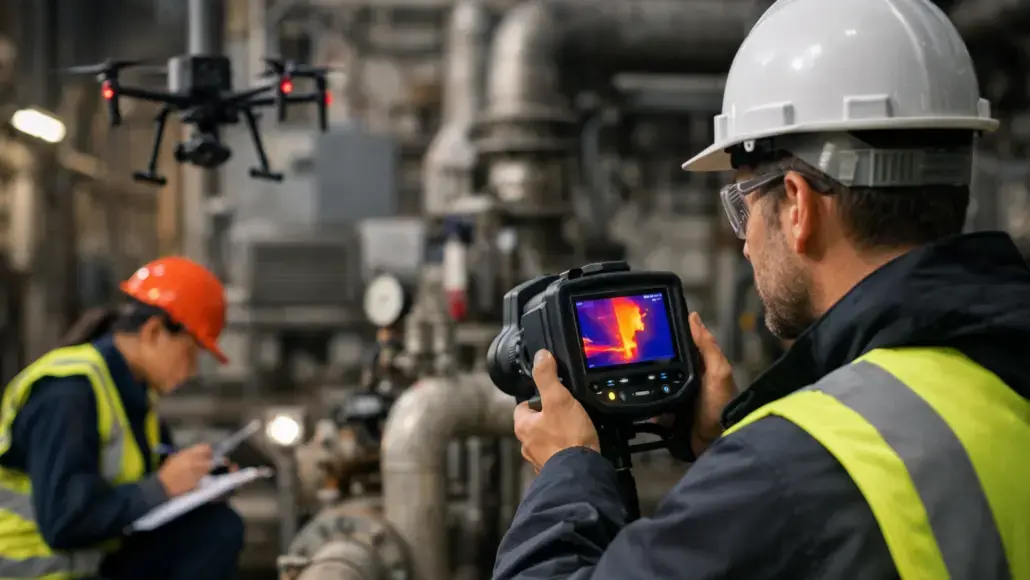

Healthcare facilities need to be safe, clean and in full operation on a day-to-day basis. Periodic inspections provide an early warning to report issues which may impact patients, staff and services. Advanced imaging now provides a more detailed and comprehensive means for inspectors to identify problems and issues that may be impossible to see in a visual inspection. In addition to its benefits for inspectors, there are also several practical benefits of using advanced imaging with the accepted methods of inspection. These include the following:
1. See Problems beyond the Surface
Traditional inspections are largely visual inspections. But all the above unfelt heat, moisture, electrical issues and equipment issues can arise without any warning indication. With thermal imaging cameras, for instance, temperature differentials can be measured on surfaces.
An official can use thermal imaging to inspect electrical panels, medical machinery, ventilation systems, and more. You should look for unusual heat patterns because the connections are either overloaded or due to poor electrical contact or equipment operating outside of normal conditions. These findings do not necessarily confirm that these are the cause of the fault, but do indicate to an inspector where further investigation is required.
There is also an improvement in the inspection of building structures by using advanced imaging. Use of infrared cameras may aid in locating temperature anomalies indicative of leaks, insufficient insulation or water. Early diagnosis can assist facility managers to schedule additional testing before a minor building issue evolves into a larger one requiring more comprehensive solutions.
2. Support Safer Healthcare Environments
Many systems are required to function reliably in healthcare buildings. Imaging can be used to assist inspectors to monitor equipment without having to interrupt normal operations. It may be helpful when inspecting parts that are hot when operating normally.
Imaging can be used to help with preventive maintenance programmes too. Images can be taken at routine inspections and a comparison made with historical results. When over time changes occur, it may be possible to find early indications of a problem to be addressed before it fails equipment or otherwise disrupts services.
3. Improve Inspection Decisions
The use of an advanced thermal imaging camera NZ is best integrated into a broader inspection program. For instance, a thermal image might reveal an unusual temperature pattern. However, it would be up to a qualified professional to decide what the pattern indicates. Inspectors might have to take images, equipment specifications and other testing methods into account, even though physical checks are done.
This way, the likelihood of missing issues is minimised, and assumptions are avoided. It also gets into the level of detail for the condition of a facility. Imaging can be valuable if used properly and as an aid to the professional inspection, rather than a substitute.
In today’s world, advanced imaging is providing a new way of thinking about building and equipment inspections in healthcare facilities. It assists interviewers in seeing trends that would otherwise not be apparent when conducting routine visual inspections and offers a good log of what they have reviewed. Combining imaging with professional assessment and maintenance will work in conjunction to make informed decisions on behalf of healthcare organisations and provide subsequent support for safer and more reliable facilities.