













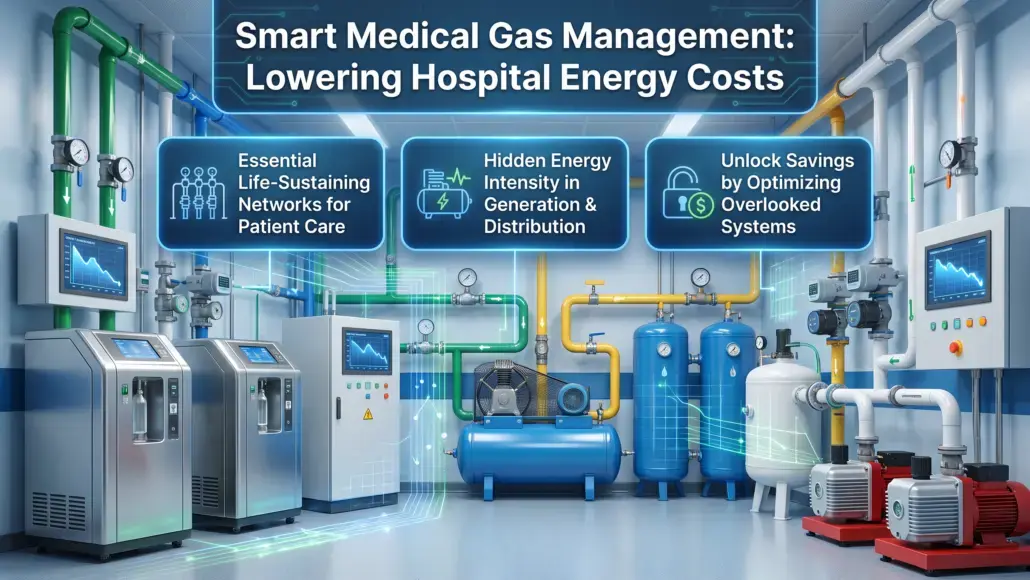
Modern healthcare facilities rely heavily on a complex array of life-sustaining gases, ranging from medical grade oxygen to high pressure compressed air and surgical vacuum systems. These networks are the silent workhorses of the clinical environment, supporting everything from routine patient care to complex surgical procedures. However, the energy intensity required to generate, compress, and distribute these gases is often overlooked in traditional facility management strategies. As hospitals strive for greater operational efficiency and environmental sustainability, medical gas system optimization has become a critical focus area. By examining the entire lifecycle of gas production and delivery, facility managers can identify significant opportunities to reduce electrical consumption while maintaining the highest standards of patient safety and clinical reliability. This process involves a detailed analysis of source equipment, distribution piping, and end user interfaces to ensure that every kilowatt of energy is used effectively.
The financial and environmental benefits of optimizing these systems are substantial. Medical air compressors and vacuum pumps are among the largest electrical loads in a hospital’s mechanical plant, often running continuously to meet fluctuating clinical demands. When these systems are poorly maintained or incorrectly configured, they operate at a fraction of their potential efficiency, leading to inflated utility bills and increased carbon emissions. A comprehensive approach to medical gas system optimization addresses these inefficiencies through a combination of hardware upgrades, software integration, and improved maintenance protocols. This strategy not only lowers costs but also enhances the resilience of the hospital’s infrastructure, ensuring that critical gases are always available when needed most. By treating medical gas as a valuable utility rather than a simple commodity, healthcare leaders can drive meaningful improvements in facility performance.
Analyzing Leak Detection Protocols in Medical Gas Networks
One of the most insidious sources of energy waste in healthcare facilities is the presence of leaks within the medical gas distribution network. Because gases like oxygen and medical air are invisible and often odorless, small leaks can persist for years without being noticed by clinical or maintenance staff. These leaks force the source equipment to work harder to maintain system pressure, leading to excessive energy consumption and premature wear on compressors and pumps. A comprehensive program of medical gas system optimization prioritizes the implementation of advanced leak detection protocols. This involves the use of ultrasonic acoustic sensors and digital flow meters that can pinpoint the location of even the smallest breaches in the piping system. By identifying and repairing these leaks, hospitals can immediately reduce the load on their mechanical plant, resulting in direct and measurable energy savings.
Regular auditing of the distribution network is essential for maintaining these gains over the long term. This process includes inspecting joint connections, valve boxes, and patient outlets, which are common failure points in older systems. The transition from reactive to proactive maintenance is a hallmark of an optimized facility. Instead of waiting for a significant pressure drop or a mechanical failure, maintenance teams use data from the building management system to monitor flow rates and pressure stability in real time. Any deviations from the expected baseline are flagged for investigation, allowing for repairs to be made before they impact clinical operations or energy efficiency. This disciplined approach to network integrity ensures that the medical gas system optimization efforts remain effective, providing a reliable foundation for patient care while minimizing the facility’s environmental impact.
Operational Efficiency of Source Equipment and Plant Rooms
The heart of the medical gas network lies in the central plant room, where compressors, vacuum pumps, and manifold systems generate the necessary pressures for distribution. In many older hospitals, this equipment is oversized or utilizes outdated technology that lacks the ability to modulate output based on actual demand. Medical gas system optimization frequently involves the modernization of this source equipment. The installation of variable speed drives (VSDs) on compressors and vacuum pumps allows the motors to adjust their speed to match the real-time requirements of the hospital. This prevents the energy-intensive practice of running equipment at full capacity only to blow off excess pressure. By aligning production with consumption, hospitals can achieve significant reductions in their electrical base load.
Beyond speed control, the selection of the equipment itself plays a vital role in overall efficiency. Modern oil-free compressors and high-efficiency claw vacuum pumps are designed to provide maximum output with minimum energy input. These technologies also reduce the maintenance burden, as they have fewer moving parts and require less frequent lubrication and filter changes. The integration of advanced sequencing controllers further enhances the efficiency of the central plant. These controllers manage multiple units, ensuring that only the most efficient combination of machines is running at any given time. They also rotate the lead machine to ensure even wear across the fleet, extending the overall lifespan of the hospital’s capital assets. This holistic view of plant operation is central to successful medical gas system optimization, transforming a traditional mechanical space into a high-performance utility hub.
Secondary Distribution Systems and Pressure Regulation Strategies
The way gases are moved from the central plant to the patient bedside is another area where efficiency can be improved. Traditional distribution systems often rely on a single, high-pressure loop that requires significant energy to maintain. However, medical gas system optimization encourages the use of localized pressure regulation and zone-based distribution. By maintaining higher pressures only where they are strictly necessary, such as in operating theaters for surgical tools, and using lower pressures for general patient rooms, the overall energy demand on the compressors can be reduced. This tiered approach to pressure management requires a sophisticated network of regulators and sensors but offers a more nuanced and efficient way to handle gas delivery across a large and diverse campus.
Additionally, the design of the piping itself can impact energy performance. Undersized pipes create friction and pressure drops, forcing the central plant to work harder to overcome these losses. During facility renovations or new construction, engineers can optimize pipe diameters to minimize these resistive forces. The use of high-quality materials and precise installation techniques also helps to maintain smooth internal surfaces, further reducing turbulence and energy loss. These structural improvements, when combined with intelligent monitoring, create a distribution network that is both efficient and reliable. The goal of medical gas system optimization in this context is to ensure that the delivery of life-saving gases is as seamless and energy-efficient as possible, supporting the hospital’s mission of care while respecting the institution’s sustainability goals.
Impact of Gas Purity Monitoring on Plant Longevity
The quality of the gas being distributed is not only a clinical concern but also a factor in the mechanical health of the system. Contaminants such as moisture, oil, or particulates can damage sensitive regulators and patient-end equipment, leading to leaks and increased maintenance costs. Medical gas system optimization includes the integration of continuous purity monitoring systems. These sensors track the dew point, carbon monoxide levels, and other key indicators to ensure that the gas meets pharmacopeia standards. By maintaining high purity levels, the hospital protects its infrastructure from corrosion and fouling, which are significant contributors to energy inefficiency over time. A clean system operates more smoothly, with less resistance and fewer mechanical failures.
This focus on purity also has a direct impact on the efficiency of the filtration and drying systems within the central plant. Desiccant dryers and high-efficiency filters are essential for maintaining gas quality, but they also consume energy. By optimizing the regeneration cycles of these dryers based on actual moisture levels rather than simple timers, hospitals can reduce their compressed air loss and electrical consumption. This data-driven approach to gas quality management is a key component of a comprehensive medical gas system optimization strategy. It ensures that the hospital provides the safest possible environment for its patients while also operating its critical facilities at peak efficiency. The synergy between clinical safety and operational performance is what defines the most successful and sustainable healthcare organizations in the modern era.
The journey toward an optimized medical gas network is an ongoing process that requires collaboration between clinicians, facility managers, and engineering experts. As technology continues to advance, new opportunities for efficiency will emerge, from smarter sensors to more efficient generation methods. The adoption of medical gas system optimization represents a forward-thinking approach to hospital management, one that recognizes the vital link between infrastructure performance and patient outcomes. By investing in these improvements, healthcare facilities can achieve a triple bottom line: reduced costs, enhanced clinical safety, and a smaller environmental footprint. This commitment to excellence ensures that the hospital remains a resilient and sustainable pillar of the community, ready to meet the healthcare challenges of the future with a high-performance infrastructure that supports every breath and every procedure. The integration of digital twins and predictive modeling will further refine these efforts, allowing facility managers to simulate various operational scenarios and select the most efficient configurations before making physical changes to the plant. This level of foresight is essential for managing the complex energy needs of a modern medical campus, ensuring that the infrastructure can adapt to new clinical technologies without becoming an energy liability. By prioritizing medical gas system optimization, healthcare leaders are not just saving money; they are building a more resilient foundation for the delivery of life-critical services.