














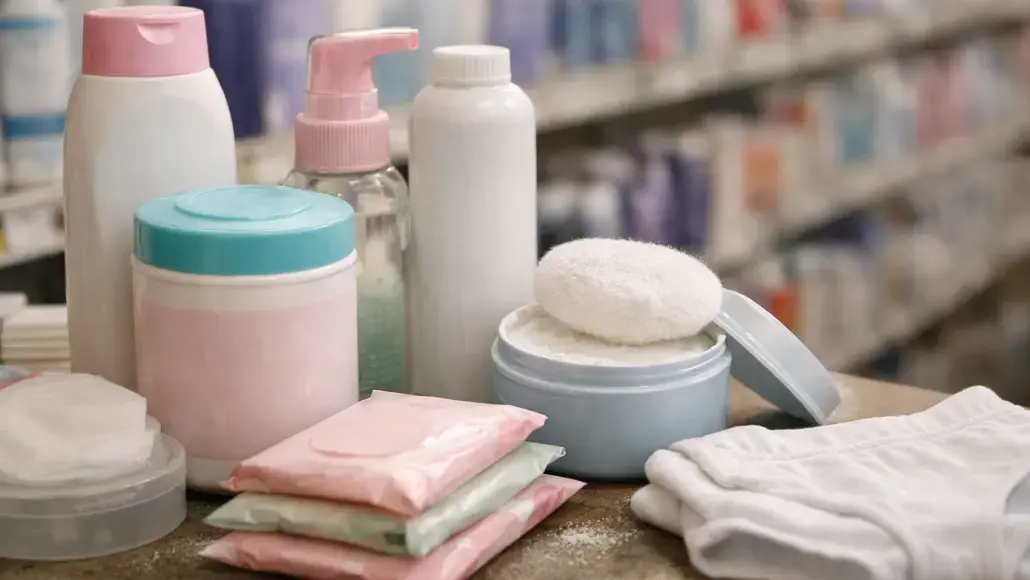

The irony of vaginal health is that the products marketed to help it are often the ones doing the most damage. Walk down any drugstore aisle, and you’ll find rows of washes, wipes, sprays, and powders all promising freshness and confidence. Meanwhile, the vagina is self-cleaning and has been managing itself perfectly well without any of them.
The vaginal microbiome maintains a slightly acidic pH between 3.8 and 4.5, which is kept in check by Lactobacillus bacteria that produce lactic acid and prevent harmful organisms from taking over. When that balance gets disrupted, the result is often the exact discomfort those products claim to prevent.
If you’ve ever found yourself reaching for boric acid suppositories to restore balance after a mystery flare-up, one of these everyday products might be the culprit.
1. Scented Body Wash and Bar Soap
This is probably the most common offender because it’s the one nobody thinks to question. Most body washes and bar soaps are formulated with a pH of 9–10, which is significantly more alkaline than the vaginal environment. Using them in or around the vulva strips away protective bacteria and raises pH.
Fragrance compounds make it worse. They’re irritants on their own, and when applied to tissue as delicate as the vulva, they can trigger inflammation, itching, and contact dermatitis. Warm water on the external area is genuinely all that’s needed. If you want to use a cleanser, choose one that’s fragrance-free, dye-free, and pH-balanced for intimate use.
2. Douches
Douching is one of the most well-documented disruptors of vaginal health, and yet products are still widely available and marketed as hygiene essentials. The practice involves flushing the vaginal canal with water or a solution, which washes out the beneficial Lactobacillus bacteria that maintain acidity and microbial balance.
Studies have consistently linked douching to increased rates of bacterial vaginosis, yeast infections, and even pelvic inflammatory disease. The vagina doesn’t need to be rinsed, flushed, or deodorized internally.
3. Fabric Softener and Scented Laundry Detergent
Your underwear sits against your vulva all day, which means whatever residue your laundry leaves behind is in constant contact with your most sensitive skin. Fabric softeners and heavily scented detergents contain fragrances, dyes, and chemical softening agents that cling to fabric through multiple wears.
For women who deal with recurrent irritation or infections, switching to a fragrance-free, dye-free detergent and skipping fabric softener on underwear altogether can make a surprisingly significant difference. It’s one of those invisible triggers that’s easy to overlook because the product never comes into direct contact with the body.
4. Bubble Bath and Bath Bombs
Soaking in a tub full of fragrance, dyes, and surfactants for 30 minutes is essentially marinating your vulva in potential irritants. Bubble baths and bath bombs are designed to foam, fizz, and smell amazing, but the chemicals that create those effects can disrupt vaginal pH and irritate vulvar tissue.
This doesn’t mean baths are off limits. It means keeping additives out of the equation if you’re prone to sensitivity. A plain warm soak with Epsom salts is far gentler than a bath bomb loaded with synthetic fragrance and glitter.
5. Vaginal Moisturizers and Lubricants
Not all lubricants are created equal, and some of the most popular ones contain ingredients that actively work against vaginal health. Glycerin, a common ingredient in water-based lubricants, can feed yeast. Nonoxynol-9, found in spermicidal lubricants, has been shown to destroy Lactobacillus and damage vaginal epithelial cells.
Lubricants with a pH significantly higher than the vaginal range can also temporarily shift conditions in favor of harmful bacteria. When choosing a lubricant, look for options that are glycerin-free, paraben-free, and pH-matched to the vaginal environment.
6. Wet Wipes and Feminine Wipes
Feminine wipes are marketed as a quick refresh, but most contain preservatives, fragrances, and surfactants that don’t belong anywhere near the vulva. Even wipes labeled “gentle” or “pH-balanced” often contain methylisothiazolinone or other preservatives known to cause contact allergy.
The wipe itself can also cause micro-abrasions through friction, especially on dry or irritated tissue. If you want to freshen up on the go, a damp washcloth or plain water is safer and just as effective.
Your Products Should Work for You, Not Against You
The common thread through all of these products is that they introduce something, whether it’s fragrance, chemicals, or friction, into an environment that functions best when left mostly alone. The vagina isn’t dirty, and it doesn’t need to be perfumed, scrubbed, or steamed into submission.
If you’re dealing with recurring discomfort, infections, or symptoms that never fully resolve, auditing the products that come into contact with your vulva and vagina is one of the simplest and most effective first steps you can take. Sometimes the fix is removing what’s been quietly causing the problem all along.