











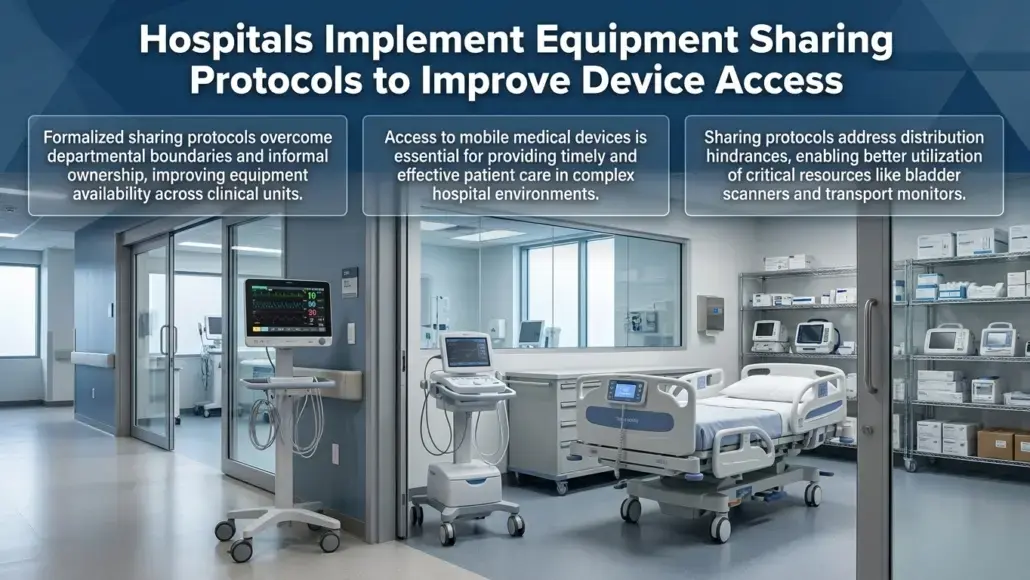

In the complex environment of a modern hospital, the ability to access medical devices across different departments is essential for providing timely and effective patient care. Mobile medical equipment, such as bladder scanners, transport monitors, and specialty beds, are frequently needed by multiple clinical units, yet their distribution is often hindered by departmental boundaries and informal ownership practices. The implementation of formalized sharing protocols provides the necessary framework to overcome these barriers, ensuring that equipment moves efficiently between units based on clinical priority rather than proximity or historical allocation. By establishing clear rules for the request, use, and return of devices, hospitals can significantly enhance the accessibility of their mobile assets.
The move toward shared resource models is driven by the need for greater operational flexibility and fiscal responsibility. When departments operate as isolated silos, the hospital is forced to over-invest in equipment to ensure that every unit has its own dedicated inventory. This results in significant capital waste, as many devices sit idle for large portions of the day. formalized sharing protocols allow the hospital to treat its equipment as an enterprise-wide resource, maximizing the utilization of every asset and reducing the total number of units required to meet the needs of the entire facility. This shift not only lowers procurement costs but also improves the overall resilience of the institution’s clinical infrastructure.
Governance and Accountability in Resource Sharing
A successful shared equipment model depends on a strong governance structure that defines the rights and responsibilities of each department. These sharing protocols must be developed collaboratively, involving clinical leaders from all major specialties to ensure that the needs of each unit are respected. The governance framework should clearly outline the priority levels for different types of equipment, ensuring that high-acuity needs in the emergency department or intensive care unit are always met before elective requests. By providing a transparent and fair system for resource allocation, hospitals can build the trust necessary for clinicians to relinquish their departmental “ownership” of equipment.
Accountability is another critical component of the governance process. Each department must be responsible for the proper care and timely return of shared devices. When a piece of equipment is finished being used, it should be returned to a designated central location or passed directly to the next requesting unit through a tracked process. This prevents devices from being “hidden” in storage closets or kept in a unit “just in case” they are needed later. Real-time tracking technologies, such as Radio Frequency Identification (RFID), provide the visibility required to enforce these protocols, allowing hospital administrators to see exactly which department is in possession of an asset and how long they have had it.
These frameworks often rely on medical device pooling to consolidate inventory, ensuring that departments do not compete for the same limited resources. By centralizing the management of mobile assets, the hospital can ensure that all devices are properly maintained, cleaned, and calibrated before being reissued to another department. This centralized oversight reduces the risk of equipment malfunction and ensures that every piece of technology used at the bedside meets the highest safety standards. Consequently, the sharing model not only improves accessibility but also contributes to a more consistent and reliable clinical environment for both patients and staff.
Technical Infrastructure for Cross-Departmental Visibility
The effectiveness of sharing protocols is heavily dependent on the quality of the hospital’s technical infrastructure. Without a reliable way to locate and monitor equipment, clinical staff will continue to spend excessive time searching for the tools they need, leading to frustration and delays in patient care. A comprehensive asset tracking system is the foundation of any successful sharing initiative, providing real-time data on the location, status, and availability of every mobile device in the facility. This visibility allows clinicians to see where the nearest available device is located and request it directly through a centralized digital platform.
Integrating the tracking system with the hospital’s electronic health records and clinical workflow software can further enhance the efficiency of equipment sharing. For instance, when a patient is scheduled for a procedure that requires a specific type of monitor, the system can automatically reserve the necessary equipment and notify the logistics team to deliver it to the surgical suite. This proactive approach to resource management eliminates the need for manual requests and ensures that the clinical team can focus on the patient rather than logistical coordination. The data generated by these integrated systems also provides valuable insights into equipment utilization patterns, enabling the hospital to refine its sharing protocols based on actual demand.
Staff training and cultural change are equally important for the successful implementation of cross-departmental sharing. Clinicians must be educated on how to use the tracking tools and the importance of adhering to the agreed-upon protocols. This requires a significant shift in mindset, moving away from a culture of departmental competition toward one of institutional collaboration. By highlighting the benefits of the shared model,such as faster access to cleaner and better-maintained equipment,administrators can foster a sense of collective responsibility for the hospital’s assets. Regular communication regarding the success of the sharing initiative can help to maintain momentum and ensure long-term compliance with the new protocols.
Optimizing Clinical Workflows through Device Mobility
The primary objective of improving device access is to ensure that clinical workflows are as efficient and uninterrupted as possible. When sharing protocols are executed effectively, the time clinicians spend searching for equipment is drastically reduced, allowing them to dedicate more time to direct patient interaction and clinical decision-making. This improved efficiency is particularly important in high-pressure environments like the emergency department, where even a few minutes of delay can have a significant impact on patient outcomes. By streamlining the movement of equipment between units, hospitals can ensure that their most critical clinical pathways are fully supported at all times.
Device mobility also facilitates the flexible use of clinical space. When equipment is not tied to a specific department, it can be easily moved to follow the patient as they progress through different stages of their care. For example, a transport monitor can accompany a patient from the emergency department to the radiology suite and then to the ICU, ensuring continuous monitoring without the need to switch devices. This seamless transition improves patient safety and reduces the cognitive load on staff, who no longer need to learn the operational nuances of multiple different monitors. The ability to move technology where it is needed also allows the hospital to repurpose clinical areas more easily during patient surges or facility renovations.
Likewise, the standardized maintenance and cleaning of shared equipment contribute to smoother clinical workflows. When a device is returned to the central pool after use, it undergoes a rigorous decontamination and calibration process before being issued to the next department. This ensures that every piece of equipment arrives at the bedside in perfect working order, reducing the incidence of equipment-related delays and failures. The consistency provided by a centralized maintenance program also simplifies the training process for staff, as they are always working with equipment that meets the same high standards of performance and reliability. By treating device mobility as a core component of operational excellence, hospitals can achieve a higher level of clinical responsiveness and patient safety.
Financial and Strategic Benefits of Shared Asset Models
The financial sustainability of a healthcare institution is closely linked to the efficiency of its capital utilization. Sharing protocols allow hospitals to achieve a much higher return on investment for their mobile assets by ensuring that they are in constant use rather than sitting idle. This improved utilization reduces the pressure to purchase new equipment, allowing the hospital to redirect capital toward other critical areas such as staffing, facility upgrades, or new medical technologies. The ability to manage a smaller, more active fleet of devices also lowers the long-term costs of maintenance, software updates, and storage space.
Strategic planning is further enhanced by the wealth of data generated by a shared resource model. By analyzing equipment usage across all departments, hospital leaders can identify which assets are truly essential and which are underutilized. This data-driven insight allows for more accurate procurement decisions, ensuring that the hospital’s technology investments are aligned with actual clinical needs. The transparency provided by a centralized tracking system also simplifies the process of equipment recalls and safety alerts, as every affected unit can be located and removed from service instantly. This proactive approach to asset management reduces the hospital’s exposure to legal and regulatory risks.
Additionally, the collaboration fostered by equipment sharing can lead to broader improvements in hospital operations. When departments work together to manage shared resources, they develop communication channels and problem-solving skills that can be applied to other cross-functional challenges. This culture of cooperation breaks down the silos that often hinder institutional progress and creates a more unified and resilient organization. By embracing the principles of shared resource management, hospitals can ensure that they are making the most of their technological and human capital, positioning themselves for long-term success in an increasingly complex healthcare sector.
Enhancing Patient Safety and the Quality of Care
At the end of every operational process is a patient whose well-being depends on the timely and accurate application of medical technology. Sharing protocols contribute directly to patient safety by ensuring that clinicians have the right tools available at the right time. The reduction in equipment-related delays means that diagnostic tests are performed sooner and therapeutic interventions are initiated more quickly, leading to improved clinical outcomes. A reliable supply of well-maintained equipment also reduces the stress on clinical staff, allowing them to maintain their focus on the patient and provide a higher quality of care.
The consistency provided by a shared equipment model also reduces the potential for clinical errors. When all departments use the same standardized fleet of devices, the risk of a clinician being unfamiliar with a piece of equipment is minimized. This is particularly important for staff who may work in multiple different units or for temporary agency personnel. The standardized cleaning and maintenance protocols also contribute to a reduction in hospital-acquired infections, as every shared device is thoroughly decontaminated between uses. This commitment to hygiene and safety is a fundamental component of providing high-quality healthcare to the community.
Finally, the improved accessibility of equipment enhances the overall patient experience. Patients who receive timely care are more likely to be satisfied with their hospital stay and have better overall perceptions of the institution. The ability to move equipment without interruption with the patient also reduces the number of times they need to be disconnected and reconnected to monitoring systems, providing a more comfortable and less disruptive clinical experience. By prioritizing device access through the implementation of rigorous sharing protocols, hospitals demonstrate their commitment to both operational efficiency and patient-centered care. The result is a more resilient, efficient, and compassionate healthcare environment that is better equipped to meet the needs of every patient.