
















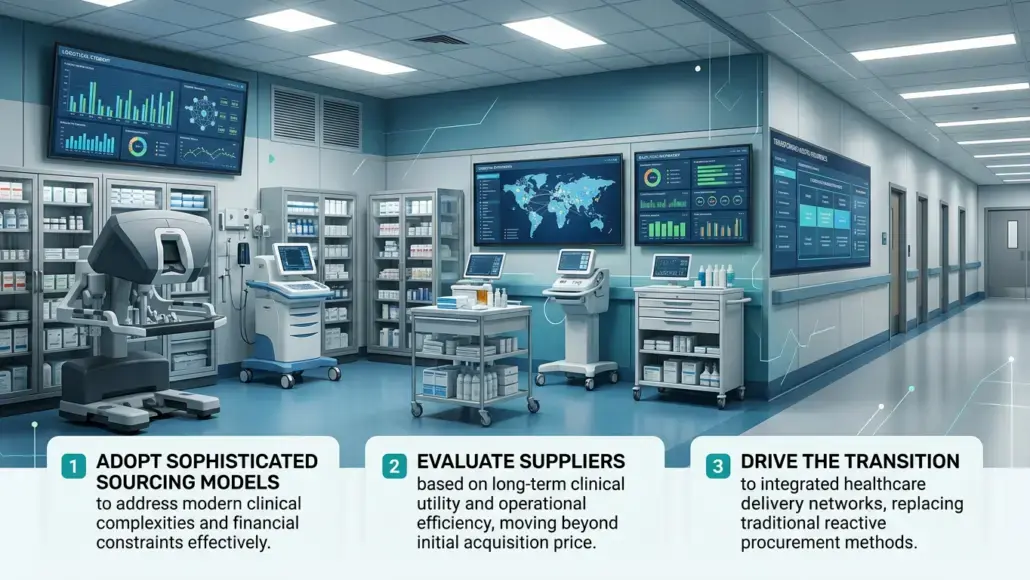

The transition toward integrated healthcare delivery networks necessitates a departure from traditional, reactive procurement methods. Hospital administrators are increasingly adopting sophisticated sourcing models to address the complexities of modern clinical requirements and financial constraints. These frameworks provide a structured methodology for evaluating suppliers, not merely on the basis of initial acquisition price, but through the lens of long-term clinical utility and operational reliability. By moving away from transactional purchasing, healthcare institutions can establish more resilient foundations that withstand external market fluctuations and internal demand surges. The implementation of these models requires a deep understanding of the specific clinical needs across various departments, from oncology to perioperative services. This strategic shift is not merely an administrative adjustment but a fundamental reimagining of how the supply chain interacts with clinical care. As hospitals face increasing pressure to provide high-quality outcomes with limited resources, the efficiency of their procurement processes becomes a primary determinant of overall institutional health.
A primary driver for this shift is the need to harmonise procurement activities across multi-facility systems. Large healthcare organisations often suffer from fragmented purchasing patterns where individual hospitals within the same network negotiate independent contracts. This fragmentation leads to price variations and inefficient resource allocation. Modern sourcing models mitigate these issues by centralising decision-making processes and utilizing the collective volume of the entire network. This approach allows for more aggressive negotiation positions while ensuring that every facility adheres to a uniform standard of quality and safety. Furthermore, the systematic evaluation of supplier capabilities ensures that the chosen partners possess the necessary logistical infrastructure to support continuous hospital operations without interruption. The consolidation of these efforts also reduces the administrative burden on individual facility managers, allowing them to focus on patient-facing activities. By creating a unified procurement strategy, health systems can better manage their financial risks and ensure that every dollar spent contributes directly to clinical excellence.
In addition to volume-based advantages, these sourcing models provide a mechanism for continuous market scanning and supplier development. Procurement leaders are no longer passive recipients of supplier offerings; they are active partners in shaping the marketplace. By identifying emerging technologies and specialized providers, hospitals can stay ahead of clinical trends and incorporate innovation into their standard operating procedures. This proactive stance is essential in a sector where technological obsolescence can occur rapidly, potentially leaving institutions with outdated and inefficient equipment. The rigorous vetting processes inherent in these models also protect the hospital from the risks associated with poor-quality products or unethical manufacturing practices. Ultimately, the evolution of sourcing structures represents a commitment to professionalism and excellence in the administrative side of healthcare delivery.
Data Integration and Decision Support
Effective procurement in the healthcare sector relies heavily on the ability to synthesise vast quantities of data into actionable insights. Advanced sourcing models incorporate rigorous data analytics to monitor market trends, track supplier performance, and forecast future demand patterns. This analytical rigour enables procurement teams to identify opportunities for cost savings and process improvements that were previously obscured by manual reporting methods. By utilizing real-time data feeds, hospitals can maintain optimal inventory levels, thereby reducing the financial burden of carrying excess stock while simultaneously preventing clinical stockouts. The integration of electronic health records with procurement systems further enhances this capability by providing direct visibility into the consumption patterns of clinical supplies and pharmaceuticals. This data-driven approach ensures that procurement decisions are based on objective evidence rather than subjective preferences or historical habits.

The application of these sourcing models also facilitates the adoption of predictive maintenance schedules for critical medical equipment. When procurement teams have access to comprehensive performance data, they can negotiate service level agreements that include proactive monitoring and rapid response times. This shifts the focus from repairing broken equipment to ensuring continuous uptime, which is essential for maintaining patient flow and surgical schedules. Additionally, the use of spend analysis tools allows hospitals to categorise expenditures more accurately, identifying areas where physician preference items may be driving unnecessary costs. By presenting clinical leaders with objective data regarding the comparative efficacy and cost of different products, procurement officers can foster a culture of evidence-based purchasing that benefits both the institution and the patient. This transparency is vital for building trust between the administrative and clinical branches of the hospital, ensuring that everyone is working toward the same goal of cost-effective, high-quality care.
Furthermore, the implementation of advanced analytics allows for the simulation of different sourcing scenarios to assess their potential impact on the hospital financial health. For instance, procurement leaders can model the effect of switching to a new supplier for high-volume items or investing in a new diagnostic platform. These simulations provide a clear understanding of the trade-offs involved in different procurement strategies, allowing for more informed decision-making at the executive level. The ability to track the total cost of ownership in real time also ensures that the hospital can make timely adjustments to its procurement plans as market conditions or clinical needs change. By leveraging the power of data, healthcare institutions can transform their procurement functions from simple cost centres into strategic drivers of value and innovation.
Clinical Collaboration and Standardisation
One of the most significant challenges in hospital procurement is balancing the need for cost efficiency with the diverse preferences of clinical staff. Successful sourcing models bridge this gap by involving clinicians directly in the procurement process. Product evaluation committees, comprised of surgeons, nurses, and technicians, play a vital role in testing and selecting the medical devices that will be used in daily practice. This collaborative approach ensures that the products selected meet the rigorous standards required for patient safety and clinical outcomes. When clinicians feel ownership over the selection process, they are more likely to comply with the resulting contracts, leading to higher levels of standardisation across the facility. This engagement also provides procurement teams with valuable insights into the practical challenges faced by staff on the front lines of patient care.
Standardisation is a cornerstone of operational efficiency in healthcare. By reducing the variety of products used for similar procedures, hospitals can streamline their training requirements and simplify their inventory management processes. This reduction in clinical variation also leads to improved patient safety, as staff members become highly proficient in using a smaller set of tools and devices. The implementation of sourcing models that prioritise standardisation allows hospitals to negotiate deeper discounts with a select group of primary vendors. This concentration of spend strengthens the relationship between the hospital and its suppliers, creating opportunities for joint innovation and service improvement initiatives. Moreover, standardisation facilitates the development of centralised purchasing systems that can manage procurement tasks with greater precision and speed. The following points represent the core benefits of a clinical-led standardisation effort:
- Increased proficiency of clinical staff due to a reduced variety of complex medical devices.
- Simplified inventory management and reduced storage space requirements for redundant products.
- Enhanced bargaining power with manufacturers through the concentration of purchasing volume.
- Improved ability to track and analyze the clinical outcomes associated with specific products.
- Reduced risk of clinical errors related to the misuse of unfamiliar equipment or supplies.
Sustainability and Long-Term Operations
The long-term viability of hospital procurement operations depends on the ability to manage risks and ensure the sustainability of the supply chain. Modern sourcing models place a heavy emphasis on supplier diversity and geographic resilience to protect against global disruptions. By diversifying the supplier base and sourcing from multiple regions, hospitals can reduce their vulnerability to natural disasters, geopolitical instability, or manufacturing failures. This strategic approach to risk management is essential for maintaining the continuity of care in an increasingly unpredictable global environment. Furthermore, healthcare organisations are increasingly incorporating environmental and social criteria into their sourcing decisions, recognising the impact of their procurement activities on the broader community. This focus on sustainability is not only an ethical imperative but also a practical necessity for ensuring the long-term reliability of the medical supply chain.
Adopting these sourcing models also involves a commitment to continuous improvement and performance monitoring. Procurement teams must regularly review contract compliance and supplier performance to ensure that the expected benefits are being realised. This ongoing evaluation process allows hospitals to identify underperforming suppliers and take corrective action before clinical operations are affected. The use of key performance indicators related to delivery accuracy, product quality, and cost savings provides a clear metric for success. Ultimately, the transformation of hospital procurement operations through advanced sourcing models leads to a more efficient, resilient, and patient-centered healthcare system. By investing in the right frameworks and technologies, hospitals can ensure they are well-positioned to meet the challenges of the future while maintaining the highest standards of care.
The commitment to sustainability also extends to the lifecycle management of medical supplies and equipment. Hospitals are increasingly looking for ways to reduce clinical waste and improve the recyclability of the products they purchase. This involves working closely with suppliers to develop more sustainable packaging solutions and implementing robust systems for the safe disposal or reprocessing of medical devices. By incorporating these considerations into their sourcing models, healthcare institutions can reduce their environmental footprint while also identifying new opportunities for cost savings. For example, the use of reprocessed single-use devices can lead to significant reductions in procurement expenditures without compromising patient safety. This holistic view of the supply chain ensures that the hospital procurement operations are aligned with the broader goals of environmental responsibility and clinical excellence.
Future-Proofing Hospital Supply Networks
The rapid pace of technological innovation in the medical field requires procurement strategies that are inherently flexible and forward-looking. As hospital systems integrate more sophisticated digital health tools, their sourcing models must adapt to include software-as-a-service agreements and cybersecurity requirements. These modern frameworks allow healthcare providers to stay at the cutting edge of clinical practice without being constrained by rigid, long-term contracts that do not account for technological shifts. Specifically, the ability to negotiate upgrade paths and modular service agreements is becoming a critical component of strategic sourcing. This ensures that the hospital can continuously improve its clinical capabilities while managing the financial risks associated with technical obsolescence. The integration of artificial intelligence and machine learning into procurement platforms will further enhance the ability of hospitals to anticipate clinical needs and optimize their sourcing activities.
Moreover, the focus on supply chain resilience is leading many hospitals to invest in domestic manufacturing partnerships and localized distribution hubs. By shortening the physical distance between the supplier and the point of care, healthcare institutions can significantly reduce the lead times for critical supplies and minimize the impact of global logistics disruptions. This regionalized approach to sourcing also supports the local economy and strengthens the ties between the hospital and its community. When combined with advanced inventory tracking systems, these future-proof networks provide a high degree of operational stability. The commitment to continuous learning and adaptation in procurement operations ensures that the hospital remains a leader in both clinical excellence and financial integrity. As the healthcare sector becomes increasingly complex, the role of strategic procurement will continue to grow in importance, serving as a vital link between clinical innovation and operational success.
Ultimately, the goal of these sourcing models is to create a healthcare environment where clinical staff have the tools they need to succeed, and where financial resources are managed with the highest level of precision. By investing in the right people, processes, and technologies, hospitals can transform their procurement functions into powerful engines for institutional growth and patient wellbeing. This journey requires a clear vision, a collaborative spirit, and a steadfast commitment to excellence in every aspect of hospital management. Through the implementation of advanced sourcing strategies, healthcare organisations can ensure they are not only surviving but thriving in an increasingly challenging global landscape.