
















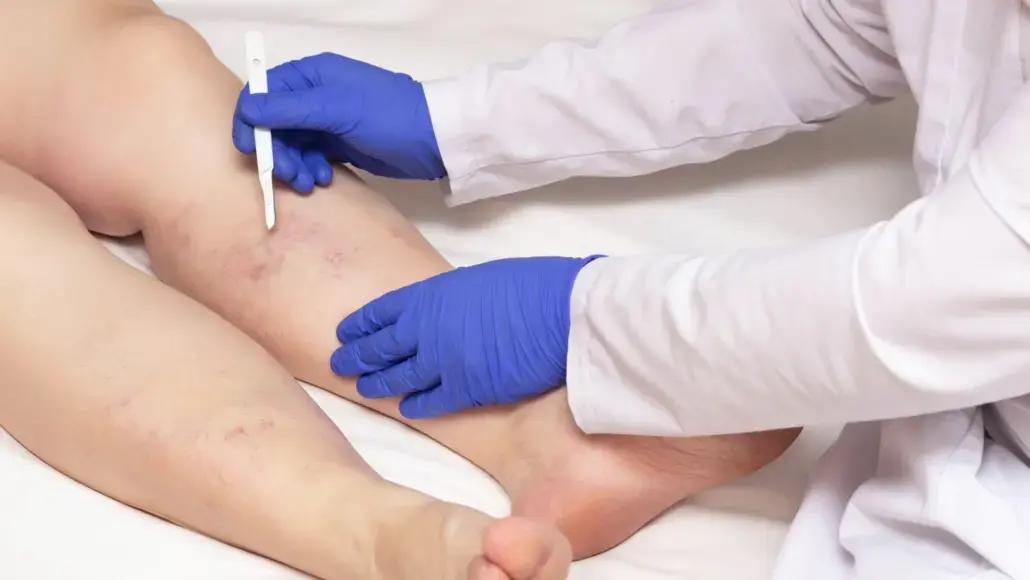

Most people notice a vein and either ignore it or start worrying. Neither response is particularly useful without knowing what to actually look for. Visible veins are not the problem. Skin thickness, hydration, body temperature, and muscle mass all affect how prominently the vascular network shows through. A lean person in a hot room will have veins that seem to surface everywhere. Same person, cold room, an hour later, and half of them have disappeared. That’s vasodilation, not pathology.
A vein becomes a clinical concern when it stops being just visible and starts being symptomatic. Redness tracking along its length. Tenderness that wasn’t there yesterday. A hardness under the skin that feels nothing like the soft compression a healthy vein produces. Those are the signs of phlebitis, and knowing how to read them changes what you do next. So what exactly separates a visible vein from an inflamed one?
Soft Versus Hard
Press gently on a visible vein. It should compress without resistance and without pain. A vein that feels like a cord, firm along its length, with a texture more like a pencil than a soft tube, has changed. That hardness reflects inflammation in the vessel wall. Sometimes clot formation. It’s not subtle once you know what normal feels like by comparison.
Tenderness that runs along the vein rather than sitting at a single point is the companion sign. Not just sore when pressed. Achy at rest. That combination of hardness and tenderness in the same vessel is the clearest early signal that something beyond normal visibility is happening.
The Color Question
There’s a persistent assumption that blue or greenish veins are somehow more concerning than others. They’re not. Why are veins blue is actually a trick question because they aren’t, not really. Blood is always red. The blue or green you see through skin is an optical effect produced by how different light wavelengths penetrate tissue at different depths. What you see on the surface tells you nothing about the health of the vein producing it.
Color that matters is in the skin over the vein, not the vein itself. Redness spreading across the skin above a specific vessel segment, particularly when it comes with warmth in that same area, is an inflammatory sign worth paying attention to.
What Varicose Veins Actually Are
Bulging, twisted, rope-like veins on the legs are common enough that people normalize them entirely. That’s not entirely wrong. Many people carry varicose veins for decades without acute problems.
But varicose veins represent an underlying venous insufficiency: valves inside the veins that aren’t functioning properly, allowing blood to pool backward. That structural change makes those vessels more susceptible to inflammation than a healthy vein would be. Someone with varicose veins who notices one segment becoming suddenly tender and hard isn’t just having a bad varicose vein day. That segment needs to be assessed.
Superficial Versus Something Deeper
Superficial phlebitis sits close enough to the surface to see and feel. It’s uncomfortable and sometimes painful, but it’s manageable, and most cases resolve.
Deep vein thrombosis doesn’t work the same way. It’s below what you can feel from outside. The leg swells broadly. It feels heavy. The warmth is diffuse rather than tracking along a visible vein. Sometimes there’s no visible sign at all, which is what makes it dangerous. A clot that forms in the deep venous system can migrate.
The connection between the two that most people don’t know: superficial phlebitis that starts spreading, moving toward the groin or behind the knee rather than staying contained, can extend into the deep system. A superficial problem that isn’t staying superficial is a reason to get imaging rather than wait.
Three Signs That End the Monitoring Period
There’s a point where watching makes sense and a point where it doesn’t. Watching makes sense for a vein that’s visible but not tender, not hard, and not accompanied by any skin changes. Watching stops making sense when:
- Redness and warmth are spreading rather than staying contained to one segment
- The vein has become a firm cord you can trace with your finger
- There’s any accompanying fever, even a low one
- The leg is swelling beyond the immediate area of the vein
That last one matters. Swelling that extends past the obviously affected vein suggests the inflammatory or clotting process is affecting venous drainage more broadly than what’s visible on the surface.
One More Thing About Timing
Phlebitis can develop fast. A vein that felt normal in the morning can be tender and red by evening without any intervening trauma or obvious cause. Spontaneous onset without an obvious trigger like a recent IV line or injury happens, particularly in people with existing venous insufficiency.
Assuming it’ll resolve on its own because it came on quickly is the reasoning that leads to delayed evaluation. Fast onset isn’t reassurance. It’s the vascular system flagging something urgently.
Frequently Asked Questions
Can you have phlebitis without seeing anything on the surface?In the superficial system, usually no. Phlebitis in a visible vein almost always produces surface signs. What you can’t see is deep vein involvement, which is why significant leg swelling without obvious surface changes is a reason for imaging rather than observation.
Is it normal for veins to be more visible after exercise?Yes. Exertion increases blood volume and pressure in peripheral vessels. Veins that seem to disappear at rest become prominent during and after physical activity. That’s physiology, not pathology. The question is whether they return to baseline after the exertion ends and whether they’re tender at any point.
What’s the fastest way to tell at home whether a vein needs evaluation?Run a finger along it. A healthy vein compresses easily and doesn’t hurt. A vein that feels hard along its length, hurts when touched, or sits under skin that’s red and warm compared to the area around it has three reasons to be assessed rather than monitored.