












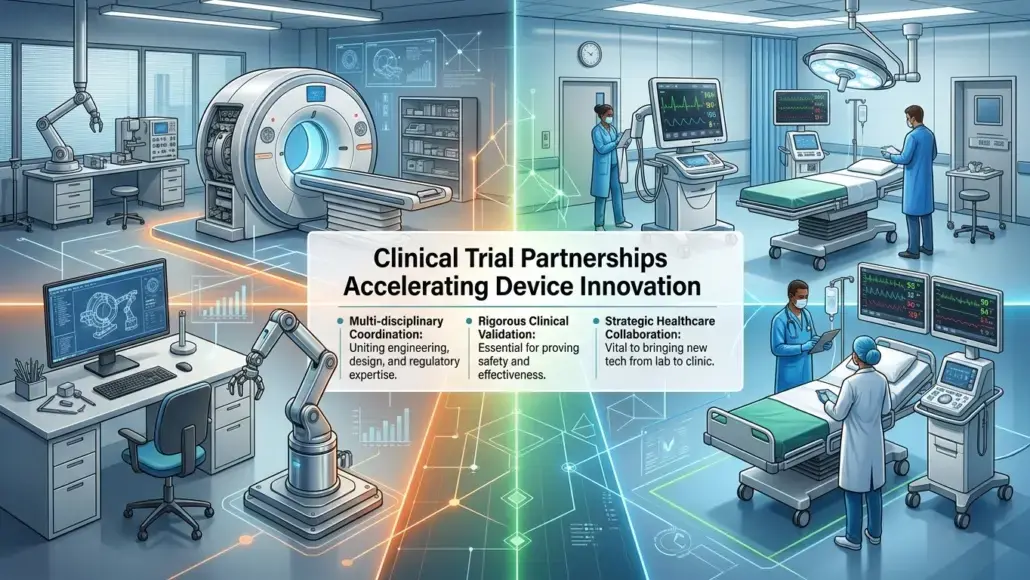
The development of high-tech medical products is a journey that requires the coordination of many different expertise areas, from engineering and design to regulatory affairs and clinical research. For a new medical technology to move from the research lab to the hospital floor, it must undergo a rigorous process of clinical validation to ensure its safety and its effectiveness. The emergence of strategic healthcare collaboration is a key factor in this process, and it is becoming clear that clinical trial partnerships are essential for accelerating device innovation. By bringing together device manufacturers, academic researchers, and clinical sites, these partnerships provide the resources and the data needed to bring new treatments to market with greater speed and reliability.
Medical technology R&D is no longer a solitary activity but a collaborative effort that relies on the participation of many stakeholders. The transition from internal product development toward an open and partnership-driven model is driven by the increasing complexity of the regulatory and the clinical landscape. When clinical trial partnerships are utilized, the manufacturer can leverage the expertise and the infrastructure of the partner site to design and execute more effective studies. This move toward a more integrated and professionalized approach to device innovation is a hallmark of the modern healthcare sector, where the focus is on achieving the best possible functional outcomes for the patient.
Regulatory Strategy and Clinical Validation Standards
The primary benefit of utilizing strategic partnerships is the significant improvement in the efficiency of the regulatory and the clinical workflow. By engaging with clinical sites early in the development process, manufacturers can ensure that their research designs are aligned with the actual needs of the clinicians and the requirements of the regulatory bodies. Clinical trial partnerships provide a stable and predictable environment for the collection of high-quality clinical data, which is essential for a successful product launch. This proactive approach to regulatory strategy ensures that the device innovation is achieved with the highest possible level of scientific rigor and professional accountability.
Furthermore, the collaboration between different organizations allows for the sharing of risks and the optimization of resources. Clinical trials are expensive and time-consuming, and a single organization often lacks the capacity to handle every aspect of a large-scale study. By distributing the workload among multiple partners, the industry can bring more innovative products to market in less time. The move toward a more cooperative and efficient approach to R&D is a defining characteristic of the modern healthcare sector, and the role of clinical trial partnerships in supporting this transition is indisputable. The focus remains on achieving the best possible value for the organization and for the patients it serves.
Healthcare Collaboration and Product Development Innovation
The integration of clinical insights into the product development process is a key factor in the success of any device innovation program. By working closely with the clinicians who will eventually use the product, manufacturers can identify potential issues and opportunities for improvement at an early stage. Clinical trial partnerships provide a vital feedback loop that ensures the final device is not only technically sound but also clinically effective and easy to use. This move toward a more patient-centered and practical approach to design is a hallmark of the modern healthcare sector, and the role of partnership-driven research in supporting this transition is essential.
Furthermore, the participation of academic researchers in these partnerships brings a new level of scientific depth to the development process. Academic partners can provide access to specialized analytical tools and a deep understanding of the biological and the physical principles underlying the new technology. This synergy between industry and academia is a powerful driver for innovation, leading to the development of more sophisticated and functional medical devices. The move toward a more multidisciplinary and professionalized approach to R&D is a defining characteristic of the modern healthcare industry, and the role of clinical trial partnerships in supporting this transition is essential. The focus remains on creating a robust and dependable system that can be used with confidence in every setting.
Quality Assurance and Professional Accountability in Research
The transition toward a more collaborative approach to clinical research requires a rigorous adherence to international standards for safety and ethics. Regulatory compliance is a fundamental requirement for all partners involved, as the integrity of the clinical data depends on the consistency and the transparency of the research process. Partners must ensure that their research protocols are subject to a comprehensive program of oversight and quality control. This involves the training of all research staff on the principles of Good Clinical Practice (GCP) and the proper handling of patient data to ensure that the study is conducted in a professional and accurate manner.
Furthermore, the professional accountability of all partners is a critical factor in the success of the partnership. Every organization must fulfill its specific responsibilities and contribute to the overall success of the study. The move toward a more integrated and professionalized research environment is a defining characteristic of the modern healthcare industry, and the role of high-quality partnerships in supporting this transition is essential. The focus remains on creating a reliable and effective clinical research platform that can meet the most demanding requirements of the regulatory bodies and the medical community.
Future Horizons in Device Innovation Innovation
The continued evolution of the medical technology market will likely lead to an even greater emphasis on the use of decentralized and digitalized clinical trials. We are seeing the development of systems that use remote monitoring and wearable sensors to collect patient data, reducing the need for site visits and for manual data entry. The role of clinical trial partnerships in supporting this evolution is essential, as they provide the infrastructure and the expertise needed to manage these complex digital studies. This move toward more flexible and patient-friendly research represents the next frontier in device innovation.
In the coming years, the integration of artificial intelligence and real-time data analytics will further enhance the value of clinical research. AI algorithms can analyze the clinical data in real-time, identifying potential safety signals and providing insights into the performance of the device innovation. This would provide a more secure and guided experience for the entire research team. The ability to manage complex medical cases with the same speed and precision as a simple diagnostic test is a major goal for both researchers and healthcare providers. The ongoing commitment to technical innovation and partnership-driven care is what will define the leaders of the industry in the decades to come.
The transition toward a more connected and data-driven approach to medical technology RD is a defining characteristic of the modern healthcare industry. By prioritizing the use of clinical trial partnerships, healthcare providers and manufacturers can achieve levels of speed and efficiency that were once considered unattainable. The benefits of this approach extend beyond the research lab, contributing to a more effective and sustainable health system that is better equipped to handle the challenges of a global population. The commitment to technical excellence and professional collaboration is what will define the success of these programs in the decades to come.
As the industry moves forward, the focus will remain on the refinement of partnership properties and the continued improvement of clinical outcomes. The ability to handle the increasing complexity of new device innovations and regulatory requirements will remain a key challenge for researchers and clinicians alike. The ongoing evolution of clinical trial partnerships is a testament to the power of technical innovation in the service of human health, ensuring that the next generation of medical technology is both safe and accessible to every patient who needs it.