













The modernization of healthcare logistics is increasingly defined by the integration of sophisticated automation to manage the movement of critical assets. As hospitals grow in complexity and scale, the traditional reliance on manual transport is becoming a significant bottleneck for clinical operations. The implementation of automated material handling systems provides a solution to these challenges, ensuring that supplies, medications, and laboratory samples are moved with a high degree of precision and speed. These technologies, ranging from pneumatic tube systems to autonomous mobile robots, are not merely upgrades to existing workflows but are foundational shifts in how medical facilities manage their internal resources. By reducing the physical burden on staff and minimizing transport times, healthcare organizations can focus more of their energy on direct patient care and clinical excellence.
The strategic adoption of automation in the medical supply chain is driven by the need for operational consistency and financial efficiency. Manual material handling is susceptible to errors, delays, and variability that can disrupt the patient care cycle. In contrast, automated material handling provides a predictable and scalable method for managing the high volume of goods moving through a hospital on a daily basis. This transition to a more technology-driven logistics model allows for the optimization of labor resources, as transport tasks are handled by specialized hardware while clinical professionals remain available for bedside duties. This analytical examination focuses on the diverse range of automated solutions currently reshaping the hospital environment, highlighting the intersection of robotic engineering, network connectivity, and clinical safety.
Autonomous Mobile Robots and Fleet Management in Healthcare
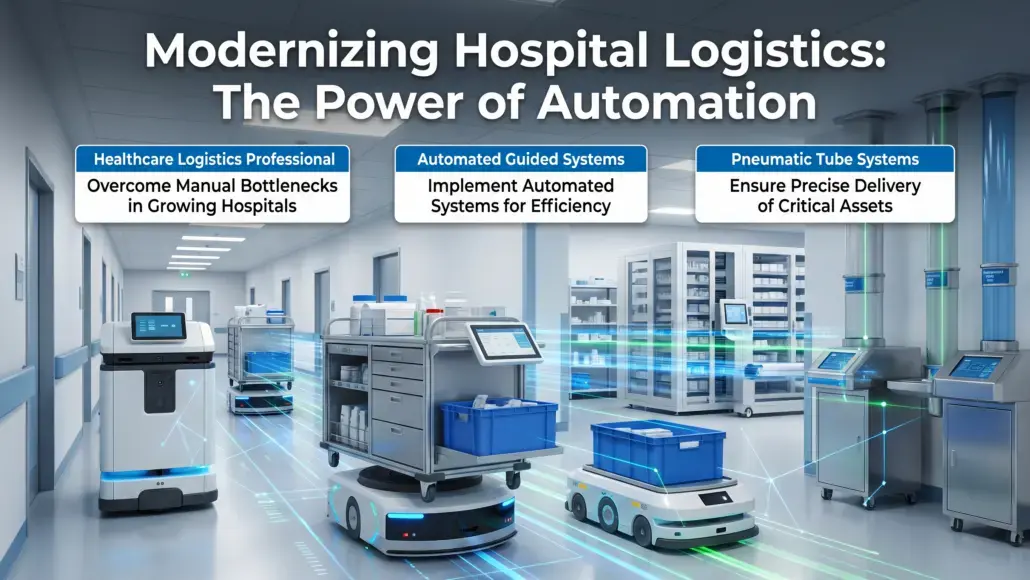
One of the most significant advancements in hospital logistics is the deployment of Autonomous Mobile Robots (AMRs) to manage the transport of heavy and bulky goods. Unlike traditional Automated Guided Vehicles (AGVs) that require fixed paths or magnets, AMRs use advanced sensors and spatial mapping to move through the facility, avoiding obstacles and finding the most efficient routes. These robots are capable of transporting hundreds of kilograms of materials, including laundry, waste, and bulk medical supplies, between the central warehouse and various clinical departments. The use of automated material handling in this capacity significantly reduces the risk of workplace injuries associated with manual pushing and pulling, while also ensuring that deliveries are made on a consistent schedule.
The effectiveness of an AMR fleet is dependent on a sophisticated management system that coordinates the movement of multiple robots simultaneously. These systems are often integrated with the hospital’s central logistics platform, allowing for real-time tracking and automated task assignment based on priority. For example, if a specific department requires an urgent delivery of sterile supplies, the fleet management software can redirect the nearest available robot to fulfill the request. This level of responsiveness is essential for maintaining the high throughput required in a busy modern hospital. Additionally, these robots can be programmed to use service elevators and maneuver through restricted areas, providing a seamless transport network that operates independently of human intervention. The integration of these autonomous systems into the daily life of the hospital requires careful planning of corridors and charging zones to ensure that the robots do not interfere with the movement of patients and clinicians.
Pneumatic Tube Systems and Rapid Sample Transport
While robots manage heavy loads, the transport of small, time-sensitive items such as laboratory samples and urgent medications is handled by pneumatic tube systems. These networks of vacuum-sealed pipes provide an instantaneous method for moving goods between clinical floors, laboratories, and the central pharmacy. Automated material handling through pneumatic tubes is a vital component of the hospital’s diagnostic cycle, as it significantly reduces the time between sample collection and lab processing. In emergency scenarios where every minute is critical, the ability to send a sample across the facility in seconds can have a direct impact on patient outcomes.
Modern pneumatic tube systems have evolved to include more advanced tracking and security features. Every carrier can be equipped with an RFID tag, allowing the system to log the point of origin, the destination, and the specific contents of the package. This provides a clear chain of custody for sensitive samples and controlled substances, ensuring that the right materials reach the right location. Additionally, the automation of these systems allows for more complex routing, with specialized diverters that can manage multiple carriers moving through the network simultaneously without collisions. The integration of these systems with the hospital’s Laboratory Information System (LIS) ensures that the tracking data is automatically updated, providing clinicians with real-time updates on the status of their requests. The reliability and speed of pneumatic transport make it an indispensable tool for the modern clinical environment.
Automated Dispensing Systems and Pharmacy Logistics
The pharmacy is one of the most critical nodes in the hospital supply chain, managing a high volume of specialized and often high-value medications. Automated material handling in the pharmacy involves the use of robotic picking systems and automated dispensing cabinets (ADCs) to manage inventory with a high degree of accuracy. These systems use barcode scanning and robotic arms to retrieve medications from storage bins and package them for delivery to specific clinical units. This automation reduces the likelihood of medication errors and ensuring that the right dose is prepared for the right patient. By automating the routine tasks of picking and packing, pharmacists can focus more of their attention on clinical consulting and patient safety.
Automated dispensing cabinets located on the clinical floors act as secure, localized storage hubs for medications. These cabinets are integrated with the central pharmacy system, providing real-time visibility into medication usage and automated replenishment triggers. When a nurse requires a medication, they log into the ADC using biometric authentication, and the system opens the specific drawer containing the required item. This level of control is essential for managing controlled substances and reducing the risk of diversion. The use of automated material handling in this capacity ensures that medications are always available at the point of care, reducing the need for clinical staff to make frequent trips to the central pharmacy. This decentralized yet highly controlled approach to medication management is a key factor in improving both operational efficiency and patient safety.
Vertical Logistics and Conveyor Integration in Supply Hubs
In multi-story healthcare facilities, the movement of materials between floors is a significant logistical challenge. Vertical conveyors and specialized lift systems provide a dedicated method for moving supplies and waste without using the main passenger or service elevators. Automated material handling through these vertical networks allows for a continuous flow of goods that is independent of the facility’s pedestrian traffic. These systems are often integrated with horizontal conveyor belts in the central warehouse, providing a seamless path from the loading dock to the upper clinical floors. By automating the vertical movement of goods, hospitals can reduce congestion in elevators and ensure that critical supplies are not delayed by pedestrian traffic.
The design of these vertical logistics systems must account for the diverse range of materials being transported. This includes the use of specialized carriers for sterile goods, as well as dedicated paths for waste and soiled laundry to prevent cross-contamination. The integration of these systems with the facility’s Building Management System (BMS) allows for continuous monitoring of performance and automated alerting in the event of a mechanical failure. Additionally, the use of smart sorting systems at the termination points ensures that materials are delivered to the correct department without the need for manual sorting. This level of architectural integration is essential for supporting the high-volume material flow required in large-scale healthcare institutions. The focus remains on creating a quiet, efficient, and reliable logistics network that operates behind the scenes to support clinical excellence.
Scalability and the Future of Robotic Integration in Healthcare
As the demands placed on healthcare facilities continue to evolve, the role of automation in logistics will expand even further. Future automated material handling systems will likely incorporate more advanced artificial intelligence to optimize routing and task prioritization in real time. We can also expect to see more integration between different types of automated systems, such as robots that can automatically load and unload carriers from pneumatic tubes or vertical conveyors. These developments will create a truly integrated logistics network that manages the movement of goods from the loading dock to the bedside without any manual intervention. The ability to scale these systems as the facility grows is a critical consideration for hospital planners and administrators.
Future-proofing these systems also involves a commitment to connectivity and data standards. As more robotic systems are added to the facility, they must be able to communicate with each other and with the broader hospital IT infrastructure. This requires the adoption of open protocols and standardized data formats to ensure interoperability across different vendors and technologies. By building a flexible and connected logistics framework, healthcare organizations can ensure that they are prepared for the next generation of technological innovation. The proactive management of these automated material handling assets is essential for maintaining a competitive and efficient clinical environment that prioritizes patient safety and operational excellence. The ultimate goal is to create a logistics system that is so efficient and reliable that it becomes an invisible but indispensable support for the life-saving work performed by clinical teams every day.