










By Siemens SI Global Head of Life Sciences, Christophe Peytremann
Pharma manufacturers are under pressure to boost resilience, cut risk and stay compliant ‒ and infrastructure systems play a crucial role. While predictive maintenance has laid the groundwork, artificial intelligence (AI) is now driving the real transformation, fundamentally reimagining how pharmaceutical facilities move from reactive firefighting to intelligent prediction.
For lab and facility managers, AI integration means moving beyond simple alerts to smart systems that learn, adapt, and predict with unprecedented accuracy. The result is a fundamental shift from reactive maintenance to proactive optimization ‒ less downtime, stronger compliance and dramatically more efficient use of time and resources.
I believe AI has the potential to redefine what it means to run a modern pharmaceutical site, including fewer failures, less firefighting and a lot more intelligent control.
The Hidden Infrastructure Crisis
When pharmaceutical executives discuss operational risk, conversations typically center on production equipment, supply chains, and regulatory compliance. Yet lurking beneath these visible concerns is a more fundamental threat – the complex web of infrastructure systems that make everything else possible.
A single HVAC failure at a major pharmaceutical facility can cost hundreds of thousands of euros per hour in lost production and waste materials. Power distribution issues can compromise entire batches. Environmental monitoring failures can trigger regulatory investigations that last months and cost millions.
Despite these stakes, many pharmaceutical companies continue operating with a reactive maintenance model ‒ waiting for critical infrastructure to fail before taking action. This approach, once considered standard practice, is increasingly untenable in an industry where margins are tight, regulations are stringent, and downtime costs are extortionate.
The Predictive Foundation
The pharmaceutical industry’s infrastructure management is undergoing a fundamental shift. Companies that have adopted predictive maintenance are reporting dramatic improvements: up to 85% better downtime forecasting, 50% fewer unplanned outages, and maintenance cost reductions of up to 40%.
Take fume hoods, critical to both safety and energy efficiency yet often unmonitored between maintenance checks. Without real-time visibility, they may run outside compliance parameters or remain open when unused, driving up energy costs and operational risk. Advanced platforms now provide early alerts ‒ for instance, if sashes are left open too frequently ‒ enabling managers to prioritize high-impact fixes based on energy-saving potential.
Similarly, continuous monitoring of cold storage systems spots abnormal freezer or fridge behavior before it compromises critical samples and chemicals, protecting both product integrity and regulatory compliance.
But while predictive maintenance has established the foundation, AI is challenging the status quo. It isn’t just making predictive maintenance better ‒ it’s completely reimagining this approach from reactive problem-solving to intelligent, proactive optimization.
From Reactive to Predictive
The most significant shift isn’t just technological ‒ it’s philosophical. AI is fundamentally changing how pharmaceutical facilities think about infrastructure management, moving from a model where problems are solved after they occur to one where they’re prevented before they begin.
Traditional predictive maintenance relied on predetermined thresholds and basic pattern recognition. This approach, while better than purely reactive maintenance, still operated within rigid, predefined parameters.
AI changes everything. The latest AI enabled systems don’t just monitor against fixed thresholds ‒ they learn the unique behavioral patterns of each piece of equipment, understand seasonal variations, account for production schedules, and even factor in external conditions like weather patterns that might affect HVAC performance.
Most compelling is how AI transforms data into actionable intelligence. Instead of generating alerts that technicians must interpret, AI systems provide specific recommendations, for example: “Adjust HVAC settings now to prevent compliance breach during tomorrow’s temperature spike.”
This represents a fundamental reimagining of maintenance ‒ from reactive problem-solving to intelligent prevention.
AI-Powered Remote Diagnostics
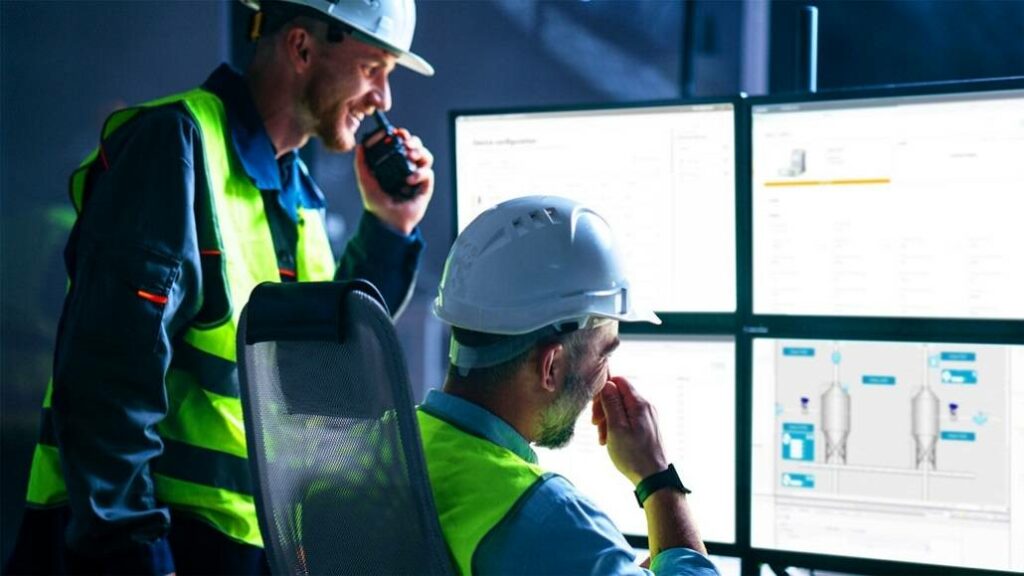
The integration of AI with remote diagnostics capabilities represents another leap forward in reimagining pharmaceutical infrastructure management. Where traditional remote monitoring provided data, AI-powered systems provide insight and action.
Consider how AI recently transformed a motor fault scenario at a pharmaceutical manufacturing facility. When a frequency drive error occurred, the AI system didn’t just detect the fault ‒ it immediately analyzed the error pattern against thousands of similar incidents, predicted the most likely failure mode, and recommended the specific replacement part before a human technician even looked at the alert.
The AI system guided a field service engineer through remote diagnosis, providing not just historical data but intelligent analysis.
This AI-guided approach doesn’t just save time ‒ it transforms decision-making from reactive guesswork to intelligent, data-driven precision. The system learned from this incident, making future predictions even more accurate.
Beyond Human Capability
What makes AI truly transformative in pharmaceutical infrastructure isn’t just its ability to process data faster than humans ‒ it’s its capacity to see patterns that humans simply cannot detect. AI systems can simultaneously monitor thousands of data points across multiple systems, identifying subtle correlations that would be impossible for human operators to recognize.
For example, an AI system might notice that slight variations in ambient humidity, combined with specific production schedules and minor fluctuations in power quality, create conditions that lead to HVAC failures three weeks later. No human could track and correlate these variables across time, but AI makes these connections automatically, enabling truly predictive interventions.
I’m particularly impressed by AI’s ability to learn from near-misses ‒ those situations where systems almost failed but didn’t. Traditional maintenance approaches largely ignore these events, but AI systems analyze them as valuable learning opportunities, gradually building a more complete picture of system vulnerabilities and resilience factors.
Breaking the Cultural Barrier
From what I’m seeing in the field, the pharmaceutical industry’s adoption of AI-powered infrastructure management remains uneven despite the transformative potential. The technology exists, the business case is compelling, and the competitive advantages are clear ‒ yet the biggest barrier isn’t technical, it’s cultural.
The challenge is that AI requires a fundamental shift in thinking. Traditional maintenance cultures reward firefighting ‒ the heroic technician who fixes the crisis gets recognition. AI-driven prevention, by contrast, looks like nothing happened at all. Success becomes invisible, making it harder to justify and celebrate. This creates a paradox where the most valuable maintenance activities are often the least visible to senior management.
Breaking through requires reimagining maintenance processes around what AI makes possible rather than simply applying AI to existing approaches.
The mindset shift requires deliberate action across three key areas, with AI intelligence at the center:
AI-Powered Infrastructure Visibility: Traditional maintenance discussions focus on production equipment, but AI can monitor and optimize all infrastructure systems ‒ HVAC, clean utilities, power distribution ‒ simultaneously. Success requires demonstrating to every department how AI prevents failures, protects compliance, and reduces risk through intelligent prediction rather than reactive response.
Start small with AI pilot projects: Build on this awareness by running a focused an AI enhanced predictive maintenance pilot on a critical infrastructure asset – something visible, high-impact and easy to measure. A quick, successful pilot not only builds confidence but creates internal advocates who can help scale adoption across other systems.
AI-Ready Data Integration: Building maintenance data often exists in separate systems, but AI needs comprehensive data streams to deliver maximum value. This requires both technical integration and organizational changes that prioritize data sharing to feed AI systems that become smarter over time.
The AI Imperative: Redefining Pharmaceutical Operations
In my view, the pharmaceutical industry can no longer afford to treat infrastructure failures as inevitable costs of doing business. What I’m witnessing goes beyond incremental improvement ‒ AI is fundamentally reimagining what it means to operate a modern pharmaceutical site.
AI-powered facilities are moving toward a model where failures become increasingly rare and, when they do occur, are addressed with minimal disruption because the AI system predicted them weeks in advance. Companies can leverage AI to access global expertise instantly while focusing internal resources on strategic optimization.
What makes this particularly compelling is AI’s compounding competitive advantage. These systems get better over time ‒ each incident, each near-miss, each successful prediction makes them smarter. The longer an AI system operates, the more intelligent it becomes. Facilities that delay adoption aren’t just missing current benefits ‒ they’re falling further behind with each passing day as competitors’ AI systems accumulate more knowledge and become more accurate.
This transformation also extends beyond cost savings. In an industry where product quality and regulatory compliance are paramount, AI’s ability to predict and prevent infrastructure issues before they impact operations represents a new form of operational excellence. AI systems can simultaneously ensure GMP compliance, optimize energy efficiency, extend equipment life, and reduce environmental impact ‒ all while learning continuously.
The question facing pharmaceutical manufacturers isn’t whether AI will transform infrastructure management ‒ it’s already happening. For lab and facility managers, the path forward is clear: embrace artificial intelligence not as a tool to make existing processes better, but as a technology that reimagines pharmaceutical infrastructure management entirely. The AI revolution in pharma infrastructure has begun ‒ and the companies that recognize and act on this transformation today will define the operational standards of tomorrow.
 About Christophe Peytremann
Christophe Peytremann is Global Head of Life Science at Siemens Smart Infrastructure, where he works closely with pharmaceutical lab, operations and production teams to explore how digital technologies can boost efficiency, ensure regulatory compliance and support long-term productivity. He brings deep sector expertise from more than a decade at Novartis, most recently as Global Head of Operational Excellence, where he led the lean transformation of the company’s global QC labs network and oversaw major QA and capability-building initiatives. With a dual background in environmental science and business management, Christophe combines hands-on operational knowledge with a strategic mindset.