















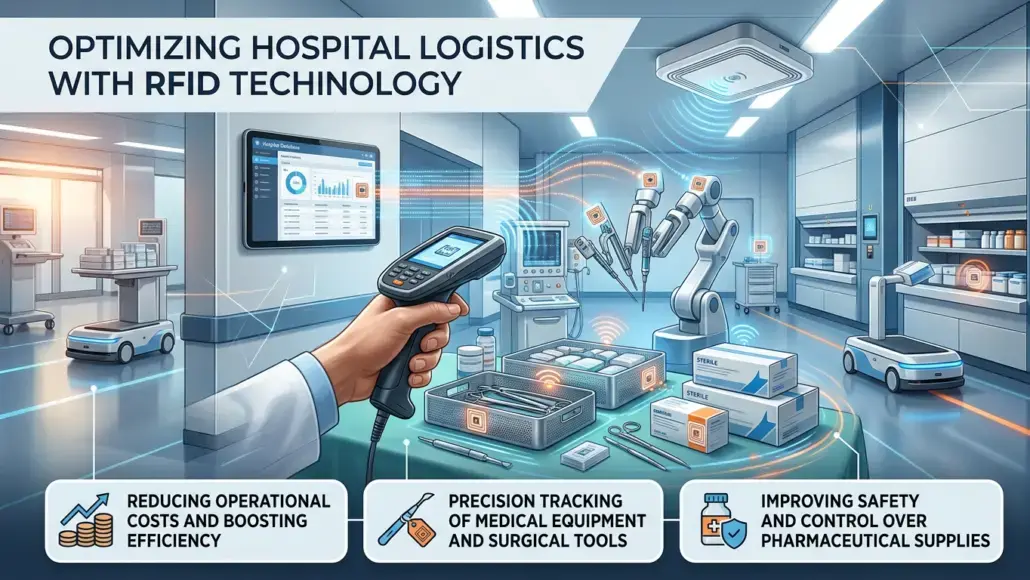

Modern healthcare environments face increasing pressure to optimize operational costs while maintaining the highest standards of patient care. The integration of Radio Frequency Identification (RFID) technology stands as a primary solution for addressing the complexities of internal logistics. By utilizing electromagnetic fields to automatically identify and track tags attached to medical equipment, surgical instruments, and pharmaceutical supplies, institutions can achieve a level of precision previously unattainable through manual methods. This systemic shift allows for the continuous monitoring of essential items, ensuring that critical resources are available exactly when and where they are required.
The transition toward automated systems significantly reduces the burden on clinical staff who often spend a disproportionate amount of time searching for misplaced equipment. When medical professionals can rely on automated systems to locate portable ventilators, infusion pumps, or specialized surgical kits, they can focus their attention on direct patient interventions. This optimization of human resources is a direct byproduct of improved hospital stock visibility, which provides a transparent view of the entire inventory lifecycle. By eliminating the blind spots in the supply chain, hospitals can prevent the unnecessary over-ordering of expensive equipment, thereby protecting the financial health of the organization.
Implementing these systems requires a comprehensive understanding of the physical environment within the facility. Signal interference from large metal objects or high-frequency medical machinery must be mitigated through strategic placement of readers and antennas. Additionally, the selection of appropriate tags, whether active, passive, or semi-passive, depends on the specific requirements of the assets being tracked. Passive tags are often sufficient for low-cost consumables, while active tags, which broadcast their own signals, are better suited for high-value mobile equipment that moves frequently between different floors or departments. Tracking these assets ensures that hospital stock visibility remains consistent across the entire facility.
Optimizing Clinical Workflows and Reducing Waste Through Data Precision
Waste reduction in the healthcare sector is not merely a financial goal but a clinical necessity. Expired medications and sterilized supplies that exceed their shelf life represent a significant loss of capital and can pose risks to patient safety if not managed correctly. RFID systems enable a first-in, first-out (FIFO) inventory rotation by providing real-time alerts when items are approaching their expiration dates. This level of granular control ensures that older stock is utilized before newer shipments, minimizing the volume of discarded materials. The resulting efficiency is a cornerstone of a modern healthcare supply chain.
The precision offered by these tracking systems extends to the operating room, where the management of surgical implants and instruments is critical. Each item can be tracked through the sterilization process, ensuring that every kit is complete and has undergone the necessary decontamination protocols. This automated verification process adds an extra layer of safety, reducing the likelihood of surgical delays or complications related to missing equipment. When surgeons have confidence in the availability and integrity of their tools, the overall quality of care improves substantially.
Additionally, the data collected through these systems provides valuable insights into usage patterns. By analyzing the frequency with which certain items are utilized, hospital administrators can make informed decisions about procurement and storage. If data shows that a particular department consistently underutilizes its allocated stock of specialized catheters, the inventory can be reallocated to a high-demand area. This dynamic redistribution of resources is only possible when hospital stock visibility is maintained through a centralized digital platform that synthesizes information from various clinical touchpoints.

Enhancing Financial Oversight and Procurement Accuracy in Healthcare Settings
Financial accountability is paramount in the current economic climate, where hospital budgets are under constant scrutiny. Automated inventory management provides an audit trail that is both accurate and accessible. Every time an item is removed from storage or relocated to a patient room, the transaction is logged without the need for manual data entry. This reduces the margin for error and provides a clear picture of departmental spending. The ability to generate detailed reports on inventory consumption allows for more accurate budgeting and prevents the accumulation of stagnant capital in the form of excess stock.
The integration of RFID data with hospital enterprise resource planning (ERP) systems streamlines the procurement process. Instead of relying on periodic manual counts, which are often prone to inaccuracies, the system can trigger automated reorder points based on real-time consumption data. This ensures that stock levels are maintained at optimal levels, avoiding both shortages and overstocking. A more resilient system is built when institutions prioritize data-driven procurement improving hospital supply chain resilience, allowing for a more responsive approach to fluctuating clinical demands.
- Automated reordering reduces the administrative burden on procurement teams.
- Real-time tracking minimizes the risk of stockouts for life-saving medications.
- Digital audit trails improve compliance with regulatory financial standards.
- Asset utilization data informs capital expenditure decisions for new equipment.
Budgetary planning also benefits from the improved visibility of high-value assets. Hospitals can track the total cost of ownership for expensive machinery by monitoring its usage frequency, maintenance history, and downtime. This information is crucial when deciding whether to repair existing equipment or invest in newer models. By treating every piece of equipment as a tracked asset, the institution can maximize the return on its investments and ensure that funds are directed toward the most impactful clinical technologies.
Future Proofing Hospital Infrastructure Through Interoperable Technology Frameworks
As hospitals continue to evolve, the need for interoperability between different technological systems becomes increasingly apparent. RFID technology does not exist in a vacuum; it must work in harmony with electronic health records (EHR), laboratory information systems, and pharmacy management platforms. Creating a unified data ecosystem allows for a more holistic view of the patient journey. For instance, when a specific medication is administered, the system can automatically update the patient’s record while simultaneously adjusting the inventory levels in the pharmacy.
The scalability of these systems is a vital consideration for large healthcare networks. A system that works effectively in a single facility must be able to expand across multiple locations without a loss of data integrity. This requires the adoption of global standards for data exchange, ensuring that information can be shared across different departments and institutions. By establishing a unified digital framework, healthcare providers can ensure that their infrastructure remains adaptable to future innovations in medical technology and data analytics.
Maintaining high standards of hospital stock visibility ensures that the organization remains prepared for emergency situations or sudden influxes of patients. During a crisis, the ability to rapidly identify the location and quantity of available resources can be the difference between a coordinated response and a chaotic one. Systems that provide immediate clarity on the availability of personal protective equipment (PPE), oxygen canisters, and emergency medications are essential components of a modern, resilient healthcare facility.
Technical Integration and Organizational Change Management
The successful deployment of RFID systems is as much about cultural change as it is about technical installation. Staff members must be trained to understand the value of the technology and to follow the necessary protocols for tag management. Resistance to new systems often stems from a lack of understanding or a fear of increased surveillance. Therefore, hospital leadership must communicate the benefits of the technology clearly, focusing on how it will simplify daily tasks and improve patient outcomes.
Technical support and ongoing maintenance are also critical for long-term success. Readers must be calibrated regularly, and software updates must be managed to ensure that the system remains secure and functional. A dedicated team of IT professionals and clinical advocates can facilitate the transition, providing troubleshooting support and gathering feedback from frontline users. This collaborative approach ensures that the technology remains aligned with the actual needs of the clinical environment.
Finally, the security of the data collected through these systems must be a top priority. As more assets are connected to the hospital network, the risk of cyberattacks increases. Encryption and comprehensive access controls are necessary to protect sensitive information and to comply with patient privacy regulations. By building security into the foundation of the technological framework, hospitals can utilize the benefits of automated tracking without compromising the safety of their digital infrastructure. Continuous monitoring of the system’s performance and security posture ensures that the investment in hospital stock visibility continues to deliver value for years to come.