










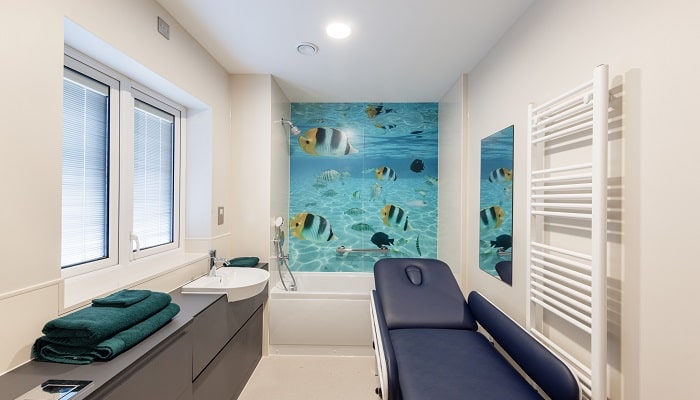
Accessible design, design for neurodiversity, inclusive design – these are not new terms, but seeing these design concepts translate into reality in the built environment has been a long time coming, and is now climbing up the agenda. As this movement gathers momentum, Altro looks to how and why design for neurodiversity resonates so widely at this point in time, and talks to some of the people making a change by demanding the design community do better.
In October 2022 a diverse group of people from all over the world gathered in Manchester at Material Source, for lively discussion on best practices and obstacles in inclusive design and how they can be overcome. At least one project manager left early: “I’m not being rude,” he said as he rushed for the door. “I’ve just realised that the project we’re about to sign off on has missed the point, and now I can see how we need to do it differently. If I leave now, I can fix it.”
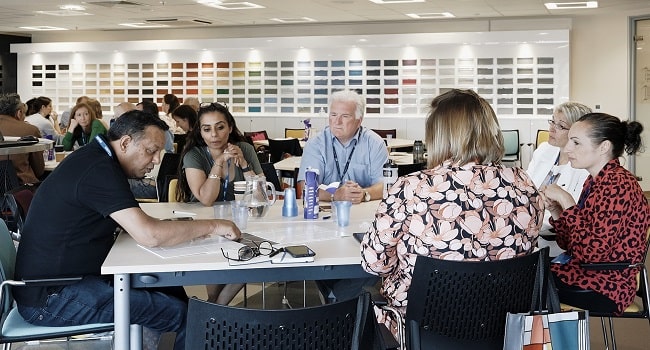
The event, focused on inclusive design and neurodiversity, was hosted by flooring and walling manufacturer Altro, and was one of the early developments in a collaborative passion project that has gathered momentum over the past three years. In November 2023 Joe Hurst, Altro’s Social Care Key Account Manager, Stephanie Kyle of Maber Architects and Maria Luigia Assirelli of Floyd Slaski Architects, are together again at Altro’s Letchworth HQ, meeting a large contingent from a major NHS Trust.
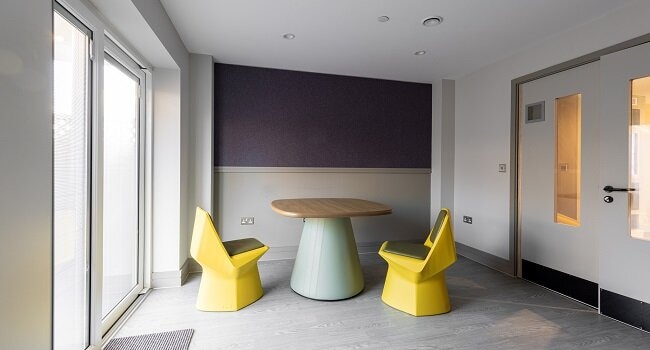
Around the table are the NHS Trust’s Head of Mental Health, Head of Capex Refurb Projects, Facilities Managers and more, and they are here for an open and honest conversation about their buildings, and about creating ‘places of safety’. They’re here because someone from their Trust was at one of a series of workshops organised by Altro, with industry-leading speakers such as Steph and Maria, where they learned that there is a different way to approach design for neurodiversity, that inclusive design doesn’t have to cost more if you consider it at the right stage, that meeting building regs simply means doing the bare minimum, which is not really enough, and that those in charge of building projects have a responsibility – and an opportunity – to do more.
Could it be that finally, we are seeing an appetite for architecture and interiors ‘by people, for people’, that come from an understanding of lived experience and that acknowledge, accept and better still, celebrate, diversity amongst our population? The strength of response from those who have attended Altro’s various forums and workshops would suggest that yes, that appetite is there. Why now? Well in part because of the way in which the message is being delivered. This is personal for the people involved; they care passionately, and that passion is infectious.
As Altro’s Social Care Key Account Manager, Joe Hurst understands the importance of inclusive design from many different viewpoints, working with designers, architects, facilities managers, care homes and more. As a parent of an autistic son, he’s seen the impact of design decisions play out in real life. “Through Altro’s Voice of the Customer programme I had the opportunity to raise questions around design for neurodiversity, to get a conversation started.”
This is also personal for Steph Kyle of Maber Architects, who was diagnosed as autistic in 2020, nearly 15 years after a diagnosis of auditory processing disorder, which presents in a similar way. Her interest was sparked as a child when an architecture company visited her school. They were involved in building a new aquarium in the city. Steph and her classmates visited the completed building, which she describes as “horrific, the worst building ever!”.
From here began the start of a special interest in building regulations and design for neurodiversity. “Every project I did at university focused on neurodiversity, on being autistic. I accumulated all this knowledge, reading scientific papers for fun. But then I would speak to people who had been architects for 25 years and find they didn’t know the basics about inclusive design, not even accessible toilets. How could this be the case?”
Maria Luigia Assirelli of Floyd Slaski Architects also explored her passion for accessible design as part of her architecture training. An architectural study and dissertation on a rehabilitation centre in Rome led her to a Masters in healthcare design. In 2005, she met Christopher Beaver of GA Architects, who has been dedicated to designing neurodiverse-friendly buildings since 1996, creating innovative facilities for children with severe learning difficulties. Together, Maria and Christopher conduct seminars and round tables to delve into ways to enhance their designs. Maria describes design for neurodiversity as “a puzzle to put together. I have a logical mind, and I love architecture with a purpose.”
Maria and Steph were just two of the experts brought together by Altro over the past few years for Altro Forum events in Manchester, Letchworth and London. Also involved are Sarah Darwin of PHI Architects who specialises in low energy, Passivhaus projects and designing for special needs and autism and who has shared her experiences as a designer and as a parent to a 21 year-old son with autism, and Professor Anastasios Maragiannis, Professor of Inclusive Design who presented on diversity and inclusion.
Maria believes in the importance of education, and that part of the architectural journey should be the obligation to the end user. “User experience should play a major part in architectural education, and in forming guidance and regulations. We have a moral obligation to stand up for something just and not accept second best.”
Education is the key factor for Steph, too. “People don’t design badly on purpose,” she says. “They just don’t realise they need to consider, and that changes if we change the architectural education system, which currently prioritises creative design over functional, accessible design, but you can absolutely have both.”
Between 400 and 500 people have taken part in Altro’s Forum events, with a further 4,000 taking up Altro’s Design for Neurodiversity CPD. “It’s an educational journey to engage with people,” explains Joe. “This is just the start of helping build better for the future, we’re in the infancy of raising awareness. We can’t educate everyone on our own, we need to work together.”