












Close
Digital Health & Ai Innovation summit 2026
Medical Taiwan 2026

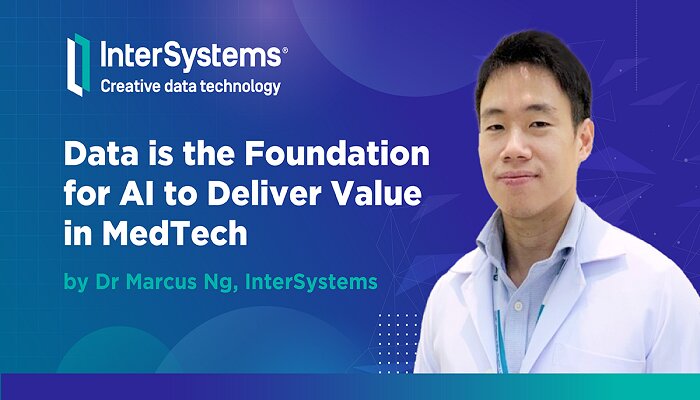
Data is the Foundation for AI to Deliver Value in MedTech

Note* - All images used are for editorial and illustrative purposes only and may not originate from the original news provider or associated company.

Subscribe

- Never miss a story with notifications

- Gain full access to our premium content

- Browse free from any location or device.

Media Packs

Expand Your Reach With Our Customized Solutions Empowering Your Campaigns To Maximize Your Reach & Drive Real Results!

– Access the Media PackNow

– Book a Conference Call

Leave Message for Us to Get Back

Related stories

Healthcare Wearables Driving Preventive Care Strategies...

Healthcare wearables are profoundly reshaping the landscape of modern medicine, moving the focus from reactive treatment to proactive prevention. This article explores how these sophisticated devices, through real-time health tracking, advanced wellness monitoring, and early risk detection, empower individuals and medical professionals alike to implement smarter, more effective preventive care strategies, ultimately fostering a healthier, more informed populace.

Digital Health Technologies Enhancing Modern Care...

Digital health technologies are fundamentally reshaping how healthcare is delivered, moving beyond traditional models to offer more efficient, accessible, and patient-centered solutions. From the widespread adoption of telehealth platforms to the seamless integration of Electronic Health Records (EHR) and the proactive insights gained from remote patient monitoring, these innovations are not merely incremental improvements but represent a profound healthcare digital transformation. This article delves into how these advanced digital health technologies are enhancing care delivery, optimizing clinical workflows, and fostering a new era of proactive, personalized patient care, ultimately driving better outcomes for individuals and healthcare systems alike.

AI Powered Diagnostics Improving Clinical Accuracy...

AI powered diagnostics are revolutionizing healthcare by significantly enhancing clinical accuracy. Through advanced medical image analysis, early disease detection, and robust data-driven clinical decisions, these diagnostic AI tools are transforming patient outcomes and empowering clinicians with unprecedented precision. This article delves into how artificial intelligence is becoming an indispensable force in modern diagnostics, ensuring a future of more reliable and effective healthcare.

With artificial intelligence in healthcare, data is not just a minor component; it’s the foundational layer that amplifies AI’s potency, particularly in MedTech. When we peel back the layers of AI, we uncover crucial elements that engage with and depend on data in fundamental ways. A new InterSystems whitepaper explores these relationships making data the bedrock of AI and shaping the MedTech innovation landscape.

Amid the recent pandemic that strained healthcare systems, a prime example of AI development surfaced in a solution for early dementia detection. Groundbreaking solutions like this exemplify AI’s potential to improve healthcare with early intervention. While AI is often hailed as revolutionary, it’s essential to note that it’s not a panacea nor a simple plug-and-play solution. Beneath its surface, data is the vital fuel propelling key AI elements forward.

Consider algorithms – a core element of artificial intelligence. Imagine them not only as complex sets of instructions but also as inquiring minds. Without the nourishment of data, they stay dormant. Data is the catalyst providing the sustenance to activate their learning and adaptive capacities. This is especially relevant in machine learning, which relies on data for extracting patterns and relationships and the training, testing, and fine-tuning of algorithms.

Think about the remarkable capabilities of model architectures, another key component of AI, as they process and learn from extensive datasets. Their true power is only unleashed when data is seamlessly integrated. This is when the models go beyond simple computation and begin to operate more like the complex neural networks of the human brain, comprehending intricate patterns hidden in the data and extending their understanding beyond initial confines.

The comparison to the human brain serves as a metaphorical reference point. It’s essential to recognize that algorithms and model architectures represent just a glimpse into the broader spectrum of AI elements that interact with and depend on data.

Monica Rogati’s AI Hierarchy of Needs underlines the importance of data. The basal tiers in the pyramid represent vital stages in data management. At every level, the foundation is laid for the next, paving the way for implementing AI and Deep Learning at the top of the hierarchy.

This perspective underscores the notion that data acts as the foundational bedrock, shaping the very essence of AI. Therefore, resolving data-related challenges early on becomes pivotal for successful and robust AI implementations – something that would benefit many MedTech developments.

There are parallels between addressing data challenges in AI early on and the early detection of diseases like dementia. A proactive approach at the foundational stages has significant advantages in both realms. The common thread is the recognition that addressing challenges at the outset, whether in the digital or healthcare landscape, is key to fostering success and enhancing the well-being of individuals and systems.

In our whitepaper, Getting the Most from AI in MedTech Takes Data Know-How, we explore examples illustrating the impact of data on AI performance, what data challenges to navigate, and why overcoming them is crucial to unlocking AI’s potential in MedTech.

Access the whitepaper here:
https://www.intersystems.com/resources/ai-medtech-data-know-how-whitepaper/


Author: Dr. Marcus Ng

Author Img

Dr. Marcus Ng is a Physician Executive at InterSystems, a creative data technology provider dedicated to solving critical scalability, interoperability and speed challenges for its customers. Dr. Ng provides clinical leadership for the strategic planning, implementation and management of health information systems and is responsible for maintaining strong relationships with key clinical stakeholders.

Company: InterSystems


InterSystems is the information engine that powers some of the world’s most important applications. In healthcare, finance, government, and other sectors where lives and livelihoods are at stake, InterSystems has been a strategic technology provider since 1978. InterSystems is a privately held company headquartered in Cambridge, Massachusetts (USA), with offices worldwide, and its software products are used daily by millions of people in more than 80 countries. For more information, visit InterSystems.com

Send Enquiry for this story

By submitting this form you agree to allow www.hhmglobal.com to contact you regarding your enquiry.
See our Privacy Policy to learn more.

MEDICAL FAIR ASIA 2026

Latest stories

Related stories

Healthcare Wearables Driving Preventive Care Strategies Today

Healthcare wearables are profoundly reshaping the landscape of modern medicine, moving the focus from reactive treatment to proactive prevention. This article explores how these sophisticated devices, through real-time health tracking, advanced wellness monitoring, and early risk detection, empower individuals and medical professionals alike to implement smarter, more effective preventive care strategies, ultimately fostering a healthier, more informed populace.

Digital Health Technologies Enhancing Modern Care Delivery

Digital health technologies are fundamentally reshaping how healthcare is delivered, moving beyond traditional models to offer more efficient, accessible, and patient-centered solutions. From the widespread adoption of telehealth platforms to the seamless integration of Electronic Health Records (EHR) and the proactive insights gained from remote patient monitoring, these innovations are not merely incremental improvements but represent a profound healthcare digital transformation. This article delves into how these advanced digital health technologies are enhancing care delivery, optimizing clinical workflows, and fostering a new era of proactive, personalized patient care, ultimately driving better outcomes for individuals and healthcare systems alike.

AI Powered Diagnostics Improving Clinical Accuracy in Healthcare

AI powered diagnostics are revolutionizing healthcare by significantly enhancing clinical accuracy. Through advanced medical image analysis, early disease detection, and robust data-driven clinical decisions, these diagnostic AI tools are transforming patient outcomes and empowering clinicians with unprecedented precision. This article delves into how artificial intelligence is becoming an indispensable force in modern diagnostics, ensuring a future of more reliable and effective healthcare.

Advanced Rehabilitation Technologies Supporting Faster Recovery

The landscape of rehabilitation is undergoing a profound transformation, driven by cutting-edge advancements. This article explores how advanced rehabilitation technologies are revolutionizing patient recovery, offering unprecedented precision, personalization, and engagement. From sophisticated robotic systems and immersive virtual reality environments to smart wearables and AI-driven insights, these innovations are significantly enhancing therapeutic outcomes, making recovery journeys more efficient, accessible, and motivating for individuals striving to regain function and independence.

Subscribe

- Never miss a story with notifications

- Gain full access to our premium content

- Browse free from any location or device.

Media Packs

Expand Your Reach With Our Customized Solutions Empowering Your Campaigns To Maximize Your Reach & Drive Real Results!

– Access the Media Pack Now

– Book a Conference Call

Leave Message for Us to Get Back

Translate »