









Close
Digital Health & Ai Innovation summit 2026
Medical Taiwan 2026

Lunit Aims FDA Nod for Breast Cancer Risk Prediction Model

Note* - All images used are for editorial and illustrative purposes only and may not originate from the original news provider or associated company.

Subscribe

- Never miss a story with notifications

- Gain full access to our premium content

- Browse free from any location or device.

Media Packs

Expand Your Reach With Our Customized Solutions Empowering Your Campaigns To Maximize Your Reach & Drive Real Results!

– Access the Media PackNow

– Book a Conference Call

Leave Message for Us to Get Back

Related stories

Hospital Infrastructure Modernization Shapes Healthcare

The physical environment in which care is delivered is evolving from a static container of services into an active, intelligent participant in the healing process. By prioritizing sustainability and integrating sophisticated facility management systems, modern medical institutions are enhancing their operational resilience while creating safer and more efficient spaces for both patients and clinicians.

Precision Diagnostics Accelerating Early Detection

The fundamental strategy of clinical medicine is shifting from managing symptoms to identifying the earliest molecular indicators of disease. By integrating sophisticated genomic analysis with high-fidelity imaging, practitioners are now able to intercept pathological processes long before they manifest as systemic illness, significantly improving the efficacy of therapeutic interventions.

UK Medical Device Testing Jumps 17%,...

Clinical investigations of medical devices in the UK reached...

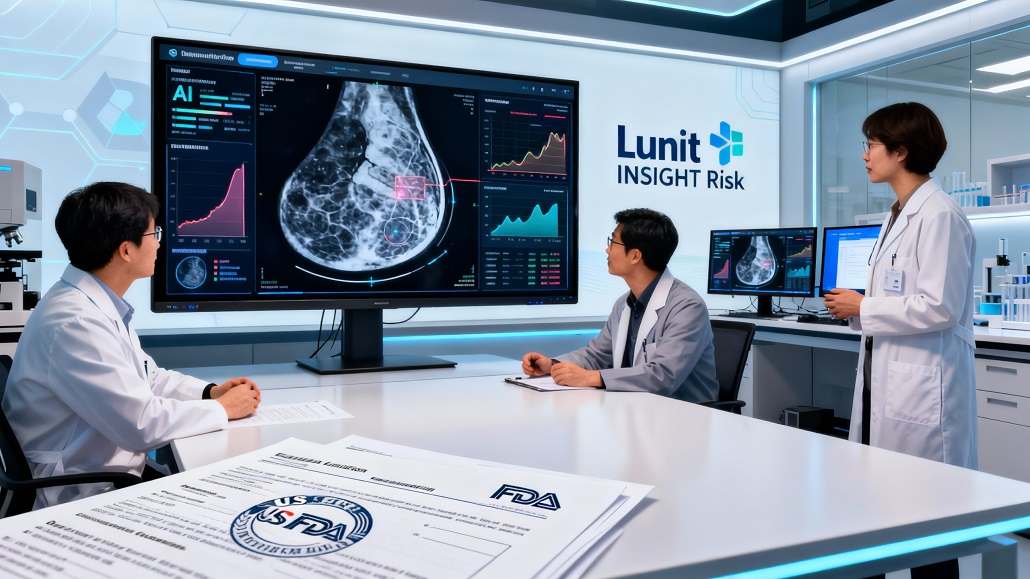
Lunit has gone ahead and announced the submission of a 510(k) premarket notification looking out for clearance from the US Food and Drug Administration – FDA for its breast cancer risk prediction model called the Lunit INSIGHT Risk.

Notably, the model is designed so as to estimate a five-year risk of developing breast cancer in women based upon screening mammograms, either by way of digital or synthetic, without needing the patient questionnaires.

Lunit went on to acquire the technology, which was developed originally by Dr. Graham Colditz as well as Dr. Shu (Joy) Jiang at the Washington University School of Medicine located in St. Louis, US.

As per the company, it is the inaugural AI solution that offers surveillance, epidemiology, and end results – SEER-calibrated five-year absolute risk estimates for women across the US.

Lunit expects that the potential clearance of the model is going to take place in 2026.

It is well to be noted that the performance of the model is said to have been validated in a couple of peer-reviewed studies that show a five-year area under the curve -AUC values of almost 0.80 across the diverse screening populations throughout Canada as well as the US.

These trials also go ahead and point out a consistent performance in spite of the race, age, or breast density, therefore supporting the potential of the model when it comes to equitable adoption within clinical settings.

Notably, Lunit INSIGHT Risk, the much anticipated breast cancer risk prediction model has received breakthrough device designation from the US regulator.

Brandon Suh, the Lunit CEO, said that through delivering absolute, guideline-aligned five-year risk estimates directly from the routine screening images, Lunit INSIGHT Risk looks forward to supporting earlier and more informed decisions in terms of preventive care. They also believe that this approach can go ahead and enable the health systems to execute practical risk-stratified strategies as the screening recommendations go on to evolve.

He added that as the screening programs increasingly transition from a one-size-fits-all approach to more customized and risk-informed pathways, they go on to see this submission not just as a scientific landmark but also as a strategic step that positions Lunit so as to meet the changing requirements of health systems as well as patients.

The model is going to function with an intent to work alongside the breast health portfolio of Lunit, including the likes of Lunit INSIGHT MMG as well as DBT detection models, along with the Volpara RiskPathways.

This integration looks forward to supporting the risk-based workflows throughout the process of evaluation, imaging, and reporting, as well as ongoing follow-up.

In September 2025, apparently, Lunit went on to enter into a partnership with CellCarta, a Canada-based research organization, in order to integrate digital pathology AI within clinical trials.


MEDICAL FAIR ASIA 2026

Latest stories

Related stories

Hospital Infrastructure Modernization Shapes Healthcare

The physical environment in which care is delivered is evolving from a static container of services into an active, intelligent participant in the healing process. By prioritizing sustainability and integrating sophisticated facility management systems, modern medical institutions are enhancing their operational resilience while creating safer and more efficient spaces for both patients and clinicians.

Precision Diagnostics Accelerating Early Detection

The fundamental strategy of clinical medicine is shifting from managing symptoms to identifying the earliest molecular indicators of disease. By integrating sophisticated genomic analysis with high-fidelity imaging, practitioners are now able to intercept pathological processes long before they manifest as systemic illness, significantly improving the efficacy of therapeutic interventions.

UK Medical Device Testing Jumps 17%, AI and Neurotech Lead

Clinical investigations of medical devices in the UK reached...

Medtronic Secures FDA PMA for Infuse Bone Graft in TLIF

Medtronic announced that it has secured FDA premarket approval...

Subscribe

- Never miss a story with notifications

- Gain full access to our premium content

- Browse free from any location or device.

Media Packs

Expand Your Reach With Our Customized Solutions Empowering Your Campaigns To Maximize Your Reach & Drive Real Results!

– Access the Media Pack Now

– Book a Conference Call

Leave Message for Us to Get Back

Translate »