












The internal mechanics of a large-scale medical facility are often as complex as the clinical care provided within its walls. From the movement of life-saving medications to the transport of surgical linens and laboratory samples, the flow of materials is a critical component of patient safety and operational success. Traditionally, these logistical tasks have relied on manual labor, which is not only physically demanding but also prone to errors and delays. As the healthcare industry faces increasing pressure to improve efficiency while reducing costs, the integration of automation hospital logistics pharmacy systems is becoming a strategic priority. By leveraging autonomous mobile robots and robotic dispensing units, hospitals are transforming their back-end operations into highly efficient, data-driven ecosystems. This shift is not just about moving goods; it is about ensuring that the right resources are in the right place at the right time, every single time.
The Transformation of Hospital Logistics Automation
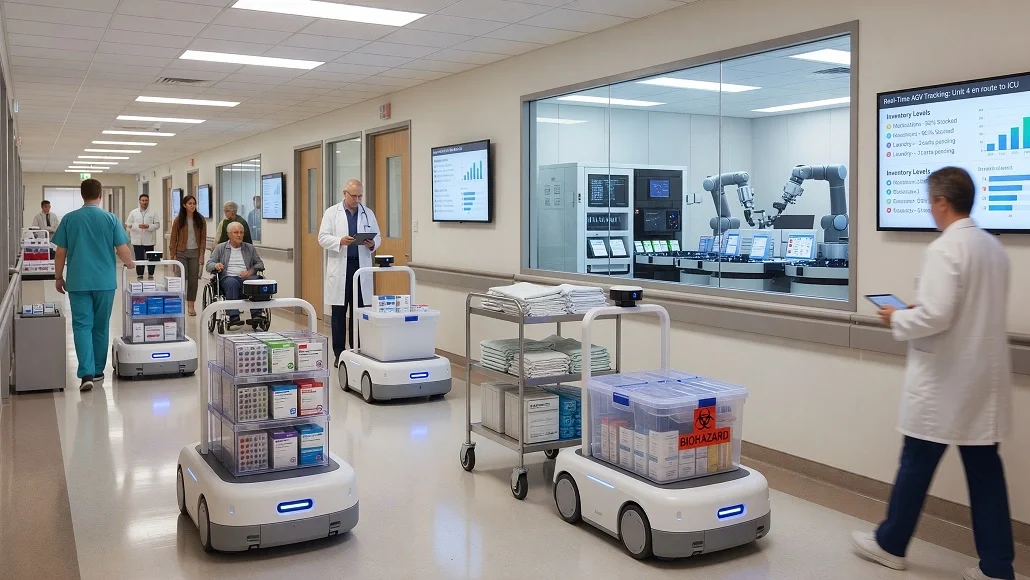
The cornerstone of this logistical revolution is hospital logistics automation, which utilizes a fleet of autonomous guided vehicles (AGVs) to navigate the labyrinthine corridors of modern medical centers. These AGV robots hospitals are designed to perform heavy-duty transport tasks that would otherwise require significant human effort. They can haul laundry carts, deliver meal trays, and transport heavy medical equipment between departments without requiring any dedicated tracks or external guidance. Using advanced lidar and mapping technologies, these robots can safely navigate around staff, patients, and visitors, even in high-traffic areas. This automation allows hospitals to redirect their support staff toward tasks that require human judgment and empathy, such as assisting patients or maintaining the facility’s environment. The result is a more streamlined workflow that operates twenty-four hours a day, seven days a week, without the risk of fatigue-related accidents.
In addition to heavy transport, these autonomous systems are increasingly being used for “last-mile” delivery within a hospital. Smaller, more agile robots can be dispatched to deliver urgent laboratory results or a single dose of medication to a specific nursing station. These units are often equipped with secure, biometric-controlled compartments to ensure that sensitive materials are handled only by authorized personnel. By providing a reliable and rapid transport link between departments, these robots reduce the need for clinical staff to act as couriers, a common source of distraction and inefficiency in traditional hospital models. The ability to track every delivery in real-time through a centralized dashboard provides administrators with an unprecedented level of visibility into the facility’s material flow, allowing for continuous optimization of routes and schedules.
Enhancing Accuracy in the Robotic Pharmacy
Perhaps the most critical application of automation hospital logistics pharmacy systems is found within the hospital pharmacy. Medication errors are a significant concern in healthcare, often resulting from manual picking and labeling mistakes. To mitigate these risks, many facilities are adopting robotic pharmacy systems that can store, dispense, and package medications with absolute precision. These systems use barcode-scanning technology to ensure that every pill and vial is correctly identified and tracked throughout the healthcare supply chain. When a physician enters a prescription into the electronic health record, the robotic system automatically retrieves the correct dose, labels it for the specific patient, and prepares it for delivery. This level of automated inventory systems ensures that medication stock levels are monitored in real-time, preventing the sudden shortages that can disrupt patient care.
Beyond simple dispensing, advanced robotic pharmacy units can also handle the complex tasks of intravenous (IV) compounding. Preparing sterile IV bags requires a high level of precision and adherence to strict contamination control protocols. Robotic systems can perform these tasks in a self-contained, sterile environment, eliminating the risk of human-introduced contaminants and ensuring that the final product is both accurate and safe. This level of automation is especially critical in oncology and pediatrics, where even small variations in dosage can have serious clinical consequences. By automating these high-risk activities, pharmacies can significantly improve their safety profile and allow their highly trained pharmacists to focus on clinical consultations and patient education, where their expertise is most needed.
Optimizing the Healthcare Supply Chain
The integration of automated inventory systems allows for a more holistic view of the entire healthcare supply chain. By tracking every item from the moment it enters the facility to the moment it is consumed, hospitals can identify patterns of waste and optimize their purchasing strategies. This data-driven approach to logistics ensures that high-value items, such as specialized implants or expensive biologics, are managed with the utmost care. Furthermore, automation can extend to the supply rooms on individual patient floors. Smart cabinets equipped with weight sensors and RFID technology can automatically track when an item is removed and trigger a restocking request from the central warehouse. This ensures that nurses always have the supplies they need at hand, reducing the “hunting and gathering” time that often takes them away from direct patient care.
The use of predictive analytics within the healthcare supply chain is another emerging trend. By analyzing historical consumption patterns and correlating them with seasonal health data or local outbreak reports, automated systems can anticipate future demand for specific medications or supplies. This allows hospitals to adjust their inventory levels proactively, ensuring they are prepared for surges in patient volume without over-ordering and risking the expiration of expensive products. This level of intelligence is transforming the hospital warehouse from a passive storage area into a dynamic and reactive logistical hub that actively supports the facility’s clinical mission. For hospital leadership, the financial benefits of reduced waste and improved inventory turnover are clear, providing a strong business case for continued investment in logistical automation.
The Role of AGV Robots Hospitals in Clinical Efficiency
The deployment of AGV robots hospitals has a direct impact on the clinical efficiency of a facility. In many traditional hospitals, the movement of laboratory specimens and diagnostic results is a manual process that can take hours. By utilizing dedicated robotic delivery systems, these items can be transported across the facility in a fraction of the time, allowing for faster diagnosis and treatment decisions. These robots can even be programmed to use elevators and open secure doors, allowing them to move between floors and restricted areas without human assistance. This seamless integration of logistics and clinical care is what defines a truly modern medical center. The ability to move materials quickly and accurately is especially critical in emergency and trauma settings, where every second saved in the delivery of blood products or medications can have a direct impact on patient outcomes.
Beyond material transport, these robots are also being utilized to manage hospital waste and recycling. Managing biohazardous materials and large volumes of general waste is a physically demanding and potentially hazardous task for human workers. By automating the transport of waste from collection points to a central processing area, hospitals can improve the safety and hygiene of their clinical environments. These robotic systems can be programmed to operate during off-peak hours, minimizing their impact on patient and staff movement. The data collected from these waste management cycles can also be used to identify opportunities for improved recycling and waste reduction, supporting the hospital’s sustainability goals. This comprehensive approach to logistical automation ensures that every aspect of the facility’s operation is as efficient and safe as possible.
Challenges in Implementing Logistics and Pharmacy Automation
While the benefits of automation hospital logistics pharmacy systems are clear, the implementation process can be complex. The initial capital investment for a fleet of AGVs and a fully robotic pharmacy is substantial, requiring a clear business case and a long-term vision from hospital leadership. Additionally, the physical layout of older hospital buildings can pose challenges for robotic navigation, requiring retrofitting or specialized programming to ensure the robots can operate safely. There is also the essential task of integrating these new technologies with existing IT systems, such as the electronic health record and the pharmacy management software. Ensuring that these systems can “talk” to each other is crucial for maintaining a seamless data flow and preventing the creation of information silos. Finally, staff training is paramount; employees must understand how to interact with the robots and how to troubleshoot minor issues to ensure the system remains operational.
Another significant challenge is the cultural change required within the organization. Logistical and pharmacy staff may initially view automation as a threat to their job security, leading to resistance or lack of engagement with the new systems. To address these concerns, hospital leadership must emphasize that automation is intended to augment rather than replace the human workforce. By removing the most physically taxing and repetitive tasks, automation creates opportunities for staff to transition into more skilled and clinically oriented roles. For example, a pharmacy technician whose picking duties have been automated might be retrained to assist with patient discharge counseling or to manage the robotic systems themselves. This shift in focus requires a commitment to ongoing education and a culture of continuous improvement that values the contributions of every staff member in a technology-enhanced environment.
Future Innovations in Hospital Automation
Looking ahead, the future of automation hospital logistics pharmacy systems will likely include even more sophisticated forms of integration. We are seeing the development of “swarming” robots that can collaborate on large-scale transport tasks, as well as drones for the rapid delivery of urgent medications or organs between separate hospital buildings. In the pharmacy, the next generation of robotic systems may incorporate machine learning to predict medication demand based on seasonal trends or local health data, allowing for even more precise inventory management. As these technologies continue to mature and become more affordable, we can expect to see them adopted by a wider range of healthcare facilities, including smaller clinics and long-term care centers. The ultimate goal is to create a fully autonomous logistical backbone for healthcare that operates invisibly in the background, allowing the human staff to focus entirely on the art and science of healing.
The potential for robotic systems to handle “last-mile” delivery directly to the patient’s bedside is also an area of active research. Imagine a robot that not only delivers a medication to a nursing station but can also verify the patient’s identity and assist the nurse in the administration process. This level of bedside automation would provide an additional layer of safety and would further streamline the clinical workflow. While there are significant technical and regulatory hurdles to overcome, the progress made in recent years suggests that these innovations are within reach. By continuing to push the boundaries of what is possible in logistical and pharmacy automation, the healthcare industry is ensuring that it can meet the challenges of the future with a resilient and efficient infrastructure that prioritizes patient safety and clinical excellence.
Redefining the Patient-Centered Hospital
As hospitals continue to embrace automation, the focus remains on the patient. By automating the mundane and physically taxing aspects of logistics and pharmacy management, healthcare providers are creating an environment where the human touch is more prominent, not less. When a nurse is no longer required to spend an hour of their shift fetching supplies or waiting for a medication delivery, they have more time to spend listening to a patient’s concerns or explaining a treatment plan. The efficiency gained through automation hospital logistics pharmacy systems is, at its core, a way to reclaim the humanity of healthcare. It is a powerful reminder that while technology can move the boxes and dispense the pills, only people can provide the empathy and care that are essential for recovery.
The synergy of robotic precision and human compassion is the future of medicine, and it is a future that is already arriving in hospitals around the world. By investing in the logistical and pharmaceutical foundations of the facility, healthcare leaders are ensuring that their organizations are built on a solid platform of safety and efficiency. This allows the entire clinical team to operate at the top of their license, providing the best possible care for every patient who enters their doors. As we move forward, the most successful hospitals will be those that view automation not as a cost-cutting measure, but as a strategic enabler of clinical excellence and patient-centered care. The journey toward this fully automated and highly humanized future is an ongoing process of innovation, collaboration and a relentless focus on the needs of the patient.