











The modernization of healthcare data architecture from fragmented silos to a cohesive, agile framework represents a critical advancement in the management of clinical and operational information. In an era where the volume of medical data is expanding exponentially, traditional methods of integration have become increasingly insufficient to meet the needs of real-time care. By creating a unified layer that spans across disparate systems from legacy EHRs to modern cloud-native platforms the medical community is moving toward a standard of seamless connectivity. Healthcare data fabric enabling unified information access is the primary engine of this shift, ensuring that data is no longer a bottleneck but a fluid and accessible resource. This architectural evolution allows for the “democratization” of information, providing clinicians and administrators with the right data at the right time, while maintaining the highest standards of governance and security. As these systems become the backbone of the digital hospital, they are setting a new standard for organizational agility and patient-centered excellence.
Designing a Unified Architectural Framework for Clinical Data
Historically, the healthcare industry has struggled with the “silo effect,” where vital patient information is trapped in independent systems that were never designed to communicate. This fragmentation not only slows down clinical workflows but also increases the risk of error, as clinicians are forced to make decisions based on an incomplete or outdated view of the patient. Today, the integration of healthcare data fabric enabling unified information access addresses this challenge by providing a sophisticated, virtualized layer that sits on top of all existing data sources. Instead of the costly and time-consuming process of moving data into a single “data lake,” a data fabric leaves the information where it resides while providing a unified point of access. This agile approach allows healthcare organizations to integrate new data sources such as wearable sensors or social determinants data in a matter of days rather than months, ensuring that the system is always ready for the next innovation.
The primary benefit of a data fabric architecture is its ability to handle both structured and unstructured data with equal ease. In the modern hospital, valuable information is found in everything from HL7 messages and DICOM images to free-text clinical notes and genomic sequences. A data fabric uses intelligent metadata management to “understand” the context and quality of all these disparate data types, allowing them to be queried and utilized as a single, cohesive dataset. This level of healthcare data integration is a cornerstone of modern health information management, providing the foundation for more advanced analytics and AI-driven clinical tools. By creating a unified healthcare data environment, organizations can move away from the “data cleaning” phase and focus on the “data utilizing” phase, where the true clinical and operational value is realized. The fabric is the digital thread that binds the hospital’s disparate systems into a single, high-performance organism.
This architectural shift also promotes a more “future-proof” IT environment. In a traditional model, adopting a new software platform often required a complex and disruptive “migration” process. With a data fabric, new applications can be “plugged in” to the unified layer, instantly gaining access to all the necessary historical data. This flexibility is essential for fostering a culture of innovation, as it allows organizations to experiment with new digital tools without risking the stability of their core systems. By making data a shared and accessible utility, the data fabric is empowering every department to drive its own clinical and operational improvements. This is the true meaning of a “connected” healthcare system: one where the technology is as fluid and adaptive as the clinical needs it supports. The fabric ensures that the hospital’s digital assets are always aligned with its mission of care.
Real-Time Connectivity and the Speed of Clinical Decisions
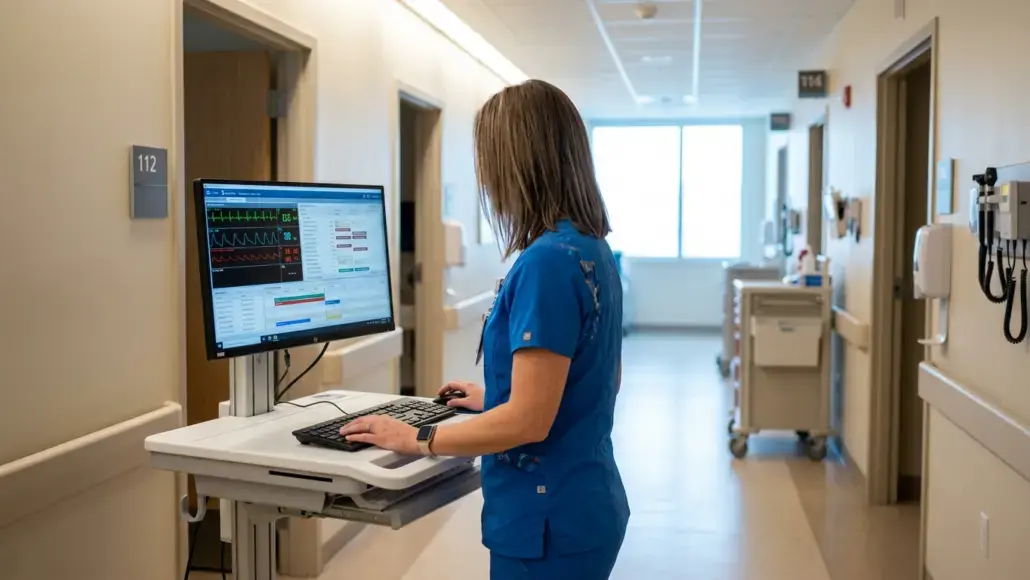
In the high-stakes environment of an acute care setting, the difference between having the right information in seconds versus minutes can be a matter of life and death. Healthcare data fabric enabling unified information access provides this critical real-time connectivity by utilizing an “active metadata” approach. Instead of static, predefined integrations, the fabric uses AI to continuously discover and connect relevant data points as they are created. This means that as soon as a lab result is finalized or a vital sign is recorded, it is instantly available across the entire clinical network, from the attending physician’s tablet to the command center dashboard. This “always-on” connectivity is essential for managing the dynamic needs of a busy medical center, ensuring that no patient is ever waiting for their information to “sync.”
Furthermore, real-time access through a data fabric allows for a more responsive and intelligent approach to hospital operations. For example, a “capacity management” application can use the fabric to pull in real-time data on bed availability, surgical scheduling, and staffing levels to provide a live view of the hospital’s status. If a sudden surge in emergency department volume occurs, the system can automatically suggest the most efficient way to reallocate resources to meet the demand. This level of operational agility is a direct result of unified healthcare data, moving the hospital from a reactive state toward one of proactive orchestration. By ensuring that information flows as fast as the clinical events it represents, a data fabric enables a higher standard of safety and efficiency that benefits both patients and staff. The data becomes a living part of the hospital’s daily heartbeat, providing the pulse of information needed for excellence.
The impact of real-time data also extends to the patient’s own experience. When a clinical team has instant access to the latest test results, they can provide the patient with immediate feedback and a clear plan for the next steps. This reduces the “wait time” and the associated anxiety that often characterize the diagnostic process. Moreover, real-time connectivity allows for the use of “just-in-time” clinical decision support, where the system can alert the doctor to a potential issue such as an abnormal heart rhythm or a deteriorating vital sign before it becomes a crisis. This proactive safety layer is a hallmark of the modern digital hospital, providing a level of vigilant support that ensures every patient receives the best possible care. By connecting the “data signals” of health in real-time, we are building a more secure and responsive care environment for all.
Strengthening Data Governance and Security in Fabric Systems
As data becomes more accessible and interconnected, the need for robust governance and security becomes even more paramount. Healthcare data fabric enabling unified information access addresses this by embedding governance directly into the fabric itself. Instead of having separate security policies for every individual system, a data fabric allows for a single, centralized policy that is applied consistently across all data access points. This ensures that every bit of information is protected by the same high standards of encryption, authentication, and auditing, regardless of where it resides. This “governance-by-design” approach is essential for maintaining compliance with regulations like HIPAA and GDPR and for preserving the sanctity of the patient’s most personal information. By making security a fundamental part of the architecture, we are building a foundation of trust that is necessary for the success of any digital health initiative.
Moreover, a data fabric provides unprecedented visibility into “data lineage” the history of where a piece of data came from, who accessed it, and how it was used. This transparency is vital for ensuring the quality and integrity of the clinical record. If a discrepancy is found in a lab result or a diagnosis, administrators can trace it back to its source instantly to identify and correct the issue. This level of accountability is a primary driver of quality improvement in modern health information management, providing the evidence needed to continuously refine and improve clinical practices. By turning “data governance” from a restrictive chore into a proactive tool for excellence, a data fabric ensures that the hospital’s most valuable asset is managed with the highest level of care and precision. The fabric doesn’t just connect data it protects and validates the clinical truth.
This centralized governance also facilitates a more efficient “data sharing” model for research and collaboration. Instead of having to negotiate complex agreements for every individual dataset, organizations can use the data fabric to create “secure enclaves” where authorized researchers can access anonymized data for specific projects. This ensures that the pursuit of scientific progress is balanced with the absolute protection of patient privacy. By making governance an enabler rather than a barrier, the data fabric is accelerating the pace of medical discovery and ensuring that every clinical encounter contributes to a deeper understanding of human health. The goal is a world where data is shared responsibly and utilized for the common good, within a secure and ethically sound framework. This is the ultimate promise of modern health information management.
Driving Innovation Through Decentralized Data Democratization
One of the most transformative impacts of a data fabric is the “democratization” of information across the medical institution. Traditionally, accessing clinical data for research or quality improvement was a complex process that required the intervention of a specialized IT team. Today, healthcare data fabric enabling unified information access provides self-service tools that allow clinicians, researchers, and administrators to access and analyze the data they need directly. By removing the technical barriers to information access, organizations can foster a culture of innovation and continuous learning. A nursing team can use the fabric to track their own department’s performance metrics in real-time, or a research team can use it to identify a cohort of patients for a new clinical trial in a matter of clicks. This level of empowerment is essential for building a high-performing medical institution that is constantly seeking new ways to improve.
Furthermore, this democratization allows for the rapid development and deployment of new AI and machine learning tools. A data fabric provide the high-quality, pre-integrated data needed to “train” new algorithms, ensuring that they are built on a representative and accurate sample of the hospital’s actual patient population. Once developed, these tools can be easily “plugged in” to the fabric, making their insights instantly available to the entire clinical team. This accelerated cycle of innovation is a hallmark of modern healthcare IT, providing the agility needed to stay at the cutting edge of medical science. By creating a “platform for innovation,” a data fabric ensures that the hospital is not just a consumer of technology but a creator of it. The institution becomes a living laboratory, where every bit of data is a potential seed for a new medical breakthrough. Information is the fuel, and the fabric is the engine that drives us toward a healthier future.
The impact of this democratization also reaches the patient directly. By providing patients with a unified view of their own health data from multiple sources, the data fabric is empowering them to take a more active role in their own care. They can see their latest vitals alongside their discharge summary and their upcoming appointments, providing a deeper sense of clarity and purpose. This transparency is a key driver of health engagement and adherence to treatment plans. When patients have the same information as their care team, the relationship moves from a hierarchical one to a collaborative one. This is the ultimate goal of the “person-centered” healthcare movement: a system where the individual is at the heart of the digital narrative, supported by a fabric of information that respects their agency and supports their well-being. The technology serves as a bridge, connecting the patient with the best that modern medicine has to offer.
Future Horizons: The Semantic and Cognitive Data Fabric
Looking toward the future, the next generation of data architecture will move toward a “cognitive data fabric” a system that not only connects data but also “understands” it at a deep, semantic level. By utilizing advanced AI and knowledge graph technologies, a cognitive fabric will be able to identify complex, multi-dimensional relationships across the entire data ecosystem. It will be able to recognize that a specific clinical symptom, a genomic marker, and a social factor are all related to a single underlying condition, even if they are stored in completely different systems. This level of “intelligent integration” is the ultimate goal of healthcare data fabric enabling unified information access, providing a foundation for truly holistic and personalized medicine. The fabric will become a “clinical brain” for the hospital, providing the deep reasoning and insights needed to tackle the most complex health challenges of our time.
Moreover, we are moving toward a state of “federated data fabrics,” where information can be shared and analyzed across different healthcare institutions while still maintaining absolute privacy and security. This would allow for a level of global collaboration that was previously impossible, as researchers could analyze the anonymized data from millions of patients across the world to identify new trends and develop more effective treatments. This global connectivity is a vital part of the future of healthcare IT, ensuring that the benefits of precision medicine reach every patient, regardless of their location. By building a unified and intelligent global data layer, we are creating a more resilient and responsive healthcare system for all. The fabric is the digital bridge that connects the world’s medical knowledge, ensuring that we are all working together in the pursuit of health. The future is connected, and it is a future we are building one unified information access point at a time.
This future also includes the rise of “self-healing” data fabrics, where AI autonomously identifies and corrects data quality issues or security vulnerabilities as they arise. This ensures that the system is always performing at its peak and that the clinical record is always of the highest possible quality. By automating the “maintenance” of the data ecosystem, we are freeing up human experts to focus on the high-level tasks that require a human touch. The goal is a healthcare system where information is as reliable and as ubiquitous as the air we breathe a silent and powerful support system for the healing process. As we continue to weave this digital fabric, we are not just building a better IT system we are building a better future for humanity, one where the best of our collective knowledge is available to everyone, everywhere. This is the mission of the modern digital hospital, and the data fabric is the key to its success.
Conclusion: The Foundation of a Seamless Health Data Ecosystem
The ongoing journey of healthcare data fabric enabling unified information access is a testament to the power of integration and the pursuit of a more coordinated and intelligent healthcare system. We have moved from a past of fragmentation and isolation to an era of connectivity and agility. By prioritizing unified healthcare data, real-time access, and robust governance, healthcare organizations are ensuring that their most valuable resource is managed with the same level of care and precision as their patients. The data fabric is no longer just a technical architecture it is a fundamental part of the clinical infrastructure, providing the lifeblood of information that allows the clinical mission to flourish. This move toward a seamless and responsive data ecosystem is saving lives, reducing waste, and ensuring that every patient receives the best possible care based on the most accurate and timely information available.
Ultimately, the success of the data fabric will be measured by the silence it produces the absence of data gaps, the absence of integration delays, and the absence of administrative friction for the clinical team. When the system works perfectly, the technology is invisible, providing a silent and powerful layer of support that allows clinicians to focus on their vocation and patients to focus on their recovery. This is the ultimate goal of all our architectural and administrative efforts. By investing in the highest levels of data connectivity and professional standards, we are safeguarding the future of healthcare, ensuring that the healing process is supported by the best that modern science and technology have to offer. This is the promise of the healthcare data fabric, and it is a promise we are fulfilling every day, for every patient and every provider. The unified future is here, and it is a future we are building together, one data point and one connected insight at a time. This is how we ensure that the next generation inherits a medical system that is as intelligent as it is compassionate.