












Close
Digital Health & Ai Innovation summit 2026
Medical Taiwan 2026

JAOtech launched Updated Version Wyki wireless medical keyboard

Note* - All images used are for editorial and illustrative purposes only and may not originate from the original news provider or associated company.

Subscribe

- Never miss a story with notifications

- Gain full access to our premium content

- Browse free from any location or device.

Media Packs

Expand Your Reach With Our Customized Solutions Empowering Your Campaigns To Maximize Your Reach & Drive Real Results!

โ€“ Access the Media PackNow

โ€“ Book a Conference Call

โ€“ Leave Message for Us to Get Back

Related stories

Johnson & Johnson Advances Cardiac Mapping...

Johnson & Johnson has outlined plans to introduce a...

Healthcare Financing Models Supporting Modern Care...

The transformation of the economic foundations of medicine from a volume-based to a value-based model represents the most significant shift in clinical administration in over a generation. In an era of rising costs and an aging population, the traditional "fee-for-service" approach is being replaced by sophisticated financial structures that incentivize high-quality outcomes and long-term health maintenance. By integrating insurance innovation, sustainable investment strategies, and data-driven cost optimization, healthcare financing models supporting modern care delivery are becoming the primary driver of clinical sustainability and innovation. This evolution ensures that financial resources are allocated where they have the most impact improving the lives of patients and ensuring that the healthcare system remains resilient and accessible for every member of society.

Regulatory Compliance in Healthcare Technology Advancements

The rapid integration of sophisticated digital tools into clinical practice requires a robust and adaptive oversight framework to ensure that innovation never comes at the expense of patient safety or data integrity. As medical technologies evolve from simple mechanical devices to complex, AI-driven diagnostic and therapeutic systems, the role of governmental and professional standards becomes increasingly critical. By establishing clear certification processes and rigorous risk management protocols, regulatory compliance in healthcare technology advancements is becoming the primary guardian of quality in the modern medical landscape. This commitment to oversight ensures that the benefits of high-tech medicine such as improved accuracy and more personalized treatments are delivered within a secure and ethically sound environment, effectively bridging the gap between scientific discovery and safe clinical application.

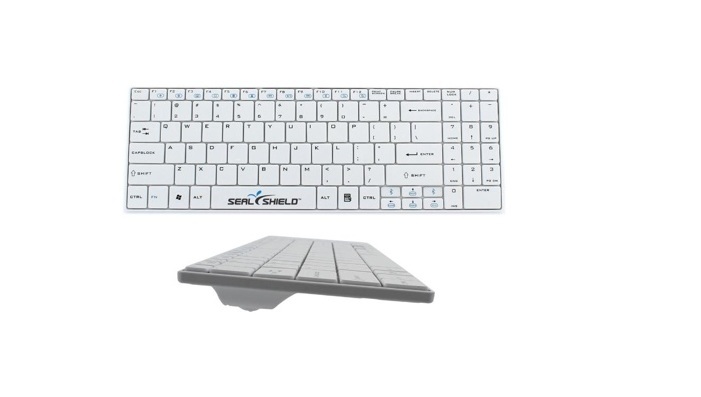
JAOtech announced an upgraded version of its fully sealed Wyki wireless keyboard, designed for use with its hospital Smart Terminals, medical all-in-one computers for use at the patient bedside. New features include a larger mouse pad, a numeric keypad, an improved tactile feel and a longer wireless range.

Healthcare keyboards have many users, and cross contamination from and to patients by these users is a serious risk. The JAOtech Wyki(tm) has been specifically designed as an infection-control keyboard that monitors its own disinfect status to safeguard both patients and staff. Wyki has been designed for the most sensitive areas of a modern healthcare environment providing smarter prevention and control of hospital acquired infections.

The Wyki offers a disinfection function which can be set to indicate when the keyboard needs to be disinfected. Unlike conventional computer keyboards that can harbor reservoirs of harmful bacteria, this unique function promotes cleanliness to combat cross-contamination. There are no covers to replace or dispose of. When the disinfect button is activated it will temporarily disable the keyboard, to prevent response to any accidental key presses. An LED on Wyki indicates when this feature is operational.

Other infection control features include an IP65 rated splash proof flat key design with smooth contours ensuring that the keyboard can be reliably cleaned with wipes or hospital-grade disinfectants. The keyboard base is manufactured using plastics injected with Novaron, a silver based inorganic anti-microbial agent, eliminating the spread of infection.

The keyboard is battery powered and charges using a unique Smart Docking interface. The new Wyki keyboard integrates seamlessly with existing and new JAOtech Smart Terminals, mounting below the terminal on a specially designed mounting bracket or pairing automatically for use wirelessly on a patient’s lap or bedside table. Other new features on the latest Wyki include a 15 metre range, an improved tactile feel to the keys for easier lighter typing, a numeric keypad for enhanced data entry and a larger mouse pad. The new keyboards can be automatically paired with both new and existing docking stations. A wired version is also available.

About JAOtech

JAOtech is a multi-award winning market leader in the design and manufacture of a high performance, innovative range of embedded Smart Terminals. JAOtech patient entertainment and point-of-care terminals are medically compliant by design, and over 55,000 have been installed in hospitals worldwide in partnership with approved technology partners. The terminals provide a core solution for a host of interactive healthcare applications providing secure access to Electronics Medical Records (EMR) and offering triple-play solutions for patient entertainment. JAOtech is dedicated to the betterment of healthcare IT.

MEDICAL FAIR ASIA 2026
MEDICAL FAIR CHINA

Latest stories

Related stories

Johnson & Johnson Advances Cardiac Mapping with AI Module

Johnson & Johnson has outlined plans to introduce a...

Healthcare Financing Models Supporting Modern Care Delivery

The transformation of the economic foundations of medicine from a volume-based to a value-based model represents the most significant shift in clinical administration in over a generation. In an era of rising costs and an aging population, the traditional "fee-for-service" approach is being replaced by sophisticated financial structures that incentivize high-quality outcomes and long-term health maintenance. By integrating insurance innovation, sustainable investment strategies, and data-driven cost optimization, healthcare financing models supporting modern care delivery are becoming the primary driver of clinical sustainability and innovation. This evolution ensures that financial resources are allocated where they have the most impact improving the lives of patients and ensuring that the healthcare system remains resilient and accessible for every member of society.

Regulatory Compliance in Healthcare Technology Advancements

The rapid integration of sophisticated digital tools into clinical practice requires a robust and adaptive oversight framework to ensure that innovation never comes at the expense of patient safety or data integrity. As medical technologies evolve from simple mechanical devices to complex, AI-driven diagnostic and therapeutic systems, the role of governmental and professional standards becomes increasingly critical. By establishing clear certification processes and rigorous risk management protocols, regulatory compliance in healthcare technology advancements is becoming the primary guardian of quality in the modern medical landscape. This commitment to oversight ensures that the benefits of high-tech medicine such as improved accuracy and more personalized treatments are delivered within a secure and ethically sound environment, effectively bridging the gap between scientific discovery and safe clinical application.

Healthcare Interoperability Enabling Connected Care Systems

The ability of disparate digital platforms to seamlessly exchange and interpret clinical information represents the critical infrastructure upon which modern medicine is built. In a complex care environment where patients often interact with multiple specialists, pharmacists, and community health providers, the lack of data connectivity can lead to fragmented care and significant safety risks. By establishing a unified framework for data exchange and electronic health records integration, healthcare interoperability enabling connected care systems is becoming the primary driver of clinical coordination and efficiency. This transformation ensures that the right information reaches the right provider at the right time, creating a comprehensive "clinical narrative" that supports better decision-making and a more patient-centered approach to healing.

Subscribe

- Never miss a story with notifications

- Gain full access to our premium content

- Browse free from any location or device.

Media Packs

Expand Your Reach With Our Customized Solutions Empowering Your Campaigns To Maximize Your Reach & Drive Real Results!

โ€“ Access the Media Pack Now

โ€“ Book a Conference Call

โ€“ Leave Message for Us to Get Back

Translate ยป