
















The rapid expansion of the global healthcare sector has placed immense pressure on diagnostic facilities to deliver faster, more accurate, and more comprehensive results than ever before. In response to this growing demand, the integration of laboratory automation advancing diagnostic workflows has become a cornerstone of modern medical science. For decades, clinical laboratories relied heavily on manual labor for sample preparation, testing, and data entry a model that was prone to human error and limited by the physical capacity of staff. Today, the landscape is being redefined by a seamless fusion of robotics, sophisticated software, and high-throughput testing capabilities. This transition is not merely an upgrade in equipment it represents a fundamental change in the philosophy of diagnostics, moving toward a model where precision and speed are built into the very architecture of the lab.
The Technological Core of Laboratory Automation
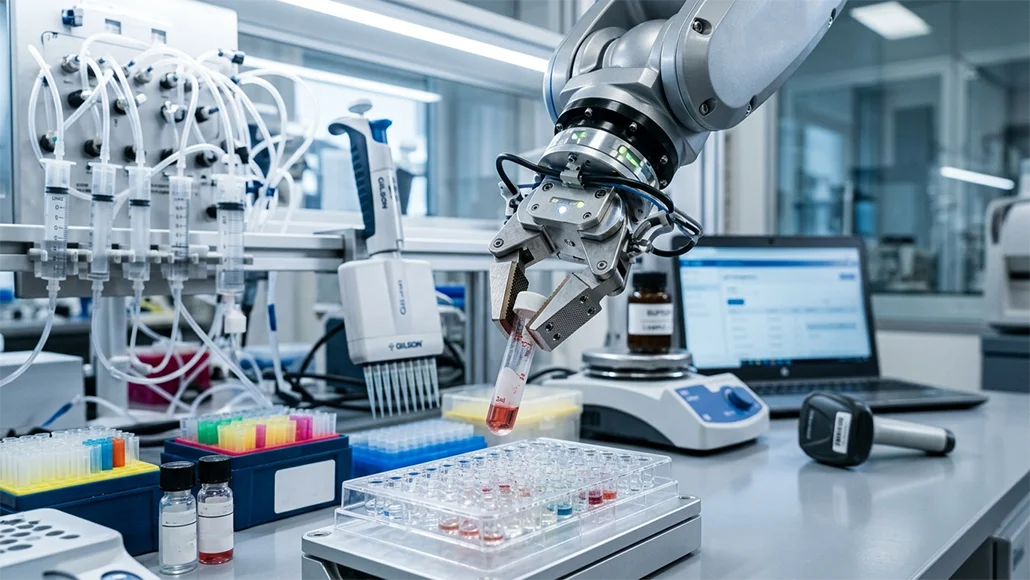
At the heart of this revolution is a suite of technologies designed to handle the most repetitive and delicate tasks with a level of consistency that human operators cannot match. Laboratory automation advancing diagnostic workflows involves the deployment of modular systems that can manage everything from initial sample sorting to final result archiving. These systems utilize advanced robotics in labs to perform precise liquid handling, plate movements, and reagent dispensing. By automating these foundational steps, laboratories can operate around the clock, significantly reducing the “turnaround time” for critical tests. This is particularly vital in acute care settings where a delay of even a few hours in receiving a diagnostic result can have a significant impact on a patient’s treatment plan and eventual outcome.
Robotics in Labs: Enhancing Precision and Safety
The introduction of robotics in labs has addressed two of the most significant challenges in the clinical environment: accuracy and safety. Manual pipetting and sample handling are not only tedious but are also the primary sources of pre-analytical errors. A single misplaced sample or a slight variation in reagent volume can lead to skewed results, necessitating costly and time-consuming retests. Automated robotic arms, guided by sophisticated optical sensors and AI-driven software, eliminate these variables by performing every action with mathematical exactness. Furthermore, robotics play a crucial role in biosafety. By minimizing the direct contact between laboratory personnel and potentially infectious biological samples, automation creates a safer working environment. This was never more evident than during recent global health crises, where automated systems allowed for the safe processing of thousands of highly contagious samples daily without putting staff at undue risk.
Streamlining Diagnostic Workflows through Intelligent Integration
Efficiency in a laboratory is not just about how fast a single machine can run it is about how smoothly samples move through the entire facility. Laboratory automation advancing diagnostic workflows focuses on the “total laboratory automation” concept, where disparate instruments are linked together by conveyor tracks and managed by a centralized Laboratory Information System. This integration allows for a continuous flow of samples, from the moment they are logged in at reception to the final verification of results. Intelligent software can prioritize urgent samples, automatically rerouting them to the front of the testing queue without human intervention. This level of orchestration ensures that the laboratory’s total capacity is utilized effectively, preventing the bottlenecks that often occur in manual or semi-automated environments.
The Impact of High Throughput Testing on Public Health
One of the most transformative aspects of this technological shift is the advent of high throughput testing. This capability allows laboratories to process thousands of samples in a single shift, a requirement that has become standard in modern epidemiology and large-scale screening programs. For instance, in the realm of genetic sequencing and molecular diagnostics, high-throughput systems can analyze vast amounts of data in a fraction of the time it took just a decade ago. This is essential for the burgeoning field of precision medicine, where diagnostic workflows must identify specific genetic markers to tailor treatments to individual patients. By making these complex tests more accessible and affordable, laboratory automation is playing a direct role in the democratization of advanced medical care, ensuring that cutting-edge diagnostics are no longer restricted to elite research institutions.
Data Management and the Reduction of Cognitive Load
A significant but often overlooked benefit of laboratory automation advancing diagnostic workflows is the management of the massive data streams generated by modern testing. As sample volumes increase, the cognitive load on laboratory professionals the pathologists and technicians who must interpret results grows exponentially. Automated systems assist in this by performing initial data validation and flagging any results that fall outside of pre-defined normal ranges. This allows specialists to focus their expertise on the most complex and ambiguous cases rather than spending time on routine, normal results. Furthermore, the integration of automation with digital archives ensures that historical patient data is instantly accessible, allowing for the longitudinal tracking of health trends which is vital for managing chronic conditions and identifying emerging health threats.
Overcoming Implementation Barriers and the Human Factor
Despite the clear advantages, the path to laboratory automation advancing diagnostic workflows is not without its complications. The initial capital investment required for state-of-the-art robotics and software is substantial, which can be a deterrent for smaller clinics or regional laboratories. Additionally, there is the challenge of “workforce transition.” As machines take over routine tasks, the role of the laboratory professional is shifting from manual operator to system manager and data interpreter. This requires a significant investment in retraining and a cultural shift within the organization. However, those who have successfully navigated this transition report higher levels of job satisfaction, as staff are freed from mundane tasks to engage in more intellectually stimulating and clinically significant work.
Future Trends: AI and the Autonomous Laboratory
The next frontier for laboratory automation advancing diagnostic workflows is the full integration of artificial intelligence and machine learning. We are moving toward the concept of the “autonomous laboratory,” where AI systems not only manage the flow of samples but also perform real-time quality control and predictive maintenance on the hardware. An AI-driven system could, for example, notice a subtle drift in a machine’s performance and automatically calibrate it before it affects the accuracy of any results. Moreover, as AI becomes better at pattern recognition, it will assist in complex diagnostic tasks like identifying rare cellular abnormalities in pathology slides or predicting drug resistance in bacterial cultures. This will further enhance the accuracy and clinical utility of the laboratory, making it a proactive partner in patient care rather than a reactive service.
Sustainability and Environmental Considerations in the Lab
Modern laboratory automation also offers a path toward more sustainable operations. Manual processes often involve a significant amount of single-use plastic and reagent waste due to human error or the need for redundant testing. Automated systems are designed for maximum efficiency, using the precise amount of reagent required and optimizing the use of consumables. Furthermore, consolidated automated platforms often have a smaller total footprint and lower energy requirements than a collection of older, standalone instruments. As healthcare systems globally look to reduce their carbon footprint, the efficiency gains provided by advanced clinical lab technology will be an important factor in achieving environmental goals without compromising on the quality of patient care.
Enhancing Reliability in Global Diagnostic Networks
Finally, laboratory automation advancing diagnostic workflows is a key driver in standardizing the quality of care on a global scale. In a manual system, the quality of a test result can vary significantly based on the skill level of the individual technician. In an automated system, the process is standardized, meaning that a test performed in a metropolitan hospital in Europe should yield the same reliable results as one performed in a newly automated lab in an emerging economy. This consistency is vital for international clinical trials and for global efforts to track and manage infectious diseases. By providing a reliable, standardized foundation for diagnostics, automation is helping to build a more resilient and interconnected global health infrastructure.
Conclusion: The Backbone of Modern Medicine
In conclusion, the movement toward laboratory automation advancing diagnostic workflows is one of the most significant developments in the history of clinical medicine. By embracing robotics, high-throughput testing, and intelligent data integration, we are creating a diagnostic infrastructure that is not only faster and more efficient but also inherently more reliable and safe. While the transition requires careful planning and significant investment, the long-term benefits for patient care and public health are undeniable. The laboratory is no longer a hidden room where manual tasks are performed in isolation it has become a high-tech engine of innovation that drives clinical decision-making and empowers doctors to save lives with greater confidence. As we look to the future, the continued evolution of these systems will remain the backbone of a smarter, more responsive, and more equitable healthcare system for all.