












Key Takeaways:
- Smart hospitals leverage advanced technologies like AI, IoT, and automation to create highly interconnected and efficient environments.
- Automation significantly enhances operational efficiency by streamlining administrative tasks, patient services, and even clinical processes, freeing up staff for direct patient care.
- Intelligent asset tracking and robust data integration are foundational, enabling real-time resource management, predictive analytics, and informed decision-making across the hospital.
- These solutions not only optimize internal operations but also profoundly improve the patient experience through personalized care, reduced wait times, and seamless communication.
- The widespread adoption of smart hospital solutions is crucial for building a resilient, cost-effective, and patient-centric healthcare future, despite challenges like initial investment and cybersecurity.
The landscape of healthcare is undergoing a profound metamorphosis, shifting from traditional, often siloed operations to an interconnected, intelligent ecosystem. At the forefront of this evolution are smart hospital solutions, a comprehensive suite of technologies designed to fundamentally redefine how healthcare facilities function. This paradigm shift is not merely about introducing new gadgets it’s about creating an integrated environment where every process, every piece of equipment, and every individual is part of a larger, optimized system. The overarching goal is clear: smart hospital solutions improving operational efficiency across the entire spectrum of care delivery, from the moment a patient steps through the doors to their recovery journey and beyond.
Hospitals, by their very nature, are complex operations, balancing critical patient care with immense administrative and logistical demands. Historically, these demands have often led to bottlenecks, resource wastage, and fragmented data. However, the advent of smart technologies including the Internet of Things (IoT), Artificial intelligence (AI), machine learning, and advanced robotics has unlocked unprecedented opportunities to address these challenges head-on. The transformation into a smart hospital is, therefore, an imperative for any institution aspiring to deliver superior patient outcomes while also ensuring fiscal sustainability in an increasingly competitive and demanding healthcare environment.
The Core of Smart Hospitals: Beyond Digitalization
To truly grasp the essence of smart hospitals, it’s vital to differentiate them from simply ‘digital’ hospitals. While digitalization involves converting information into a digital format and using electronic systems, smart hospitals go several steps further. They are characterized by seamless integration, real-time data exchange, predictive analytics, and autonomous systems. This means that a smart hospital isn’t just using an Electronic Health Record (EHR) system it’s an environment where the EHR communicates instantly with smart beds, medical devices, supply chain logistics, and even the building’s infrastructure.
At its heart, a smart hospital is an intelligent ecosystem built on interconnected technologies. It leverages data from myriad sources patient wearables, diagnostic equipment, facility sensors, and administrative systems to generate actionable insights. These insights then drive automated processes, facilitate quicker, more informed decisions, and proactively address potential issues before they escalate. This holistic approach ensures that resources are allocated optimally, staff operate at peak efficiency, and patients receive more personalized and timely care. It’s about creating a responsive, adaptive, and highly effective healthcare environment.
Leveraging Automation for Enhanced Workflows
One of the most significant contributions of smart hospital solutions improving operational efficiency lies in the realm of automation. Traditional hospital workflows are often burdened by repetitive, manual tasks that consume valuable staff time and are prone to human error. Automation, powered by smart technologies, liberates healthcare professionals from these burdens, allowing them to focus on what they do best: patient care.
Automated Patient Registration and Scheduling
Consider the patient journey, which typically begins with registration and scheduling. In many traditional settings, this process can be slow, error-prone, and frustrating for patients. Smart hospital solutions introduce automated kiosks, online portals, and AI-driven chatbots that streamline appointment scheduling, pre-registration, and even insurance verification. Patients can complete necessary paperwork digitally, reducing wait times upon arrival and ensuring that administrative staff can dedicate their time to more complex inquiries rather than routine data entry. This not only enhances the patient experience but also significantly boosts the efficiency of front-desk operations. The impact on healthcare workflow optimization here is profound, reducing administrative overhead and improving patient flow.
Robotics in Clinical and Non-Clinical Operations
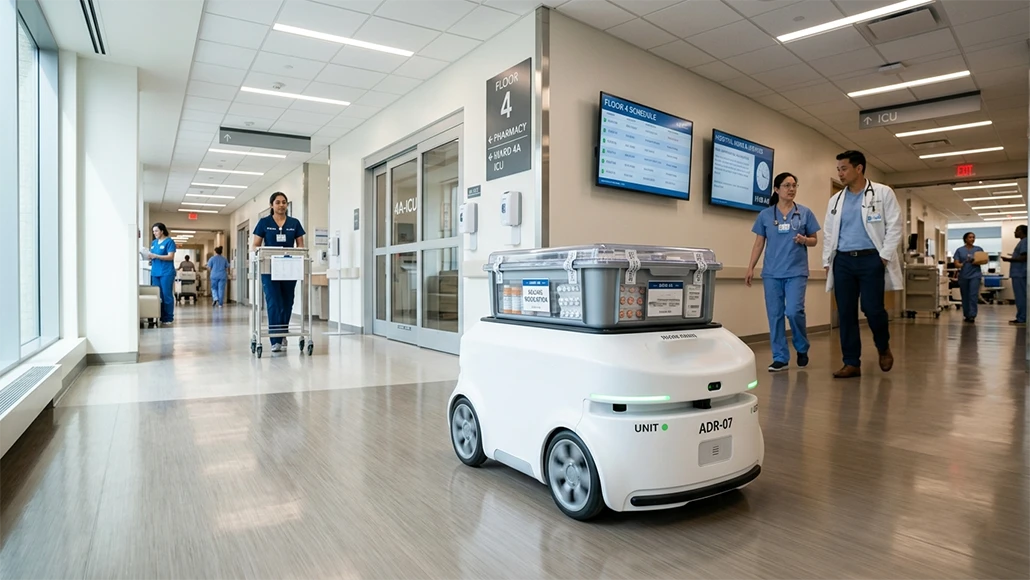
Beyond administrative tasks, robotics is transforming both clinical and non-clinical hospital operations. In the operating room, robotic-assisted surgery offers greater precision, minimally invasive procedures, and faster patient recovery times. But the scope of hospital automation extends far beyond surgical suites. Autonomous robots are increasingly deployed for tasks such as delivering medication, transporting lab samples, sterilizing rooms, and even managing inventory. These robots can navigate complex hospital environments, operate around the clock, and reduce the risk of human error or cross-contamination. This frees nurses, orderlies, and other support staff from arduous logistical duties, enabling them to spend more time directly interacting with patients, thus enhancing the quality of care and increasing overall staff satisfaction.
Intelligent Asset Tracking and Resource Management
Hospitals are veritable treasure troves of high-value equipment, from MRI machines and ventilators to infusion pumps and wheelchairs. Misplacing or inefficiently utilizing these assets can lead to significant financial losses, delays in care, and operational frustrations. Smart hospital solutions improving operational efficiency tackle this challenge head-on through sophisticated asset tracking and resource management systems.
Real-time Location Systems (RTLS) and IoT
The deployment of Real-time Location Systems (RTLS) is a cornerstone of smart asset management. By integrating IoT sensors into equipment and even staff badges, hospitals can track the precise location of every vital asset in real-time. This eliminates the frantic search for available equipment, ensures that critical devices are where they need to be, and optimizes their utilization rates. For instance, if a specific surgical tool is needed urgently, its exact location can be pinpointed instantly, reducing delays in crucial procedures. Furthermore, RTLS can monitor the operational status and maintenance needs of equipment, facilitating proactive servicing and preventing unexpected downtime. This robust hospital asset tracking capability minimizes waste and maximizes the return on investment for expensive medical devices.
Optimizing Inventory and Supply Chain
Beyond tracking individual assets, smart hospital solutions extend to the entire supply chain. Predictive analytics, driven by AI, can analyze historical usage data, patient admissions, and upcoming procedure schedules to forecast demand for medical supplies and pharmaceuticals. This allows hospitals to maintain optimal inventory levels, reducing the likelihood of stockouts while simultaneously minimizing excess inventory that ties up capital and expires. Automated dispensing cabinets, integrated with the central supply chain system, ensure that the right medications and supplies are available at the point of care, reducing the time nurses spend retrieving items and enhancing patient safety by minimizing medication errors. This integrated approach to inventory management is a prime example of how smart healthcare systems drive profound efficiency gains.
Data Integration: The Central Nervous System of a Smart Hospital
The sheer volume of data generated within a hospital is immense, yet its true value often remains untapped due to fragmented systems and disparate data sources. A hallmark of smart hospital solutions improving operational efficiency is their ability to seamlessly integrate this vast sea of information, transforming raw data into actionable intelligence.
Unified Data Platforms
At the core of a smart hospital lies a unified data platform that acts as its central nervous system. This platform brings together data from EHRs, laboratory information systems, radiology systems, IoT sensors on medical devices, building management systems, and even patient feedback mechanisms. By breaking down data silos, a comprehensive, real-time view of every aspect of hospital operations becomes available. Clinicians can access a patient’s complete medical history, real-time vital signs from monitoring devices, and even environmental data from their room, all from a single interface. This holistic perspective enables more accurate diagnoses, personalized treatment plans, and better-coordinated care. The robust data integration in hospitals is not just a technical feature it’s a foundational enabler for superior clinical and operational decision-making.
Predictive Analytics for Proactive Management
With integrated data, hospitals can move beyond reactive problem-solving to proactive management. Predictive analytics tools, powered by machine learning, can analyze historical and real-time data patterns to forecast future events. For instance, they can predict surges in patient admissions, identify patients at high risk of readmission, or even forecast equipment failures. This foresight allows hospital management to optimize staffing levels, allocate resources more effectively, and intervene early in patient care pathways, preventing adverse events. Such capabilities transform hospital management from a reactive exercise into a strategic, forward-looking discipline, greatly enhancing overall operational efficiency in healthcare.
Enhancing Patient Experience Through Smart Solutions
While operational efficiency is a primary driver, smart hospital solutions concurrently elevate the patient experience. A more efficient hospital environment naturally translates to better, more responsive, and more personalized care.
Personalized Care Pathways
With comprehensive data integration and predictive analytics, healthcare providers can craft highly personalized care pathways. This means tailoring treatment plans, medication schedules, and follow-up care based on an individual patient’s unique health profile, risk factors, and even preferences. Smart beds can monitor vital signs and automatically adjust position for comfort or to prevent bedsores. Interactive patient portals allow individuals to access their health records, communicate with their care team, and participate more actively in their own recovery, fostering a sense of empowerment.
Seamless Navigation and Communication
For patients and visitors, navigating large hospital campuses can be a source of stress. Smart hospital solutions often include indoor navigation apps that guide individuals to their appointments, labs, or loved ones’ rooms. Digital signage and personalized alerts keep patients informed about wait times, appointment changes, and care instructions. Moreover, integrated communication platforms facilitate seamless interaction between patients and their care team, allowing for quick questions and reassurance without the need for physical presence, enhancing comfort and reducing anxiety.
The Broader Impact: Towards Sustainable Healthcare Operations
The collective impact of smart hospital solutions improving operational efficiency extends far beyond individual departments. These technologies lay the groundwork for a more sustainable, resilient, and patient-centric healthcare system. By reducing waste, optimizing resource utilization, and streamlining workflows, smart hospitals can significantly lower operational costs while simultaneously improving the quality and accessibility of care. This leads to better financial health for the institution, allowing for reinvestment in advanced technologies and staff development.
Furthermore, by reducing the burden of manual tasks and providing staff with better tools and information, smart hospital solutions contribute to improved staff satisfaction and retention. This is crucial in an industry often plagued by burnout and staffing shortages. Ultimately, these integrated solutions fortify the entire framework of hospital management technology, making healthcare delivery more robust, responsive, and ready for future challenges.
Challenges and the Road Ahead
While the benefits are compelling, the journey to becoming a truly smart hospital is not without its challenges. Significant initial investment is required for infrastructure upgrades, new technologies, and staff training. Cybersecurity is another paramount concern, given the sensitive nature of patient data and the interconnectedness of systems. Ensuring interoperability between diverse systems from different vendors also demands careful planning and execution.
Despite these hurdles, the trajectory towards smart hospitals is irreversible. As technologies mature and become more cost-effective, and as the imperative for efficiency and superior patient outcomes grows, the adoption of these solutions will only accelerate. The future of healthcare resides in intelligent, integrated environments where technology empowers human expertise, creating a system that is not only efficient but also profoundly compassionate.
In conclusion, the strategic implementation of smart hospital solutions improving operational efficiency represents a pivotal moment in healthcare evolution. By leveraging automation, intelligent asset tracking, and comprehensive data integration, hospitals can transform their operations, delivering higher quality care more effectively and sustainably. This is not merely an upgrade it is a fundamental reimagining of what a hospital can be, paving the way for a healthier, more efficient future for all.