





Key Takeaways:
- Smart medical devices are fundamentally changing patient monitoring by offering continuous, real-time data.
- They facilitate remote patient monitoring, expanding care beyond traditional hospital walls to home settings.
- These devices enhance clinical decision-making through immediate alerts and comprehensive data analytics.
- Integration of connected medical devices optimizes hospital monitoring technology and workflow efficiency.
- The shift towards digital patient care empowers individuals and promotes proactive health management.
Smart Medical Devices Transforming Patient Monitoring Systems
The modern healthcare landscape is experiencing a seismic shift, driven by technological advancements that are fundamentally reshaping how patient care is delivered and managed. At the forefront of this transformation is the integration of smart medical devices for patient monitoring, a development that is not merely incremental but truly revolutionary. These innovative technologies are moving beyond traditional, often intermittent, observation methods to establish continuous, real-time data streams that provide an unprecedented depth of insight into a patient’s physiological state. This article delves into how these sophisticated devices are not just enhancing, but actively redefining patient monitoring systems, paving the way for more proactive, personalized, and efficient healthcare.
The Imperative for Evolution in Patient Monitoring
For decades, patient monitoring, particularly in hospital settings, relied heavily on nurses and medical staff performing periodic checks, using often cumbersome equipment, and manually charting vital signs. While effective to a degree, this approach had inherent limitations: delayed detection of critical changes, labor-intensive workflows, and a lack of continuous data context. The demand for more granular, immediate, and accessible health data, coupled with an aging global population and a rising prevalence of chronic diseases, necessitated a paradigm shift. The advent of highly capable smart medical devices presented the perfect answer, promising a future where healthcare is less reactive and more predictive. These devices are crucial for evolving traditional patient care.
Bridging the Gap Between Observation and Intervention
The traditional model often created a gap between the onset of a health event and its detection, leading to potential delays in intervention. Smart medical devices for patient monitoring are designed specifically to bridge this gap. By continuously collecting and transmitting data, they offer an immediate window into a patient’s health trajectory, enabling earlier recognition of deteriorating conditions or subtle improvements. This capability is not just about convenience; it’s about fundamentally improving patient outcomes by facilitating timely and informed clinical decisions. The integration of such devices represents a pivotal advancement in safeguarding patient well-being, both within clinical environments and beyond.
Defining the Core of Smart Medical Devices in Monitoring
At their essence, smart medical devices are sophisticated instruments equipped with sensors, processing capabilities, and connectivity features that allow them to collect, analyze, and transmit health data. Unlike their traditional counterparts, these are connected medical devices that leverage wireless technologies such as Bluetooth, Wi-Fi, and cellular networks to communicate with central systems, cloud platforms, or even directly with healthcare providers. This connectivity is the linchpin that transforms isolated data points into a comprehensive, actionable narrative of a patient’s health. They range from wearable sensors for continuous glucose monitoring to sophisticated implantable cardiac devices, all designed with the overarching goal of enhancing surveillance without increasing the burden on patients or clinicians.
The Ecosystem of Connected Patient Monitoring
The effectiveness of these devices lies not just in their individual capabilities but in their ability to form an interconnected ecosystem. This ecosystem includes the devices themselves, secure data transmission protocols, robust data storage solutions, and advanced analytics platforms that can interpret vast amounts of information. This holistic approach ensures that the data collected by smart medical devices for patient monitoring is not merely raw numbers, but intelligent insights that inform care strategies. The secure and efficient flow of this data is paramount to realizing the full potential of digital patient care.
The Power of Real-Time Health Monitoring and Data Insights
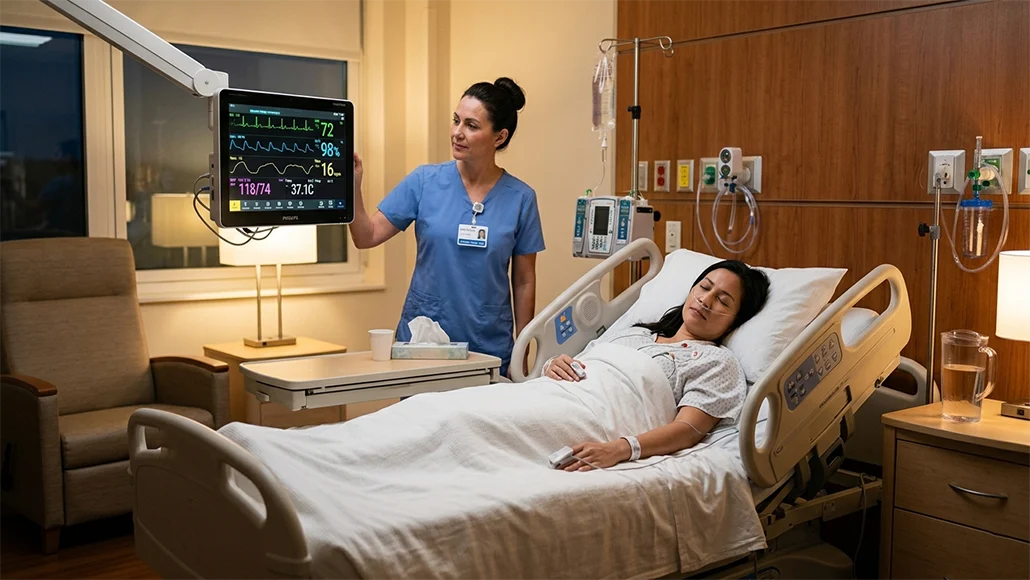
One of the most significant advantages brought by these innovations is the capability for real-time health monitoring. Imagine a patient recovering from surgery, where every fluctuation in heart rate, oxygen saturation, or temperature is instantly captured and analyzed. This continuous stream of data allows clinicians to track trends, identify anomalies, and intervene proactively, often before a critical event escalates. The days of nurses manually checking vitals every few hours are being superseded by systems that offer persistent, immediate updates, dramatically reducing the window of undetected decline.
From Raw Data to Actionable Intelligence
The true value of real-time health monitoring extends beyond mere data collection; it lies in the ability to convert this torrent of information into actionable intelligence. Advanced algorithms and machine learning models can process complex datasets, identify subtle patterns indicative of impending health issues, and even predict potential risks. This intelligent analysis empowers healthcare providers with deeper insights, enabling them to tailor interventions more precisely and to anticipate patient needs, leading to more personalized and effective treatment plans.
The Rise of Remote Patient Monitoring
Perhaps no aspect has been as profoundly impacted as remote patient monitoring. These technologies extend the reach of healthcare far beyond the traditional confines of clinics and hospitals, allowing patients to be monitored in the comfort and familiarity of their own homes. For individuals managing chronic conditions like diabetes, hypertension, or heart failure, home health monitoring devices such as smart blood pressure cuffs, continuous glucose monitors, and wearable ECG patches provide invaluable daily data. This not only reduces the need for frequent in-person visits but also gives patients a greater sense of control and involvement in their own health management.
Empowering Home Health and Reducing Hospital Readmissions
The shift to home health monitoring represents a strategic move towards preventative care and a reduction in healthcare costs. By continuously monitoring patients post-discharge, for example, healthcare systems can detect early warning signs of complications, intervene remotely, and significantly reduce hospital readmissions. This not only improves the patient’s quality of life but also optimizes resource allocation within the healthcare system, demonstrating a clear economic and clinical benefit of smart medical devices for patient monitoring. This trend is reshaping the delivery model for chronic disease management and post-acute care.
Enhancing Clinical Decision-Making and Alert Systems
The integration of smart medical devices for patient monitoring provides clinicians with an unparalleled level of data to inform their decisions. Beyond just continuous data, these systems often incorporate intelligent alert mechanisms. When predefined thresholds are exceeded, or concerning trends are identified, automated alerts are sent to the care team, often prioritized by urgency. This ensures that critical situations are brought to attention swiftly, allowing for rapid assessment and intervention. This capability is a cornerstone of improved safety and efficiency within patient monitoring systems.
Mitigating Alarm Fatigue and Focusing Attention
While alerts are vital, poorly managed alarm systems can lead to “alarm fatigue” among staff. Modern connected medical devices and their accompanying software are designed to be smarter, utilizing algorithms to filter out benign fluctuations and provide contextually relevant alerts. This intelligent filtering helps clinicians focus their attention on truly critical issues, enhancing their decision-making process by providing clearer, more refined information. It ensures that the benefits of continuous monitoring do not come at the cost of overwhelming medical personnel.
Impact on Hospital Monitoring Technology and Workflow Efficiency
Within hospitals, smart medical devices for patient monitoring are revolutionizing existing hospital monitoring technology. Traditional wired setups are giving way to wireless, integrated systems that offer greater flexibility, mobility, and data accessibility. Nurses can check patient vitals from a central station, specialists can review data remotely, and alarms can be configured to reach the appropriate care provider directly. This seamless integration streamlines workflows, reduces the time spent on manual data entry, and allows healthcare professionals to dedicate more time to direct patient care rather than administrative tasks.
Optimizing Resource Allocation and Patient Flow
By providing real-time insights into patient status across an entire unit or even a hospital, these advanced patient monitoring systems enable better resource allocation. For instance, staff can be dispatched more efficiently to patients requiring immediate attention, and bed management can be optimized based on acuity levels. This operational efficiency is a critical factor in managing the increasing demands on healthcare infrastructure, proving that the transformation extends beyond clinical outcomes to core operational aspects.
Empowering Digital Patient Care and Engagement
The advent of smart medical devices for patient monitoring is fundamentally shifting the dynamic of patient care towards a more collaborative model. Patients are no longer passive recipients of care but active participants in their health journey. With accessible dashboards and intuitive apps, individuals can view their own health data, understand trends, and adhere more effectively to treatment plans. This level of engagement fosters greater self-management capabilities and promotes a proactive approach to wellness, a core component of digital patient care.
Fostering Health Literacy and Proactive Wellness
By making health data transparent and comprehensible, these devices enhance health literacy. Patients gain a better understanding of how their lifestyle choices impact their health metrics, empowering them to make informed decisions. This proactive engagement, supported by smart medical devices for patient monitoring, is a cornerstone of modern preventive care strategies, moving healthcare from a reactive illness model to a proactive wellness model. It is a powerful driver for fostering long-term health and well-being.
Navigating the Future of Patient Monitoring
The trajectory for smart medical devices for patient monitoring is one of continuous innovation. We can anticipate even more sophisticated sensors, enhanced AI-driven analytics, and seamless integration with broader digital health platforms. Challenges remain, particularly concerning data security, interoperability across different systems, and ensuring equitable access to these technologies. However, the benefits in terms of improved patient outcomes, enhanced operational efficiency, and a more empowered patient population are undeniable.
The transformative power of smart medical devices for patient monitoring is not a futuristic concept; it is a present-day reality rapidly shaping the healthcare landscape. These devices are more than just gadgets; they are vital tools that enable real-time health monitoring, facilitate remote patient monitoring, optimize hospital monitoring technology, and ultimately foster a future of truly proactive and personalized digital patient care. Their continued evolution promises to deliver ever-greater capabilities, driving healthcare into an era defined by precision, responsiveness, and patient empowerment.