Close
Digital Health & Ai Innovation summit 2026
Medical Taiwan 2026

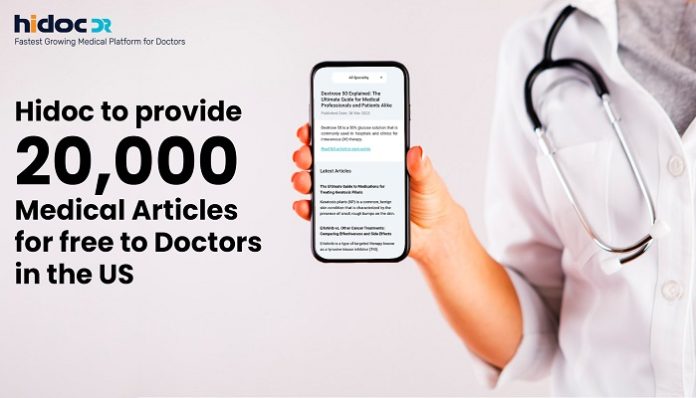
Hidoc to provide 20,000 Medical Articles for Free for Doctors in the US

Hidoc aims to provide 20,000 Medical Articles for Free to helps in developing R&D skills in Doctors in the US through Hidoc Articles. Learning about recent advancements is extremely important for doctors to provide advanced treatment and care to patients. Understanding the need for research and development in the medical field is also important for doctors at the same time.

Hidoc Dr being the one-stop solution for doctors and other medical practitioners has successfully settled the global platform for sharing medical learning & updates. Adhering to its aim of providing immense knowledge to medical and healthcare professionals for their academic and professional growth Hidoc now launches an important feature of Hidoc Articles for doctors and other healthcare professionals in the US.

Among all the different interesting features of Hidoc Dr, Hidoc Articles is one of the most important knowledgeable features of Hidoc to help them in developing knowledge in all recent advancements of therapies, therapeutics, diseases, patient outcomes, etc. moreover, this will also help in enhancing the research skill among the doctors and other medical practitioners.

Doctors play a major role in research innovation as they are the ones who can report different patient issues and help in moving further to research on it. As per Giorgio Baglivi, โ€œLet the young know they will never find a more interesting, more instructive book than the patient himselfโ€ indicating the importance of studying a patient for a more improved and better outcome.

The feature of the Hidoc Articles is introduced to valuable users for obtaining detailed information on medications, therapies, etc. The users will get all sorts of basic and advanced research articles that will help them learn about different medicines their dosage, indications, contradictions, and so on. Further, reports on different diseases, their outcomes, available treatment options, etc. are also provided. Updates on recent medical research are also given to the users free of cost.

Medical Journals provide updates on novel molecules which can be used as drugs, novel approaches to develop a new therapy, disease epidemic updates, etc. to physicians and other healthcare professionals to make them aware. Through these medical journals, the users will gain knowledge on the latest research, interventions, devices, drugs, surgical techniques, etc.

Hidoc Articles comes with a section of the latest articles, explore more articles, to let the users get access to all the articles published on the site. Most importantly, the users are going to get articles based on specializations, this will ensure a much better user experience while searching for articles. The articles will not only enhance their knowledge but also influence their research skills in them.

Hence, HidocArticles will help doctors to stay updated with current research at the tip of their fingers, where they can learn about pharmaceuticals, therapies, diagnostics, disease epidemiology, and so on justifying the focus and aim of Hidoc Dr focused on making life easier for doctors with valuable knowledge and information, on medical topics across different specialities in health and medicine.

6 Things You Need To Know About The Inpatient Mental Health Care

Mental health issues can come in many forms, from mild depression to severe paranoia and even disability. Seeking treatment for these conditions is critical for recovery, butโ€”with the complexity of mental health care regulations and services varying dramatically from state to stateโ€”navigating an inpatient mental health care facility or program can be confusing. To help make sense of it all, here are six important things you should know about what goes into seeking quality inpatient mental health care.

What is Inpatient Mental Health Care

Inpatient mental health care is a type of treatment for individuals who are struggling with mental illnesses. It typically involves 24-hour care provided by medical professionals such as psychiatrists and psychologists, in a hospital or residential facility setting. If you are seeking mental health treatment in Florida behavioralhealth-centers.com/jupiter-fl/ is a facility with dedicated staff and a variety of treatment programs. Being in an inpatient environment can help provide structure and a sense of safety. It provides individuals with the opportunity to practice new coping skills and important life activities such as communication and decision-making skills.

This type of intensive therapy helps provide support to those who are struggling with severe mental health issues like acute depression, suicidal ideation, bipolar disorder, or other serious disorders. The purpose of this type of care is to reduce symptoms while educating patients ways they may manage their illness so that they can lead happier, more productive lives after their stay has ended.

Understanding the Different Types of Treatment Available

When it comes to treating health conditions and illnesses, there are many options available. It is important to understand the different types of treatment and their efficacy so that the best decision can be made for your care. There are a variety of traditional treatments such as medications, diet changes, exercise regimens, and therapies, as well as alternative treatments such as meditation, herbal remedies, acupuncture, and chiropractic adjustments. Learning about how each type of treatment works may help you decide which option will be most beneficial for your condition. Whichever route you decide to take, it is important to consult with your healthcare provider so that you can receive personalized advice and make an informed decision.

The Importance of Building a Treatment Team That Works for You

Mental health is an essential part of a person’s well-being, therefore it is important to ensure that one gets the right kind of treatment. This is where the importance of building a treatment team that works for you comes in. A treatment team consists of mental health professionals such as psychiatrists, psychologists, social workers, and other medical personnel that work together to ensure that the patient receives comprehensive and individualized care. When selecting members for your treatment team, it is important to choose those who specialize in evidence-based treatments and have experience working with similar issues.

Furthermore, ensuring a good communication channel between members of your treatment team will help to provide holistic care tailored to fit your needs and maximize treatment effectiveness.

Knowing Your Rights and Understanding the Legal Ramifications of Mental Health Care

Mental health has become a growing concern for individuals, families, and communities alike. As such, it is important to understand one’s rights and the legal ramifications that come with accessing mental health care. Different areas of mental health have different laws and regulations to ensure an ethical approach to diagnosing and treating various conditions. Informing yourself of these legal points can help you make sure that your rights are protected when seeking mental health care. It can also provide peace of mind in knowing that you are receiving the best possible care available by licensed professionals who abide by accepted standards of practice in their field. Taking charge of your mental health can help lead to a healthier life overall.

Preparing for Hospitalization and What to Expect on Admission Day

Before admission day it is important to make sure you have up-to-date paperwork, contact information for your healthcare providers, and advance directives (in case any decisions need to be made on your behalf). On admission day itself, plan to arrive with what you will need during your stay: pajamas and toiletries, necessary medications, advance directives if applicable, and some items to help pass the time while waiting.

Upon arrival at the hospital, expect to provide detailed information about your medical history as well as provide insurance and financial details. Be prepared to have tests taken such as bloodwork and x-rays in order to assess your condition. Even if those tests do not take place right away upon arrival, remember that they are important components of care prior to beginning treatment. At all times throughout the process remain communicative with the hospital staff so they can provide you with appropriate, safe care.

Aftercare Services and Resources to Support Your Recovery Journey

Aftercare services and resources can be crucial tools for recovery. They provide the necessary foundation to build upon existing skills, knowledge, and tools. The variety of aftercare options available ensures there is a choice for everyone’s individual needs. Services may include intervention programs such as therapeutic groups, articles or tips from experts, support groups, and mentor programs; all dedicated to helping individuals further their journey toward wellness.

Online resources also provide a wealth of information through podcasts, books, live webinars, or local professionals who specialize in well-being and mental health. Aftercare services are just one part of the puzzle in achieving recovery goals: connecting your lived experience with regular appraisal and review of progress will ultimately lead to lasting well-being.

Inpatient mental health care is a critical step in the process of recovery and can provide a safe space to work on physical, emotional, and spiritual healing. Recovery is an individual journey and inpatient care should be based on each personโ€™s unique needs. Working with a qualified and experienced professional team is essential to achieving the best outcomes and overall mental well-being. It is important to research the different types of care available, know your rights, and identify potential resources for post-hospitalization support that may make the transition back home easier. With proper education about mental health care options, planning ahead for hospitalization, and seeking out supportive services during treatment and beyond, it is possible to come away from this experience with renewed hope and greater strength.

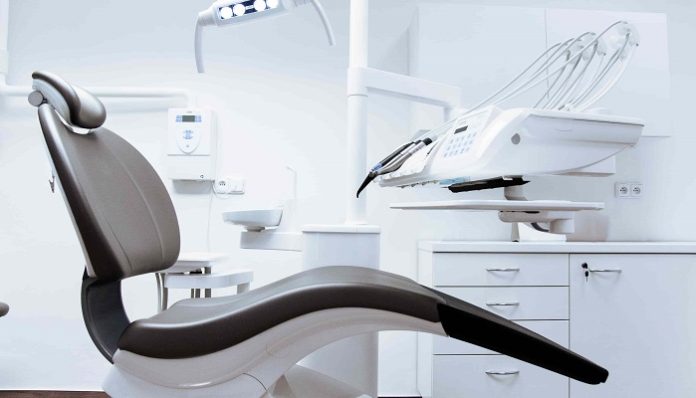
How Do Dental Offices Store And Handle Patients Data

Dental offices not only have to offer perfect services to the clients but also need to store their patient’s health data for future reference. In addition, when patients visit a dental fraternity, they expect proper oral care advice. At the same time, the patients trust the dental offices with their sensitive oral and personal data and do not expect any loopholes or leakage.

The Health Insurance Portability and Accountability Act (HIPAA) has formulated a law to protect patients’ data. As per the act, dentists are required to maintain a standard of protecting patients’ data.ย 

In addition, HIPAA protects dentists regarding data release and empowers renowned professionals such as Dr. Amina Ghatala to reassure their patients.

Details About Storage and Handling of Patients Data by Dental Offices

Let us walk through some relevant information about how dental offices are required to protect and store their patients’ data.

What Kind of Data is Protected

Dental information should contain only clinical data, including the patient’s medical history, basic information about the patient, and oral health records of the patient. In addition, the dental data are classified into two forms: Progress notes and Medical and dental histories.

Progress notes are essential for continued treatment, completed either during or immediately after the visit. On the other hand, medical or dental histories include all the essential health information before the initiation of treatment.

Tips To Protect and Store Your Patients’ Dataย 

Every dentist has an obligation under the HIPAA to ensure that their patients do not have to complain regarding the storage and protection of their data. Here are some tips through which dental offices can do so in the best possible manner.

Make Use of Physical Guards

Even another patient overhearing incidentally about your patient’s data is considered to be a breach of privacy. This is where physical safeguards come into the picture. It would help if you placed barriers for entering the data room so that anyone and everyone cannot enter the room quickly.ย 

Soundproof rooms and using a code for authentication before entering the data room are some of the ways through which dental offices can reduce the leakage of data.

Build a Protective System

Patients’ data must be protected from all aspects, even natural calamities. Thus, you should physically monitor your patients’ data and ensure they are safe from any damage, such as floods, fire, or even accidental human leakage.ย 

As per experts, you need to work primarily on the locking part to build such a robust system. For example, get a double-lock rule, which implies that anyone who tries to access the patient’s data has to get past two strong locks.ย 

In addition, you can keep the data files in a cabinet that is kept in a locked storage room. Give access to only authorized persons for this room, so any random person cannot access the cabinet.ย 

Also, ensure to possess a fireproof cabinet for storing the data, as fire is often the most common way of causing damage to the data files.ย 

Digitization Always Works Well

Digitization is also an effective way of protecting and storing your patients’ oral health data.ย 

The best aspect of digitization is a reduction in mistakes and the strengthening of protective layers. In addition, the usage of electronic files removes the danger of files getting physically damaged.ย 

However, since outdated software can lead to cyber hacking, you need to be on your toes to get the software updated. Some ways of digitizing data storage include encryption, cloud storage, teledentistry, etc.

Better talk to a professional and get detailed information about adding more security layers to your patients’ data.ย 

Final Words

Keeping your patients’ data safe is imperative to build up your good reputation as a dental office. However, no matter how much confidence you have in your security system, you must be sure there are no chances of data leakage.ย 

Thus, you need to make efforts to add two or three layers of security to protect your patient’s information. Get help from a professional with complete knowledge about the same who can lend you a helping hand in covering your security loopholes.ย 

TRSA Members Head to Capitol Hill to Advocate for Increased Safety and a Stronger Healthcare Supply Chain

IBM Helping to Battle COVID-19 Medical Supply Chain Shortages with the Launch of IBM Rapid Supplier Connect

TRSAย hosted its 13th Annual Legislative Conference in Washington, D.C. March 22-23. In addition to attending committee meetings, networking events, briefings and receptions, association members participated in TRSAโ€™s annual Hill Day, which included a total of 93 in-person meetings with federal lawmakers and staff.

Representing the linen, uniform and facility services industry, TRSA operator and supplier partner member executives advanced TRSAโ€™s advocacy agenda by calling for action on various priorities impacting the industry, with a focus on two top issues:

  • The need to ensure that healthcare staff are properly protected at work by requiring hospitals, healthcare facilities and other outpatient clinics to maintain minimum levels of reusable healthcare textile personal protective equipment (PPE) as a counterbalance to disposable equivalents.
  • The need to maximize infection prevention by requiring hygienic laundering of healthcare uniforms by certified linen, uniform and facility services businesses.

The group educated legislators on the importance of professionally laundered, hygienically clean Healthcare Personnel Attire (HPA) and provided evidence that supports the essential need to manage potentially contaminated fabrics within a controlled environment to mitigate cross contamination risks. This led to their call to establish requirements for healthcare facilities to provide HPAs for all healthcare workers per shift as well as the need for healthcare workers to leave soiled HPAs at their facilities.

The group educated legislators on the importance professionally laundered, hygienically clean Healthcare Personnel Attire (HPA) and provided evidence that supports the essential need to manage potentially contaminated fabrics within a controlled environment to mitigate cross contamination risks.

TRSA members also described careful monitoring of industrial processes at their companies and the stringent requirements of TRSAโ€™s Hygienically Clean certification, which recognizes companiesโ€™ commitment to cleanliness through third-party, biological testing and inspection. Instead of allowing healthcare uniforms to be worn and washed at home, this process eliminates subjectivity around various individual standards for โ€œcleanโ€ by focusing on results that verify textiles cleaned in these facilities meet appropriate hygienically clean standards and established industry guidelines, policies and procedures.

TRSA Hill Day attendees urged members of Congress to co-sign a letter to the Department of Health and Human Services (DHHS) Secretary Xavier Bacerra to examine how DHHS can ensure that healthcare facilities maintain a greater balance of reusable PPE to better protect healthcare staff members and the environment from the harmful impacts of disposables. The increased supply of reusable healthcare textiles ensures healthcare providers are better prepared for the possibility of future pandemics.

โ€œThe meetings on the Hill were engaging, well organized and productive in my opinion,โ€ said Jim Kearns, executive vice president/CFO, Alsco Uniforms, Salt Lake City, and chair of TRSAโ€™s Board.

Kevin Schwalb, TRSAโ€™s vice president of government relations, briefed the members on TRSAโ€™s key legislative issues before they departed for their meetings on Capitol Hill. Attendees were also well versed on the current political landscape after attending the previous dayโ€™s keynote speech from Bob Cusack, editor in chief of The Hill, as well as the Hill Day Issue Briefing featuring policy directors from Brownstein Hyatt Faber Schreck LLP, Brian Wild and Drew Littman.

Plan Set-Up By FDA To Terminate Emergency Use Authorization

Plan Set-Up By FDA To Terminate Emergency Use Authorization

With the COVID-19 health emergency due to end on May 11, medical technology businesses that brought equipment to the marketplace under special rules for the pandemic will need to establish transition plans quickly, based on the most recent final guidance provided on March 24 by the Food and Drug Administration (FDA).

The FDA defined the measures that MedTech companies must take if their product has an emergency use authorization or was launched under a pandemic exemption.

For equipment with an EUA

The FDA stated that device EUAs will not expire immediately when the public health emergency subsides. Rather, the Secretary of Health and Human Services will issue an early notice of when the agency’s EUA designation will expire.

Businesses that want to continue selling their product in the future must submit a commercial proposal to the FDA before the EUA expiration date, according to the regulator. As a component of this procedure, companies should include a Transition Implementation Plan that covers how they will deal with previously distributed devices in the event of a favourable or negative FDA ruling. The FDA stated that it will not object to the ongoing distribution of products that are still under evaluation after their EUA expires, as long as their marketing filing has been approved by the agency.

Businesses that do not submit a submission to the agency must stop selling or testing their product by the EUA date of termination.

For devices supplied under another pandemic-related guidance

Since the time the pandemic began, the FDA has published numerous so-called enforcement discretion notices to increase the availability of certain types of devices.

For example, the FDA has stated that it will allow remote digital pathology equipment and digital health therapies for mental health disorders to be disseminated without prior approval. It will also allow adjustments to some types of devices, including diagnostic machines, ventilators, heart as well as lung machines known as ECMOs, and cardiopulmonary bypass devices, before even obtaining regulatory approval. Such exemptions will end after the pandemic designation expires, though the FDA has recommended a 180-day transition plan to give device manufacturers time to adjust.

On May 11, when all the public health emergency end, the transition period will begin. The FDA recommends device manufacturers begin preparing marketing proposals if they intend to continue selling their products. In the second phase, which begins after the 90 days of transition, the FDA said that firms should submit their proposal for clearance. For numerous kinds of life-support systems, such as oxygen machines and ventilators, the FDA needs manufacturers to let the agency know whether or not they intend to continue supplying the product in the future.

While the FDA’s pandemic guidelines will expire on November 7, the agency has stated that devices can continue to be disseminated provided their marketing proposal is accepted by the authority before then. In comments submitted in response to a draft version of the guidance released in December, medical device businesses and industry groups broadly supported the transition time, though several requested clarifications on some issues related to labelling and the supply chain procedure.

Abbott Laboratories stated that the suggested 180-day transition period is fairย for device manufacturers to request and gain approval for the pre-market proposal.

AdvaMed, a medical device trade association, also supported the transition time but wanted additional flexibility with labelling modifications, such as allowing manufacturers to offer the information online and allowing customers to request updated labelling.

Cardinal Health, a manufacturer of gloves, gowns, durable medical equipment, and other supplies, pointed out thatย the FDA must allow for an appropriate timeframe that takes into account all downstream trade partners to avoidย abrupt changes in product accessibility.

For example, clinicians may require more time to develop alternative products or treatment strategies, and distributors may require more time to develop other sources or items, depending on the business.

Allowing consumption until the expiration date will give EUA products enough time to navigate their way through the supply chain once the transition period begins.

Top Strategies for Global Safety Management

Everything gets bigger the moment your organization starts operating on a global level – your workforce becomes diverse, your clients hail from different time zones, and most importantly, your safety management system becomes a complex web of site-specific programs and organizational practices.

When you are implementing a safety policy at different sites located across the globe, there is so much more to do than just selecting some training vendor or an international expert and allowing them to handle everything else. While rolling out a global program, you are bound to face a few challenges – these include external and internal, cultural, and even language problems.

Top Strategies for Global Safety Management

Multinational organizations commonly face various technical, geographic, and cultural challenges in terms of managing health and safety effectively. You donโ€™t have to google โ€˜global safety management consultantsโ€™ or something related to find out what strategies will work the best for you – it never works!

Based on our experiences in helping different businesses to deal with such issues, we were able to identify more than one challenge that you might face while placing health and safety strategically in your organization.

So without wasting any time, scroll down and find out the top strategies relevant to global safety management.

1. Align Worker Health And Safety With Your Global Business Values And Strategies:

Any organizationโ€™s management sets the direction for everyone associated with the company to follow. At the same time, it also sets a strategic mission and vision, profitability, production targets, and growth. Moreover, you also have to take into account the organizationโ€™s ability to ensure the health and safety of workers associated with them throughout the world.

Of course, this system for managing health and safety is definitely aligned with the concerned companyโ€™s business processes and cultures.

If the management does demonstrate in actions and words through procedures, financial incentives, and, more importantly, policies, that they are committed to worker safety and health, then both workers and supervisors will respond by making sure that the work is actually performed throughout the company.

2. Think Globally But Act Locally

When you think globally, you end up creating an innovative and new mindset for thinking about different ways of penetrating new markets and, at the same, capitalizing on production that exists outside domestic borders. It also means joint ventures, increased shareholder values, strategic acquisition, and, obviously, the companyโ€™s future.

Your business can succeed globally when you are able to effectively and efficiently allocate your companyโ€™s financial tools or resources for developing newer markets and, in the process, establishing distribution and manufacturing points for servicing those markets. This concept obviously translates well to health and safety issues.

Any forward-thinking MNC will definitely use management systems that are integrated and innovative for approaching the health and safety of workers. Obviously, this approach will align the health and safety of valuable human resources along with production, service and product quality, environmental impacts, research and development, development and research, machinery and process, and obviously, financial targets.

The basic key here is that all goals, instead of just a few, are vital to accomplishing inclusive of the health and safety of the concerned organization.

3. Demonstrate How Good Safety And Health Management Benefits The Business

In order to manage health and safety, financial resources must be set aside within different business units across the globe.

The leaders at the local levels must understand the actual value placed by corporate leaders on giving a safe space for work. And not just that – the local management should also be given incentives for ensuring that resources are actually deployed for different aspects of health and safety.

The key here is to get a health and safety professional on board – this expert needs to be hired at the corporate level or at the plant and be involved in the whole planning stage of a new project. This is inclusive of brand-new products as well as processes for manufacturing, packaging, and even distributing those products.

The challenge? The challenge here is to basically institutionalize health and safety into the whole solution side related to the planning processes. In such challenging situations, health and safety experts can easily identify different areas where not just health and safety are at stake but also at a point where their expert opinions will have an impact on the financial aspects of your business.

4. Manage Regulatory Compliance Issues

Regulatory compliance is one essential thing for your company – essentially, it is needed for maintaining a companyโ€™s license to do basic business. One of the best ways to start managing compliance is for developing really good management standards for both health and safety throughout your organization.

This will obviously ensure that there is consistency in terms of being compliant with recognized health and safety practices. If the regulations at the local level are relatively more strict, these are implemented right above the different requirements associated with corporate standards. Thus, local regulations are prioritized first, followed by corporate standards.

One of the biggest challenges here is obtaining regulations in the English language. There is relatively more awareness of this currently as compared to the situation five years ago. Many governmental health and safety bodies provide English versions of such standards.

Another thing that you can do is utilize your local resources (external and internal) to augment health and safety activities. The best options for your organization will rely on the size of your company and the local resources that you can access.

And Itโ€™s A Wrap!

And thatโ€™s a wrap on the top strategies required for global safety management – now that you are aware of some of the top strategies for global safety management, what are your thoughts on doing the same for your organization? Are you in agreement with us – or do you think there are other strategies that are more relevant for similar purposes?

Tell us about your thoughts – and while you are sharing your opinions and thoughts on the subject, feel free to share any prior experience related to the subject in the comments below.


How to Write a Case Study Paper for Nursing

Case studies are an evitable part of nursing education. These projects allow nursing students to understand the concepts of health assessment better, define factual information about the patient, and prepare for the licensure examination.

A case study will teach you how to conduct a comprehensive health assessment, including physical, psychological, and social evaluations. To complete the case study successfully, you must combine your theoretical knowledge and practical skills to advance as a professional nurse. For example, spinal stenosis is a term that expresses low back pain. But knowing the term is not enough; you must understand the main symptoms, how this condition occurs, and related conditions that may clarify your patient’s health.

As a nursing student, you may feel confused with case studies, as it requires in-depth and critical analysis thinking from you. If you have faced this type of assignment for the first time, you can use a case study writing service to get a clear idea of how the paper should be written. A licensed nurse will perform writing and deliver a professional-looking paper.

You will be assigned to solve various case studies during your nursing course. Typically, there are two types of nursing case studies:

โ€ข Traditional case study. This kind often comprises a patient’s scenario as well as a list of questions that need to be addressed.

โ€ข Unfolding case study. It’s quite a new type of case study. The task usually presents a patient scenario with evolution details. Students must evaluate and re-evaluate the patient’s condition based on the offered scenario, care plan, and rationale.

7 Steps to Write a Nursing Case Study

Step 1

Read out the case carefully. Just after you have read the text, think about the situation. How does the case influence your patient? Does it influence the care plan? How does the received information affect the priorities of care and implementation?

Step 2

Evaluate the case. Donโ€™t rush into writing a practice section. You need to analyze subjective and objective data to be able to make a patient’s health assessment and draw up a plan. You may be able to see possible difficulties and advantages in the treatment of the patient by thinking back on the scenario described in the case. Your capacity for critical thinking and the quality of your patient care decision-making may be improved by proper evaluation.

Step 3

Understand the questions. You need to figure out every word to receive the correct answer. Try to rephrase the question and underline keywords to grasp the main idea. Moreover, you may need to clarify and search for more information to understand the question better. It can also be beneficial to divide difficult questions into manageable chunks and respond to each separately.

Step 4

Answer a “So what” question. It’s essential to improve your critical thinking skills and retention of key information. We advise you to additionally use external resources such as textbooks or evidence-based search engines to clarify any uncertainties and deepen your understanding of the subject matter. Take notes while evaluating to identify key moments to consider when answering the question and be helpful when making conclusions.

Step 5

Take a new stance. Now itโ€™s time to reread the text of the case and relate all information you have to the situation. Do new key points influence the health care plan? What has changed? After responding to questions, thinking back on the patient description may offer fresh perspectives that weren’t initially obvious. This task can help improve patient care and develop your clinical reasoning abilities.

Step 6

Consider future outcomes. After you have driven the conclusion, it’s time to reflect on how the care plan will influence the trajectory of patients’ care. How will it affect your patient? To avoid problems and enhance results, you must proactively adapt your care strategy by predicting possible changes in the patient’s state.

Step 7

Organize your answers. Some nursing schools and colleges give templates that students should just fill in. At the same time, others ask for more formal writing. To write answers to your case study, read out the requirements for paper design. It might include the referencing style (typically APA), length, and required sections.

Tips for Writing a Nursing Case Study

Plan your time. Dedicate enough time to work on the case study. You may need to do additional research and organize your writing.

Donโ€™t get frustrated. When you don’t know the answer, don’t try to find the perfect or ideal solution. Define the room for your growth and define your knowledge gaps.

Format your paper. Organize your references and citations according to the required formatting style.

Proofread and edit. Spelling and grammar errors can spoil even a perfect answer. Some professors donโ€™t mind mistakes, while others may lower your mark.

Self-evaluate your performance on the case. Itโ€™s highly important to find your areas of strength and weakness. If you wish to grow personally and professionally, take some time to reflect on your case performance.

Wrapping Up

Working on case studies may be overwhelming, but it will be much easier with the proper guidance and your effort. Keep in mind to take pauses and get assistance when necessary. Don’t be afraid to edit and rewrite your work to get the best results.

4 Changes Coming To The US Healthcare System

Healthcare has always been at the top of the list of priorities for the American government. As time moves forward, new technologies and social attitudes keep bringing about changes to how we perceive healthcare. As such, certain changes have to be made.

The last decade alone has seen medical institutions adopt an entirely digital method of storing patient medical records. This has led to an increase in the speed at which patients can be diagnosed and treated. Faster treatments mean that more patients can be seen by a doctor. This decade has also seen an increase in government spending when it comes to healthcare. In the year 2020, the US government increased its healthcare spending by almost 2.7%. With that said, you can expect to see some big changes happen to US healthcare in the next ten years. Here are some of the changes you can expect to see.

Biotech

Biotechnology is a type of medicine that utilizes living cells to create medicines and diagnostic tools. This branch of medicinal practice has always been used in the manufacturing of vaccines but now research into this field has made more advancements possible.

CRISPR tech is a tool used in genetics and can accurately splice human DNA strands. Using this tech, doctors can now identify and treat more genetic disorders than ever before. This kind of technology has also helped doctors make huge leaps forward in cancer diagnosis treatment. By having access to specific strands of DNA, medical professionals can locate, predict and remove specific gene mutations. These mutations are responsible for the cell mutations that can lead to more aggressive forms of cancer. Cancer is a disease that is easier to treat the earlier it is caught. Therefore, the ability to identify cancer on a genetic level is going to greatly improve the survival rate of cancer over the coming decade.

AI

Another advancement in technology that is currently having an impact on almost every field is artificial intelligence. AI is a tool that can automate certain procedures. As such, doctors can run programs to quickly find the best treatment plan for their patients. This automation can also be used on administration tasks. Therefore, you are likely to see another upward trend of faster treatment times and the number of patients seen by a doctor.

Artificial intelligence can also be used to provide patients with a virtual healthcare assistant. These assistants are intelligent enough to search through hoursโ€™ worth of information to answer any questions or queries that a patient may have about their condition. Access to this information can help ease a patientโ€™s worries and help them speed up their own recovery by learning how best to act when living with their current health condition. AI in healthcare is explored in this online short course provided by the MIT Sloan School of Management. Artificial intelligence may be the future of healthcare, and you should ensure you are familiar with the tech.

Remote Healthcare

Receiving appropriate healthcare from the comfort of your own home is made more possible with virtual assistants that artificial intelligence can provide. However, other technological advancements in other fields have also made it possible for patients to receive remote healthcare. For example, the advancements made to video call technology allow people to have a face-to-face discussion with their doctor about their symptoms to speed up the diagnosis process. Also, the rise in smartphones allows patients to gain access to a medical professional in all manner of ways. You can choose to speak to these individuals on the phone, via text message, or through another type of messaging app.

Of course, this kind of remote communication is most useful for those with minor health complications. However, this process can provide housebound patients with the appropriate medical care, provide doctors with more time to see their patients, and allows doctors to refer their patients to an adequate healthcare professional. All of these benefits can lead to a better and much faster healthcare service.

Wearable Healthcare Tech

Smart technology hasnโ€™t only improved the way in which we communicate. It has also had a profound effect on the type of gadgets that you have access to.

You have probably seen or been in contact with some kind of fitness watch before. These wearable wristbands have the technological capabilities to measure your heart rate, calculate sleep patterns, and monitor stress levels or other vital life signs. This data is essential for doctors when it comes to diagnosing certain healthcare issues. As such, wearing this kind of healthcare technology can help speed up diagnosis times. Whatโ€™s more, this type of technology can help point you in the right direction when it comes to leading a healthy lifestyle.

Consuming too many calories will lead to weight gain, which comes with its own set of health complications. Knowing how many calories you consume can help you to better manage your diet to lead a healthier lifestyle so that you require less medical advice. There is no telling how far this kind of wearable medical technology will advance, but the tech that people are using today is already a massive advantage when it comes to speeding up diagnosis times.

An Ageing Population

Healthcare in the USA has advanced so much that is posing new problems for healthcare professionals. America has a rapidly aging population, which means that the country is home to more senior citizens than ever before. Studies have shown that the average citizen in the United States is 35% more likely to reach the age of ninety than they were in previous studies. This is because medical science has advanced so far that more people are living through illnesses that would be fatal.

While this may seem like a positive, experts believe that there will be a large rise in the number of patients that are afflicted with illnesses that are more likely to be contracted at an older age. As such, more of the US population is likely to be diagnosed with diabetes, cancer, or dementia as the population continues to age. Also, it is likely that doctorsโ€™ time will be taken up treating injuries caused by falls in the future.

While all this information seems like a negative, more people being diagnosed with these types of diseases means that more research will need to be conducted into the illnesses to find a cure. Therefore, an aging population makes it more likely that a younger patient with these illnesses is more likely to survive in the future. Also, better treatments mean that more people will age past the current average life expectancy. As a result, doctors have a better chance of researching the medical conditions that are likely to affect this part of the population. Thus, the cycle continues.

Conclusion

As you can see, the rapid advancement of technology is having a profound effect on the changes being made to the US healthcare system. However, that does not mean that the older methods have become obsolete. Doctors still need to treat, diagnose, and research the conditions of their patients. The only difference now is that these tasks will be made much faster in the future.

The Economic Benefits of Fitness: How the Fitness Industry Can Boost Local Economies and Create Jobs

It’s no secret that physical activity has a wide variety of benefits. Not only does it prevent disease, boost mental health, and improve overall well-being, but it can also boost the economy and create job opportunities. In reality, there are no disadvantages to having a healthy population.

ย By joining a gym, walking outside, or learning about NASM vs ISSA certifications to become a personal trainer, the fitness industry can transform your life! While you may have solid knowledge about the physical benefits, the economic advantages are likely less obvious. So, let’s take a deeper dive into how the fitness industry can boost the economy.

ย Continue reading to learn about five key economic benefits of exercise!

1. Boosts Productivity

According to the World Health Organization, 1 in 4 adults worldwide don’t meet the recommended levels of exercise. In addition to having negative implications for the population’s health, it also impacts the productivity levels of workers.

ย Studies show that regular exercise can improve focus, encourage quick learning, foster creativity, and improve memory. These qualities can drastically improve your productivity and achievement at work. Additionally, as you have greater mental focus, you will feel more satisfied with your progress! Therefore, if more people incorporated physical activity into their daily routines, more work would get done, and economic benefits would follow.

2. Reduced Healthcare Costs

Healthcare costs have increased considerably as more people face disease from lack of physical activity and poor diet choices. Whether diabetes, heart disease, or stress-related illness, medical bills to cover doctor’s visits, equipment, and higher insurance coverage isn’t cheap.

ย If fitness became a priority in our communities, these preventable diseases would be less present, and healthcare costs would decrease significantly. In fact, according to a global study, increasing activity rates could save billions of dollars annually! Feeling healthy and saving money is undoubtedly a plus.

3. Lower Transportation Costs

Walking, running, or biking when possible is a great way to save money and lower your environmental impact! Next time you need to go somewhere, consider if it’s possible to go another way besides by car. Although it may be difficult in some scenarios, simply walking a few minutes across a parking lot instead of driving to get from one store to another can benefit your health! Simple habit changes like these can add up and make a difference.

When you take an active approach to transportation, you can stay fit while decreasing the costs involved with gas, parking fees, and more. Not only will it benefit your health and clear your mind, but it will also increase your budget for other things! It’s a win-win situation.

4. Improved Mental Health

Taking care of your mental health is extremely important to function properly on a day-to-day basis. Whether working, helping your children with their homework, or simply discussing plans with your significant other, mental health guides us to make sound decisions and feel minimal anxiety and stress.

Luckily, fitness can improve mental health significantly and help you have a clear mind to go about your day. With less mental strain, you can do each activity precisely and feel more satisfied with your accomplishments in your work and personal life! After exercising, you will feel refreshed and able to live your day with the greatest potential.

5. More Job Opportunities

The fitness industry offers various jobs that can decrease unemployment rates and encourage people to stay active. From personal trainers, group fitness instructors, and people working on applications and websites focused on fitness initiatives, the work opportunities are endless.

The training required to be a personal trainer or fitness instructor is very accessible and, in most cases, can be completed online. Therefore, finding employment or adding a side job to your resume is a great opportunity! Not only is it an exciting field to be part of, but it makes a massive difference in the well-being of our communities and will leave you feeling rewarded!

Ready to Reap the Benefits of Exercise?

When you consider both the physical and economic benefits of physical activity, it is clear how it can positively impact you and your community. By incorporating fitness into your daily routine, whether by joining a gym, becoming a personal trainer, walking your children to school, or jogging around the local park, you will feel great and contribute to the local economy. If you haven’t already, it’s time to begin your fitness journey!

Navenio Selected to Join AWS Healthcare Accelerator: Global Cohort for Workforce

AWS announces AWS Healthcare Accelerator for startups in the public sector

Navenio announced it has been selected to participate in the AWS Healthcare Accelerator: Global Cohort for Workforce to advance solutions for addressing urgent challenges facing the healthcare workforce.

Healthcare workforce shortages are at crisis levels, driven by burnout, shrinking budgets, and the aftermath of a worldwide pandemic. As a result, patients may go untreated or experience delays in care, and healthcare workers need support now more than ever.

This AWS Healthcare Accelerator is a four-week technical, business, and mentorship program for startups seeking to use AWS to improve healthcare workforce training, retention, and deployment. This opportunity will support Navenioโ€™s efforts to unlock a 2-3x improvement in the number of tasks hospital staff can complete on a daily basis, thereby improving bottom-line, patient experience and staff retention.

The AWS Healthcare Accelerator curriculum provides opportunities such as hands-on AWS Cloud and technical training, mentorship from healthcare leaders, and exposure to AWS customers and members of the AWS Partner Network. Navenio may also receive AWS computing credits and opportunities to speak with investors and industry experts, including at a Demo Day where Navenio will be showcased.

Navenioโ€™s Intelligent Workforce Solution provides an indoor mapping system for healthcare facilities and beyond. With its beacon-less technology, Navenio helps optimise patient flow for medical and allied health professionals. The technology is optimising workforce efficiency by up to 100%, freeing up clinical resources to allow teams to focus on patient care, as well as easing the strain on frontline staff who are trying to cope with the backlogs of patients. Utilising AWS , Navenio plans to continue developing its solutions and expand within the healthcare sector, including across virtual wards, district nursing and domiciliary care.

Connie Moser, CEO at Navenio commented: โ€œAt Navenio, we are continuing to support the growing need for a digital solution in healthcare across the world. Navenio has had a positive effect on efficiency in hospitals and healthcare settings, resulting in better care and improved patient outcomes. As part of the AWS Healthcare Accelerator we are excited to further develop our solutions to help assign tasks to healthcare teams based on their location and ease of deployment to provide solutions, across the healthcare sector and beyond.โ€

โ€œSolutions to help clinicians as well as other office and technical staff in healthcare are needed urgently and globally,โ€ said Dr. Rowland Illing, Chief Medical Officer and Director of International Public Sector Health at AWS. โ€œWe know that advancing cloud- and technology-enabled approaches can alleviate some of the burden, and weโ€™re proud to be convening standout startups and healthcare leaders in this first-ever global Accelerator to do that.โ€


Translate ยป