Close
Digital Health & Ai Innovation summit 2026
LiGHT26

GE HealthCare Drives Cardio-Oncology Care in EU COMPASS

cardiooncology care

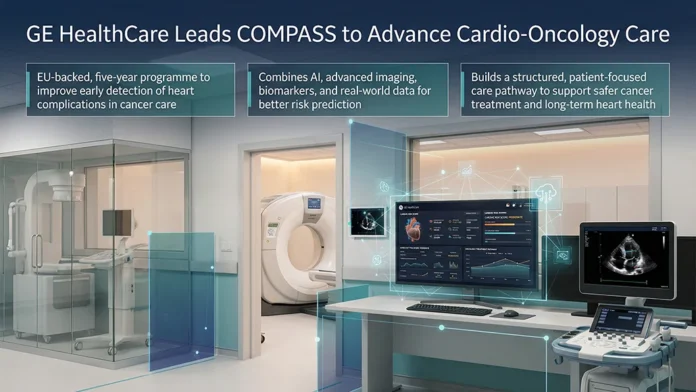
GE HealthCare has taken on the role of lead industrial partner within the COMPASS consortium, a Europe-wide initiative focused on strengthening cardio-oncology care. Backed by the EUโ€™s Innovative Health Initiative (IHI), the five-year programme unites over 60 partners and operates with a total budget of โ‚ฌ50.5 million. Its central objective is to enhance early detection and prediction of cardiovascular complications among cancer patients.

The programme responds to a rising clinical challenge, where cardiovascular disease is increasingly observed in individuals undergoing or recovering from cancer treatment. This trend is associated both with pre-existing conditions and the adverse effects of therapies such as chemotherapy, radiotherapy, and targeted treatments. With heart-related complications now identified as the second leading cause of death in cancer survivors, the need to advance cardio-oncology care has become more urgent across healthcare systems.

Through COMPASS, participating organisations aim to establish a structured, patient-focused care pathway that enables earlier identification and coordinated management of cardiovascular risks linked to cancer therapy. The initiative integrates artificial intelligence, advanced imaging technologies, biomarkers, and real-world data to strengthen risk prediction, support timely diagnosis, and enable more personalised clinical decisions.

โ€œKingโ€™s College London is looking forward to providing academic leadership and scientific coordination to COMPASS, harnessing the consortium expertise across cardiology, oncology, molecular science, big data and AI to address the increasing challenge in cardiotoxicity in cancer care,โ€ said Steve Archibald, Professor in Molecular Imaging at Kingโ€™s College London. โ€œWe aim to promote integrated care models to drive widespread adoption across healthcare systems.โ€

According to GE HealthCare, the collaboration also prioritises improvements in care delivery by aligning clinical pathways and enhancing patient engagement. These efforts are intended to support the safe continuation of cancer treatments while minimising long-term cardiovascular risks. โ€œThis initiative is well positioned to enable patient-centered cancer care that takes cardiotoxicity risk into account, supports the early detection of cardiotoxic side-effects, and promotes long-term heart health for oncology patients,โ€ said Eigil Samset, General Manager, Cardiology Solutions at GE HealthCare and COMPASS Industry Lead.

Medtronic ViaVerte Deal Expands Nerve Ablation Portfolio

Medtronic ViaVerte Deal

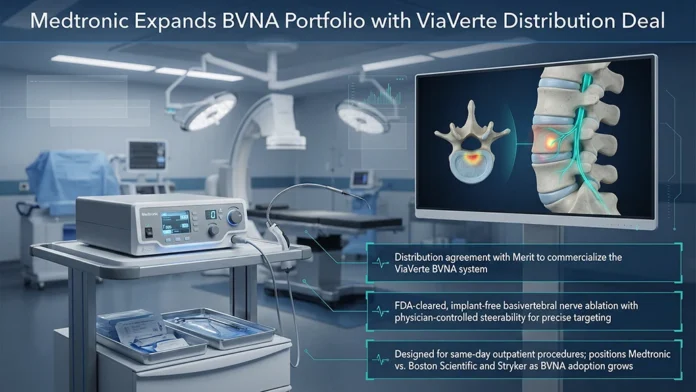
Medtronic has entered into a distribution agreement with Merit Medical Systems to commercialize its ViaVerte system, marking a strategic expansion in the nerve ablation segment. The Medtronic ViaVerte deal brings into focus an FDA-cleared, minimally invasive, implant-free basivertebral nerve ablation (BVNA) system designed to treat chronic vertebrogenic lower back pain. According to Medtronic, the platform stands out as the first and only BVNA system equipped with a physician-controlled steerable mechanism, enabling precise targeting of the basivertebral nerve. The ViaVerte system is intended for same-day outpatient procedures, aligning with broader industry trends toward less invasive pain management solutions.

The Medtronic ViaVerte deal positions the company more directly against competitors such as Boston Scientific, which offers the Intracept BVNA system following its 2023 acquisition of Relievant Medsystems, and Stryker, which received FDA clearance for its own BVNA system in May 2025. Medtronic indicated that the agreement builds on its series of strategic initiatives aimed at strengthening core franchises. It also deepens its collaboration with Merit Medical, which currently supplies the Kyphon KyphoFlex unipedicular balloon catheter. The companies stated that the ViaVerte BVNA system is expected to become available later this year.

โ€œFor 50 years, we have advanced how chronic pain is treated,โ€ said Paolo Di Vincenzo, president, Medtronic Neuromodulation, which is part of the Medtronic Neuroscience Portfolio. โ€œAdding ViaVerte basivertebral nerve ablation expands our world-leading pain interventions portfolio and gives patients and their physicians another meaningful option for lasting relief.โ€
โ€œWe are thrilled to expand our ongoing business relationship with Medtronic by providing Meritโ€™s proprietary articulating technology. We believe ViaVerte represents a significant advancement in the BVNA market.โ€
โ€œThis agreement underscores our mutual dedication to providing innovative therapies to support physicians and their patients.โ€

BTIG analysts Sam Eiber, Marie Thibault and Alexandra Pang maintained a โ€œBuyโ€ rating for Merit following the announcement. They highlighted that limited details were disclosed about ViaVerte beyond its physician-controlled steerable mechanism. While describing the BVNA segment as a โ€œrelatively small marketโ€ estimated at around $200 million, the analysts pointed to its rapid growth, supported by activity from Boston Scientific and Stryker. โ€œWe are pleased to see Merit enter this fast-growing and under penetrated market and think Medtronic makes sense as a partner given its Neuromodulation portfolio,โ€ the analysts wrote. โ€œIt could also serve as one lever to help the OEM business get back on more stable footing.โ€

Medical Device Manufacturing Advancing Global Supply Net

Medical device manufacturing advancing global supply

The modern healthcare landscape is inextricably linked to the intricate web of medical device manufacturing. From the simplest syringe to the most complex robotic surgical system, these devices are the lifeblood of clinical practice, enabling physicians to diagnose, treat, and monitor patients with increasing precision. However, the true story of this industry is not just about the devices themselves, but about the sophisticated systems of medical device manufacturing advancing global supply. In an era of rapid technological change and unpredictable global disruptions, the ability to design, produce, and distribute medical technologies at scale is a critical component of international public health. This evolution is being driven by a fusion of advanced materials science, precision engineering, and strategic manufacturing partnerships that ensure the right tools are available to the right clinicians at the right time.

At the core of medical device manufacturing advancing global supply is a shift toward more resilient and diversified supply chains. The vulnerabilities of the traditional global model were laid bare during recent years, as logistical bottlenecks and material shortages highlighted the risks of over-reliance on a single geographic region. Today, the industry is moving toward a multi-hub approach, where manufacturing capabilities are strategically distributed to mitigate risk and ensure a stable flow of essential medical goods. This trend is not about deglobalization, but about a more sophisticated form of resilient globalization, where medical device manufacturing advancing global supply is supported by a network of localized production centers that can rapidly scale or pivot in response to a crisis.

The Strategic Role of OEM Partnerships in MedTech

A significant portion of the innovation in this sector is driven by OEM (Original Equipment Manufacturer) partnerships. Many of the worldโ€™s leading medical device brands do not actually manufacture every component of their products. Instead, they rely on specialized OEM medical devices partners who possess the specific engineering and production expertise required for high-precision components. These partnerships are a cornerstone of medical device manufacturing advancing global supply, as they allow for a more agile and efficient use of resources. By outsourcing the production of specialized parts to an OEM partner, a medical technology company can focus its internal efforts on research, clinical trials, and regulatory compliance, effectively accelerating the time-to-market for new life-saving innovations.

These OEM relationships are built on a foundation of rigorous quality management and regulatory alignment. In the medical device industry, there is no margin for error. Every component, no matter how small, must meet the exacting standards of the FDA, EMA, and other international regulatory bodies. Therefore, the choice of a manufacturing partner is a strategic decision that goes far beyond cost. It is about finding an organization that shares a commitment to quality-by-design and possesses the necessary ISO certifications to operate in a highly regulated environment. This collaborative model is a primary engine of medtech production, ensuring that even the most complex devices can be manufactured at a scale that meets the needs of a global population.

Precision Engineering and Advanced Materials in Healthcare Manufacturing

The physical reality of medical device manufacturing advancing global supply is defined by the incredible precision of modern engineering. We are now entering an age where devices are becoming smaller, more intelligent, and increasingly biocompatible. This requires a level of manufacturing expertise that was once the exclusive domain of the aerospace or semiconductor industries. For example, the production of micro-stents for cardiovascular surgery or ultra-thin electrodes for neural implants demands cleanroom environments and microscopic assembly techniques that are at the absolute cutting edge of human capability. This focus on device engineering is what allows for the creation of tools that are not only more effective but also less invasive, significantly improving the patient experience.

Furthermore, the use of advanced materials is a key driver of healthcare manufacturing. The development of new polymers, titanium alloys, and bio-absorbable materials is opening up new possibilities for long-term implants and wearable sensors. These materials must be processed with extreme care to ensure they do not trigger an immune response or degrade prematurely within the human body. By integrating these material sciences into the production process, medical device manufacturing advancing global supply is providing clinicians with more durable and reliable tools than ever before. This is particularly evident in the field of orthopedics, where 3D printing and additive manufacturing are now being used to create patient-specific implants that mimic the exact structure of a personโ€™s bone, leading to better integration and faster healing times.

Scalable Production and Global Supply Chain Resilience

One of the greatest challenges in medical device manufacturing advancing global supply is the need for scalability. A medical breakthrough is only as good as our ability to produce it in sufficient quantities to help those in need. This requires a transition from the lab-scale prototype to a mass-scale production environment without any loss of quality or precision. This is where advanced automation and digital twin technology are playing a crucial role. By creating a virtual model of the production line, manufacturers can simulate and optimize the manufacturing process before a single physical part is ever made. This not only reduces waste but also ensures that the final production system is robust and capable of meeting global demand.

Moreover, the resilience of the global medical supply chain is being bolstered by better data integration. Manufacturers are increasingly using blockchain and real-time tracking to monitor the movement of raw materials and finished products from the factory floor to the hospital loading dock. This level of visibility is essential for medical device manufacturing advancing global supply, as it allows for a more proactive approach to inventory management. If a supplier in one part of the world experiences a delay, the manufacturer can quickly identify an alternative source, ensuring that there is no disruption in the availability of critical medical devices. This connected supply chain is a fundamental component of a more stable and equitable global healthcare system.

Regulatory Compliance and Quality-Driven Systems

The most critical factor in medical device manufacturing advancing global supply is, and always will be, patient safety. This is why every aspect of the manufacturing process is governed by a complex and ever-evolving web of regulations. Compliance is not just a legal requirement it is a moral obligation. High-quality medical device manufacturing is characterized by a culture of quality that permeates every level of the organization. From the initial design phase to the final inspection, every step is documented, verified, and audited to ensure that the device performs exactly as intended. This commitment to quality is what builds trust between the manufacturer, the clinician, and the patient.

As we look to the future, the harmonizing of international regulatory standards will be a key factor in further medical device manufacturing advancing global supply. Currently, manufacturers often have to navigate different sets of rules for the US, Europe, and Asia, which can slow down the distribution of new technologies. Efforts to create a more unified global regulatory framework will allow for a more rapid and efficient response to global health challenges. By continuing to innovate in both the engineering and the regulatory aspects of the industry, we can ensure that medical device manufacturing advancing global supply remains a robust and reliable pillar of the modern world, bringing the latest medical advancements to every corner of the globe.

Smart Manufacturing Transforming MedTech Production

Smart manufacturing transforming medtech production

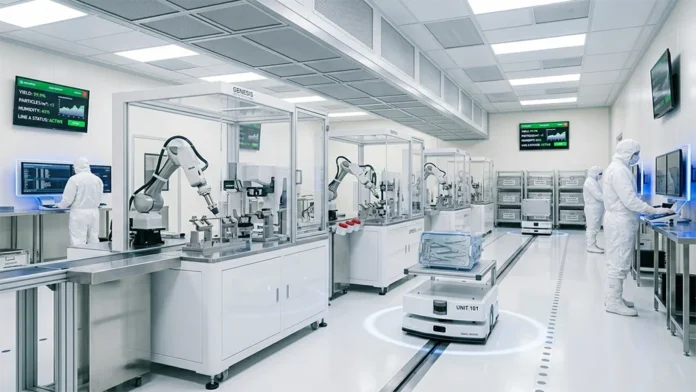
The industrial world is currently in the midst of its fourth major revolution, often referred to as Industry 4.0. While this movement has already reshaped sectors like automotive and aerospace, its most profound impact is perhaps being felt in the field of medical technology. The emergence of smart manufacturing transforming medtech production is not merely about adding more robots to a factory floor it is a fundamental reimagining of how we design, build, and distribute healthcare solutions. By integrating the physical and digital worlds through the Industrial Internet of Things (IIoT), artificial intelligence, and advanced robotics, the medtech industry is creating a new generation of smart factories. These facilities are capable of producing highly complex, life-saving devices with a level of precision, speed, and customization that was previously impossible.

At the heart of smart manufacturing transforming medtech production is the data-driven approach. In a traditional manufacturing environment, data was often siloed, and problems were often only identified after a batch of products had already been completed. In a smart factory, every machine, sensor, and tool is connected to a central digital nervous system. This allows for real-time monitoring of the entire production process, from the temperature of a cleanroom to the precise force applied by a robotic assembly arm. This level of visibility is the essence of industry 4.0 healthcare, as it enables a proactive, predictive model where issues are identified and resolved before they ever lead to a defective product. This not only reduces waste and lowers costs but also significantly enhances the safety and reliability of the medical devices that reach the patient.

The Power of Digital Twins in MedTech Production

A cornerstone of smart manufacturing transforming medtech production is the use of digital twins. A digital twin is a virtual replica of a physical asset, whether it is a single machine, a production line, or an entire manufacturing facility. By creating these virtual models, medtech companies can simulate and optimize their production processes in a risk-free digital environment. For example, before a new surgical instrument goes into production, engineers can use a digital twin to test how different materials or manufacturing methods will affect its final quality and performance. This capability is a game-changer for digital twins production, as it drastically reduces the time and cost associated with prototyping and scaling up new innovations.

Furthermore, digital twins allow for a level of flexibility that is essential in the modern medtech landscape. As the industry moves toward more personalized and patient-specific devices, the ability to rapidly reconfigure a production line is a critical advantage. In a smart factory, a digital twin can be used to plan a seamless transition from one product variant to another, ensuring that the physical machines are updated with minimal downtime. This is particularly vital for the production of custom orthopedic implants or patient-specific surgical guides, where every unit is unique. By leveraging the power of smart manufacturing transforming medtech production, companies can now produce batches of one with the same efficiency and quality as mass-produced goods.

AI-Driven Quality Control and Predictive Maintenance

One of the most transformative aspects of smart manufacturing transforming medtech production is the integration of artificial intelligence into the quality control process. In traditional manufacturing, quality control often relies on manual inspections or statistical sampling, which can miss subtle defects. In contrast, an AI-driven system can use high-speed cameras and advanced image recognition to inspect every single unit on a production line in real-time. These AI systems can detect microscopic cracks, surface imperfections, or dimensional deviations that would be invisible to the human eye. This level of AI manufacturing healthcare is setting a new standard for precision and safety in the industry, ensuring that every device that leaves the factory is perfect.

Beyond quality control, AI is also revolutionizing the maintenance of manufacturing equipment. Predictive maintenance uses machine learning algorithms to analyze data from sensors on a machine to predict when it is likely to fail. This allows the manufacturer to perform maintenance during a planned shutdown, rather than waiting for a catastrophic failure that could halt production for days. For a medtech company, this reliability is essential, as even a short disruption in the supply of critical devices like heart valves or insulin pumps can have serious consequences for patient health. By integrating smart manufacturing transforming medtech production into their operations, companies are building a more resilient and dependable production ecosystem.

Automated Medical Manufacturing and Collaborative Robotics

The physical manifestation of smart manufacturing transforming medtech production is the rise of automated medical manufacturing. We are seeing a new generation of cobots, or collaborative robots, that are designed to work safely alongside human operators. Unlike traditional industrial robots that are often caged for safety, cobots use advanced sensors to detect human presence and can be easily programmed to assist with delicate tasks like the assembly of micro-fluidic devices or the packaging of sterile instruments. This human-robot collaboration is a hallmark of industry 4.0 healthcare, as it combines the dexterity and problem-solving skills of a human with the precision and tireless endurance of a machine.

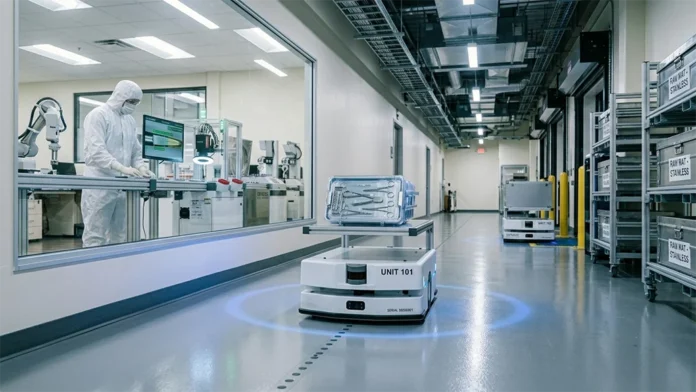
The automation of the manufacturing process also extends to the smart logistics within the factory. Autonomous mobile robots (AMRs) can navigate a facility to deliver raw materials to a production line or move finished goods to a warehouse. This reduces the need for manual material handling and ensures that the production process flows smoothly and efficiently. This holistic approach to smart manufacturing transforming medtech production creates a seamless environment where every movement is optimized for maximum value. This efficiency is particularly important in a global market where medtech companies are facing increasing pressure to lower costs while maintaining the highest standards of quality and innovation.

Sustainability and the Future of Smart MedTech

As we look toward the future, smart manufacturing transforming medtech production will also play a key role in making the industry more sustainable. By optimizing energy use, reducing material waste, and improving the efficiency of the supply chain, smart factories can significantly lower their environmental footprint. This is becoming a major priority for both manufacturers and healthcare providers, as the global community works toward a greener healthcare system. Furthermore, the ability to produce devices closer to the point of care through localized, smart manufacturing hubs will reduce the carbon emissions associated with long-distance shipping.

The ultimate goal of smart manufacturing transforming medtech production is to create a more responsive and patient-centric healthcare system. We are moving toward a world where a patientโ€™s unique anatomical data can be sent directly from a hospital to a smart factory, where a custom device is designed, manufactured, and shipped within 24 hours. This level of speed and personalization will revolutionize the treatment of complex conditions, from rare genetic disorders to traumatic injuries. By continuing to invest in the technologies of Industry 4.0, the medtech industry is not just changing how it makes things it is changing what is possible for the human body. The transformation is already underway, and the result will be a healthier, more precise, and more resilient world for everyone.

Personalized Medicine Advancing Targeted Treatment Path

Personalized medicine advancing targeted treatment

The paradigm of modern healthcare is undergoing a radical shift, moving away from the conventional blockbuster drug model that treats patients based on average responses within a large population. This transition is defined by the emergence of personalized medicine advancing targeted treatment, a multidisciplinary field that combines the power of genomics, bioinformatics, and advanced molecular diagnostics to create a healthcare experience tailored to the individual. For over a century, the medical community has relied on a reactive approach, treating symptoms as they appear and hoping that the chosen intervention will be effective for the majority. However, the reality is that every person possesses a unique genetic makeup that dictates how they will respond to a specific disease and the medications intended to treat it. By harnessing the potential of personalized medicine advancing targeted treatment, clinicians can now move from a reactive stance to a proactive, predictive model that significantly improves the probability of success for every patient.

The foundation of this personalized approach is the human genome. Since the completion of the Human Genome Project, the cost of sequencing an individual’s DNA has plummeted, making it increasingly accessible as a standard diagnostic tool. When clinicians utilize personalized medicine advancing targeted treatment, they are not just looking at a patientโ€™s external symptoms but are instead reading the very blueprint of their biological existence. This genomic data allows for the identification of specific genetic mutations or variations that may predispose an individual to certain cancers, cardiovascular diseases, or rare genetic disorders. By understanding these vulnerabilities before they manifest as full-blown clinical conditions, the medical community can implement preventive strategies that were previously impossible, effectively stopping the disease in its tracks or managing it far more effectively from its earliest stages.

The Role of Biomarker Research in Precision Treatment

A critical component of personalized medicine advancing targeted treatment is the identification and validation of biomarkers. Biomarkers are biological indicators ranging from specific proteins in the blood to patterns of gene expression in a tumor that provide a snapshot of a patientโ€™s health or their likely response to a particular therapy. In the field of oncology, biomarker research has been particularly transformative. Instead of treating all lung or breast cancers with the same broad-spectrum chemotherapy, doctors can now test for specific markers like EGFR or HER2. This information is the essence of personalized medicine advancing targeted treatment, as it allows for the selection of a drug that specifically targets the molecular driver of that individual’s cancer, while sparing healthy cells from the toxic side effects of traditional treatments. This targeted approach not only increases the efficacy of the treatment but also preserves the patientโ€™s quality of life during a very difficult period.

Moreover, biomarker research is expanding into other areas of medicine, such as psychiatry and immunology. For example, identifying specific inflammatory markers can help rheumatologists determine which biologic therapy will be most effective for a patient with rheumatoid arthritis. In mental health, researchers are looking for genetic markers that can predict how a patient will metabolize antidepressants, reducing the trial-and-error phase that often plagues psychiatric care. This precision treatment model ensures that the patient receives the right dose of the right medicine at the right time. By integrating these biological insights, personalized medicine advancing targeted treatment is reducing the burden of adverse drug reactions, which are currently a leading cause of hospitalizations and mortality worldwide.

Genomic Medicine and Data-Driven Insights

The true power of personalized medicine advancing targeted treatment is realized when vast amounts of genomic and clinical data are integrated through advanced computational analysis. The field of pharmacogenomics, which studies how genes affect a person’s response to drugs, is a prime example of this synergy. By analyzing large datasets, researchers can identify subtle genetic variations that influence drug metabolism, allowing for the development of companion diagnostics that are used alongside a medication to ensure its safe and effective use. This level of personalized medicine advancing targeted treatment is becoming the standard for many new drug approvals, as regulatory bodies like the FDA and EMA recognize that the average patient is a statistical myth that can lead to suboptimal care and unnecessary risk.

However, the transition to genomic medicine requires a sophisticated digital infrastructure. Data must be stored securely, analyzed accurately, and presented to the clinician in a way that is actionable at the point of care. This is where artificial intelligence and machine learning are playing an increasingly vital role. These technologies can sift through millions of data points to find patterns that the human eye might miss, such as a rare combination of genetic variants that increases the risk of a specific type of heart failure. By providing these insights to the physician, personalized medicine advancing targeted treatment empowers the human expert to make more informed decisions, blending clinical experience with the most advanced biological data available. The result is a more robust, evidence-based approach to patient care that honors the unique complexity of human biology.

Targeted Therapy Development and the Future of Care

The pharmaceutical industry is also being reshaped by the principles of personalized medicine advancing targeted treatment. The development of new therapies is increasingly focused on orphan diseases and specific molecular subtypes of common conditions. This shift is driven by the realization that a drug that works exceptionally well in a small, genetically defined group is more valuable than a drug that works moderately well for everyone. This targeted therapy development is leading to breakthroughs in fields like gene therapy and mRNA technology, where the treatment is essentially a customized piece of biological code designed to correct a specific genetic defect. This is the ultimate expression of personalized medicine advancing targeted treatment a therapy that is not just for the patient but is a part of the patient.

As we look toward the future, the integration of real-world evidence from wearable devices and electronic health records will further refine the personalized medicine advancing targeted treatment model. Imagine a system where your genomic profile is combined with real-time data on your sleep, diet, and stress levels to provide personalized health recommendations. This holistic view of the individual will allow for a truly precision lifestyle, where the focus is on maintaining health rather than just treating disease. The ethical and privacy considerations of such a system are significant, but the potential to extend human life and reduce the global burden of chronic illness is unparalleled. By continuing to invest in personalized medicine advancing targeted treatment, we are paving the way for a more equitable and effective healthcare system where every individual is seen, understood, and treated as the unique biological entity they are.

Ethical and Practical Considerations in Precision Medicine

The transition to personalized medicine advancing targeted treatment is not without its challenges. One of the primary concerns is ensuring equitable access to these advanced technologies. Currently, genomic sequencing and targeted therapies can be expensive, potentially creating a divide between those who can afford precision care and those who cannot. To fully realize the promise of personalized medicine advancing targeted treatment, the healthcare industry must work together to lower costs and integrate these tools into standard clinical practice. This includes updating insurance reimbursement models to recognize the long-term value of preventive genomic screening and targeted interventions, which can prevent much more costly hospitalizations and chronic complications later in life.

Additionally, the management of genetic data poses significant privacy risks. Patients must be confident that their genomic information will be protected and used only for their benefit. Clear ethical guidelines and robust cybersecurity measures are essential components of the personalized medicine advancing targeted treatment ecosystem. As we navigate these complexities, the focus must remain on the patient. The goal is to create a healthcare system that is not only technologically advanced but also deeply human and compassionate. By leveraging the power of personalized medicine advancing targeted treatment, we are moving closer to a future where precision is synonymous with care, and where the uniqueness of the individual is the very center of the medical journey.

Clinical Laboratory Automation Improving Testing Speed

Clinical laboratory automation improving testing efficiency

The silent heartbeat of every modern hospital is its clinical laboratory. While clinicians and surgeons interact directly with patients, the laboratory provides the critical data that informs nearly 70% of all medical decisions. For decades, the labor-intensive nature of diagnostic testing meant that clinicians often had to wait hours, or even days, for the results that would guide a life-saving intervention. However, the paradigm is shifting. The introduction of clinical laboratory automation improving testing efficiency has revolutionized the diagnostic landscape, moving away from manual pipetting and toward a high-throughput, robotic environment. This evolution is driven by a convergence of rising testing volumes, a global shortage of skilled laboratory personnel, and an urgent need for greater accuracy and speed in patient care. By integrating advanced robotic systems and digital management platforms, laboratories can now process thousands of samples with a level of precision and consistency that was previously unimaginable.

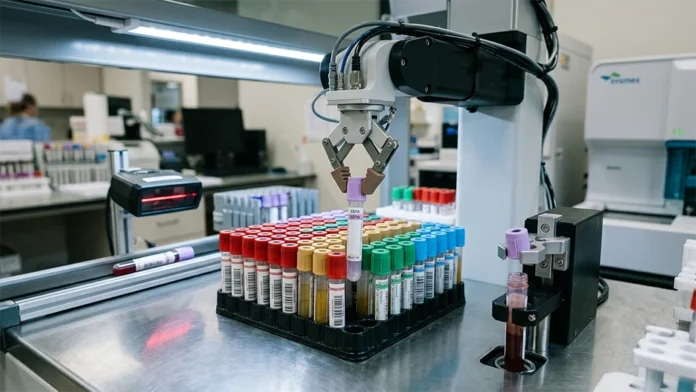
The core of clinical laboratory automation improving testing efficiency is found in the total laboratory automation (TLA) models. In these systems, a sample is placed on a track and navigated through the entire analytical process from sorting and centrifugation to analysis and storage without any human intervention. This hands-off approach is the hallmark of modern clinical lab systems, as it drastically reduces the potential for human error. In a manual lab, the risk of mislabeling a tube or incorrectly pipetting a reagent is a constant concern. However, in an automated environment, every sample is tracked by a barcode and handled by robotic arms that operate with sub-millimeter precision. This not only ensures the integrity of the test but also significantly reduces the turnaround time (TAT), allowing physicians to receive critical results while a patient is still in the emergency room or the operating suite.

The Impact of Robotic Sample Processing on Workflow

One of the most significant bottlenecks in traditional diagnostics is the pre-analytical phase. This stage includes the sorting, uncapping, and preparation of various biological samples, such as blood, urine, and tissue. Historically, this work was performed by laboratory technicians, who spent hours on repetitive tasks that were both time-consuming and prone to causing repetitive strain injuries. The emergence of robotic sample processing as part of clinical laboratory automation improving testing efficiency has fundamentally changed this dynamic. Modern pre-analytical workstations can sort and prepare hundreds of tubes per hour, ensuring that they are ready for the analyzer the moment they arrive in the lab. This initial speed is crucial, especially for time-sensitive tests like cardiac troponin or blood glucose levels, where every minute counts for the patientโ€™s outcome.

Beyond the immediate speed of processing, these robotic systems contribute to a much safer work environment. Laboratory personnel are frequently exposed to biohazardous materials, and manual handling of open tubes increases the risk of aerosolization and accidental needle sticks. By utilizing clinical laboratory automation improving testing efficiency, the lab can keep samples closed and contained for as much of the process as possible. The robots handle the dirty work, allowing the highly trained human staff to focus on the thinking work interpreting complex results, maintaining the equipment, and troubleshooting rare diagnostic anomalies. This shift in roles is a key benefit of diagnostic laboratory technology, as it elevates the profession of laboratory medicine from manual labor to data-driven clinical consultation.

Digital Lab Management and Real-time Data Integration

While the hardware of clinical laboratory automation improving testing efficiency is impressive, the brain of the modern lab is the Laboratory Information Management System (LIMS). These digital platforms are the connective tissue that links every piece of robotic hardware to the hospitalโ€™s electronic health records. When a sample is scanned at the point of collection, the LIMS immediately knows which tests are required and directs the automated track to send the sample to the appropriate analyzer. This seamless integration is essential for lab efficiency solutions, as it eliminates the need for manual data entry and reduces the risk of clerical errors. Furthermore, these systems provide laboratory managers with real-time data on the status of every sample, allowing them to identify and resolve bottlenecks before they impact patient care.

The use of clinical laboratory automation improving testing efficiency also allows for autoverification of results. This process uses complex algorithms to review test results against a patientโ€™s historical data and known physiological ranges. If a result is within normal parameters and consistent with previous tests, the LIMS can automatically release the result to the clinician without a manual review. This drastically speeds up the reporting process for the vast majority of normal tests, leaving the laboratory specialists with more time to focus on the critical or abnormal results that require expert clinical judgment. This blend of robotic efficiency and human expertise is the ultimate goal of clinical laboratory automation improving testing efficiency, creating a system that is both faster and more reliable than either could achieve alone.

Scalability and the Global Demand for Diagnostics

The global demand for diagnostic testing is increasing at an exponential rate. Factors such as an aging population, the rise of chronic diseases like diabetes and cardiovascular disorders, and the increasing use of personalized medicine are putting unprecedented pressure on laboratory resources. In this context, clinical laboratory automation improving testing efficiency is not just a convenience it is a necessity for the sustainability of the healthcare system. Automated labs are inherently scalable, meaning they can handle a significant increase in testing volume without a proportional increase in staff or physical space. This efficiency is particularly vital during public health crises, such as the COVID-19 pandemic, where the ability to rapidly scale up PCR testing was a critical component of the global response.

Furthermore, these lab efficiency solutions are becoming more accessible to smaller community hospitals and diagnostic centers. While the initial investment in a TLA system can be significant, the long-term cost savings in terms of reduced labor, decreased reagent waste, and fewer errors make it a compelling financial decision. As the technology matures, we are seeing the emergence of modular clinical laboratory automation improving testing efficiency, where a lab can start with a single robotic module and add more as their needs grow. This democratization of diagnostic laboratory technology ensures that patients in rural or underserved areas can receive the same high-quality, rapid diagnostics as those in major metropolitan medical centers.

The Future of Automated Laboratory Medicine

As we look to the future, the next frontier for clinical laboratory automation improving testing efficiency is the integration of artificial intelligence and advanced molecular diagnostics. We are moving toward a world of smart labs that can not only process samples but also predict when a piece of equipment is about to fail or when a specific reagent is running low. AI will play a greater role in the analytical phase, helping to interpret complex genomic sequences or identify rare cellular abnormalities in blood smears with a level of accuracy that exceeds human capability. This evolution will further solidify the role of clinical laboratory automation improving testing efficiency as the backbone of precision medicine.

The ultimate vision is a fully integrated diagnostic ecosystem where the lab is not a separate department but a seamless part of the patientโ€™s clinical journey. From the moment a sample is drawn, it is part of a high-speed, data-driven process that delivers actionable insights directly to the physicianโ€™s fingertips. By continuing to innovate in the field of clinical laboratory automation improving testing efficiency, we are not just making labs faster we are making healthcare more responsive, more accurate, and more human. The robots may be doing the work, but the benefit is felt by every patient who receives a timely diagnosis and a personalized path toward healing.


Abbott Scales Diagnostics with Exact Sciences Acquisition

Exact Sciences acquisition

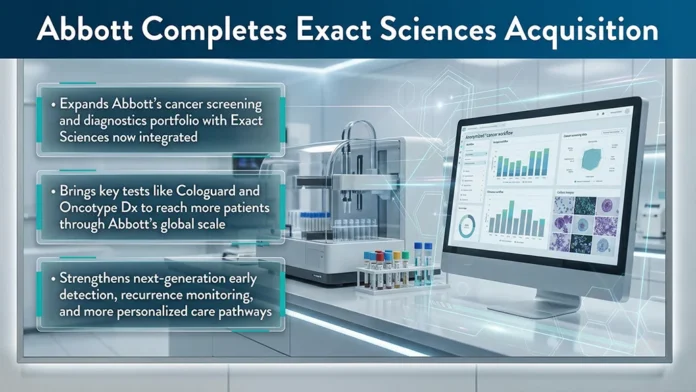
Abbott has finalized the Exact Sciences acquisition, marking the completion of a deal first announced in November 2025 to acquire the Madison, Wisconsin-based cancer diagnostics developer. The company agreed to pay $21 million for Exact Sciences and raised $20 billion through a notes offering earlier this month to support the transaction. With the Exact Sciences acquisition now closed, the company has formally integrated the business into its broader diagnostics portfolio.

The acquisition strengthens Abbottโ€™s position in cancer screening and diagnostics, a segment experiencing rapid growth. Through this deal, Abbott expands its reach to millions more patients by leveraging Exact Sciencesโ€™ product portfolio. This includes Cologuard, a non-invasive test designed for colorectal cancer screening, alongside a range of established and emerging diagnostic tools aimed at improving early detection and disease management.

Exact Sciences brings a suite of solutions such as Oncotype Dx, Cancerguard for multi-cancer early detection and Oncodetect, which supports molecular residual disease identification and recurrence monitoring. Abbott highlighted that the companyโ€™s pipeline includes next-generation diagnostics focused on detecting cancer at earlier stages, enabling improved treatment decisions and ongoing monitoring. These capabilities are expected to enhance care pathways and support more personalized treatment approaches.

Following the transaction, Exact Sciences will operate as a wholly owned subsidiary of Abbott. The medtech company anticipates the acquisition will contribute approximately $3 billion in incremental sales in 2026. โ€œAbbottโ€™s global scale, track record of operational and commercial excellence and work with healthcare systems around the world will expand access to important tools for early cancer detection and personalized treatments,โ€ said Robert B. Ford, chair and CEO, Abbott. โ€œWith the legacy and deep expertise of the Exact Sciences team, weโ€™re ready to transform cancer care.โ€

GE HealthCare Secures FDA Clearance for Photonova Spectra

FDA clearance

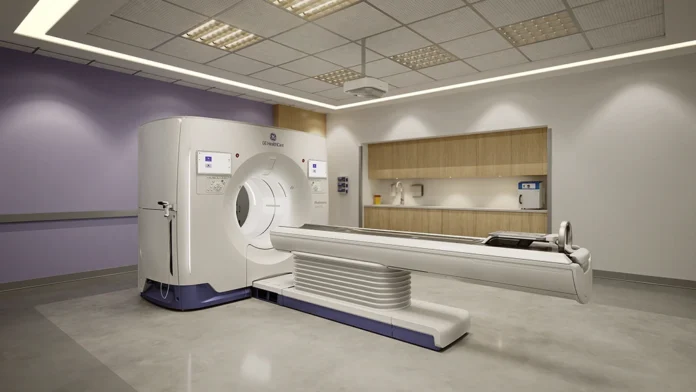
GE HealthCare has secured FDA clearance for its Photonova Spectra solution, marking a significant step in the advancement of photon-counting computed tomography. The Chicago-based company confirmed that the system received FDA 510(k) clearance, positioning Photonova Spectra as a flexible PCCT platform designed to address a wide range of clinical requirements. Built on GE HealthCareโ€™s proprietary Deep Silicon detector technology, the system introduces multiple configuration options aimed at supporting diverse imaging environments while enhancing diagnostic precision.

The Photonova Spectra platform is engineered to deliver broad coverage alongside ultra-high definition (UHD) spatial and spectral imaging. According to GE HealthCare, the system enables faster acquisition speeds and supports detailed visualization of subtle tissue variations, small lesions and vascular structures. Unlike conventional CT systems that convert X-rays into light before measurement, photon-counting CT directly detects individual X-ray photons and measures their energy. This approach allows for improved spatial and spectral resolution, as well as enhanced tissue characterization. The company also highlighted that its Deep Silicon detector material strengthens spectral imaging performance, particularly in lesion characterization and treatment monitoring. GE HealthCare submitted Photonova Spectra for FDA clearance in November 2025, incorporating advanced AI applications into the platform.

As clinicians across the United States face rising volumes and increasing diagnostic complexity, technology must do more than capture images it must simplify decision-making and strengthen performance across the enterprise, said Catherine Estrampes, President & CEO, U.S. and Canada, GE HealthCare. Photonova Spectra is designed to deliver rich clinical insights in every scan and help alleviate cognitive burden for care teams. With the U.S. 510(k) clearance, we are proud to now bring this innovation to U.S. healthcare systems and the patients they serve.

Further technical capabilities of Photonova Spectra include 8-bin energy resolution enabled by Deep Silicon, supporting advanced material separation and characterization. This allows clinicians to distinguish materials such as iodine, calcium and fat with greater clarity. The systemโ€™s wide detector coverage and rapid rotation speed of 0.23 seconds contribute to fast acquisition and motion-free imaging. Additionally, Photonova Spectra captures both 8-bin spectral and ultra-high definition spatial data simultaneously without requiring specialized protocols, ensuring spectral data is available in every exam.

GE HealthCare noted that the system has applications across neurology, oncology, musculoskeletal imaging, thoracic imaging and cardiology. It supports visualization of fine brain structures, characterization of lesions, detection of small fractures and bone marrow edema, and advanced cardiac and chest imaging. The platform also leverages Nvidia computing technology, enabling it to process up to 50 times more data than conventional CT systems. Ongoing collaborations with UW-Madison and Stanford Medicine are focused on exploring new clinical applications and imaging protocols. With regulatory approval in place, GE HealthCare is now preparing for commercial availability of Photonova Spectra in the U.S.

Photonova Spectra reflects years of intentional design and close collaboration with clinicians, researchers and collaborators across the globe, adds Jean-Luc Procaccini, president & CEO, Molecular Imaging and Computed Tomography, GE HealthCare. From the earliest stages to today, we remain focused on building a system that addresses the practical realities of clinical practice while opening pathways for scientific advancement. The result is a photon-counting platform engineered for the needs of todayโ€™s care teams, as well as the imaging challenges and research opportunities that will shape the future of CT.

Beyond the Waitlist: How a Single Strand of Hair is Changing Autism Diagnostics

Hair based autism test

For many families, the path to an autism diagnosis feels less like a medical process and more like a marathon with no finish line. Between years-long waitlists and the pressure of “aging out” of early intervention windows, the search for answers is often defined by uncertainty.

However, a recent expansion from LinusBio is aiming to close that gap. The company announced that its biomarker-based test, ClearStrandโ„ขASD, is now available for children up to age 10, moving well beyond its previous cutoff of 48 months. This shift comes at a critical time, as the CDC now estimates that 1 in 31 children in the U.S. are identified with autism spectrum disorder.

A “Biological Diary” in a Strand of Hair

The most striking thing about the test is the sample it requires: a single strand of hair. While traditional blood or urine tests only show a “snapshot” of a child’s health at one specific moment, hair acts as a longitudinal record.

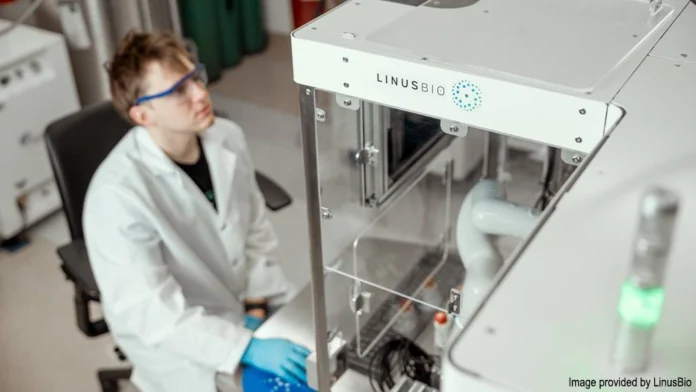
LinusBio uses a combination of robotics and laser-based analysis to “read” the elemental data deposited in the hair over time. This allows them to reconstruct a timeline of how a childโ€™s biology has interacted with their environment, an approach they call “exposomic sequencing”. Remarkably, just one centimeter of hair can yield data equivalent to roughly 1,000 sequential blood measurements.

Streamlining the System

ClearStrandโ„ขASD is designed as a “rule-out” test. With a 95% negative predictive value, it gives clinicians a high level of confidence to exclude autism as a diagnosis. In practice, this means families can be redirected toward the right care pathways immediatelyโ€”such as speech therapy or sensory supportโ€”rather than waiting years for an evaluation they might not actually need.

The Scientist Behind the Breakthrough: Dr. Manish Arora

While his titles are impressive, he is the Edith J. Baerwald Professor and Vice Chairman at the Icahn School of Medicine at Mount Sinai, Dr. Manish Aroraโ€™s work is driven by a simple goal: providing families with clarity.

An environmental epidemiologist by trade, Dr. Arora pioneered the use of tooth and hair samples to look back in time at environmental exposures, even reaching back to the prenatal period. His career has been dedicated to moving away from purely behavioral assessments, which can be influenced by cultural context or access to care, and toward objective biological data.

Despite his international recognition as a researcher, Dr. Arora often notes that his roles as a husband and father are just as central to his work as his time in the lab. Itโ€™s this perspective that fuels his commitment to early detection, offering families the “transformative” power of timely intervention.

GE HealthCare Completes $2.3B Intelerad Acquisition Deal

Intelerad acquisition

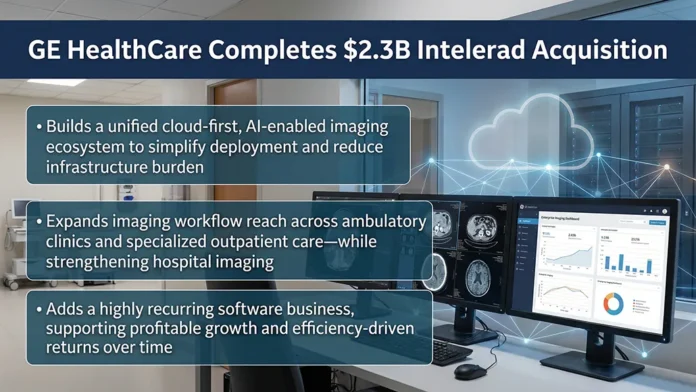
GE HealthCare confirmed it has completed its previously announced $2.3 billion acquisition of Intelerad, marking the completion of a transaction first disclosed in November. The Chicago-based company had outlined at the time that the Intelerad acquisition would be executed as an all-cash deal and aligned with its broader strategy to expand its portfolio of cloud-enabled products threefold by 2028.

Intelerad, known for its imaging software and digital enterprise workflow solutions, operates extensively across outpatient ambulatory care environments. Its portfolio includes cloud-first platforms tailored for both radiology and cardiology, supporting workflows across inpatient and outpatient settings. Through the Intelerad acquisition, GE HealthCare is positioning itself to deepen its footprint in specialized clinics and ambulatory care, while reinforcing its established capabilities in hospital-based imaging. The combined offering is expected to deliver a unified, cloud-first and AI-enabled imaging ecosystem aimed at lowering infrastructure costs and accelerating deployment timelines.

Following the close of the transaction, Intelerad will be integrated into GE HealthCareโ€™s imaging business while continuing to serve enterprise imaging customers across the U.S., Canada, the UK and Oceania. GE HealthCare projects that Intelerad will generate approximately $270 million in revenue during the first full year under its ownership, with around 90% classified as recurring. The company also expects adjusted EBITDA margins to exceed 30%, alongside low-double-digit annual revenue growth, with further acceleration anticipated over time.

GE HealthCare indicated that the acquisition may have a slightly dilutive effect on adjusted EPS in the near term. However, it expects to counterbalance this through cost efficiencies and achieve a high-single-digit return on invested capital by year five.

Scott Miller, CEO, Solutions for Enterprise Imaging, GE HealthCare, said: Intelerad enhances our ability to deliver a cloud-first enterprise imaging platform at scale. Together, we are connecting imaging across care settings with interoperable, AI-enabled solutions that simplify operations, improve clinical insight, and help our customers deliver more precise, personalized care.

Translate ยป