






Close
Digital Health & Ai Innovation summit 2026
Medical Taiwan 2026

Adults- 50 And Up Are Now Eligible For Second Booster Shots

Top Ways To Boost Human Growth Hormone Levels

The US Food and Drug Administration has extended the emergency use authorization for the Pfizer and Moderna COVID-19 vaccines, allowing adults 50 and older to receive a second booster dose of any COVID-19 vaccination as soon as four months following the first booster dose.

The move increases the number of boosters available to healthy older people. Previously, the FDA had permitted extra doses for anyone aged 12 or older who had a severe immune deficiency. For a total of five doses, this group of adults can now get a three-dose primary sequence and two boosters.

Following suit, the US Centers for Disease Control and Prevention announced that it will update its vaccine pages to reflect the FDA’s extended eligibility. In elderly and immunocompromised people, there appears to be some diminishing of protection against serious COVID-19 outcomes over time. According to emerging research, a second booster dosage of either the Pfizer-BioNTech or Moderna COVID-19 vaccine could help raise protection levels for these higher-risk individuals. 

In a press statement, the director of the FDA’s Center for Biologics Evaluation and Research, Dr. Peter Marks, noted that furthermore, the findings demonstrate that an initial booster dose is essential because it enables protection of all adults from COVID-19’s potentially fatal outcomes. Those who have not yet gotten their first booster dose should do so immediately. The FDA stated that the known and prospective advantages of second boosters exceed the known and potential hazards for these populations in making its judgment.

Adults who received Johnson & Johnson’s vaccine as both primary and first booster doses at least four months ago may now receive an extra booster of Pfizer/BioNTech or Moderna‘s vaccines, according to the CDC. Boosters are safe, opines CDC Director Dr. Rochelle Walensky in a statement. People over the age of 50 can now obtain a further booster 4 months after their previous dosage to strengthen their protection even more. Those 65 and older, as well as those 50 and older with existing medical disorders that enhance their risk of severe disease from COVID-19, are the most likely to benefit from an extra booster dose at this time. The CDC and FDA are continuing to examine the necessity for further booster dosages for all Americans, says Rochelle. 

The CDC’s update is what’s called a discretionary guideline, which means that the shots can be given to children in this age range if they want them, notwithstanding scientific uncertainty. However, it is not a formal recommendation.

The lack of clear support for second boosters defers the task of calculating the dangers and advantages of some other vaccine dosages to individuals, which has alarmed some vaccine supporters who argue that the minuscule extra protection some may receive isn’t worth the uncertainty fourth doses bring.

Dr. Megan Ranney, an emergency medicine physician and the academic dean of Brown University’s School of Public Health, believes that officials have been forced to make policies before they had enough information to back them up throughout the pandemic. This, according to Ranney, is another example. She says it’s unclear whether everyone requires a fourth dose at this time, but having this permission in hand will provide them the flexibility to quickly roll out more boosters if they’re needed.

She considers the Biden administration’s approval as an insurance plan on their behalf, adds Ranney. It’s a means to make it easier for folks to acquire the vaccine or a booster shot. Yet, it also gives them the flexibility to quickly roll out BA.2 if it turns out to be worse than they expected or if another variety emerges in the coming months that necessitates another booster, they’ll be able to immediately implement it. So that’s how she’s reading it. Third dosages, according to scientific consensus, assist in boosting immunity against severe disease caused by the virus that elevates COVID-19. However, as the vaccinations continue to provide a high degree of safety against COVID-19 hospitalisation and mortality, even as resistance against illness wanes, the evidence is far from established on when, or even if, a fourth dose may be required.

Much of the evidence analysing the efficacy and safety of a second booster shot has been supplied by Israel, which has been advising a fourth dosage of coronavirus vaccination to individuals 18 and older since the end of January.

The FDA said it evaluated information from Israel’s Ministry of Health on more than 700,000 patients aged 18 and above who had received second Pfizer-BioNTech vaccination boosters at least four months following their first booster. Over 600,000 of those surveyed were over the age of 60. According to the FDA, data has indicated no additional safety concerns related to the fourth dose.

The evidence on the safety of the Moderna boosters when used as a fourth dosage comes from a trial of 120 patients aged 18 and up who received a fourth dose of the vaccine at least four months following receiving their third dose of the Pfizer vaccine, as per the FDA. In the three weeks that followed the last dose, no new safety issues were discovered.The FDA drew some of its information for its decision from previous studies.

In a major trial of more than half a million persons over 60, those who got a second booster, or fourth dosage, of a COVID-19 vaccination had a 78 percent reduced risk of death during the Omicron wave than those who received a third shot at least four months prior. In both groups, however, the number of deaths was rather modest. There were 232 total deaths out of roughly 234,000 people who had only three doses of the Pfizer-BioNTech vaccine after 40 days of follow up, compared to 92 deaths out of 328,000 people.

Fourth boosters were found to be safe and restored antibodies to levels obtained after the third dosage in a smaller study of health care professionals, which included younger folks. Fourth doses, on the other hand, were only moderately beneficial in preventing illness (approximately 30 to 40%). And the majority of the sick workers always had high viral loads, implying that they could spread the illness to others.

Additional research from the United Kingdom shows that the antibody boost from the booster dose wears off swiftly within weeks. As a result, some experts believe that, given available resources and waning interest in more boosters, the US should hold off on implementing fourth doses until there is a clear threat of a fresh wave of illnesses. Some predict that it will happen in the fall of next year.

Dr. William Schaffner, a communicable diseases expert at Vanderbilt University, stated that if there is only one bullet in the pistol to shoot, he would prefer to postpone firing until the fall, since that’s when cases may really begin to escalate. Americans aged 12 and up have been qualified for a third vaccine dosage since January, but just 46% of that age group has received one. Schaffner is concerned that fourth doses will mislead people who haven’t yet decided whether or not to take a third dose. He believes public health officials and clinicians should keep focusing on getting the third dose into eligible people.

Blessing Health System Partners with Biofourmis to Launch Home Hospital Services

Blessing Health System Partners with Biofourmis to Launch Home Hospital Services

Biofourmis, a Boston-based global leader in virtual care and digital therapeutics, today announced that it was selected by Blessing Health System in Quincy, Ill., as the technology solutions partner for its newest program, which delivers acute-level hospital care inside patientsโ€™ homes.

Blessing Health System is an integrated rural health system spread over three states (Illinois, Missouri and Iowa) consisting of three hospitals, two physician groups, an accredited college of nursing and health sciences, a network of medical specialty businesses and a charitable foundation.

Biofourmis is supporting the health system with its turnkey, end-to-end, home hospital solution for participation in the Rural Home Hospital project. This new program allows caregivers to deliver hospital-level care in patientsโ€™ homes across a range of acute conditions instead of admitting them to a medical facility. This allows them to optimize capacity and ensure that hospital beds are available for more critically ill patients. Other outcomes include higher patient satisfaction, lower readmission rates and hospital-acquired conditions, as well as a reduction in the overall cost of care. For rural communities, home hospital programs also reduce patient and family travel burdens and out-of-pocket costs associated with facility-based care.

Blessing Health System providers will visit patients in their homes and utilize Biofourmis technology to remotely monitor them using biosensors and a patient-centric companion app. Continuously streaming data from the wearables and electronic patient-reported outcomes (ePROs) are fed into the Biofourmis artificial-intelligence (AI)-powered Biovitalsยฎ Analytics Engine, which establishes a personalized patient baseline via machine learning and delivers real-time notifications to providers as patient conditions change.

โ€œParticipating in a home-based hospital program in our rural area required choosing an experienced and knowledgeable technology partner offering a comprehensive solution that we could easily expand as the initiatives added more patients and more conditions,โ€ said Mary Frances Barthel, MD, MHCM, SFHM, FACP, Chief Quality and Safety Officer, Blessing Health System. โ€œAlthough we considered several solutions, Biofourmis offered the most comprehensive, highly scalable and user-friendly solution. We are confident that it will enable us to successfully participate in this program, but more importantly, deliver the high-quality care that our patients expect in the comfort and convenience of their homes.โ€

Biofourmis has deep experience as a technology provider for hospital-level care at home, including the Home Hospital program at Brigham and Womenโ€™s Hospital, which co-developed Biofourmisโ€™ Hospital@Home technology solution. Brighamโ€™s clinical leadership has published several clinical studies demonstrating the benefits of its program, including a randomized clinical trial in the Annals of Internal Medicine that found the Home Hospital program reduced hospital admissions among participating patients by 70% and lowered costs by 40%.

Rural Health System of the Future

To date, most home hospital programs serve primarily urban areas. Over the next three years, the Rural Home Hospital project will apply lessons and processes learned from those earlier initiatives to help build, launch and evaluate a nationwide program to serve the unique care needs of rural residents across the U.S.

The Rural Home Hospital was created by a joint venture of the Harvard T. J. Chan School of Public Health and Brigham and Womenโ€™s Hospital in Massachusetts. Blessing Health System was one of only two U.S. participants selected out of a pool of 700 applicants. Rural Home Hospital will include patients with acute exacerbations of conditions such as heart failure, chronic obstructive pulmonary disease, asthma, gout, chronic kidney disease and others. For the research study, roughly half of the participants will receive facility-based inpatient care and the other half will receive home-based care.

Blessing Health System is also one of 92 health systems in the nation to receive the Acute Hospital Care at Home waiver, with 204 hospitals in 34 states participating (as of March 17). The Acute Hospital Care at Home Program provides 1:1 Medicare reimbursement parity for hospitals that admit patients with a wide range of acute conditions to their homes. As with the Rural Home Hospital project, patients receive a combination of in-person and virtual visits from providers, as well as around-the-clock monitoring and communication.

โ€œHealth systems in every type of community in the U.S. are recognizing the clinical and economic benefits of safely and effectively delivering more care in the home, whether that is acute, post-acute or complex chronic condition management,โ€ said Kuldeep Singh Rajput, CEO and founder of Biofourmis. โ€œBlessing Health System serves a large geographic region, but by partnering with Biofourmis, together we will ensure that providers have the actionable data and tools to deliver highly personalized care regardless of where patients are located.โ€

About Biofourmis

Biofourmis is a fast-growing global health technology company that is focused on leveraging software and data science to deliver virtual care and develop novel digital therapies. The companyโ€™s robust care management platform, Care@Home, enables remote disease management across a range of medical conditions for acute, post-acute and chronic care. The solution utilizes medical-grade wearables to continuously collect patient data, which is analyzed by Biovitalsยฎ, Biofourmisโ€™ highly sophisticated, clinically validated AI-powered predictive analytics engine. With support from Biofourmisโ€™ in-house clinical care team, payers and providers can leverage the solution to predict clinical deterioration in advance of a critical eventโ€”which enables earlier interventions for better outcomes and cost savings. Likewise, the company discovers, develops and delivers clinically validated digital therapeutics. These monotherapies or โ€œpill plusโ€ prescription therapeutics support payers and providers in improving patientsโ€™ lives while reducing healthcare utilization and associated costs.

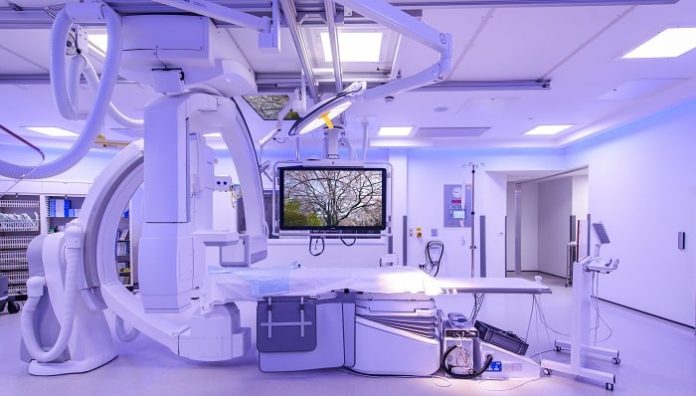
Philips Image Guided Therapy System Azurion with Ambient Experience and FlexVision display helps reduce patient anxiety during interventional procedures

 Philips Image Guided Therapy System  Azurion with Ambient Experience and FlexVision display helps reduce patient anxiety during interventional procedures

Royal Philips, a global leader in health technology, announced commercial availability of the companyโ€™s new solution for interventional rooms, Ambient Experience with FlexVision display, which will be showcased at the American College of Cardiologyโ€™s 71st Annual Scientific Session & Expo (ACC 2022), April 2-4, Washington, D.C., USA. Connecting to Philips Image Guided Therapy System – Azurion, it uses the systemโ€™s large display to offer patients a calming multi-sensory experience while staff prepare them for their procedure, prior to the display being used for the actual intervention. It also allows patients and interventional team members to adapt the roomโ€™s ambient lighting and sound to add to the overall feeling of calm, especially during the patient entry and preparation phases of procedures. Aimed at reducing patient anxiety during interventional procedures, Ambient Experience, leveraging FlexVision display, has the potential to improve the patient and staff experience, positively impact outcomes, and enhance workflows and productivity.

Anxiety in patients undergoing minimally-invasive image-guided therapy typically peaks immediately before the procedure is performed. As a result, sedative drugs and general anesthesia are commonly used in interventional rooms to ensure patients lie still during procedures. Mitigating the clinical atmosphere associated with typical interventional rooms by introducing positive elements that distract, inform, educate, and empower patients, Philips Ambient Experience aims to reduce patient anxiety to a level where interventionists can operate more productively and efficiently. For example, the solution could reduce the overall procedure time and, in some cases, reduce the costs associated with patient sedation or general anesthesia.

โ€œOne factor in our decision to use Philipsโ€™ solution is that along with the patient experience, it has been shown that you can use less anesthesia in some cases due to the relaxing and distracting factors of Ambient Experience. We wanted to set ourselves apart from other labs,โ€ said Victor Hall, Vice President of the Heart and Vascular Institute, Baptist Health Care Pensacola, Florida, US.

โ€œInterventional procedures can be challenging for patients, especially those who are anxious about the intervention and the outcome,โ€ said Werner Satter, General Manager Ambient Experience at Philips. โ€œWith the addition of Ambient Experience connected to FlexVision display, which is part of Philips Image Guided Therapy System โ€“ Azurion, we address the atmosphere and mood of the room by offering active relaxation opportunities for patients and staff.โ€

In addition to the systemโ€™s library of pre-recorded themes, Ambient Experience also connects to media devices such as mobile phones and tablets, adding a powerful element of interactivity and choice so that patients and staff can enjoy an even more personalized experience. Single-touch control allows interventional room staff to switch between customized presets and optimal lighting and audio settings for each phase of a procedure.

Philips Ambient Experience applies evidence-based, human-focused innovation and design thinking to give patients and staff an engaging and pleasant experience, while also improving the efficiency of diagnostic and therapeutic procedures and building confidence in the services and reputation of healthcare facilities. Reduced patient anxiety contributes to better patient and staff experiences and potentially better patient outcomes, while improved efficiency contributes to lower cost of care, helping healthcare providers meet all four aspects of the Quadruple Aim.

Ambient Experience has a wide range of healthcare application areas. In the radiology department of Noahโ€™s Ark Childrenโ€™s Hospital for Wales (Cardiff, UK), where it provides an immersive interactive experience for children from the moment they arrive, a patient-satisfaction study showed that Philips Ambient Experience achieved high net promoter scores.

About Royal Philips

Royal Philips is a leading health technology company focused on improving people’s health and well-being, and enabling better outcomes across the health continuum โ€“ from healthy living and prevention, to diagnosis, treatment and home care. Philips leverages advanced technology and deep clinical and consumer insights to deliver integrated solutions. Headquartered in the Netherlands, the company is a leader in diagnostic imaging, image-guided therapy, patient monitoring and health informatics, as well as in consumer health and home care. Philips generated 2021 sales of EUR 17.2 billion and employs approximately 78,000 employees with sales and services in more than 100 countries.

The Do’s And Don’ts Of Being Single With Infertility

The Do's And Don'ts Of Being Single With Infertility

Infertility has increased dramatically over the past 60 years, with an estimated 3.5 million people in the UK experiencing difficulties conceiving at some point during their reproductive life. And not all are currently in a relationship, which raises the question of how and when you discuss infertility while on the dating scene.

Here is our guide to the dos and donโ€™ts of dating with infertility.

DO

Get support and advice

If you know or suspect you have issues with your fertility, it is always a good idea to get yourself checked out by your GP or a fertility clinic, like Create Fertility even if you are single or not yet ready to try for children, so you know exactly what the situation is, what help is available and what your options are. This way, you can be clear in your own mind how you feel about your infertility, and what you are prepared to do in the long-term if becoming a parent is what you want to do. ย 

Pick the right time to raise the issueย 

The dating scene is about having fun as well as potentially finding a life partner, so itโ€™s not necessary to wear your heart on your sleeve about your infertility from the get-go. In fact, being too upfront on a first date can be off-putting. Instead, wait until you think there is longer term relationship potential for you both before deciding to have the conversation. But donโ€™t wait too long as it is important information your new partner needs to know.

Take your ages into account

Fully declaring you have issues with your fertility in your early 20s can be different to disclosing information to a new partner when you are both in your 30s and even early 40s, as expectations will be different.ย  A desire to have a family in your 30s is more of an essential (and more pressing) consideration for many people, and it is only fair to tell a potential partner that you may not be able to have children.

DONโ€™T

Feel ashamed or blame yourself

Infertility can be caused by a range of issues and, in around one in four cases, no known cause can be found, so it is important not to blame yourself when dating with infertility. So, when raising the subject of infertility for the first time when dating, it is important to feel confident and comfortable in the amount of information about your particular case you want to share.

Expect them to want the same as youย 

Especially if you think they are โ€˜the oneโ€™, it is essential that you donโ€™t ignore your dateโ€™s response to your infertility news, even if itโ€™s a reaction you didnโ€™t want. They may be unwilling to take on what may lie ahead in terms of potential IVF treatment or consider other options such as adoption. Or children may simply not be on their life agenda. Listen to what they say without trying to change their opinion or try to convince them otherwise. ย 

Feel pressured to compromiseย 

Letting your date know you have fertility issues can change the whole dynamic as it brings in some theoretical forward planning at a time when the relationship may not be fully committed. So donโ€™t be tempted to tell your date what you think they want to hear, especially if itโ€™s clear you are not on the same page. If trying for children โ€“ in the near or long-term future – is important to you, then you may have to accept this is not the new relationship for you.

Optum and LHC Group to Combine, Advancing Abilities to Extend Value-Based Care into Patients Homes

Optum and LHC Group to Combine, Advancing Abilities to Extend Value-Based Care into Patients Homes

Optum, a diversified health services company, and LHC Group, a national patient-focused provider of high-quality in-home health care services, have agreed to combine to further strengthen their shared ability to advance value-based care, especially in the comfort of a patientโ€™s own home. The agreement calls for the acquisition of LHC Groupโ€™s outstanding common stock for $170 per share.

The combination of LHC Group with Optum Health, which works with over 100 health plans, unites two organizations dedicated to providing compassionate and comprehensive care to patients and their families. LHC Groupโ€™s history of high-quality home and community-based care matched with Optumโ€™s extensive value-based care experience and resources will accelerate the combined companiesโ€™ ability to deliver integrated care, improving outcomes and patient experiences.

โ€œLHC Groupโ€™s sophisticated care coordination capabilities and its warm, human touch is so important for home care, and will greatly enhance the reach of Optumโ€™s value-based capabilities along the full continuum of care, including primary care, home and community care, virtual care, behavioral health and ambulatory surgery,โ€ said Dr. Wyatt Decker, CEO, Optum Health. โ€œWe greatly admire how the people of LHC Group have created a culture that enables them to be a trusted health care partner to patients and their families when they need it the most, and we look forward to working with and learning from them.โ€

โ€œSince our founding in 1994, โ€˜itโ€™s all about helping peopleโ€™ has been the core of our mission, and as part of the Optum team and its value-based capabilities, we will be able to expand our patient-centered mission and help drive best care practices across the country,โ€ said Keith G. Myers, LHC Groupโ€™s chairman and CEO. โ€œWorking together as organizations committed to caring for the most vulnerable in society will help us more effectively and efficiently deliver high quality and increasingly value-based care in the home.โ€

LHC Groupโ€™s 30,000 employees, including frontline care providers and administrative and support personnel, provide more than 12 million annual in-home patient-focused interventions and is widely recognized as one of the highest-quality providers of in-home care, with quality scores consistently running more than one-third higher than industry norms. The LHC Group leadership team will continue forward as part of Optum Health.

The agreement calls for the acquisition of LHC Groupโ€™s common stock for $170 per share in cash and is expected to close in the second half of 2022 subject to LHC Group shareholder approvals, regulatory approvals and other customary closing conditions. Co-founders Keith and Ginger Myers will personally invest $10 million in UnitedHealth Group stock following the close of the combination. The acquisition is expected to be neutral to UnitedHealth Groupโ€™s outlook for adjusted net earnings per share in 2022, modestly accretive in 2023, and advancing strongly in subsequent years.

Flume Health adds NextCare to its Flume Community Platform, Expanding In-Network Opportunities for Urgent Care Patients

Urgent Care vs Doctor: Which is the Right One for You?

Flume Health, a Health-Plan-as-a-Service platform that eliminates the complexity of designing and managing healthcare plans, today announced that it has added NextCare, one of the nation’s largest privately owned providers of urgent care and occupational medicine service, to its Flume Communityโ„ข platform starting with all 40 NextCare clinics in Texas. The program will expand to NextCare’s locations in 10 additional states, including OK, MI, AZ, CO, KS, MO, NC, NM, VA and WY throughout 2022-23.

The industry is starting to embrace a new direction in healthcare as evidenced by health plans contracting directly with providers and health providers considering new, alternative arrangements to ensure people receive top care. Flume Health and NextCare’s arrangement allows middle market companies in all kinds of industries (that offer health plans powered by Flume) to add convenient and affordable access to urgent medical care for their employees and families. By tailoring healthcare plans according to the needs of varied companies and workforces, Flume creates solutions that help people where they’re at in their personal health journeys and uplevel the offerings that their employers can provide.

“Flume Health has always been in the business of trying to make it easier for people to access care at a more reasonable price. It’s very much core to our mission, and it’s what we’ve been doing from day one,” said Cedric Kovacs-Johnson, CEO and founder, Flume Health. “By adding NextCare to our platform of providers, we continue to find ways to increase healthcare options for American workers, while aiming for transparent and fair pricing so that employers as well as NextCare’s providers and patients know exactly what to expect.”

Through Flume Health, employers can design plans that waive deductibles and coinsurance for all participants’ Flume Communityโ„ข visits, so that patients pay everything owed at the time of service, taking providers out of the collections business and removing barriers for patients who may otherwise have put off care for financial reasons. Also as part of the Flume Community, providers benefit from a dramatically reduced billing cycle โ€“ within 96 hours of a clean claim โ€“ as well as fair payment rates that are on average above the 50th percentile of fully insured payments based on local market rates.

“Self-funded employers that Flume serves in Texas run the gamut of industry, including a law firm and a landscaping company. These businesses want to offer their employees improved benefits, to attract and retain workers, and because it’s the right thing to do,” said Thom Palmer, Vice President of Managed Care, NextCare. “This agreement is the first big step toward expanding into all of our 156 locations in 11 states as we continue to seek new ways to provide more access and affordability to people in urgent times of medical need.”

About Flume Health
Flume Health is the first digital platform for health plan administration, replacing traditional TPAs and empowering challengers and established healthcare companies to design and launch powerful next-generation, personalized health plans. A Health-Plan-as-a-Service, Flume eliminates the complexity of designing, managing, and launching personalized healthcare plans. Companies can leverage Flume’s Health-Plan-as-a-Service operating system to take on the difficulties of delivering personalized health plans, allowing plan providers to focus on member experience. For more information, visit www.flumehealth.com.

About NextCare
NextCare is one of the nation’s largest providers of urgent care and occupational medical services, with an emphasis on customer service to ensure patients experience the highest level of care. NextCare operates 156 urgent care facilities in Arizona, Colorado, Kansas, Michigan, Missouri, New Mexico, North Carolina, Oklahoma, Texas, Virginia and Wyoming.

Cleveland Clinic Expands its Global Footprint with Opening of London Hospital

Cleveland Clinic announced the opening of Cleveland Clinic London Hospital, a 184-bed state-of-the-art hospital, at 33 Grosvenor Place in central London. The facility is the newest location in Cleveland Clinicโ€™s expanding global footprint and the second in London, following the opening of Cleveland Clinic Portland Place Outpatient Centre in September 2021.

As part of one of the worldโ€™s top hospital systems โ€“ as determined in Newsweekโ€™s Worldโ€™s Best Hospitals 2022 list โ€“ Cleveland Clinic London provides patients access to a global network of physicians and specialists to provide the highest quality care, as well as world-class patient experience built around the best practices and core values of Cleveland Clinic. It will offer a doctor-led model of care that is innovative, empathetic and based on research and education.

The Cleveland Clinic health system, which employs more than 72,000 caregivers worldwide, has pioneered many medical breakthroughs, including coronary artery bypass surgery, the first face transplant in the United States, and most recently the first uterus transplant in the United States.

Cleveland Clinic London Facts + Figures 2022

The eight-story facility will treat a wide range of complex conditions, with a focus on heart & vascular, digestive disease, neurosciences and orthopedics. The hospital has 184 inpatient beds, including 29 ICU beds and eight operating theaters, a 41-bed neurological rehabilitation ward and a staff of approximately 1,150 caregivers.

Equipped with the latest technology, Cleveland Clinic London has the ability to care for a complex patient population, supported by an acute admissions unit and 24/7 intensive care specialists in the ICU, a model that enhances patient safety and experience. Alongside its core focus areas, the hospital also offers a full range of medical sub-specialties and comprehensive services for imaging, labs and interventional radiology.

โ€œFor more than 100 years, Cleveland Clinic has been at the forefront of medical innovation and specialized health care,โ€ said Cleveland Clinic CEO and President Tom Mihaljevic, M.D. โ€œWe believe that touching more lives is our ethical imperative. With the opening of Cleveland Clinic London, we are extending our unique model of care to more patients than ever.โ€

Brian Donley, M.D., CEO of Cleveland Clinic London, said, โ€œThis is an eventful moment for the entire Cleveland Clinic family. We are excited to be bringing our unique model of care to the U.K., combining Londonโ€™s world-renowned physicians and research with Cleveland Clinicโ€™s 100-year history of technological advances and clinical expertise. We will provide patients with an unparalleled experience and the highest quality care.โ€

Cleveland Clinicโ€™s latest facility combines the health systemโ€™s integrated care approach with its leadership in medical innovation to meet the unique needs of each patient. The hospital is equipped with the most advanced medical and surgical technologies, including innovative laser and robotic surgery capabilities. It will offer the most advanced minimally invasive procedures, such as transcatheter aortic valve implantations (TAVI); Cleveland Clinic was one of the early pioneering centers of TAVI and has since become a world leader in this specialized treatment.

Cleveland Clinic London is one of the first private hospitals in the U.K. that can conduct intraoperative imaging for brain and spinal cord disorders, a leading tool in preventing reoperations. The hospital is also equipped with a 41-bed neuro-rehabilitation suite with technologically advanced robotic equipment.

HealthCare Synergy Partners with nVoq to Improve Clinician Experience for Home Health and Hospice

HealthCare Synergy, a leader in home health software and automations, announces a co-marketing partnership with nVoq Incorporated. HealthCare Synergy will promote clinicians using nVoqโ€™s accurate, secure speech-to-text technology in the office, on the go, or in the home when providing care. nVoqโ€™s suite of leading-edge speech recognition solutions includes nVoq.Mobile Voice for the Android tablet, and nVoq.Voice for Windows users.

Along with nVoq, HealthCare Synergy will partner to educate agencies and clinicians on how they will benefit from using nVoqโ€™s speech recognition technology. With increased documentation requirements, clinicians can quickly see the advantage of an easy-to-use speech-to-text solution that overlays with HealthCare Synergyโ€™s software, meets HIPAA compliance regulations, and understands the medical vocabulary unique to home health and hospice. nVoq fulfills these requirements, allowing clinicians to tell the patient story easily, efficiently, and accurately through a dictated narrative note.

โ€œHealthCare Synergy is always looking to provide post-acute agencies the software and automations to operate at optimal performance. Speech recognition is really the future of optimizing documentation software. We are excited to partner with nVoq to offer the next level of accurate and efficient clinical documentation,โ€ said President of HealthCare Synergy. โ€œBy using nVoqโ€™s technology with HealthCare Synergyโ€™s software, caregivers can deliver higher quality, accurate documentation, in a timelier mannerโ€” enhancing the caregiving experience, accelerating reimbursement cycles, and enabling a better work-life balance.โ€

โ€œnVoq has had tremendous success enabling leading home health and hospice agencies with our state-of-the art speech recognition platformโ€ said Debbi Gillotti, Chief Operating Officer at nVoq. โ€œOur partnership with HealthCare Synergy further aligns with our deep dedication to bring nVoqโ€™s industry leading speech recognition to home health and hospice agencies.โ€

About nVoq
nVoq Incorporated, headquartered in Boulder, CO, provides HIPAA-compliant, SaaS-based speech recognition to the healthcare industry, with a strategic emphasis on the post-acute care segment. nVoqโ€™s platform supports both mobile and office-based clinicians in capturing patient narratives at the point of care to expedite high-quality documentation, simplify coding, and streamline reimbursement.

Array Receives Patent for Technology and Methods Behind its Content Engagement and Analytics for Life Sciences Events

Array Receives Patent for Technology and Methods Behind its Content Engagement and Analytics for Life Sciences Events

Array, a leading content engagement solution for life sciences events, announced it has received a United States Patent (US Patent 16/943302) for the companyโ€™s โ€œSystems and Methods for Improved Meeting Engagement,โ€ which Array uses to deliver hybrid life sciences events with built-in engagement analytics and reporting. Array has nearly 20 years of experience at more than 10,000 life sciences events.

Array is proven to engage over 90 percent of audience members, even in virtual events, where engagement often suffers. The companyโ€™s technology allows audiences to experience presentations, ask questions, participate in discussions and respond to polling in-person via a Managed iPadยฎ or in a virtual/hybrid format. During life sciences events, Array collects engagement data at an individual and slide level, then provides consulting to ensure clients understand the data they collect and can use it to improve future events and make informed business decisions.

โ€œWhen the pandemic brought about more reliance on virtual and hybrid formats, several technology providers had to learn, evolve and reconfigure their systems to present material in those formats. Since we had been doing it for years, we simply improved upon our existing systems and methods,โ€ explains Marc Crawford, CEO of Array, adding the company applied for the patent on the technology three years ago. โ€œClients appreciated making a seamless transition to virtual and hybrid events without losing any of our robust engagement or analytics features.โ€

Arrayโ€™s hybrid solution provides an equally meaningful experience for onsite and offsite audiences, and yet yields a consolidated and truly representative capture of engagement data to interpret into insights. Theirs is one of the only hybrid solutions on the market that can facilitate interaction between any combination of in-person and remote audiences and presenters โ€“ including mixed panels โ€“ with both live and recorded content. Arrayโ€™s hybrid solution was recently named a winner in the 2022 BIG Innovation Awards presented by the Business Intelligence Group.

โ€œThe approval of this patent comes at an exciting time, when we are expanding our data products and services to help raise the quality of events across the life sciences industry,โ€ adds Crawford.

In addition to using the patented technology to help customers transition to virtual/hybrid events, Array also recently introduced a proprietary scoring methodology (Array Content Engagement Score), based on the technology.

Since 2021, Array has surpassed 2,700 virtual events and 250 hybrid events where in-person and remote audiences engage with the same speakers and content in real time.

ABOUT ARRAY

Array is a content engagement partner for life sciences events โ€“ with nearly 20 yearsโ€™ experience at over 10,000 events. Our unique combination of technology and services is proven to improve business results by engaging more than 90% of audience members and increasing knowledge transfer while collecting meaningful analytics down to the individual participant level for actionable insights. Array offers technical support, event production expertise, and analytics interpretation and guidance to maximize the impact of in-person, virtual, and hybrid life sciences events.

How To Welcome A Healthier Life With Open Arms

How To Welcome A Healthier Life With Open Arms

Do you find it hard getting out of bed every morning? Have you begun drinking caffeinated beverages just to make it through the day? If this sounds familiar, it’s time to switch over to a long-term solution. It’s straightforward to start, but after you experience the advantages of a happier, healthier, and more productive lifestyle, you’ll want to continue.

To live a more joyful, healthy, and productive life, follow these five energy-boosting ideas from Express Pharmacy:

1) Make sure you eat nutritious meals.

We all know that a nutritious diet is beneficial to our health, but it’s all too easy to conceive of healthy eating as simply a tool for weight reduction. You should, however, eat a balanced diet that is high in fruits and vegetables, lean protein, low-fat dairy products, and whole grains to give your body the energy it requires according to the 2015 Dietary Guidelines for Americans. Food has a big impact on the body, to a certain degree. Eat a wide range of foods from all four food groups to get a variety of nutrients to keep you going throughout the day.

2) You should aim for seven to eight hours of sleep each night.

It has been demonstrated that individuals who sleep more have a decreased chance of dying. Many people appear to need to improve their sleeping habits. We already know we need at least seven hours of sleep every night, so what is keeping us from obtaining it? Consider how you may decrease your most frequent sleep disruptions, and understand that sleeplessness can cause a slew of health issues, as well as mood, motivation, and energy issues. Prioritizing sleep is one of the most effective things you can do to get ready for a successful, energetic day.

3) Keep in touch with pleasant individuals.

Increase the amount of time you spend around individuals you enjoy being with. Connecting with people who have a positive attitude and similar interests will revitalize and revitalize you. The good news is that your energy account may be restocked. The bad news is that people who you don’t get along with or have a negative attitude, or make poor decisions, will deplete your energy account. Keep company with individuals you enjoy.

4) News may be good for your career or life, but too much of it can be harmful.

The news is an excellent method to stay up to speed on current affairs. It might be instructive, amusing, and even inspiring. Unfortunately, the news is frequently subjected to stories of tragedy. That is why establishing personal limitations and those for your family is so important. As a result, you may be powerless against the negative influences that seek to exploit your brain’s natural propensity for vulnerability. You may not be able to entirely avoid these stories, but you might try to minimize your exposure as much as possible, especially during challenging times.

5. Regular exercise is crucial.

Do you get weary at some point during the day? Have you ever been winded by ordinary chores like grocery shopping or housekeeping? Contrary to popular belief, getting the 150 minutes of activity each week recommended by the Physical Activity Guidelines for Americans will not deplete your energy account, but rather boost it. What is the distinction between light and moderate exercise? Walking or jogging for 30 minutes every day, for example, may help you live a healthy life.

Translate ยป