









Close
Digital Health & Ai Innovation summit 2026
Medical Taiwan 2026

GE Healthcare, Circle Health Group enter 10-year partnership deal to empower UK clinicians through technology and data

GE Healthcare, Circle Health Group enter 10-year partnership deal to empower UK clinicians through technology and data

GE Healthcare has signed a 10-year partnership agreement with Circle Health Group, the largest independent healthcare provider in the UK. The agreement will empower Circle’s clinicians to make faster, more targeted, and more informed decisions in the diagnosis, treatment and monitoring of patients. This will be achieved through intelligent devices, data analytics, applications and services with the aim of improving patient outcomes across the company’s national network of more than 50 hospitals across the UK. The comprehensive agreement covers the provision of medical equipment, installation, services, consultancy and financing:

  • Technology: GE Healthcare will provide a wide range of medical equipment from across its product portfolio. Over the course of the ten-year period, hundreds of different GE products are expected to be used in Circle’s hospitals.
  • Financing: GE Healthcare Financial Services will provide £50 million (approximately $70 million) in financing to enable the acquisition of new medical equipment.
  • Installation: Some of Circle’s facilities are complex from an installation perspective because they are listed buildings or not purpose-built hospitals. GE will therefore work with construction contractors on the installation of the equipment, ensuring that they are designed around the needs of Circle’s clinicians.
  • Services: The agreement includes an exclusive servicing contract to maintain all of Circle’s medical imaging equipment, including technology which has not been provided by GE. The data relating to the equipment under the service agreement is managed through I-Centre.
  • Consultancy: In 2020, Circle acquired BMI Healthcare. Integrating the IT systems is an ongoing process and GE have provided and will also provide digital consultancy on this, as well as on the integration of electronic patient records – all with the objective of enabling Circle’s clinicians to improve patient care by making more impactful use of the available data.

Paolo Pieri, CEO of Circle Health Group, said: “When we acquired BMI Healthcare last year, we pledged to set new standards for patient care by investing in cutting-edge technology and empowering our highly-skilled clinicians. Our partnership with GE Healthcare is a major step towards realizing that ambition.”

John Deverill, General Manager, Partnerships and Solutions at GE Healthcare EMEA, said: “The future of healthcare is in partnerships like this. We are confident that it will take Circle’s already outstanding reputation for clinical engagement and patient outcomes to the next level. We are also confident that this is just the start, as GE and Circle are already collaborating on projects. By joining forces, we can help transform healthcare.”

About Circle Health Group:

Circle Health Group is an award-winning healthcare provider operating a national network of independent hospitals. It supports patients whether they fund their own treatment or are supported by private healthcare insurance, and the group also works in partnership with the NHS. Circle Health Group acquired BMI Healthcare in January 2020. The group operates over 50 independent hospitals, runs integrated care programmes and rehabilitation services, and has an overseas division which operates two purpose-built clinics in Shanghai, China.

About GE Healthcare:

GE Healthcare is the $17 billion* healthcare business of GE (NYSE: GE). As a leading global medical technology, pharmaceutical diagnostics and digital solutions innovator, GE Healthcare enables clinicians to make faster, more informed decisions through intelligent devices, data analytics, applications and services, supported by its Edison intelligence platform. With over 100 years of healthcare industry experience and around 47,000 employees globally, the company operates at the center of an ecosystem working toward precision health, digitizing healthcare, helping drive productivity and improve outcomes for patients, providers, health systems and researchers around the world.
Pearls Second Opinion Solution Receives UAE Clearance, Paving the Way for AI-Assisted Dental Radiology

Pearls Second Opinion Solution Receives UAE Clearance, Paving the Way for AI-Assisted Dental Radiology

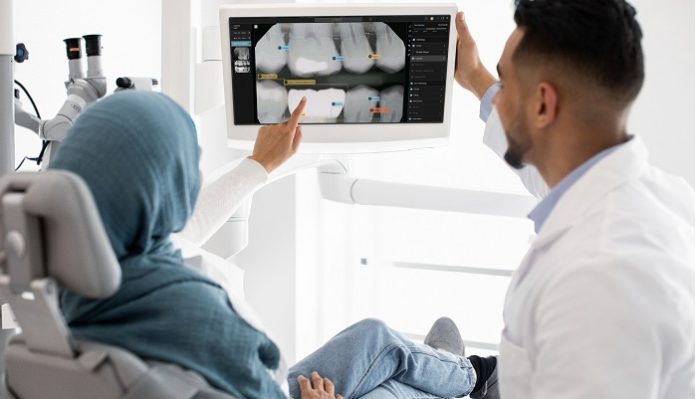
Pearl, the leader in AI solutions for efficiency, accuracy, and consistency in dental care,  announced that it has received clearance from the United Arab Emirates’ (UAE) Ministry of Health and Prevention for Second Opinion®, the first comprehensive AI-powered real-time pathology detection aid for dentists. The latest clearance follows the solution’s recent CE-marking in Europe, Medical Device Establishment License (MDEL) for use in Canada, and TGA/MEDSAFE clearance in Australia and New Zealand. Second Opinion helps dentists by automatically scanning and detecting a broad range of dental conditions via x-ray and meets stringent patient and user safety standards.

“With Second Opinion cleared, patients in the UAE can begin to gain the many benefits of AI-assisted dentistry and greater assurance in quality of care at Second Opinion-equipped dental practices,” said Dr. Oussama Alaoui, Head of Prosthodontics at Harmony Medical Center in Abu Dhabi, “I look forward to witnessing the revolutionary impact and advantages that AI will bring to our dental care.”

Second Opinion applies computer vision technologies to detect a comprehensive array of pathologies, existing restorations and natural anatomy in dental radiographs. The system analyzes radiographs in real time, allowing dentists to display, review, add or reject the system’s detections while conducting exams.

“Our Second Opinion technology enables more efficient and transparent doctor-patient communication while facilitating a higher standard of care,” said Ophir Tanz, CEO and founder of Pearl. “With the implementation of the platform in the UAE, we are excited to take a first step toward driving growth and better patient outcomes across Middle Eastern dentistry.”

About Pearl

Pearl is shaping the future of dental care by delivering AI and computer vision solutions that advance efficiency, accuracy, transparency and patient care. Founded in 2019 by Ophir Tanz, Pearl is backed by Craft Ventures and other leading venture capital firms. For more information or to request a demonstration, please visit https://www.hellopearl.com.

PierianDx and Biodesix Partner to Advance Lung Cancer Diagnostics

PierianDx, the global leader in clinical genomics knowledge, announced that it has partnered with Biodesix to provide its interpretation technology platform for use with the Biodesix newly launched GeneStrat NGS™ genomic test, a blood-based tumor profiling test to detect actionable mutations in patients with non-small cell lung cancer (NSCLC).

Biodesix will use the PierianDx platform to provide clear, up-to-date clinical interpretations for mutations detected by the GeneStrat NGS test as part of patient test results used by physicians to help inform a personalized treatment strategy and facilitate monitoring in lung cancer.

The GeneStrat NGS test is a key part of the IQLung™ testing strategy, designed to measure tumor-specific mutations and patient immune profiles with results in an unprecedented 72 hours so that physicians can assess overall prognosis and personalize treatment plans. The IQLung strategy uses genomic profiling to detect actionable mutations in lung cancer, such as EGFR, ALK, KRAS, MET, NTRK, ERBB2, and others, and delivers them in an expedited timeframe so patient treatment can begin sooner.

The GeneStrat NGS test data will be analyzed and interpreted using the most current therapy approvals and oncology guideline recommendations and delivered in a physician-ready report. The technology is backed by a comprehensive clinical knowledgebase and adaptive learning algorithms that take disparate inputs and translate them into concise interpretations with supporting evidence. As a result, characteristics of patient variants, even though rare or novel, are leveraged to present the most optimal treatment possibilities.

“We are helping to meet an unmet need in the continuum of care for lung cancer,” said Scott Hutton, CEO of Biodesix. “Partnering with PierianDx not only helps to deliver rapid results to physicians, but it also gives them information that can be easily interpreted and actioned, supporting them in providing precision care for their patients.”

“We are thrilled to provide our interpretation technology to support the outstanding testing solution from Biodesix to treat patients with lung cancer,” states Mark McDonough, CEO of PierianDx. “We are committed to democratizing clinical genomics globally and this partnership with Biodesix supports our vision to broaden access to genomic testing and provide precision care to patients everywhere.”

Stryker Announces First Patient Case Using New Tornier Perform Patient-Matched Primary Reversed Glenoid

Stryker, one of the world’s leading medical technology companies, announced  that its new Tornier Perform® Patient-Matched Primary Reversed Glenoid (Patient-Matched Glenoid) was used in a surgical procedure for the first time. The case was completed Jan. 13 by Jay Keener, M.D, in St. Louis and will be highlighted in a presentation at the 2022 Advanced Shoulder Arthroplasty (ASAP) Meeting on Jan. 21 in Snowbird, Utah.

The limited-market release Patient-Matched Glenoid is the first surgeon-driven, primary patient-specific implant available in shoulder arthroplasty. Taking into account the surgeon’s surgical preference and patient need, it is a patient-matched implant that is planned on Stryker’s Blueprint® 3D Planning Software.

“The Patient-Matched Glenoid puts surgeons in the driver’s seat to contour the implant to the face of the native glenoid that is unique to each patient’s anatomy,” said Dr. George S. Athwal, one of the designers of the implant system. “The Patient-Matched Glenoid system increases efficiency in the OR, requiring fewer surgical steps and no glenoid bone reaming.”

To generate the Patient-Matched Glenoid, the surgeon uses Blueprint Software to virtually position and execute the creation of a patient-matched implant. Once completed in Blueprint, an order is generated to manufacture the glenoid baseplate and patient-specific instrumentation (PSI). The surgeon will receive the sterile devices and execute the implantation of the baseplate using a ream-free, bone-preserving technique.

“Stryker’s relentless pursuit of innovation is exemplified in the Patient-Matched Glenoid, a strong addition to our upper extremities portfolio,” said Tim Lanier, vice president and general manager of Stryker’s Upper Extremities business. “It will give our customers autonomy that is not available anywhere else in the market.”

TP Southern Odisha Distribution Ltd launches its first Mobile Health Dispensary

T-Mobile, Zyter Partner to Deliver Virtual Healthcare for Underserved Communities

In line with the principle of empowering the community in its area of operations, TP Southern Odisha Distribution Limited (TPSODL), has launched its first Mobile Health Dispensary unit in selected villages of Ganjam District under its Corporate Social Responsibility (CSR) Program. The dispensary is launched for the healthcare benefit of rural communities.

This dispensary will cater to need of 50 villages in a month on a pre-designed schedule. 50 villages and over 70 thousand of people are expected to benefit from this service in a month. (Annually this will cover 600 villages and estimated population outreach of camps will 8.5 lakhs.) The dispensary will visit the identified villages based on the accessibility of health services and requirement. The mobile dispensary will be equipped with a MBBS Doctor, pharmacist, a nurse along with a driver and will provide doorstep basic medical healthcare to the needy. The dispensary will function daily (except public holidays and Sundays in each month).

“Marking the successful first anniversary, TPSODL team is working to create a meaningful difference in the lives of the disadvantaged people through its CSR initiatives.

Support through Healthcare facilities was one of the identified key area for CSR initiatives while working towards the holistic development of the communities. With the Mobile Health Dispensary, we aim to provide the basic health benefits to those people who lack healthcare due to their remote location. We will keep on working on similar initiatives in the future to strengthen our support for the society” said Mr. Arvind Singh, CEO, TPSODL.

About TP Southern Odisha Distribution Limited:

TP Southern Odisha Distribution Limited (TPSODL) is a joint venture between Tata Power and the Government of Odisha with the majority stake being held by Tata Power (51%). TPSODL serves a populace of 95 lakhs with a Customer Base of 23.69 lakhs in a vast Distribution Area of 48,751 sq. km. TPSODL’s parent company Tata Power has a vast experience in electricity distribution in Mumbai, Delhi, and Ajmer, and has been a benchmark performer in Delhi for the last two decades.

TPSODL is focused on providing a reliable power supply, enhanced customer services and reducing the existing AT&C losses in a systematic manner. The company is working towards achieving this by upgrading the present distribution infrastructure, adopting new technologies and providing various digital services to the customers.


Smith+Nephew acquires novel cementless partial knee system

Smith & Nephew acquires extremity orthopedics business unit of Integra LifeSciences Extremity Orthopaedics business

Smith+Nephew, the global medical technology business, announces the acquisition of Engage Surgical, owner of the only cementless unicompartmental (partial) knee system commercially available in the US.

This acquisition strongly supports Smith+Nephew’s strategy for growth by transforming its business through innovation and acquisition, while also providing differentiation for its customers. The Engage Surgical Partial Knee System is a novel, modern cementless knee implant to serve a resurgent segment driven by the potential for better long-term fixation through biologic integration, shorter operating times, and the shift to Ambulatory Surgery Centers (ASCs).

Randy Kilburn, Executive Vice President & General Manager, Reconstruction, Robotics and Digital, said:

“Smith+Nephew is now the only medical device company offering both cemented and cementless partial knee implants in the US, as well as robotics-assistance through the CORI◊ Surgical System that is well-suited for the precise alignment needed. Through our Sports Medicine franchise we have an established, strong position in ASCs where the vast majority of partial knees in the US are performed. Our VISIONAIRE◊ business, the high performance and small footprint of CORI, plus our partial knee portfolio, is a unique compelling offering for customers.”

The acquisition will drive Smith+Nephew’s Robotics and Real Intelligence strategy. Partial knee procedures are well-matched for robotics due to the need for precise alignment and Smith+Nephew’s CORI Surgical System already supports the cemented JOURNEY II◊ unicompartmental knee. The Engage Surgical Partial Knee System is optimised for robotics and will have an application with CORI in the future. Engage Surgical’s Partial Knee System also complements Smith+Nephew’s focus on serving the growing outpatient market, with an increasing proportion of knee procedures performed in ASCs.

Dan Justin, Chief Executive Officer, Engage Surgical, said:

“The Engage Surgical Team is excited about joining Smith+Nephew to help expand the impact of the Engage Surgical Partial Knee System and integrating it with the CORI Surgical System. Smith+Nephew is well-suited and well-prepared to continue our mission of providing better outcomes for knee arthroplasty patients.”

With Engage Surgical’s Partial Knee System, Smith+Nephew expects to be able to drive market expansion in the US, and in time in other markets as regulatory approvals are secured. Engage Surgical’s Partial Knee System currently has regulatory clearance in the US where it is in limited market release.

The partial knee market is currently worth approximately $300 million in the US (SmartTRAK) and is expected to grow faster than the total knee market and by around 4% per annum through 2029 (Millennium Research Group, Inc). Smith+Nephew expects cementless partial knees will grow ahead of overall partial knees, in line with recent patterns seen in the cementless segment.

The cost of the acquisition is up to $135 million contingent on sales performance. The acquisition was financed from existing cash and debt facilities. Engage Surgical is located in Orlando, Florida.

About Smith+Nephew

Smith+Nephew is a portfolio medical technology business focused on the repair, regeneration and replacement of soft and hard tissue. We exist to restore people’s bodies and their self-belief by using technology to take the limits off living. We call this purpose ‘Life Unlimited’. Our 18,000 employees deliver this mission every day, making a difference to patients’ lives through the excellence of our product portfolio, and the invention and application of new technologies across our three global franchises of Orthopaedics, Advanced Wound Management and Sports Medicine & ENT.

Wingcopter lands $16 million contract with Spright for medical deliveries in the USA

Wingcopter lands $16 million contract with Spright for medical deliveries in the USA

German drone delivery pioneer Wingcopter and Spright, a subsidiary of leading American air medical service provider Air Methods, announced a new commercial agreement worth more than US$ 16 million. As part of the deal Spright is acquiring a large fleet of Wingcopter’s new flagship delivery drone, the Wingcopter 198, to meet the increasing demand for medical drone delivery solutions throughout the United States. The contract makes Wingcopter the exclusive provider of fixed wing eVTOL delivery drone technology to Spright for use within its United States operations. Spright, in turn, becomes the exclusive provider of Maintenance, Repair and Overhaul (MRO) for the Wingcopter 198 to third parties in the USA, an ideal fit thanks to its available infrastructure across the country.

Spright was launched in July of 2020 as the new drone division of Air Methods to improve healthcare access and minimize supply challenges for customers across the US. To this end, Spright is creating a drone-based, healthcare-specific delivery network in the United States leveraging an existing infrastructure of more than 300 bases, serving hundreds of hospitals, across 48 states in predominantly rural areas.

The agreement further strengthens the strategic partnership between the two companies that was announced in August 2021. Spright is closely supporting Wingcopter in its FAA UAS type-certification process, leveraging the Spright team’s extensive aviation experience operating both FAA 121 and 135 air carriers, its existing Part 135 certificate (on-demand air service), SMS (Safety Management System) Program, and long-standing relationships with the FAA.

Spright is collaborating with Hutchinson Regional Health System, in Hutchinson, Kansas, for initial tests, and plans to expand the service beyond Kansas with additional strategic medical projects later this year. The Wingcopter fleet will increase healthcare access across rural and underserved communities by enabling the instant and on-demand delivery of vital medical supplies, medications, vaccines, blood, and lab samples, between medical facilities. It will also improve quality of care for patients due to faster turn-around time of lab samples and more targeted treatments for patients. Finally, the electrically powered Wingcopter cargo drones will reduce the medical industry’s carbon footprint, contributing to greener and more sustainable supply chains with faster and more predictable delivery times.

Joseph Resnik, President of Spright, comments, “We are fortunate to have Wingcopter on board as our aircraft technology partner. With their industry-leading eVTOL aircraft design, Wingcopter brings a level of maturity needed to address the complex and diverse demands of the US healthcare market. We are confident that our combined strengths will deliver innovative, time-saving solutions to meet the needs of our customers and their communities.”

Tom Plümmer, Co-founder and CEO of Wingcopter, explains, “This multi-million-dollar commercial agreement with Spright is a clear proof that the Wingcopter 198 has a perfect product-market-fit. We are proud to enable large-scale drone delivery across the United States with this strong partnership. The projected compound annual growth rate (CAGR) for the drone delivery market of more than 50 % to a total volume of almost USD 40 billion in 2030 underlines the rapid adoption of eVTOL technology for last-mile logistics. We are happy to be at the forefront of this fast-growing market together with Spright.”

Wingcopter and Spright will showcase the Wingcopter 198 delivery drone and offer an opportunity to meet C-level executives of both companies in person to discuss ways of collaboration or investment opportunities at logistics tech conference Manifest in Las Vegas January 25-27, 2022.

Top Likely Medical Tech Hazards To Watch Out For In 2022

C Spire partners with Delta Regional Medical Center on remote patient monitoring

Healthcare facilities of late have started to face some extraordinary concerns; one such concern happens to be cybersecurity attacks where multiple health systems have started to face high-end ransomware encroaches last year. As per a report rolled out by IBM Security, cyberattacks have actually doubled from 2020 to 2021.

What these attacks have done is not only played an annoying role in the disruption of patient care but have also affected the hospital’s data system as well as the medical devices that get connected to the facility network. A watchdog group has laid more stress on potential harm to patients amidst the attacks than the effects of a breach in data. The breach can as well result in patients’ surgeries being rescheduled, vehicles set for emergency being diverted, or the entire units related to care being closed.

In the position that we are in, the healthcare segment must anticipate attacks, the only question is when. But with a seamless security plan and a strategy to maintain patient care, the consequences of a cybersecurity incident can be diminished.

Hospitals, as well as device manufacturers, share the ownership of securing tools from potential attacks. That said, the situation does become complicated as and when the devices go older and the software they take the help of no longer gel. The FDA is doing their bit to propel capabilities that could update the devices and fix them, but nothing has been implemented as yet.

Some of the Medical Technology hazards that one should look out for in 2022 can be listed down to-

Supply Chain Gaps

The issues regarding the supply chain are significantly important amidst a time when COVID cases have impaired shipping to a relevant extent and led to a shortage in supplies. This has had an effect on the availability of those devices which could resist the healthcare system’s capacity to not only treat their respective patients but protect their staff as well. What device manufacturers do is source their raw material from offshores to maintain a slim inventory. They have contracts with a small number of distributors and manufacturers too in this regard.

Impaired Infusion Pumps

One of the major causes of worry which should be reflected upon immediately is the infusion pumps that are damaged, which in turn can cause a major setback for the medical administration. The reports keep jolting the authorities of damaged pumps being used as far as patient care is concerned. There have been instances where the infusion pumps have been unsuccessful to regulate the medication flow leading to overdoing things and in a way harming patients. The worst part is that these damaged pumps can be hard to identify and therefore, won’t trigger an alarm in the first instance.

The Dearth of Emergency Stockpiles

The fact remains that due to the start of the pandemic, the real significance of emergency medical supplies stockpiles has become evident. Due to a shortage of actual required equipment, healthcare facilities have turned towards expired products. Local as well as national emergency stockpiles have fallen short and have at times included unusable equipment too. It is well to be noted that in the pandemics’ initial days many hospitals had to stick with reused masks and even expired respirators.

The Telehealth Resurrection

The telehealth model has been effectively followed and implemented across the pandemic for patient care. That said, they were all put into use so quickly that many of them do not pay heed to clinician workflows. These programs pertaining to telehealth must be easy to use and in a way shouldn’t create an impression of overwhelming the healthcare providers because of a large amount of data that literally doesn’t lead to anything but a confused state.

Proper Usage of Syringe Pumps

There have been misconceptions of how to deliver low drug flows by way of using syringe pumps which can affect patient care to no end. Notably, when the pumps are conditioned for a low flow rate, there is quite a tangible gap between when the infusion begins at the pump and the actual drug delivery to the patient. There is always a likelihood of clinicians perceiving the delayed response from the patient as an inadequate dose which might lead to the over infusion of medicines.

Artificial Intelligence Shortfalls

While the facets of artificial intelligence suggest that it is quick in reconstructing MRIs, CTs, as well as other scans, there is a certain set of limitations too that come tagged along. There might as well be some tiny perturbations that lead to obscure tumors, features, and also other vital information. There may as well be cases where the standardized algorithms may prove to be more beneficial as compared to AI reconstruction that may give out a degraded quality of images.

The Exact Duodenoscope Practice

Reusing duodenoscopes is a cause of worry because if it isn’t cleaned well, it can lead to infection amongst patients. One of the surveys pertaining to healthcare workers last year suggested, that they were prone to face timeline pressure with the use of duodenoscopes as they had to clean and disinfect those devices, especially the ones with fixed distal endcaps.

Scaling-Up The Disposable Gowns

This is a concern that has affected healthcare organizations, big or small, since the wrong choice of gowns can end up in the frontline healthcare force not being adequately protected. The report by the ECRI suggests that the manufacturing quality may vary, and it might not always be consistent. Almost half of the gowns that ECRI tested did not match up with the standards and protection levels.

Internet Holds The Key

Since more and more devices in a health care facility have been initiated, internet connectivity is of prime significance in inpatient care. For eg. transmitting alarms to a nurse’s phone or electronic record access can depend largely on the WiFi. Any flaw in the connectivity can lead to critical alerts not reaching the destination they should be.

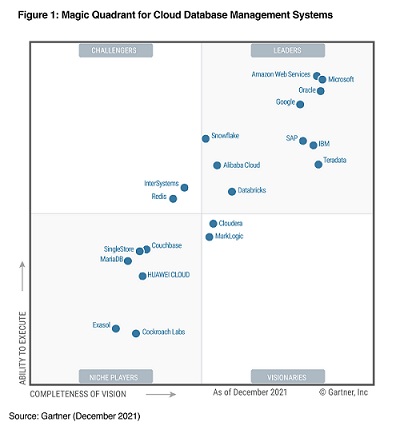
InterSystems Positioned in the Challengers Quadrant of the 2021 Gartner Magic Quadrant for Cloud Database Management Systems

InterSystems, a creative data technology provider dedicated to helping customers solve the most critical scalability, interoperability, and speed problems, announced it has been positioned by Gartner in the Challengers quadrant of the 2021 Gartner Magic Quadrant for Cloud Database Management Systems.

InterSystems IRIS is a complete, cloud-first data platform which provides high performance database management, interoperability, and analytics capabilities, all built-in from the ground up.

InterSystems IRIS exceeds requirements for multicloud, intercloud and hybrid deployment, high-speed processing and ingest, and distributed data access. InterSystems IRIS is available on all major public cloud marketplaces, including Amazon Web Services, Microsoft Azure, Google Cloud Platform and private cloud, and has been deployed across the globe.

InterSystems IRIS position recognises the solution’s support for advanced analytics, due to its strength in embedded analytics, ML and AI. InterSystems IRIS Adaptive Analytics capabilities provide business users with superior ease of use and self-service analytics capabilities to visualise, analyse and interrogate live data from multiple sources in a consistent format.

“One of the biggest IT challenges facing businesses today is integrating their data from across multiple systems and silos and turning it into actionable insights,” said Scott Gnau, InterSystems Head of Data Platforms. “We feel our position in this year’s Gartner Magic Quadrant recognises our ability to help organisations overcome those difficulties with advanced technologies that enable them to access, transform and harmonise data from multiple sources and makes it faster and easier for them to gain new insights.”

“Over the last year, we have continued to innovate and invest in our InterSystems IRIS data platform, extending our performance, scalability, analytics and multicloud support. With the addition of frictionless and native Python support, we now support millions of Python developers and hundreds of thousands of existing Python libraries. We will continue to invest in innovation and deliver the benefits of that back to our customers and partners, ensuring they have the capabilities required to enable an agile and resilient organisation.”

A complimentary copy of the 2021 Magic Quadrant for Cloud Database Management Systems can be viewed here.

[1] Gartner, Magic Quadrant for Cloud Database Management Systems for Analytical Use Cases,” Rick Greenwald, Merv Adrian, Adam Ronthal, Philip Russom, Henry Cook, 14 December 2021.

What is Niclosamide?

There could be a handful of “dual-purpose” medications at your disposal in your medical cabinet. Many popular drugs can be used for various purposes. Even though they were designed to treat a particular ailment, they can also help to cure other illnesses.

One of these is niclosamide. It has become a major cure for diabetes, Parkinson’s disease, viral and microbial infections, although it was formerly utilized as an anthelmintic medicine. According to some accounts, it can also be used to treat several cancers. This is a comprehensive list of the drug’s major applications.

What Is Niclosamide, Exactly?

Niclosamide is an anthelmintic medication that serves as a cure for parasite infections all over the world. Worm infections can be treated with the use of anthelmintics. Niclosamide is a tapeworm treatment for fish and wide tapeworms. Infections with beef tapeworm and dwarf tapeworm are also commonly cured with Niclosamide. It cannot, however, serve as a treatment for other worm diseases like roundworms or pinworms.

These parasitic worms attach themselves to the gut wall, develop, and lay eggs. Usually, they appear to be mild. However, they can sometimes develop into an invasive infection and cause significant issues. Intestinal worm infections are a worldwide public health issue.

Globally, 2 billion individuals are infected with soil-transmitted helminths (STHs). Even though they are fully avoidable, they nonetheless result in a great deal of distress, discomfort, and agony. Anthelmintics are useful in this situation.

Niclosamide is an anthelmintic that has been authorized by the FDA. However, the last five years have seen a surge in interest regarding its potential to serve as an anticancer drug. Other illnesses it could potentially treat include diabetes, Parkinson’s disease, microbial, and viral infections.

Research has shown this oral drug to be more productive than flubendazole and mebendazole. Furthermore, it is the treatment of choice for large-scale chemotherapy. For over half a century, this oral anthelmintic medication has helped in the treatment of tapeworm infections.

How Does Niclosamide Work?

Niclosamide tablets is a prescription-only medication. As soon as it comes into touch with tapeworms, it destroys them. The deceased worms are subsequently transported out through the intestines and out of the system. When defecating, you may sometimes see the worms. But you will rarely see them since they are mostly destroyed in the intestines.

The drug should be taken on an empty stomach, ideally 1 hour before or 2 hours after a meal, to assist in eliminating the infection. However, physicians typically advise taking a pill shortly after a light meal to avoid an upset stomach. Breakfast, for example.

Notwithstanding its widespread usage as an anthelmintic, the mechanism behind it is still fully unknown. However, research in the last decade or thereabout has associated the product’s therapeutic ability to several additional ailments involving signaling cascades.

Reference: https://www.niclosam.com

Translate »