














Close
Digital Health & Ai Innovation summit 2026
Medical Taiwan 2026

What is Labiaplasty and the Cost to Get a Labiaplasty Surgery Near Me?

What is Labiaplasty and the Cost to Get a Labiaplasty Surgery Near Me?

If you’ve been thinking about undergoing the labiaplasty procedure, then you are probably interested in finding out exactly how much that would cost you and what it would mean for your overall finances. Well, the first thing you should understand is that this depends from one place to another, meaning that you should always try and find out the precise cost in your specific area. Now, of course, even though those prices will differ, it’s perfectly normal for you to expect them to be kind of similar in different areas. And, you certainly wouldn’t be wrong in those expectations.

Before we get to the part of financing and before I tell you how to actually find the right place where you should get this procedure in your area, I suppose that you should learn more about labiaplasty in general. The fact that you are here tells me that you probably know precisely what this procedure entails, but, still, we should make that clear before going any further. After all, we don’t want you to get any wrong perceptions of it all.

What Is It?

As mentioned above, you should learn about this procedure in general before we start getting into the specifics. So, let us start with those basics. The labia minora are actually a pair of small folds that begin at your clitoris and then extend downward. They are also called “small lips”, so you might be more familiar with that specific term. Why am I, however, mentioning it in the first place?

Well, you needed to know precisely what labia minora is in order to actually understand what labiaplasty entails. As you might have concluded all on your own by now, this is actually a surgery of labia minora, which is performed with the aim of rejuvenating your vagina, so to speak. This plastic surgery is usually not necessary, since those noticeable skin folds around the actual opening of your vagina are completely normal. Yet, a lot of women don’t like the look of it, which is why they decide to go through this procedure in the first place.

You should also know that this surgery should never be done on girls younger than 18, since the labia minora continues to develop even after puberty, i.e. in your adulthood. In any case, it would be a good idea for you to consult a professional and let him or her explain practically everything you need to know about labiaplasty in general, so that you are sure you are making an informed decision when you choose to have this surgery performed on you. Of course, I believe that the reading you’ve done so far has helped you understand the procedure.

Here are some more things you should know about it: https://www.healthline.com/health/labiaplasty

How Much Does It Cost?

Given that you are still here, it’s safe to say that you have decided to perform this actual surgery and that you are almost ready to do it. I say almost because there are still a few important questions that you want to have answered. First of all, you want to know exactly how much this will cost you. And, then, you also want to know how to find the right expert in your area to perform the surgery. So, let us answer those questions for you one at a time, starting with the money related one.

The average cost of this procedure is around $3000. And, yet, that doesn’t have to mean that you’ll pay that exact amount. Some people will pay less than the others, because the cost is actually individually tailored. So, while the approximate cost may vary from area to area, it also varies from person to person, which is why I cannot tell you precisely how much all of this would actually cost you. Yet, the approximation mentioned above should be a good guideline.

Now, while I cannot tell you how much this will cost you, there is someone that can. In case you couldn’t have guessed it, I am talking about the expert that will actually perform the procedure on you. Basically, you will find out the exact cost after having a consultation with your surgeon, which is another important reason why you should be careful when choosing the right expert in your area to perform this procedure. So, let us now move on to the next question.

How To Find The Right Expert In Your Area?

As we have made it clear above, it is important for you to choose the right expert to perform the surgery. After all, we are talking about your health here and you don’t want to take any chances by hiring the wrong people for the job. Labiaplasty is certainly a procedure that requires the attention of skilled and experienced professionals, which simply means that you’ll need to spend some time doing your research on different professionals before making your final choice. Plus, the overall cost will also depend on the choice you make here.

If you are not entirely sure about how to actually pick the correct expert for this surgery, let me give you a few hints. First of all, you should start asking around and checking if anyone has some great recommendations to give you. I know that this might be a topic that you don’t want to talk about, but it would be good to talk to a few people you trust before undergoing any such procedures.

When you get some recommendations, or when you find a few options online, you should proceed to doing some more detailed research on those professionals. Make sure to check their qualifications and the level of their experience, but don’t forget to inspect their reputation too, because you certainly don’t want to work with ill-reputed surgeons. Of course, you should feel free to schedule a consultation with several different experts, so that you can get an idea about how the process would go, as well as how much it would cost you. Doing all of this will help you make the best choice.

How Can I Maximize My Pre-Workout?

How Can I Maximize My Pre-Workout?

MedicalNewsToday in one of it’s articles defined pre-workout as dietary supplements that people can take before a workout to help maximize  their training. Pre-workout can be in the form of premixed drinks, powders, pills and snack bars. It’s major function is to boost one’s energy level and enhance focus. For a healthy lifestyle, it is recommended that you do not take an overdose of pre-workouts.

The International Society of Sports Nutrition ( ISSN) reported that this substance is the most effective nutritional supplement for an increased performance in high intensity exercise and also for gaining lean body mass.

Are you interested in improving your athletic performance? Do you need an increase in your strength level? Do you wish to consume supplements rich in protein and other necessary nutrients? Then, you need to get quality pre-workout from us.

What do pre-workouts contain?

  • Carbohydrate: the body uses glucose and glycogen as it’s major source of energy. It is important to top up your energy reserve before a rigorous workout session.
  • Caffeine: it’s a stimulant that improves alertness and boosts It enhances muscle strength and endurance and increases speed.
  • Beetroot juice: it helps in increasing blood flow thereby improving cardiovascular performance.
  • Creatine: it is derived from three amino acids and it is important for endurance and a boost in performance during exercise.
  • HMB( Beta- hydroxy- Beta- methyl butyrate): it helps with speedy workout recovery.

Reasons people take pre-workout you

  • Pre-workout improves mental alertness. It keeps you ready and alert for the task ahead. It prepares your body and it makes you more engaged.
  • Due to one’s alertness after taking pre-workout, it becomes harder for one to hurt one ‘self due to lack of focus.
  • It increases one’s energy level.
  • People take pre-workout because it makes it easier for one to be more focused during a workout session.
  • They take it because it enhances performance.
  • It helps one lose excess body fat quickly.
  • Taking pre-workout makes it easier for one to recover after an intense workout session.
  • It makes one more fit.

How can I maximize my pre-workout?

  1. Do not substitute healthy meals with pre-workout. It is important you eat a balanced meal before workouts.
  2. For maximum effect, you should stay hydrated before, during and after a workout session.
  3. It is recommended you take your pre-workout 20-30 minutes before working out. Within a time frame, it is expected that it begins to work in your body before you start your first set of exercise.
  4. Do not overdose. Do not take more than what is recommended by a medical personnel.
  5. Make sure you are well rested. It is dangerous to take pre-workout or even try to workout with a tired body.
  6. Get enough sleep.
  7. Take it slow. Avoid gulping large quantities of pre-workout to avoid experiencing negative effects.
  8. Buy supplements from a tested and trusted source. We supply the best pre-workout. You can contact us to get highly effective and quality supplements for optimum workout results.

Understanding HCP Usage of Technology in a Post-Pandemic World through Hidoc

Understanding HCP Usage of Technology in a Post-Pandemic World through Hidoc Dr.: Usage by Platform, Content Consumed, and Actions Taken

The COVID-19 pandemic has revolutionized the health care system in India by bringing in multiple digital health technologies as the new normal. As a result, our healthcare systems are charting roadmaps to leverage digital tools to design, set up, and implement various telehealth services.

HCP or healthcare personnel use the digital concept to keep people out of the hospital and maintain social distance. This has accelerated the treatment of diseases as the process now uses remote patient monitoring and related medical interventions.

HCP Usage of Technology

Before the pandemic outbreak, digital healthcare technology usage mainly comprised analog devices, like wearables and hearables, that capture data in a low-key manner. Nevertheless, doctors extracted helpful information from this data to come to a close diagnosis of the patient’s ailment. These included devices such as patient monitors, ventilators, diagnostic testers, infusion pumps, and CT scanners.

However, these methods required the patient and the physicians to be in close proximity that broke the social distancing protocols vital for life protection. The HCPs realized the need to have more effective methods to be in place that minimized physical interactions but were still accurate and user-friendly.

Call for Technology in Healthcare
Tele-health or virtual doctors’ visits became popular. It paved the way for online scheduling and medical investigations through widespread usage of technologies for enhanced care monitoring and management.

This whole concept has made it easier to monitor patients. HCP can now treat people at home, with required medical data coming in from blood pressure monitors, electronic gadgets, or pulse oximeters. This type of data assessment is not only convenient but also cost-effective.

Today, even after the pandemic is subsiding, doctors commonly use digital healthcare technologies to identify early warning signs of diseases. They can now easily capture data from a wearable device or advanced imaging.

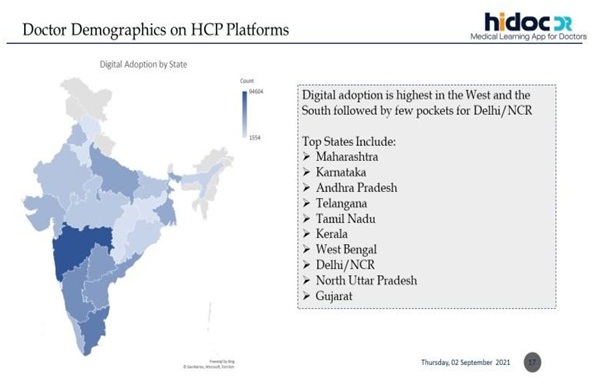
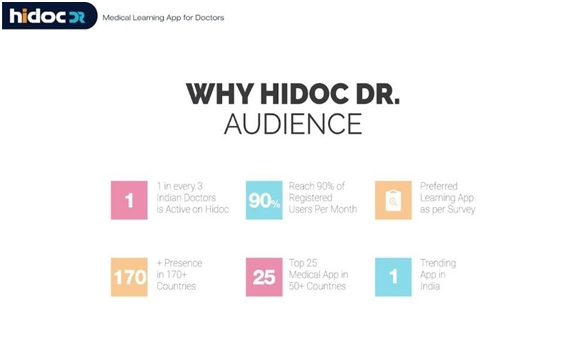
Technology has been accepted with open arms by doctors, physicians, and pharmacists alike all across India. Hidoc Dr. has come forward as a technically medical breakthrough utilizing AI-based medical learning for more than 8 lakh doctors across 29 plus states in India. A vast database of 1 lakh plus medical cases provides doctors with guaranteed and quick medical second opinions based on evidence.
Below we present some valuable insights that will help you understand HCP usage of technology.

I. Usage by Platform

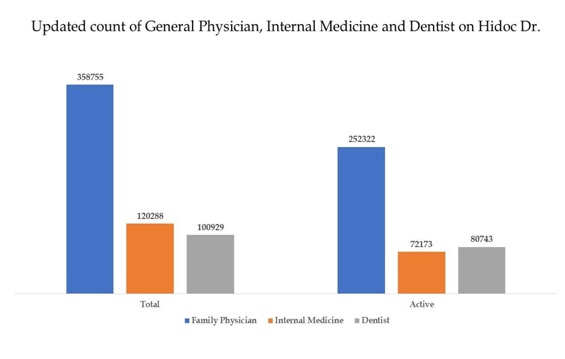
  • India has about 1.8 million doctors, out of which 20% are GPs or general practitioners.
  • 90% of these practitioners rely on search engines like Google and digital medical platforms like Hidoc Dr. to assist in their clinical decisions.
  • A GP performs 15 to 20 medical searches a day on average.
  • There are about 1000 endocrinologists in India, and they do an average of 500 searches per day on Hidoc Dr.. to find relevant cases and articles.
  • Similarly, 1200 plus oncologists use the Hidoc Dr. app to search cases and drugs across medical, surgical, and radiation domains of oncology.
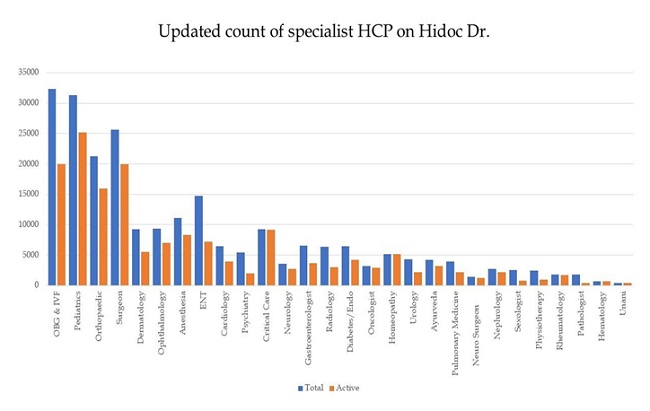
  • 24000 plus Obstetrics, Gynaecologists, and IVF specialists in India use Hidoc Dr. to gain information from 10 million articles from 28,000 plus medical journals.
  • 98% of these OBGs who use the Hidoc platform search for cases and seek second medical opinion for pregnancy and infertility drugs, PCOS, and pre and post-pregnancy complications.
  • 24890 active Paediatrics in India use Hidoc Dr. for case studies and medical information.
  • These pediatrics perform 650 searches in one day on an average related to drugs and case studies.
  • 10,000 plus registered and 9000 active Critical Care Doctors in India also use this app
  • They perform an average of 450 searches a day related to infectious diseases and related drugs.

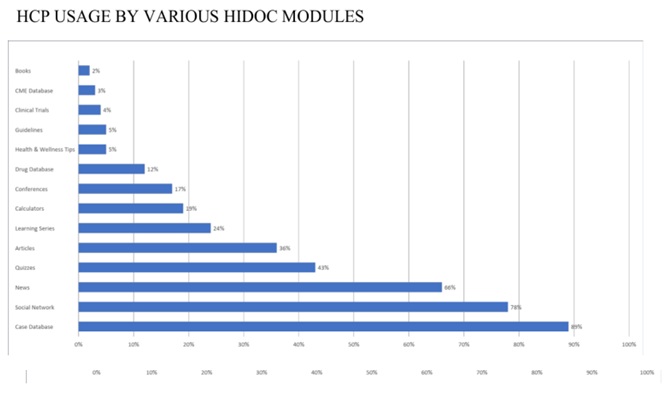
The graphs given below represent the HCP usage of the Hidoc Dr. app.

These insights can help pharma managers to create a social presence to connect with their audiences and share quality content to promote engagement.

II. Usage by Content Consumed
Hidoc Dr. is a trusted companion of doctors across India across various domains and specializations to seek medical second opinion online in a quick and reliable manner. The app has a massive database of more than 30,000 medico journals and 1 lakh medical cases. With about 12 million web and app sessions conducted every month, there is a tremendous amount of content consumed by various doctors.

Hidoc Dr. provides a wide range of articles, blog posts, case studies, videos, quizzes, learning series, books, and even medical news and the latest information about clinical trials. There are also online surveys that provide valuable information and insights into the medical industry across various niches.

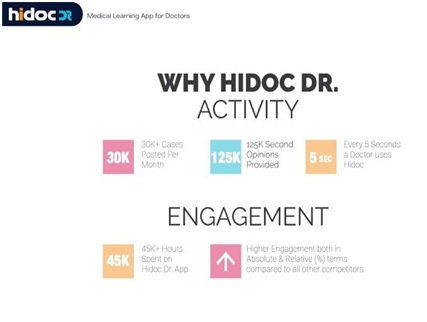
  • About 30,000 cases are posted on Hidoc Dr. per month. That averages to about 1000 cases on a daily basis.
  • The Hidoc platform provides approximately 4 second medical opinions for every case referred.
  • The app provides a wide range of CME or Continuing Medical Education courses and instructional video material to aid doctors.
  • There are informative and educational articles and research findings that are read and shared by thousands of doctors.
  • The app also features quiz campaigns with detailed analytics and online surveys.
  • It also arranges webinars with more than 12 million web and app sessions monthly.
  • Most frequently read articles by GPs are related to Covid-19 effects on medical practice, long Covid symptoms, and roles of family physicians.
  • Highly viewed articles by Endocrinologists are related to PCOS, testosterone management in older males, and insulin dose adjustments.
  • Highly viewed articles by oncologists are related to global cancer mortality rates and trends, cancer cure and its critical analysis, and radiation guides for radiation oncologists.
  • OBG’s mostly view articles related to pregnancy trauma and shared decision-making for OBG’s and pediatric gynecology.
  • Intensivists mostly view articles related to Acute Coronary Syndrome (ACS), the impact of SARS-Cov-2 on elderly patients, and the prognostic impact of Vitamin D deficiency in ACS patients.


III. Usage by Actions Taken

Hidoc Dr. has carved a niche among the medical fraternity with its comprehensive information and research database and extended reach pan India. Thousands of doctors across various domains read, consume, share, and refer to the app content daily. Podcasts, webinars, research articles, and online CMEs are immensely popular.
Here are some insights:

  • Most searched keywords by GPs across India on Hidoc Dr. are Covid fever, coronavirus mutation, and long Covid symptoms.
  • Top searched drugs by GPs are Doxycycline, Ibuprofen, Paracetamol, and Immunity boosters.
  • Top searched keywords by endocrinologists across India are Thyroid, Hypoglycaemia, obesity, and metabolic abnormalities.
  • Top searched drugs by endocrinologists are Corticosteroid, insulin, Methimazole, and Letrozole.
  • Top searched keywords by oncologists in India on the Hidoc Dr. app are Immunotherapy, chemotherapy, and malignant by medical oncologists, Metastases, Prognosis, and Whipple procedure by surgical oncologists, and radiotherapy and curative treatment by Radiation Oncologists.
  • Most searched drugs by oncologists are Dasatinib, Axitinib, and Avelumab.
  • Top searched keywords by OBGs are pregnancy, PCOD, and infertility.
  • Top searched keywords by pediatricians are ADHD, Autism, and Congenital Heart Disease.
  • Most searched drugs by pediatricians are Albuterol, Cephalexin, and Azithromycin.
  • Top searched keywords by Intensive Care/ Critical Care doctors are cardiovascular medicine, allergy, and diabetes, and metabolism.
  • Most searched drugs by Intensive Care/ Critical Care doctors are Atropine, Dopamine, and Epinephrine.

If we go by the click statistics by HCPs, here are some interesting findings:

  • The percentage of HCPs who clicked on a single Hidoc Dr. article is 78%.
  • The percentage of HCPs who clicked on 2 articles is 69%.
  • The percentage of HCPs who clicked on 3 articles is 68%.
  • Finally, the percentage of HCPs who clicked on 4 articles on the app is 65%.

Case Database Statistics on Hidoc Dr. are as follows:

  • The percentage of HCP consumption for one case is 98%.
  • The percentage of HCP consumption for more than 10 cases is 82%.
  • The percentage of HCP consumption for more than 50 cases is 68%.
  • The percentage of HCP consumption for more than 100 cases is 44%.

Hidoc Dr. app medical calculator usage is as follows:

  • The percentage of HCP consumption for one calculator is 61%.
  • The percentage of HCP consumption for more than 10 calculators is 42%.
  • The percentage of HCP consumption for more than 50 calculators is 36%.
  • The percentage of HCP consumption for more than 100 calculators is 28%.

Hidoc Dr. app medical guideline usage is as follows:

  • The percentage of HCP consumption for one guideline is 95%.
  • The percentage of HCP consumption for more than 10 guidelines is 59%.
  • The percentage of HCP consumption for more than 50 guidelines is 12%.
  • The percentage of HCP consumption for more than 100 guidelines is 5%.

Hidoc Dr. app Ad Metrics that show ad behaviour are as follows:

  • Most effective modern advertisement-Podcasts
  • Most effective legacy advertisement- Up to 7 minutes CME videos.
  • Most preferred advertisement: GIF Ads and banners
  • Ad engagement per HCP: 1 out of 20 ads result in engagement with 5% CTR.
  • Ad shown per HCP: 4 impressions per active HCP daily

Summing Up
Hidoc Dr. assists various interested pharmaceutical companies pan India with its digital marketing initiatives. With its massive outreach to millions of doctors all over the country, you get access to a vast pool of medical data and practitioners. Hidoc has been recommended by several medical associations and has successfully built trustworthy and long-lasting relationships with millions of users.

Doctors can continue to benefit from our massive reach and 1 lakh medical case database pan India. If you are a digital marketer, communicate the right message to your medicos with Hidoc Dr that can help you transform your brand visibility. Advertising on Hidoc is 9X cheaper than other digital platforms with a brand recall rate of 10X.
Get in touch with our team today. For more information click here : https://www.hidoc.co/index.php

How innovation and responsibility contribute to patient’s well-being

How innovation and responsibility contribute to patient's well-being

In the health care industry, changes are occurring at a rapid pace. People, machines, and information are becoming even more interconnected. Meanwhile, unanticipated events such as the Covid-19 pandemic affect the pharma and biotech industry as well. To meet the needs of our customers, innovations at the interface between pharmaceutical products, services, and digital data must be accelerated. As a globally leading contract development and manufacturing organization (CDMO), Vetter is continuously engaged in this swiftness of change. This is achieved through the testing of future technology and the implementation of new digital systems as necessary. Given all the variabilities occurring within the industry, there is only one constant at Vetter: to sustainably improve the patients’ quality of life through the drugs we produce.

Vetter has an important responsibility. The injectable drugs we manufacture for our customers will, in turn, have a direct impact on patients around the world who rely on these drugs for their overall health and quality of life. As a family-owned business, Vetter knows that achieving the highest possible level of quality is the key to our overall strategy. In fact, digitalization is behind many of the advances the company has made in recent years. And while digital transformation is rooted in Vetter’s overall culture, it is not a self-serving approach to drug product manufacturing. Rather, it is an essential part of the job for the people that work at Vetter and allows us to support the quality of the products we manufacture.

Through our work, we produce critical therapies for e.g., the treatment of cancer, rheumatism, or multiple sclerosis, as well as medications for rare diseases. That is why the regulatory specifications in the pharmaceutical environment are very restrictive. We know that people’s lives depend on the drugs that we produce. Therefore, reliable, efficient, and safe processes are the very essence of our industry. For Vetter, that means overcoming a higher complexity and leveraging the many benefits of digitalization.

No time to wait

At Vetter, we have made digitalization a part of our daily business. Our company strategy, Vetter NExT 2029, is being developed in cooperation with our staff members in virtual workshops. In fact, many of the ideas and challenges that result from these workshops directly influence our digital roadmap. For example, within the scope of digitalizing central key processes, future factory processes are a part of our focus. We approach topics such as predictive maintenance, visual remote services, or intelligent worker assistance systems in order to reduce standstill and troubleshoot times on a significant level. We have also implemented artificial intelligence (AI) within the company through the successful usage of machine learning systems. Moreover, we are working on exciting projects such as generating text from data – the so-called natural language generation, as well as initiating complex forecasting projects within the context of controlling. In the future, we will rely on robotic process automation for recurring and clearly-defined tasks.

Innovation on a continuous basis is what we consider an integral part of our responsibility. This is what we expect to achieve as a company. As such, several of our digital infrastructures are completely developed in-house and are setting the stage for important competencies that will play an increasingly significant role in the future. There is no time to wait. Our customers and patients around the world are depending on us. That is what drives us every day.

At the center of all: our people

The implementation of digital processes concerns the essential core processes at Vetter. Within the scope of our wide-ranging digitalization strategy, we focus on, among other things, projects in the topic areas of production, quality, and the supply chain. The administrative sector is also facing a wide variety of digitalization projects.

Without question, digitalization is increasing. For that reason, the activities and procedures that comprise our work change as well. Every day, we address the question of how we can manage to undergo this change in a sustainable and successful way. We believe the answer is by having employees who are confident, passionate, and comfortable with applying new technologies. For more than 70 years, our staff has played a key role in helping to shape our company. Today, they represent a force of approximately 5,500 people on three continents and are, without doubt, the most important success factor in our digital journey.

Health Tips That Can Help You Take Better Care Of Your Baby

Health Tips That Can Help You Take Better Care Of Your Baby

The joy of a new baby is undeniable, but ensuring a smooth transition for you and your child is essential. You’ll also have to give some attention to your child’s eating and sleeping habits and schedules if you want them to grow up healthy. Check out the tips below to know more about the essentials.

1.  Exposure to Germs

Always assess where your baby is going. Bear in mind how you can limit your newborn’s exposure to germs, from places like nursery centers to friends’ and family members’ houses. For example, you can avoid bringing your baby’s belongings like toys to a daycare center where they can possibly catch additional unknown infections. It’s also a good idea to stay away from any crowds for the first two months after your child’s birth.

Nevertheless, keep in mind that in the first 24 months of life, your toddler may experience up to ten colds. Making your baby stay away from socializing and playing because you’re overthinking about germs can backfire since infrequent germ exposure can help them build a stronger immune system. Hence, you must learn to build a well-balanced approach.

2.  Homemade Baby Food

According to research, it has been shown that newborns are more open to sampling new meals than their older siblings; this is because they are still developing their palates. From the minute they first pick up a spoon, we should give our newborns fresh, delightful, and natural varieties of food.

If the meal is created from fresh, whole ingredients and nothing else, then that’s much better for the overall health of your child. Homemade baby food is often much healthier than commercially processed food. After rigorous scientific research, it has been proven that some famous brands are allegedly selling baby food tainted with lead; all parents should do their best to avoid pre-processed food in order to ensure their child’s wellbeing, as malicious ingredients can be life-threatening when ingested continuously. Cooking in large quantities saves money over purchasing individual servings. Another benefit of making your own baby food is that you can regulate the quality of the components. It appears that making baby food at home is the best choice!

3.  Understanding The Sleeping Pattern

New parents are mostly astonished to hear that their infant, who seems to want them all the time, sleeps for up to 16 hours or more a night. Newborns usually sleep for 2 to 4 hours at a time, but this might vary. Do not anticipate them to sleep through the night, as their digestive systems are so little that they require nutrition every few hours, and should wake up if they haven’t been nursed for 4 hours.

In addition, your baby should be sleeping through the night at around 6 months of age. Yet, If your child doesn’t sleep through the night (between 6 and 8 hours) at 3 months of age, it’s not a problem as long as your baby is gaining weight and looks healthy. Then, don’t worry if your child hasn’t slept through the nighttime at the age of 3 months.

To lessen the risk of Sudden Infant Death Syndrome, known as SIDS, newborns should always be put to sleep on their backs. Sharing a room with parents for the first 6 to 12 months of an infant’s life is also a safe habit, as long as the newborn isn’t smothered by quilts, pillows, or any plushies. To avoid the formation of a flat area on one side of your baby’s head, be sure to alternate their sleeping positions from time to time.

Days and nights might become muddled up for many babies. At night, they are more attentive and awake, while at daytime they are more tired. Keeping them calm at night is one method to help them, you can try to maintain low light levels by using a nightlight or similar device. During the afternoon, converse and play with your infant. By talking and playing with your baby when they are awake throughout the day, you may keep them alert for a longer period.

4.  Dressing Your Baby Right

Another thing you must ensure as a parent is that your infant is well-clothed, which may be a little warmer than you are. Keep in mind that wearing too many layers might lead to dehydration, which in turn increases the chance of being ill. It’s important to find the right balance, so consult your child’s pediatrician or other health care provider about how many layers to wear in different climates.

As a new parent, you’ll get a lot of advice from other individuals. Yet, what works for one family may not suit you and your baby, therefore, it’s vital to keep in mind that what succeeds for one family may not work for another. Being confident in your abilities to care for a newborn requires patience and experience.

A Comprehensive Guide to Cosmetic Surgeries Concerning Health

A Comprehensive Guide to Cosmetic Surgeries Concerning Health

The number of people undergoing cosmetic surgery procedures has skyrocketed in the last few years, but it is important to know what you are getting into before committing. This article will explore the dangers and risks involved with these surgeries so that you can make an informed decision on whether or not they are right for you.

What Are The Most Common Cosmetic Surgery Procedures?

Cosmetic surgery procedures in the last few years have become extremely popular for many different reasons. One of the primary reasons is the advancements in technology and techniques in this field. The public has begun to be more accepting of these procedures and feel that they no longer only belong to a select group of people. There are many types of cosmetic surgeries that can be done to enhance one’s body, but the most popular include breast augmentation, liposuction, rhinoplasty (which you can learn more about on this website), blepharoplasty (eyelid surgery), abdominoplasty, botox injections, chemical peels, and laser hair removal. Every surgery has its own risks and benefits, but the best choice depends on your body type, lifestyle preference, financial situation, medical history, and desired outcome.

What Are The Dangers Involved With Cosmetic Surgery?

Although plastic surgery procedures are becoming more and more common these days, it is important to understand all of the risks involved before taking any action. Many people ignore or fail to recognize these dangers, pushing them down the road until they finally realize that cosmetic surgeries can be potentially fatal in some cases. Every surgery has its own risks and benefits, but sometimes it is hard to tell what the true extent of each is until you have already undergone the procedure. Below, you will learn about all of the risks involved with each procedure so that you are better prepared to make an educated decision on whether or not they are right for you.

Breast Augmentation Surgery

The number one danger associated with breast augmentation surgery is the risk of serious infection. Because this surgery operates in a sensitive area of the body, there is a large risk involved with infection and abscess formation. If this occurs, you will need to seek emergency care immediately as these infections can become life-threatening if left untreated. Another common danger associated with breast augmentation surgery is capsular contracture. This happens when scar tissue forms around the implants and squeezes them together. This hardening can cause pain and disfigurement, but seeking immediate treatment will ensure that the damage is not too extensive.

Liposuction

The number one danger associated with liposuction is the risk of infection and abscess formation. Because the skin in this area is so delicate, it can be easily damaged during surgery. If this occurs, you will need to seek emergency care immediately as these infections can become life-threatening if left untreated. Another common danger associated with liposuction is pulmonary embolism. This is when a blood clot forms in the veins of your legs and travels into the lung, blocking off circulation to that area. This can lead to sudden death if it remains untreated, but proper medical care can save lives if this occurs.

Rhinoplasty (Nose Job)

The number one danger associated with rhinoplasty is the risk of anesthesia. This surgery requires an injection to numb the area, which can have life-threatening effects if not properly administered by a professional. You may experience bleeding from your nose or respiratory issues following this surgery because of improper administration, so it is important to stay aware of your body’s response to the anesthesia. A common danger associated with rhinoplasty is bleeding. If this occurs, you will need to seek emergency care immediately as blood loss can become life-threatening if allowed to accumulate in the brain or other organs in your body.

Blepharoplasty (Eyelid Surgery)

The number one danger associated with blepharoplasty is the risk of bleeding. Because this area is near the sinuses, it can be very easy to damage them during surgery if not performed properly, which can lead to excessive bleeding. If this occurs, you will need to seek emergency care immediately as blood loss can become life-threatening if allowed to accumulate in the brain or other organs in your body. Another common danger associated with blepharoplasty is infection. If this occurs, you will need to seek emergency care immediately as these infections can become life-threatening if left untreated.

Cosmetic surgery is a sensitive topic, but it doesn’t have to be scary. In this article, we’ve outlined the most common dangers associated with each of these procedures so that you can make an informed decision on how best to proceed with your own health and safety in mind. If any of these risks sound concerning or if you want more information about what they entail, don’t hesitate to contact professionals for guidance on which procedure would work best for you.

6 Things You Should Have in Mind Before Writing Your Will

6 Things You Should Have in Mind Before Writing Your Will

Planning for the future is a necessity. No one knows what will happen in the next few months, so it is essential to have a plan of action should something terrible happen. One of those things that everyone needs to think about is their will. When you die, your assets are divided according to your wishes and to whom you want them given. If you don’t have a will written down, then these decisions fall into the hands of others. This blog post will discuss six things that everyone should have in mind before writing their will.

Your Will Should Be Specific

One of the most important things to consider when drafting your will is how specific it is written. It would be best to list everything out so there aren’t any surprises after your death. If you leave something open-ended, then state laws may rule it in a certain manner.

You must be very specific about who your children are if you have them. If they do not exist or their relationship to you is unclear, state laws may rule this out when dividing up assets after your death. For example, if you have adopted children, then state laws may rule that they do not have any rights to your will.

Seek the Services of An Attorney

Even though you may have a rough draft of what your will looks like, it is never a bad idea to seek the services of an attorney. A lawyer can look over your will and suggest changes that they think would be better for your wishes. You can learn more here about the services they offer and why it is necessary to consult them before writing your will. They may even inform you of your eligibility for certain benefits that you did not know about.

Most attorneys are also responsible for filing your will with the state, which is another thing that you should look for in a lawyer. If they do not file it, then it becomes null and void to everyone else except yourself. This means that if someone tries to go against what is stated within it after your death, there isn’t anything stopping them from doing so.

Guardianship Of Children

If you have children, then they will need someone to look after them in your absence. If you don’t specify who should care for them, then state laws may rule the decision out for you and put them into foster homes.

Ensure that you name a guardian for your children when you write out your will. You can also add who it is that should take care of them if the person named cannot do so or does not want to be responsible for them anymore after your death.

Your Will Should Include A Contingency Plan

What happens if something goes wrong and someone contests the will after your death? Contests are very rare, but they do happen. It is essential to have a contingency plan for this type of situation so that it doesn’t cause too much trouble.

You should always include the name and information of an executor within your will and who needs to be contacted in case there is any contest over the will. This way, if there is a problem, then you have someone to turn to who can help get this figured out quickly before it causes too much trouble for your loved ones.

Include An Updating Clause In Your Will

One of the best things that you can do when writing up your will is add in an updating clause to change it at any time. This gives your loved ones the ability to update what is stated within their will if they need to after some major life changes occur, such as marriage or divorce.

It should also be included in everyone’s will regardless of age because things tend to change throughout our lives, and we may want to update it. For example, if you become a parent, you may want to change the individual named as your guardian for kids within the will.

Appoint an Executor

You should always have an executor appointed to your will so that it can be filed after your death. If you do not appoint one, then state laws may rule this out for you and determine who is responsible for doing so instead.

The person named as executor needs to know all about what is included in your will because they need to have the ability to interpret it for themselves. It is also essential that they are trustworthy, so you should only name someone who has your best interests at heart and can be trusted with this responsibility after you die.

In conclusion, writing a will can be challenging to do, but it is something that you should take the time and effort into doing because of everything that it entails. Not only does this type of document provide your family with one less thing that they have to worry about after your death, but it also ensures that all things are done according to what you want instead of defaulting to state laws. Remember that you need to consult with an attorney before writing your will.

Community Hospital Corporation Named 2021 Top 100 Workplace

In 2021, Community Hospital Corporation (CHC) has once again been named a recipient of The Dallas Morning News’ annual Top 100 Places to Work award.

CHC won “Best Communication” among all 100 companies. Within the 36 small size companies that won within the Top 100, CHC was the 11th top small company. The award recognizes and celebrates companies inspiring leadership and the enduring resilience of the North Texas business community.

The award is the latest recognizing CHC for its workplace culture. CHC achieved the prestigious National Standard Award by DMN in 2020 and 2019. Prior, CHC placed among the top 100 in DMN’s Top Places to Work in the small company category in 2016 and 2015. CHC was also named to Becker’s Hospital Review 150 Great Places to Work in Healthcare in 2019, 2018, 2016 and 2015.

CHC President and CEO Jim Kendrick commented on this year’s DMN award: “We are truly honored to receive this prestigious award. It acknowledges our efforts in creating a healthy environment for our highly talented employees who are dedicated to providing the best community healthcare possible. For 25 years, community and rural hospitals have turned to us to help them improve.”

The award underscores CHC’s expertise in advancing community healthcare nationwide since its inception in 1996. Some of those milestones include:

  • Success in turning around distressed hospitals. CHC currently owns, manages or consults with nearly 30 community and rural hospitals.
  • CHC Supply Trust, the supply chain services arm of CHC Consulting, reached a major accomplishment this year of service to 100+ hospitals by providing group purchasing organization (GPO) access, supply chain management support, and strategic insight to client hospitals.
  • CHC ContinueCARE has improved operations of Long-Term Acute Care Hospitals (LTACHs), fulfilling a vital function in the care continuum and managing patient overflow from at-capacity hospitals throughout the pandemic.
  • CHC Consulting, CHC’s management and consulting arm, has produced more than 100 Community Health Needs Assessments (CHNAs) in 16 states.
  •  CHC recruited and placed 60 field executives in hospital leadership roles across the country, including CEOs, CFOs and CNOs, over the past three years.
  • CHC has placed a great emphasis on striving for diversity and inclusion in all recruitment of talent and in support of its family-centered culture

About Community Hospital Corporation – HELP WHERE HOSPITALS NEED IT®

Community Hospital Corporation owns, manages and consults with hospitals through CHC Hospitals, CHC Consulting and CHC ContinueCARE, with the purpose to guide, support and enhance the mission of community hospitals and healthcare providers. Based in Plano, Texas, CHC provides the resources and experience community hospitals need to improve quality outcomes, patient satisfaction and financial performance.

What is the Internet of Behaviours (IoB) and why Pharma and Health Brands should be paying attention

Digital Health

The Internet of Things (IoT) has been the topic of discussion for many years in the technology and data circles. However, the Internet cannot exist without people and what they do with it. This has led to a line of thinking which marries data and people’s behaviour to arrive at richer and more fruitful experiences for both brands and end-consumers.

On a cold November day in 1989, Tim Berners-Lee achieved the first communication between a HTTP client & server, via the internet. And the World Wide Web was born. The invention of the World Wide Web and web browsers upgraded the internet. Instead of being islands of information, the files or data on the internet became connected and more accessible to all. Today, the World Wide Web has transformed everything from finance, to travel, to entertainment, to education. But the most significant change has occurred in healthcare.

The Internet is changing us.

The internet has led to many changes in how people act, think and behave, especially with respect to their health and well-being.

We are more informed: Earlier there was limited access to information, especially about healthcare. The practice of medicine and interactions with the doctor were pedantic in nature. With the World Wide Web, a floodgate of information has opened up. Everyone, especially patients and caregivers, now have immediate access to information about health conditions, doctors, medicines and treatments.

We are more demanding: The immediate effect of more information is empowered patients who demand more. They are now able to evaluate comparative health offerings as well as doctors and are expressing their intention to participate in health decisions too.

We are more connected: Through social media, and other platforms, patients and caregivers are now connecting and discussing health-related topics. Online doctor-consultation and peer-to-peer interactions through technology is helping in always-on disease management as well. Answers to questions that they never asked, or did not feel comfortable asking, are now available freely.

We are changing: The way people shop is changing. A lot of wellness related purchases, as well as pharmaceutical purchases are taking place online. Pharmacies, once considered essentially terrestrial in nature, are seeing a digital transformation. The act of whipping out a smartphone to compare and get the best deals, is now also present in at pharmacies.

We are generating a lot of data: The total amount of data generated by traditional & cloud data centres, enterprise infrastructure like cell towers and branch offices as well as end-points like PCs, smart phones and IoT devices is called the Global Datasphere. According to IDC the Global Datasphere will reach 175 Zettabytes by 2025. (One zettabyte is equal to One trillion Gigabytes).

In addition to that, the more connected we become, the greater our need to know about health-related topics (to some extent also fuelled by the Covid-19 Pandemic). It is not surprised then that Google receives more than a billion health-related searches each day.

So the question is, what do we do with this changed human behaviour and the zettabytes of data and human actions generated on the internet?

Internet of Things vs the Internet of Behaviours.

The Internet of Things (IoT) was coined by Kevin Aston in 1999. It is a concept that describes physical objects embedded with sensors, processing abilities, software and other technologies so that they may connect and exchange data with other objects and systems over the internet or any other communication networks.

In simple words, IoT is about data exchange through connected devices that can ‘talk’ to each other.

However, most of us tend to think of the internet as an aggregate of technologies, assembled to function seamlessly. Sure, technology powers the internet. But there is one thing that is absolutely fundamental to the existence of the internet: people, and what  they do on it.

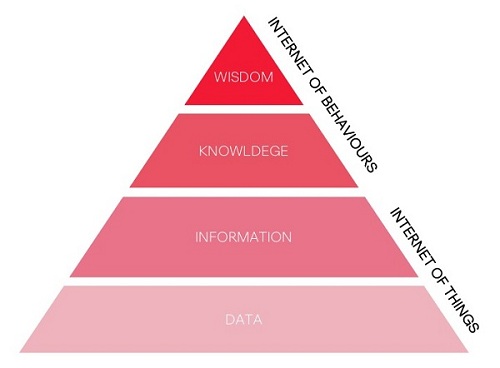
The Internet of Behaviours (IoB) is a relatively newer term that extends the IoT concept. Connected devices create newer data points which are likely to contain insights about customer behaviour, desires and  expectations and is termed as the Internet of Behaviours.

In other words, the IoB tries to understand the data obtained from human interactions on the internet from a behavioural and psychological point-of-view.

An appreciation of human behaviour has a potential of helping brands know people better and nudge them towards a desired response through improved experiences.

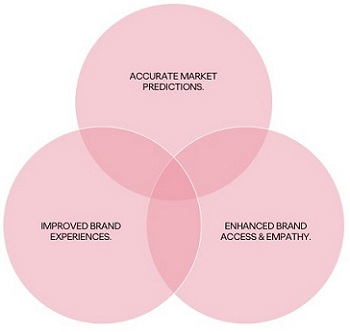
Three ways IoB may be harnessed by Pharma & Health brands.

Accurate market predictions. The internet has become the personal go-to information-hub for most of us. An increasing number of people are now searching for health-related information, ranging from healthy lifestyle advice to treatment and diseases. Often, what they are looking for are live needs and most likely, just before a transaction.

By collecting and mapping online behaviour patterns from social media activity, smartphone geolocation data, online purchases, use of apps as well as choice of food & commuting data, it is possible to predict what the users may want. This can help paint a very realistic picture of the market and also a more accurate way of predicting market gaps and potential. Further, it can be very useful in allocating budgets for public health initiatives by governments and health authorities.

Improved brand experiences.

With an increased adoption of digital health by patients and healthcare providers alike as well as regulatory changes in favour of digitalisation, there has been a considerable shift towards online healthcare transactions. According to McKinsey, in 2021 telehealth utilization has stabilized at levels 38X higher than before the pandemic in the USA. Similar trends can also be seen across the world.

The rise of digital health gives access to a lot of health data which until now was only available offline (clinic visits, pharmacy purchases etc.). This data may prove to be a gold mine when it comes to understanding how people are adapting to the new user experience, the expectations and the gaps.

Even if user’s expectations are being met, we may try to understand what is making it work or, if it is not being fulfilled satisfactorily, is there any post-transaction dissonance exhibited via social posts or search? Knowing this can helping brands look at things from the user’s point-of-view and improve how they connect to their audience.

Enhanced brand access & empathy.

One of the biggest challenges in healthcare is assessing the prevalence of diseases. The current understanding depends upon studies conducted with small sample sizes and extrapolating the findings to a larger population. However, with behavioural data from the internet, self-assessment apps & data voluntarily submitted on patient communities, brands can accurately draw up the prevalence of diseases and also the true human impact among patients and caregivers.

For Pharma & Health brands it is important to be accessible. Analysing disease prevalence data and what patients and caregivers share in their social posts, or as videos on Youtube, can greatly help brands empathise with people and help plan brand presence and accessibility for all.

The IoB is here to stay.

David Ogilvy once said, “Consumers don’t think how they feel. They don’t say what they think and don’t do what they say”. Traditional data collection methods like focus groups and interviews examine human behaviour in a formal setting. This often leads to a ‘projected’ response as people see and act in a state of being observed. But as actions on the internet are more or less private, they are likely to be slightly unfiltered and without layers. Technology can help us narrow this gap between formal and real consumer understanding. It is now possible to gather great amounts of behavioural information without necessarily intruding into the consumer’s life.

However, IoB is about people and their personal data. This raises more than a few questions about privacy. Most people would not like to readily share access to their health data, and understandably so. It can also be abused to spread misinformation and even lead to unfortunate exploitation. Therefore, it is crucial that the IoB is utilised as a window into the world of the consumer, rather than a door for intruding upon them.

If that is understood and taken care of, IoB truly has the potential to launch healthcare into a brave new future, made of delightful experiences for all: brands, patients, doctors and end-consumers.

Ayushman Bharat Digital Mission: The Benefit and Future of Digitisation in the Medical Sciences

15418 - digital_healthcare.jpg

The current Ayushman Bharat Digital Mission by the PM to allow greater IT-penetration of healthcare is welcome news. What makes it doubly so, is the focus on digital health such as app-based solutions. This is because leveraging digital technology towards disease management and cure is very cost-effective.

The Focus of this mission towards Public Private Partnership (PPP) will lead the way to cut long-term healthcare costs, as is evident from outcomes in many Western nations. The dream of universal health coverage can be made a reality sooner by leveraging technology the way this mission intends.

This sort of patient-centric, IT-based solution could help everyone within the industry have a better handle on efficiency and managing claims. Fast, efficient data-exchange and communication can be a win-win for both the patient as well as the health sector as a whole.
What is trending in patient’s homes will then be mimicked in corporations. Corporations that are providing health benefits and employee wellness programs will find that having a focus on digital health, will increase productivity while reducing illness related loss in labor-hours will drop. This will then be followed by similar technology penetration as will start in people’s homes.

Digitization would mean less trips to the doctor for interventional care and the shift would be to periodic, predetermined visits. Patients will find that this sort of visit will lead to a healthier and longer lifespan – and as an added benefit – these visits will be easier on the pocket.

With a centralized digital system of patient health ID, app developers (such as our own upcoming Circee HealthWise app) can tap into other metadata of the patient and avoid unnecessary duplication and in exchange, provide valuable predictive information to the government about hotspots in the country that need attention.

Remote digital healthcare providing services always have a recurring issue of finding out precisely the most effective assistance to the patient. WIth a centralized Healthcare Professionals Registry (HPR) and Healthcare Facilities Registries (HFR), this issue can be altogether mitigated and patients could be put in touch directly with the closest HPR and/or HFR.

As I have maintained, new innovations in the form of IoT devices, to specialized instruments for telemedicine, to data analytics, will eye the same space – the patient’s home. Such forms of health technology penetration into people’s homes can also help the rural underserved areas of our country.

The move towards IT-based health solutions will also be able to address one of the major issues in India- that of non-adherence to prescribed treatment regimen. A recent paper by Dr. Pooja Singh from All India Institute of Medical Sciences (AIIMS), reported as little as 50% or fewer adherences to prescription medications. Needless to say, this dismal rate can lead to further aggravation and cost of handling the disease burden which digitisation can help prevent.

It is time that we in the Indian healthcare system, leapfrog and embrace the benefits of IT in the health space. Doing so will help us in the health system as well as our primary objective – making our citizens healthy and keeping them there.

Translate »