












Close
Digital Health & Ai Innovation summit 2026
Medical Taiwan 2026

Hair Transplant For People With Curly Hair

What causes curly hair? The simple answer is genetics. Curly hair is classified as a dominant gene; thus, it tends to express itself with more vehemence than many other genes a host may be carrying. Having said that, science has managed to develop a few other theories about what makes hair follicles curl. One postulation states that the curls are caused by a greater number of hair cells on the convex side of the follicle, while a lesser amount makes up the concave side. Fewer cells create a shorter edge, which draws the follicles inward, resulting in a curl. Another theory goes that different lengths of cells on either of these sidesโ€”concave and convexโ€”create curls. Whatever the case, people with curly hair are often the subject of envy by their peers.

But just like people with straight hair, curly-haired folk can suffer from pattern baldness, or a thinning out on the scalp. The good news is that they can also receive successful curly hair transplant treatment should they choose to go that route. Modern techniques in follicular unit extraction (FUE) have made this once difficult procedure far more promising to carry off.

How Does Curly Hair Differ From Straight Hair?

Speaking from the perspective of a transplant surgeon, the donor area in back of a curly-haired personโ€™s head normally wonโ€™t carry the reserves of one with straight hair. Or in other words, fewer donor follicles exist for harvesting. Then again, the volume of curled hairs is almost always higher, resulting in at least a partial compensation for the shortage. Also, the low, straight hairline of many curly-haired individuals used to be challenging to reproduce, though not so much anymore. Since its discovery in 1988, FUE has undergone many breakthroughs. Among them lies the treatment for curly hair.

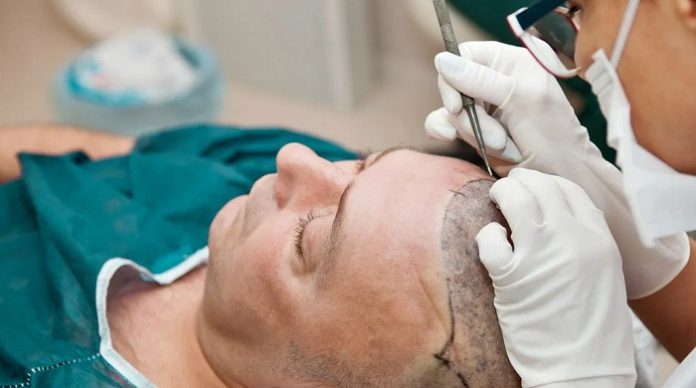
We all know what a hair transplant is. For the unversed, it is a procedure where a dermatological or a plastic surgeon usually moves hair from the back or side of the head to the bald patch which is either at the top or front of the head. Hair Transplant Chicago is where you can get a seamless transplant service that looks clean and very appealing.

How Can You Get A Hair Transplant With Curly Hair?

One tricky thing about this procedure is the angle of each follicular unit. On the scalp surface, a surgeon will perceive it as moving in one direction, while just beneath, the angle changes, forming a shape that resembles the letter C. Because of this, itโ€™s very important for the surgeon to approach the follicular unit in such a way as not to cause damage. African-Americans almost always have these C-shaped units, but for anyone with curly hair, surgeons can expect to encounter this unique trait.

Expert Hair Surgeons

There are many surgeons that are well experienced with curly hair transplants. We start with a hair and scalp analysis, determining density and overall thickness, as well as just how much further the patientโ€™s hair loss will progress. This last gives us an accurate portrayal of the treatment area.

Next we move on to possible donor areas. These could come from in back of the head or other parts of the body, such as the beard, back, or chest.

In addition to careful extraction of C-shaped follicular units, great care must also be taken with insertion of sensitive FUE grafts. Our own Mohebi Implanter makes curly hair transplants easier by reducing unneeded interaction with the grafts while using less force upon them during the entire process.

If you have curly hair that is thinning and are worried about becoming bald, schedule an appointment with hair transplant surgeon. Youโ€™ll begin with a consultation with one of our surgeons. The surgeon will examine your condition and develop a plan to turn things around. The procedure itself takes from 6 to 8 hours. Itโ€™s performed under sedation and local anesthesia. After the procedure we monitor your condition with follow-up appointments.


Indian Railway’s to deploy RailTels Hospital Management Information System

Indian Railways has selected RailTel Corporation of India Limited for the deployment of Hospital Management Information System (HMIS), an integrated clinical information system, for improved administration and patient healthcare at its 125 health facilities and 650 polyclinics across India.

The software allows customisation of clinical data as per the departments and laboratories. Its multi-hospital feature offers cross consultation besides seamless interface with medical and other equipment.

Patients are expected to benefit by enabling them to have access to all their medical records on their mobile device.

RailTel and the Indian Ministry of Railways signed a memorandum of understanding (MOU) on the modalities of executing the work.

HMIS is an open-source software that will be deployed over the cloud.

Indian Railway Board chairman VK Yadav said: โ€œWe are embracing digitization across all spheres and are continuously undergoing change. The HMIS platform will be connected to the Unique Medical Identity System. A Centre of Excellence for Artificial Intelligence (AI) is underway which will drive these technological changes be it artificial intelligence, data analytics or app-based services.

โ€œOur strategic relationship with RailTel has always been based on merit and they continue to help us implement variety of projects such as the Video Surveillance System, E-Office Services, Content on Demand,, Wi-fi across major railway stations in India โ€œ.

RailTel chairman and managing director Puneet Chawla said: โ€œProof of Concept of the HMIS has already been established by the implementation of the hospital management information system in South Central Railway and a pan India deployment is being considered in a phased manner. Traditional forms of record keeping has its own limitations and we believe that the integration of technology is the only way to achieve scale, cost efficiencies, ease of access besides other benefits.โ€

The Board’s Role in Hospital Finances and Operations During COVID-19

The Board's Role in Hospital Finances and Operations During COVID-19

The coronavirus pandemic has underscored the importance of the hospital boardโ€™s governance function relating to financial performance. But just how involved should boards be in the finances and operations of their hospitals?

Successful board members know itโ€™s critical for them to focus on strategy and leave daily operations to hospital leadership. Yet as the pandemic made clear, itโ€™s not only appropriate but also imperative that board members understand the finances and operations of their hospitals.

Community hospitals were already facing tight operating margins before COVID-19 struck. Those issues have now been exacerbated by substantial new costs associated with caring for COVID-19 patients; cancellations of elective surgeries; increased numbers of uninsured patients and uncompensated care; and a pandemic-induced recession.

In this environment, itโ€™s still important for boards not to overstep into operations, which is the responsibility of hospital leadership. The board does play a critical oversight role that requires a thorough understanding of the hospitalโ€™s financial situation and operational landscape. That includes a firm grasp on how COVID-19 is affecting hospital revenues, treatment priorities and funding sources โ€” and how those changes will affect strategic plans, operations and budgets moving forward.

While board members need not be finance specialists, education about the hospitalโ€™s finances is an essential part of the onboarding process for any new board members. Drawing from this knowledge base, the boardโ€™s core duties relating to finance and operations include:

  • Assisting with strategic business planning
  • Approving the hospitalโ€™s annual budget
  • Establishing long-term financial targets
  • Ensuring cost-effective use of resources and capital

Amid the pandemic, the board must review the hospitalโ€™s strategic and operational plans as well as its annual budget to ensure they account for the profound effects of COVID-19. The board should also help ensure that the hospitalโ€™s business continuity and legal compliance obligations are being met. These considerations include:

  • Ensuring that management has a plan in place to keep the workforce sufficiently staffed, equipped with PPE and ready with a succession plan in case of infection of key frontline personnel.
  • Determining whether sufficient measures are in place to counter revenue shortfalls and sustain operations throughout the pandemic.
  • Helping to create an integrated strategy for securing any needed emergency funding from state, local, federal and philanthropic sources.
  • Working with risk management and legal counsel to ensure adequate consideration of how liability exposure and legal compliance are affected by the realities of pandemic care.

The board should also define what success looks like when it comes to both financial performance and patient care throughout the pandemicโ€™s duration. That means the board is instrumental in the strategy sessions that identify the steps for financial and operational survival through the pandemic.

At the same time, the boardโ€™s role in longer-term planning must carry on. Board members must still play their traditional role of helping create strategies for service line growth, operational efficiency, clinical quality and other initiatives that will endure beyond the pandemic.

The board should also be regularly informed of, but not deeply involved in, the operational implementation of strategy through routine reports. These should help board members monitor the hospitalโ€™s financial health, quality of care and performance against similar hospitals using key performance indicators.

CHC Consulting has helped many hospitals with new board member orientations designed to ensure that board members have the essential financial skills they need. In the COVID-19 environment, these competencies are more critical than ever for hospitals looking to survive the current crisis and to serve their communities successfully long after the pandemic ebbs.

United Health Foundation partners with TACHC to improve diabetes care in Texas

United Health Foundation partners with TACHC to improve diabetes care in Texas

United Health Foundation has partnered with Texas Association of Community Health Centers (TACHC) to provide improved care for adults living with diabetes across the US state.

With the goal of expanding the project state-wide, the four-year, $2.5m funding from UHF will allow TACHC to treat at least 40,000 diabetic adult patients in 24 health centers.

This grant partnership is expected to help reduce the percentage of patients with unsuccessfully controlled type 1 or type 2 diabetes from 35% to 30% as well as expand TACHCโ€™s Optimizing Comprehensive Clinical Care (OC3) programme, which aims to advance patient-centered care and enhance health outcomes.

Furthermore, the health center staff will be able to learn to use data to drive better quality care by understanding the connection between efficiencies, access, continuity and improved patient health.

Two health centers will also take part in a pilot focused on peer-to-peer support for diabetes care, during the second year of the partnership.

UnitedHealthcare Community Plan of Texas CEO Don Langer said: โ€œThe United Health Foundation and the Texas Association of Community Health Centers share the goal of addressing uncontrolled diabetes. This partnership will assist TACHC in its mission to support its member centers, their patients and the communities they serve and ultimately help Texans live healthier lives.โ€

TACHC executive director Jana Eubank said: โ€œThe Texas Association of Community Health Centers is extremely grateful for the United Health Foundationโ€™s support and partnership. This grant will enable our clinicians to develop new curriculum and create a virtual platform for our already successful Optimizing Comprehensive Clinical Care program.โ€

Partnering with TACHC is the latest effort by UnitedHealth Group to address the problem of diabetes.

LeanTaaS launches new cloud-based solution iQueue for Inpatient Beds

CB Insights Names LeanTaaS to 2020 Digital Health 150 List of Most Innovative Digital Health Startups

Software innovator LeanTaaS has announced the launch of its new cloud-based solution, iQueue for Inpatient Beds, to help health systems increase bed throughput.

The company increases patient access and transforms operational performance for more than 300 hospitals. Health systems can use iQueue for Inpatient Beds to drive daily inpatient capacity management decisions at all levels ranging from a single operations-focused source of truth, including discharge and admissions predictions for each unit.

LeanTaaS has developed the solution to combat the key issues faced by hospitals, including poor visibility into the existing and future bed capacity.

Other issues include reactive decision-making, lack of end-to-end digital workflow and variable demand being met with limited supply.

LeanTaaS founder and CEO Mohan Giridharadas said: โ€œInpatient bed throughput practices are traditionally labour-intensive, leading to errors and an excess of time spent reporting out numbers.

โ€œWe are pleased to provide capacity leadership with a solution that dramatically reduces the amount of time spent manually compiling, searching for and reporting out data, allowing more time for optimizing patient care while reducing clinician burnout.โ€

iQueue for Inpatient Beds can surface admission bottlenecks by leveraging real-time machine learning/AI-based admission and discharge prediction models.

PROCEPT BioRobotics Announces Full Medicare Coverage for Aquablation Therapy for Enlarged Prostate

PROCEPT BioRobotics Announces Full Medicare Coverage for Aquablation Therapy for Enlarged Prostate

PROCEPTยฎ BioRobotics Corporation, a surgical robotics company developing intelligent solutions to transform the field of urology, announced that Aquablation therapy, delivered by the AquaBeamยฎ Robotic System for the treatment of benign prostatic hyperplasia (BPH), will be fully covered for all Medicare patients in the United States effective December 27, 2020.

Medicare Administrative Contractors (โ€œMACsโ€) First Coast Service Options, Inc (First Coast), Noridian Healthcare Solutions, LLC (Noridian), Novitas Solutions, Inc. (Novitas), GBA, LLC (Palmetto), and Wisconsin Physician Services (WPS) issued positive Local Coverage Determination policies for Aquablation therapy effective December 27, 2020. These five MACs join National Government Services (NGS) and CGS Administrators, LLC (CGS) who issued positive coverage policies for Aquablation therapy effective November 2020.

โ€œIn the United States, approximately 40 million men have BPH, a condition that significantly impacts quality of life,โ€ said Reza Zadno, president and chief executive officer of PROCEPT BioRobotics. โ€œWe are grateful to all seven of the Medicare Administrative Contractors for working collaboratively to expand coverage for Aquablation therapy. The continued expansion of reimbursement coverage for Aquablation therapy ensures patients have access to an important treatment option that combines both the symptom relief generally associated with resective BPH treatments, and the reduced side effects generally associated with non-resective treatments.โ€

This recent Medicare announcement compliments positive coverage positions issued earlier in 2020 from Anthem and Humana, two of the nationโ€™s leading health insurance providers. Anthem and Humana insure more than 42 million and 7 million lives nationwide, respectively, through their commercial and Medicare Advantage products.

โ€œThe decision to finalize these coverage policies was influenced by a significant amount of published data indicating Aquablation therapy is a safe and effective treatment that does not have the prostate size and shape limitations of many other BPH technologies,โ€ said Dr. Claus Roehrborn, Professor and Chair of the Department of Urology, UT Southwestern Medical Center in Dallas, Texas. โ€œAquablation therapy is uniquely positioned to provide both long-lasting symptom relief and low rates of irreversible sexual dysfunction.

About PROCEPT BioRobotics Corporation
PROCEPT BioRobotics is a surgical robotics company enabling better patient care by developing transformative solutions in urology. With an initial focus on BPH, the AquaBeam Robotic System delivering Aquablation therapy is the first FDA-cleared, surgical robot with automated tissue resection for the treatment of lower urinary tract symptoms due to BPH. Aquablation therapy combines real-time, multi-dimensional imaging, automated robotics and heat-free waterjet ablation for targeted, controlled, and immediate removal of prostate tissue. Aquablation therapy offers predictable and reproducible outcomes, independent of prostate anatomy, prostate size or surgeon experience.

A mobile app on cards for e-ambulance to Covid-19 patients in home isolation

With the national capital witnessing a fresh surge in COVID-19 cases, the Delhi government is likely to launch a dedicated mobile application for the electric ambulance service for coronavirus patients in home isolation. They said such ambulances will ferry those patients whose condition is not serious.

According to the health department, over 24,000 coronavirus patients were in home isolation in the national capital till Tuesday.

Patients who are asymptomatic or have mild symptoms are suggested by the authorities to stay in home isolation if they have facilities for the same at their residence.

A source said that Prakriti E-Mobility Pvt Ltd, which is an app-based Electric Vehicle (EV) taxi service provider, may be engaged by the Delhi government to start electric ambulance facility, adding that the new service is likely to be launched in the “next one-two days.

“The electric-vehicle ambulance service will provide transportation service for the COVID-19 patients in home isolation, whose condition is not serious,” the source said

On Tuesday, Delhi recorded its sharpest single-day spike of 7,830 fresh COVID-19 cases which took the national Capital’s infection tally to over 4.5 lakh, and 83 more fatalities โ€”the highest since June 16.

The fresh infections, which took the city’s case count to 4,51,382, came out of 59,035 tests conducted the previous day. The positivity rate stood at 13.26 per cent.

Delhi’s previous highest single-day spike of 7,745 cases was recorded on Sunday. The third wave has resulted in a more than 88 per cent rise in the number of active cases in a month’s time. At the same time, the number of patients in home isolation had increased by over 90 per cent. Meanwhile, the daily positivity rate touched a new high during the third wave when it went over 15.

French state-of-the-art mobile hospital frees-up beds for Covid-19 patients in southwest

French state-of-the-art mobile hospital frees-up beds for Covid-19 patients in southwest

A unique mobile hospital, developed at Toulouse City Hospital, has taken up its first posting in Bayonne public hospital in south west France where it will free up beds for Covid-19 patients.

The mobile hospital known as โ€œShelterโ€ looks like any other large 18-tonne lorry, but once stationed folds out to make an 80 square metre space, fully equipped to deal with any form of emergency care.

The unit contains18 beds: eight for emergency treatment and 10 for patients in a more stabilised condition. Crucially, it can be set up by four people in under half an hour.

โ€œItโ€™s a unique device,โ€ said professor Vincent Bounes, the brains behind the field hospital, and who was inspired by similar mobile units he had seen in the US equipped with army technology used in man-made and natural disasters.

โ€œItโ€™s a quick mobile unit so you need a maximum of 30 minutes to deploy it, which was very important. Also itโ€™s completely autonomous, containing everything needed for treating a patient: its own water supply, energy, oxygen, drugs, equipment, beds and so on.โ€
Covid crisis

Bounes began developing Shelter with his Samu team three years ago and benefited from funding from EGALURG โ€“ a European cooperation network to improve healthcare in isolated communities, emergencies and disasters on both sides of the Pyrenees.

“It’s a three year programme and we’re very proud of it,” said Bounes. “I hope it will be of great value to the hospital and the patients.”
Shelter can accommodate 18 patients, 8 in individual, intensive care units.

The first hospital to use Shelter is in Bayonne, in the Pyrenees region. The mobile unit will be used to treat emergencies such as strokes or heart attacks, freeing up as much space as possible for Covid admissions.

โ€œWe are currently in a tense period,โ€ Dr Tarak Mokni told Sudouest online. โ€œWe need a place for non-Covid-related emergencies so that we can continue to welcome Covid patients in the right conditions.โ€

โ€œWe are under pressure but the situation is under control; we called on this mobile unit to make sure we could carry on keeping things under control,โ€ he said.
ICUs under strain

There are now more than 32,000 Covid patients in hospitals in France, Prime Minister Jean Castex told a news briefing on Thursday. A new Covid-19 case was admitted to hospital every 30 seconds and one into intensive care every three minutes.

Franceโ€™s ICU wards are operating at 90 percent of their capacity before the crisis, Castex said.

On a slightly more positive note, he added there were early signs that the Covid-19 figures were tapering slightly, with the number of infections down around 16 percent this week compared to their level at the end of October.

More Cash For NSW Health Solar Power Program

More Cash For NSW Health Solar Power Program

Thirty-seven health facilities have had solar panels installed under the $5.5 million NSW Health Solar Program โ€“ and thereโ€™s more cash and installations to come.

On Sunday, the Berejiklian Government announced the program would be receiving an extra $14.5 million for energy efficiency projects and large-scale solar upgrades at eight hospitals across four local health districts and nine ambulance stations.

The districts and facilities to benefit:

  • Nepean Blue Mountains Local Health District: Solar PV and lighting upgrades at Nepean, Blue Mountains and Lithgow Hospitals.
  • Ambulance NSW: Nine (as yet un-named) sites across the state to have solar panels installed.
  • Hunter New England Local Health District: Large scale solar at Armidale, Belmont, Tamworth and Wallsend Hospitals (capacities not mentioned).
  • Central Coast Local Health District: Gosford Hospital โ€“ 1.166MW PV system.
  • Western NSW Local Health District: Parkes Hospital โ€“ 395 kW system.

All these projects, which will avoid an estimated 9,445 tonnes of CO2e per year, are expected to be completed by June next year.

The initial program saw solar installations at 20 ambulance stations, 4 MPS (Multi-Purpose Service) facilities and 13 hospitals. NSW Health Minister Brad Hazzard said more than two thirds of the systems were installed at rural and regional health facilities. These included recently opened hospitals located at Macksville and Mudgee โ€“ both of which were fast-tracked as part of the Berejiklian Governmentโ€™s response to COVID-19.

Through the additional $14.5 million investment, itโ€™s expected $2.6 million will be saved on energy bills annually โ€“ so a simple payback of around five and a half years. Under the initial $5.5 million rollout, more than $500,000 (assumed annually) is expected to be saved each year.

The simple payback figure for the initial rollout (11 years) is pretty crappy considering itโ€™s not uncommon for commercial solar payback to be achieved within 5 years โ€“ so perhaps a mistake was made with those figures.
Kean: Solar Power A โ€œNo-Brainerโ€

NSW Energy Minister Matt Kean is a solid supporter of solar energy.

โ€œInstalling solar on our hospitals and ambulance sites is a no brainer โ€“ the buildings have big rooftops that are perfect for solar installations,โ€ said Minister Kean. โ€œSolar will help our hospitals to save money on their energy bills and lower their carbon footprint.โ€

Itโ€™s quite fitting that hospitals should be used for solar energy generation given the health impacts of emissions from fossil-fuel based electricity generation and climate change.

In addition to the above projects, $8.1 million was announced for solar power system installations at Hornsby Ku-ring-gai, Fairfield, Canterbury and John Hunter hospitals in January this year.
Renewable Energy โ€œSuperpowerโ€ Plan Released

In other recent news out of New South Wales, Minister Kean last week unveiled a roadmap for the state he said will assist the private sector in bringing 12 gigawatts of renewable energy capacity and 2 gigawatts of storage online by 2030. It is expected to support 6,300 construction jobs and 2,800 ongoing jobs.

The Roadmap is predicted to reduce household average annual energy bills by $130 per year and by $430 per year for small businesses between 2023 and 2040. Modelling determined implementation of the roadmap would see NSW being in the top 10 for lowest industrial electricity prices across the OECD.

NIGERIA: a solar PV system to power the Sabon Birni hospital and mosque

Summit BHC acquires West Virginias Highland Hospital

A 60 kWp solar photovoltaic system is currently under construction in Sokoto State in north-western Nigeria. It will power the local government secretariat, hospital and mosque in the Sabon Birni region.

Solar energy is a key ally in the electrification of Sokoto State, located in north-western Nigeria. The local government is relying on a 60 kWp solar photovoltaic system for lighting at the Sabon Birni health centre, the local mosque and the local government secretariat, via a mini-grid.

The installation, which is already 85% complete, will require an investment of 232 million naira, or nearly US$610,000. โ€œThe project, which is also being carried out in Tambuwal locality, aims to ensure an adequate supply of electricity in Sokoto state and the use of its vast energy resources. Close to the target areas, we are looking into the possibility of connecting a few households to this solar-powered mini-grid,โ€ says Alhaji Sani Ahmad, the Director of Planning in the Nigerian Ministry of Local Government.

This project is being implemented less than a year after the commissioning of another 60 kWp solar system in Torankawa locality. Initiated by the Nigerian Electricity Regulatory Commission (NERC), this project was implemented within the framework of the Renewable Energy Micro Utility (REMU) project. The solar power plant, which now supplies more than 100 households, was financed to the tune of 140 million naira (US$380,000) via the Nigerian Sovereign Green Bond. This green bond was launched by the federal government of Nigeria to finance reforestation and renewable energy development projects.

Translate ยป