










Close
Digital Health & Ai Innovation summit 2026
Medical Taiwan 2026

Lutronic Introduces Intelligent Care in Muscle Stimulation with IntelliSTIM – A Third Generation Body Sculpting Device

Lutronic Introduces Intelligent Care in Muscle Stimulation with IntelliSTIM - A Third Generation Body Sculpting Device

Lutronic, a global leader in creating intelligent, energy-based systems for medical aesthetics, has unveiled Accufit, their exceptional new device for targeted muscle activation. Accufit takes muscle activation to strengthen and sculpt muscle in the abdomen, obliques, and buttocks – to new levels with innovative technology. In effect, this makes Accufit both the first of its kind and best in class, with exceptional and unique results in the muscle-sculpting space.

“Accufit is more than an improvement on existing muscle activation devices, it’s a complete reimagining of what’s possible,” James Bartholomeusz, Lutronic’s Chief Technology Officer, explains. “We based Accufit on intensive research into the unique and complex ways we build muscle. When you weight train, you strengthen and lengthen; you load up with weight to increase muscle fibers. You build bulk, but you also sculpt and refine both smaller and larger muscle groups. In the process, you also need to relax and release any muscle tension. Accufit replicates the entire process. It doesn’t just contract muscles repetitively like earlier devices still on the market do.”

The key to Accufit’s success is its unique design and functions. Eight IntelliSTIMโ„ข electrodes designed to distribute energy and generate incredibly strong muscular contractions on any area needed to be treated without pain or skin sensitivity. Accufit’s IntelliPhaseโ„ข waveforms produce four unique muscle movements โ€“ Twist, Hold, Grip, and Tap โ€“ replicating the different muscle building actions a weight trainer would use. An automated treatment cycle, IntelliCycleโ„ข, repetitively works the selected muscle groups treating them based on the shape and size. There is no need to move or reposition these electrodes for the system to cycle through the four movements. And Accufit treatments are fully customizable to help patients achieve their personal goals.

“I chose the Lutronic Accufit body sculpting system as it offers area-specific muscle activation waveforms that are designed to optimize effects in the targeted muscle groups. I can select a treatment mode that focuses on a specific muscle group that addresses the concerns of my patients. I can also set the system to the IntelliCycle treatment which is like a ‘set it and forget it’ mode that cycles through a comprehensive ‘muscle workout’ program without the need to move electrodes to different locations. Accufit comfortably works muscle groups in numerous positions for optimum results in body sculpting,” says, Melda Isaac, MD, Founder, MI Skin Dermatology Center, Washington, DC.

“Aesthetic clinicians and consumers are benefitting from early devices introduced in the past 18 months, despite their limitations,” said Jina Kim, VP of Marketing at Lutronic. The Accufit system is a true 3rd generation approach, including, proprietary and meaningful technologies that enable more comprehensive, multi-faceted treatments for improved patients’ physical appearance and treatment experience.

“We’ve had an excellent response to Accufit from every perspective – the technology, the usability and treatment results,” says Jonathan Baker, Director of Business Development. “I have experience with 1st and 2nd generation devices which always had limitations like limited range of motion. With Accufit, people feel like they’re doing the workout themselves even though their muscles are activated synthetically. The Accufit is truly impressive and our customers are thrilled with patient outcomes and that is what really excites me. Physicians and their technicians appreciate Accufit’s built-in intelligence and ease of use.”

Typically, muscle activation clients have been under BMI 25 and exercise with some regularity. But Accufit’s exceptional results, clearly noticeable in before and after photos, broaden the potential client base. “Because we are creating a comprehensive experience as one might have with a personal trainer, we think Accufit is also perfect for people who are beginning their fitness journey and want a kickstart, Bartholomeusz asserts. Women post pregnancy, people starting a diet, anyone without core strength will feel the results of Accufit. It would take three months of regular highly focused fitness program to achieve what we have seen with Accufit in as little as four sessions treated over two weeks.”

About LUTRONIC
Effective. Innovative. Intuitive. Dependable. These four core tenants fuel Lutronic’s development of intelligent laser and energy-based systems. Lutronic’s robust products include proprietary features to optimize care in aesthetic, ophthalmic, spinal, and surgical procedures. Committed to this mission, Lutronic partners with key opinion leaders to advance the science and efficacy of Lutronic’s systems. To develop unrivaled platforms with “smart” features, Lutronic devotes as much as four times what competitors invest in research and development, resulting in more than 535 patents and patent applications worldwide.

In addition to operations and manufacturing in the Boston area, Lutronic has a significant manufacturing and research center in South Korea, offices in Germany, China, and Japan, and a worldwide network of ever-expanding direct sales teams and distributors.

Wavelink announces Olinqua’s hospital communication solution

How People Can Benefit From A Community Hospital

Enterprise solutions provider Wavelink has announced the availability of Olinquaโ€™s mobile communication application for hospitals.

Although most hospitals still rely on pagers to communicate with staff, paging technology is ageing, with many systems needing to be upgraded or replaced. Paging is also one-way, with no ability to provide feedback or acknowledge receipt of messages. Without knowing if a message has been read, or even received, it is not possible to escalate messages. The solution is to mass-broadcast messages to a wide audience to increase the chance of a response.

In addition, paging does not facilitate person-to-person communication, which means that many staff members are exchanging information via personal devices using unapproved, potentially unsecured consumer messaging tools such as WhatsApp. This leaves hospitals vulnerable, with no control or access to the communication exchange.

Furthermore, messages received on pagers are not categorised, so the user canโ€™t filter by message type or see multiple messages on a screen; they have to scroll through single lines of text to find a message. This means that a message for a code alarm could be buried amongst other, less important, messages and requests, potentially putting patient lives at risk.

In todayโ€™s digital environment, hospitals need a better way to communicate with staff and ensure the highest standard in security and patient care. To address this, Olinqua has released its mobile communications application.

Designed specifically for hospital users including doctors, nurses, ward clerks, clinical assistants and facilities and security teams, the mobile app provides a number of features, including:

  • two-way, secure messaging that ensures only approved contacts receive messages
  • message by role, name or team (ad hoc or pre-defined)
  • task management, including the ability to create, assign, accept and complete tasks
  • customised task types, with different responders for each, ensuring skill sets are matched to required tasks
  • incident management, including the ability to create, assign, respond to or complete hospital codes
  • colour-coding capability to match hospitalsโ€™ alert code structure, for example fire/smoke (code red); medical emergency (code blue); personal threat (code black)
    full visibility into code participation.
  • the ability to converse within a code/incident and have the conversation logged against the code for future audit
  • user credentials enabling each user to sign in and out of the app from a smart device
  • instant revoking of user rights to access messages and other information.

Wavelink Health Practice Lead Alan Stocker said, โ€œWith hospitals starting to adopt purpose-built smart devices, as well as providing for bring-your-own-devices, there is a real opportunity for hospitals to replace pagers with an application that is multifaceted, providing person-to-person and role-to-role communication functionality with a familiar format that staff are used to seeing in their everyday lives, such as on social messaging applications.โ€

Olinqua Director Martin Moszczynski added, โ€œThe Olinqua mobile communication application will offer healthcare workers an improved communications experience, along with increased efficiency and much richer information on events occurring within the hospital to improve patient outcomes.โ€

The Olinqua mobile communication application will be available in Australia and New Zealand in December 2020.

University of Rochester serves rural patients, reduces ED burden with telebehavioral health

Ontario Invests in Telehealth to Gives Seniors Access to Care at Home

As part of the new Patient Experience Digital Series, two clinicians explain how a virtual care model is helping more compassionately treat patients in their home communities while improving the provider experience.

The debut installment of the new Cleveland Clinic & HIMSS Patient Experience Digital Series debuts next Tuesday, November 10.

The goal of the series, which will roll out in six parts over the coming months, is to build an online education and networking platform where attendees can gain insights into the many ways technology and human-centered experience are intersecting and being innovated across healthcare โ€“ and how they can be optimized for maximal empathy.

Some of the sessions will air live and others will be on-demand โ€“ one of which will focus on an innovative use case for telebehavioral health that has already improved patient care while gaining cost efficiencies for small and rural hospitals.

For the session, Building Empathy with Telebehavioral Health: Crossing the Urban-Rural Divide, I spoke with Dr. Jennifer Richman, associate professor of psychiatry at University of Rochester Medical Center, and Michael Hasselberg, NP, senior director of digital Health at U of Rochester.

They explained how an initiative launched in 2016, known as the Psychiatric Assessment Officer Telepsychiatry Model, has paid dividends across the health system, including lower costs through reduced resource utilization, fewer readmissions, and, most importantly, improved patient care through wider accessibility and more empathetic treatment options.

The challenge was one of geography: Mental health issues are just as prevalent as in rural communities as in big cities, but patients in those far-flung places, served by small, understaffed and resource-limited hospitals, lack easy access to the empathy and care they need.

In their presentation, Hasselberg and Richman describe how they developed the new telehealth model, which capitalized on the psychiatric skills of their colleagues in Rochester, while extending their reach into rural communities. The approach has had an array of benefits โ€“ for patients, of course, but also for behavior health experts and for the financial health of the University of Rochester Medical Center and its affiliated rural hospitals.

“These small and rural community hospitals that surround the greater Rochester urban region were almost bankrupt โ€“ some of them were bankrupt โ€“ because the patient population they typically saw was the Medicaid or uninsured population. And what we saw in the data was that behavioral health patients were very high users of these community hospitals,” Hasselberg explained.

“A lot of these hospitals had very high, potentially avoidable ED presentation rates and very poor 30- and 60-day readmission rates,” he said.

Moreover, when behavioral or mental health would present at the emergency department, “there were no onsite psychiatric resources,” said Hasselberg.

Instead, they were often “put into an ambulance and driven 90 miles north to the big city of Rochester to be seen at one of the tertiary hospitals for evaluation.

Unfortunately, most of those patients then wouldn’t meet inpatient psychiatric admission criteria in Rochester. In those cases, “we would put them in an ambulance and send them all the way back down to that rural community,” he said. “But we didn’t know the resources there, so we didn’t have a good discharge plan for them.”

“The most important component is the onsite patient engagement, and that is done by the licensed clinical social worker and mental health counselor from the rural community,” said Richman.

“The second component is the telepsychiatry component. We have a psychiatrist or a nurse practitioner in the academic medical center in Rochester, two hours away, who’s available 9-5 every weekday to discuss cases with that onsite engagement specialist.

The third piece, which has its own set of unique benefits, is a telementoring program for behavioral health providers such as social workers and psychiatric nurses.

“When you’re a rural mental health provider, you’re very isolated. You don’t have anyone who speaks your language. You don’t have anyone to bounce ideas off,” Richman explained. “It’s very hard to maintain mental health providers in rural areas.

“So we do a virtual telementoring with a psychiatrist at the academic medical center and these various psychiatric assessment officers at these different rural hospitals, and we would meet weekly to talk about common issues, common patient scenarios โ€“ essentially developing a community of practice for a bunch of these rural providers who might not have anybody else.”

During their video session on Tuesday, Hasselberg and Richman go into much more detail about the implementation of the program โ€“ describing technology needs, new workflows, clinician buy-in, financial and operational returns, and, of course, patient experience.

As described this June in the Journal of Psychosomatic Research, an analysis of emergency department data from three of the rural hospitals enrolled in the telehealth program found a 36% reduction in all-cause ED revisit rate during the first 90-day period, and 44% reduction in the next 90 days. For cash-strapped community hospitals, that’s significant.

In addition, the EHR-linked telehealth program has helped Rochester clinicians better collect clinical data and social determinant information for patients who live in those communities, helping the medical center better assess and triage them when necessary, said Hasselberg.

Richman said other communities with similar challenges should take note: “We really think it’s a pretty easy model to initiate, with not many resources,” she said. “So we hope to see the spread, not only in New York State, but in other states that could be helped by this.”

AUO and NHRI jointly develop smart healthcare system for the elderly

Change Healthcare Acquires PROMETHEUS Analytics

AU Optronics (AUO) has worked with government-sponsored National Health Research Institutes (NHRI) to develop a smart system for healthcare of the elderly.

The system, showcased at at the 2020 Taipei International Care Technology Application exhibition during November 3-5, can automatically create healthcare plans by digitizing professional worksheets and work processes, and is connected with NHRI’s cloud-based long-term care resources platform to record elder people’s health data at different stages to enable big data analysis and realize continuing care, saidAndy Yang, vice president for AUO’s Strategic Investment & New Business Operations.

The system is ready for commercial use, Yang noted, adding that it is currently under trial use by some continuing care providers in Taiwan and three elderly care centers in China. For commercial use, the system will be SaaS (software as a service) on a subscription basis.

AUO also showcased a few smart elderly healthcare solutions using cloud-based health ERP (enterprise resource planning) developed by its subsidiary AUO Care.

The safety guard platform is a solution that features integration of IoT sensors of fall detection, locational positioning, emergency calls and smart mattresses.

Another solution is a health management platform to promote active management by means of exercises, with the platform covering exercise assessment, plans, execution, evaluation and adjustment as well as review of physical fitness and health trends. The platform is intended to nourish the concept of letting the elderly stay healthy by virtues of exercises.

Smith+Nephew adds patient selection and care-pathway optimization tools to ARIA Digital Care Management Platform for ASCs

Smith & Nephew acquires extremity orthopedics business unit of Integra LifeSciences Extremity Orthopaedics business

Smith+Nephew, the global medical technology business, has announced the addition of ARIA SiteSelect and ARIA Optimized Recovery Pathways to its digital episode of care management platform, ARIA. These digital tools will help clinicians more consistently determine the appropriate surgical site of care for patients and standardize total joint care pathways with the objective of improving post-operative outcomes.

ARIA SiteSelect is a clinical decision support tool created to enable a clinician to determine whether a patient is a suitable candidate for outpatient surgery in the ambulatory surgery center (ASC) setting. ARIA SiteSelect is based on an algorithm that uses multiple factors related to the patientโ€™s medical history and lifestyle including their demographic, social, functional and medical status in order to support the clinician in determining the appropriate surgical site of care.

ARIA Optimized Recovery Pathways are a series of outpatient total joint care pathways selected and optimized by the clinician in ARIA to support the standardization of care plans for outpatient total joint procedures. The evidence-based 90-day episode of care pathways are designed to support the potential reduction in complications associated with post-operative pain control while also helping to restore the patientโ€™s functional mobility sooner after surgery, which can support improved outcomes.

The assets were designed for clinicians and are intended to be used by clinical practices and surgical sites of care to support their treatment protocols.

โ€œAs more healthcare practitioners and patients realize the potential benefits of outpatient surgery in the ASC setting, itโ€™s more important now than ever to offer clinicians a tool to indicate and help guide patients to the site of care where they stand to experience the best outcome,โ€ said Dr. Ritesh Shah, orthopaedic surgeon at Illinois Bone and Joint Institute and Chief of Orthopaedic Surgery at Advocate Illinois Masonic Medical Center.

โ€œDelayed ambulation after surgery is a critical factor that can detrimentally affect recovery for a total joint patient,โ€ said Dr. Nishant Shah, Partner with Midwest Anesthesia Partners. โ€œThe goal of the clinical pathways is to streamline the process, make it more consistent from patient to patient, and create efficiencies that enable patients to get back to the lives they enjoy sooner.โ€

โ€œARIA SiteSelect and ARIA Optimized Recovery Pathways are additional solutions in our Positive Connections digital toolkit that empower surgeons to make informed, efficient decisions within their clinical practice and ASC,โ€ said Laura Rector, Vice President for Ambulatory Surgery Centers at Smith+Nephew. โ€œWe support long-term solutions for ASCs and clinicians in an effort to help them improve practice management.โ€

ARIA, Smith+Nephewโ€™s digital care management platform, was launched in August 2020. It promotes engagement between patients and providers to support the overall patient experience before and after surgery.

AseptiScope Announces the US Launch of The DiskCover System, to Protect Patients from Pathogen Exposure

AseptiScope Announces the US Launch of The DiskCover System, to Protect Patients from Pathogen Exposure

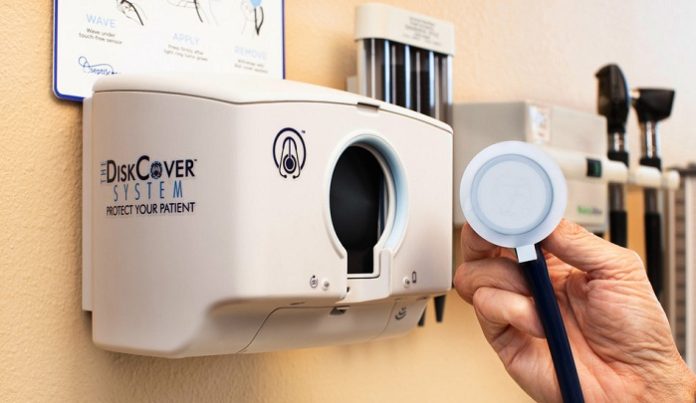
AseptiScope, Inc., a privately funded San Diego, California based clinical innovation company, announced the launch of its flagship product for protecting patients from exposure to pathogens, The DiskCoverโ„ข System. The DiskCover System is the first practical and effective solution to address the longstanding challenge of effective stethoscope hygiene.

โ€œAfter years of research and development, we are proud to introduce The DiskCover System, the first touch-free stethoscope barrier system to protect patients from pathogen exposure,โ€ said Scott Mader, co-founder and CEO of AseptiScope Inc. โ€œInfection control standards have never been more important, and todayโ€™s launch ushers in an infection control solution that is a rapid, highly effective, and affordable method for healthcare providers to protect patients from a well-documented contamination challenge,โ€ he added.

The stethoscope, the most frequently used medical instrument with over 5.5 billion annual auscultations in the US alone, is commonly referred to as the โ€œclinicianโ€™s third hand.โ€ It is a ubiquitous, valuable clinical tool and an enduring symbol of the trust between healthcare providers and patients. The stethoscope is also a proven vector of disease transmission, with CDC cleaning guidelines that are incompatible with the intensity of stethoscope use and the high-paced workflow in clinical settings. Recent observational studies reveal that stethoscopes are seldom cleaned between patients and, even when cleaning does occur, less than 4% of stethoscope diaphragms in these studies met CDC cleanliness requirements. In instances where cleaning techniques such as alcohol swabs are employed in accordance with guidelines, studies have shown that resistant pathogens frequently persist. Moreover, disposable, โ€œsingle-patientโ€ stethoscope alternatives offer significantly compromised acoustics and fail to address the risk of clinician-to-clinician infections.

โ€œThe very low rate of stethoscope hygiene after patient contact represents a current and potentially serious safety threat,โ€ said Dr. Alpesh Amin, Executive Director of Hospital Medicine and Chair of Medicine at the University of California Irvine. In his published research on the subject entitled The Third Hand, Dr. Amin establishes the true scope of the problem. โ€œTransmission of pathogens from patient to patient by stethoscopes could undermine the bene?ts of hand hygiene programs, as patients are commonly exposed to unclean stethoscopes.โ€

The DiskCover System is the first and only touch-free stethoscope barrier dispensing system. The System dispenses single-use aseptic disk covers that are proven to protect patients from exposure to harmful pathogens and contaminants on the stethoscope diaphragm without compromising the acoustics critical for accurate diagnoses. The compact DiskCover Dispenser, designed to be mounted in or near hand hygiene stations in the clinical setting, applies individual disk covers instantly, minimizing workflow disruption while encouraging clinician compliance. The DiskCover Dispenser is designed to work with the disposable, clean room manufactured Clean Cassetteโ„ข. Each Clean Cassette houses 420 single-use disk covers and is carefully designed to maintain the aseptic status of each individual disk cover through to the point of care.

With todayโ€™s launch, AseptiScope is activating full-scale commercial activities for The DiskCover System and is filling contracted orders with its premier customers; orders that represent a wide spectrum of clinical settings, from leading hospitals to individual physician offices.

โ€œThe DiskCover System fills a startling gap in our fundamental efforts to protect patients,โ€ commented Dr. Stuart Kipper of Stuart Kipper MD and Associates in Encinitas California, among the first customers to receive and install The DiskCover System. โ€œAs clinicians, we routinely use disposable gloves and gowns to help protect our patients, and ourselves, from pathogens. Now, for the first time, we have a fast and easy system to do the very same for our stethoscopes,โ€ he stated. โ€œI had The DiskCover System professionally installed in our practice and it was up and running in just minutes. In fact, I am already using it and my patients love it,โ€ Kipper added.

About AseptiScope, Inc.

AseptiScope, formed in early 2016, is a privately funded San Diego, California based, clinical innovation company. The company is founded and led by clinical innovation experts, leading medical researchers and practicing physicians. The AseptiScope mission is to design, develop, manufacture and commercialize novel solutions that offer โ€œInfection Protection for Clinician & Patient.โ€ The company has now launched the first true and practical solution for the longstanding challenge of stethoscope contamination.

Elekta’s newest radiotherapy system, Elekta Harmony, receives CE mark

GenesisCare to acquire nine Elekta Unity systems

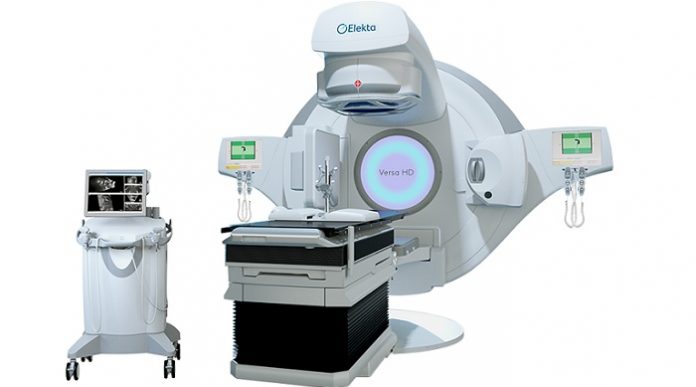
Elekta announced that it has received CE mark for its Elekta Harmony* linear accelerator (linac), clearing the technology for commercial sales in Europe. Initially, Elekta will introduce Harmony throughout Europe and other countries where the CE mark is recognized within the Middle East, Africa and the Asia Pacific region.

A cancer treatment system designed to meet healthcare centersโ€™ need for a productive, precise and versatile radiotherapy treatment system, Elekta Harmony perfectly balances productivity, versatility and precision without compromise, making it a solution for both mature and developing markets.

Renato Leite, Head of Region Europe at Elekta, said: โ€œHarmony was built from the ground up with patients and users in mind. It is a practical system both for developing markets and those where radiotherapy is already well-established. This regulatory approval paves the way to increasing the number of patients, clinics and countries that will benefit from precision radiation medicine. We believe this brand new linac will be very successful in Europe and other regions making a positive contribution to advance cancer treatment.โ€

Productivity: the new FastTrack in-room experience reduces patient setup time by as much as 50 percent**. Combined with further workflow enhancements, treatment slots can be reduced by up to 25 percent, enabling clinicians to deliver high-quality cancer care to more patients.

Precision: a best-in-class multi-leaf collimator provides one-millimeter resolution beam-shaping across the full 40 cm X 40 cm field size, which provides โ€œshrink-wrappedโ€ sub-millimeter conformality around the tumor target.

Versatility: the option of multiple energies, treatment techniques and imaging modalities, providing the versatility needed to treat the most common indications, including breast, lung, pelvic and head-and-neck cancers.

About Elekta
For almost five decades, Elekta has been a leader in precision radiation medicine. Our more than 4,000 employees worldwide are committed to ensuring everyone in the world with cancer has access to โ€“ and benefits from โ€“ more precise, personalized radiotherapy treatments.

MIT Researchers Use mHealth Tools to Identify COVID-19 in a Cough

Researchers at the Massachusetts Institute of Technology have developed an mHealth tool that can reportedly identify evidence of COVID-19 in a person’s cough, even if they’re asymptomatic.

In a study recently published in the IEEE Journal of Engineering in Medicine and Biology, the team of researchers used tens of thousands of samples of [people coughing and talking, and were able to create an AI tool that could accurately identify coronavirus symptoms 98.5 percent of the time among those whoโ€™d tested positive for the virus and in every asymptomatic case.

โ€œThe sounds of talking and coughing are both influenced by the vocal cords and surrounding organs,โ€ Brian Subirana, a research scientists in MITโ€™s Auto-ID Laboratory and co-author of the study, said in a press release published by the university. โ€œThis means that when you talk, part of your talking is like coughing, and vice versa. It also means that things we easily derive from fluent speech, AI can pick up simply from coughs, including things like the personโ€™s gender, mother tongue, or even emotional state. Thereโ€™s in fact sentiment embedded in how you cough.โ€

The idea of detecting illness in coughs isnโ€™t new. In 2014, ResApp Health developed an mHealth app at the University of Queensland in Australia that could help clinicians identify respiratory distress, such as pneumonia, bronchitis, croup and asthma, in children and adults who coughed into a smartphone.

With the world in the grip of the pandemic, health systems and digital health companies like Fitbit have been focused on developing telehealth and mHealth platforms that could detect early signs of the virus through vital signs, activity and sleep patterns tracked on wearables.

โ€œOur research shows that our bodies start to fight the disease before more visible symptoms appear,โ€™ Amy McDonough, general manager and senior vice president of Fitbit Health Solutions, said of that companyโ€™s recent partnership with Northwell Health and the US Army on a connected health project. โ€œWe believe Fitbit can reliably detect those signals, giving us an incredible opportunity to get ahead of this and help alert people that they could be sick before they unknowingly spread it to others.โ€

The Mayo Clinic is also researching how voice-based medical biomarkers can be used to identify illness. Recently, the health system announced a partnership with Vocalis Health to develop new tools for monitoring patients with respiratory issues like pulmonary hypertension.

โ€œWe have seen the clinical benefits of voice analysis for patient screening throughout the COVID-19 pandemic, and this collaboration presents an opportunity for us to continue broadening our research, beginning with pulmonary hypertension,โ€ Tal Wenderow, CEO and co-founder of Israel-based Vocalis Health, recently told the Times of Israel. โ€œVoice analysis has the potential to help physicians make more informed decisions about their patients in a non-invasive, cost-effective manner. We believe this technology could have important clinical implications for telemedicine and remote patient monitoring in the very near future.โ€

At MIT, Subirana and his colleagues developed AI tools to measure a personโ€™s vocal cord strength, then focused on tools to detect emotional states evident in speech, using people living with Alzheimerโ€™s as their model. On top of that, they layered a database of different coughs.

The resulting AI tool identifies four biomarkers specific to COVID-19: vocal cord strength, sentiment, lung and respiratory performance and muscular degradation.

โ€œWe think this shows that the way you produce sound, changes when you have Covid, even if youโ€™re asymptomatic,โ€ Subirana said.

The researchers are now working to create an mHealth app that would allow care providers and patients to use the tool on a smartphone or tablet โ€“ perhaps eventually on a smart speaker or other digital health platform in the home. And theyโ€™re planning partnerships with large health systems to strengthen and expand the database to identify other conditions.

โ€œPandemics could be a thing of the past if pre-screening tools are always on in the background and constantly improved,โ€ they concluded in the study.

Arogya World Launches New Mental Health Criteria for Workplaces in India

 Arogya World Launches New Mental Health Criteria for Workplaces in India

Arogya World launched extensively researched mental health criteria, as part of its Healthy Workplace framework in collaboration with Librum, to help corporates address employee mental wellbeing in a structured manner, at Arogya’s online Healthy Workplace conference today.

This effort, the first-ever of its kind in India, was initiated by Arogya World in direct response to repeated requests from business and HR leaders in COVID times.

The World Health Organization estimates that India will suffer economic losses amounting to a staggering 1.03 trillion dollars from mental health conditions between 2012 and 2030. The post-pandemic world and shifting workplace dynamics, like work from home and job uncertainty, have worsened the situation. While employers are trying their best to reach out to employees through various programs, the stigma around mental health in India makes it very challenging.

Dr Shekhar Saxena and Vikram Patel, both world-renowned mental health experts and professors at Harvard University, worked with their colleagues and with the Arogya World team to develop these criteria. According to Shekhar Saxena, “We wanted to develop values and evidence-based set of criteria that would provide a roadmap for implementation of good mental health programs, launch meaningful initiatives and raise awareness around mental health in workplaces in India.”

The new set of criteria cover a number of aspects like Promoting Well-Being, Managing Stress, Leadership and Supporting Recovery, and have been merged with Arogya World’s existing Healthy Workplace criteria that cover physical health promotion and NCD prevention efforts including No Tobacco Policy, Healthy Eating, Physical Activity, and Shifting Mindsets. Roll-out plans and scoring guidelines for the combined criteria will be communicated clearly to interested companies, going forward.

“By putting mental health on par with physical health, this ambitious and comprehensive set of criteria will spur India’s companies to action and help them address both NCD prevention and mental well-being simultaneously,” said Nalini Saligram, Founder and CEO of Arogya World.

“This will help India’s workforce stay healthy and be more productive and can help increase India’s future global competitiveness,” said Nalini Saligram.

Arogya World completes 10 years in 2020 and has been working with nearly 150 companies enabling them to become “Healthy Workplaces”, constantly providing them with insights and programs to address NCD prevention and other aspects of employee health in a comprehensive way, while encouraging the companies to be more data-driven in their approach.

Arogya World believes in constant improvement and a proactive approach in addressing health issues at the workplace, and the new mental health criteria are another step in this direction.

Other efforts to encourage companies to address mental health include case studies on how exemplary Healthy Workplaces have reduced stigma and successfully deployed mental health programs to large employee populations plus a set of stress reduction text messages for working Indians developed with NIMHANS.

It also conducted webinars on mental well-being with partners such as CII, iNFHRA, CBRE, GACS, NHRD, Manah Wellness, and others. In solidarity with One Mind At Work, Arogya World encourages more CEOs and business leaders in India to commit to tackling mental health at work. The time to act is now – mental health issues are widely recognized as a major fall-out from COVID.

Intermountain Healthcare to Expand its Relationship with Vizient, Now as a GPO Member

Intermountain Healthcare to Expand its Relationship with Vizient, Now as a GPO Member

Vizient, Inc. announces that Intermountain Healthcare will be expanding its relationship with Vizient beyond its current utilization of Vizientโ€™s analytic tools to now include accessing Vizientโ€™s group purchasing organization (GPO) portfolio.

Intermountain Healthcare already uses Vizientโ€™s Clinical Data Base and Operational Data Base analytics to align cost and quality decisions, engage physicians in utilization and supply choices, and improve outcomes. Intermountain will now use Vizientโ€™s GPO portfolio for purchasing with the expectation of a decrease in current supply costs. They have the opportunity to join Vizientโ€™s pharmacy program, including the companyโ€™s Novaplusยฎ private label program, to reduce pharmacy expenses and minimize the impact of drug shortages on their enterprise.

โ€œWe are excited to welcome Intermountain Healthcare to Vizient and begin helping them meet their goal of driving cost savings as well as further improving the quality of care for the patients they serve,โ€ said Byron Jobe, president and chief executive officer for Vizient. โ€œWe look forward to partnering with one of the nationโ€™s health care leaders.โ€

โ€œBoth organizations have a common goal of providing patients access to high-quality care at the most affordable cost,โ€ said Bert Zimmerli, chief financial officer and executive vice president of Intermountain. โ€œWe look forward to continuing the development of our relationship towards the fulfillment of this goal.โ€

Intermountain is joining Vizient in conjunction with the planned acquisition of Intalere, which is anticipated to close during Q1 2021, pending standard regulatory review.

About Vizient, Inc.

Vizient, Inc. provides solutions and services that improve the delivery of high-value care by aligning cost, quality and market performance for more than 50% of the nationโ€™s acute care providers, which includes 95% of the nationโ€™s academic medical centers, and more than 20% of ambulatory providers. Vizient provides expertise, analytics and advisory services, as well as a contract portfolio that represents more than $100 billion in annual purchasing volume, to improve patient outcomes and lower costs. Vizient has earned a Worldโ€™s Most Ethical Company designation from the Ethisphere Institute every year since its inception. Headquartered in Irving, Texas, Vizient has offices throughout the United States.

Translate ยป